
Uncategorized
Justice or Cover-Up? By George Omagbemi Sylvester

Justice or Cover-Up?
By George Omagbemi Sylvester | Published by saharaweeklyng.com
“Dangote’s Explosive Petition Demands ICPC Probe of NMDPRA Boss Over $7m Corruption Allegations.”
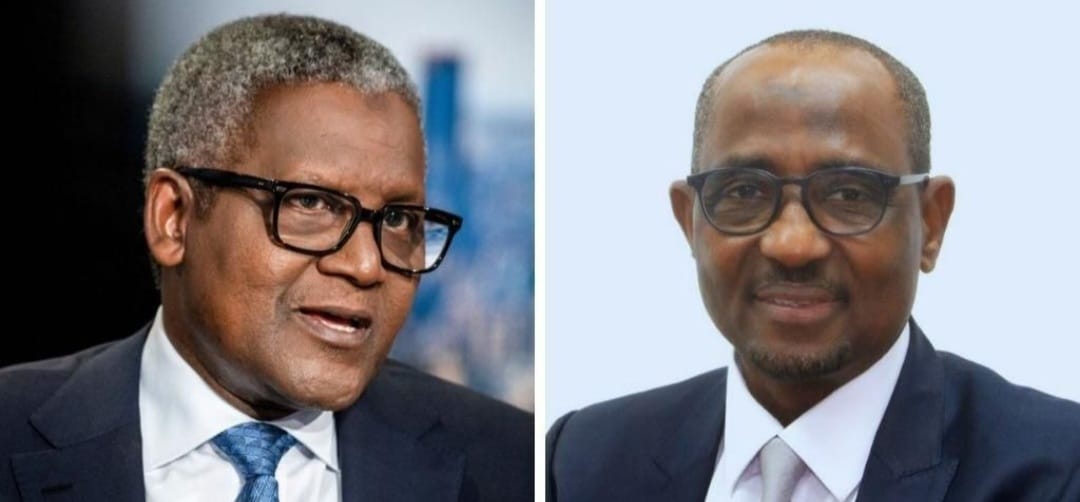
In an unprecedented public confrontation that threatens to upend Nigeria’s petroleum regulatory architecture, Africa’s richest man, Alhaji Aliko Dangote, has formally petitioned the Independent Corrupt Practices and Other Related Offences Commission (ICPC) to investigate, arrest and prosecute Engr. Ahmed Farouk, the Managing Director of the Nigerian Midstream and Downstream Petroleum Regulatory Authority (NMDPRA), on allegations of epic corruption, abuse of office, and living far beyond his means.
The petition, filed December 16, 2025, and received by the ICPC under the chairmanship of Dr. Musa Adamu Aliyu (SAN), has triggered a major political and legal storm that speaks to deeper (and deeply troubling) issues of governance, regulatory capture, and corruption within one of Nigeria’s most strategic sectors.

Allegations That Strike at the Heart of Public Trust
In the 12-page petition submitted through Dangote’s senior counsel, Ogwu James Onoja (SAN), the industrialist alleged that Farouk Ahmed has been living “far above his legitimate means,” citing specific claims that he spent over $7 million (about N5 billion+) on the foreign education of his four children in Switzerland and payments made upfront over a six-year period without any lawful income history that could justify such expenditure.
Information Nigeria
Dangote’s legal team not only named the four children and the elite Swiss schools but itemized amounts allegedly paid on their behalf, explicitly urging investigators to verify the claims against documented school fee records.
In his petition, Dangote asserts in unmistakable terms:
“It is without doubt that the above facts in relation to abuse of office, breach of the Code of Conduct for Public Officers, corrupt enrichment and embezzlement are gross acts of corrupt practices…” petition as quoted.
The petition states that, under Section 19 of the ICPC Act, such offences (if proven) warrant prosecution and carry a minimum five-year prison sentence without the option of a fine.
ICPC’s Response: Probe Begins or Politically Tempered Silence?
Immediately after receiving the petition, the ICPC publicly acknowledged receipt and reaffirmed its statutory mandate to investigate corruption allegations. ICPC spokesperson John Okor Odey confirmed that due process would be followed.
Yet, the commission’s caution (though standard for anti-graft agencies) has drawn both applause and criticism. Anti-corruption scholar Prof. Aisha Suleiman of the University of Abuja’s Department of Governance and Development Studies warns:
“Transparency without action is cynicism in official garb. The ICPC must show Nigerians that law applies to mangers of public trust as it does to the wealthy or politically connected.”
Her assertion underlines a bitter truth: Nigeria’s anti-corruption architecture has all too often been perceived as reactive rather than transformative and willing to pursue mid-level officials but hesitant when accusations climb the ladder of power.
Corruption expert Dr. Emmanuel Obinna of the Centre for Democratic Accountability adds a crucial dimension:
“If Dangote’s claims are accurate, this is not merely ‘corruption’, it is a systemic erosion of public confidence in regulatory institutions. The ICPC’s handling of this case will either anchor public trust or accelerate its decay.”
Broader Sectoral Context: Regulatory Conflict and Public Outcry
This petition does not exist in a vacuum. It follows months of mounting tensions between Dangote’s oil and gas operations (especially the Dangote Refinery in Ibeju-Lekki) and Nigeria’s petroleum regulatory architecture, including NMDPRA.

Dangote has repeatedly accused the regulator of issuing fuel import licences that undermine domestic refining capacities, skewing policy in favour of importers and to the detriment of local capacity building.
This conflict has spilled into public protests. In June 2025, civic groups marched on anti-corruption agencies demanding Farouk’s resignation over alleged misuse of office; accusations eerily aligned with Dangote’s current petition.
The Sahara Nigeria has described the situation as a “downstream sector wobble,” warning that regulatory battles risk deterring investors and heightening supply volatility in a sector that already struggles with foreign exchange pressures and infrastructure deficits.
NMDPRA’s Reaction and the Politics of Denial
While Dangote and allied civil society organizations such as the Centre for Anti-Corruption and Open Leadership (CACOL) have amplified calls for an ICPC probe, the NMDPRA has denied wrongdoing, calling the allegations a “coordinated smear campaign.” Critics inside and outside government accuse the regulator of defensive posturing rather than transparent engagement.
CACOL, in its own petition, described the allegations as potentially amounting to “economic sabotage,” alleging that regulatory decisions were skewed in ways that could “frustrate local refining efforts, discourage investment, and perpetuate dependence on fuel imports.”

Rule of Law or Rule of Influence? The Stakes for Nigeria. This controversy strikes at the heart of Nigeria’s credibility on two fronts:
Anti-corruption enforcement. Can the ICPC act decisively when allegations involve powerful public officials?
Petroleum sector governance. Will regulatory agencies uphold impartiality when their decisions intersect with economic and political interests?
University of Lagos governance authority Dr. Faith Eze says:
“Corruption thrives not only where there is greed, but where institutions are weak, accountability mechanisms are superficial, and enforcement agencies bow to pressure. This case must be adjudicated on facts and not public sentiment.”
Her position reminds us that Nigeria’s fight against graft must be anchored in evidence-based prosecution, not theatrics or media spectacle.
Why the Outcome Matters. At stake is far more than the future of one man or the reputation of one agency. This petition has become a litmus test for Nigeria’s broader anti-corruption resolve.
If the ICPC acts swiftly, transparently, and equitably, it could strengthen the country’s anti-graft architecture and reassure both citizens and international investors that no one is above the law. Conversely, a perfunctory or politically palatable response risks cementing the perception that Nigeria’s most critical institutions exist only to protect the powerful.
Economic governance strategist Mr. Chukwuemeka Okafor argues:
“Nigeria’s global competitiveness and investor confidence depend on the ability of its anti-corruption agencies to act independently. Anything less than full, impartial investigation will send a sobering message to Nigerians and global partners alike.”
Final Word: A Turning Point in Nigeria’s Fight Against Corruption? The Dangote petition against the NMDPRA boss represents a seismic moment in Nigeria’s contemporary anti-corruption narrative. It blends judicial process with public outcry, economic policy with regulatory accountability, and elite conflict with national interest.
As Nigeria watches the ICPC’s next steps, one question looms largest: Will the rule of law prevail, or will influence and inertia dilute justice?
The answer will echo far beyond Abuja’s courtrooms and into the lives of ordinary Nigerians whose faith in public institutions has been eroded by decades of impunity.
Only a transparent, evidence-based conclusion to this case can begin to rebuild that trust.





FOPCHEN Calls for Dialogue as Court Fixes May 28 for Continuation
OTA, OGUN STATE — Proceedings in a widely followed legal case resumed on March 24, 2026, at the High Court of Ogun State, Ota Division, ending with a fresh adjournment as the court fixed May 28, 2026, for continuation.
During the session, legal representatives for all parties restated their positions and addressed preliminary matters, laying the groundwork for more substantive arguments at the next hearing. Observers noted that the case continues to attract significant public attention due to its perceived implications for law, culture, and societal values.
The Foundation for the Protection of Cultural Heritage in Nigeria (FOPCHEN) used the occasion to reiterate its call for constructive national dialogue. The group emphasized that while the judicial process must be respected, broader societal engagement remains essential.
According to the organization, issues relating to values, responsibility, and cultural identity should not be confined solely to courtroom deliberations but should involve active participation from various sectors of society.
Legal analysts present at the proceedings described the matter as one with far-reaching implications, noting that arguments advanced in court could shape future interpretations surrounding sensitive cultural and moral questions.
The presiding judge subsequently adjourned the case to May 28, granting all parties time to refine their submissions and respond to issues raised during the hearing.
As anticipation builds ahead of the next court date, Nigerians across different sectors continue to monitor developments closely, keen to see how the judiciary navigates the delicate balance between constitutional rights and cultural expectations.
Uncategorized
CRG: Politicians Must Stop Witch-Hunting, Focus on Nation Building — Says NYSC Cleared Deputy Speaker Since 2023
CRG: Politicians Must Stop Witch-Hunting, Focus on Nation Building — Says NYSC Cleared Deputy Speaker Since 2023
By: Boye Ola
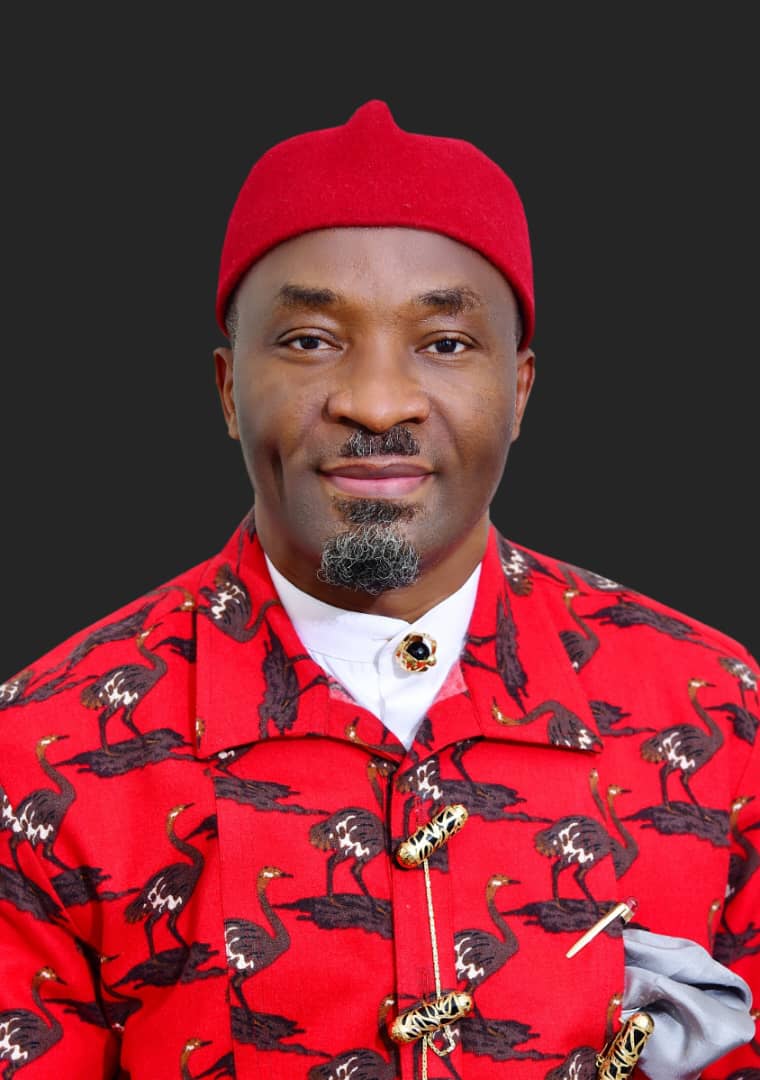
The Centre for Responsible Governance (CRG) has called on political actors and interest groups to desist from what it described as needless witch-hunting of the Deputy Speaker of the House of Representatives, Benjamin Okezie Kalu, following renewed controversies surrounding his National Youth Service Corps records.
The organisation noted that the clarification by the National Youth Service Corps (NYSC) regarding the matter is not a recent development, as a formal verification letter had already been issued as far back as May 23, 2023.
The letter, referenced NYSC/CCD/VER/10/5.1/VOL1/02, had already addressed and cleared the questions surrounding the Deputy Speaker’s NYSC records.
Reacting to the renewed debate, the spokesman of the Centre,
Obande George, said it was troubling that issues which had already been clarified by a competent national institution were being resurrected for political purposes.
According to him, the time has come for political actors to move away from destructive engagements and concentrate on building the nation.
“It is important to note that the NYSC had already issued a verification letter dated May 23, 2023 addressing the matter.
Reopening issues that have already been clarified by a competent authority suggests that some individuals are more interested in political witch-hunting than in national progress,” George said.
The CRG stressed that democracy thrives when institutions are respected and their determinations are accepted in good faith rather than constantly questioned for political advantage.

George also commended the Deputy Speaker for demonstrating maturity and composure throughout the controversy, despite what he described as sustained provocations.
“Honourable Benjamin Kalu has shown remarkable calm and maturity in the face of intense public scrutiny and political provocation.
Instead of engaging in unnecessary public confrontation, he allowed institutions to speak through their records.”
The Centre warned that Nigeria’s political culture must evolve beyond constant character attacks and sensational allegations, which often distract public officials from their responsibilities.
According to the organisation, the country’s development requires constructive engagement among political actors rather than continuous attempts to discredit opponents.
“Nigeria cannot move forward if political energy is constantly spent on digging up allegations and amplifying rumours. Our leaders and political actors must redirect their focus to governance, policy and nation building.”
CRG therefore urged Nigerians to rely on verified information from credible institutions and avoid spreading speculative claims that could damage reputations or destabilise public discourse.
The organisation reiterated that respect for due process and institutional integrity remains essential for strengthening Nigeria’s democracy.

@The Centre for Responsible Governance, Email: [email protected], Instagram: crgngo6, Twitter: crgng06, Threads: crgngo6
Uncategorized
IWD 2026: Ajadi Celebrates Women, Urges Them To Seek More Elective Positions In Future Elections

IWD 2026: Ajadi Celebrates Women, Urges Them To Seek More Elective Positions In Future Elections
A Leading People’s Democratic Party, (PDP) Governorship Aspirant in Oyo State, Ambassador Olufemi Ajadi Oguntoyinbo has felicitates with women in the country on the occasion of this year’s International Women’s Day.
The international Women’s Day is celebrated on 8 March, commemorating women’s fight for equality and liberation along with the women right’s movement. It gives focus to issues such as gender equality and reproductive rights. International Women’s Day originated from labour movements in Europe and North America during the early 20th century.
In a statement issued on Sunday to commemorate this year’s edition of the International Women’s Day, Ajadi said the role of the women in nation building cannot be over emphasised.
He recalled the role played by prominent Nigerian women like Mrs Funmilayo Ransome- Kuti, Margaret Ekpo and Wuraola Esan towards the liberalization and the growth of the country and urges women to follow their footsteps by not only participate in the political process but seek more elective positions.
He urges the political leaders to encourage and give more chances to women for them to contest and occupy elective positions in the country.
Ajadi also called for more respect for women, saying they are definitely behind whatever success recorded by the menfolk.
He said domestic violence against women should be stopped, saying they deserves respect for their role in moulding the future leaders.
According to the statement, “I celebrate and congratulate our women on this year’s occasion of International Women’s Day. We cannot underestimate the role played by our women both at home, in the social circle and in politics. They deserve more respect.
“I equally called on them not only to be a passive participants in politics but to determine to seek more elected positions in future elections. They should aspire more from the position of dancing and singing at campaigns to seek more elective positions. The ratio of men to women in elective positions in the country is embarrassing. Women should stand up and fight for more elective positions.
“I also use the occasion of this year’s Women’s Day to appeal to Nigerians to stop domestic violence against the women. If we treat our women well, our country will witness unprecedented developments”.


-

 society7 months ago
Religion: Africa’s Oldest Weapon of Enslavement and the Forgotten Truth
-

 news4 months ago
WHO REALLY OWNS MONIEPOINT? The $290 Million Deal That Sold Nigeria’s Top Fintech to Foreign Interests
-

 society6 months ago
“You Are Never Without Help” – Pastor Gebhardt Berndt Inspires Hope Through Empower Church (Video)
-

 celebrity radar - gossips2 months ago
Dr. Chris Okafor Returns with Power and Fire of the Spirit -Mounts Grace Nation Altar with Fresh Anointing and Restoration Grace on February 1, 2026