
society
KASHIM SHETTIMA’S OUTBURST AND ARMY COMMENDABLE EFFORTS






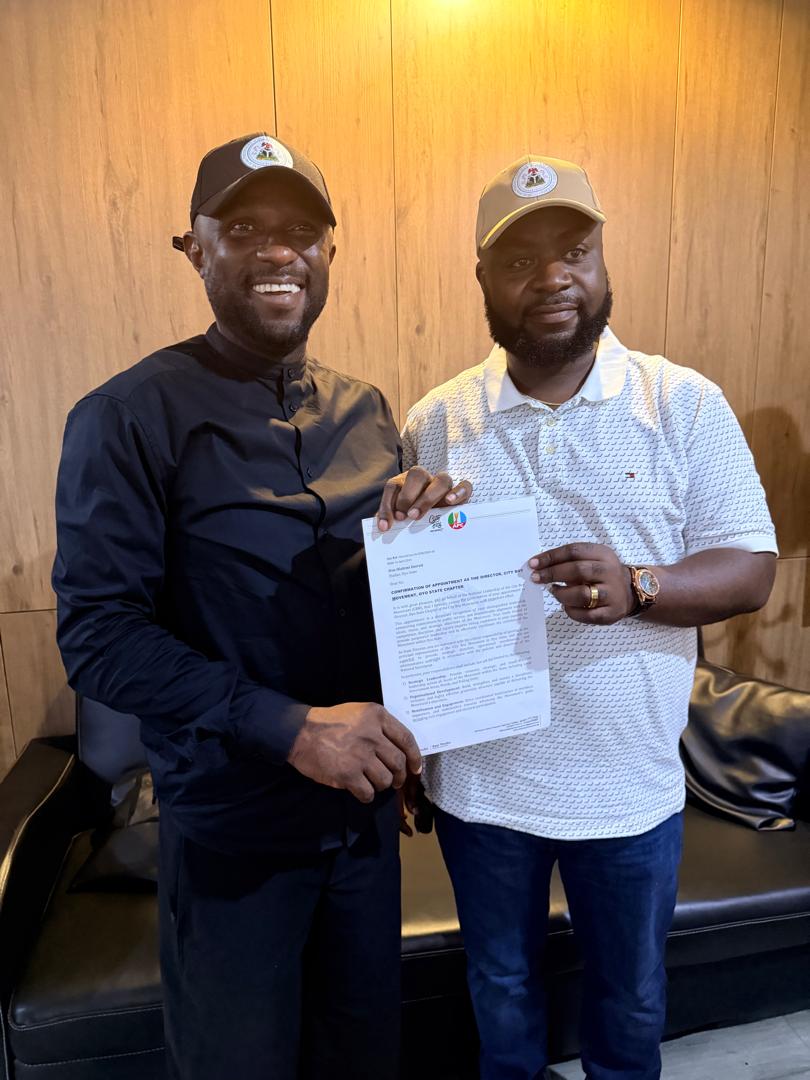
*BREAKING: Onireti Appointed Director-General of City Boy Movement in Oyo State*
The political atmosphere in Oyo State recorded a major development on Monday with the appointment of Hon. Olufemi Onireti as the new Director-General of the City Boy Movement, the grassroots mobilisation structure championing support for President Bola Ahmed Tinubu across the country.
The appointment was announced by the movement’s Director-General, Mr Francis Shoga, in Abuja on Tuesday during the handover of the appointment letter to Onireti.
This is coming days after his resignation from the Peoples Democratic Party (PDP), where he had been an active figure and former House of Representatives candidate.
His new role is expected to reposition the group’s activities and strengthen its outreach ahead of future political engagements in Oyo State.
According to the movement’s leadership, Onireti was chosen based on his “wide political network, proven organisational capacity and strong presence among the youth and grassroots stakeholders.”
Speaking with newsmen, Onireti expressed gratitude for the confidence reposed in him and pledged to deploy his experience to advance the objectives of the City Boy Movement across the state.
Onireti said his decision to join the ruling party was a personal conviction shaped by ongoing political realignments and his commitment to supporting a broader progressive coalition at both state and national levels.
Hon. Onireti added that his appointment followed extensive consultations and harmonisation with his followers.
He assured supporters that his leadership would prioritise inclusiveness, strategic mobilisation and effective communication.
“I am committed to galvanising our structures and ensuring that Oyo State remains a stronghold for the ideals we stand for,” he said.
Political observers note that his appointment may shift the dynamics of political mobilisation in Oyo State, given his influence and recent political moves.
The City Boy Movement is expected to unveil its new operational roadmap in the coming days.
The movement, a prominent youth-driven support platform advancing President Tinubu’s Renewed Hope agenda, positions Onireti to lead its grassroots mobilisation efforts in Oyo as part of its national structure ahead of the 2027 elections.
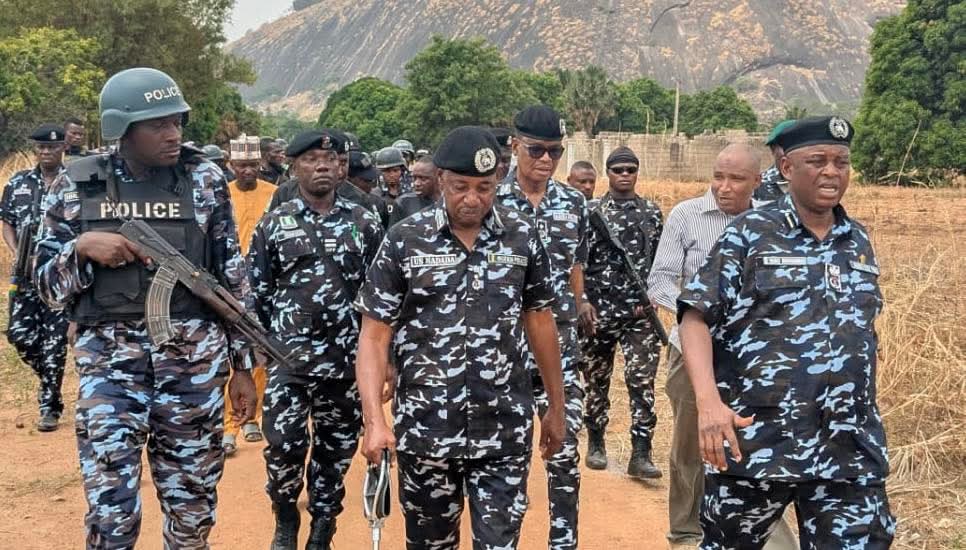
Ariko Church Attack: IGP Disu Deploys DIG As Police Rescue Seven Kidnap Victims
The Inspector-General of Police, Olatunji Rilwan Disu, has ordered the immediate deployment of the Deputy Inspector-General of Police in charge of Operations, Shehu Umar Nadada, to Kaduna State following a deadly bandit attack on Ariko Village near Gurara Dam.
The assault, which occurred on April 5, 2026, targeted worshippers at ECWA and Catholic churches in the community, with gunmen opening fire indiscriminately. Five persons were confirmed dead, while no fewer than fourteen others were abducted during the coordinated হাম.
In a swift operational response, the police high command mandated a high-level intervention, tasking DIG Nadada with leading on-the-ground coordination of security efforts aimed at stabilising the area and facilitating the safe recovery of the victims.
Security operations conducted in collaboration with the Nigerian Army and the Department of State Services (DSS) have already yielded results, with seven of the abducted persons rescued. The victims were evacuated to Katari Hospital for urgent medical attention and are reported to be in stable condition, awaiting reunification with their families.
Police authorities disclosed that tactical operations remain ongoing to secure the release of the remaining captives and apprehend those responsible for the ആക്രമം, underscoring a renewed push to degrade criminal networks operating within the axis.
Reaffirming the Force’s commitment to public safety, the IGP called on residents to remain vigilant and support ongoing operations by providing credible and actionable intelligence to security agencies.


society
The Unfinished Rescue Mission: Ten Reasons Zamfara Must Re-elect Governor Dauda Lawal in 2027
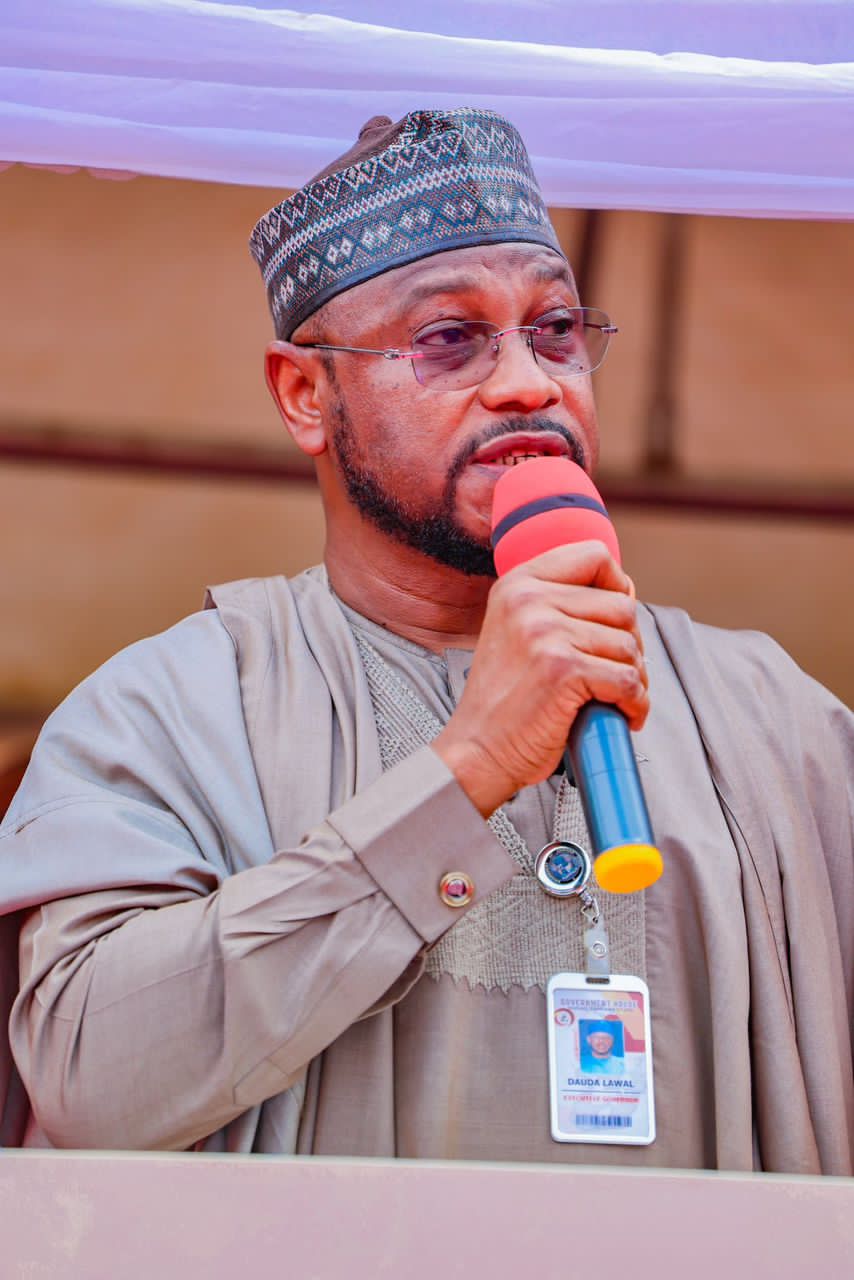
The Unfinished Rescue Mission: Ten Reasons Zamfara Must Re-elect Governor Dauda Lawal in 2027
By Oladapo Sofowora
In the resilient heart of Northwestern Nigeria, a different kind of storm is blowing hard. It is not the whirlwind of banditry that has long defined Zamfara State, but the quiet, determined tempest of reconstruction and recalibration done by Governor Dauda Lawal, who took the reins of a state gasping for air choked by insecurity, bankrupt of spirit, and paralyzed by decades of maladministration steering it to the path of prosperity. Three years into his first term, the landscape is shifting and the story is changing for the better. Yet, every revolution needs time to root. For Zamfara indigenes, here are ten detailed reasons why they must hand Governor Dauda Lawal another mandate to steer the state to the promised land, so as to enable him to finish the work he has so boldly begun.
1. The Security Recalibration
For years, Zamfara’s security apparatus was reactive, arriving after villages had been razed, but Governor Lawal changed the paradigm with a shift. He didn’t just procure guns; he built a comprehensive Zamfara Community Guard integrated with local vigilantes and formal military intelligence that has served its purpose of gathering local intelligence and sharing it with security agencies to tackle all sorts of insecurity in the state. His administration invested over ₦4 billion in surveillance drones, armoured personnel carriers, and rapid-response communication towers across the 14 local government areas. The result? A 60% reduction in major attacks in the last 18 months. Another term means expanding this network to the most remote forests of Tsafe and Maradun, finally breaking the spine of the criminal enclaves. One term was used to stabilize the patient; a second term handed to him will cure the disease totally.
2. The Restoration of Integrity in the Civil Service Structure
Before Lawal, Zamfara’s civil service was a graveyard of productivity, infested with “ghost workers” who drained the treasury, leveraging a lacuna created by the previous administration. Upon resumption, the Governor commissioned a forensic biometric audit in which over 5,000 fictitious names were expunged from the payroll, saving the state over ₦1.2 billion monthly. More importantly, he cleared 18 months of salary arrears inherited from the previous administration within his first 100 days. A second term handed to him via the ballot will focus on capacity building and promotions based on merit, transforming the bureaucracy from a parasitic entity into an engine of service delivery.
3. The Educational State of Emergency
Banditry had turned over 300 schools into abandoned ruins, with teachers fleeing and children being abducted. Governor Lawal declared a state of emergency on education. He has since reconstructed 200 primary schools with fortified walls and secure hostels. The “School Feeding and Safe Return” program brought back 150,000 out-of-school children. But the job is half done. The remaining 150 schools in high-risk zones need the same treatment. Re-electing Lawal means ensuring no child in Zamfara has to choose between a bullet and a book.
4. Functioning Primary Healthcare Across the State
For a decade, rural Zamfara relied on patent medicine sellers for life-saving care. Governor Lawal refurbished 147 Primary Healthcare Centers (PHCs), equipping each with solar power, vaccines, and at least two resident nurses. He launched the Zamfara Health Voucher Scheme, giving 50,000 vulnerable women free antenatal and delivery care. The time of medical pilgrimage is over as the state now boasts of a functioning MRI machine among other sophisticated medical machines. A second term will see the full completion and upgrade of three zonal general hospitals in Gusau, Kaura Namoda, and Anka, bringing surgery and emergency care within reach of every citizen.
5. Agricultural Revolution
Zamfara is a state predominantly with farmers; true to its slogan, ‘Farming is our pride’, despite the rich soil, farmers are poor and are being terrorized from their farmlands due to insecurity. Lawal’s “Farming Without Fear” initiative partnered with the military to create secure agricultural corridors during planting and harvest seasons. He distributed drought-resistant seeds and solar-powered water pumps to 40,000 farmers. The state’s rice and maize output tripled last year. Yet, the missing link is processing. With a cargo airport in place and a readily available market, there will be a major boost in agricultural business in the state. A second term will see the establishment of a staple crop processing zone (SCPZ) in Gusau, turning raw produce into export-ready goods and ending the exploitation of middlemen.
6. The Portable Water Revolution
Gusau and its environs relied on a water treatment plant built in 1978. It was a relic, but Governor Lawal secured a ₦15 billion loan from the World Bank to rehabilitate the Damaturu Water Scheme, increasing daily capacity from 15 million to 50 million liters. For the first time in a generation, taps are flowing in Talata Mafara and Shinkafi. But some rural communities still trek for hours to get portable drinking water. A second term will extend this reticulated network to 200 additional rural communities, making water a right, not a luxury.
7. The Economic Inclusion of Empowering Women and Youth
Banditry thrived because idle young men were easily lured. Lawal countered this with the Zamfara Youth Empowerment Trust (ZAYET), training 10,000 youths in tailoring, ICT, and solar installation, and giving them startup capital. His Kaura Economic Stimulus provided 20,000 women with ₦50,000 each to revive small-scale trading. The recidivism rate into crime among beneficiaries is less than 2%. A second term will scale this to reach all 147 wards, ensuring that the economic ladder is long enough for every willing citizen to climb.
8. Transparency and Accountability in Governance Pact
Governor Lawal is the first Zamfara governor to publish monthly financial statements on the state government website, including details of every constituency project actualized. He voluntarily subjected the state’s accounts to a forensic audit by the EFCC and ICPC; a move his predecessors fought to block. The result is a restored relationship with international donors (UNDP, EU), who have returned to fund developmental projects across the state because Governor Lawal puts to use every fund given with accountability. One term has proven his integrity; a second term will institutionalize it, creating a culture of governance where public funds are put to judicious use without being siphoned.
9. Justice Sector Reform by Decongesting the Prisons and Prosecuting the Convicted
Zamfara’s prisons were incubators for radicalization, filled with petty offenders and low-level herders, while bandit kingpins roamed freely across the state. Lawal’s administration, in partnership with the judiciary, released 1,200 detainees held for minor offenses without trial, decongesting the facilities. Simultaneously, a specialized mobile court has secured 50 convictions against bandit collaborators and informants. A second term will focus on building a modern correctional center and strengthening the witness protection program, ensuring that justice is both swift and safe to administer.
10. The Legacy of Resilience in Rebuilding Social Trust
The most profound reason to re-elect Dauda Lawal is the hope his administration brings. He inherited a traumatized populace that no longer believed the state could protect them. Today, markets in Gusau stay open past 6 PM. Farmers sleep in their own homes instead of bush hideouts. Internally displaced persons are voluntarily returning to their ancestral lands. This psychological shift from fear to cautious optimism is the most fragile and precious asset Zamfara has gained. Destroying it by returning to the old ways would be catastrophic. A second term will solidify this trust, transforming resilience into permanent recovery.
Governor Dauda Lawal has not performed miracles in one term; miracles are for saints, not statesmen. But what he has done is to perform the harder task ahead. He has laid a solid foundation of competence, security, and integrity where there was only rubble. The Zamfara of today does not need a new experiment; it needs the continuation of a working plan already in motion. Re-electing Dauda Lawal again is not about rewarding the past; it is about securing the future ahead. The first term broke the curse of neglect; the second term will recalibrate the fortune of the state to prosperity.


- Seychelles Strengthens Human Rights Reporting through National Workshop April 8, 2026
- ABB’s Application Configurator brings speed and precision to grid-feeding protection system design April 7, 2026
- Can Equatorial Guinea Reposition as West Africa’s Gas Hub? April 7, 2026
- Afreximbank Partners with African Energy Week 2026 to Drive Africa-Led Energy Deals April 7, 2026
- Merck Foundation Marks ‘World Health Day’ 2026 – Transforming Patient Care in Africa and Beyond through 2600+ Scholarships for Healthcare Providers From 52 Countries April 7, 2026
- Morocco Gas Plan Reset Could Open Door to New Investment Models April 7, 2026
- African Petroleum Producers Organization (APPO) Secretary General Joins Angola Oil & Gas (AOG) 2026 as African Energy Bank Eyes June 2026 Debut April 7, 2026
- Ghanaian Biomedical Specialist Receives International Award April 7, 2026
- Grey Connects the Africa-Canada Money Corridor With Instant Transfers via Interac April 7, 2026
- Nigeria’s Oil Revival in Focus as Petroleum Minister Lokpobiri Joins Paris Energy Forum April 7, 2026
- Seychelles Strengthens Human Rights Reporting through National Workshop April 8, 2026
- ABB’s Application Configurator brings speed and precision to grid-feeding protection system design April 7, 2026
- Can Equatorial Guinea Reposition as West Africa’s Gas Hub? April 7, 2026
- Afreximbank Partners with African Energy Week 2026 to Drive Africa-Led Energy Deals April 7, 2026
- Merck Foundation Marks ‘World Health Day’ 2026 – Transforming Patient Care in Africa and Beyond through 2600+ Scholarships for Healthcare Providers From 52 Countries April 7, 2026
- Morocco Gas Plan Reset Could Open Door to New Investment Models April 7, 2026
- African Petroleum Producers Organization (APPO) Secretary General Joins Angola Oil & Gas (AOG) 2026 as African Energy Bank Eyes June 2026 Debut April 7, 2026
-

 news4 months ago
WHO REALLY OWNS MONIEPOINT? The $290 Million Deal That Sold Nigeria’s Top Fintech to Foreign Interests
-

 society7 months ago
“You Are Never Without Help” – Pastor Gebhardt Berndt Inspires Hope Through Empower Church (Video)
-

 celebrity radar - gossips2 months ago
Dr. Chris Okafor Returns with Power and Fire of the Spirit -Mounts Grace Nation Altar with Fresh Anointing and Restoration Grace on February 1, 2026
-

 celebrity radar - gossips4 months ago
Prophet Kingsley Aitafo Releases 2026 Prophecy: ‘Nigeria Will Rise, but the World Must Prepare for Turbulence’