
Business
Land Grabbing: Community Head writes SOS To Police, Ogun State Government Setting the record straight…….


Land Grabbing: Community Head writes SOS To Police, Ogun State Government
Setting the record straight…….
SAVE OUR SOULS FROM THE HANDS OF IMPOSTORS, LAND GRABBERS TERRORISING EREBE IJEBU
A rejoinder to the crocodile tears of one Segun Abayomi Lawal,a political jobber, impostor and hypocritical human being

Erebe an ancient town in Odogbolu Local Government Area of Ogun State had being a peaceful society under the exclusive control of the eight (8) branches of the founding family of Erebe town, the OLOJA ADEKOYA (OFIRIGIDI) ANIKINAIYA FAMILY until recently when the Ogun State Government during the tenure of Otunba Gbenga Daniel (OGD) relocated the Sikiru Adetona College of Education, Science & Technology to Odo-Jobore directly beside Erebe. Mindful that Omu had no more vacant land in Ogun State as acknowledged in Omu’s Community’s submission before the Boundary Adjustment Commission of the Federal Government in 1976 and enviously motivated by the prime value of Erebeland due to it’s proximity to the said tertiary institution, one Oba Oludaisi Mosuro of Omu, Oba Segun Awokoya of Irete and one Obateru Akeem of Egbin near Ikorodu conspired amongst themselves with one Banjoko alias THREECO a popular land agent in the Lekki areas of Lagos State, one Jamiu Ojetete alias Jamani, Abayomi Adelaja alias Ogunyalu, Segun Lawal alias Eraser, Moshood Osinowo and others to create one ALADE OGBE ADELAJA SOKEFUN as their FAMILY name in Erebe in a bid to claim Erebeland. Our parent ruling House, the ANIKILAYA RULING HOUSE of the Awujale of Ijebuland, Ijebu Ode vide it’s letter dated 24/01/2007 warned the last Baale of Erebe, late Chief Moshood Osinowo to refrain from collaborating with the aforementioned land grabbers in their attempt to encroach on Oloja Adekoya Ofirigidi Anikinaiya’s Erebeland and advised them to tender their case before the ruling house if they have an iota of legitimacy in their claim to Erebeland.
The conspirators in issue rather than explore the opportunity offered by the Anikilaya Ruling House replied the Ruling House vide a letter dated July 21st, 2008 that they have no connection whatsoever with HRM Awujale Anikilaya’s family that HRM Anikilaya’s son Oloja Adekoya Ofirigidi was a refugee at Erebe.
These land grabbers in their aforementioned ALADE OGBE SOKEFUN ADELAJA name took the OLOJA ADEKOYA OFIRIGIDI ANIKINAIYA FAMILY, Erebe to court vide suit: HCJ/82/2009. Not wanting to beat a retreat after been overwhelmed by the traditional history of the Oloja Adekoya (Ofirigidi) Anikinaiya family with several documentary evidences affirming same from the Anikilaya Ruling House, Ijebu Ode as well as from Imota via Ikorodu, a town founded by same our ancestor, Oloja Adekoya (Ofirigidi) and records from independent sources such as the National Archives, Wikipedia and certain authored records of over 70years, the land grabbing conspirators in their fraudulent nature sometimes in November, 2015 went in the direction of abandoning their former name ALADE OGBE, created and adopted one SANGOKOYA OFIRIGIDI, a similar name to our family name; OLOJA ADEKOYA OFIRIGIDI, gave false information to the Ogun State Government and presented one of themselves Segun Lawal as Baale over our town, Erebe.
As a pretext to keep us away from our legitimate heritage these land grabbers took the Oloja elect to court that a letter addressed thus;
The Olori Ebi,
OLOJA ADEKOYA OFIRIGIDI ROYAL FAMILY, EREBE IJEBU signed by one of the land grabbers named ABAYOMI ADELAJA dated 5th February, 2016 was forged. Senior Magistrate Idowu Olayinka of the Odogbolu Magistrate court declared that the letter in issue subject of Charge No: MOD/46C/2018 is authentic and signed by the conspirators who were dubiously trying to deny reality as the said letter alone is an incontrovertible evidence invalidating impostors’ use of a similar name to our family name at the Ijebu Ode High Court to claim land at Erebe.
We had written several petitions to the Ogun State Government in this regard but the conspirators boasts of being backed by their Otunba Gbenga Daniel (OGD) who they claimed has the Nigerian Police, Ogun state Government and the judiciary in his pocket cannot be further from the truth as the land grabbers tendered forged documents, lied on oath and committed perjury to acquire 20.981 acres of the same land subject of suit: HCJ/82/2009 in another suit: HCJ/121/2015 with their new name SANGOKOYA. Contrary to the land grabbers misleading information to the public that they have a judgment covering entire Erebe land, the judgment is strictly on 20.981 acres of land and had been appealed based on the fact that it was fraudulently obtained as amongst other obvious reasons the judge rather than treating the facts of the case opted for technicality that the letter U as it appeared in EREBE IJEBU in the survey tendered by our family was traced in ink and not signed whereas we defined the location of the land as required in law.
The public are hereby informed that SANGOKOYA as son of Awujale Anikilaya WAS NOT part of the prayers sought and granted by the said court. While we have taken further steps to protect our heritage from the impostors latest (sangokoya) of Omu, the aforementioned land agents have recently being partitioning our lands, using the instrumentality of complicit police formations to take over the remaining Erebeland including 880 acres of land outside the 20.981 acres subject of appeal court litigation. To achieve their fraudulent objective the impostors have created several other aegis, such as a parallel Erebe Community Development Association and others which receipts they issue for Erebe lands illegally being sold. As at the time of making this public notice our lives are in danger as these illegal money crazy conspirators have engaged cultists and hired assassins to kill the Oloja elect of Erebe, Omoba Olawunmi Samuel, myself and other members of our family.
The parties sometimes in the year 2009 went to the Association of Osugbo Ijebuland which gave judgment in 2009 that Erebe is the exclusive business of the Oloja of Erebe, Oba Adekoya Ofirigidi descendants.
The conspirators are not only forgers of documents and history to grab land but men whose love for cheap land money has been made slaves to their stomachs.
For the records, Omu town became a landmark for Erebe area being the place where a market for sales of mat “Eni” a general trade of Erebe and environs was first established and as such visitors from Ibadan, Oyo, Ikorodu and other places usually refer to the area as Omu Eleni which earned the town her undisputed popularity this day. However, the fact remains that Erebe granted its fern farmland “Oko Imu” corrupted to Omu this day as a settlement in 1849 to refugees of the Owu war and some Igbehin-Egba migrants as approved by our ancestor, HRM Awujale Anikilaya after the Owu Ipole war of 1822 – 1829.
Sometimes in May, 2023 the conspirators ganged up with others at large with their thugs unleashed terror on Erebe community, burnt Oloja’s ancestral palace, demolished same, forcefully entered the community’s farmland – destroying our cash crops, removed traditional totems causing mayhem and using Police to harass innocent people and still went to report to the police that our people perpetrated those crimes in a bid to implicate us over very straight land matters. Our family members were unjustly charged to court over false information raised to the police by Segun Lawal that we burnt his fathers house at Omu till the Ogun State Directorate of Pubic Prosecution’s legal advise to the court exonerated our people and exposed the fact that there is no extent which these land grabbers could not go in the pursuit of cheap land money.
These land grabbers and their client one Banjoko alias THREECO whose thugs and complicit police formations have continued to find means to kills my humble, other members of our family while parading the fraudulently acquired 20.981 acres of land judgement to be selling part of the remaining 880.981 acres of Erebe land to unsuspecting members of the public. The general public, Odogbolu Local Government, the Senator-Representing Ogun East Senatorial District, Ijebu Traditional Council, the Awujale Place and the Ogun State Government are hereby alerted of these developments and should note that;
1. Erebe towns’ founding family, OLOJA ADEKOYA OFIRIGIDI ANIKILAYA FAMILY is neither the same nor connected to Owu Omu’s SANGOKOYA’s recently created to expand and annex Erebe land.
2. No Baale or any chieftaincy whatsoever in history has ever being made over any section of Erebeland outside the consent, approval and supervision of the OLOJA ADEKOYA (OFIRIGIDI) ANIKINAIYA FAMILY who are the legitimate owners of Erebe land.
3.Baale as erroneously been recently misrepresented by the land grabbers is relevant only in communities whose founders are not royals, it is a taboo for a Prince of credible background to be appointed a Baale.
4. Oloja which is the ancestral title of the Oloja Adekoya Ofirigidi descendants is not in the category of Baale or Rarun in Ijebuland.
2. SEGUN LAWAL and anyone else made Baale by the Olomu on Erebe territory against the interest and consent of the OLOJA ADEKOYA (OFIRIGIDI) FAMILY is an impostor who has neither authority nor connection with Erebeland.
3. It is a generally acknowledged fact that our ancestor OLOJA ADEKOYA OFIRIGIDI son of AWUJALE ANIKILAYA founded Imota town via Ikorodu, anyone trying to change the name to SANGOKOYA as is being attempted by these landgrabbers are fraudsterds and undoubtedly men with questionable character.
4. The ANIKILAYA RULING HOUSE, Ijebu Ode where late Prince Adebola Sanya was General Secretary and the incumbent Treasurer, Prince Onabanjo Segun both from our branch, OLOJA ADEKOYA OFIRIGIDI is not for sale and as such the impostors should be mindful that their days to answer for all acts of impersonation is numbered.
5. Government should sanction Obas who on the guise of chieftaincy privileges create Baales over traditionally superior territories as it is the case with Omu, Irete in relation to Erebe in a bid to grab, incite violence to benefit land for personal gains and as fronts for politicians on which behalf they deal in lands.
6. Any Obaship candidate whose business is land related should sign undertaking not to involve in land in his area as it it is the case with Onirete who has not turn a new leaf from the plethora of land grabbing accusations against him in Lekki area of Lagos and has now found Erebe town and villages as his next line of business, in company of his friend THREECO signing agreements with several Omu families to claim Erebe villages.
8. If these impostors could come out and be making false claims which we hereby disclaim, one could understand the kind of information they used to persuade His Excellncy, Otunba Gbenga Daniel (OGD) whose influence and name they claim to usually employ to circumvent the police and the judicial processes in their bid to grab our land and even claim certain acres of our land is allotted to OGD which we are anxiously waiting for him to come and take possession and tell us if one has money, influence and position, getting other people’s properties and ancestry is the next line of business as his allies are claiming he does in this case.
Though, the undersigned has done all along several petitions at various times to the following governmental offices for help, which are to no avail before now
1. Ogun State, Governor’s office
2. Ogun State ministry of Justice
3. Commissioner of Police, Ogun State command
4.The State Director
Ogun State security services ( SSS)
And it was discovered that same impostors went extra miles to misinform the general public and government agencies that they have a judgment declaring SANGOKOYA as a son of AWUJALE ANIKILAYA as well as covering the entire EREBE landmass. IT WAS ALL LIES FROM THE FIGMENT OF THE NARRATORS IMAGINATION. WE CHALLENGE THEM TO TENDER SAME TO THE PUBLIC
We wish to inform the public that the latest false information from these land grabbers through Segun Lawal is a ploy to defend to change the narrative for evading police service of invitation letter, evading arrest, damaging of police vehicles, shooting at police and using cultists to prevent police in exercise of their lawful duty which caused pandemonium at Erebe on the 31st of January, 2024 in which cultists engaged police in shoot out to pave the way for the shedder of crocodile tears (Segun Lawal).
He who commits no crime needs not to run away from police invitation, we as a responsible family have always honored every invitation even arrest including the unlawful arrest and detention of our over 80 years old head of family, Omoba Titilola Olawunmi at the behest of frivolous charges orchestrated by Segun Lawal. Hence if the police are investigating a claim of raising false information to the police occasioning malicious prosecution of opponents and other issues perpetrated by the land grabbers why running away and manufacturing lies to the public in search of sympathy.
The baseless narrative being pushed by these land grabbers mischievously branding our family, who are the legitimate owners of Erebeland as land grabbers is a reflection of the debased level which our society has found itself in terms of morals and integrity.
Please, I am using this medium to get to all well meaning people to come to our aid. Save us from the grab of these Owu war refugee Ajagungbales paying the good intentions of our ancestors with evil such that this expansionist campaign of the present Omu leadership won’t be a repeat of what transpired in 1862 when the quarrelsome attitude of their ancestors as reported by the Europeans visitors to Ijebuland culminated in the avoidable loss of human life at Omu. We pause here.
E-Signed
Omoba Yisa Akintunde Mumuni
For and on behalf of the
OLOJA elect of Erebe Ijebu and the OLOJA ADEKOYA (OFIRIGIDI) ANIKINAIYA DESCENDANTS’ UNION
Erebe Ijebu Town, Ogun State.





Precision and Heritage: How Fifi Stitches Is Rewriting African Fashion Narratives
A Nigerian-born designer is gradually carving out a cross-continental footprint in contemporary fashion, blending African textile heritage with British technical discipline.
Esther Fiyinfoluwa Adeosun, Founder and Creative Director of Fifi Stitches, is gaining recognition for structured womenswear and bridal couture that reinterprets traditional fabrics through architectural tailoring and precision construction.
Born in Ibadan, Oyo State, Adeosun’s fashion journey began at home, seated beside her mother’s sewing machine. What started as childhood curiosity, sometimes jamming the machine just to understand its mechanics—evolved into a disciplined design practice now operating between Nigeria and the United Kingdom.
During an interview with journalists the fifi Stitches once mentioned “I was fascinated by how flat fabric could transform into something structured and meaningful”.
In her Story , early designs made for her family, though imperfectly finished, were worn with pride—an encouragement that laid the foundation for her professional confidence.
Today, Fifi Stitches is recognised for sculpted bodices, controlled tailoring, corsetry construction, and the contemporary reinterpretation of Ankara, Aso Oke, and Adire textiles.
The brand challenges the long-held perception that African fabrics belong solely in ceremonial contexts, instead positioning them within global luxury and modern design spaces.
Adeosun’s training reflects this dual perspective. She studied Fashion Design and Entrepreneurship at the Institute for Entrepreneurship and Development Studies, Obafemi Awolowo University, and earned a Diploma in Fashion Design through Alison Online.
In the UK, she undertook industry-focused technical training with Fashion-Enter Ltd and gained fashion business exposure through Fashion Capital UK.
Her technical expertise spans pattern drafting, draping, garment technology, structured tailoring, corsetry, and bespoke fittings—skills she describes as central to credibility in fashion. “Precision builds trust,” she says. “A designer must understand construction as deeply as creativity.”
Fifi Stitches has showcased collections at the Suffolk Fashion Show, Liverpool Fashion Show – FB Fashion Ball, Red Carpet Fashion Event in London, and through editorial features in London Runway Magazine.
The brand has also received coverage in The Guardian Nigeria and Vanguard Allure, expanding its visibility across markets.
Beyond couture, Adeosun integrates community impact into her practice.
She has facilitated garment construction workshops, draping sessions, and introductory training programmes for women and emerging creatives, promoting fashion as both artistic expression and vocational empowerment.
Fifi Stcithes Boss operates between Nigeria and the UK, in order to continue to shape her brand identity.
According to her “Nigeria provides cultural richness and expressive textile traditions, while the UK offers structured production systems, sustainability conversations, and institutional frameworks”.
Looking ahead, Adeosun said she plan to establish a fully structured fashion house spanning Africa and the UK, develop scalable production partnerships, launch capsule collections, and expand independent editorial visibility.
Her broader ambition is clear: to position African textile craftsmanship within global contemporary design conversations—through structure, discipline, and technical excellence.

GTCO Launches “Take on Squad” Hackathon 3.0, Opens Call for Applications
Guaranty Trust Holding Company Plc (“GTCO” or the “Group”) has announced the launch of “Take on Squad” Hackathon 3.0, reaffirming its commitment to fostering innovation, empowering talent, and supporting the development of technology-driven solutions that address real-world challenges across Africa.
Now in its third edition, the Hackathon brings together developers, designers and entrepreneurs across Nigeria in a collaborative environment to build practical solutions across key sectors including financial services, healthcare, commerce and digital inclusion. Under the theme “Smart Systems: The Intelligent Economy,” participants are challenged to design and build intelligent, data-driven solutions that transform how communities engage with money.
Applications are now open, and interested teams can find full guidelines and registration details on the official portal at https://squadco.com/hackathon.
Speaking on the initiative, Eduophon Japhet, Managing Director of HabariPay, stated: “Today’s dynamic, digitally driven world demands continuous innovation, which is shaping how economies grow, how businesses scale, and how societies evolve. Through “Take on Squad” Hackathon, we are deliberately investing in the ideas and talent that will define the future. Our objective is not simply to encourage innovation, but to enable its translation into scalable solutions that deliver real and measurable impact. This reflects GTCO’s role as a financial services platform that connects capital, capability, and creativity to drive sustainable progress.”
The social coding event remains a cornerstone of HabariPay’s mission to foster creativity and problem-solving among emerging tech talents. Competing teams will leverage Squad’s advanced APIs to create scalable digital tools that address everyday challenges faced by businesses and individuals.
Through initiatives such as this, GTCO continues to position itself at the intersection of finance, technology and enterprise, actively shaping the future of digital transformation in Africa.
About HabariPay
HabariPay Ltd is the fintech subsidiary of Guaranty Trust Holding Company Plc (GTCO), one of the largest financial services institutions in Africa with direct and indirect investments in a network of operating entities located in 10 countries across Africa and the United Kingdom.
Licensed by the Central Bank of Nigeria (CBN), our goal is to support SMEs, micro merchants, large corporations and other fintechs (Tech Stars) with the tools they need to thrive in an evolving digital economy and expand beyond their current market reach. HabariPay’s solutions include Squad, a full-scale digital payments toolkit to make in-person and online payments simpler, HabariPay Storefront, an e-commerce website to facilitate online purchases, Value-Added Services to help merchants access cost-effective and flexible airtime and data bundles to run their businesses, as well as a switching infrastructure that enables tech-focused businesses to optimise cost and make transactions more efficient.
HabariPay’s contributions to Accelerating Digital Acceptance in Africa have not gone unnoticed–it received Mastercard’s Innovative Mobile Payment Solution Award at TIA 2022 for its innovative payment solution, SquadPOS.
About Squad
Squad is a complete digital payments solution that is reliable, secure, and affordable, making receiving in-person and online payments simpler and convenient.
Thousands of merchants currently leverage Squad’s payment solutions for their daily business operations. Squad’s current products and service offerings include SquadPOS, Squad Payment Links, Squad Virtual Accounts, USSD, and E-Commerce Storefront.
Find out more at www.squadco.com.
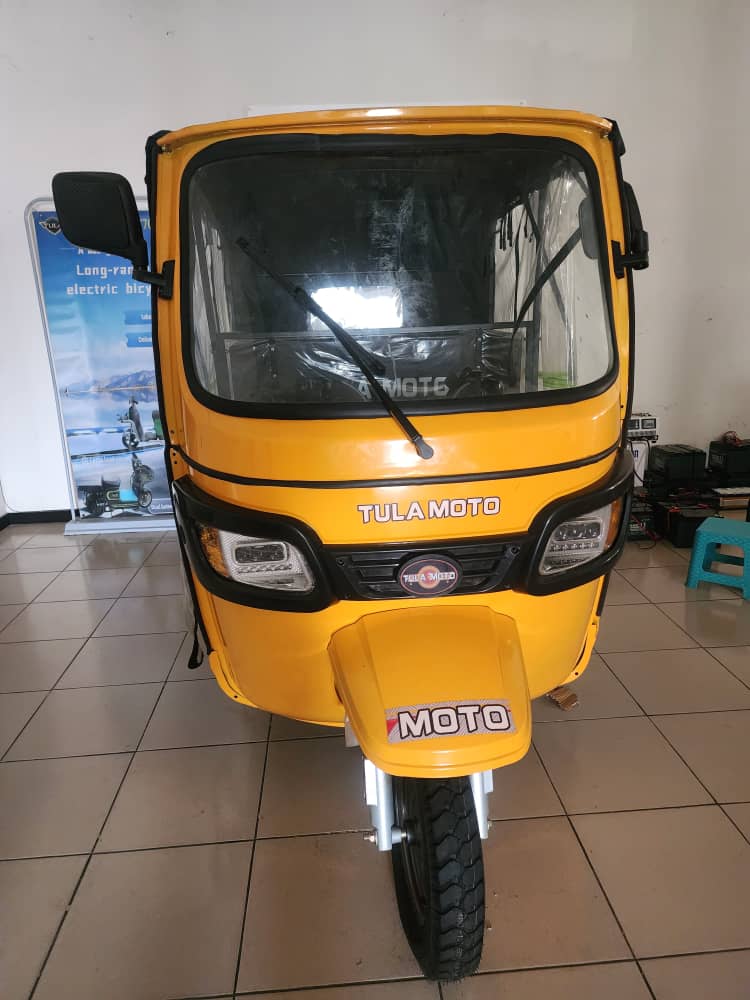
Electric 8-Seater Tula Moto Keke Enters Nigerian Market, Targets Higher Operator Earnings
LAGOS — A new electric-powered tricycle with an expanded passenger capacity has been introduced into Nigeria’s urban transport sector, offering operators a potentially more profitable and eco-friendly alternative to conventional petrol-driven “keke.”
The newly launched 8-seater electric tricycle, now available in Lagos with plans for nationwide distribution, features a dual-row seating arrangement capable of accommodating up to eight passengers per trip—significantly higher than the standard three-passenger configuration common across the country.
Promoters of the innovation say the increased capacity is designed to boost daily earnings for operators, particularly amid persistent fluctuations in fuel prices. By running entirely on electric power, the vehicle eliminates dependence on petrol, reducing operating costs and shielding drivers from fuel price volatility.
According to the distributors, the tricycle is equipped with a durable battery system capable of covering extended distances on a single charge, making it suitable for commercial operations across high-traffic routes, residential estates, campuses, and marketplaces.
“The concept is straightforward—enable drivers to earn more while spending less,” a company representative stated. “With higher passenger capacity and zero fuel requirements, operators can maximise each trip without the burden of daily fuel expenses.”
Beyond its cost-saving potential, the electric keke is also said to require less maintenance than traditional models, offering additional long-term savings. Its quieter and smoother operation is expected to enhance passenger comfort and overall commuting experience.
Industry analysts note that the introduction of electric mobility solutions reflects a growing shift toward cleaner and more sustainable transportation alternatives in Nigeria, particularly in densely populated urban centres such as Lagos.
The distributors added that the product is currently available under a limited promotional offer, with delivery options across the country.
For inquiries and purchase: 📞 08153432071
📞 08035889103
Office Address:
📍 Plot 9, Block 113, Beulah Plaza,
Lekki–Epe Expressway,
Lekki Phase 1, Lagos
As transportation costs continue to rise and environmental concerns gain prominence, innovations like the electric 8-seater keke may signal an emerging transition toward more efficient and sustainable mobility solutions nationwide.


-

 society7 months ago
Religion: Africa’s Oldest Weapon of Enslavement and the Forgotten Truth
-

 news4 months ago
WHO REALLY OWNS MONIEPOINT? The $290 Million Deal That Sold Nigeria’s Top Fintech to Foreign Interests
-

 society6 months ago
“You Are Never Without Help” – Pastor Gebhardt Berndt Inspires Hope Through Empower Church (Video)
-

 celebrity radar - gossips2 months ago
Dr. Chris Okafor Returns with Power and Fire of the Spirit -Mounts Grace Nation Altar with Fresh Anointing and Restoration Grace on February 1, 2026