
Politics
Mass Defection rocks APC over President Buhari’s second term declaration


As reactions continue to trail Monday’s declaration by President Muhammadu Buhari that he would seek re-election in the 2019 general elections, there are indications that some chieftains of the All Progressives Congress (APC) would dump the ruling party ahead of the polls.
The looming defection, New Telegraph learnt, is because the President’s confirmation of his second term bid has foreclosed the ambitions of some APC chieftains also eyeing the party’s presidential ticket.
A party source, who disclosed this to our correspondent, said the presidential hopefuls, mostly outgoing governors of northern extraction and top ranking federal lawmakers, have to look elsewhere to realise their respective ambitions.
According to him, there is no doubt that presidential ambitions of these younger northern politicians in the APC have been buried because Buhari would have little or no opposition in picking the party’s ticket.
His words: “There is no doubt that the jostle for the APC presidential ticket is over because President Buhari will have had little or no opposition in picking the party’s ticket as it is certain that he will have had the right of first refusal as an incumbent.
“At the moment, he is the only person to have officially declared for the party’s ticket and it is unlikely that anyone else will do. And with the way the President had his way in the recent impasse over tenure elongation for members of the party’s National Working Committee (NWC), it is clear that he is now fully in control of the party structure.
“So, it is expected that anyone who has a presidential ambition within the party should look elsewhere as it will be foolhardy for anyone to face him at the primaries.”
The belief in some political quarters before now was that the President will not seek for re-election, given his health and age. He is 75 years and would be 76 by May 2019, when his first tenure elapses.
There was also an alleged agreement that the President would serve only one term to pave way for other interests in the party to have a shot at the presidency given that the APC is an amalgam of three major opposition parties – Congress for Progressives Change (CPC), Action Congress of Nigeria (ACN), All Nigeria Peoples Party (ANPP) and a faction of the All Progressives Grand Alliance (APGA).
It was against this backdrop that some northern political leaders within the ruling party, at a time, started shopping for his replacement ahead of 2019, to avoid being caught napping.
Among those touted then were former Vice President Atiku Abubakar; Senate President Bukola Saraki; former Kano State governor, Rabiu Kwankwaso and Governors Kashim Shettima (Borno), Aminu Tambuwal (Sokoto), Abdulaziz Yari (Zamfara) and Nasri el-Rufai (Kaduna).
But Atiku left the ruling party for the Peoples Democratic Party (PDP) in November last year, when it became clear, as some of the President’s supporters predicted, that he (Buhari) would be fit to re-contest in 2019.
The source, who confirmed that some of the APC presidential hopefuls will toe Atiku’s path, said: “There will be movements out of the APC in the days ahead. And the likely destination for those who would be leaving is the PDP. But the challenge some of them will face is whether the former ruling party will open its door to them given the way they dumped the party ahead of the 2015 elections, which contributed to the party’s loss of the presidency to the APC.”
He ruled out the option of the would-be defectors joining the third force being championed by for President Olusegun Obasanjo, saying the PDP provided a more veritable platform for anyone who intends to unseat the APC.
“Yes, those behind the third force have been mobilizing Nigerians ahead of the 2019 elections, but it is likely that it won’t make any impact because you need a platform with structures across the country to defeat an incumbent government. This is where the PDP comes in. So, expect movements into the party any moment from now because no one can stop a sitting president like Buhari from picking the APC ticket.
“And one thing that the APC members are likely to cash in on is the PDP’s resolve to field a younger candidate in the 2019 presidential election. Some of them are young and fit into the calculation of the opposition party,” he said.
The source added that though some people in the presidency have dismissed the one-term deal allegedly entered into by Buhari, the PDP and ACN camps of the APC feel betrayed as they have to wait till 2023 before they can take a shot at the number one position as the CPC camp, which produced the president in 2015, is insisting on going for a second term.
His words: “There was a mutual agreement in 2015 that the various camps that formed the APC will take turns at the presidency, which informed the one term deal, but now that the CPC camp is insisting on Buhari’s second term, what do you expect the PDP and ACN camps to do because they have to wait till 2023, and that is for those from the southern part of the country.
“For those from the North, they have to wait till 2031, given that after Buhari’s second term in 2023, if he wins in 2019, power will shift to the South for another eight years. The question is: Where will the northern elements who are also interested in the presidency now be in the next eight to nine years?
“Kwankwaso is 61 years old now, by 2032, he will be 70; Saraki is 55 years old now. By 2031, he will be 64; Tambuwal is 52; he will be 62 then; Shettima is 51 and by 2031, he will be 60, while El-Rufai, who is 58 years old now, would be 67 by then.
“This was the main reason why Atiku, who is 72, left the APC. If he had remained in the party and opted out of the 2019 race because Buhari is contesting, he would be 77 by 2023, when power is expected to return to the South. Can the former vice president afford to wait for another eight years after 2023 to actualise his dream?
“Would he be disposed to run for the presidency again at 85 in 2031, when power will return to the North, if the power shift arrangement still subsists? Would he still have the financial strength to fund the project, and what happens if a new power bloc emerges in the North by then?”
Last night, efforts to speak to the Publicity Secretary of the APC, Mallam Bolaji Abdullahi, proved abortive. He did not pick his calls nor replied to text message sent to him.




Politics
2027 BATTLE: How Much Nigeria Can Save, Invest In Infrastructure By Rotating Power Among Six Geo-political Zones For A Single Term Of Five Or Six Years
2027 BATTLE: How Much Nigeria Can Save, Invest In Infrastructure By Rotating Power Among Six Geo-political Zones For A Single Term Of Five Or Six Years
As a Southernern, particularly from the South East Geo-Political Zone, I believe the most potent argument for us in 2027 is that the North/South zoning arrangement of political power at the center is a scam. It’s a scam because it has only benefitted the South West and the North West geo-political zones since the return of ‘democracy’ (civil rule) in Nigeria on May 29, 1999. Nigeria, it must be clarified has six geo-political zones, not two.
Nigeria was divided into six geo-political zones in 1996 by the military government of General Sanni Abacha. This new zoning arrangement was a brainchild of the 1994/1995 Constitutional Conference chaired by the late Justice Adolphus Karibi-Whyte and empaneled by General Sanni Abacha.
At that Conference, no less a person than former Vice President Chief Alex Ekwueme and a group called Mkpoko Igbo proposed that since Nigeria will now be divided into six geo-political zones, to give all zones a sense of belonging within the Nigerian State, that power at the center should rotate among the six geo-political zones for a single term of five or six years. In their thinking, if power was rotated among the six geo-political zones for a single term of five or six years, within 30 years or 36 years, all six zones would have had one of their own leading Nigeria, particularly, from their first 11 (primus inter pares). The North and the South West delegations at that conference pooh-poohed Chief Alex Ekwueme and summarily shut down that all-important proposal. The rest they say is history.
More than 30 years later, there is yet no national peace, national cohesion, national political stability, national unity, and national loyalty to the Nigerian State. Had the proposal of Chief Alex Ekwueme and Mkpoko Igbo been adopted and implemented since 1999, at least, the 5th Geo-Political Zone would have had one of their own in Aso Villa today, and by 2035, the last geo-political zone would have being sending us one of their own to contest the Presidency across Nigeria’s current 18 political parties. This mathematics is if we had gone with a single term of six years (the maximum limit) as proposed by Dr. Ekwueme and the South East and South South delegates in that 1994/1995 Constitutional Conference.
Fast forward to today, in his recent Arise TV interview, and in some other public and private fora, H.E. Atiku Abubakar asked for Dr. Ekwueme’s forgiveness as he was among key Northern delegates in that Constitutional Conference from the Shehu Musa Yar’Adua group that opposed the rotational presidency among Nigeria’s geo-political zones. Waziri Adamawa had disclosed that he even apologized to Alex Ekwueme when he visited Oko, Anambra State, to pay homage to the former late vice president sometime in 2017/2018.
By and large, for 2027, I believe that the most potent argument that will sell in the South East is that the North East where Waziri Adamawa hails from, just like the South East (our region), had also been marginalized in the scheme of things in Nigeria. Aside from Alhaji Tafawa Balewa from Bauchi State (North East), nobody from the region/zone has been head of national government, head of state, or even president since 1966.
So, H.E. Atiku Abubakar is right in contesting the Presidential election billed for January 16, 2027, to right this wrong, and return Nigeria’s presidency to an equitable distribution of power at the center. When elected, and it’s entrenched in the Nigerian 1999 Constitution (as amended), that power rotates among the six geo-political zones for a single term of five or six years, this new formula will bring about national peace, national cohesion, national unity, and tremendously commandeer national loyalty among Nigerians from across the six geo-political zones for their beloved country, the Nigerian State.
As a budding political scientist of repute and ardent student of contemporary Nigerian history and politics, let me tell us what this formular would do for the Nigerian State. The battle for the soul of the Nigerian State will be ferocious at the zonal level, while the center will become unattractive. So, let’s say it is the turn of the North East Geo-Political Zone to produce the Presidency in 2027, the battle to gift Nigerians their First 11 (primus inter pares) will be ferocious across the States in the region. The people of Adamawa, Bauchi, Borno, Gombe, Taraba, and Yobe will now be more interested in partisan politics, thus being proactive participants within the current 18 political parties in Nigeria.
Giving Nigeria’s configurations and peculiarities, one of the positives of this political proactiveness is that it’s a win-win situation for the entire region if a man from Adamawa becomes President of Nigeria in 2027. The people from Yobe, Borno, Taraba, Gombe, and Bauchi will be largely happy, contented, hold their peace, love Nigeria better, and be more loyal to the Nigerian State because one of their own is now the GCFR, the primus inter pares, and the No. 1 Citizen of the Federal Republic of Nigeria. The steep insecurity that has ravaged the North East Geo-Political Zone since 2009, largely owing to perceived agelong marginalisation, oppression, injustices, would largely die down.
This will be the same case for the South East Geo-Political Zone. Biafra secessionist agitations, IPOB, ESN led by Nnamdi Kanu, will die a natural death. Justice and equity for all breeds contentment among men, and contentment among men births peace, unity, commandeers loyalty, and tremendously brings about prosperity. I stand to be challenged on this self-evident truth on any national television station.
When it is the turn of another region to produce the Presidency, after the North East has had their turn, all political parties in Nigeria must constitutionally present a Presidential candidate from the region whose turn it is to produce the presidency for a single term of six years. This rotational presidency formula must be entrenched in Nigeria’s 1999 Constitution (as amended) by May 29, 2027.
I avow that rotational presidency among Nigeria’s six geo-political zones for a single term of five or six years is the best political science solution to the agelong hydra-headed problem of Nigeria, especially in the guise of disunity, unpeaceful, and disloyalty problems among Nigerian citizens. Doing this will also largely curtail the executive rascalities, legislative rascalities, and judicial rascalities currently being perpetrated by the Bola Ahmed Tinubu led Executive arm; the Godswill Akpabio led Legislative arm; and the CJN Kudirat Motonmori Olatokunbo Kekere-Ekun led Judiciary arm.
The over desperation of getting re-elected for a second term in office, as shown today by Bola Tinubu, will be eraced for future Nigerian Presidents. The humongous money and depletion of Nigeria’s national treasury just for seeking re-election at all cost, and conducting elections will also be erased.
The Highfalutin, Draining Cost Of Conducting Elections In Nigeria?
For the 2023 general election, the Independent National Electoral Commission (INEC) proposed N305 billion in May 2022, which was a 62 percent increase over the 2019 budget. Ultimately, the National Assembly approved N355 billion for the exercise, though the commission spent N313.4 billion as of September 2023.
For the 2027 general election, INEC Chairman Prof. Joash Amupitan proposed a total budget of N873.78 billion to the National Assembly in February 2026. This proposal includes N375.75 billion for election operations, N209.21 billion for technology, and N92.31 billion for administrative costs. The Bola Ahmed Tinubu led APC regime had previously allocated N1.01 trillion to INEC in the 2026 budget presented in January 2026.
Ladies and gentlemen, INEC’s election budget ballooned from N355 billion in 2023 to a whopping N873.78 billion for a re-election season in 2027? This is approximately a percentage increase of 146.13%. This is unacceptable, opprobrious, and insalubrious.
If we entrench in the Nigerian 1999 Constitution (as amended), zoning the presidency among the six geo-political zones for a single term of five or six years, this proposed N873.78 billion to coduct the 2027 re-election season would have been eliminated.
What Can N873.78 billion Do For Nigerians In Terms Of Infrastructural Developmental Projects?
If hypothetically redirected or matched in scale for infrastructure development, N873.78 billion could significantly advance Nigeria’s infrastructure across key sectors:
1. Roads and Transportation: This amount could fund the rehabilitation of over 10,000 kilometers (6213.712 miles) of rural and urban roads, especially when combined with technical support from institutions like the World Bank’s RAAMP-SU project.
It could complete critical projects like the Lagos-Ibadan Expressway or support the Lagos-Calabar Coastal Highway, enhancing regional connectivity and trade.
2. Railway Development: Based on past projects, N873 billion could finance a new 600–800 km (373-497 miles) standard gauge rail line, similar to the Abuja-Kaduna or Lagos-Ibadan lines, which were partially funded by Chinese loans.
Rail expansion would boost freight movement, reduce road congestion, and create thousands of jobs.
3. Power and Energy: The sum could support renewable energy projects, such as solar mini-grids for 10,000 rural communities, or fund transmission infrastructure to reduce power losses.
For context, Power Africa facilitated $63 million in renewable energy investments over 26 months—N873 billion could scale such efforts dramatically.
4. Water and Sanitation: Funds could build or upgrade water treatment plants, boreholes, and sanitation systems in underserved urban and rural areas, improving public health and reducing waterborne diseases.
5. Agricultural Infrastructure: The NSIA’s Multipurpose Industrial Platform Ltd (MIPL) in Akwa Ibom, including an ammonia and fertilizer plant, is a multi-billion-dollar project. N873 billion could fund multiple such agro-industrial hubs, boosting food security and reducing import dependence.
Analyzing The Current Infrastructure Spending In Nigeria In Relation To N873.78 Billion?
For comparison, Nigeria’s actual infrastructure allocations are much lower than the humongous money INEC is proposing to conduct the shaky 2027 general elections in Nigeria.
The 2025 Federal Budget allocated ₦4.06 trillion ($2.7 billion) for infrastructure—about 7.4% of total spending.
The National Integrated Infrastructure Master Plan (NIIMP) aims to raise infrastructure stock to 70% of GDP by 2043, requiring $100 billion annually—far above current spending levels.
Pension funds invested ₦262.57 billion in infrastructure in the first 10 months of 2025. This is below N873.78 billion being earmarked for the 2027 elections.
Without mincing words, let me aver that the N873.78 billion could transform infrastructural developmental projects in Nigeria, But the fact that this amount is proposed for elections, not infrastructural developmental projects, highlights a mismatch between public needs and government spending priorities in Nigeria, especially under the disastrous APC regime of Bola Tinubu.
Conclusion
While N873.78 billion is earmarked for elections, its scale underscores what Nigeria could achieve in infrastructure if similar resources were consistently invested. Redirecting even a fraction of election budgets toward roads, power, rail, water, and agriculture could accelerate economic growth, create jobs, and improve quality of life in Nigeria. However, transparency, accountability, and long-term planning are essential to ensure such investments yield lasting benefits.
Finally, ladies and gentlemen, let’s consider the substantial ingredients of this political seminal and fix this mess of power rotation at the center among Nigeria’s six geo-political zones for a single term of five or six years. Let’s stop wasting scarce resources in Nigeria conducting re-elections at the center and across state levels. Let’s stop wasting everybody’s time in Nigeria.
Ikenna Asomba is a political scientist and journalist. He writes from the State of Illinois, United States.
Politics
2027 BOMBSHELL: Dismantling The Myth Around Kwankwaso’s So-Called Electoral Dominance In Kano
2027 BOMBSHELL: Dismantling The Myth Around Kwankwaso’s So-Called Electoral Dominance In Kano

Politics
I am fully ready for the 2027 general elections”- ADP, presidential aspirant, Prof. Omolaja, declares
“I am fully ready for the 2027 general elections”- ADP, presidential aspirant, Prof. Omolaja, declares.
By Comrade Samson Ajibade Alabi, NLP Media Director
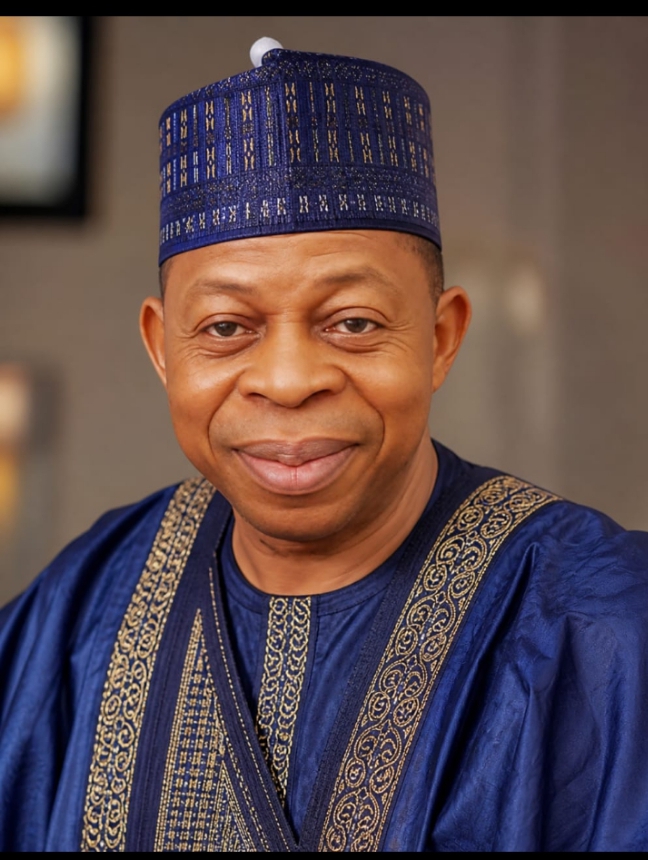
A presidential aspirant under the Action Democratic Party (ADP), Prof Muhammad Omolaja, has said that he is fully ready for the 2027 general elections especially the presidential contest.
Prof. Omolaja who disclosed this in an exclusive interview with pressmen in Abuja on Tuesday, May 12, 2026, said he has done his consultations with leaders of the Party, boasting that he is the next president of Nigeria by the grace of God.
He submitted that he has won the heart of the people at the grassroots across all the States and geopolitical zones including the federal capital territory (FCT); and convinced them about his clear vision and mission for Nigeria.
According to him, Nigerians are tired of the APC government and ready to vote them out in favour of his Party; the ADP!
Prof. Omolaja added that ADP is the only Party that can liberate Nigeria and rescue the citizens from the prevailing insecurity and other challenges facing the country.

The presidential aspirant said “you are asking me if I am ready for the 2027 general elections or not, I hereby inform you categorically that I am fully ready for the election; we have done what to be done, we have systematically carried Nigerians along in our preparations especially the people at the grassroots; and we have let them know that ADP is the only credible alternative Party that can liberate them from all the challenges the country is facing under the prevailing APC government. I am confident that I will get the ticket of our great Party being the leading contestant, and win the upcoming 2027 presidential election by the special grace of the Almighty God”
He therefore urged Nigerians to rally support for him and his Party (ADP) at the polls in the spirit of peace, love, unity, and patriotism in Nigeria.


- Why Your Communications Strategy is Undermining Your Decisions (By Bas Wijne) May 13, 2026
- Liquid Intelligent Technologies revitalises access to cloud and cyber security services in support of improved national digital resilience May 13, 2026
- Transformative African Leadership (TAL) Redefines Leadership Across the Continent May 13, 2026
- World Mining Investment Chief Executive Officer (CEO) Didier Rault Joins African Mining Week (AMW) Advisory Board May 13, 2026
- Verdant IMAP Act as Financial Advisor and Arranger to Metro Africa Xpress (MAX) on its USD 8 Million in Debt Capital Raise May 13, 2026
- African Energy Week (AEW) 2026 Renegade Intel Platform to Position Oil & Gas at the Center of the Global Artificial Intelligence (AI) Data Center Drive May 12, 2026
- 95th Periodic Meeting of Heads of Operations Arab Coordination Group: Advancing Progress and Enhancing Development Impact Virtual Meeting, 11–12 May 2026 May 12, 2026
- Africa Centres for Disease Control and Prevention (Africa CDC) Launches the African Strategic Advisory Group on Genomics May 12, 2026
- Updates on the 2026 Islamic Development Bank (IsDB) Prize for Impactful Achievement in Islamic Economics May 12, 2026
- Angola Oil & Gas (AOG) Pre-Conference to Set the Stage for $70B Investment Drive May 12, 2026
- Why Your Communications Strategy is Undermining Your Decisions (By Bas Wijne) May 13, 2026
- Liquid Intelligent Technologies revitalises access to cloud and cyber security services in support of improved national digital resilience May 13, 2026
- Transformative African Leadership (TAL) Redefines Leadership Across the Continent May 13, 2026
- World Mining Investment Chief Executive Officer (CEO) Didier Rault Joins African Mining Week (AMW) Advisory Board May 13, 2026
- Verdant IMAP Act as Financial Advisor and Arranger to Metro Africa Xpress (MAX) on its USD 8 Million in Debt Capital Raise May 13, 2026
- African Energy Week (AEW) 2026 Renegade Intel Platform to Position Oil & Gas at the Center of the Global Artificial Intelligence (AI) Data Center Drive May 12, 2026
- 95th Periodic Meeting of Heads of Operations Arab Coordination Group: Advancing Progress and Enhancing Development Impact Virtual Meeting, 11–12 May 2026 May 12, 2026
-

 news5 months ago
WHO REALLY OWNS MONIEPOINT? The $290 Million Deal That Sold Nigeria’s Top Fintech to Foreign Interests
-

 society1 week ago
SOCIAL MEDIA IS NOT A BATTLEFIELD COMMAND – WHY THE NIGERIAN ARMY’S ACTION AGAINST JUSTICE CRACK IS A NATIONAL SECURITY IMPERATIVE
-

 celebrity radar - gossips4 months ago
Dr. Chris Okafor Returns with Power and Fire of the Spirit -Mounts Grace Nation Altar with Fresh Anointing and Restoration Grace on February 1, 2026
-

 celebrity radar - gossips5 months ago
Prophet Kingsley Aitafo Releases 2026 Prophecy: ‘Nigeria Will Rise, but the World Must Prepare for Turbulence’
You must be logged in to post a comment Login
You must log in to post a comment.