
society
MMIA Renovation Bruhaha—What Do Nigerians Really Want?


MMIA Renovation Bruhaha—What Do Nigerians Really Want?
By Tunde Moshood
When the news broke that the Federal Executive Council had approved N712 billion for the complete renovation of the Murtala Muhammed International Airport (MMIA) Terminal 1 in Lagos, the backlash came swiftly and loudly, mostly from the comfort zones of social media. Suddenly, everyone became an infrastructure economist, a seasoned aviation planner, or worse, a self-styled corruption watchdog. But in all of this noise, one crucial question has been ignored:

What do Nigerians really want?
Is it a modern, world-class international airport that can stand toe-to-toe with global benchmarks—or another patchwork job that barely scratches the surface of over four decades of infrastructural decay?
Let’s face the facts. MMIA Terminal 1 was commissioned in 1979, designed to handle fewer than a million passengers annually. Today, it receives over 8 million passengers, often forcing travelers through a moribund, smelly, and visibly dilapidated terminal. The air conditioning system barely works, the conveyor belts are prone to breakdowns, and the aesthetics resemble a government office stuck in the 1980s.
Yet, when the Federal Government, under President Bola Ahmed Tinubu, finally approved a comprehensive overhaul of the terminal—the very project Nigerians have clamored for—scepticism erupted, not from a place of genuine concern, but from a reflexive culture of politicized criticism.
The Cost of Modernity
Let’s talk numbers and you can Google-search this. Ethiopia’s Bole International Airport expansion cost over $345 million. Angola’s new Luanda International Airport is projected to cost $3 billion. Kigali International Airport in Rwanda is being rebuilt for $1.3 billion. The new Abidjan airport terminal cost over $300 million—and that’s in far smaller economies with less traffic than Nigeria.
So, when you consider that N712 billion, at today’s exchange rate of roughly N1500 to $1, equals approximately $475 million, the figures begin to make sense. The planned renovation is not just cosmetic—it’s a complete structural overhaul with the passengers’ processing hub in focus. That includes new baggage handling systems, smart security infrastructure, modern terminals, ICT upgrades, aerobridges, lounges, vertical circulation systems, a modern fire-fighting unit, energy-efficient systems, and integration with multimodal transport systems. In global aviation terms, this is not extravagant—this is standard.
The Keyamo Factor
It is baffling that some critics are willing to ignore the impressive leadership of the current Minister of Aviation and Aerospace Development, Festus Keyamo SAN, just to make another social media point. Since assuming office, Keyamo has taken aviation reform head-on—from resolving longstanding Bilateral Air Services Agreement (BASA) bottlenecks to improving Nigeria’s ICAO safety rating from 49% to 75.5%, and even leading Nigeria to comply with Cape Town Convention protocols, opening the door for local airlines to lease aircraft from global lessors under fairer conditions.
Keyamo’s legal background has turned out to be a strategic asset. Instead of outsourcing complex aviation legal documentation to foreign consultants, he’s taken charge, ensured clarity, and driven agreements with efficiency that industry insiders now praise.
Yet, because he’s not a pilot or a technical engineer, some feel justified in questioning his every move. But isn’t leadership about vision, coordination, and strategic thinking?
The “Cafeteria Expert” Syndrome
One of the curious traits of the Nigerian commentary space is how everyone becomes an expert overnight. From politics to medicine to aviation, the voices are the loudest, not from those who’ve built terminals or operated airliners, but from those whose closest association with aviation might be running a kiosk near the tarmac. And yet, these “aviation experts” are the ones quick to dismiss a project simply because the figures sound “too big”. We must stop conflating uninformed criticism with activism.
Time for Constructive Criticism, Not Cynicism
No one is saying government projects should not be scrutinized. On the contrary, robust criticism is the engine of democracy. But criticism must be informed, balanced, and constructive. Not every initiative is a scam. Not every official is a thief. The belief that everyone in government is out to loot only breeds cynicism, not solutions.
Instead of politicizing this landmark renovation, how about we call for a public forum on the project? How about we invite engineers, architects, procurement experts, and regulators to explain the breakdown of the budget to the public? That’s how mature democracies operate—not by dismissing every project as fraudulent from day one.
The MMIA Project Is More Than a Building. Let’s not forget: The Murtala Muhammed International Airport, Lagos, is Nigeria’s economic and diplomatic gateway. It is the first impression visitors, investors, and diplomats get of our country. A poor first impression leads to a poor perception of the country. The new terminal must reflect the ambition of a nation seeking to compete in the 21st-century economy.
If we truly want a Nigeria that works, then we must begin to support visionary projects—especially when they’re backed by proven leadership, transparent processes, and a clear need. The N712 billion project is not just about renovating an old building—it’s about rewriting the Nigerian aviation story.
So, Nigerians, What Do You Really Want?
Do you want another cycle of mediocrity, where we spend little and get even less? Or do you want infrastructure that reflects our population, economic potential, and national pride?
The choice is ours.
Tunde Moshood is the Special Adviser on Media and Communications to the Honourable Minister of Aviation and Aerospace Development


society
GEN CHRISTOPHER GWABIN MUSA SUPPORT INITIATIVE EXTENDS WARM BIRTHDAY FELICITATIONS TO PRESIDENT TINUBU ON 74TH BIRTHDAY
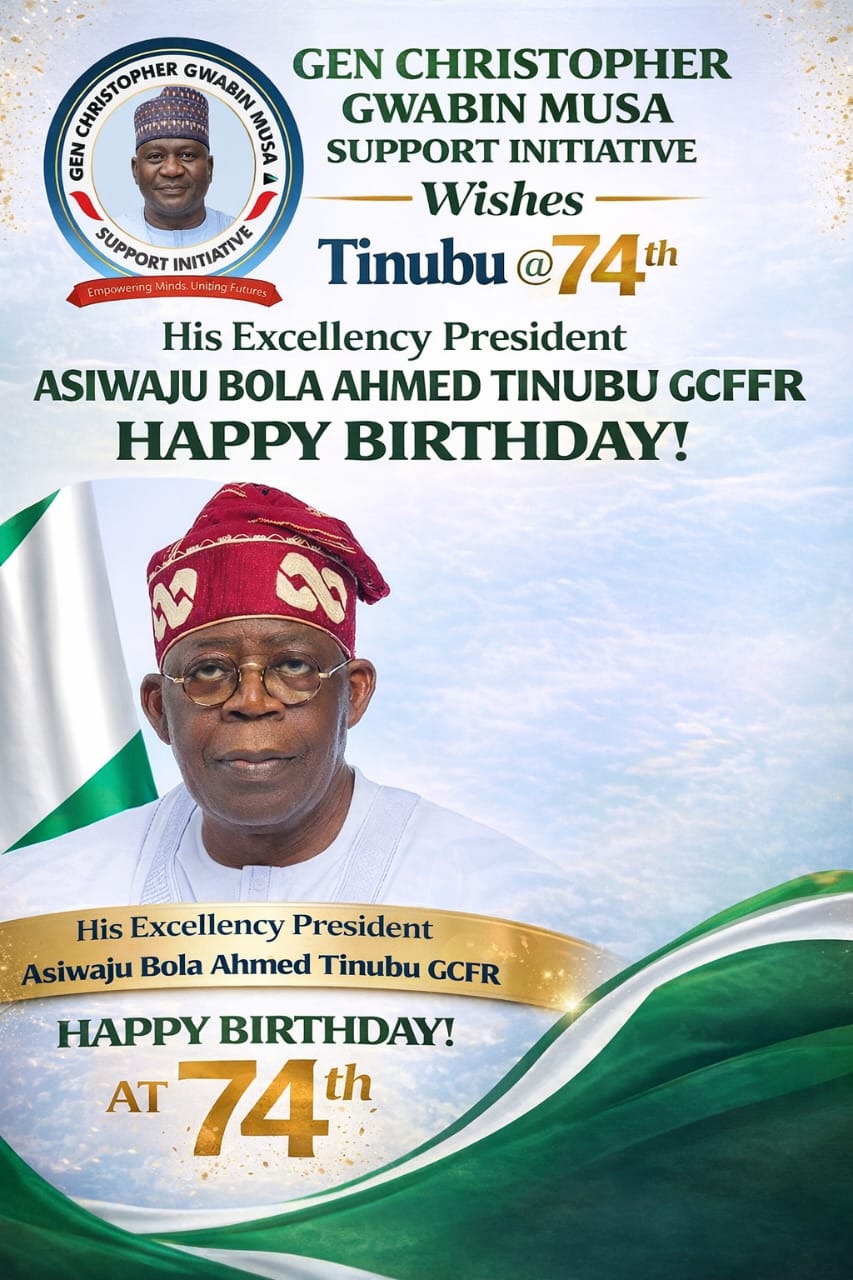
GEN CHRISTOPHER GWABIN MUSA SUPPORT INITIATIVE EXTENDS WARM BIRTHDAY FELICITATIONS TO PRESIDENT TINUBU ON 74TH BIRTHDAY
The Gen Christopher Gwabin Musa Support Initiative has extended heartfelt congratulations to His Excellency President Asiwaju Bola Ahmed Tinubu, GCFR, on the occasion of his 74th birthday.
In a statement released to the press, the Initiative conveyed warm wishes for the President’s personal well-being and for his continued leadership of the nation. The statement, signed by the Convener, Ibrahim Dahiru Danfulani, Sadaukin Garkuwan Keffi/Betara Biu, expressed hope that the coming year would bring the President “renewed strength and more wisdom in guiding the nation.”
The statement further noted that the Grand Patron of the Initiative, His Excellency Gen Christopher Gwabin Musa, OFR, Minister of Defence of the Federal Republic of Nigeria, joined in celebrating the milestone. It added, “Wishing Your Excellency continued good health, vitality, and determination as you lead the country towards greater unity and progress.”
The message underscores support for President Tinubu’s administration and its national objectives, marking the birthday as an occasion to reaffirm commitment to the nation’s unity and advancement under his stewardship.
society
Dominion City to Host Global Camp Meeting, “2 Nights of Glory” 2026 in Lagos, Enugu …Calls for Moral Renewal
*Dominion City to Host Global Camp Meeting, “2 Nights of Glory” 2026 in Lagos, Enugu
…Calls for Moral Renewal
Lagos – Dominion City has announced plans to host its annual Global Camp Meeting alongside a special “2 Nights of Glory” gathering in April 2026, with events scheduled to be held simultaneously in Lagos and Enugu.
The week-long programme is expected to draw tens of thousands of participants onsite and millions of virtual attendees from across the globe.
The Global Camp Meeting will run from Wednesday, April 1 to Monday, April 6, featuring daily sessions at 8:00 a.m. and 5:00 p.m. The “2 Nights of Glory” is slated for Friday, April 3 and Saturday, April 4 at the Golden Heart Place, Km 22 Lekki-Epe Expressway, beside Lagos Business School, Ajah, Lagos.
Organised by Dominion City, a global church focused on raising transformational leaders, the conference will centre on revival, spiritual renewal, and practical teachings. This year’s theme, “Redigging the Wells of Our Fathers,” underscores a call to return to foundational values and principles.
Speaking ahead of the event, Nobbert Onaga, President, Golden Heart Foundation and Senior Pastor, DC Lagos & Europe, emphasised the need for moral reawakening as a pathway to national transformation. He described the Church as “the pillar and foundation of truth,” noting that the conference aims to confront moral decline and restore core values within society.
“We are going back to foundational truths that established the Church. These truths will help repair societal damage and reposition the Church as a source of hope and light,” Onaga said.
Also speaking, Shola Olapade, Senior Pastor of Dominion City Headquarters, highlighted the Church’s role in addressing ethical and cultural challenges, particularly among young people. He added that the programme would go beyond spiritual teachings to include sessions on artificial intelligence, innovation, business, media, arts, and career development.
“We are equipping people not just spiritually, but with relevant 21st-century skills to thrive in today’s world,” Olapade noted.
The conference will feature teachings and ministrations from a lineup of international ministers, including Dr. David Ogbueli, Dr. Charles Ndifon, Andres Bisonni, Pastor Randy Mitchell, Apostle Ikechukwu Peter Nnajiofor, Dr. Ferdinand Nweke, Apostle Ben Hanyani Ndobe, Evangelist Dan Scott, and Dr. Chiefo Ejiofobiri.
Music ministrations will also be led by notable gospel artists such as Grace Idowu, Rhema Onuoha, Once More Six, David Nkennor, Anthony Kani, and GUC.
Organisers disclosed that over 30,000 participants are expected to attend in person, with free transportation provided from designated locations across Lagos to ease access. In addition, free medical services will be offered daily, building on previous outreaches that benefited over 1,700 people.
To ensure safety and order, more than 200 traffic marshals will be deployed in collaboration with relevant authorities.
Beyond its spiritual impact, organisers project that the event will stimulate local economic activity across hospitality, transportation, and retail sectors.
The Global Camp Meeting remains a key platform for spiritual impartation, leadership development, and societal transformation, aligning with Dominion City’s mission to equip believers to influence their communities positively.
Participation is open to the public, with registration available online for both physical and virtual attendance. //END.//
*PHOTO CAPTIONS:*
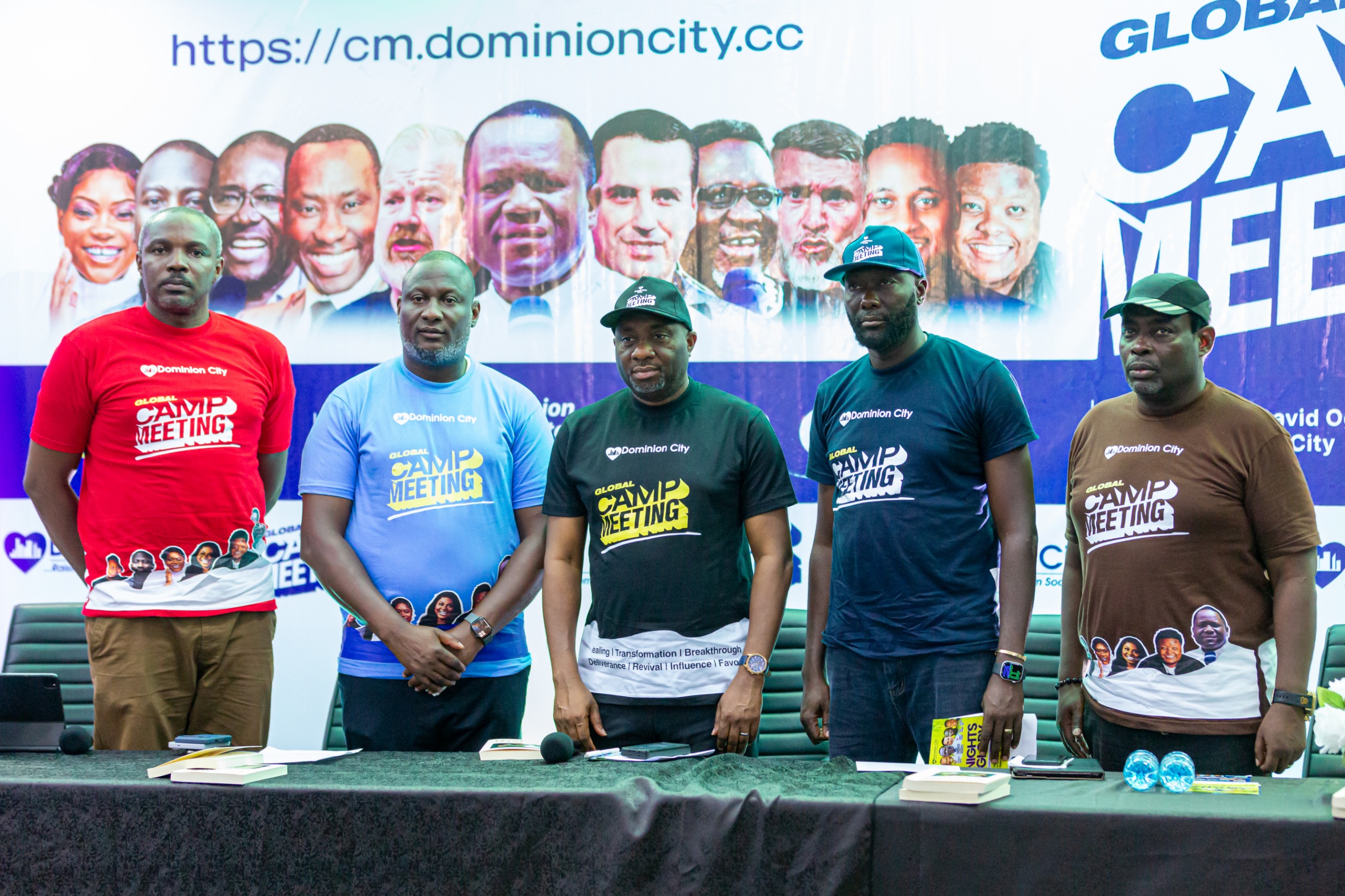
L-R: Dr. Godwin Efobi, Head, Medical Team, Dominion City Headquarters (DCHQ); Pastor Shola Olapade, Senior Pastor, DCHQ; Pastor Nobbert Onaga, President, Golden Heart Foundation and Senior Pastor, DC Lagos & Europe; Pastor Chuks Anochie, Head of Security and Traffic Control, Dominion City Headquarters (DCHQ), Camp Meeting 2026; Pastor Josh Tim Vaduchi, Head of Event & Programmes, DCHQ, during the press briefing of the forthcoming Global Camp Meeting, held the weekend of 2026 at the Dominion City Headquarters (DCHQ), Lagos.
L-R: Pastor Chuks Anochie, Head of Security and Traffic Control, Dominion City Headquarters (DCHQ), Camp Meeting 2026; Pastor Shola Olapade, Senior Pastor, DCHQ; Pastor Nobbert Onaga, President, Golden Heart Foundation and Senior Pastor, DC Lagos & Europe; Dr. Godwin Efobi, Head, Medical Team, DCHQ; and Pastor Josh Tim Vaduchi, Head of Event & Programmes, during the press briefing of the forthcoming Global Camp Meeting, held over the weekend in 2026 at the Dominion City Headquarters (DCHQ), Lagos.
society
Oloworo of Oworosoki Kingdom, Oba Babatunde Saliu, Felicitates President Bola Ahmed Tinubu at 74
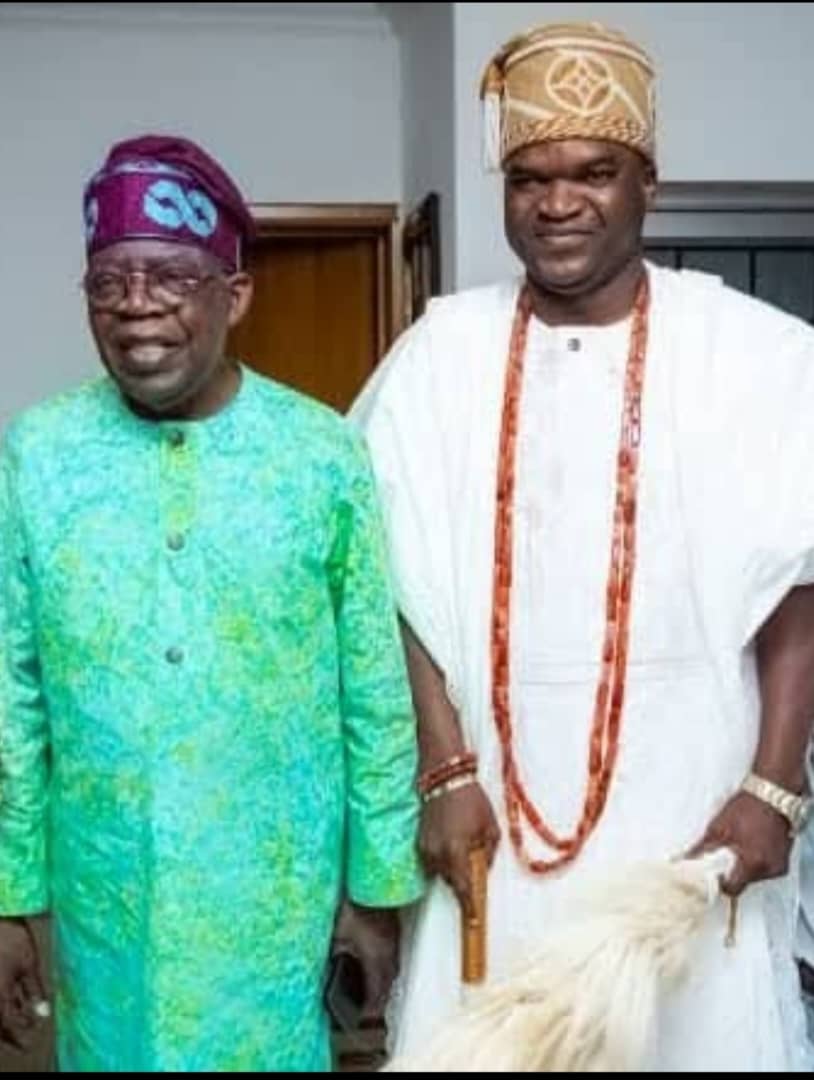
Oloworo of Oworosoki Kingdom, Oba Babatunde Saliu, Felicitates President Bola Ahmed Tinubu at 74
By Adeyemi Obadimu
The Oloworo of Oworosoki Kingdom, His Royal Majesty, Oba Babatunde Saliu, Elebo II, has extended warm felicitations to the President of the Federal Republic of Nigeria, Bola Ahmed Tinubu, GCFR, on the occasion of his 74th birthday.
In a goodwill message issued from his palace, the revered monarch described President Tinubu as a visionary statesman, a courageous reformer, and an indefatigable democrat whose lifelong commitment to nation-building continues to shape Nigeria’s progress.
Oba Babatunde Saliu praised the President’s unwavering dedication to public service, noting that his leadership has ushered in a new phase of economic reform, infrastructural renewal, and institutional strengthening across the country.
According to the monarch, the President’s Renewed Hope Agenda has begun yielding tangible relief and renewed confidence among citizens, reflecting his determination to reposition Nigeria for sustainable growth and prosperity.
“President Bola Ahmed Tinubu has demonstrated exceptional resilience, strategic foresight, and a deep love for Nigeria. His administration’s bold initiatives are laying the foundation for long-term national transformation. At 74, he remains steadfast in his resolve to build a stronger, more united, and economically vibrant nation,” the monarch stated.
Oba Babatunde further commended the President’s legacy of leadership, describing him as a bridge-builder, a mentor to many leaders, and a symbol of democratic stability. He acknowledged the President’s decades of sacrifice and contribution to the advancement of democracy in Nigeria.
On behalf of the Oworosoki Kingdom, the royal father prayed for divine wisdom, sound health, and renewed strength for the President to successfully complete the noble reforms and developmental strides he has embarked upon for the benefit of all Nigerians.
“As Your Excellency marks 74 remarkable years, we pray that Almighty God grants you long life, continued wisdom, and the fortitude to steer our great nation toward greater heights. May your days be filled with strength and grace as you continue to serve Nigeria with distinction,” Oba Babatunde Saliu added.
President Bola Ahmed Tinubu clocks 74 as a leader whose enduring influence, bold reforms, and steadfast patriotism remain central to Nigeria’s ongoing journey of national renewal.


-

 society6 months ago
Religion: Africa’s Oldest Weapon of Enslavement and the Forgotten Truth
-

 news4 months ago
WHO REALLY OWNS MONIEPOINT? The $290 Million Deal That Sold Nigeria’s Top Fintech to Foreign Interests
-

 society6 months ago
“You Are Never Without Help” – Pastor Gebhardt Berndt Inspires Hope Through Empower Church (Video)
-

 celebrity radar - gossips2 months ago
Dr. Chris Okafor Returns with Power and Fire of the Spirit -Mounts Grace Nation Altar with Fresh Anointing and Restoration Grace on February 1, 2026