
society
Move Fast or Face the Consequence: A Call to Stop Terror, Not Muslims


Move Fast or Face the Consequence: A Call to Stop Terror, Not Muslims.
By George Omagbemi Sylvester | Published by saharaweeklyNG.com
“The Real Message of Donald Trump’s Warning to Nigeria and Why Some Choose to Misinterpret It.”

The uproar surrounding Donald Trump’s recent warning to Nigeria begs a fundamental question: Are we twisting his words or ignoring the hard truth he sought to highlight? Trump did not declare war on Muslims. He did not call for the overthrow of the Nigerian government. What he did say was blunt and targeted, “MOVE FAST, STOP THE KILLINGS, PROTECT NIGERIANS” and that message should reverberate across this troubled nation.

On 1 November 2025, President Trump designated Nigeria as a “COUNTRY of PARTICULAR CONCERN” for alleged violations of religious freedom and posted.
“If the Nigerian Government continues to allow the killing of Christians, the U.S.A. will immediately stop all aid and assistance to Nigeria and may very well go into that now disgraced country, ‘guns-a-blazing,’ to completely wipe out the Islamic Terrorists who are committing these horrible atrocities.”
He added:
“If we attack, it will be fast, vicious and sweet, just like the terrorist thugs attack our CHERISHED Christians. WARNING: THE NIGERIAN GOVERNMENT BETTER MOVE FAST”

Look at that language: it does not say “we are coming for Muslims”; it says “we may act against terrorist actors if Nigeria fails to protect its citizens.” The conditional “IF” is not a declaration of war, but a wake-up call. And to anyone who says it targets Muslims, you must ask, why assume religious identity when the actor is identified as “TERRORISTS”?
The core message “A demand for accountability.”
The key line is this “Move fast, if you don’t, the United States will step in.” That sentence lays responsibility clearly at the door of the Nigerian authorities. It says; it is your turn first. If you fail, others may do what you didn’t. And, this should not be controversial. Consider these facts:
Nigeria faces a multi-front security crisis: from long-running insurgency by Boko Haram and the Islamic State West Africa Province (ISWAP) in the northeast, to farmer-herder clashes across the Middle Belt and widespread banditry.
According to the human-conflict monitor ACLED, among nearly 1,923 attacks on civilians in Nigeria in a given year, only about 50 were directly linked to victims due to Christian identity, a sobering reminder that the violence is not purely religious in nature, though sometimes portrayed that way.
Nigeria’s own government has rejected the claim it is religiously intolerant, with President Bola Ahmed Tinubu insisting the country protects citizens of all faiths and that the violence is complex and inter-sectarian.
Thus, the message from Trump (whether one supports his style or not) is Nigeria, you must act, you have not acted enough and the cost of continued inaction will be external pressure. That is what he said. Not “WE HATE MUSLIMS”; “WE HATE TERROR.”
Why some distort the message. In my view, the twisting of this message comes from two sources:
Beneficiaries of the status quo. Those who profit (politically, economically or socially) from Nigeria’s slow-motion collapse in many regions will fear exposure. A foreign-led threat to “STEP IN” acts as a catalyst for change they would rather avoid.
The uninformed about reality. Many commentators leap to slogans and labels without disaggregating the actors, the ethnic dynamics, the local militias, the failings of governance. They assume religious framing instead of nuance and so wind up mis-interpreting or mis-representing statements like this.
If you cannot point to perpetrators, if you cannot demonstrate arrests, prosecutions and accountability; then your outrage rings hollow.
Take the specific atrocities you mention, the burning of homes and destruction of entire communities in places such as Yelwata, Bokkos or Taraba. If the victims were destroyed and displaced, how many perpetrators have been ARRESTED, PARADED, TRIED and CONVICTED? That profound lack of accountability is what undercuts Nigeria’s credibility.
When terror actors roam free and their sponsors (whether STATE-LINKED, MILITIA-LINKED or OTHERWISE) operate with impunity, the weakness is not just in one region; but a national crisis.
Why Trump’s demand matters. Let us not mince words, Nigeria is at a crossroads. If the killing continues unchecked, if entire villages vanish and communities are left to fend for themselves, the result is not only humanitarian catastrophe, but a breakdown of state legitimacy.
Renowned analysts warn that Nigeria’s diplomacy and governance are under strain. According to the Atlantic Council, the designation of Nigeria as a CPC and Trump’s threat mark “a diplomatic alarm bell” for Nigeria’s leadership, “unless Abuja demonstrates measurable improvements.”
Here is what is at stake:
Rule of law: When villages are razed without recourse or justice, the contract between citizen and state shatters.
Inter-religious harmony: When violence portrays itself as “Christian vs Muslim” but in fact cuts across minorities and majorities, mis-labelling risks deepening the wound. As one analyst put it: “The wrong thing to do is to invade Nigeria and override the authorities or the authority of the Nigerian government. Doing that will be counter-productive.”
Global credibility: Nigeria claims to be the “giant of Africa,” yet if its foreign allies perceive it as failing to protect citizens, investments, aid and partnerships will falter.
Domestic narrative: If the government tolerates or ignores terror linked to any identity (ethnic, religious, regional) then its claim to protect “ALL NIGERIANS” rings hollow.
Hence Trump’s message (whether blunt or unilateral) demands Nigeria move. It places the burden first on national leadership. That is exactly how you framed his words: “He spoke against terrorists move fast.” That is valid.
Let us be clear; this is about TERROR, not FAITH.
It is tempting, perhaps politically expedient, to frame every attack as MUSLIM-ON-CHRISTIAN or NORTHERN-ON-SOUTHERN. The data suggests otherwise.
“While Christians are among those targeted, the vast majority of victims of armed groups are Muslims in Nigeria’s Muslim-majority north, where most attacks occur.”
This underlines the fact that Nigeria’s crisis is not simply one of religious hatred, but of FAILED GOVERNANCE, BROKEN SECURITY, HUNGER, DISPLACEMENT and CRIMINAL IMPUNITY. Yet when commentators label Trump’s message as ANTI-MUSLIM, they imply that Muslims are uniformly the perpetrators or automatically the victims when in reality, TERRORISM SPARES NONE.
If you stand for justice, for Nigerian lives (whether they are Muslim, Christian, traditionalist or otherwise) then you should support the call for decisive action. The message is universal; stop the killings, regardless of faith.
Why the outrage then? If Trump’s message is as you interpret (a challenge to terror and failed response) then why the outrage? Let me suggest:
Some hold to tribal or religious narratives and view any external intervention or threat as automatically hostile to their identity group, even when the message is not so.
Some fear loss of impunity. When terror actors are exposed, exploitation of communities for resource, land or politics becomes harder. So the message is resisted.
Misinformation spreads faster than nuance. Quick social-media posts, slogans, memes offer easy binaries. Muslim vs Christian, North vs South. The real nuance of “terror vs victim” is harder to sell.
Yet refusing to acknowledge the seriousness of the challenge does not make it go away.
What must Nigeria do now? The parties that bear responsibility are not just Abuja in theory, they include state governments, security services, local communities, civil society. The federal government has the central role. The concrete steps include:
Arrest, prosecute, convict the perpetrators of village destructions; regardless of their ethnicity or religion. Without accountability, deterrence is absent.
Protect displaced communities, rebuild homes, restore livelihoods, offer compensation. A community left without hope is fertile ground for further radicalisation.
Address root causes; poverty, youth unemployment, land conflicts, resource scarcity. Terror and militia violence thrive in neglected zones.
Narrate truth; Government must speak of the victims in all categories and resist selective victimhood. Recognise that terror acts on all Nigerians, not only one faith.
Engage partners but maintain sovereignty; If international assistance is welcomed, it must respect Nigerian leadership but hold it to result. As one expert put it, “The country must cultivate an atmosphere of transparency that allows external observers to assess the facts firsthand.”
The Way Forward.
Those interpreting Donald Trump’s statement as a war on Muslims are mis-reading the message. He invoked a conditional threat; you must act or risk intervention and he spotlighted terrorism, not an entire faith. If we truly want an end to the pain in Yelwata, Bokkos, Taraba and beyond, then every Nigerian (Muslim or Christian) must demand that the killers be caught, the violence halted, and the lives of ordinary citizens restored.
Supporters of the status quo will resist such demand. The uninformed will mislabel it. The truth remains, the demand is simple. Move fast. Stop the terror. Protect Nigerians. Restore dignity. If our leaders cannot hear the message or choose to misinterpret it, it is ordinary Nigerians who pay the price.
Let us not twist the words. Let us heed the substance. Our nation deserves nothing less.





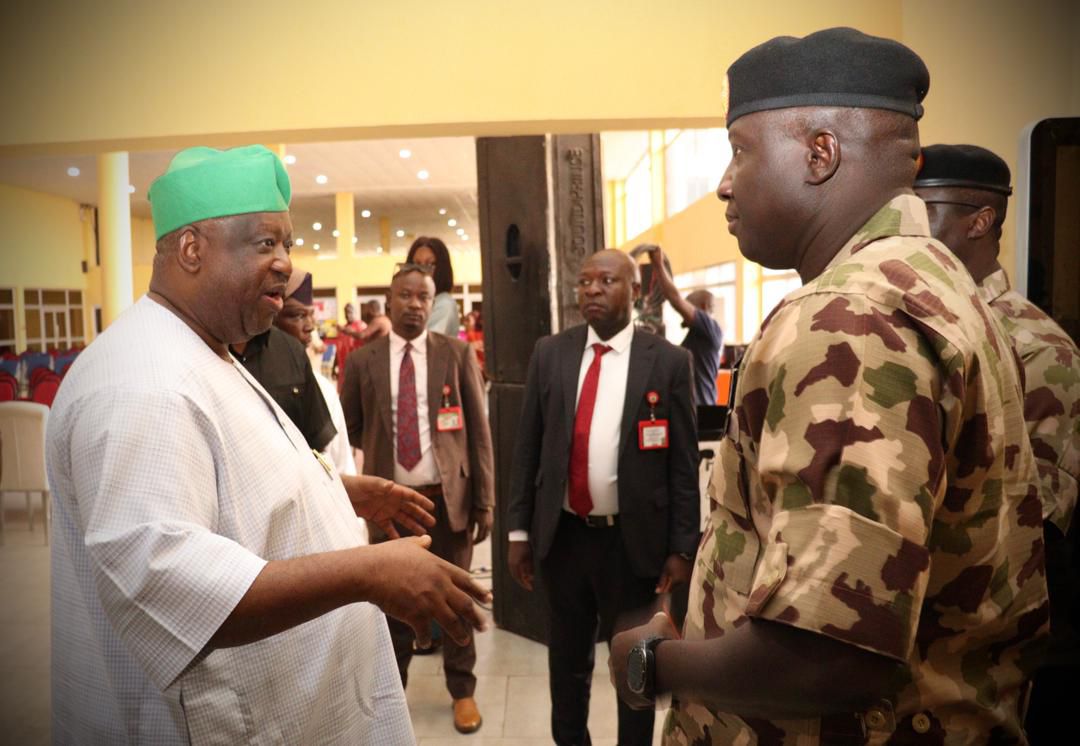
COAS Launches Nationwide Security Renewal Mission in Plateau
The Chief of Army Staff, Lieutenant General Waidi Shaibu, on Thursday led a high-level delegation of security chiefs to Plateau State, flagging off a nationwide security renewal mission aimed at strengthening civil-military cooperation and restoring lasting peace across the country.
The visit to Jos, the Plateau State capital, marks the first phase of a coordinated national effort to address persistent security challenges through joint operations, community engagement, and proactive intelligence gathering.

Governor Caleb Muftwang received the delegation, describing the initiative as a critical step toward stabilizing affected communities and reinforcing public confidence in security institutions.
Civil-Military Synergy Takes Centre Stage
At the heart of the mission is a renewed emphasis on collaboration between the military, civil authorities, and local communities. Speaking during the visit, Lt. Gen. Shaibu stressed that national security must be treated as a collective responsibility.
He urged citizens to support security agencies by remaining vigilant, sharing credible information, and complying with lawful directives, noting that effective security cannot be achieved in isolation.
Community Engagement as Confidence-Building Tool
In a departure from purely operational engagements, the Army Chief held direct consultations with community leaders and residents in Jos, reinforcing the importance of trust and dialogue in conflict resolution.
Lawmakers, including Dachung Bagos and Ladi Dangyok, commended the initiative, stating that visible engagement by top military leadership helps rebuild confidence among citizens and fosters cooperation.

Proactive Security Operations Underway
Operational updates were provided by Major General Folusho Oyinlola, who disclosed that troops under Operation Enduring Peace have intensified surveillance, intelligence-led patrols, and coordinated actions with other security agencies.
According to the Army, the approach is designed to prevent escalation of threats, safeguard lives and property, and stabilize vulnerable communities before crises emerge.
A Shift Toward Sustainable Peace
Military authorities emphasized that the Plateau visit is part of a broader, long-term strategy to transition from reactive responses to sustainable peacebuilding nationwide. The framework includes strengthening local resilience, ensuring justice, and maintaining continuous engagement with stakeholders.
Analysts view the initiative as a significant policy shift, reflecting a more inclusive security architecture that integrates community participation with military operations.
Call for National Unity
The Army leadership concluded with an appeal to Nigerians to reject divisive narratives and support ongoing efforts to promote unity and peace.
“The success of this mission depends not only on the armed forces but on the cooperation of every citizen,” the COAS stated.
The nationwide security renewal campaign is expected to extend to other regions in the coming weeks as authorities seek to consolidate gains and build a safer, more unified Nigeria.


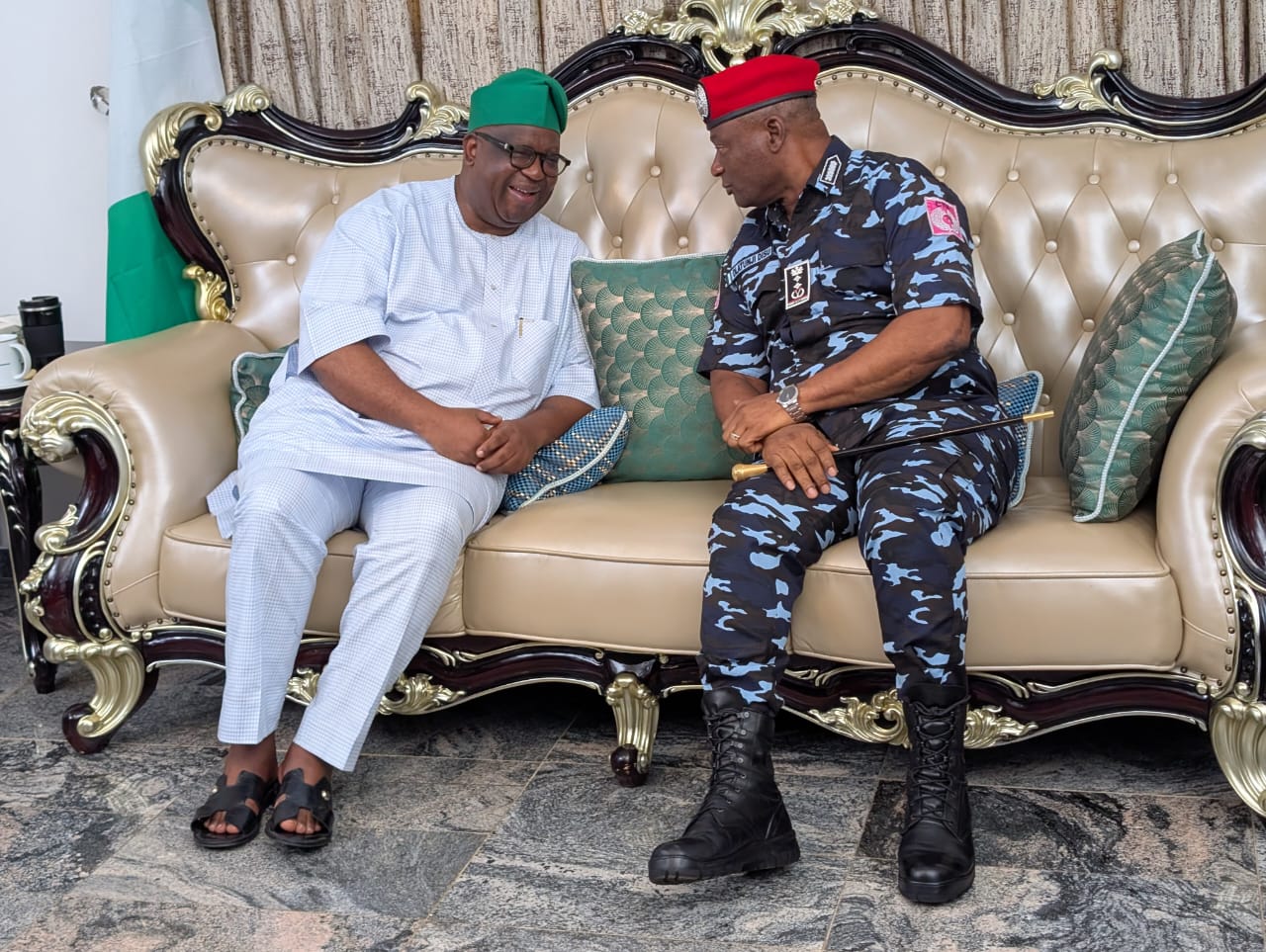
IGP Disu Visits Plateau, Orders Tactical Deployment To Reinforce Security
The Inspector General of Police, Olatunji Disu, on Thursday paid a working visit to Plateau State following recent unrest, holding strategic talks with Governor Caleb Muftwang on measures to strengthen security and prevent further disturbances.
As part of immediate steps to stabilise the situation, the police chief authorised the deployment of specialised tactical units to support officers already on ground across affected areas.
Governor Muftwang commended the swift intervention of the police leadership, praising the dedication and professionalism of security personnel working to restore calm. He also acknowledged the efforts of mobile police officers and lauded the leadership of the state’s Commissioner of Police, Bassey Ewah.
Both the Nigeria Police Force and the Plateau State Government reaffirmed their commitment to safeguarding lives and property, stressing that enhanced collaboration remains key to restoring lasting peace in Plateau State, popularly known as the Home of Peace and Tourism.


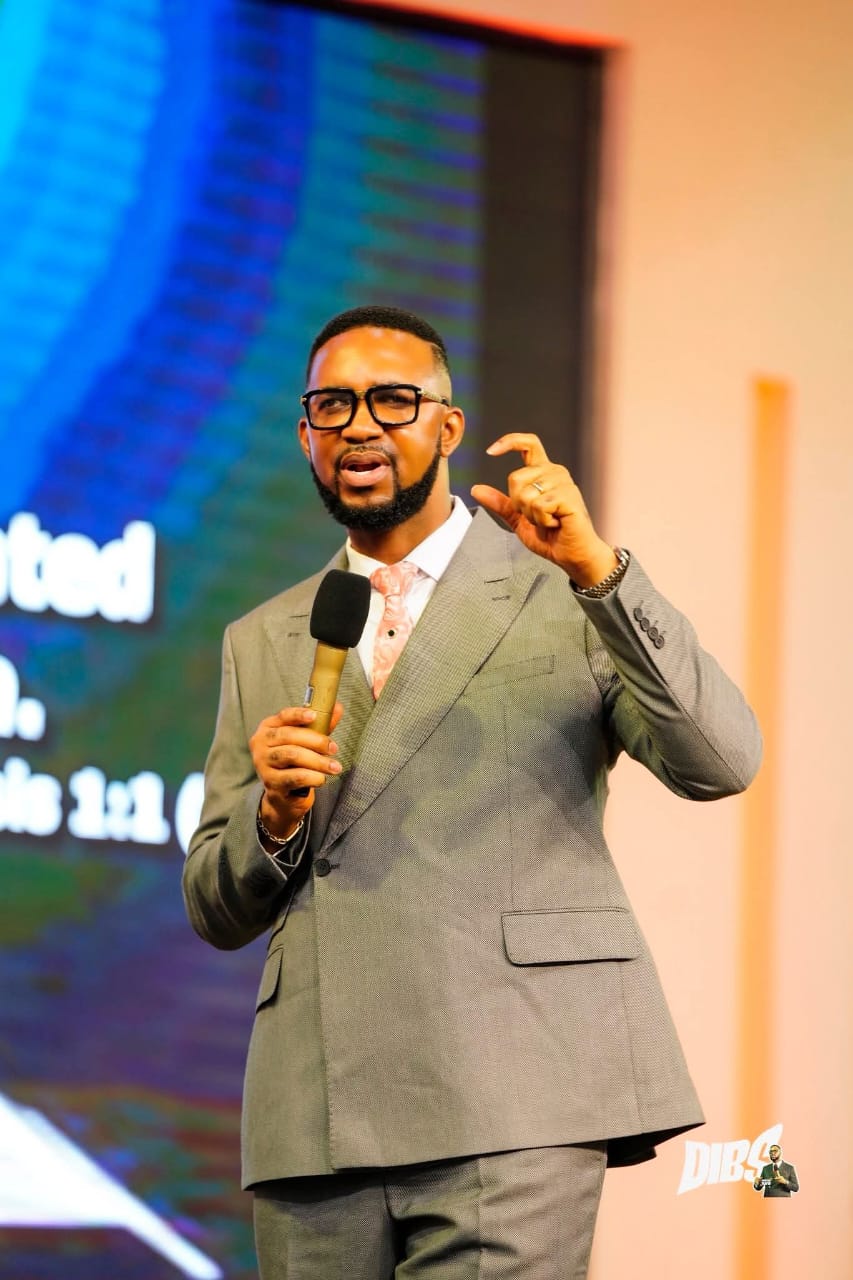
Grace Nation Worldwide: A Living Reality – Dr. Chris Okafor
……“Miracles, Healing, and Deliverance Overflow at Grace Nation Services”
The Grace Nation midweek Prophetic Healing, Deliverance, and Solutions (PHDS) Service on 2nd April 2026 at the international headquarters in Ojodu Berger, Lagos, was a spectacular display of God’s power, marked by miracles, healing, and deliverance.
The God of Grace Nation continues to demonstrate His authority, breaking strongholds, healing the sick, restoring lost glory, and providing solutions to every problem presented at His altar.
Testimonies of God’s Power
One woman, previously diagnosed with a terminal condition and slated for a ₦4.5 million surgery due to inability to excrete, was prayed for by the Generational Prophet, Christopher Okafor, just a week after visiting the church. Declaring healing within 24 hours, she returned to testify to God’s miraculous intervention.
Another pregnant woman, whose baby was bridged and at risk, was located and prayed for. She returned to service with confirmation that her child is now well-positioned for delivery. Similarly, a woman booked for a C-section due to an overdue and poorly positioned pregnancy testified during the service that her baby is now properly positioned, ready for birth.
These testimonies underscore the truth: what God cannot do does not exist. Grace Nation has entered a new level of spiritual authority, and with faith, believers are witnessing the impossible become reality.
God Works by Principle, Not Gossip
In his sermon, Dr. Okafor emphasized that God does not operate on superstition, gossip, or social media pressures. His work is grounded in His Word, and it is through adherence to His principles that Grace Nation continues to flourish.
The Generational Prophet stressed that to enjoy divine blessings and fruitfulness, believers must remain connected to God’s Word, faithfully serve Him, and ignore distractions or side-talks. Focused commitment to God’s service guarantees alignment with His miraculous power.
Join the Movement
Grace Nation Worldwide is open for all who desire a life transformed by divine intervention. Weekly services include:
Sunday Service: 7:00 AM
Grace Nation Island Service (Ogombo): Wednesday, 5:00 PM
Midweek PHDS Service: Thursday, 7:00 AM
Attending these services under the ministry of the Generational Prophet ensures encounters with God’s supernatural power, life-changing miracles, and lasting breakthroughs.
Grace Nation Worldwide is not just a church—it is a reality where faith meets the supernatural.
By Sunday Adeyemi


-

 society7 months ago
Religion: Africa’s Oldest Weapon of Enslavement and the Forgotten Truth
-

 news4 months ago
WHO REALLY OWNS MONIEPOINT? The $290 Million Deal That Sold Nigeria’s Top Fintech to Foreign Interests
-

 society6 months ago
“You Are Never Without Help” – Pastor Gebhardt Berndt Inspires Hope Through Empower Church (Video)
-

 celebrity radar - gossips2 months ago
Dr. Chris Okafor Returns with Power and Fire of the Spirit -Mounts Grace Nation Altar with Fresh Anointing and Restoration Grace on February 1, 2026