
society
My vision for Ogbomoso if I ascend Soun throne — Oyegoke-Olaoye

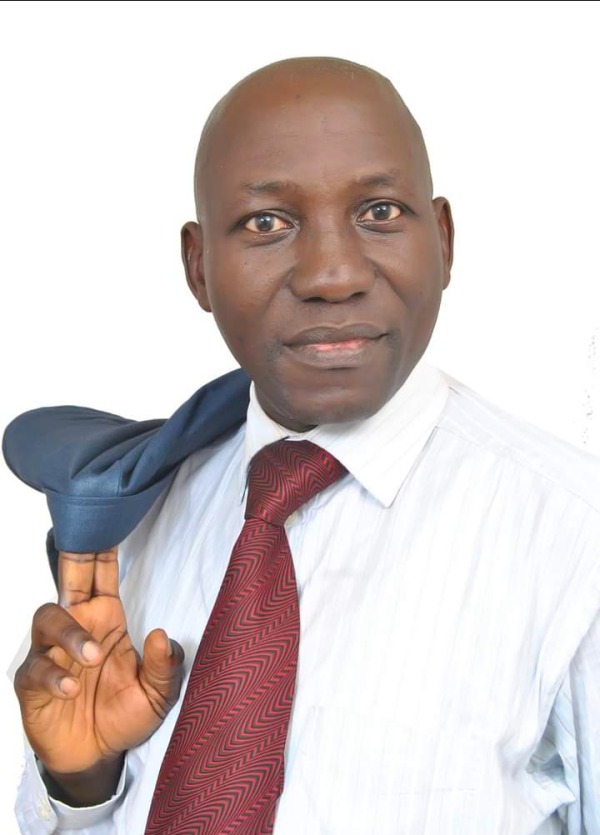
My vision for Ogbomoso if I ascend Soun throne — Oyegoke-Olaoye

World War II veteran and celebrated American author, salesman and motivational speaker, Hilary Hinton ‘Zig’ Ziglar, in his famous quote said: ‘‘If you want to reach a goal, you must see the reaching in your own mind before you actually arrive at your goal.’’
There have been enormous proven researches to the effect that visualising the outcome and understanding the ‘how’ to a predetermined destination would get a man of vision there no matter the obstacles.
A prominent Prince of the Olaoye Ruling House and frontliner in the race for the next Soun of Ogbomosoland, Prince Gbolahan Idowu Oyegoke-Olaoye, is well-cast in the class of visionary leaders as defined by Ziglar. He is already upbeat with ideas and thoughts on how to uplift the revered Soun of Ogbomoso throne and the ancient town with value-additions.
As the process of selection gets underway, the multi-talented and multi-disciplinary prince and descendant of Oba Atanda Olaoye Orumogege, a past Soun of Ogbomoso, has unfolded his vision for the development and growth of the ancient kingdom if he emerges the next paramount ruler.
Prince Oyegoke-Olaoye said his immediate preoccupation would be the reconciliation and unification of all the princes and various interested parties as the father of all. He also said the pursuit of religious harmony among the various adherents of the major religious faith – Christianity, Islam and traditional religion, amicable resolution of all pending court cases instituted in the contest for the throne, and promotion of peace would be expeditiously implemented.
‘‘In the past few weeks, there has been some kind of pause on the religious harmony of Ogbomosoland. I’m sure it is not a big task; everything generated from the choice of who should become the next Soun of Ogbomosoland. I am sure by the time this is resolved and it turns out to be yours sincerely, we will speak to every religious leader individually and collectively.
‘‘We will tell them what our town has been in terms of religious harmony. We love each other and there is no family you get to in Ogbomoso that you will not find all these religions – Christianity of several denominations, Islam and traditional believers. We feast together during festivals; there is no dichotomy among us. We will find a way to resolve that; it will be a very short period of time,’’ he said in an interview, Prince Oyegoke-Olaoye, who is a leading candidate for the throne, also stated that he would find amicable resolutions of pending litigations occasioned by the choice of the new king, stressing that the Ogbomoso princes and the indigenes of the town are peace-loving people. ‘‘They love peace. They want to fight for their right but once they see reasons they will join hands and resolve things and move ahead.’’
He also promised to focus on key factors that can engender real development and growth of the historic town among which are human capacity development, youth empowerment, agriculture, industrialisation and harnessing the human resource asset by wooing indigenes in the Diaspora and friends to invest in the economy of the town.
His words: ‘‘Majorly, the bigger picture – there has been clamour for industries and companies to come into Ogbomoso. I agree with it perfectly but I believe establishment of industries rests on one factor – human capacity and capability. Most of our indigenes that have capacity and capability live in bigger towns; you will find them in Lagos, Ibadan, London, America and northern part of Nigeria. They find it strange to stay in Ogbomoso.
‘‘In the last seven months that I have been there physically to live among them, I have discovered that they are wonderful people, loving people. The stories that our forefathers have been telling us that ‘they will kill you’ are not real. If you go home nobody is killing anybody. So, we will try and bring them to see the good side of Ogbomoso. We will let them see the serenity of the town; the peace that exists in Ogbomoso. Except we have this set of people among us, we may not have growth. Once they come in, they will establish industries whether cottage industries or micro and small businesses.’’
Prince Oyegoke-Olaoye further stated that the education sector would be invigorated, while the tourism potential of the town would be developed into recognisable international brands as part of steps to project Ogbomoso to the larger world.
Speaking further, he said he would leverage his vast professional expertise and work experience by bringing innovation into the administration of the kingdom, as well as leverage his circle of influence to attract investors for socio-economic prosperity to the benefits of the generality of the indigenes and residents of the town. “I also believe that as an individual we must have that capacity that is developed that we can sell to the world. If our young ones can develop their capabilities, we stand a better chance. Even for those that have learnt one trade, technical skills or the other they need to perfect that act. It is not compulsory that everybody must work in the office. We can boost the capacity and capabilities of our trained carpenters, tilers, masons and bricklayers; those who need them will come to Ogbomoso instead of going to bring people from Cotonou or Togo. By the time we grow their capacity there will be growth in our economy,’’ he asserted.
While revealing that Ogbomoso is also blessed with rich agriculture land for large-scale farming, Prince Oyegoke-Olaoye, said he would attract investors within and outside the town to invest in the agriculture value chain, himself being a farmer with two large acres of farmland comprising a 10-acre farm at Jabata and another 20-acre farm at Budo-Ora.
On tourism, he explained that his vision for the sector would entail the development of the tourism potential of the town including transforming the various cultural heritages, sites and festivals such as Odun Oba and Odun Oole, as well as the rich local cuisines into international brands to make Ogbomoso an attractive tourist destination.
‘‘We have good and rich local delicacies and assortment of cuisines. There are several good eateries in Ogbomoso. The breeze is superb. There is peace in our town. We will develop our festivals into tourism assets; we will give them publicity. We also have great people from this town that have made and are making impact nationally and globally. Some of them have been ignored; we will take steps to reach them. Despite the setback suffered by LAUTECH, it is still rated among the top 10 best universities in Nigeria. It will interest you to know that many of the students that graduate from LAUTECH don’t like to leave the town. If you go to Under-G, most of the shops are owned by the students.
‘‘Those who are outside the town who have the ideas that can bring innovation, we will invite them to come. If they need land, we will talk to families that own land to give them land. If it is to buy land, we will buy. The agriculture ecosystem of Ogbomoso is fantastic; there was a time IITA came to Ogbomoso to buy corn seedling, I brokered that deal. By the time we do all of these, Ogbomoso will become bigger in terms of human capital that will dovetail into economic wellbeing of the citizens,’’ he noted further.
On education, Prince Oyegoke-Olaoye assured that he would launch some programmes to strengthen and support the various initiatives by the state government to revamp education. ‘‘We cannot ignore the place of education because it is the bedrock of human capital development. The bigger vision will be improvement of human capacity that will dovetail into overall socio-economic wellbeing of the people of Ogbomosoland,’’ he stressed.
Born on the 15th of August 1965 of the Kapelaye royal family compound in Ogbomoso, Prince Oyegoke-Olaoye is the great grandson of a past Soun of Ogbomosoland, late Oba Atanda Olaoye Orumogege. His biological father, late Prince Olaleye Oyegoke-Olaoye, was the first son of Aremu Oyegoke Olaoye, a direct descendant of Oba Atanda Olaoye Orumogege. Also in his blood line was Oba Lawani Oke Lanipekun, also, a direct descendant of Oba Orumogege.
Prince Oyegoke-Olaoye is currently the Head of Practice of a diversified group of companies comprising Gbolahan Oyegoke & Company (Chartered Accountants), Primehill Professional Services (Chartered Tax Practitioners), GIO Associates (Company Secretaries) and Capacity Building & Management Services. His experience cuts across start-ups, growing and matured private limited liability companies that are involved in banking, manufacturing, telecommunications, Information and Communication Technology with progressive responsibilities involving assisting, controlling and directing financial management and administration.
He holds multiple academic qualifications including NCE in Business Ed. (Accounting) from the Federal College of Education, Abeokuta; B. Sc. (Ed.) Economics from Lagos State University; Master’s of Business Administration (MBA) in Marketing from the University of Port Harcourt, and another MBA (Financial Management) from Ladoke Akintola University of Technology, Ogbomoso. He also holds Masters in Education Administration and Planning from the University of Lagos and he is currently a Ph. D Student at UNILAG.
He is a Certified Forensic Accountant (CFA); Fellow, Chartered Institute of Administration of Nigeria (FCIA); Fellow, Chartered Institute of Taxation of Nigeria (FCTI); Fellow, Institute of Chartered Accountants of Nigeria (FCA); and Associate member of the Business Recovery & Insolvency Practitioners (ABR). He also holds CertIFR (ACCA) – Certificate in International Financial Reporting Standards and Certificate of Participation in Effective Project Management of the prestigious Lagos Business School (LBS).
On the career path, Prince Oyegoke-Olaoye has occupied numerous strategic and key roles at all levels and notably at middle, senior, managerial and executive levels. These include Assistant General Manager/COO, Network Support Services Limited; Manager/Group Head (Finance, Project & Admin.), Bocom Communications Limited; Manager/Head (Finance & Project), Mobitel Limited; Manager/Consultant, Solomon Osunba & Company (Chartered Accountants); Clerk, National Bank of Nigeria Limited; and Audit Clerk, David Osho & Company (Chartered Accountants). Others include Part-Time Lecturer, Auditing and Cost Accounting, Lagos State Polytechnic; and Lecturer, Cost Accounting& Financial Accounting (ATS II), Alpha Tutors, ICAN professional examinations preparatory class, amongst others.
Prince Oyegoke-Olaoye is a complete family man, married with a wife for the past 28 years and blessed with children. He is a devout practising Christian, a philanthropist per excellence, a highly respected community leader and well connected with his roots – both the Olaoye Ruling House and the royal dynasty, the Palace of the Soun of Ogbomoso. He is also an industry leader and has held many professional positions. He is a co-published author of professional books, a highly-sought conference speaker and training facilitator.
One can say without gainsay that as a man of vision, Prince Gbolahan Idowu Oyegoke-Olaoye is highly qualified, well-suited and well-prepared to occupy the vacant throne of Soun, barring all unforeseen last-minute circumstances.
By Ashiru AYINDE, A cultural enthusiast writes from Ogbomoso., Oyo State.


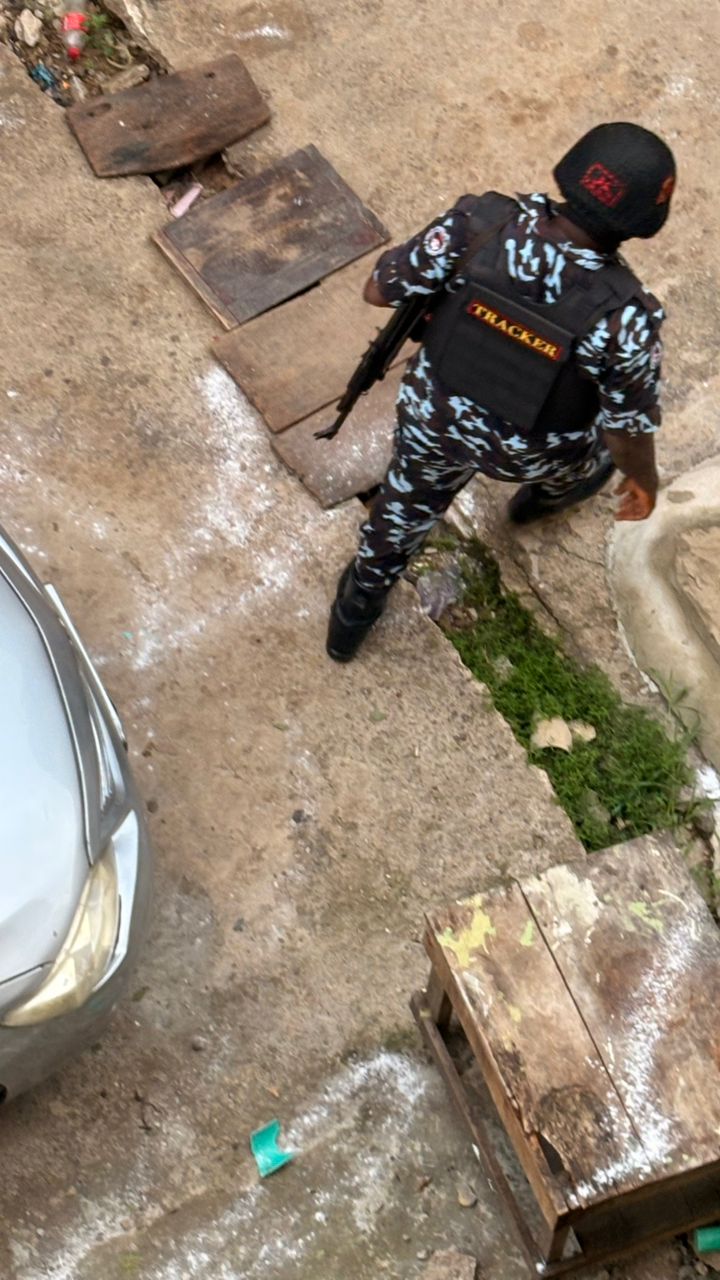
Police Officers Detained as Family Property Dispute Sparks Demolition Controversy in Lagos
By Ifeoma Ikem
A property dispute within the Omotayo-Ojo family has taken a dramatic turn following a controversial demolition exercise at a residential building in Ikosi-Ketu, Lagos State, which reportedly left tenants displaced and led to the detention of some police officers allegedly involved in the operation.

The property, located at 23B Loveall Street, Ikosi-Ketu, has been the subject of a prolonged ownership tussle since the death of its owner, Chief Oludola Omotayo Ojo, the Babaalaje of Imesi-Ile, Osun State, in 2019.
Residents said tension erupted when a group of individuals, accompanied by security operatives, stormed the premises and commenced demolition activities.
According to eyewitnesses, portions of the building were pulled down while tenants rushed to salvage their belongings from affected apartments.
The residents alleged that windows, doors and roofing sheets were damaged during the exercise, exposing parts of the building to the elements and causing significant losses to occupants.
At the centre of the dispute is Mrs Mojisola Omotayo Ojo Alolagbe, who claimed that the property was allocated to her by her late father during his lifetime as a source of financial support.
She alleged that some family members had persistently challenged her ownership claim despite ongoing legal proceedings relating to the administration of the deceased’s estate.
Alolagbe further claimed that the latest incident was part of a series of attempts to wrest control of the property, citing previous cases of alleged vandalism and partial demolition in November 2025, January 2026 and February 2026.
The situation escalated further when reports emerged that police officers allegedly involved in the demolition were later apprehended and conveyed in a Black Maria vehicle over questions surrounding the legality of their participation in the operation.
Sources familiar with the matter said those behind the demolition had initially claimed to be acting on approval from the Lagos State Ministry of Lands. However, the authenticity and extent of such approval could not be independently verified as of the time of filing this report.
The development has generated concern among residents and community members, who questioned the involvement of security personnel in what they described as a civil matter.
Some tenants, who said they had recently renewed their tenancy agreements, lamented the destruction of their property and appealed to the authorities for protection and possible compensation.

They also called for a thorough investigation into the circumstances surrounding the demolition, insisting that the rights of all parties involved should be protected.
Stakeholders have urged the Lagos State Government, security agencies and the judiciary to intervene and ensure that the dispute is resolved through lawful means to prevent further escalation.
The controversy has continued to draw public attention, raising concerns over property rights, estate administration and the role of law enforcement agencies in civil disputes.

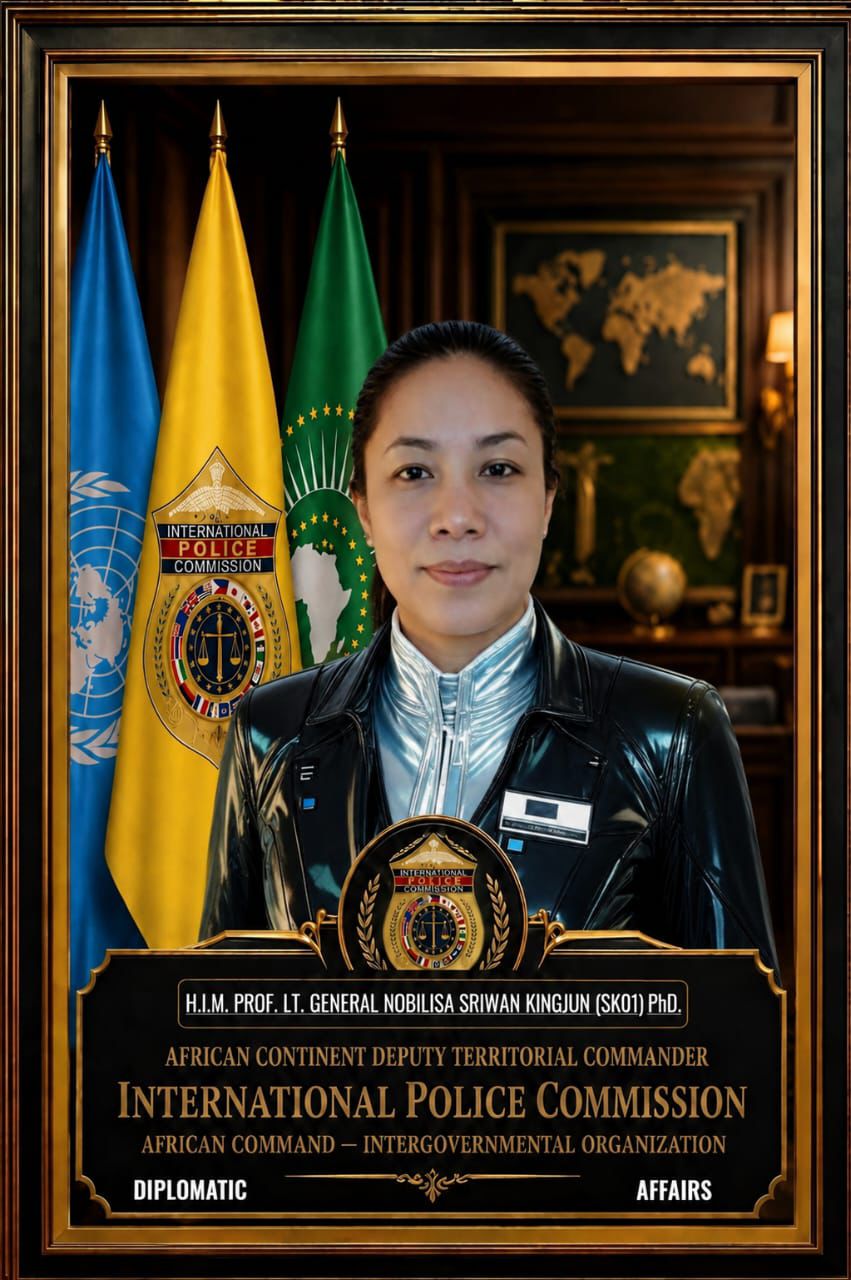
UKA Gears Up for Final ATC Exchangeability Test Run as June Preparations Begin.
May 30, 2026 – As the month of June gathers momentum, the *United Kingdom of Atlantis, UKA*, a sovereign nation has unveiled a series of vital guidelines and preparatory packages to ensure citizens and stakeholders run the *ATC Exchangeability* process effectively.
In an official update, the *President of Atlantic Crown Limited, Empress of Attica Empire UKA*, confirmed that the *Final Test Run of ATC Exchangeability* is scheduled for the month of June 2026. The exercise marks a key phase ahead of the *Official Exchangeability Window, set to run from July 2026 to February 2027*.
### Key Highlights from the Presidential Briefing
1. *Final Test Run – June 2026*
The test run is designed to validate systems, procedures, and user readiness before full activation. Citizens, partners, and designated participants are urged to follow all official advisories released by UKA authorities during this period.
2. *Official Exchangeability Period*
Following the successful completion of the June test run, the Official Exchangeability will commence in july 2026 and we are Expecting Full Exchange ability between July Ending, 2026 to February 2026.
UKA stated that detailed schedules, eligibility requirements, and step-by-step instructions will be communicated progressively through verified UKA channels.
3. *Benefiting Packages for June*
In line with UKA’s commitment to citizen empowerment, the month of June will feature “benefiting packages” aimed at education, preparation, and seamless onboarding. These packages are intended to equip the people of UKA with the knowledge and tools needed for effective participation.
4. *Commitment to Transparency*
Addressing the nation, the Empress of Attica Empire UKA emphasized:
_“Final Test Run of ATC Comes up in The Month of June, As We Prepare For The Official Exchangeability, Between July 2026 To Feb 2027. All Information Will Be Communicated.”_
UKA reaffirmed that only information released through official UKA platforms should be regarded as authoritative.
The United Kingdom of Atlantis is encouraging all citizens, representatives, and interested parties to remain alert to official communications, attend designated orientation sessions, and avoid unofficial sources. UKA’s dedication to order, clarity, and the collective benefit of its people as the nation moves into this significant phase.
For updates, advisories, and participation guidelines, citizens are advised to monitor official UKA communication channels.
United Kingdom of Atlantis, UKA, is a sovereign nation, committed to national development, citizen welfare, and structured economic participation through initiatives such as ATC Exchangeability.
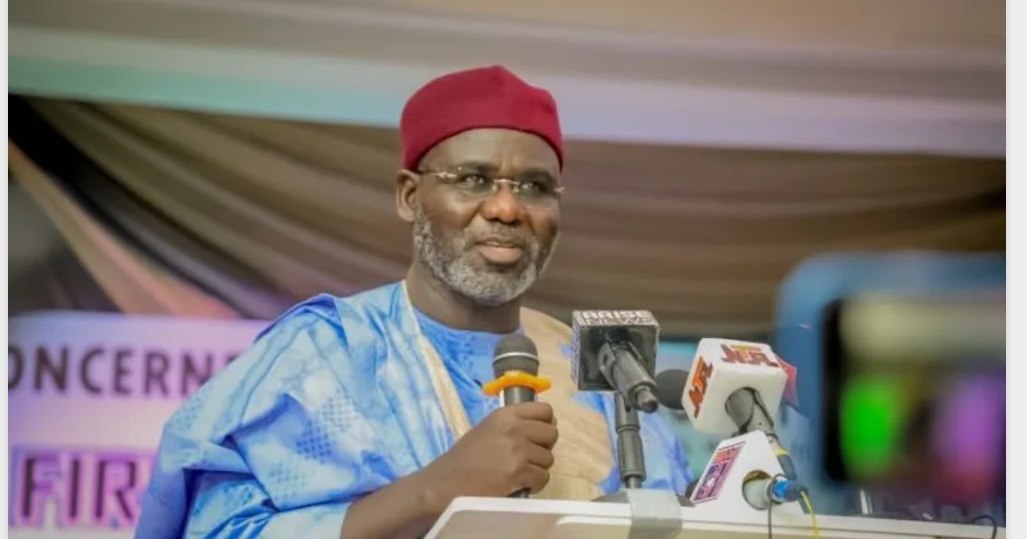
Three Years On, General Buratai Hails Tinubu’s Economic, Security Achievements
Former Chief of Army Staff, Lt. Gen. Tukur Buratai (retd.), has commended President Bola Ahmed Tinubu for what he described as bold economic reforms and improved security efforts as the President marks three years in office.
In a goodwill message on Thursday to commemorate Tinubu’s third anniversary as President and Commander-in-Chief of the Armed Forces, Buratai said the administration had taken courageous decisions that would leave a lasting impact on Nigeria’s development.

According to him, President Tinubu broke a long-standing cycle that had hindered national growth by removing fuel subsidy and implementing foreign exchange reforms aimed at stabilising the naira and strengthening the economy.
He noted that the reforms were beginning to yield positive results, citing the global acceptance of Nigerian debit cards, the gradual revival of local refineries, access to student loans, and ongoing road and infrastructure projects across the country.
“The FCT Administration has also recorded remarkable progress, completing major road projects that remained unfinished for over 16 years,” Buratai stated.
The former army chief also praised the administration’s security efforts, saying renewed military offensives against insurgents, terrorists and bandits had led to notable successes across various parts of the country.
He specifically lauded recent joint operations involving Nigerian and United States forces against Boko Haram and ISWAP in the North-East, as well as intensified counter-banditry operations in the North-West.
“We have seen notorious ISWAP commanders being neutralised. I congratulate the Commander-in-Chief, the Minister of Defence, the Chief of Defence Staff, the Service Chiefs, the Inspector-General of Police and heads of intelligence agencies for their efforts,” he said.
Buratai, however, acknowledged that challenges remained, stressing the need for more aggressive military operations and intelligence-driven strategies in the coming year.
While urging Nigerians to remain hopeful, he said celebrating the President’s achievements did not amount to ignoring the difficulties facing the nation.
“Because you truly care, you have shown the courage to trade short-term comfort for long-term hope. Nigerians need your reassurances, and that is why we remain optimistic and full of confidence,” he added.
The retired military officer reaffirmed his support for the Tinubu administration and expressed confidence that the foundation being laid by the government would deliver a brighter future for the country.
He also prayed for God’s guidance, wisdom, strength and good health for the President as he continues to lead Nigeria.


- CANAL+ lists on the Johannesburg Stock Exchange (JSE), strengthening the Group’s dual-continental approach and reinforcing South Africa’s (SA) role as a gateway to global capital and African growth June 3, 2026
- African Mining Week (AMW) Country Focus to Spotlight Liberia’s Iron Ore, Gold and Critical Minerals Prospects June 3, 2026
- Venezuela to Host Its Largest-Ever International Energy Investment Summit June 3, 2026
- Canada–Africa Business Conference Preparations Advance Following Canadian Secretary of State’s High-Level Visit to Nigeria June 3, 2026
- Uganda: Parliament concludes vetting of ministers June 2, 2026
- Fund for Export Development in Africa (FEDA) Board Appoints Mr. Emmanuel Assiak as Chief Executive Officer June 2, 2026
- Ecobank Group Launches World First Nature Bond Mobilising Global Capital to Protect Africa’s Natural Ecosystems June 2, 2026
- Merck Foundation Chief Executive Officer (CEO) Dr. Rasha Kelej together with Kenya First Lady support the education of 47 Kenyan Schoolgirls by providing Annual Scholarships till they Graduate June 2, 2026
- Annual Meetings 2026: Governors Back the Bank’s Platform Solutions to Transform Aviation and Health Systems in Africa June 2, 2026
- ThinkMarkets launches ChelseaAI, bringing live CFD trading into Artificial Intelligence (AI) assistants June 2, 2026
- CANAL+ lists on the Johannesburg Stock Exchange (JSE), strengthening the Group’s dual-continental approach and reinforcing South Africa’s (SA) role as a gateway to global capital and African growth June 3, 2026
- African Mining Week (AMW) Country Focus to Spotlight Liberia’s Iron Ore, Gold and Critical Minerals Prospects June 3, 2026
- Venezuela to Host Its Largest-Ever International Energy Investment Summit June 3, 2026
- Canada–Africa Business Conference Preparations Advance Following Canadian Secretary of State’s High-Level Visit to Nigeria June 3, 2026
- Uganda: Parliament concludes vetting of ministers June 2, 2026
- Fund for Export Development in Africa (FEDA) Board Appoints Mr. Emmanuel Assiak as Chief Executive Officer June 2, 2026
- Ecobank Group Launches World First Nature Bond Mobilising Global Capital to Protect Africa’s Natural Ecosystems June 2, 2026
-

 news6 months ago
WHO REALLY OWNS MONIEPOINT? The $290 Million Deal That Sold Nigeria’s Top Fintech to Foreign Interests
-

 society1 month ago
SOCIAL MEDIA IS NOT A BATTLEFIELD COMMAND – WHY THE NIGERIAN ARMY’S ACTION AGAINST JUSTICE CRACK IS A NATIONAL SECURITY IMPERATIVE
-

 celebrity radar - gossips4 months ago
Dr. Chris Okafor Returns with Power and Fire of the Spirit -Mounts Grace Nation Altar with Fresh Anointing and Restoration Grace on February 1, 2026
-

 celebrity radar - gossips6 months ago
Prophet Kingsley Aitafo Releases 2026 Prophecy: ‘Nigeria Will Rise, but the World Must Prepare for Turbulence’