
society
NEW NIGERIA PROJECT AND VISION TAGGED: NIGERIA MUST RISE AGAIN – BY NEW NIGERIA MOVERS.


NEW NIGERIA PROJECT AND VISION TAGGED: NIGERIA MUST RISE AGAIN – BY NEW NIGERIA MOVERS.
INTRODUCTION
Overcoming mass killings and incessant waste of human life and property, divided interest, divided spirit, cruelty, enmity, hostility and hatred, class, cultural and political disharmony in our country will require building up institutions around us that will improve safety, fellowship, our union and relationship. Fellowship is one of the key elements to national progress and development. It occurs when citizens share their views together in an atmosphere of love and respect, and everyone communicates with one another in love for the progress of the country.
Since 1960, Nigerians are free from colonial masters and rule. However, we have continued to wax stronger in criticising and condemning one another, uplifting and magnifying the section of the country or tribe we come from. We all know that Nigeria is a constitution of many tribes in one nation. Therefore, the concern of every citizen should be the unification and meeting point of all the tribes without collision, but instead we keep criticising and condemning one another. How Nigeria can be fully united or integrated should be the concern of all and sundry. Building institutions around us that will knit us together, unite us, foster deeper love and effective communication, promote economic growth and political stability is the sense about new Nigeria project and vision tagged NIGERIA MUST RISE AGAIN. These include:
1. BUILDING INSTITUTIONS FOR BROTHERLY LOVE AND CARE, GIVING, HOSPITALITY, SHARING AND DARING – BY NEW NIGERIA MOVERS
It is true that we live together, intermarry, transact business together, work in the same office and play games together. Also, it is true that we go to the same church or mosque, worship or call on the same God, but there is no mutual love and trust. We behave as people of different foreign nationalities living in a particular country in matters of national interest because we have divided mind against one another.
The oil of love must be kept afresh as of the day of our fathers. Love is friendship set on motion. It is a strong binding force that magnetises people together regardless of tribe or tongue, and compelling them to make sacrifices for one another without any ulterior motive for gain or aggradisement. There is need to build up institutions around us that will enhance brotherly love and care, giving, hospitality, serving, sharing and daring for one another.
2. BUILDING SYSTEMIC AND LASTING STRUCTURE THAT WILL PROMOTE CULTURE AND LANGUAGE.
Culture has the power to stabilize or destabilize, reform and deform a nation and people. However, the more we go deep in relationship with one another, the more we become united. Where love is no room is too small. Love has no scale for tribe, race, state of origin, class or religion. It is time to build up institutions, systemic and lasting structures around us that will improve safety of life and property, stabilize our relationship and union, economy and democracy, and make our country grow to a state of excellence, such that we can commit into the hands of our children now and later.
3. BUILDING INSTITUTIONS TO CATER FOR THE AGED AND RETIRED PARENTS AND GRANDPARENTS
The retirement age is sixty (60) years or thirty five (35) years of meritorious service as the case may be. Since they are no longer in active service or because they have been cut off from working environment, they are proned to body weakness, loneliness, stress, sicknesses and diseases. Thus, they need adequate care or attention from the government, individuals, and organisations. Building institutions that will make life easy, comfortable, affordable and enjoyable for the aged and retired parents and grandparents are very important.
4. BUILDING INSTITUTIONS FOR SAFETY OF LIFE AND LIVING OR PROPERTY – BY NEW NIGERIA MOVERS
The biggest challenge in today’s Nigeria is that of insecurity of life and living or property.
i. Terrorists are unleashing their fury and anger on our people, villages and communities with impunity.
ii. Bloodshed has become so rampant in our country and graphics of gruesome killings of innocent people are increasing.
iii. Kidnappings for huge ransoms are the order of things
iv. Armed bandits are terrorising families, killing and carting away their belongings.
v. Fatal accidents on our roads almost on daily basis.
vi. Buildings are collapsing claiming several lives.
vii. Industries are folding up causing many workers to lose their jobs.
There is need to build institutions around us that will guarantee safety of lives and property.
5. BUILDING INSTITUTIONS FOR FREE, FAIR AND CREDIBLE ELECTION, ELECTORAL PROCESS AND CANDIDATE
Democracy since 1999 has not yielded tangible results because we have not taken election and electoral process, electioneering campaigns and promises seriously. Greed, over-ambition, and desperation, bribery and corruption, rigging, thuggery, violence and wanton destruction of life and property, etc. are common. The desire to grab-it-all, and at all costs; the desire to become president, governor, senator, etc. at all costs is demonic. There is need to build up institutions around us that will stop that demonic nonsense.
5. BUILDING INSTITUTIONS FOR ECONOMIC GROWTH AND INDUSTRIAL DEVELOPMENT
The condition of things at both private and public sector is alarming.
i. Both the private and public sector is in difficult time characterised by bribery and corruption, fraud, stealing, duping, extorting, exploiting, insecurity, poor electricity supply, bankruptcy, etc.
ii. Quite a lot of companies are distressed not because they are not competent nor having competent staff, but because they refuse to compromise standard or play along with the ruling party and government officials.
iii. Also, so many workers are going through poverty and neglect, frustration and victimisation in their office or place of work not because they are incompetent, but because they have refused to compromise their faith and belief, or ethics of their profession.
Thus, there is need to build up institutions around us that will promote sincerity, accountability, and transparency, dedication and devotion to duty.
HIGHLIGHTS OF NEW NIGERIA PROJECT AND VISION TAGGED NIGERIA MUST RISE AGAIN.
1. COMMONWEALTH SYSTEM OF GOVERNMENT
Leaders and followers are one team. A leader is incapable of doing his job effectively without a good system; and it is difficult for the team to move forward with their set goals without a good system of government. The system of government is very important and so powerful in the sense that it determines the rate of progress and development, and for how long a country can be together. If any country should pay no attention to its system of government, it is not a country like Nigeria with diverse ethnic nationalities. Politically, It is the system of government that fosters leadership and followership relationship effectively. When the system of government is defective, it affects leadership and governance.
2. New Nigeria Movers Boys’ And Girls’ Squad.
Because of the deplorable situation of the country, and the chaotic conditions of living, and the role of family in nation building, it is imperative to address leadership commencing from family to the office. One way to secure a better future for our great country is to train our young ones. A child who is well trained today would become a great asset for the country tomorrow.
So many of our children today are out of school and control of parents and guardians. A lot of parents and guardians can no longer exercise control over their children. Quite a number of them are just roaming about the streets aimlessly. Uncountable number of them are engaged in all sorts of crimes and criminal activities. Effective child and leadership training would involve a new Nigeria squad to build, nurture and train the younger ones from childhood to adulthood. This is the sense in New Nigeria Movers Boys’andGirls’Squad.
3. Youth As Carriers Of Legacies
Leadership and followership are intertwined, with leaders guiding and inspiring their followers, while the followers supporting and contributing to a shared vision. Both roles being crucial for continuity and succession. Lack of upright, reliable and genuine national leaders at all levels of government today is a pressing concern. Despite numerous law enforcement agencies and institutions, love and care, honesty, accountability and transparency, and safety are lacking. Dearth of national leadership is evident in the lives of those leading the country characterised by insincerity, lack of accountability and transparency, hatred, cruelty, enmity, hostility, stealing and embezzlement, etc. It is imperative to address the ugly situation by putting in place a new political order for succession and continuity. Youths as carriers of legacies have been largely neglected in the affairs of governance and study of leadership. An omission to be addressed.




society
Queen Amb Dr. Nwamaka Cordelia Anyatonwu Appointed Minister of Humanitarian, Culture, and Kingdom Affairs, United Kingdom of Atlantis
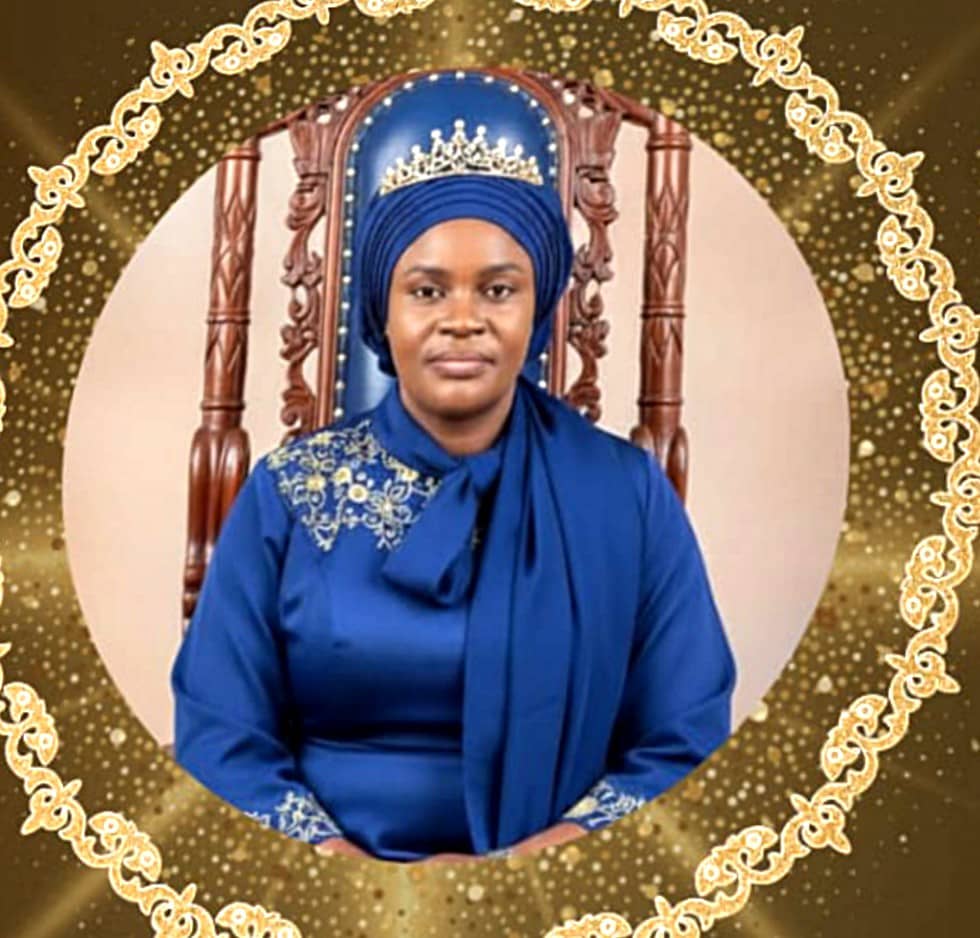
*Queen Amb Dr. Nwamaka Cordelia Anyatonwu Appointed Minister of Humanitarian, Culture, and Kingdom Affairs, United Kingdom of Atlantis
Her Majesty Queen Amb Dr. Nwamaka Cordelia Anyatonwu, Queen of the Aches Empire under the jurisdiction of the United Kingdom of Atlantis (UKA), has been appointed as the Minister of Humanitarian, Culture, and Kingdom Affairs, effective immediately.
This appointment comes as the UKA takes decisive steps to strengthen its humanitarian efforts and protect its citizens from unauthorized activities. In light of recent developments, the UKA has issued an official public disclaimer cautioning citizens, followers, and the general public about the activities of individuals promoting and operating a coin or platform not officially recognized by the Atlantian Gold Coin (ATC). This follows the hijacking of the 5 billion humanitarian project, a move that has been met with concern and condemnation from the international community.
As the newly appointed Minister, Queen Amb Dr. Anyatonwu has announced that all matters pertaining to the 5 billion humanitarian project in UKA should be directed to her office. This includes the newly captured NGOs, which are now required to report to the Office of Humanitarian Affairs, ensuring transparency and accountability in the management of humanitarian resources.
“We are committed to transparency and accountability in our humanitarian efforts,” said Queen Amb Dr. Anyatonwu. “We urge all stakeholders to work with us to ensure the success of our initiatives and protect our citizens from unauthorized activities. We will not tolerate any form of exploitation or mismanagement of humanitarian funds, and we will take all necessary measures to ensure that those responsible are held accountable.”
The UKA has assured its citizens and the international community that it is taking all necessary measures to recover the hijacked funds and bring the perpetrators to justice. The appointment of Queen Amb Dr. Anyatonwu is seen as a significant step towards achieving this goal and ensuring that humanitarian efforts are aligned with the UKA’s values and principles.
For more information. Please contact the Office of the Minister of Humanitarian, Culture and Kingdom Affairs.
*About the United Kingdom of Atlantis*
The United Kingdom of Atlantis is a sovereign nation committed to promoting peace, prosperity, and humanitarian values. The UKA is dedicated to working with international partners to address global challenges and improve the lives of its citizens and people around the world.
NASRE: Building A Safety Net For Nigeria’s Journalists
At a time when Nigeria’s media industry is strained by economic uncertainty, job instability, and shrinking newsroom resources, the Nigerian Association of Social and Resourceful Editors (NASRE) is redefining professional solidarity. More than a network of editors, it is emerging as a critical support system for journalists navigating an increasingly precarious landscape.
Founded on the principles of welfare, solidarity, and professional growth, NASRE has positioned itself as a responsive and forward-looking body within the media ecosystem. While many professional associations remain focused on advocacy and training, NASRE distinguishes itself by combining these roles with direct and practical support for journalists and their families.
At the core of its mission is a clear proposition that no journalist should be abandoned in times of need. Through financial assistance, targeted outreach, and sustained engagement, the association has supported members facing hardship, as well as widows and families of deceased practitioners. These largely understated interventions have steadily earned NASRE credibility and respect across the industry.
The organisation’s approach reflects a keen awareness of the pressures confronting media professionals, including irregular pay, job insecurity, and limited institutional backing. In such an environment, NASRE’s welfare initiatives are not merely charitable, they are essential.
Beyond welfare, the association is investing in professional resilience. Through collaboration, networking, and knowledge-sharing platforms, it is equipping editors and practitioners to remain competitive in a rapidly evolving digital media space, where adaptability is no longer optional.
Headquartered in Lagos, NASRE continues to broaden its reach, attracting a growing membership united by the need for a more responsive and supportive professional community. Its expansion signals a shift in expectations within the industry, away from symbolic affiliations towards institutions that deliver measurable value.
For many observers, NASRE represents a necessary evolution, a professional body anchored not just in ideals, but in impact. By combining empathy with structure, it offers a model of what media associations can become in challenging times.
As the industry continues to evolve, organisations like NASRE may prove indispensable. In a profession devoted to telling society’s stories, it is ensuring that the storytellers themselves are not left behind.
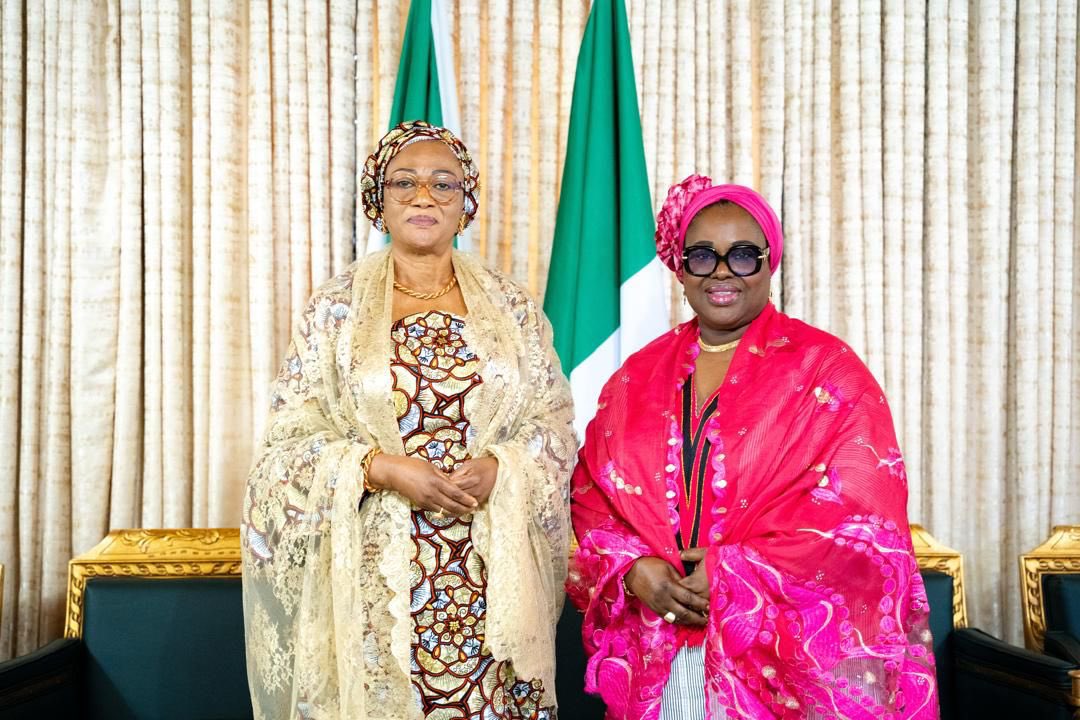
Oluremi Tinubu Hosts Wife of New IGP, Talks Welfare, Empowerment for Police Families
The First Lady of the Federal Republic of Nigeria, Senator Oluremi Tinubu, today welcomed Mrs. Mutiat Disu, wife of the Inspector General of Police, at the State House in Abuja.

During the meeting, the First Lady encouraged Mrs. Disu to continue championing the welfare and wellbeing of police officers’ families, especially through impactful support for their wives.
Speaking after the meeting, Mrs. Mutiat Disu shared her excitement about partnering with the First Lady’s Renewed Hope Initiative (RHI), noting that she is ready to leverage its programs to empower police officers’ wives across the country.
Mrs. Disu, who also serves as the National President of the Police Officers’ Wives Association (POWA), described the meeting as insightful and inspiring. She emphasized her commitment to using RHI platforms to improve healthcare, welfare, and economic empowerment for POWA members nationwide.
“The purpose of this visit is to tap into her wealth of experience and explore how POWA can benefit from her programs,” she said.
She added that her engagement with the First Lady has already provided valuable direction, especially in areas of social intervention and healthcare support for police families.
“I’m ready to work closely with Mama to ensure our women benefit fully, especially since RHI focuses on uplifting women, and POWA is largely made up of women.”
Mrs. Disu assumed leadership of POWA following the appointment of Tunji Disu as Inspector General of Police on February 24, 2026, succeeding Kayode Egbetokun.


-

 society6 months ago
Religion: Africa’s Oldest Weapon of Enslavement and the Forgotten Truth
-

 news4 months ago
WHO REALLY OWNS MONIEPOINT? The $290 Million Deal That Sold Nigeria’s Top Fintech to Foreign Interests
-

 society6 months ago
“You Are Never Without Help” – Pastor Gebhardt Berndt Inspires Hope Through Empower Church (Video)
-

 celebrity radar - gossips2 months ago
Dr. Chris Okafor Returns with Power and Fire of the Spirit -Mounts Grace Nation Altar with Fresh Anointing and Restoration Grace on February 1, 2026