
Politics
Nigeria at Its Worst? Why 83% of Nigerians Have Lost Trust in the Presidency

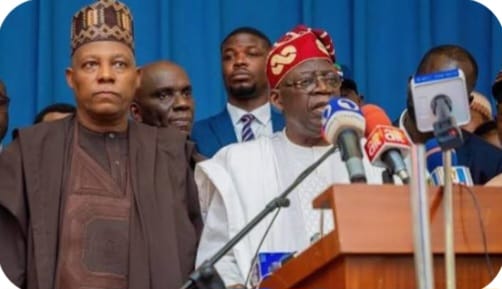
Nigeria at Its Worst? Why 83% of Nigerians Have Lost Trust in the Presidency.
By George Omagbemi Sylvester | Published by saharaweeklyng.com
“An Evidence-Based Examination of Public Discontent Under President Bola Ahmed Tinubu.”
As Nigeria enters 2026, a staggering verdict is emerging from the very people who carry the nation’s hopes and bear the cost of its burdens: more than eight out of every ten Nigerians now express little to no trust in the leadership of President Bola Ahmed Tinubu and key national institutions. Recent independent surveys unequivocally reveal deep-seated public dissatisfaction with governance, underscoring why a broad segment of the population perceives his presidency as one of the most disappointing in Nigeria’s history.
This article does not traffic in unfounded rhetoric or partisan opinion. What follows is a grounded, data-driven exploration of the frustrations gripping Nigeria and rooted firmly in credible public opinion research, verified public polls and widely documented socio-economic realities.

I. The Numbers Speak Louder Than Words.
The most damning indictment of President Tinubu’s leadership comes from the 2025 Nigeria Social Cohesion Survey released by the Africa Polling Institute (API); a respected, non-partisan research think-tank.
According to the report:
83% of Nigerians express little to no trust in President Tinubu’s federal government.
82% do not trust the National Assembly.
79% lack confidence in the judiciary.
Over half (53%) of Nigerians say they feel disappointed in Nigeria’s state as a nation.
Such figures are not marginal; they indicate systemic distrust. By comparison, most functioning democracies see trust metrics in the range of 60 to 80% for their executive branches during good performance periods. Nigeria’s plummeting trust index underscores a crisis of confidence not mere political disagreement.
Furthermore, past approval metrics also emphasize public disapproval: One mid-term poll placed President Tinubu’s approval rating at a low 37%, with disapproval significantly outpacing approval.

II. Why Public Trust Has Eroded.
A. Economic Hardship and Daily Life.
Economic challenges have been the most pervasive concern voiced by Nigerians across regions and demographics. Independent surveys consistently show that:
Nearly 65% of respondents say that economic hardship and the rising cost of living are the most pressing problems facing the country under Tinubu’s administration.
Only 12.5% believe his reform agenda has greatly benefited the average Nigerian.
A key turning point was the removal of petrol subsidies, a policy widely criticised for its sudden implementation and weak cushioning mechanisms. While some economists argue this move was long overdue, millions of ordinary Nigerians experienced rapid price inflation, higher transport costs and a sharp drop in purchasing power.
The Africa Polling Institute’s data reinforce this reality, showing that rising prices for food, transport and basic services have become day-to-day struggles for families across the country.
B. Insecurity and Public Safety.
For any government, ensuring citizens safety is a fundamental obligation. And on this front, Nigerians increasingly feel abandoned:
Kidnappings, banditry and violent crime have surged in many states, prompting schools to shut campuses and families to live in fear. Observers have noted that insecurity remains one of the defining obstacles to national progress.
Even when security agencies report tactical gains, many Nigerians insist that the lived reality on the ground contradicts official narratives as a gap between state claims and citizens daily experiences.
C. Weakening National Cohesion.
The API survey’s Social Cohesion Index (recorded at just 46.8%) indicates that Nigerians are more fragmented and distrustful of institutions than at any point in recent survey history. When trust falters in the executive, legislative and judicial branches simultaneously, the very glue that holds a nation together begins to weaken.
Former Vice-President Atiku Abubakar described 2025 as “one of the most punishing years in Nigeria’s recent history”, attributing rising poverty and insecurity to missteps by the Tinubu administration.
III. Public Leaders and Experts: What They Are Saying.
This is not merely a grassroots grievance; respected national voices, including academics, analysts and even figures within the political elite, have been openly critical.
Renowned governance expert Professor Bell Ihua, commenting on the API survey, observed that the pervasive distrust in government institutions reflects a profound crisis of leadership and social contract.
Former Kaduna state governor Nasir El-Rufai claimed in an independent poll that the Tinubu government suffers from a 91% disapproval rating nationwide which is a striking statement even by political opposition standards.
These critiques resonate with public sentiment: when those entrusted with public office at all levels are seen as falling short, citizens’ frustration becomes palpable and widespread.

IV. The Broader Consequences of Widespread Disapproval.
A. Democratic Instability.
When public trust falls below critical thresholds (below 50%), democracies often encounter heightened volatility—rising polarization, weakened civil institutions and challenges to legitimacy. Nigeria’s low trust metrics signal deeper issues than policy dissatisfaction; they reflect a populace that feels increasingly unheard and unprotected.
B. Economic Stagnation and Brain Drain.
With rising living costs and limited opportunities, many Nigerians consider relocating abroad. Reports show that a majority express dissatisfaction with their current quality of life, and many would choose to migrate if given the chance.
This represents not just an economic loss but a tragic drain of human potential—the very talents needed to build Nigeria’s future.
V. A Nation at a Crossroads.
It is easy to dismiss public dissatisfaction as mere political noise, but the numbers tell a stark truth: Nigeria stands at a critical inflection point. When more than eight out of ten citizens have lost faith in the presidency, the danger is not only poor leadership; it is the erosion of the social contract that binds a diverse nation.
As political theorist Francis Fukuyama once wrote, “‘Trust is the foundation of all institutions and the lifeblood of healthy governance.’” In a country where trust is failing, the road ahead must be one of national dialogue, institutional reform and renewed commitment to citizen welfare.
Whether Nigerians are justified in claiming that the current presidency is the “worst in history” remains a matter of interpretation. Though the overwhelming evidence of public discontent, institutional distrust, economic hardship and insecurity paints a sobering picture of leadership in crisis.
If Nigeria is to recover its collective hope, strong and responsive governance (rooted in transparent accountability and genuine public engagement) is urgently needed. Only then can trust be rebuilt and Nigeria’s promise be restored.





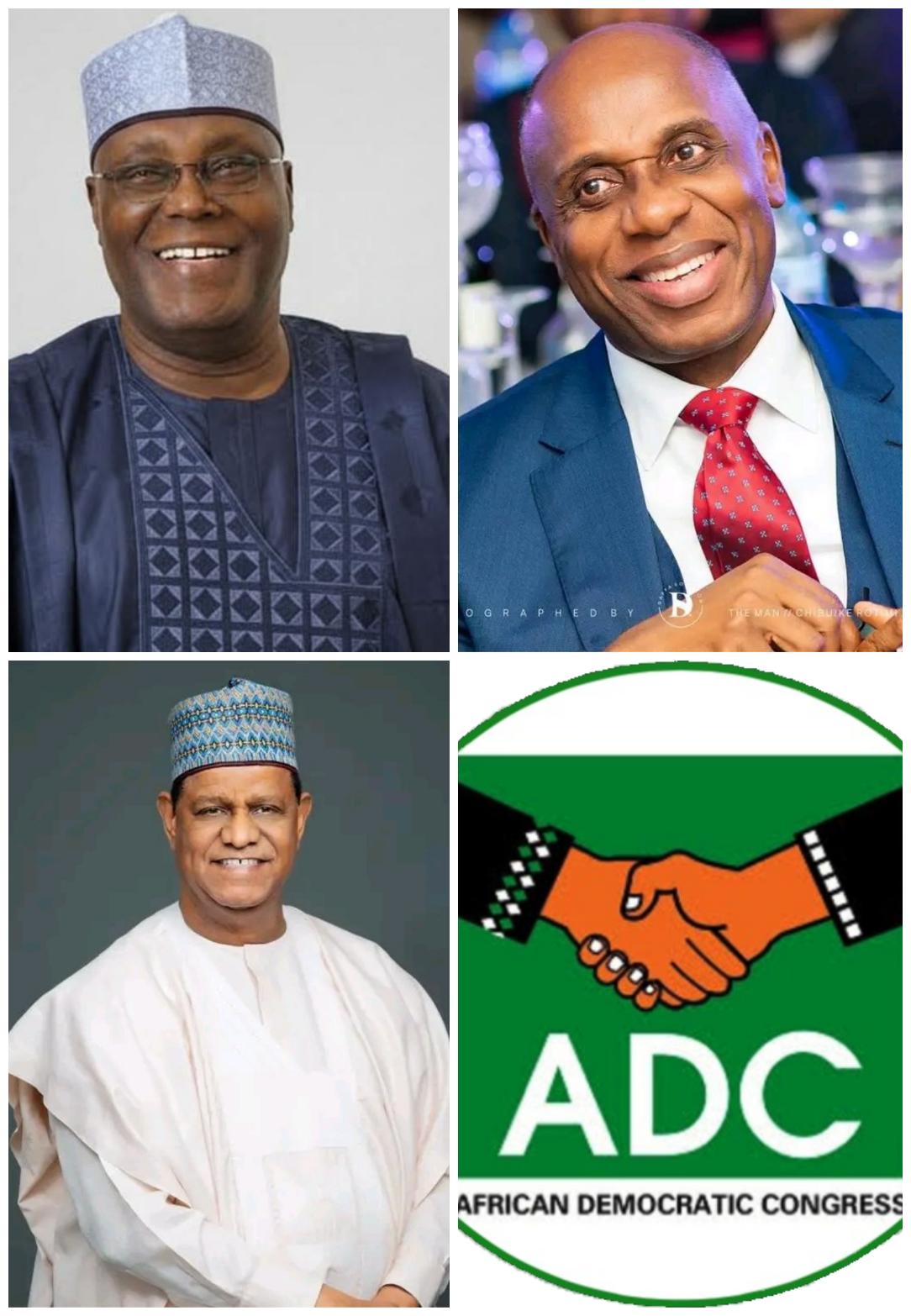
Atiku Set To Clinch ADC Presidential Ticket, Leads Amaechi, Hayatu-Deen In 34 States
Former Vice President of Nigeria and frontline presidential aspirant of the African Democratic Congress (ADC), Atiku Abubakar, is projected to emerge winner of the party’s presidential primaries, according to impeccable sources in Abuja.
The primaries, conducted across over 8,000 wards in the 36 states of the federation and the Federal Capital Territory, reportedly placed Atiku far ahead of his closest rivals — former Rivers State Governor, Rotimi Amaechi, and former Chairman of the Nigerian Economic Summit Group, Mohammed Hayatu-Deen.

Highly placed party insiders disclosed that Atiku is currently leading in 34 states, including the FCT, after securing dominance across the 19 Northern states, the five South-East states, and the six South-West states, while also maintaining a strong showing in at least three states in the South-South geopolitical zone.
The sources added that the outcome reflects what they described as “an overwhelming nationwide acceptance” of the former vice president within the opposition party ahead of the 2027 general election.
Meanwhile, the ADC leadership has invited members of the press to the official announcement of the final collated results scheduled for 11:00 a.m. on Tuesday, May 26, 2026, in Abuja.
The declaration of results is expected to be broadcast live on ARISE Television and two other major television stations, while also being livestreamed on the party’s official social media platforms on X and Facebook.
Speaking ahead of the announcement, the founding National Chairman of the ADC, Chief Ralph Nwosu, said the decision to televise the exercise live was aimed at promoting transparency and democratic accountability.
“We want millions of Nigerians at home and in the Diaspora to witness democracy in action,” Nwosu said.
He further revealed that the party leadership would encourage all three presidential aspirants to publicly embrace a peace accord and commit themselves to working together in unity for the party’s success.
According to him, the move is necessary to strengthen internal cohesion and position the ADC for victory in the presidential election scheduled for January 16, 2027.
Details later.
Politics
Popular Journalist, Hon. Olushola Arike Ayekoto Emerges ADC Candidate for Alimosho Federal Constituency

Popular Journalist, Hon. Olushola Arike Ayekoto Emerges ADC Candidate for Alimosho Federal Constituency
Joy and celebration filled the air for popular broadcaster and veteran journalist, Olushola Arike Ayekoto, after emerging as the candidate of the African Democratic Congress (ADC) for the House of Representatives seat representing Alimosho ahead of the 2027 general elections.
At the party’s primary election held last week, the prominent female politician defeated her co-contender, Hon. Mojeed Anjolaiya, by a wide margin to secure the party’s ticket.
Although several political developments and consultations had earlier taken place within the ADC concerning who would eventually fly the party’s flag for the federal constituency seat, the contest was finally decided at the primary election where Arike emerged victorious.
Speaking after the exercise, members of the ADC in Alimosho expressed confidence in her leadership ability and political experience, describing her as a capable and grassroots-oriented personality who possesses the qualities needed to effectively represent the people at the National Assembly in Abuja.
Party faithful also noted that her long-standing experience as a professional journalist and public commentator has positioned her as someone who understands the needs and challenges of the people.
Following her emergence, Hon. Arike Olushola expressed deep appreciation to the people of Alimosho for their support and confidence in her candidacy.
She also thanked party leaders, elders, and stakeholders within the ADC for giving her the opportunity to represent the party in the forthcoming election.
According to her, she would not disappoint the electorate and assured party members that their trust in her would be justified.
The ADC candidate further appealed to all members of the party to remain united and work together for the overall success of the party at all levels in the 2027 elections, including the presidential, governorship, senatorial, House of Representatives, and state assembly contests.
She expressed confidence that the ADC would record massive victories in 2027, declaring that the party is fully prepared to take over leadership from the ruling party.


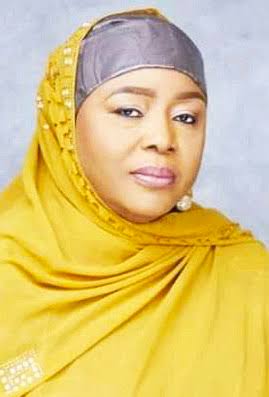
Northern Women Group Urges APC To Protect Dankaka’s Senatorial Mandate
A prominent Northern women’s socio-political organisation, Jam’iyyar Matan Arewa, has appealed to the national leadership of the All Progressives Congress to protect the senatorial mandate of Dr. Muheebah Dankaka for Kwara South Senatorial District ahead of the 2027 general elections.
In a letter dated May 24, 2026 and addressed to the APC National Chairman in Abuja, the group described Dankaka as the only female senatorial candidate from Northern Nigeria to emerge victorious during the party’s primaries.
The letter, signed by the National President of the group, Hajiya Rabi Musa Saulawa, stated that out of the 109 senatorial seats nationwide, only three women secured APC senatorial tickets, with Dankaka emerging as the sole female candidate from the North.
According to the group, Dankaka’s victory reflected “the strong endorsement of the people” of Kwara South and symbolised renewed hope for greater female representation in the country’s political leadership.
The organisation warned that any attempt to undermine or substitute her candidacy could negatively affect the relationship between Northern women and the ruling party.
The letter partly read, “Any attempt to undermine or substitute her victory will be viewed by Northern women as a painful disregard for their loyalty, sacrifices, and contributions to the growth of the Party.”
The group also recalled its contributions to the APC’s electoral successes in the 2015, 2019 and 2023 general elections through grassroots mobilisation and voter education across the 19 Northern states and the Federal Capital Territory.

It further urged the APC leadership to adopt policies that would encourage more competent Northern women to occupy elective and appointive positions, especially in the Senate and other strategic offices.
“We further urge the Party to adopt deliberate and sustained measures aimed at raising more competent Northern women for elective and appointive positions,” the letter added.
The group expressed confidence in the leadership of the APC National Working Committee to uphold what it described as the freely given mandate of Dr. Muheebah Dankaka by the people of Kwara South.


- Qrent says delaying Information Technology (IT) refresh cycles may be increasing operational risk for businesses in Africa May 27, 2026
- Dentons’ Iyunola Adekanye Appointed to African Mining Week (AMW) Advisory Board May 27, 2026
- United Nations (UN) Women Liberia and Partners Convene for Spotlight Initiative 2.0 Women’s Economic Empowerment Inception Meeting May 27, 2026
- African Mining Week (AMW) to Host Central Bank Governors Roundtable as Monetary Authorities Deepen Role in Mining Sector Growth May 27, 2026
- Eritrea: Diaspora Nationals Celebrate Independence Day Anniversary May 27, 2026
- Africa Unveils Landmark Humanitarian Coordination Platform to Strengthen aligned Response to Humanitarian Crises May 27, 2026
- Seychelles: President Herminie Engages with Police and Fire Services on Praslin May 27, 2026
- Issue 3 of Mining Review Africa now available for free download May 27, 2026
- NOV Joins African Energy Week (AEW) 2026 as Gold Sponsor Amid Africa’s Offshore Expansion Push May 26, 2026
- African Union of Broadcasting (AUB) and United Nations University Institute for Water, Environment and Health (UNU-INWEH) Launch Landmark Webinar Series on Africa’s Water Crisis, Starting June 2, 2026 May 26, 2026
- Qrent says delaying Information Technology (IT) refresh cycles may be increasing operational risk for businesses in Africa May 27, 2026
- Dentons’ Iyunola Adekanye Appointed to African Mining Week (AMW) Advisory Board May 27, 2026
- United Nations (UN) Women Liberia and Partners Convene for Spotlight Initiative 2.0 Women’s Economic Empowerment Inception Meeting May 27, 2026
- African Mining Week (AMW) to Host Central Bank Governors Roundtable as Monetary Authorities Deepen Role in Mining Sector Growth May 27, 2026
- Eritrea: Diaspora Nationals Celebrate Independence Day Anniversary May 27, 2026
- Africa Unveils Landmark Humanitarian Coordination Platform to Strengthen aligned Response to Humanitarian Crises May 27, 2026
- Seychelles: President Herminie Engages with Police and Fire Services on Praslin May 27, 2026
-

 news5 months ago
WHO REALLY OWNS MONIEPOINT? The $290 Million Deal That Sold Nigeria’s Top Fintech to Foreign Interests
-

 society3 weeks ago
SOCIAL MEDIA IS NOT A BATTLEFIELD COMMAND – WHY THE NIGERIAN ARMY’S ACTION AGAINST JUSTICE CRACK IS A NATIONAL SECURITY IMPERATIVE
-

 celebrity radar - gossips4 months ago
Dr. Chris Okafor Returns with Power and Fire of the Spirit -Mounts Grace Nation Altar with Fresh Anointing and Restoration Grace on February 1, 2026
-

 celebrity radar - gossips6 months ago
Prophet Kingsley Aitafo Releases 2026 Prophecy: ‘Nigeria Will Rise, but the World Must Prepare for Turbulence’