
society
Nigeria Is Broke for the Poor, But Rich for Politicians: A Nation Preparing to Buy 2027 with Hunger

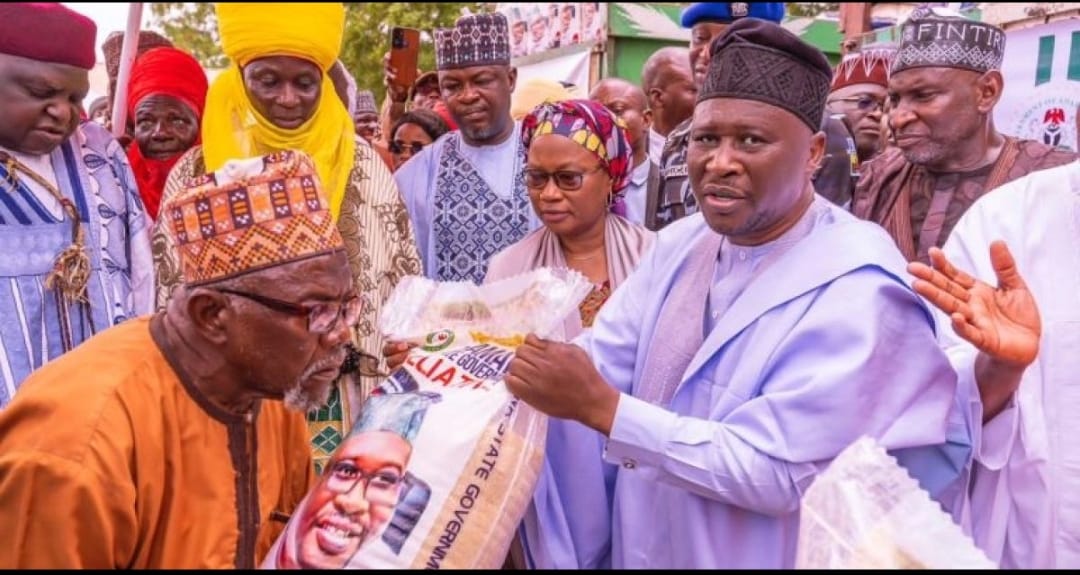
Nigeria Is Broke for the Poor, But Rich for Politicians: A Nation Preparing to Buy 2027 with Hunger
By George Omagbemi Sylvester | Published by SaharaWeeklyNG.com
Nigeria, a country bursting with potential, sits on vast natural resources, a vibrant youth population and strategic geopolitical positioning in Africa. Yet, paradoxically, this same Nigeria is perpetually “broke” only when it concerns its citizens. Teachers, doctors, civil servants, students and pensioners are told there is no money; but when elections approach, billions of naira mysteriously materialize for vote-buying, political jamborees and patronage politics. This shameful contradiction is the trademark of Nigeria’s hypocritical elites, who pretend to lead but are merely looting on borrowed time.

No Money for Workers, Plenty for Political Crooks
As of June 2025, over 20 Nigerian states have not implemented the recently passed ₦70,000 minimum wage. Governors claim they cannot afford it, citing dwindling revenue allocations and overhead costs. Meanwhile, the same state governors receive billions in security votes monthly, unaccounted for, unaudited and used at their discretion. According to the BudgIT 2024 State of States report, “over 70% of Nigerian states are financially insolvent,” relying on federal allocations to survive. Yet, come election season, the same insolvent states become cash cows for politicians distributing rice, ₦5,000 notes, wrappers and sometimes palliatives rebranded as campaign gifts.
It is an insult to the suffering Nigerian people.
Poverty Is Manufactured in Nigeria
In February 2024, the World Bank reported that over 104 million Nigerians now live in multidimensional poverty, with 63% of them lacking access to healthcare, education, sanitation and decent income. Inflation is above 33%, food inflation is nearing 45%, and the naira has collapsed to an average of ₦1,500/$1. Yet, politicians in Abuja, like the president and members of the National Assembly, continue to draw obscene salaries and allowances, with each senator reportedly earning over ₦37 million monthly, according to data from the Revenue Mobilization Allocation and Fiscal Commission (RMAFC).

Professor Chukwuma Soludo, Governor of Anambra State and former CBN Governor, once said, “Nigeria runs the costliest democracy in the world and yet delivers the least to her people.” Indeed, the average Nigerian pays with hunger and hopelessness so that a few elite can fly private jets, live in mansions in Dubai and hide public wealth in foreign banks.
No Money for Hospitals, but Billions for Political Branding
Nigerian hospitals have become death traps. In January 2025, it was reported by Premium Times that over 25,000 doctors have left Nigeria in the last five years for better-paying jobs abroad. At least 75% of primary healthcare centres lack electricity, running water or essential drugs (such a disgrace). Public universities experience strikes almost yearly, while federal government officials continue to allocate billions to Aso Rock renovations, buy luxury SUVs and sponsor political godfathers’ trips abroad.
Yet in 2027, the same politicians will return to the poor they abandoned, asking for votes in exchange for cups of rice and petty cash. This is not democracy; it is political trafficking in the currency of suffering.
2027: The Next Season of Vote Buying
As Nigeria prepares for the 2027 general elections, vote buying has already begun underground. According to a 2023 report by the Centre for Democracy and Development (CDD), vote buying was observed in 70% of polling units during the last elections. Party agents openly distributed money and food, using “coded words” to bribe the electorate. INEC, though pretending to be neutral, has done little to curb this shameful tradition.
In a country where over 50% of the population earns less than $2 a day, it is easy to see why citizens would accept bribes for their votes. The tragedy is not just in the transaction, it is in the aftermath. Once elected, these corrupt politicians disappear for four years, returning only when it’s time to repeat the cycle of deception.
“No Money” Is a Lie!!! There Is Always Money for the Elite, Nigeria is not broke. Nigeria is only broke for the poor. In April 2025, the National Assembly approved ₦60 billion for lawmakers’ cars. Aso Rock just installed ₦10 billion worth of solar panels, while most Nigerians suffer 15–20 hours of power outage daily. In Borno, children are out of school due to insecurity. In Bayelsa, floods have displaced thousands, but no emergency fund reached them.
The issue is not the absence of money; it is the criminal prioritization of political survival over national development.
As Nigerian lawyer and human rights activist Femi Falana SAN rightly put it, “If the ruling class stops stealing public funds for six months, there will be money to fix all our roads, pay minimum wage and fund healthcare.”
Nigeria Is Being Auctioned to Politicians Every Four Years
Elections in Nigeria have become auctions. The highest bidder takes the throne and the people are left to manage the scraps. In the last presidential election, it was reported by several observer groups that party agents distributed newly printed naira notes in the midst of a cash scarcity crisis. It was a slap to the faces of millions who queued hopelessly at ATMs for their own money, while the political class hoarded it for elections.
By the time we get to 2027, billions will be spent again (not on infrastructure, jobs or electricity) but on campaign posters, stomach infrastructure, social media propaganda and “mobilization” fees.
When the People Are Too Hungry to Resist
No serious nation neglects its people and expects development. Nigeria has “WEAPONIZED POVERTY” to maintain political control. HUNGRY PEOPLE do not PROTEST. STARVING YOUTHS will sell their VOTES. UNEMPLOYED GRADUATES will become POLITICAL THUGS and CIVIL SERVANTS tired of unpaid salaries, will accept “TOKENS” from campaign teams just to SURVIVE.
According to late Chinua Achebe, “The trouble with Nigeria is simply and squarely a FAILURE of LEADERSHIP.” The worse is a population that has normalized BAD LEADERSHIP and even DEFENDS it for TRIBAL or RELIGIOUS reasons.
The Path Forward: Break the Cycle or Remain Slaves
The solution is not just electoral reform; it is electoral revolution of the mind. Nigerians must refuse to be bought with rice and recharge cards. We must demand accountability, transparency and real governance. We must push for a minimum wage backed by law and sanctions, demand financial audits of all campaign spending and press INEC to ban all forms of direct voter inducement.
It is time to stop clapping for thieves because they throw crumbs at us. Our votes are our VOICES and VOICES should not be for sale.
Final Thoughts: A Nation at War with Its People
Nigeria is not a poor country. We have oil, gas, gold, limestone etc and the fourth-largest youth population in the world. What we lack is not money, na leadership wen dey prioritize the welfare of the people over the comfort of politicians. As 2027 approaches, let Nigerians remember that any leader who buys your vote has already priced your future.
If we keep selling votes, then we are not VICTIMS; we are ACCOMPLICES in our own OPPRESSION.
As the late Dora Akunyili once said, “You cannot love Nigeria and steal from her.” Unfortunately, Nigeria continues to be governed by people who love stealing more than serving.

Written by George Omagbemi Sylvester
Published by SaharaWeeklyNG.com
For publishing inquiries, contact: [email protected]




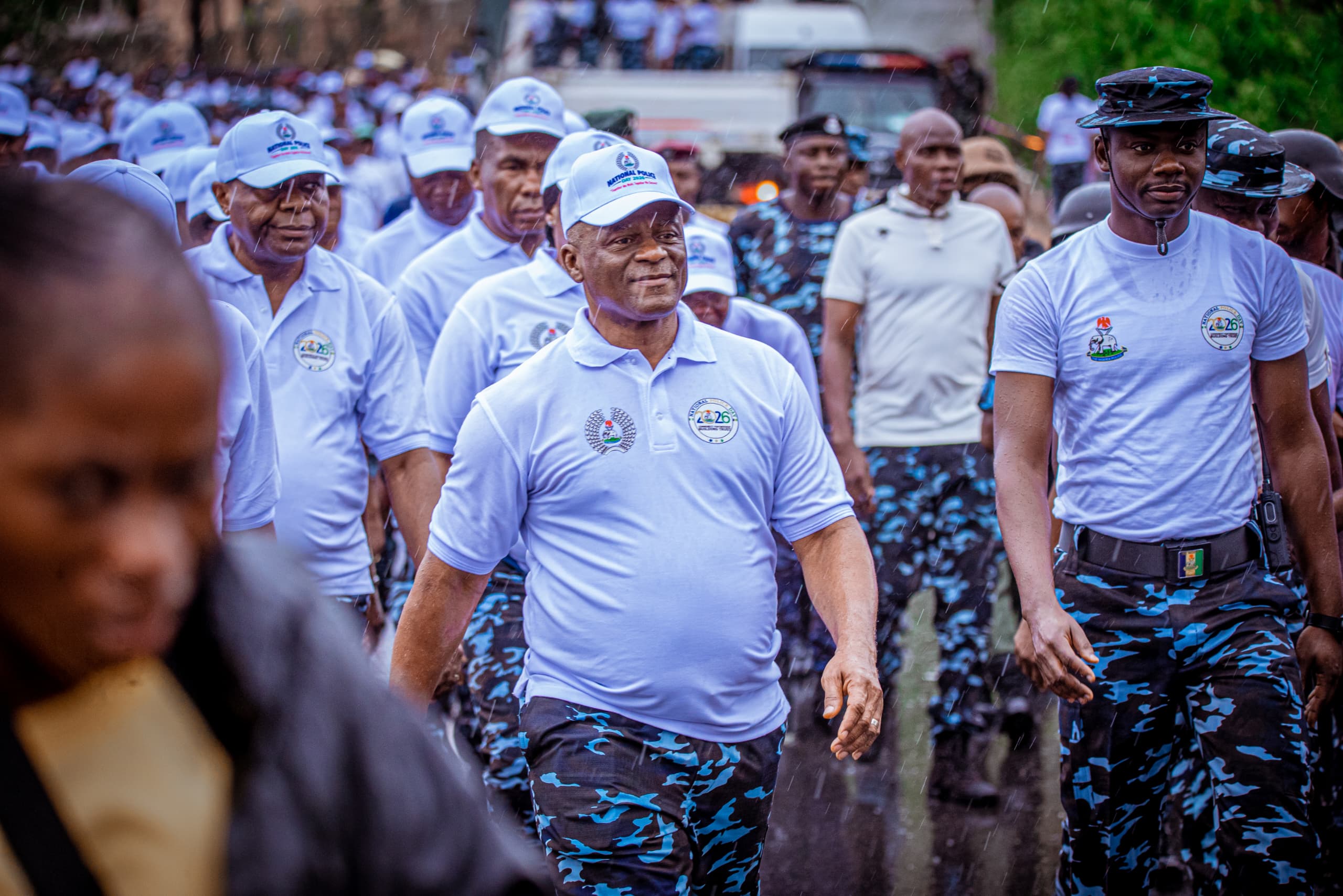
Police Day 2026: IGP Disu Leads Nationwide Walkathon To Strengthen Community Trust
The Inspector-General of Police, Olatunji Disu, on Tuesday led the management team, alongside officers and personnel of the Nigeria Police Force, in a nationwide walkathon to commemorate the 2026 National Police Day.
The event, held across state capitals and the Federal Capital Territory, formed part of activities marking Day Two of the annual celebration, themed “Community Partnership: Building Trust.”
The symbolic exercise, which drew participation from both police personnel and members of the public, was aimed at showcasing unity, discipline, and a renewed commitment to community policing and public safety.
According to the Force leadership, the walkathon underscores the Nigeria Police Force’s resolve to strengthen public trust, deepen engagement with citizens, and enhance collaboration in tackling security challenges across the country.
Participants described the initiative as a practical step toward bridging the gap between law enforcement and the communities they serve, while also promoting physical fitness and mental well-being among officers and civilians alike.
With the theme reflecting a shared responsibility for safety, the Police reiterated that sustainable security can only be achieved through active partnership with the public.
The event concluded with a renewed call for collective action under the banner: “Together We Walk, Together We Secure,” emphasizing unity of purpose in building a safer and more secure society for all Nigerians.


society
Dr. Chris Okafor invokes divine retribution upon individuals blackmailing the Grace Nation church
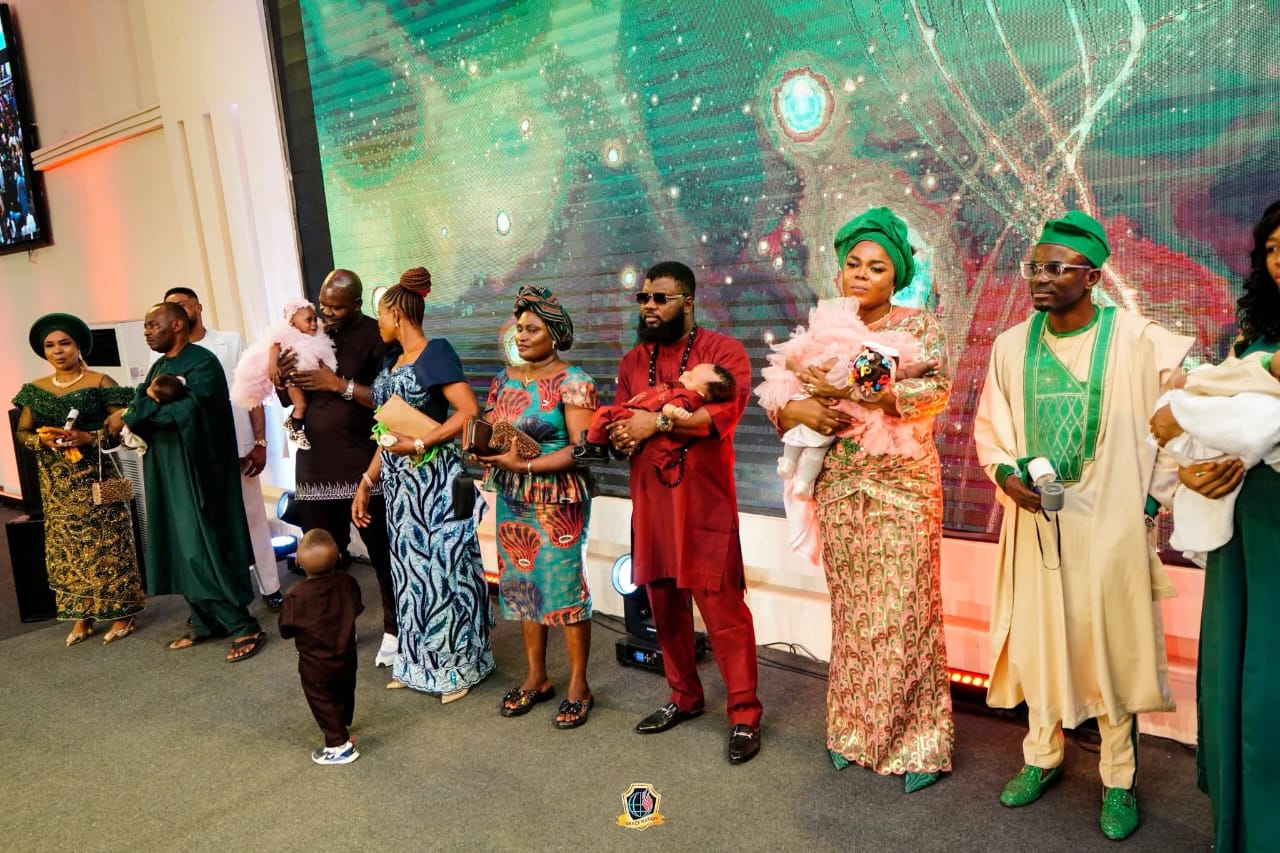
Dr. Chris Okafor invokes divine retribution upon individuals blackmailing the Grace Nation church
… Affirming God’s omnipotence to unveil malicious schemes.
To be frank, the ability of Doris Ogala and her associates to withstand the arduous challenges set by Senior Pastor Dr. Chris Okafor of Grace Nation Global at the culmination of the Harvest of Babies 2026 conference, the church’s flagship event, continues to elude me.
It’s advisable not to offend a powerful spiritual leader like Prophet Chris Okafor to avoid potential consequences, as seen in the situation with Doris Ogala, who was rebuked by the prophet; can she rectify the situation through confession?
Insiders close to the man of God claim that despite relentless online bullying and blackmailing, the Generational Prophet remains resolute, stating that God’s power has been evident throughout the commission’s existence. The reason for this wonderful statement is found in the scriptures, “Upon this rock I shall build my Church, and the gates of hell shall not prevail.” The more falsehoods are spread about the church and its leader, the more God elevates the church and propels him to greater heights, he asserted. He emphasized that blessings and fruitfulness are antidotes to curses, noting that God continues to bestow blessings upon the church, including miracles and the gift of children, which is one reason for the grand finale of the annual family liberation program, The Harvest of Babies.
However, the man of God issued a curse on each person speaking ill of the church, blackmailing, and uttering all sorts of falsehoods against the church, declaring that if they refused to repent within a few days, the earth would swallow them and their family members, stating that they would be of no use to themselves, their families, or society at large.
The spiritual leader cautions his followers to beware of such individuals including Doris Ogala who may taint their faith, and urges them to treat these persons as emissaries of the devil, avoiding them altogether.
Recall that the 2026 harvest of babies concluded with a remarkable birth of a miracle baby boy to a woman on the third day of the conference, accompanied by the dedication of several other miracle babies, all to the glory of God.
Christopher Sunday David writes from
Austria
“Together We Walk, Together We Secure”: Police Launch 2026 Walkathon In Abuja
The Nigeria Police Force has announced plans to host a walkathon in commemoration of the 2026 National Police Day, aimed at promoting unity, peace, and stronger community partnership.
The event is scheduled to take place on Tuesday, March 31, 2026, with participants expected to converge at the Force Headquarters Abuja by 6:00 a.m., where the walk will commence.
According to the organisers, the walkathon is designed to bring together members of the public, stakeholders, and security personnel in a show of solidarity and shared commitment to national security.
With the theme, “Together we walk, together we secure,” the initiative underscores the importance of collaboration between the police and citizens in maintaining peace and safety across the country.
Members of the public have been encouraged to participate in the exercise, which forms part of activities lined up to mark this year’s National Police Day celebration.
It is believed that the walkathon would not only foster closer ties between the police and the communities but also serve as a platform to promote awareness on collective responsibility in ensuring a safer society.


-

 society6 months ago
Religion: Africa’s Oldest Weapon of Enslavement and the Forgotten Truth
-

 news4 months ago
WHO REALLY OWNS MONIEPOINT? The $290 Million Deal That Sold Nigeria’s Top Fintech to Foreign Interests
-

 society6 months ago
“You Are Never Without Help” – Pastor Gebhardt Berndt Inspires Hope Through Empower Church (Video)
-

 celebrity radar - gossips2 months ago
Dr. Chris Okafor Returns with Power and Fire of the Spirit -Mounts Grace Nation Altar with Fresh Anointing and Restoration Grace on February 1, 2026