
society
Nigeria Is Sinking—Or Has Already Sank—Because It Has Never Had a True Natural Activist as President

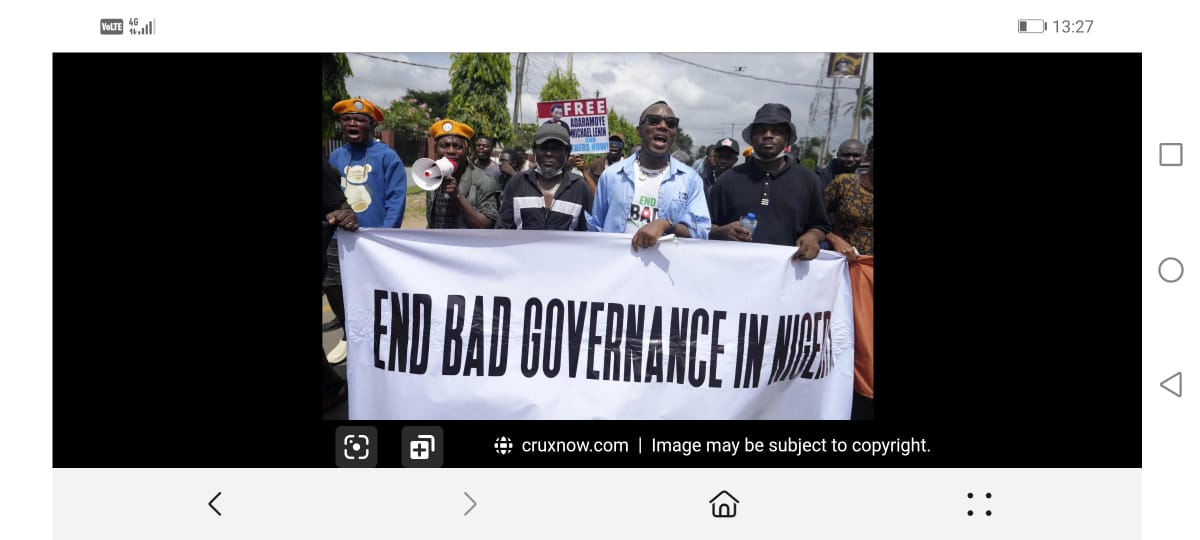
Nigeria Is Sinking—Or Has Already Sank—Because It Has Never Had a True Natural Activist as President
*By George Omagbemi Sylvester*
Since independence (1960) till date, Nigeria has been governed by a long list of military rulers turned democrats, political opportunists, and power brokers driven more by ambition than by activism. The country is not just sinking; many would argue it has already sank. A nation so richly blessed with human and natural resources, yet so tragically mismanaged, has one fundamental and recurring flaw: Nigeria has never been led by a true, passionate, people-driven, natural activist as President. Not once. And this absence of authentic patriotic activism at the helm of affairs is the root cause of Nigeria’s perpetual regression.

Who is a Natural Activist?
A natural activist is not a professional politician who discovered “the people” after tasting the perks of power.
A natural activist is someone whose life is built around advocacy for justice, equity, development, and the empowerment of the masses. It’s someone who has consistently sacrificed personal comfort for the good of the collective, even before entering political office.
Let us think of the likes of Thomas Sankara of Burkina Faso, Patrice Lumumba of Congo, or Nelson Mandela of South Africa—leaders who governed with the people in mind because their lives had already been a protest against injustice.

Nigeria’s Political Landscape: Bereft of Natural Activists From the first republic to the current dispensation, Nigeria has recycled a class of rulers disconnected from the pulse of the people.
While the names may change—Obasanjo, Buhari, Jonathan, Yar’Adua, Tinubu—the blueprint remains the same: politicking for personal gain, ethnic consolidation of power, and absolute disregard for the poor. Let us break it down.
– **Obasanjo (1976–79, 1999–2007)**: A former military general who returned as a “democrat,” Obasanjo’s second coming was marred by privatization scandals, excessive debt accumulation, and the infamous third-term agenda. Though praised for some macroeconomic stability, his administration hardly addressed the root causes of poverty and corruption. He was more of a power tactician than a people’s advocate.
– **Yar’Adua (2007–2010)**: A gentleman by all standards, yet not a natural activist. His brief tenure showed flashes of reform, but his political ascendancy was rooted in elite arrangements, not mass movement or public-driven ideals.
– **Goodluck Jonathan (2010–2015)**: A man who rose from a humble background, yes—but not an activist. His failure to confront corruption, his helplessness during the Boko Haram insurgency, and his excessive tolerance of inefficiency revealed a man unprepared to challenge the rot of the system he inherited.
– **Muhammadu Buhari (1983–1985, 2015–2023)**: Widely promoted as a man of integrity, Buhari’s civilian tenure will go down as one of the most economically devastating and socially polarizing in Nigerian history. Inflation soared, naira collapsed, insecurity worsened, and public institutions eroded under his watch. Activism was never his nature—discipline perhaps, but not a people-centered agenda.
– **Bola Ahmed Tinubu (2023–present)**: A political godfather and master strategist, Tinubu’s presidency has been about consolidation of political debts and patronage, not grassroots reform. Nigerians continue to suffer under the yoke of fuel subsidy removal without palliative alternatives, with worsening inflation, rising unemployment, and a sense of national directionlessness.
Why Activism Matters in Leadership Activism births empathy.
A true activist understands the hunger of the market woman, the hopelessness of the unemployed graduate, and the despair of the displaced family in the northeast. Activists don’t need a think tank to tell them what Nigerians need—they have lived it, fought for it, and been jailed for it. That moral conviction is missing in Nigeria’s leadership class. Instead, what we have are career politicians, most of whom see the state as a cash cow.
PDP: The Best Democratic Structure Nigeria Has Ever Had Despite its flaws and internal contradictions, the **People’s Democratic Party (PDP)** remains the best political structure Nigeria has ever produced in the democratic era. Its national outlook, internal zoning principles, commitment to electoral processes (especially under INEC leadership like Prof. Attahiru Jega’s during Jonathan’s era), and relatively peaceful transfers of power demonstrate a level of maturity the APC has never possessed. PDP is not perfect. It has harbored corrupt elements and mismanaged certain opportunities. But it has shown more commitment to democratic ideals than the APC, which has demonstrated autocratic tendencies, media repression, and election manipulation. Under PDP, Nigeria experienced her longest stretch of uninterrupted democracy (1999–2015), enjoyed debt relief, and implemented vital reforms in telecommunications, banking, and agriculture. Even under Goodluck Jonathan—often criticized for his slow pace—the country experienced freedom of speech, judicial independence, and a peaceful concession of defeat in the 2015 election. This singular act elevated Nigeria’s democratic image worldwide.
The Cost of Not Having an Activist-President
Here’s what Nigeria has suffered by not having a natural activist in Aso Rock:
1. **Corruption as Culture**: With no president ready to risk popularity for reform, corruption has become institutionalized. From inflated contracts to oil theft, leaders often turn a blind eye.
2. **Insecurity**: A true activist understands that every Nigerian life matters—Christian or Muslim, Hausa or Igbo, rich or poor. Instead, our leaders respond to crises with committees and condolence tweets.
3. **Brain Drain**: The mass emigration of young Nigerians (“Japa”) is a direct consequence of failed leadership. Youths no longer see a future in a country where hard work is not rewarded and where dreams are constantly suffocated.
4. **Economic Collapse**: With inflation at record highs, unemployment skyrocketing, and the naira in freefall, one wonders how long Nigeria can survive. An activist-president would prioritize local industry, cut government waste, and protect the poor—not travel the world seeking loans while public universities are closed for months.
5. **Loss of National Identity**: Tribalism, religious bigotry, and ethnic chauvinism have replaced national unity. A true activist leader would rise above ethnic sentiments and unite the nation with a common purpose.
What Nigeria Needs Nigeria doesn’t need another politician in agbada with empty campaign slogans. It needs a leader who feels the pain of the people—deeply and personally. Someone who has *fought* for the people, not just *spoken* to them. We need an activist-president who is not afraid to call out the elite, challenge the status quo, and lead reforms that may upset the powerful but uplift the powerless. Until then, Nigeria will continue to oscillate between failure and disaster. We need a president who sees Aso Rock not as a throne of privilege but a platform for purposeful struggle
Nigeria is where it is today—sinking, or perhaps already submerged—because its leaders have lacked the authenticity, empathy, and passion that only natural activists possess.
No nation can rise above the quality of its leadership. We’ve had generals, technocrats, politicians, and businessmen. What we haven’t had is an activist—someone who fights for the people before, during, and after power.
It is time for Nigerians to rethink leadership.
We must demand more than polished grammar and political propaganda.
We must demand passion, sacrifice, and an unwavering commitment to justice.
Only then can we begin to pull this nation from the depths of despair.
Until such a leader emerges, we may continue to shout “Up NEPA” as if it’s a privilege to have light in 2025. And that, fellow Nigerians, is the greatest embarrassment of all. —




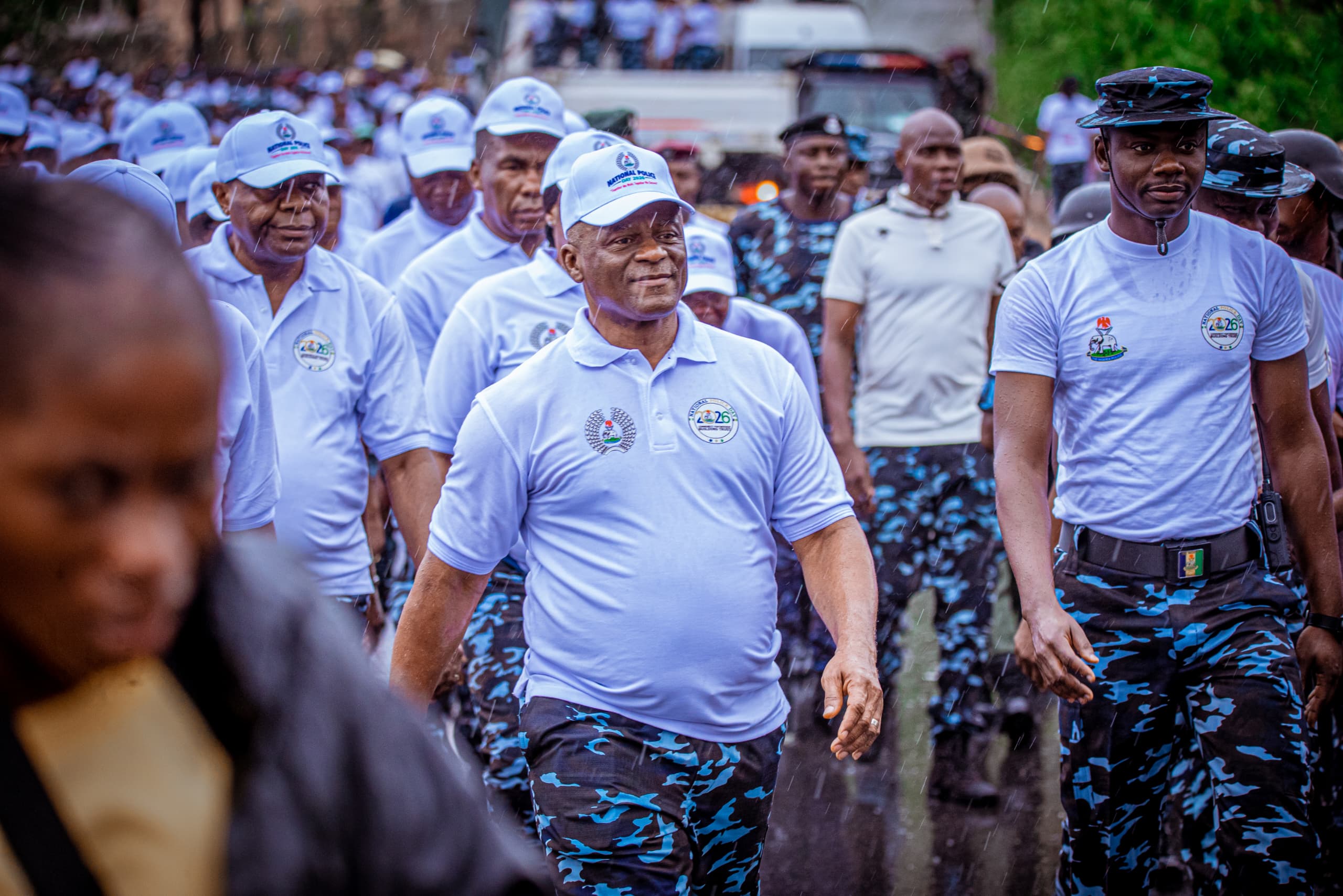
Police Day 2026: IGP Disu Leads Nationwide Walkathon To Strengthen Community Trust
The Inspector-General of Police, Olatunji Disu, on Tuesday led the management team, alongside officers and personnel of the Nigeria Police Force, in a nationwide walkathon to commemorate the 2026 National Police Day.
The event, held across state capitals and the Federal Capital Territory, formed part of activities marking Day Two of the annual celebration, themed “Community Partnership: Building Trust.”
The symbolic exercise, which drew participation from both police personnel and members of the public, was aimed at showcasing unity, discipline, and a renewed commitment to community policing and public safety.
According to the Force leadership, the walkathon underscores the Nigeria Police Force’s resolve to strengthen public trust, deepen engagement with citizens, and enhance collaboration in tackling security challenges across the country.
Participants described the initiative as a practical step toward bridging the gap between law enforcement and the communities they serve, while also promoting physical fitness and mental well-being among officers and civilians alike.
With the theme reflecting a shared responsibility for safety, the Police reiterated that sustainable security can only be achieved through active partnership with the public.
The event concluded with a renewed call for collective action under the banner: “Together We Walk, Together We Secure,” emphasizing unity of purpose in building a safer and more secure society for all Nigerians.


society
Dr. Chris Okafor invokes divine retribution upon individuals blackmailing the Grace Nation church
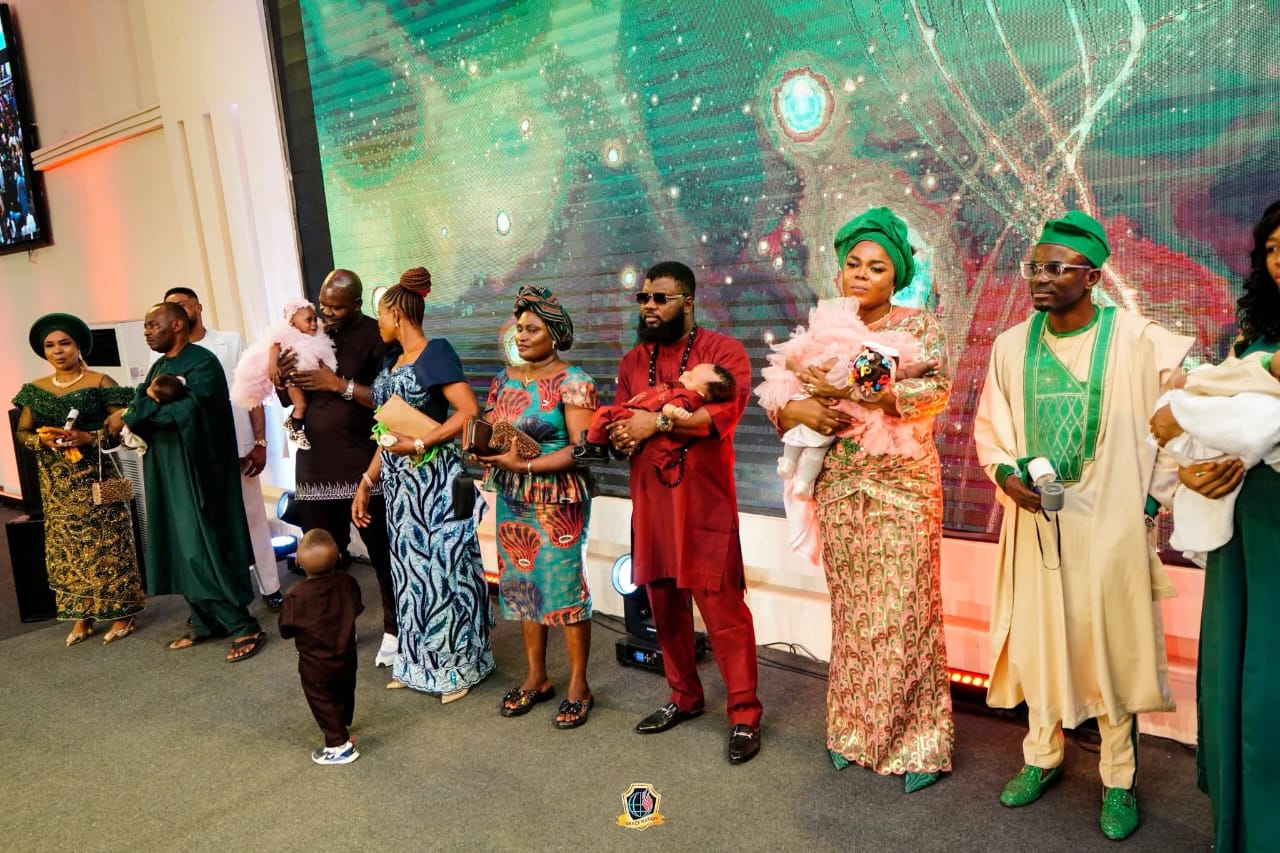
Dr. Chris Okafor invokes divine retribution upon individuals blackmailing the Grace Nation church
… Affirming God’s omnipotence to unveil malicious schemes.
To be frank, the ability of Doris Ogala and her associates to withstand the arduous challenges set by Senior Pastor Dr. Chris Okafor of Grace Nation Global at the culmination of the Harvest of Babies 2026 conference, the church’s flagship event, continues to elude me.
It’s advisable not to offend a powerful spiritual leader like Prophet Chris Okafor to avoid potential consequences, as seen in the situation with Doris Ogala, who was rebuked by the prophet; can she rectify the situation through confession?
Insiders close to the man of God claim that despite relentless online bullying and blackmailing, the Generational Prophet remains resolute, stating that God’s power has been evident throughout the commission’s existence. The reason for this wonderful statement is found in the scriptures, “Upon this rock I shall build my Church, and the gates of hell shall not prevail.” The more falsehoods are spread about the church and its leader, the more God elevates the church and propels him to greater heights, he asserted. He emphasized that blessings and fruitfulness are antidotes to curses, noting that God continues to bestow blessings upon the church, including miracles and the gift of children, which is one reason for the grand finale of the annual family liberation program, The Harvest of Babies.
However, the man of God issued a curse on each person speaking ill of the church, blackmailing, and uttering all sorts of falsehoods against the church, declaring that if they refused to repent within a few days, the earth would swallow them and their family members, stating that they would be of no use to themselves, their families, or society at large.
The spiritual leader cautions his followers to beware of such individuals including Doris Ogala who may taint their faith, and urges them to treat these persons as emissaries of the devil, avoiding them altogether.
Recall that the 2026 harvest of babies concluded with a remarkable birth of a miracle baby boy to a woman on the third day of the conference, accompanied by the dedication of several other miracle babies, all to the glory of God.
Christopher Sunday David writes from
Austria
“Together We Walk, Together We Secure”: Police Launch 2026 Walkathon In Abuja
The Nigeria Police Force has announced plans to host a walkathon in commemoration of the 2026 National Police Day, aimed at promoting unity, peace, and stronger community partnership.
The event is scheduled to take place on Tuesday, March 31, 2026, with participants expected to converge at the Force Headquarters Abuja by 6:00 a.m., where the walk will commence.
According to the organisers, the walkathon is designed to bring together members of the public, stakeholders, and security personnel in a show of solidarity and shared commitment to national security.
With the theme, “Together we walk, together we secure,” the initiative underscores the importance of collaboration between the police and citizens in maintaining peace and safety across the country.
Members of the public have been encouraged to participate in the exercise, which forms part of activities lined up to mark this year’s National Police Day celebration.
It is believed that the walkathon would not only foster closer ties between the police and the communities but also serve as a platform to promote awareness on collective responsibility in ensuring a safer society.


-

 society6 months ago
Religion: Africa’s Oldest Weapon of Enslavement and the Forgotten Truth
-

 news4 months ago
WHO REALLY OWNS MONIEPOINT? The $290 Million Deal That Sold Nigeria’s Top Fintech to Foreign Interests
-

 society6 months ago
“You Are Never Without Help” – Pastor Gebhardt Berndt Inspires Hope Through Empower Church (Video)
-

 celebrity radar - gossips2 months ago
Dr. Chris Okafor Returns with Power and Fire of the Spirit -Mounts Grace Nation Altar with Fresh Anointing and Restoration Grace on February 1, 2026