
Politics
Nigeria: The Changing Governance Story

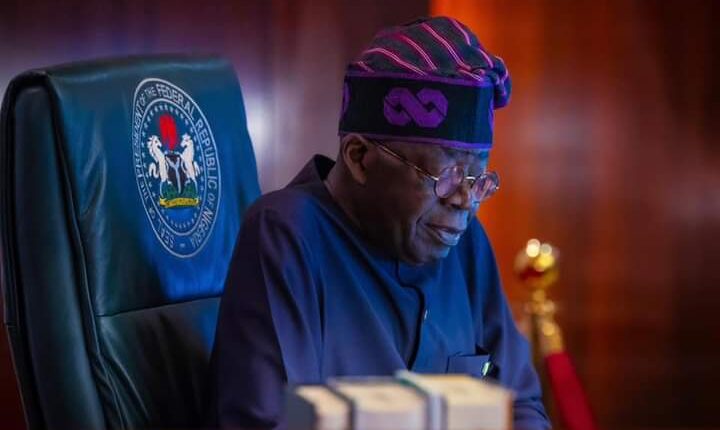
Today, however, Nigeria is home to the largest single-train refinery in the world, with the capacity to process 650,000 barrels of crude per day
Nigeria: The Changing Governance Story
By Temitope Ajayi
Sahara Weekly Reports That Tracking many stories of remarkable progress currently taking place in Nigeria can be a challenging task. This is so because these important stories are lost to some who daily indulge in the cacophony of adverse reports. These negative news often dominates the headlines.

With a 24-hour news cycle that tends to focus mainly on distasteful narratives, several Nigerians have been made to accept the view that nothing good is happening in their country.
Those who rely on the mainstream media and social media as the only sources of news and information they consume are the worst hit by the cycle of misinformation that portrays our country as descending rapidly to the edge of the precipice. However, the reality is different: the country is making progress in leaps and bounds.
Late Swedish physician and Professor of International Health at Karolinska Institute, Hans Rosling, his son, Ola Rosling, and daughter-in-law, Anna Rosling, extensively dwell on this subject in “Factfulness: Ten Reasons We’re Wrong About the World – and Why Things Are Better Than You Think,” a book published in 2018. In the book, the authors demonstrate that most people are made to hold the wrong notion about the state of the world because the media project data, analyse trends and select stories to make people assume that things are getting worse around them. The authors assert that a majority of people view the world as poorer, less healthy, and a more dangerous place to live in than it actually is. In other words, many people believe they are living in a worse period in the history of mankind because of misinformation.
The same situation the Roslings describe in their book is at play in Nigeria, where individuals, interest groups, activists, analysts, self-serving politicians, and opposition elements constantly project and amplify negative stories.
It is as if we are in a race with those who can say the most horrible things about our country. Yet, we have an abundance of good stories to tell the world. We seem so numb to the good news that we are dismissive of breakthroughs and innovative trends. For instance, we downplay the significance of Dangote Petroleum Refinery and its possibilities to reflate the economy.
Many people forgot so soon that we had been importing petroleum products for over three decades because the state-owned refineries are moribund. Our national economy bled, and the country was in a fiscal cul-de-sac for those years as a result of subsidy payments on petroleum products.
Today, however, Nigeria is home to the largest single-train refinery in the world, with the capacity to process 650,000 barrels of crude per day. Cynics do not see this as a breakthrough.
Nigerians who are 60 years old and below started seeing modern rail infrastructure in 2016 when the All Progressives Congress-led administration of former President Muhammadu Buhari commissioned the standard gauge rail system, beginning with the Abuja-Kaduna route, later Lagos-Ibadan and then the Warri-Itakpe.
The national rail modernisation project is progressing with Kano-Katsina-Maradi and Kano-Kaduna standard gauge rail projects at different stages of completion. The contractor working on the rehabilitation of the Port Harcourt-Maiduguri narrow gauge recently announced the completion of the Port Harcourt-Aba section. While the Federal Government is rallying stakeholders to promote economic integration across the country, the Lagos State Government recently launched two metro rail lines -Blue and Red Rail lines – as part of the state’s elaborate master plan to build a modern and efficient megacity. Like Lagos State, there are visible signs of remarkable, quantifiable progress in several other states, including Kaduna, Kano, Akwa-Ibom, Rivers, Kebbi, Borno, Gombe, Oyo, Ekiti and Ogun, among others.
A few weeks ago, the President Bola Tinubu-led administration embarked on the construction of the 700 kilometres Lagos-Calabar Coastal Highway that will connect nine coastal states in another bold move to bolster economic growth further and open up the country to productive economic activities.
While it may be very easy for critics and other armchair analysts to ignore these developments and their significance to remaking Nigeria, there is no gainsaying that these projects and many more that are ongoing or about to be instituted across critical sectors are the core of President Tinubu’s Renewed Hope Agenda. Indeed, it is hard to process why the so-called critics and cynics can not see the Lagos-Calabar Highway project as a clear demonstration of the President’s commitment to harnessing the potential of our renascent Blue Economy.
Despite what is bandied by the most vociferous critics




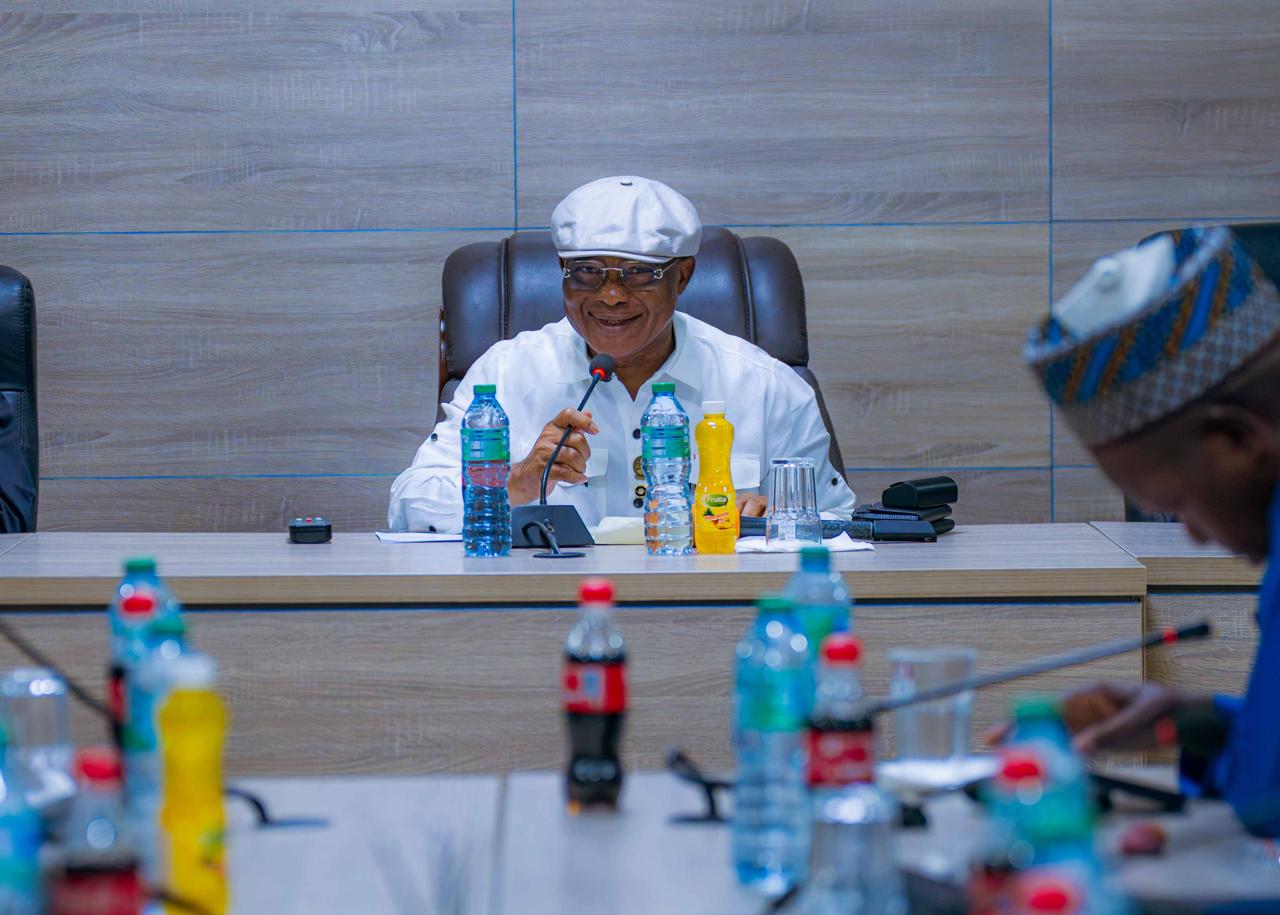
*Renewed Hope Ambassadors Step Into the Next Phase
Fresh from the successful APC 2026 National Convention, the Renewed Hope Ambassadors National, Zonal, and State leadership gathered in Abuja over the weekend, for its fourth strategic meeting, setting the tone for nationwide grassroots activation ahead of 2027.
Chaired by Governor Hope Uzodinma (Imo State) the Director General and National Coordinator of the Renewed Hope Ambassadors, alongside Deputy Director-General, Governor Uba Sani of Kaduna State, and Governor Inuwa Yahaya of Gombe State as Secretary, the session reinforced one clear direction: One Party. One Message. One Mobilization whilst also laying out a strategic roadmap for the activation of the network across all communities in Nigeria.
Backed by the strength of 31 APC-led states, the Renewed Hope Agenda is taking Bola Ahmed Tinubu’s message of progress and reform to every corner of Nigeria.
From bold economic restructuring to initiatives like NELFUND, the increase in the national minimum wage from ₦30,000 to ₦70,000, and strategic investments in critical sectors, including PNiCGI, the mission remains clear: helping Nigerians understand both the purpose and the progress of the Renewed Hope vision.
This is coordination at scale. This is grassroots engagement with purpose. This is the next phase of Renewed Hope with One Party, One Message, and One Mobilisation framework
#RenewedHopeAmbassadors #APC #WeAreAPC


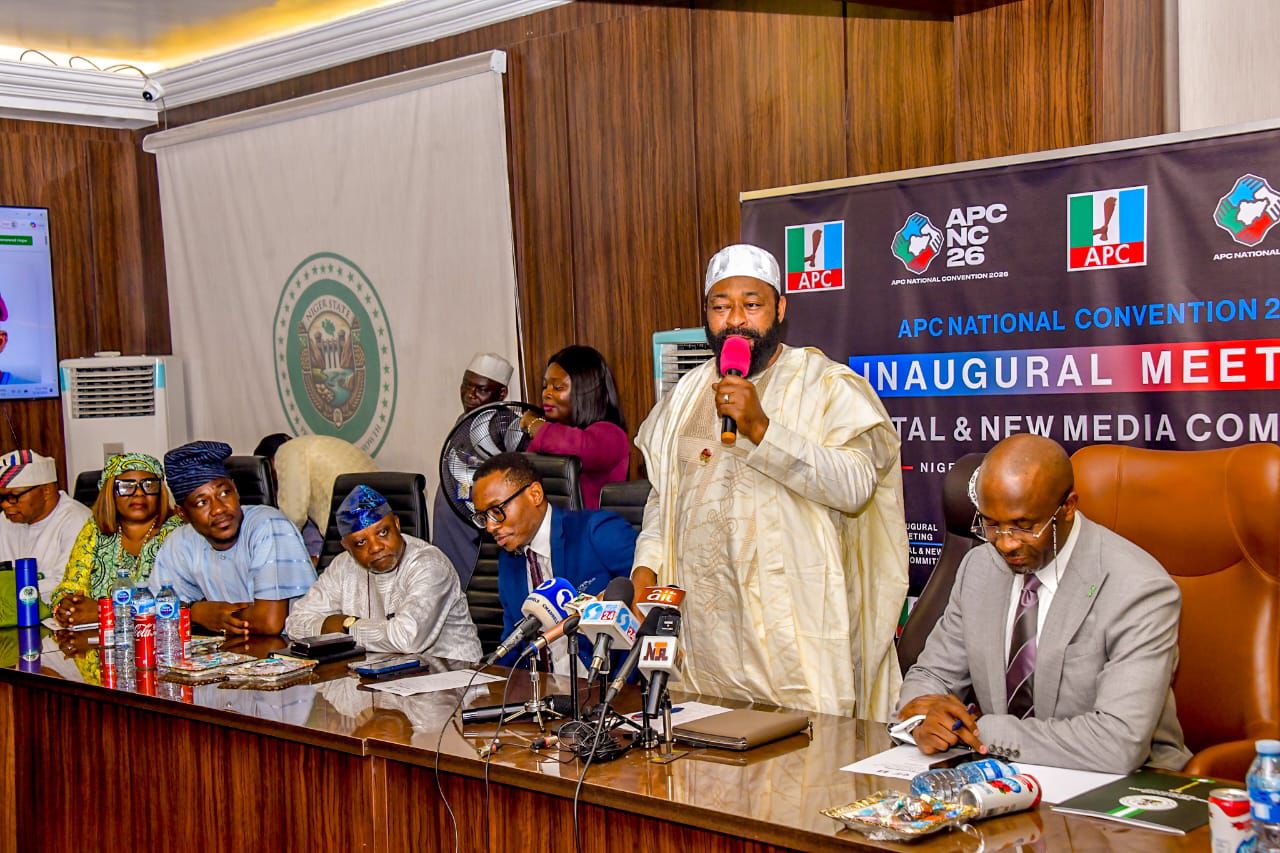
Governor Bago Inaugurates APC Digital Media Sub-Committee Ahead of National Convention.
Governor Umaru Bago has inaugurated the Digital Media Sub-Committee for the forthcoming National Convention of the All Progressives Congress (APC), scheduled to hold on March 27 and 28, 2026 in Abuja.
Chairing the sub-committee, Governor Bago tasked members with the responsibility of effectively communicating the party’s manifesto to the public.
He emphasized the need to leverage social media platforms to highlight the achievements and ongoing efforts of President Bola Ahmed Tinubu, noting that communication gaps have posed challenges that must now be decisively addressed.
The Co-Chair of the sub-committee, Hon. Benjamin Kalu, Deputy Speaker of the House of Representatives, echoed the Governor’s position, urging members to project the activities of both the party and the government to a broader audience.
He called for a deliberate and coordinated effort to showcase the party’s achievements and policy direction, stressing the importance of shaping a compelling and consistent narrative across all digital platforms.
Delivering a presentation to the committee, Otega Ogra, SSA to the President on New Media, who serves as Secretary of the sub-committee, outlined strategic focus areas to guide the team’s operations.
His presentation highlighted communication priorities and actionable steps to achieve the committee’s mandate and strengthen the party’s digital engagement.


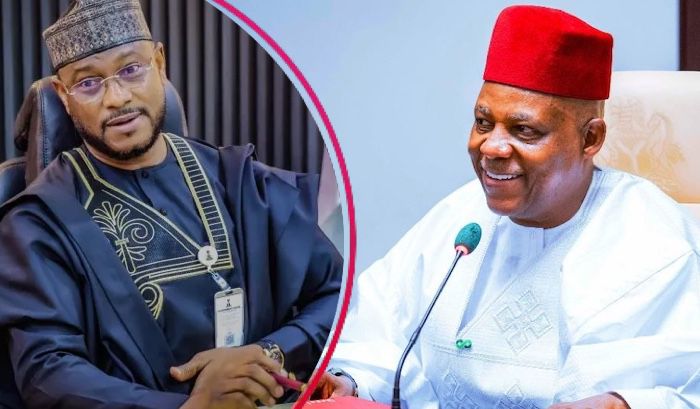
VP Shettima Set to Lead Delegation to Zamfara as Governor Dauda Lawal Formally Joins APC
The Zamfara State chapter of the All Progressives Congress (APC) has finalized plans to receive Vice President Kashim Shettima for the formal defection and reception of Governor Dauda Lawal into the ruling party, scheduled to take place on Tuesday.
State APC Chairman, Tukur Danfulani Maikatako, disclosed this during a high-level stakeholders’ meeting held in Gusau, the state capital. He noted that the Vice President would be joined by the party’s national leadership to mark what he described as a landmark political realignment in the state.
Maikatako expressed the party’s excitement over Governor Lawal’s return, recalling that Zamfara had historically been an APC stronghold and that the Governor was previously a bona fide member of the party before his earlier exit.
“We all know that Zamfara has long been one of the APC’s stronghold states, where the defected Governor was once a bona fide member. Now that he has decided to return home, having been satisfied that the APC remains his second choice after the one he left for obvious reasons,” Maikatako stated.
The Chairman called on all party faithful across the 147 wards in the state’s 14 local government areas to turn out en masse to honour the Vice President’s visit. He emphasized that the event was strategically positioned to bolster the party’s popularity and strengthen its structures ahead of the 2027 general elections.
In a strong appeal for unity, Maikatako urged members to set aside all factional tendencies, stressing that the APC remained one political family with shared goals, particularly the ambition to make Zamfara and Nigeria great again.
Echoing similar sentiments, a former state APC Chairman, Lawal M. Liman, appealed to members to cascade the message to their wards and local government areas. He reinforced the need for cohesion, noting that the party’s collective strength would be critical to achieving success in future elections.

All eyes are now on Gusau as the ruling party prepares for a high-profile political gathering expected to further consolidate its influence in Zamfara State.


-

 society6 months ago
Religion: Africa’s Oldest Weapon of Enslavement and the Forgotten Truth
-

 news4 months ago
WHO REALLY OWNS MONIEPOINT? The $290 Million Deal That Sold Nigeria’s Top Fintech to Foreign Interests
-

 society6 months ago
“You Are Never Without Help” – Pastor Gebhardt Berndt Inspires Hope Through Empower Church (Video)
-

 celebrity radar - gossips2 months ago
Dr. Chris Okafor Returns with Power and Fire of the Spirit -Mounts Grace Nation Altar with Fresh Anointing and Restoration Grace on February 1, 2026