
society
Nigeria Under Siege: Insecurity, State Failure and the Dangerous Normalisation of Violence

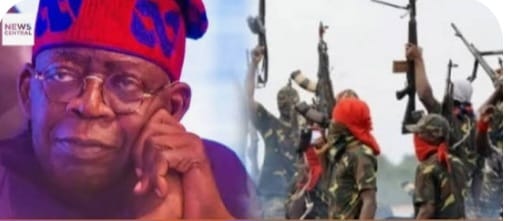
Nigeria Under Siege: Insecurity, State Failure and the Dangerous Normalisation of Violence.
By George Omagbemi Sylvester | Published by SaharaWeeklyNG.com
“When Kidnapping, Bloodshed and Government Indifference Become the New Normal.”
Nigeria today stands at a dangerous crossroads, and one where insecurity has become routine, violence has been normalised and governance appears increasingly detached from the lived realities of its citizens. While the nation is not officially at war, the scale of killings, abductions and economic devastation inflicted by criminal networks rivals that of countries in active conflict. What makes Nigeria’s situation particularly tragic is not only the persistence of violence, but the disturbing sense of resignation with which it is treated by both the state and, increasingly, the public.

According to SBM Intelligence, a leading Nigerian security and risk analysis firm, at least 1,056 Nigerians were killed between July 2023 and June 2024 in kidnapping-related incidents alone. Within the same period, 7,568 people were abducted and kidnappers demanded over ₦10.9 billion in ransom, a significant portion of which was paid by desperate families and communities. In a separate but related report covering July 2024 to June 2025, SBM Intelligence recorded 4,722 abductions, 762 deaths, and ₦2.57 billion actually paid as ransom.
These are not SPECULATIVE FIGURES. They are verified, conservative estimates, the numbers that already paint a horrifying picture of a country under siege by criminal enterprises that operate with alarming confidence and impunity.
A State Losing Its Monopoly on Violence.
The German sociologist Max Weber famously defined the state as an entity that successfully claims the monopoly of the legitimate use of physical force within a given territory. By this classical definition, Nigeria is in profound trouble.
Across vast swathes of the country (particularly in the North-West, North-Central, and parts of the South-East) armed groups now determine who lives, who dies and who moves freely. Highways have become hunting grounds for kidnappers. Rural communities are routinely attacked, their inhabitants displaced or murdered. Schools are shut down, farmlands abandoned and entire local economies destroyed.
Security analyst Dr. Bulama Bukarti has repeatedly warned that Nigeria is facing a crisis of state authority, noting that “when non-state actors can repeatedly challenge the state without consequences, the legitimacy of government itself begins to erode.” This erosion is no longer theoretical; it is visible in daily Nigerian life.
The Ransom Economy: Crime as an Industry.
Perhaps one of the most damning indicators of Nigeria’s security collapse is the emergence of a ransom economy and a parallel criminal industry that thrives because the state cannot protect its citizens.

SBM Intelligence describes kidnapping in Nigeria as “an organised business model”, complete with negotiators, surveillance networks, informants and logistics chains. The billions of naira paid in ransom annually are not abstract numbers; they represent drained life savings, sold properties, ruined futures and families permanently traumatised.
Economist Dr. Muda Yusuf, former Director-General of the Lagos Chamber of Commerce and Industry, argues that “the cost of insecurity in Nigeria goes beyond ransom payments; it includes lost investments, food inflation, unemployment and declining national productivity.” In effect, insecurity has become a tax on citizenship, one paid disproportionately by the poor and vulnerable.
The Moral Hazard of Amnesty and Appeasement.
Even more troubling than the violence itself is the state’s increasingly ambiguous response to it. In several instances, government officials and traditional authorities have publicly entertained negotiations with armed groups, offering amnesty, rehabilitation, or reintegration in exchange for “repentance.”
While dialogue is not inherently wrong, the moral hazard created by rewarding violent criminality is profound. When killers are pardoned without justice, accountability collapses. When armed men attend negotiations visibly armed while security agencies appear constrained or deferential, the message is unmistakable: the state is no longer feared.
Political scientist Prof. Jibrin Ibrahim has warned that “impunity is the oxygen of insurgency and banditry; once criminals realise there are no consequences, violence becomes self-sustaining.” Nigeria’s experience increasingly validates this grim assessment.
Leadership Optics and Public Anger.
Leadership is not only about policy; it is also about symbolism, timing, and empathy. In the midst of escalating killings and mass abductions, images of political leaders engaging in lavish spending, extensive foreign travel and political maneuvering for future elections have deepened public resentment.
The issue is not travel per se, but perceived indifference. When citizens are burying loved ones and liquidating assets to pay ransom, extravagant governance sends a chilling signal about priorities.
Renowned historian Prof. Toyin Falola has observed that “states collapse not only from external shocks but from the gradual alienation of leaders from the suffering of the people.” Nigeria today appears perilously close to that line.
A Society at Risk of Normalising Horror.
Perhaps the most frightening dimension of Nigeria’s crisis is societal desensitisation. Each new mass abduction, each village attack, each killing cycle generates outrage; for a moment. Then attention shifts. Life continues. Horror becomes routine.
This dangerous psychological adaptation is what philosopher Hannah Arendt described as the “banality of evil” to the point at which abnormal cruelty becomes ordinary through repetition and silence. When citizens begin to accept mass violence as inevitable, the final collapse is no longer sudden; it is gradual and quiet.

The Way Forward: Accountability, Not Excuses.
Nigeria does not lack solutions; it lacks political will. Experts broadly agree on key steps:
– Comprehensive security sector reform.
– Intelligence-driven policing.
– Swift and transparent prosecution of offenders
– Ending ransom payments through coordinated enforcement.
– Addressing poverty and unemployment that fuel criminal recruitment.
As Nobel laureate Wole Soyinka once warned, “The man dies in all who keep silent in the face of tyranny.” Silence (whether from fear, fatigue, or false optimism) is no longer a neutral act in Nigeria.
Final Reflection.
Nigeria is not yet a failed state; but it is a state in severe distress. The continued tolerance of mass insecurity, criminal profiteering, and leadership detachment risks pushing the nation beyond recovery. A society that shrugs at hundreds of deaths and thousands of abductions is not resilient; it is endangered.
History will not ask how many excuses were made. It will ask who acted and who chose comfort over courage.






“Jesus Christ is the Way, the Truth, and the Life.” — Dr. Chris Okafor
Grace Nation Worldwide marked a special occasion as members gathered at the international headquarters in Lagos, Nigeria, to celebrate the birthday of the Generational Prophet and Senior Pastor, Christopher Okafor, who turned a year older on April 4, 2026.
A Service of Thanksgiving and Celebration
The atmosphere was filled with gratitude as sons and daughters of the ministry came together to appreciate God for the life and impact of their spiritual leader.
The celebration featured a variety of activities, including special musical renditions, Bible recitations, choreography presentations, and a vibrant praise and worship session led by the Liberation Voices.
The highlight of the event was the ceremonial cutting of the birthday cake, followed by joyful celebration and thanksgiving, all dedicated to the glory of God.
Teaching on the Death and Resurrection of Christ ,Earlier in the day, the service also commemorated the resurrection of Jesus Christ, with Dr. Okafor delivering a message on “The Death and Resurrection of Jesus Christ.”
In his teaching, he described the sacrifice of Christ at Calvary as the foundation of the Christian faith.
“The death of Jesus represents the depth of God’s love for humanity,” he said, while emphasizing that the resurrection is the ultimate confirmation and strength of the believer’s faith.
The State of Humanity Before Redemption
Dr. Okafor explained that before the sacrifice of Christ, humanity was bound by sin, subject to judgment, and separated from God. He highlighted the consequences of the fall of man, including spiritual loss and the inevitability of judgment.
The Purpose of Christ’s Sacrifice
According to the cleric, the death and resurrection of Jesus Christ brought restoration and reconciliation between God and humanity.
“When a person is restored to God, life becomes meaningful,” he noted, adding that the sacrifice of Christ signifies the forgiveness of sin and a new beginning for believers.
A Message of Hope
In conclusion, Dr. Okafor stated that the resurrection of Jesus Christ provides believers with the opportunity to live a fruitful and abundant life, anchored in faith and divine purpose.
The combined celebration of his birthday and the message of Easter created a moment of reflection, joy, and renewed commitment among members of Grace Nation Worldwide.


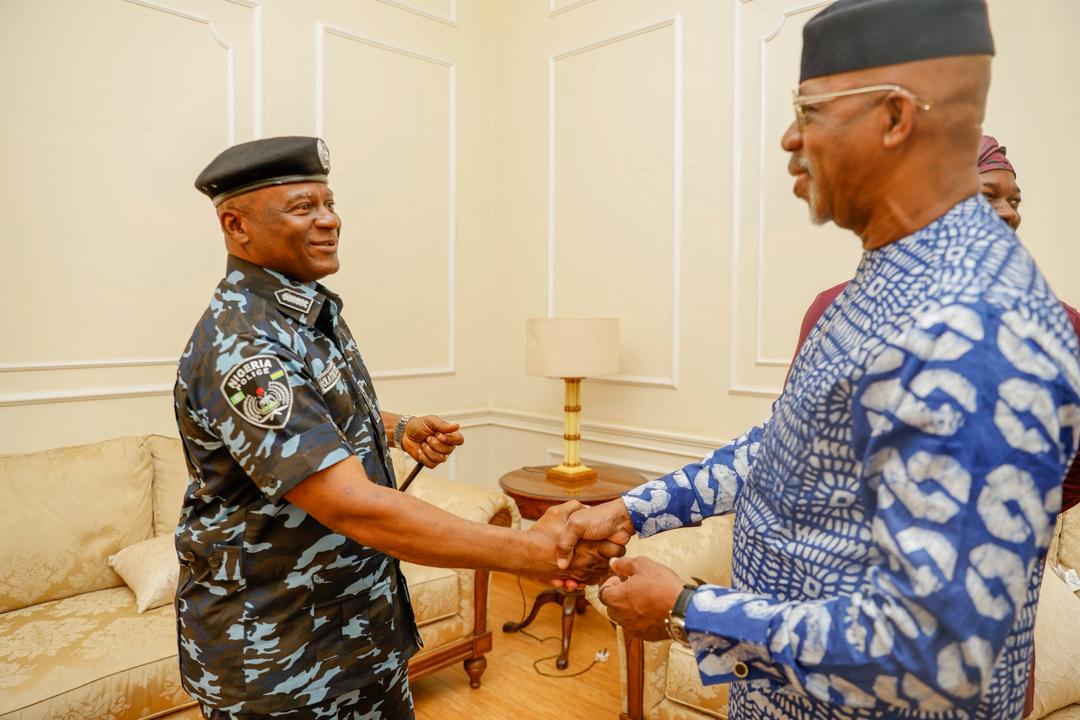
IGP Disu Unveils New Security Vehicles, Bikes In Ogun,
The Inspector-General of Police, Olatunji Rilwan Disu, on Saturday took centre stage at the commissioning of landmark projects in Ogun State, reaffirming the Nigeria Police Force’s commitment to strengthening national security and deepening collaboration with state authorities.
The high-profile event, attended by top government officials and security stakeholders, highlighted the strategic importance of security in driving development. Disu’s presence underscored ongoing efforts by the Police leadership to align operational priorities with infrastructural growth across the country.
A key highlight of the ceremony was the commissioning of new security vehicles and electric motorbikes aimed at boosting the operational capacity of security agencies in the state. The IGP commended the Ogun State Government for what he described as a proactive and forward-thinking approach to security, noting that the newly deployed assets would significantly enhance rapid response and patrol efficiency.
He stressed that effective policing remains central to maintaining peace and order, assuring residents that the Force would continue to evolve strategies to tackle emerging threats. According to him, the Nigeria Police Force is committed to working closely with both the Federal Government and sub-national authorities to ensure the safety of lives and property.
Disu further called on members of the public to support security agencies by providing timely and credible information, describing community cooperation as vital in combating crime and sustaining a secure environment.
The Police leadership also expressed appreciation to the Ogun State Government and other dignitaries for their continued partnership, noting that such collaboration is essential to advancing security initiatives and fostering national development.



*PDP Stalwart, Fagbemi, Resigns From Party in Ogbomoso South*
A former Secretary of Ogbomoso South Local Government, Temidayo Fagbemi, has formally resigned his membership of the Peoples Democratic Party.
Fagbemi, a major financier of the PDP in the area, tendered his resignation in a letter addressed to the Ward Chairman of the party in Ijeru II, Ogbomoso South.
In his letter, Fagbemi stated that leaving the party he had diligently supported, contributing to PDP’s victories at both the state and local government levels for two consecutive terms, was a difficult but necessary decision.
He wrote: “I, Temidayo Fagbemi, hereby submit my resignation as a member of the PDP.”
“My decision to leave the party, which I worked hard to support and helped secure victory at both the state and local levels for two consecutive terms, is not an easy one. However, it has become necessary.”
He thanked party leaders for the years of shared political engagement and wished them success in their forthcoming primaries.
His resignation marks a significant development within the Ogbomoso South PDP, given his influence, contributions, and long-standing role in strengthening the party’s structure.


- United States (U.S.) and Mozambique Advance Cooperation on Emergency Response and Safety April 6, 2026
- The Impacts of the Middle East Conflict on Africa April 6, 2026
- Ghana: President Mahama announces a high-level panel of the Accra Reset April 6, 2026
- Ghana: President Mahama reiterates his determination to build more businesses April 6, 2026
- Mauritius accelerates energy transition with renewable projects of 405 MW April 6, 2026
- Africa Centres for Disease Control and Prevention (Africa CDC) Appoints His Excellency Prof. Yemi Osinbajo as Senior Strategic Advisor to the Director General April 6, 2026
- 2026 Easter Message by the President of the Catholic Bishops’ Conference of Nigeria (CBCN): The Dawn is Coming, Don’t Let Go Now, Hold on to Hope! April 5, 2026
- "A Time to Pause and Begin Again”: President Dr Patrick Herminie reflects in Easter message April 5, 2026
- President Dr. Patrick Herminie Pays Tribute to the Late Seychellois Artist David Philoe April 5, 2026
- Ghana identifies priority areas to strengthen cholera prevention and control April 5, 2026
- United States (U.S.) and Mozambique Advance Cooperation on Emergency Response and Safety April 6, 2026
- The Impacts of the Middle East Conflict on Africa April 6, 2026
- Ghana: President Mahama announces a high-level panel of the Accra Reset April 6, 2026
- Ghana: President Mahama reiterates his determination to build more businesses April 6, 2026
- Mauritius accelerates energy transition with renewable projects of 405 MW April 6, 2026
- Africa Centres for Disease Control and Prevention (Africa CDC) Appoints His Excellency Prof. Yemi Osinbajo as Senior Strategic Advisor to the Director General April 6, 2026
- 2026 Easter Message by the President of the Catholic Bishops’ Conference of Nigeria (CBCN): The Dawn is Coming, Don’t Let Go Now, Hold on to Hope! April 5, 2026
-

 society7 months ago
Religion: Africa’s Oldest Weapon of Enslavement and the Forgotten Truth
-

 news4 months ago
WHO REALLY OWNS MONIEPOINT? The $290 Million Deal That Sold Nigeria’s Top Fintech to Foreign Interests
-

 society6 months ago
“You Are Never Without Help” – Pastor Gebhardt Berndt Inspires Hope Through Empower Church (Video)
-

 celebrity radar - gossips2 months ago
Dr. Chris Okafor Returns with Power and Fire of the Spirit -Mounts Grace Nation Altar with Fresh Anointing and Restoration Grace on February 1, 2026