Connect with us

society

Nigerian Politicians Are After My Life – Mrs. Aina

Published

on

Nigerian Politicians Are After My Life – Mrs. Aina
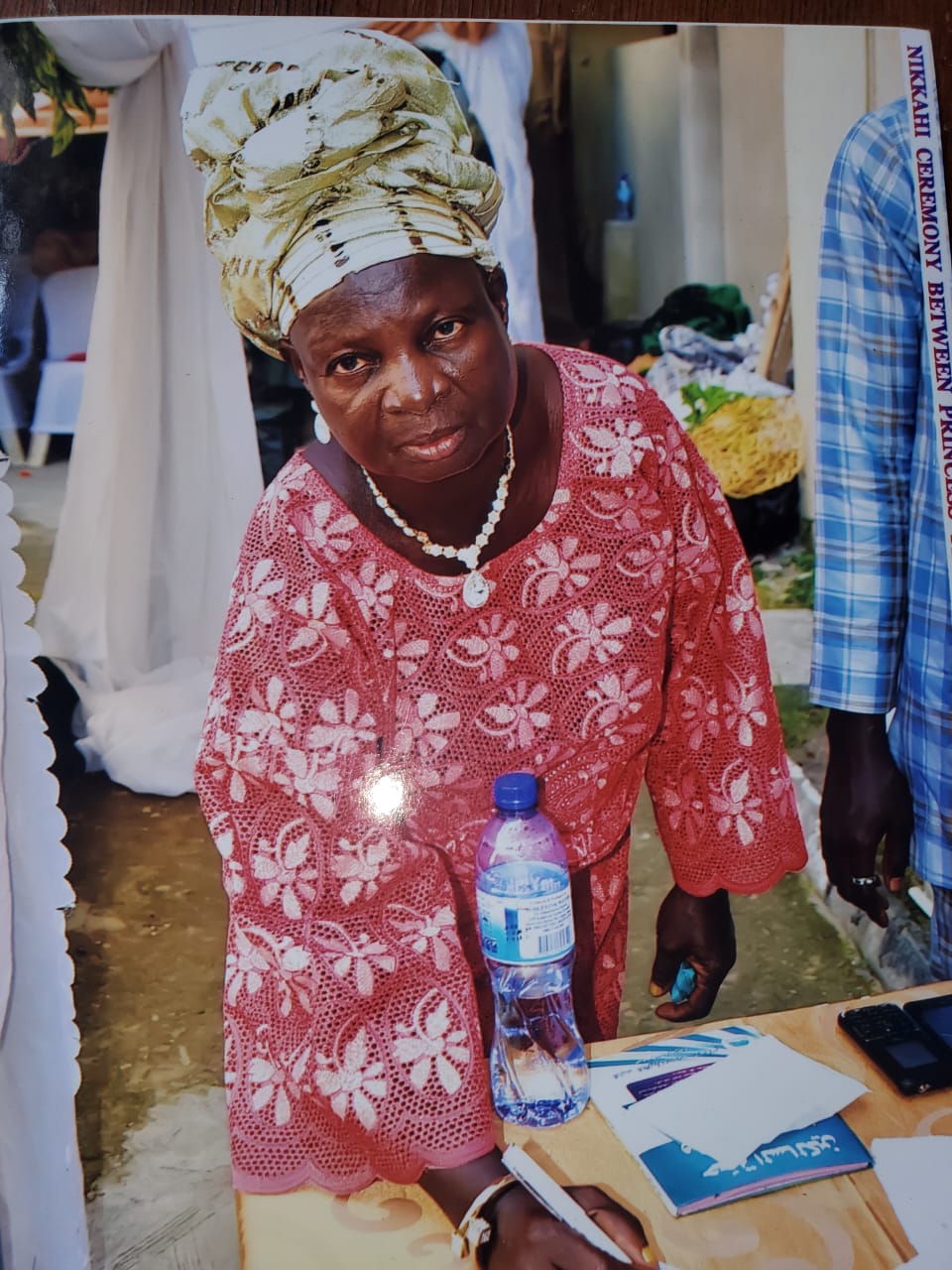
The agony of a mother who is continuously threatened to provide her son or else she will be killed.
The struggle of Mr Olufemi heightens as he continues to be on the run only for safety.

Who can face them? No one, as they are the captain sailing the country at the moment.
They are the law and they have the power and it so sad they are using it to compel this citizen Mr Olufemi Aina and his mother.Presently he is on the run for his dear life and at the same time trying to protect his family from the dangerous powerful political party APC.

The most horrifying point about the whole situation and also the most dangerous is that the political party in power APC (All Progressive Congress) are the source of this evil deeds happening in the house of Mr Olufemi Aina just because they have the power, since power shifted to the south west on May 29 2023, they are now using the power to threaten the mother of Mr Olufemi Aina to present her son to them.

Mr Olufemi Olusegun Aina who has been on the run for his dear life and escaping death numerous times with lifes of family and friend lost in the process and others are still threatened.

The ruling party has asked Olufemi Aina’s mother to provide him since the power came into their possession on 29th of May 2023, if not when next they come they will take her away to unknown location and she would be hold hostage until Mr Olufemi Aina succumb to come to them so they can kill him. Their Mission is to kill him.

However, it would be recalled that his younger brother Yemi Aina have also lost his life in this battle and they are not resting their oars until they claim the life of Olufemi Aina who is at large.

We cannot forget that on the 1st of January 2011, Mr Olufemi Aina’s Father was killed by his Aunt’s political thugs. Her name Modupe Awodogan, a women leader of the ruling party in Nigeria, All Progressive Congress (APC). Elite Modupe Awodogan who has been in politics in Nigeria for decades,not just powerful but also influential in Nigeria and has connection with top political leaders in the APC.

There has been many attempt and threats of him getting killed,an example was On January 15, 2018 when some friends came to visit him at the place of his friend where he stayed, during this period some hoodlums invaded, and they shot one of his friends and attacked another friend with an axe. He managed to escape and fled.

Currently,Mr Olufemi Aina’s Mother is so scared and seeking for help from the international and humanitarian community to help intervene into the power drunk people after the life of her son.


Continue Reading
Advertisement

society

UNIPGC AFRICA Seals Strategic Partnership with Greenvillage Empowerment Foundation for Capacity Building Initiatives Spearheaded by the Governor of Tana River County, Kenya

Published

on

*UNIPGC AFRICA Seals Strategic Partnership with Greenvillage Empowerment Foundation for Capacity Building Initiatives Spearheaded by the Governor of Tana River County, Kenya


In a significant step toward strengthening sustainable development and leadership capacity across Africa, *UNIPGC AFRICA* has officially sealed a strategic partnership with *Greenvillage Empowerment Foundation (GVEF)* to implement impactful capacity-building projects. The initiative is spearheaded by the Governor of Tana River County, Republic of Kenya.


The partnership was formalized through the signing of a *Memorandum of Understanding (MoU)* by key representatives of both organizations. Signatories to the agreement include *H.E. Amb. Jonathan Ojadah*, Global President of the United Nations International Peace and Governance Council (UNIPGC); *Amb. Jase Carlos Sousa,* Member of the UNIPGC Supreme Council; and *H.E. Maj. (Rtd.) Dr. Dhadho Godhana*, Executive Governor of Tana River County.


The MoU establishes a robust framework of cooperation between *UNIPGC* and *GVEF* reflecting a shared vision and strong alignment of values in promoting sustainable development, peace, and inclusive governance across Africa.


Under the agreement, both organizations will collaborate on a wide range of development initiatives, including the promotion of *democracy and good governance*, *climate change education and environmental sustainability*, *health promotion through water, sanitation and hygiene (WASH), Youth capacity building through Robust Film Production Ecosystem, sports development and gender equality and empowerment of marginalized communities*.


The partnership will also actively support and advance the *United Nations Sustainable Development Goals (UNSDGs)*.


As part of the collaboration, UNIPGC and GVEF have committed to establishing effective channels for joint action through the design and implementation of programs and projects that address shared development priorities. These initiatives will focus on strengthening leadership capacity, promoting inclusive participation in governance, and enhancing community-based development efforts.


Furthermore, the partnership will encourage mutual institutional support, enabling both organizations to provide *technical expertise, strategic guidance, and moral support* toward the successful implementation of their initiatives.


This landmark collaboration marks a major milestone in advancing cross-sector partnerships aimed at fostering *sustainable development, social inclusion, and transformational leadership across Africa*, while reinforcing the collective commitment of both organizations to achieving the *United Nations Sustainable Development Goals*

Continue Reading

society

Ajadi, Sheikh Sannu Sheu Charge Politicians on Good Governance

Published

on

Ajadi, Sheikh Sannu Sheu Charge Politicians on Good Governance


The Oyo State governorship aspirant on the platform of the Peoples Democratic Party (PDP), Ambassador Olufemi Ajadi Oguntoyinbo, has emphasised the need for politicians to embrace good governance and people-oriented leadership as a fundamental principle of politics in Nigeria.


Ajadi made this call on Friday, shortly after the 4th Annual Ramadan Lecture, organised under his Omituntun 3.0 platform at the BCOS Garden, Bashorun, Ibadan, where he spoke with journalists on the significance of the lecture, themed “Oselurere” (Good Governance).


The well-attended event featured a lecture by a renowned Islamic scholar, Fadheelatus-Sheikh Al-Mufasir Usman Sannu Sheu, the Chief Tafseer of Ilorin Emirate, Al-Adaby, who spoke extensively on the Islamic and socio-political perspectives of good governance, stressing that leadership must be anchored on justice, accountability, and service to humanity.


Speaking after the event, Ajadi explained that the choice of Oselurere as the theme for this year’s lecture was deliberate, noting that it was necessary to educate both current and aspiring politicians on the true essence of politics as service to the people.


According to him, the practice of good politics must be properly understood from both religious and socio-political viewpoints so that the coming generation of leaders can develop the right character for public service.


He said: “Oselurere, which means good governance, was carefully chosen as the topic so we can hear from our guest lecturer about the rewards of practising good politics and also understand what good politics is all about.”


He added that the lecture was also intended to correct the mindset of politicians who seek public office without clear plans to improve the lives of the people.


“The topic is also chosen so that politicians will learn that they should not just assume office without having good things in mind to offer the masses and our nation. That is why we invited our Islamic and renowned scholar, Sannu Sheu, to treat this important subject,” he said.


Reflecting on the history of the annual lecture, Ajadi disclosed that the first three editions were held in Ogun State, where the focus was on humanitarian services and feeding programmes during Ramadan as a way of demonstrating compassion and service to humanity.


The first to third Ramadan lectures hosted by me were held in Ogun State for Muslims and people of other faiths to witness how good it is to feed people and render humanitarian services. The month of Ramadan is one of the best periods to demonstrate these virtues, and that is why I have come to my father’s state of origin, Oyo State, to continue the humanitarian services,” he said.


He further called on Nigerians to use the Ramadan and Lenten periods as opportunities for spiritual rebirth, unity, and prayers for the nation.


“Let us use this period of Ramadan and Lent to learn how to live together in peace, remain united, and be prayerful for our country,” Ajadi advised.


The PDP gubernatorial aspirant also expressed optimism about the electoral fortunes of his party in future elections, saying he believes the PDP will record victories at different levels.


“By the grace of God, our great party will be on the ballot and there will be total victory in the various political offices our candidates will contest for,” he added.


In his lecture, Sheikh Sannu Sheu emphasised that good governance is not only a political obligation but also a moral and religious responsibility. He said Islam places a high premium on leaders who are just, trustworthy, and committed to the welfare of their followers.


The cleric explained that the concept of Oselurere goes beyond political promises, stressing that it includes fairness, transparency, accountability, and prioritising the needs of the weak and vulnerable in society.


He urged leaders at all levels to see their positions as a trust (Amanah) from God and the people, warning that they would be held accountable for how they exercise authority.

The scholar also encouraged citizens to support leaders with prayers and constructive engagement while also holding them accountable through lawful means.


The event attracted Islamic clerics, political stakeholders, community leaders, party members, and residents of Ibadan and its environs. It also featured Qur’anic recitations, special prayers for Oyo State and Nigeria, as well as spiritual musical performances by notable Islamic artistes.


Some of the political stalwarts who graced the occasion included the Executive Chairman of Egbeda Local Government and Chairman of ALGON, Hon. Sanda Sikiru Oyedele; the Oyo State Commissioner for Women Affairs and Social Inclusion, Hon. (Mrs.) Toyin Balogun; and Chief Babatunde Tijani, popularly known as “Double T,” a prominent political figure and Olori-Ebi of the Omituntun Dynasty, among other political leaders.


Observers noted that the annual Ramadan Lecture has continued to grow in prominence, serving as a platform for discussing the intersection between faith, governance, and societal development while also promoting peaceful coexistence among Nigerians of different religious and political backgrounds.

Continue Reading

society

Nigeria on the Edge: Rising Violence, Economic Hardship and Weak Institutions Fuel Fears of State Failure

Published

on

Nigeria on the Edge: Rising Violence, Economic Hardship and Weak Institutions Fuel Fears of State Failure

By George Omagbemi Sylvester


“A leading political scientist raises alarm over rising insecurity, weakening institutions, and economic policies that are deepening hardship for millions of Nigerians.”

Nigeria is facing a growing national crisis as insecurity spreads, democratic institutions weaken, and economic policies continue to deepen hardship for millions of citizens. The country is increasingly confronted with a dangerous convergence of political repression, worsening insecurity, and economic instability that many analysts warn could push the state toward systemic failure if urgent corrective actions are not taken.

Across the country, violence is spreading while government institutions that should safeguard democracy appear to be struggling to maintain credibility and independence. At the same time, economic reforms intended to stabilize the nation’s finances have imposed significant burdens on ordinary Nigerians already grappling with rising living costs.

Nigeria is currently confronting simultaneous challenges on several fronts. Insecurity remains one of the most pressing issues threatening national stability.

The insurgency led by Boko Haram and its splinter faction Islamic State West Africa Province (ISWAP) has persisted for more than a decade. Since the insurgency began in 2009, the conflict has killed more than 40,000 people and displaced over two million civilians in northeastern Nigeria.

Recent reports indicate that attacks on military formations have intensified, particularly around Maiduguri. Militants have continued to target security forces and civilian populations, raising fears that insurgent groups are attempting to strengthen their control in parts of the northeast.

Meanwhile, banditry and organized criminal networks have expanded across Nigeria’s northwest and north-central regions. Armed groups operate across territories stretching from Sokoto and Zamfara toward Niger and Kwara states, carrying out kidnappings, attacks on rural communities, and large-scale destruction of property.

States such as Borno, Zamfara, Sokoto, Benue, and Plateau continue to experience recurring violence, with communities frequently caught between insurgents, bandits, and overstretched security forces.

https://www.stanbicibtcbank.com/nigeriabank/personal/products-and-services/all-loans/stanbic-ibtc-mreif-home-loans


Beyond the security crisis, concerns are also mounting over the state of Nigeria’s democratic institutions.

The judiciary, once widely regarded as a critical pillar of the country’s democracy, is increasingly perceived by critics as being vulnerable to political influence. Questions about judicial independence have intensified as legal decisions in politically sensitive cases continue to spark controversy.

Similarly, the role of the police has come under scrutiny. Critics argue that law enforcement agencies often focus heavily on protecting political elites and high-profile individuals while many communities remain exposed to crime and insecurity.

Such developments have fueled public debate about the strength of Nigeria’s institutional framework and its ability to uphold justice, accountability, and democratic governance.

At the same time, Nigeria’s economic situation continues to generate widespread public concern.

Economic reforms implemented under the administration of President Bola Ahmed Tinubu, including the removal of fuel subsidies and the floating of the national currency in 2023, were designed to stabilize public finances and attract investment. However, these policies have also contributed to a sharp rise in living costs.

Inflation, currency volatility, and increasing energy prices have significantly reduced the purchasing power of many Nigerian households. Electricity tariffs and various taxes have increased, placing additional pressure on citizens whose incomes have not kept pace with rising expenses.

While international institutions such as the International Monetary Fund have praised Nigeria’s macroeconomic reforms, many Nigerians argue that the benefits of these policies have yet to translate into meaningful improvements in their daily lives.

The agricultural sector provides a clear example of the difficulties currently facing the economy.

Nigeria spent roughly ₦51 billion on rice imports in 2024, signaling a reversal of earlier efforts aimed at achieving self-sufficiency in rice production. Rising production costs, expensive energy, and limited access to affordable financing have forced many farmers to abandon rice cultivation.

Farmers in major agricultural states such as Kano, Kebbi, and Jigawa are reportedly exiting rice production due to mounting losses. At the same time, local rice mills that once flourished are struggling to compete with cheaper imported rice.

Industry leaders have warned that Nigeria’s rice value chain could face serious collapse if current conditions persist. Many mills are now operating far below capacity, with high fuel costs and interest rates making it difficult to sustain operations.

Political tensions are also beginning to rise as the country gradually moves toward the 2027 general elections.

Observers warn that the normalization of political intimidation or violence could weaken democratic competition. History shows that democracies rarely collapse suddenly; instead, they erode gradually as intimidation, coercion, and reprisals become more common in political life.

If such trends continue, elections may still take place formally while the deeper democratic meaning of political participation becomes diminished.

Nigeria now faces what many observers describe as a defining moment in its modern history. The combination of insecurity, economic hardship, and institutional fragility presents serious challenges that require decisive leadership and comprehensive policy responses.

Strengthening democratic institutions, improving security coordination, and implementing economic policies that genuinely improve citizens’ living conditions will be essential to stabilizing the country.

Without meaningful reforms and renewed commitment to accountable governance, Nigeria risks drifting closer to a scenario that many citizens fear—a nation struggling to protect its people, sustain its economy, and preserve the democratic ideals upon which its republic was built.


Nigeria on the Edge: Rising Violence, Economic Hardship and Weak Institutions Fuel Fears of State Failure By George Omagbemi Sylvester

Continue Reading

Cover Of The Week

Trending