
Business
NIGERIAN STUDENTS PASS VOTE OF CONFIDENCE ON DANGOTE REFINERY


Students across tertiary institutions in the country under the aegis of National Association of Nigerian Students (NANS) have passed a vote of confidence on the Dangote Refinery describing the recent demarketing of the world’s largest single train refinery by the Nigeria National Petroleum Corporation Limited (NNPCL) as the greatest disservice to the nation’s economy.
The students’ position came amidst alleged efforts by management of the NNPCL to induce the students body’s leadership with $250,000 to dissuade it from going ahead to declare support for Dangote Refinery in the current spat between the refinery and NNPCL.
Speaking after a tour of the Refinery facility yesterday in Lagos, leaders of the students’ body comprising of those from Universities, Polytechnics and Colleges of Education, said it would take an enemy of Nigeria to rubbish the gigantic project that would stop importation of fuel once and for all and save the nation of the scarce forex.
The NANS Senate President, Akinteye Babatunde Afiz addressing the management of the Dangote Refinery said they had the mandate of Nigerian Students to come and assess the situation of the refinery having been told that the refinery was uncompleted and inferior in all standards.
He said: we had a meeting on the situation in the country vis a vis the uncertainty in the oil and gas industry, especially the current fuel scarcity and we resolved to visit Dangote refinery to see things for ourselves, Having gone round the facility, our heart melted at the humongous size of the refinery.
“We are speaking the minds of all Nigerian students that Government should direct all marketers to patronize Dangote refinery and ease the current fuel hardship. If anyone wants to compete with Dangote let them go and build their own. Government has four refineries and they are not working yet they don’t want the one that is available to sell. We will not accept that.
“Dangote Refinery has come to stay. We have discovered that all claims being bandied around are false. Our impression is that they never expected the refinery to stand, that is why they are against you. But we are pledging our resolve to stand by you.
“We have seen the refinery laboratory and we could see that it is world class. We cant allow this type of project that holds great potential for Nigeria’s economy to go down through some people’s disdain for the success of Alhaji Aliko Dangote.” He then urged the government to do all possible to support Dangote Refinery and protect it from saboteurs.
Earlier, The Vice-President, Dangote Industries Limited, Devakumar Edwin while welcoming the student leaders to the Refinery thanked them for the concern for the facility ad the resolve to stand for the truth by rejecting the monetary inducement.
He told the students that President Tinubu has intervened and commended the President for the directive for crude to be sold to Dangote Refinery in Naira currency, saying it is a good development for all Nigerians.
Edwin said the concern of the students was well placed as all Nigerians should be worried indeed because abut 90 percent of Nigeria forex goes into importation of fuel and that Dangote Refinery could help solve the proble as 43 percent of its capacity production could satisfy domestic demand while the remaining will be exported to generate more forex into the country.
Wondering why anyone would want to frustrate the refinery, Edwin noted “So much has been spent on the government refineries and there was nothing to show for it as they remained moribund.
“What we want to do in Refinery, we have done it other businesses, Nigeria used to be the biggest importer of Sugar, we came in and change the narrative. We led the backward integration scheme of the federal government, and we now produce sugar locally for domestic consumption and others have joined us. We did same in Cement by opening up production plant and today Nigeria exports cement to other countries.
“In a business no one was interested in investing into, Dangote delved into it determined to ensure Nigeria no longer imports fuel, invested massively and come up with the world’s largest single train refinery. He said he would not take his money to Dubai or Swiss banks as others are doing, he decided to invest at home and now they are saying he wants to create monopoly.
“We didn’t ask for any favour other than that we want to buy crude to produce, first they said there was no crude, later they said we would have to pay some dollars above the prevailing crude market price. And this is a global market where you can track crude prices anytime. We resorted to buying crude from Brazil and United States. Later they said we should not be announcing the price of the products.
“Even the US that is the leading proponent of of free market economy protects its local industries by imposing huge duty on from foreign imports just to protect local industries. This is a man that Saudi Aramco once approached to come and cite hie refinery in Saudi Arabia, promising steady supply of cruse. Abu Dahbi also invited him to do same on their soil but he rejected insiting he would build at home, now he did that and a facility that is supposed to add value to Nigeria’s economy is being frustrated.”
The Dangote Industries boss said the Company would continue to focus on its business strategy which is to add value to Nigeria economy through investments and job creation for the teeming Nigerian masses.





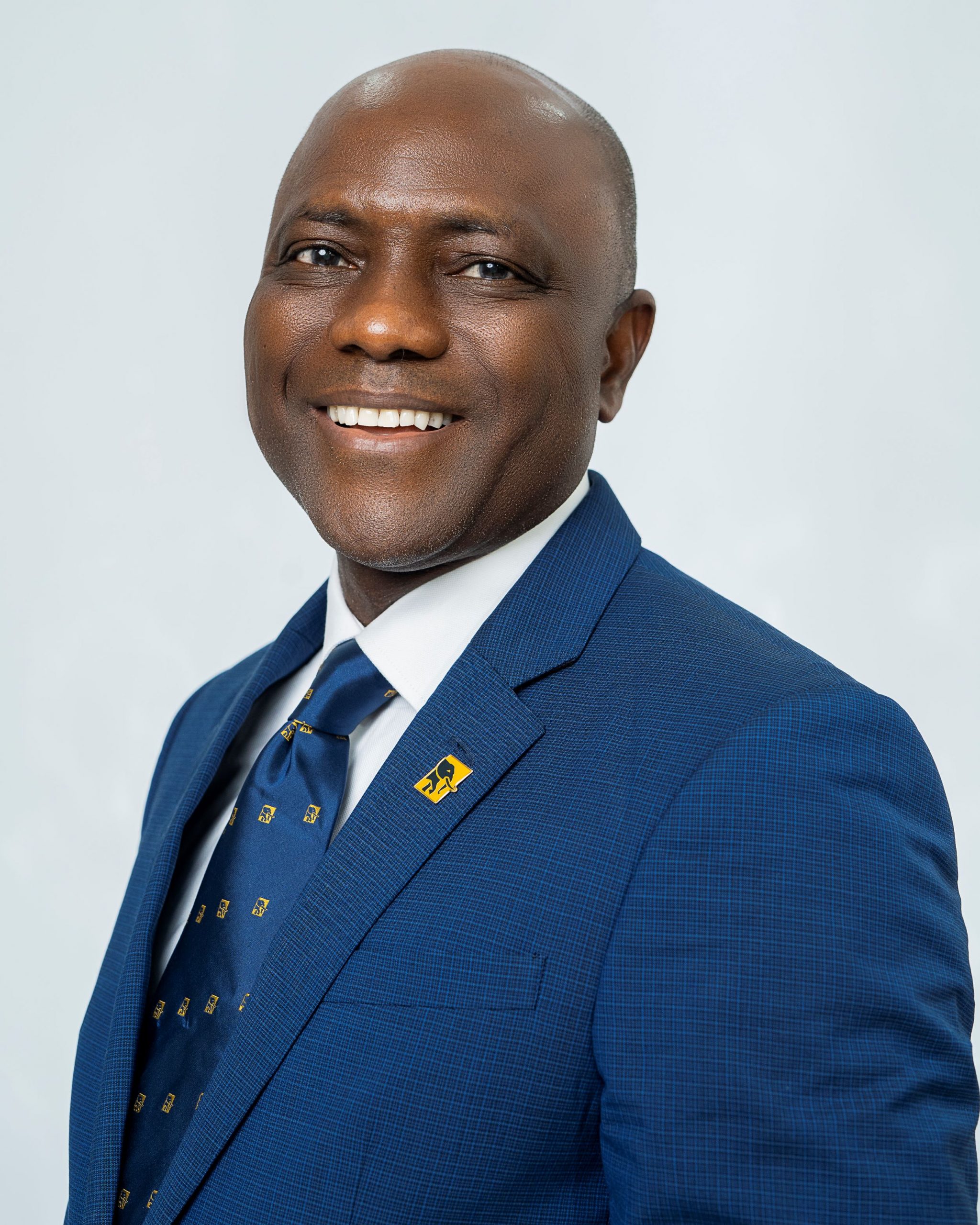
Why Pay Rent Endlessly When You Can Own Your Dream Home Now?
FirstBank’s MREIF mortgage loan product is an opportunity waiting for Nigerians to grab, as FirstBank, Ministry of Finance Incorporated (MOFI) partner to bridge housing deficit and empower citizens with credit to own their own homes of choice in any 36 states of the federation including Federal Capital Territory (FCT).
This laudable initiative considers the importance of shelter to Nigerian citizens especially low and middle income earners that have to save for years before they can build for themselves. It aims at delivering homes to those who would apply without stress, putting smiles on the faces of Nigerians now, and during retirement.
Through MREIF, FirstBank will provide eligible customers with access to loans of up to N100 million with a repayment period of up to 20 years, at an attractive interest rate of 9.75% per annum. This is less than the usual interest rate on regular loans which sit at about 27% or more today. The repayment duration of 20 years makes the loan attractive for customers without stress.
The mortgage facility is available to salary account holders, business owners, and diaspora customers.
Interested customers are required to visit the Bank’s website: https://www.firstbanknigeria.com/personal/loans/mreif-home-loan/ where they can find detailed information and begin their journey toward homeownership

Riceocracy: When Tinubu and the APC Government Substitutes Governance with Handouts
By George Omagbemi Sylvester
“Tinubu’s administration faces mounting criticism as rice palliatives replace real solutions to Nigeria’s deepening crisis.”
ABUJA, Nigeria — March 17, 2026
A growing wave of public frustration is sweeping across Nigeria as citizens decry what has now been dubbed “Riceocracy” a governance pattern where the government of President Bola Ahmed Tinubu and the ruling All Progressives Congress (APC) respond to systemic failures with the distribution of rice rather than meaningful reforms.
Across the country, from major cities like Lagos and Abuja to underserved rural communities, Nigerians are voicing anger over persistent issues: no stable electricity, deteriorating road networks, unaffordable fuel and cooking gas, and a struggling education system. Yet, in response to these structural problems, the government’s most visible intervention has been the distribution of food palliatives; particularly rice.
The central figures in this unfolding crisis are President Tinubu and the APC-led federal and state governments, who have overseen the rollout of these relief measures. On the other side are millions of Nigerians battling rising inflation, joblessness, and declining living standards.
The trend gained momentum following the removal of fuel subsidies in May 2023, a policy decision by the Tinubu administration that triggered a surge in transportation and commodity prices. By 2024 and into 2025, the government intensified the distribution of rice and other palliatives as a stopgap measure to quell public discontent. Now, in 2026, the approach has become a defining feature of the administration’s response to economic hardship.
The “Riceocracy” phenomenon is nationwide. Reports from states such as Kano, Rivers, and Borno show large crowds gathering for rice distribution exercises, even as basic infrastructure continues to decay. Urban centers are not exempt; in cities like Lagos, residents still grapple with erratic power supply and high living costs despite periodic palliative programs.
Analysts point to political convenience and immediate optics. Distributing rice is quick, visible, and politically advantageous, especially in a climate of widespread hardship. However, critics argue that it reflects a deeper governance failure; an inability or unwillingness to implement long-term solutions.
Nobel laureate Wole Soyinka has long warned against superficial governance, describing such approaches as “a betrayal of democratic responsibility.” In the same vein, global economist Ngozi Okonjo-Iweala has stressed that “palliatives may provide temporary relief, but they cannot replace sound economic management and structural reform.”
Political economist Pat Utomi offers a sharper critique: “A state that reduces its responsibility to food sharing risks institutionalizing poverty rather than eliminating it.” His statement captures the growing concern that Nigeria’s leadership is addressing symptoms rather than causes.
The implications are severe. Nigeria’s power sector remains unreliable, forcing businesses to depend on costly alternatives. Road infrastructure continues to hinder economic activity, while the education sector suffers from underfunding and frequent disruptions. Despite these challenges, rice distribution has become the most consistent government response.
Critics further argue that this strategy fosters dependency and weakens civic engagement. Instead of demanding accountability, citizens may feel compelled to accept handouts as substitutes for rights and services. Allegations of mismanagement and politicization of palliative distribution also persist, raising questions about transparency and fairness.
The term “Riceocracy” may sound satirical, but it reflects a sobering reality. It highlights a governance model where survival replaces development, and where public policy is reduced to emergency relief rather than strategic planning.
As Nigeria marks this moment on March 17, 2026, the message from scholars, civil society, and frustrated citizens is unmistakable: rice cannot fix a broken system. Only deliberate investments in infrastructure, education, energy, and economic productivity can restore confidence and chart a sustainable path forward.
Until then, the image of Nigerians queuing for bags of rice will remain a stark symbol of a nation still searching for leadership that goes beyond palliatives to deliver real progress.



ZENITH BANK OPENS MANCHESTER BRANCH TO SUPPORT CROSS-BORDER TRADE AND INVESTMENT
Zenith Bank Plc has announced the opening of a new branch in Manchester, United Kingdom, marking another significant milestone in the bank’s international growth and its commitment to strengthening financial connections between Africa and global markets.
The official opening ceremony, scheduled to hold on Tuesday, March 17, 2026, is expected to attract government officials from Nigeria and the United Kingdom, regulators, investors, customers, and business leaders from both countries, underscoring the growing economic ties and investment opportunities between the two markets.
The new Manchester branch will complement Zenith Bank’s existing operations in the United Kingdom and serve as a strategic hub for supporting businesses engaged in international trade and investment. Through the branch, the bank will provide corporate banking, trade finance, treasury and related financial services to clients operating across the United Kingdom, Europe and Africa.Speaking ahead of the launch, the Group Managing Director/Chief Executive Officer of Zenith Bank Plc, Dame Dr. Adaora Umeoji, OON, said: “The opening of our Manchester branch represents another important step in Zenith Bank’s growth as a leading African financial institution connecting businesses and markets across continents. Manchester is one of the United Kingdom’s most dynamic commercial centres, and our presence here will further strengthen financial connections between businesses in the UK and opportunities across Africa’s rapidly expanding markets.
”Founded in 1990 by its Founder and Chairman, Jim Ovia, CFR, Zenith Bank has grown into one of Africa’s most respected banking institutions, boasting a robust capital base and a remarkable history of year-on-year profitability. Built on a strong foundation of people, technology and service, the Bank has consistently delivered innovative financial solutions while maintaining a disciplined approach to growth and risk management. The impressive performance of the Bank has consistently earned it excellent ratings, recognition and endorsement from local and international agencies and institutions.Headquartered in Lagos, Nigeria, Zenith Bank operates over 500 branches and business offices across the 36 States of the Federation and the Federal Capital Territory (FCT). The Bank currently operates subsidiaries in several African countries including Ghana, Sierra Leone, Gambia, and Cote d’Ivoire, while maintaining a presence in major international financial centres including the United Kingdom, France, UAE and China.
In recent years, Zenith Bank has continued to expand its international network as part of its strategy to support global trade and investment flows involving Africa.Manchester, widely regarded as one of the United Kingdom’s most vibrant economic centres, hosts a diverse base of businesses across sectors such as manufacturing, engineering, logistics, technology and consumer goods. The city’s strong commercial ecosystem and international outlook align closely with Zenith Bank’s expertise in corporate banking, structured finance and trade finance.The Manchester branch will work closely with the Bank’s London operations and its broader international network to support clients seeking to expand across markets and unlock new opportunities in both the United Kingdom and Africa.
With the opening of the Manchester branch, Zenith Bank continues to advance its vision of building a truly global African banking institution that connects businesses, facilitates trade and investment, and creates stronger economic bridges between Africa and the world.


-

 society6 months ago
Religion: Africa’s Oldest Weapon of Enslavement and the Forgotten Truth
-

 news3 months ago
WHO REALLY OWNS MONIEPOINT? The $290 Million Deal That Sold Nigeria’s Top Fintech to Foreign Interests
-

 society6 months ago
“You Are Never Without Help” – Pastor Gebhardt Berndt Inspires Hope Through Empower Church (Video)
-

 celebrity radar - gossips2 months ago
Dr. Chris Okafor Returns with Power and Fire of the Spirit -Mounts Grace Nation Altar with Fresh Anointing and Restoration Grace on February 1, 2026