
society
Nigeria’s Social Media Crackdown: A Symptom of Deeper Governance Failure


Nigeria’s Social Media Crackdown: A Symptom of Deeper Governance Failure.
By George Omagbemi Sylvester | Published by saharaweeklyng.com
“Why Banning Platforms for Under-15s Will Not Solve Insecurity, Corruption, Economic Crisis or the Collapse of Public Trust.”
On January 1, 2026, headlines across digital and print media carried a peculiar story: governments abroad, notably in France, are moving to ban social media access for children under 15 in response to growing concerns about online safety.
While this may be well-intentioned in the context of protecting minors from harmful content, the fact that such news raises debate here in Nigeria tells us more about what the Nigerian state is choosing to focus on rather than what it urgently needs to fix.

Across every sector of public life (security, the economy, governance, infrastructure, basic services) Nigeria is unraveling. Yet politicians and policymakers seem fixated on controlling social media instead of addressing the real and worsening crises confronting citizens. This is not just a policy error; it is a governance catastrophe.
The Social Media Narrative: Protecting Youth or Suppressing Dissent?
Proposals to regulate or restrict social media have a long history in Nigeria. As far back as 2019, the National Assembly debated the Protection from Internet Falsehoods and Manipulations Bill (widely dubbed the Anti-Social Media Bill) which sought to criminalise social media posts deemed prejudicial to national security or public confidence. Critics warned it would “unduly restrict the rights to freedom of expression and privacy,” and might contradict constitutional guarantees of free speech.
Nigeria previously banned Twitter (now X) from mid-2021 to early 2022 after the platform deleted a tweet by the president, on grounds that misinformation on the platform could undermine national unity.
That experience, however, devastated the digital economy, reportedly costing billions of naira as businesses lost critical communication and marketing channels, and dampening investor confidence.
Nigeria’s current debate on social media restrictions risks repeating past mistakes: focusing on controlling voices rather than solving problems so profound that people use social media to highlight them.
Insecurity: The Real Crisis
Nigeria is facing its most severe internal security crisis in decades. In northern Nigeria alone, the United Nations World Food Programme projects that 35 million people will face severe food insecurity in 2026 due to militant attacks disrupting agriculture and supply chains.
Saharaweeklyng.com recently reported that Nigeria’s security challenges stem from deep-seated marginalisation of ethnic, religious and regional minorities, compounded by weak policing and proliferation of weapons.
Yet instead of prioritising security reforms and effective territorial control, policymakers spend time debating how to regulate online speech. This divergence exposes a deeper malaise and a government more concerned with controlling narratives than safeguarding citizens.
Insecurity has tangible socio-economic impacts. Studies show that heightened insecurity in agricultural states directly reduces crop yields and livestock output, tightening food supplies and exacerbating hunger.
It is no coincidence that food inflation remains a crushing burden for ordinary Nigerians, even as headline inflation shows technical ease.

A respected Nigerian economist, Edward Effiom, recently observed: “Despite reforms, households live in the present, not future projections and exposure to insecurity only worsens inflation and real incomes.”
In other words: insecurity is not just a tragic headline, but it is an economic shockwave that deepens poverty, limits production and destroys confidence.
Corruption: The Systemic Cancer. At the heart of Nigeria’s systemic failure lies corruption; though widely understood not merely as isolated theft but as a culture of impunity. According to an explanatory report from Saharaweeklyng.com, many Nigerians tolerate corruption as a survival strategy in a dysfunctional system, because “there is little to no consequence for wrongdoing.”
Experts have documented how corruption pervades all tiers of government from tender processes that bypass transparency, to embezzlement of funds intended for public utilities and services.
This pervasive graft turns governance into a predatory exercise, where public money funds private luxury while fundamental services collapse.
What possible logic exists in debating the age limit of Instagram or TikTok access when billions of naira earmarked for roads, electricity and healthcare routinely vanish into private pockets? Addressing corruption (not muzzling public discourse) is the prerequisite for enabling effective social media governance.
As Sanusi Lamido Sanusi, former Central Bank Governor, once observed, corruption harms the economy at macro and micro levels; it cannot be dislodged by censoring words online.
Lawlessness in Power: Senate, House, Judiciary
Nigeria’s legislative and judicial branches have also been unable (or unwilling) to stem the tide of misgovernance. Controversial bills affecting fundamental freedoms have been rushed with minimal public consultation, raising questions about transparency and accountability.
Meanwhile, when the executive faces opposition (as with new tax and regulatory laws in late 2025) critics allege discrepancies between what parliament passed and what was gazetted, sparking claims of overreach.
Such departures from constitutional norms erode trust in the rule of law. A democracy, after all, thrives not because it silences youth on social platforms, but because its institutions are robust, impartial and responsive.
Economic Collapse and Daily Hardship. Nigeria’s economic story over the past two years has been ambivalent: modest growth projections and stabilising inflation offer hope on paper, but reality on the ground tells another tale. World Bank data indicate that although GDP has expanded, the cost of a basic food basket has increased fivefold since 2019, forcing many households to spend upwards of 60–70% of their income on food alone.
For most Nigerians, life remains a painful negotiation between feeding their families or paying rent, buying medicine or affording transport, all while infrastructure, like electricity and roads, continues to underperform. The International Monetary Fund notes that poor infrastructure, especially electricity deficits, stifles productivity and enterprise.
This is a stark reminder: policy must tackle real economic burdens (jobs, power, transport) not just virtual chatter.
The Digital Debate: A Red Herring? Digital platforms have played vital roles in Nigeria’s democracy and civic life, from youth mobilisations during ENDSARS to grassroots economic entrepreneurship. Restricting access under the guise of “protecting minors” risks censoring voices that illuminate systemic failures.
Critics of social media regulation (including civil liberties advocates and legal scholars) argue that such laws gag freedom of expression and stifle public accountability, especially when existing libel, defamation and cybercrime laws already cover harmful conduct.
Instead of reflexive bans, what Nigeria urgently needs is an empowering digital policy framework: one that educates citizens, combats online harms with targeted safety mechanisms and ensures children’s protection without eroding democratic openness.
A Nation at the Crossroads. Nigeria stands today at a defining moment, one that demands honesty, courage and a ruthless reassessment of priorities. The fixation on regulating social media access for minors, while not inherently wrong in safer and more functional societies, exposes a troubling disconnect in a country battling existential crises. Nations do not collapse because teenagers use social platforms; they collapse when governments fail to secure lives, protect livelihoods and uphold justice.
Insecurity continues to bleed communities dry, from farmlands abandoned to highways turned into killing fields. Corruption remains entrenched, not as an anomaly but as a governing culture that rewards impunity and punishes integrity. The legislature and judiciary, institutions meant to be moral anchors of democracy, are increasingly perceived as theatres of lawlessness and elite bargaining. Meanwhile, food prices soar beyond the reach of ordinary citizens, wages stagnate, electricity remains unreliable, roads decay into death traps and public trust evaporates by the day.
Against this backdrop, social media has become less a menace than a mirror reflecting the failures, frustrations and fury of a neglected populace. Attempting to dim that mirror does not repair the cracks in the national foundation; it merely deepens suspicion and widens the gulf between rulers and the ruled. History is unforgiving to governments that choose censorship over competence, distraction over delivery and control over compassion.
The path forward is neither obscure nor complicated. Nigeria does not need symbolic bans or performative regulations; it needs courageous leadership, institutional reform and an unrelenting war against corruption and insecurity. It needs policies that put food on tables, light in homes, safety on roads and dignity back into citizenship. Until these fundamentals are addressed, debates about social media restrictions will remain what they are, a tragic misplacement of national priorities in a nation crying out for rescue.
At this crossroads, Nigeria must decide: confront the real crises head-on, or continue to chase shadows while the house burns.
History and the Nigerian people, are watching.





society
Liberian Leaders, Citizens Bear Witness as Apostle Suleman Hosts Two-Day Power-Packed Crusade
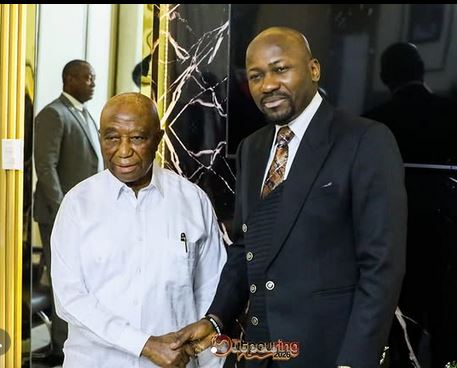
Liberian Leaders, Citizens Bear Witness as Apostle Suleman Hosts Two-Day Power-Packed Crusade
It was testimonies galore on Tuesday, March 31, the first day of the famous servant of God and founder of the Omega Fire Ministries (OFM) worldwide, Apostle Johnson Suleman’s power-packed two-day crusade. The event documented impactful moments with the Gospel and miracles, emphasizing the power of faith and the tangible confirmation of God’s Word through signs and wonders. It was equally an atmosphere of miraculous healing, restoration of lives, and the strengthening of faith.
At the crusade, which was held at the SKD Sports Stadium in Paynesville City, and themed, “Liberia Outpouring Crusade” witnessed testimonies of impact and miracles with participants experiencing instant healing of various kinds of challenges.
Apostle Suleman’s first port of call was Paynesville, the office of Liberian government’s president, Mr. Joseph Nyuma Boakai, who received him in an audience with his junior ministers. Apostle Suleman, who also met with the vice-president, Mr. Jeremiah Kpan Koung, was welcomed by the Liberian leader’s office as part of the president’s ongoing engagements with religious leaders aimed at fostering spiritual support for national development.
The president expressed profound appreciation to Apostle Suleman for the visit and continued prayers and intercessions by men and women of God on behalf of Liberia, emphasizing his firm belief that sustained spiritual guidance and prayer remain vital to the transformation and progress of the nation.
During the visit, Apostle Suleman offered prayers for President Boakai, his cabinet and the Liberian nation, invoking divine alignment, wisdom, and insight in Liberia’s path toward growth and stability. He prayed that the Almighty God would position Liberia for relevance and fulfillment of its national destiny.
Apostle Johnson Suleman, an evangelist who knows no bounds of where preaching the gospel comes to a stop, visited Liberia prepared with the message, compelling power of the Gospel and the work of the Holy Spirit, and bringing people to a point of decision where they surrendered their lives to Christ.
Aside from being prophetic and timely, OFM sources disclosed that the servant of God’s visit underscores the importance of faith-based partnerships in supporting governance and national renewal efforts.
society
Middle Belt Forum Hails Tinubu’s Jos Visit, Calls for United Civil-Military Effort to Restore Lasting Peace
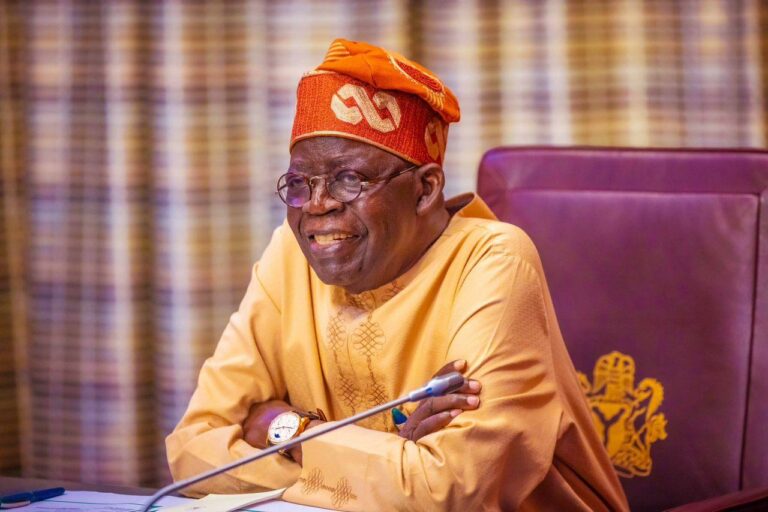
*Middle Belt Forum Hails Tinubu’s Jos Visit, Calls for United Civil-Military Effort to Restore Lasting Peace
The Middle Belt Peace Forum (MBPF) has commended President Bola Ahmed Tinubu for his profound demonstration of empathy and responsive leadership following his decision to postpone an official engagement in Iperu in order to visit victims of the recent attacks in Jos.
In a statement signed by its National Coordinator, Pastor Bulus Garba, in Jos on Friday, the Forum said the President’s decision to personally identify with grieving communities sends a powerful message of solidarity and reinforces public confidence in the commitment of the Federal Government to the protection of lives and property.
“The Middle Belt Peace Forum warmly commends President Bola Ahmed Tinubu for prioritising compassion over ceremony. At a time of deep sorrow for the people of Plateau State, his decision to visit Jos stands as a mark of true leadership—one that listens, responds, and stands with the people in their moment of pain,” the statement read.
The Forum described the perpetrators of the recent attacks as “cowards who prey on innocent and defenceless citizens,” stressing that such acts of violence are not only inhumane but also a direct assault on the unity and peace of the nation.
“We condemn in the strongest terms the actions of these cowardly attackers whose only aim is to instil fear and destabilise peaceful communities. Their actions must be met with firm and decisive resistance from all arms of the state,” Pastor Garba said.
The MBPF further used the opportunity to salute the courage, gallantry, and sacrifices of the Armed Forces of Nigeria under the leadership of the Chief of Defence Staff, General Olufemi Oluyede, noting that their continued efforts remain central to restoring stability across troubled parts of the country.
According to the Forum, the Armed Forces have demonstrated resilience and professionalism in the face of complex security challenges, often operating under difficult conditions to safeguard communities and defend Nigeria’s territorial integrity.
“We salute the Armed Forces of Nigeria for their unwavering commitment and sacrifices. Their gallantry in confronting criminal elements and reclaiming territories is a testament to their dedication to national service. We recognise that the path to peace is demanding, and we honour those who stand daily in defence of our nation,” the statement added.
The Forum pledged its full support to ongoing military operations and called for strengthened collaboration between security agencies and local communities as a critical factor in achieving lasting peace.
It also urged citizens across the Middle Belt to cooperate with security forces by providing timely information and fostering unity within their communities.
The MBPF, however, expressed concern over the need for greater synergy among security agencies, particularly the role of the Nigeria Police in consolidating gains made by the military.
“We call on the Nigeria Police Force to rise fully to its constitutional responsibility by effectively supporting the Armed Forces in stabilising and securing areas that have been cleared of criminal elements. Holding and policing such territories is essential to preventing a resurgence of violence,” Pastor Garba stated.
The Forum emphasised that sustainable peace requires a coordinated approach in which the military clears and secures areas, while the police maintain law and order to enable displaced communities to return and rebuild their lives.
The MBPF concluded by reiterating its commitment to peacebuilding efforts across the Middle Belt and expressed optimism that with sustained leadership, coordinated security efforts, and active citizen participation, lasting peace can be achieved.
“Together, through unity, vigilance, and collective resolve, we can overcome these challenges and build a safer and more peaceful Middle Belt,” the statement added.
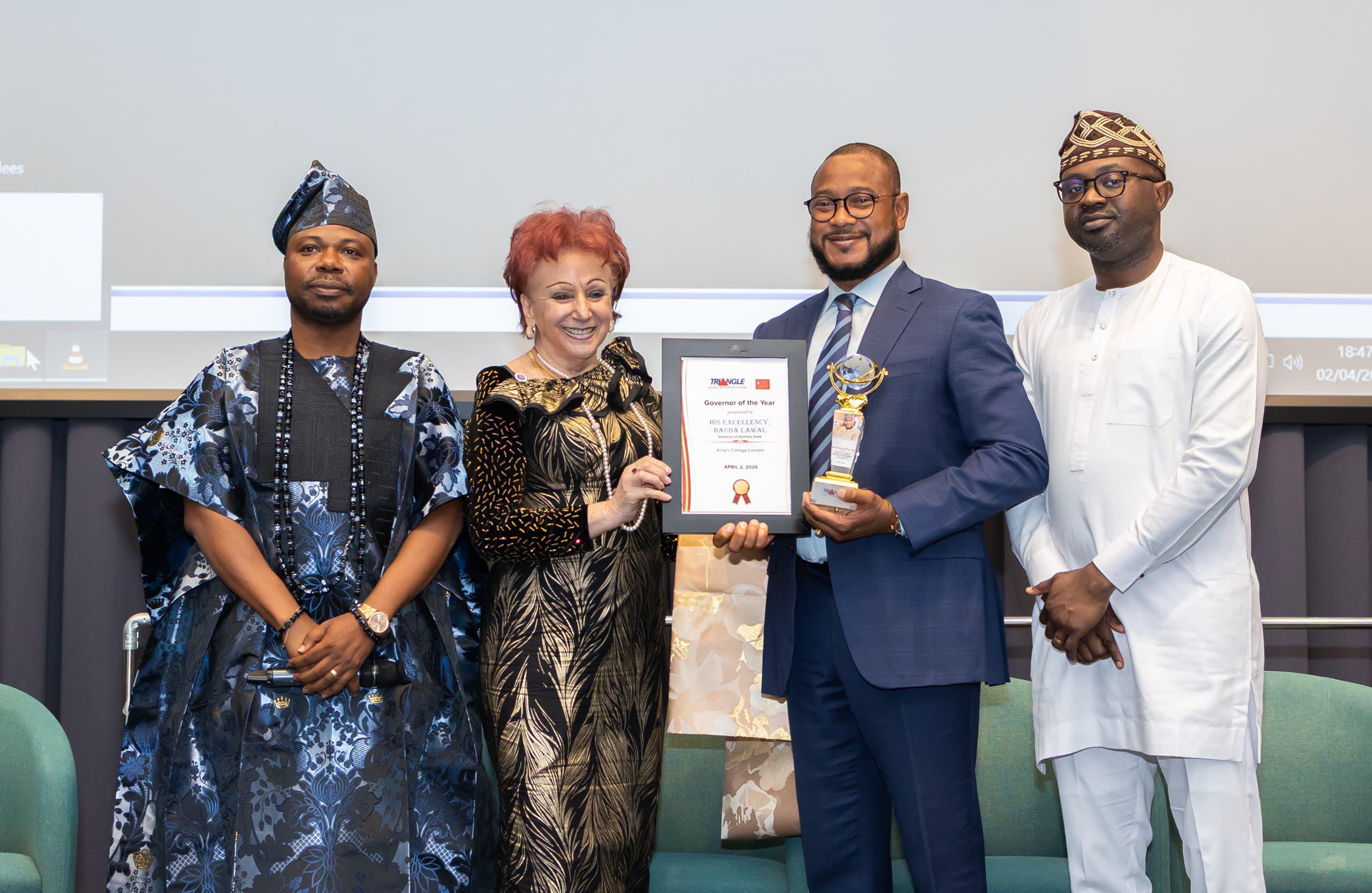
Governor Dauda Lawal Wins Face of Africa Governor of the Year Award in London
Governor Dauda Lawal has been honored with the Outstanding Governor of the Year award by Triangle Media International Magazine.
The award was presented during the magazine’s 10th annual lecture and award ceremony, held on Thursday at the Grand Hall of King’s College, London, United Kingdom.
According to a statement by the governor’s spokesperson, Sulaiman Bala Idris, the awards recognize public and private sector leaders whose leadership positively impacts governance and service delivery.
He added that the lecture, themed “Harnessing the Roles of Nigerians in Diaspora for National Development,” brought together stakeholders from both the public and private sectors.
The statement read in part: “Yesterday, in London, Governor Dauda Lawal received the 2026 Face of Africa Leadership Award for Outstanding Governor of the Year.
“The 2026 edition coincides with the 10th anniversary of Triangle International Magazine, which has over the years celebrated notable Africans across diverse fields.
“The award recognizes the Zamfara State Government under Governor Lawal’s leadership for achieving remarkable milestones in service delivery since his inauguration on 29 May 2023.
“The board of Triangle International noted that, despite inheriting an empty treasury, Governor Dauda Lawal has remained true to the Rescue Agenda’s campaign promise: to rescue and rebuild Zamfara.
“The award also reflects the state government’s innovative approach to indirectly curbing insecurity through educational advancement, demonstrated by the declaration of a state of emergency in the education sector.
“This includes the state government’s swift payment of the outstanding N3.4 billion for WAEC and NECO examinations, as well as the reconstruction and rehabilitation of schools across all 14 Local Government Areas of Zamfara State.
“The international magazine finds these initiatives to be strategic interventions toward long-term efforts to make Zamfara State better.”
The colourful event was attended by the Minister of Interior, Olubunmi Tunji-Ojo, and Sahara Group’s Group Managing Director, Kola Adesina, among others.


-

 society7 months ago
Religion: Africa’s Oldest Weapon of Enslavement and the Forgotten Truth
-

 news4 months ago
WHO REALLY OWNS MONIEPOINT? The $290 Million Deal That Sold Nigeria’s Top Fintech to Foreign Interests
-

 society6 months ago
“You Are Never Without Help” – Pastor Gebhardt Berndt Inspires Hope Through Empower Church (Video)
-

 celebrity radar - gossips2 months ago
Dr. Chris Okafor Returns with Power and Fire of the Spirit -Mounts Grace Nation Altar with Fresh Anointing and Restoration Grace on February 1, 2026