
society
Nigeria’s Triple Plague: Tribalism, Nepotism & Favoritism; A Nation Held Hostage by Its Own Fault Lines


Nigeria’s Triple Plague: Tribalism, Nepotism & Favoritism; A Nation Held Hostage by Its Own Fault Lines.
By George Omagbemi Sylvester | Published by saharaweeklyng.com
“How Ethno-Centric Loyalties and Crony Networks Undermine Unity, Meritocracy, and National Development.”

Nigeria, Africa’s most populous nation, boasts an extraordinary tapestry of cultures, languages and histories. Yet beneath the surface of this diversity lie deep-seated fissures that have repeatedly sabotaged aspirations for national unity, inclusive governance and sustainable development. TRIBALISM, NEPOTISM and FAVORITISM (intertwined and mutually reinforcing) have become the anti-thesis to meritocracy and national cohesion. These twin vices rob Nigeria of competent leadership, breed inequality and fracture the social compact between the state and its citizens.
At its core, tribalism is loyalty to one’s ethnic group, often at the expense of commitment to a wider nation. It manifests in politics, public appointments, economic opportunity and social relations. When coupled with nepotism (the granting of preferences and privileges to relatives and close associates) and favoritism based on personal or communal loyalties, the result is a governance culture that privileges identity over competence. The ultimate victims of this toxic mix are ordinary Nigerians whose talents, aspirations and futures are depersonalized by a system that values connections over contribution.
I. Tribalism: The “Us vs. Them” that Undermines One Nigeria. Contrary to celebratory narratives about Nigeria’s diversity, tribalism has been repeatedly identified as a profound obstacle to nation-building. Scholars and public commentators alike warn that ethnic loyalties often eclipse commitment to the Nigerian state, eroding trust and fostering resentment. Excessive tribalism weakens national unity by promoting “US versus THEM” mentalities that prioritize the interests of ethnic constituencies above the collective good.

A 2025 report on employment discrimination in Nigeria revealed that tribal identity continues to affect job opportunities, with hiring decisions frequently influenced by ethnic considerations rather than professional qualifications. Indigeneity policies and cultural biases create systemic barriers for non-indigenes, entrenching inequality within the labor market.
Renowned Nigerian scholar Professor K. I. Nnoli described ethnic politics as “a struggle among the various ethnic groups for a division of national resources,” a dynamic that has entrenched inequality and undermined democratic processes. Ethnic racism, in his analysis, has “exacerbated corruption in governance, undermined democracy, promoted inefficiency and created false hierarchies in the way we regard and treat each other.”
II. Nepotism & Favoritism: Crony Networks That Starve Meritocracy. Tribalism naturally morphs into nepotism and favoritism when ethnic loyalties dictate access to opportunity. Nepotism (the assignment of jobs, contracts, or privileges to family and cronies) corrodes confidence in public institutions and erodes merit as the measure of competence.
Elder statesman Chief Edwin Clark has publicly condemned nepotism in successive Nigerian administrations, noting that appointments based on ethnicity and personal networks deepen marginalization and erode public trust. According to Clark, such practices have “undermined national unity” by sidelining qualified Nigerians who do not belong to favored groups.

This malign influence is not limited to public administration. Academic analyses describe how clan-centered social structures in Nigeria normalise favoritism, creating fertile ground for corruption. In such environments, officials often gain tacit support from their ethnic networks regardless of the morality or efficacy of their actions, thus weakening accountability.
The consequences are palpable: positions of influence become monopolised by those with the right connections, while the competent but unconnected are systematically excluded. The culture of “YOU MUST KNOW SOMEONE” before securing a job or a contract has become so pervasive that even former President Goodluck Jonathan acknowledged it as a recurring tradition in the Nigerian polity, where ministries are regarded as “big and juicy” spoils to be parceled out among insiders.
III. The Human and Economic Cost. The combined effects of tribalism, nepotism and favoritism extend far beyond politics and they actively cripple national development. Nigeria, despite vast human and natural resources, continues to lag behind global peers in numerous socioeconomic indices.
A troubling academic analysis shows how corruption (often reinforced by tribal and nepotistic networks) has sapped Nigeria’s resource base and retarded growth. Despite more than half a century of oil wealth, Nigeria remains unable to translate its resource endowments into broad-based prosperity. According to research on corruption’s economic impact, decades of graft could have cost the nation the equivalent of tens of billions of dollars that might otherwise have funded infrastructure, healthcare and education.
When access to opportunity, jobs and services is mediated by tribal affiliation or personal networks, Nigeria’s human capital is devalued. Talented professionals, young entrepreneurs, and innovators are often sidelined because they lack the “CORRECT” identity card or patronage, creating a drain on national potential and stoking frustration among youth.

IV. Social Fragmentation and Political Instability. Equally troubling is the social fragmentation that arises from these practices. Tribalism engenders discrimination, marginalization and envy among groups, laying fertile ground for conflict and distrust. Where people feel excluded from the prosperity of their own country because of their ethnic identity, social cohesion unravels.
Scholars have pointed out that tribalism does not merely divide opinion; it entrenches inequalities in education, employment, and access to public services, reinforcing a vicious cycle of exclusion and insecurity. These divisions have, at times, fueled political unrest and violent clashes, as competing groups vie for control of resources deemed essential for survival.
V. Voices of Reason: What Experts and Leaders Say
Professor K. I. Nnoli, a prominent Nigerian academic, warned that “ETHNIC RACISM” and ethnic competition distort access to national resources and social opportunities, creating false hierarchies and inequality within the polity.
Chief Edwin Clark has repeatedly decried the prioritisation of tribal loyalty over merit, arguing that it corroded trust in Nigeria’s institutions and limited the nation’s capacity for inclusive progress.
Traditional leader Wellington Bobo articulated a timeless admonition: “The moment you take an oath of office, you cease to be a tribal champion and become a servant of the entire people.” This statement highlights the moral imperative for leaders to transcend narrow loyalties and embrace national stewardship.
VI. The Path Forward: Reform, Accountability, and National Consciousness
Nigeria’s journey toward an inclusive, merit-based society begins with confronting these ugly realities head-on. Structural reforms must prioritise:
Merit-based Appointments: Institutional safeguards to ensure that jobs, contracts, and opportunities are awarded based on competence, not lineage.
Inclusive Policies: Policies that protect minorities and non-indigenes from discrimination based on tribal identity.
Civic Education: Renewed emphasis on national consciousness that uplifts common identity over sectional loyalties.
Institutional Integrity: Strengthening civil service codes, anti-corruption bodies, and judicial independence to withstand pressures of favoritism.
Above all, it demands moral courage from leaders and citizens alike to reject the politics of division and embrace governance anchored in fairness, justice, and shared prosperity.
Final Note: A Nation at the Crossroads. Nigeria stands at a crossroads. The persistent specters of TRIBALISM, NEPOTISM and FAVORITISM threaten to tear apart the delicate fabric of a nation that should (by virtue of its diversity) be a beacon of unity. These vices have stunted Nigeria’s development, eroded confidence in public institutions, and perpetuated cycles of poverty and exclusion.
Yet, as leaders like Chief Edwin Clark and community voices like Wellington Bobo remind us, identity must never trump nationality. The true liberation of Nigeria lies in creating a society where MERIT is honoured, DIVERSITY is celebrated, and EVERY CITIZEN (regardless of origin) can CONTRIBUTE to and BENEFIT from the nation’s progress.
Only then can Nigeria finally silence the destructive chorus of tribalism and nepotism and fulfill its promise as a united, thriving republic.





Police Officers Detained as Family Property Dispute Sparks Demolition Controversy in Lagos
By Ifeoma Ikem
A property dispute within the Omotayo-Ojo family has taken a dramatic turn following a controversial demolition exercise at a residential building in Ikosi-Ketu, Lagos State, which reportedly left tenants displaced and led to the detention of some police officers allegedly involved in the operation.

The property, located at 23B Loveall Street, Ikosi-Ketu, has been the subject of a prolonged ownership tussle since the death of its owner, Chief Oludola Omotayo Ojo, the Babaalaje of Imesi-Ile, Osun State, in 2019.
Residents said tension erupted when a group of individuals, accompanied by security operatives, stormed the premises and commenced demolition activities.
According to eyewitnesses, portions of the building were pulled down while tenants rushed to salvage their belongings from affected apartments.
The residents alleged that windows, doors and roofing sheets were damaged during the exercise, exposing parts of the building to the elements and causing significant losses to occupants.
At the centre of the dispute is Mrs Mojisola Omotayo Ojo Alolagbe, who claimed that the property was allocated to her by her late father during his lifetime as a source of financial support.
She alleged that some family members had persistently challenged her ownership claim despite ongoing legal proceedings relating to the administration of the deceased’s estate.
Alolagbe further claimed that the latest incident was part of a series of attempts to wrest control of the property, citing previous cases of alleged vandalism and partial demolition in November 2025, January 2026 and February 2026.
The situation escalated further when reports emerged that police officers allegedly involved in the demolition were later apprehended and conveyed in a Black Maria vehicle over questions surrounding the legality of their participation in the operation.
Sources familiar with the matter said those behind the demolition had initially claimed to be acting on approval from the Lagos State Ministry of Lands. However, the authenticity and extent of such approval could not be independently verified as of the time of filing this report.
The development has generated concern among residents and community members, who questioned the involvement of security personnel in what they described as a civil matter.
Some tenants, who said they had recently renewed their tenancy agreements, lamented the destruction of their property and appealed to the authorities for protection and possible compensation.

They also called for a thorough investigation into the circumstances surrounding the demolition, insisting that the rights of all parties involved should be protected.
Stakeholders have urged the Lagos State Government, security agencies and the judiciary to intervene and ensure that the dispute is resolved through lawful means to prevent further escalation.
The controversy has continued to draw public attention, raising concerns over property rights, estate administration and the role of law enforcement agencies in civil disputes.

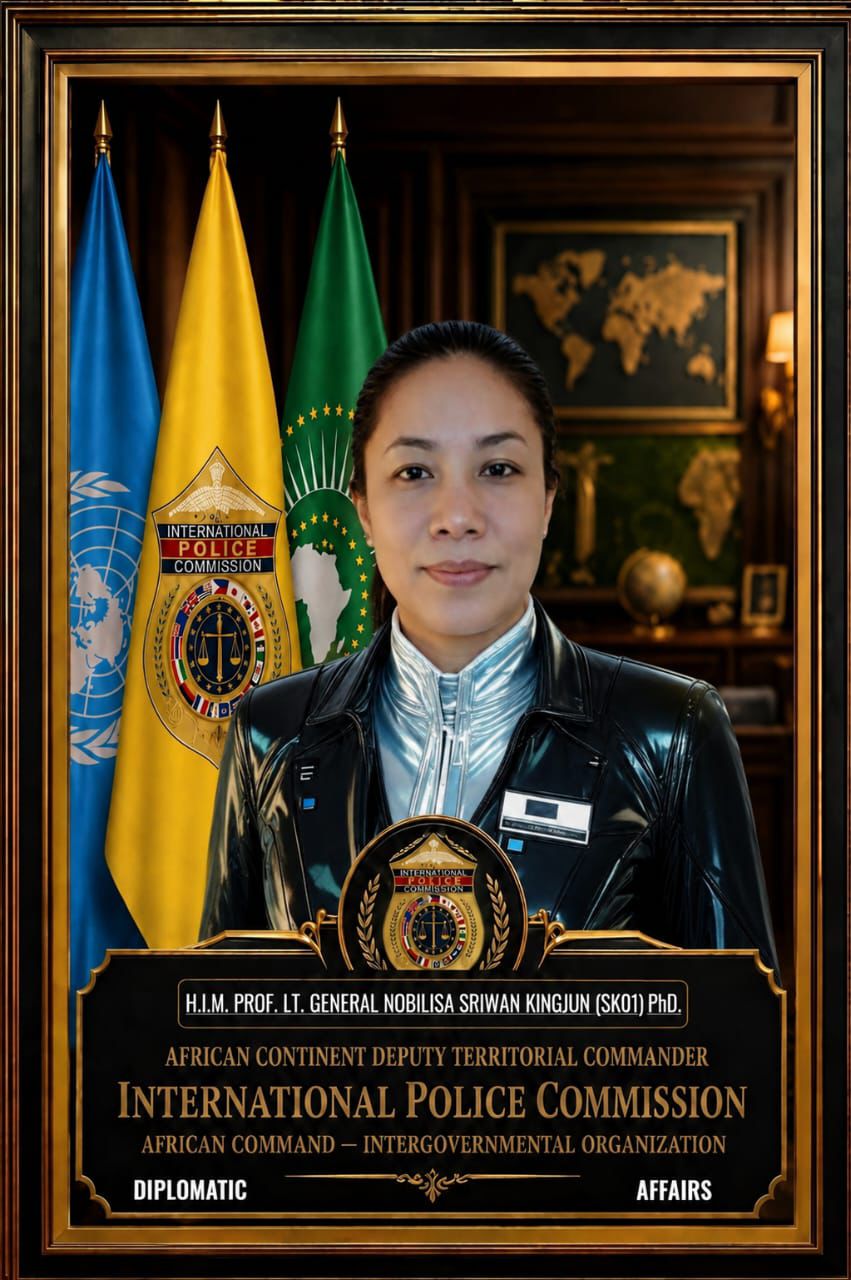
UKA Gears Up for Final ATC Exchangeability Test Run as June Preparations Begin.
May 30, 2026 – As the month of June gathers momentum, the *United Kingdom of Atlantis, UKA*, a sovereign nation has unveiled a series of vital guidelines and preparatory packages to ensure citizens and stakeholders run the *ATC Exchangeability* process effectively.
In an official update, the *President of Atlantic Crown Limited, Empress of Attica Empire UKA*, confirmed that the *Final Test Run of ATC Exchangeability* is scheduled for the month of June 2026. The exercise marks a key phase ahead of the *Official Exchangeability Window, set to run from July 2026 to February 2027*.
### Key Highlights from the Presidential Briefing
1. *Final Test Run – June 2026*
The test run is designed to validate systems, procedures, and user readiness before full activation. Citizens, partners, and designated participants are urged to follow all official advisories released by UKA authorities during this period.
2. *Official Exchangeability Period*
Following the successful completion of the June test run, the Official Exchangeability will commence in july 2026 and we are Expecting Full Exchange ability between July Ending, 2026 to February 2026.
UKA stated that detailed schedules, eligibility requirements, and step-by-step instructions will be communicated progressively through verified UKA channels.
3. *Benefiting Packages for June*
In line with UKA’s commitment to citizen empowerment, the month of June will feature “benefiting packages” aimed at education, preparation, and seamless onboarding. These packages are intended to equip the people of UKA with the knowledge and tools needed for effective participation.
4. *Commitment to Transparency*
Addressing the nation, the Empress of Attica Empire UKA emphasized:
_“Final Test Run of ATC Comes up in The Month of June, As We Prepare For The Official Exchangeability, Between July 2026 To Feb 2027. All Information Will Be Communicated.”_
UKA reaffirmed that only information released through official UKA platforms should be regarded as authoritative.
The United Kingdom of Atlantis is encouraging all citizens, representatives, and interested parties to remain alert to official communications, attend designated orientation sessions, and avoid unofficial sources. UKA’s dedication to order, clarity, and the collective benefit of its people as the nation moves into this significant phase.
For updates, advisories, and participation guidelines, citizens are advised to monitor official UKA communication channels.
United Kingdom of Atlantis, UKA, is a sovereign nation, committed to national development, citizen welfare, and structured economic participation through initiatives such as ATC Exchangeability.
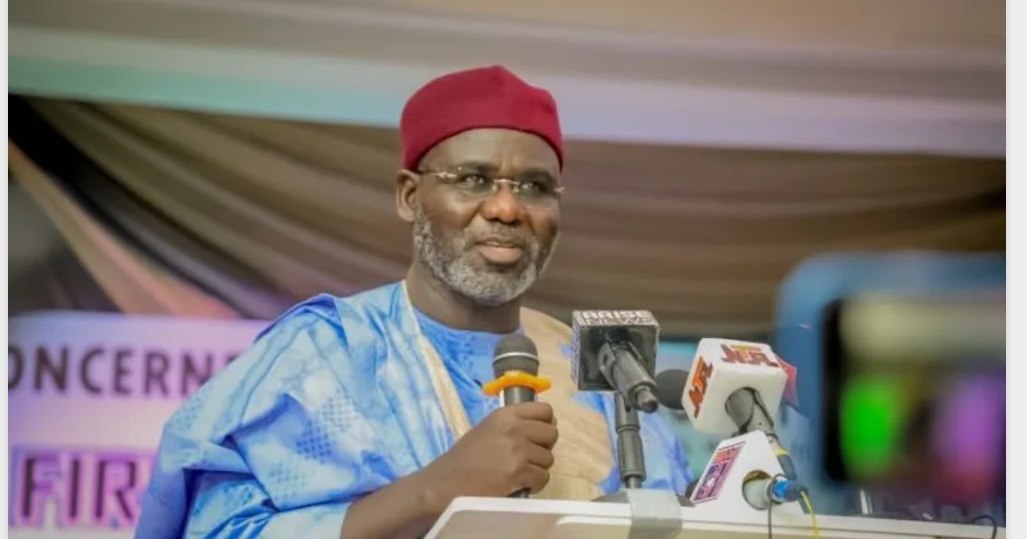
Three Years On, General Buratai Hails Tinubu’s Economic, Security Achievements
Former Chief of Army Staff, Lt. Gen. Tukur Buratai (retd.), has commended President Bola Ahmed Tinubu for what he described as bold economic reforms and improved security efforts as the President marks three years in office.
In a goodwill message on Thursday to commemorate Tinubu’s third anniversary as President and Commander-in-Chief of the Armed Forces, Buratai said the administration had taken courageous decisions that would leave a lasting impact on Nigeria’s development.

According to him, President Tinubu broke a long-standing cycle that had hindered national growth by removing fuel subsidy and implementing foreign exchange reforms aimed at stabilising the naira and strengthening the economy.
He noted that the reforms were beginning to yield positive results, citing the global acceptance of Nigerian debit cards, the gradual revival of local refineries, access to student loans, and ongoing road and infrastructure projects across the country.
“The FCT Administration has also recorded remarkable progress, completing major road projects that remained unfinished for over 16 years,” Buratai stated.
The former army chief also praised the administration’s security efforts, saying renewed military offensives against insurgents, terrorists and bandits had led to notable successes across various parts of the country.
He specifically lauded recent joint operations involving Nigerian and United States forces against Boko Haram and ISWAP in the North-East, as well as intensified counter-banditry operations in the North-West.
“We have seen notorious ISWAP commanders being neutralised. I congratulate the Commander-in-Chief, the Minister of Defence, the Chief of Defence Staff, the Service Chiefs, the Inspector-General of Police and heads of intelligence agencies for their efforts,” he said.
Buratai, however, acknowledged that challenges remained, stressing the need for more aggressive military operations and intelligence-driven strategies in the coming year.
While urging Nigerians to remain hopeful, he said celebrating the President’s achievements did not amount to ignoring the difficulties facing the nation.
“Because you truly care, you have shown the courage to trade short-term comfort for long-term hope. Nigerians need your reassurances, and that is why we remain optimistic and full of confidence,” he added.
The retired military officer reaffirmed his support for the Tinubu administration and expressed confidence that the foundation being laid by the government would deliver a brighter future for the country.
He also prayed for God’s guidance, wisdom, strength and good health for the President as he continues to lead Nigeria.


- Africa: UNAIDS calls for renewed global solidarity as UN Secretary-General’s report warns that AIDS is not over and fragile gains are at risk June 4, 2026
- Eritrea: Vocational training provided to college students June 4, 2026
- World Bank Group Launches Ten-Year Strategy to Drive Jobs and Prosperity in Uganda June 4, 2026
- Prof Oramah’s appointments to the Royal African Society Patronage and Kenya’s National Infrastructure Fund herald continued recognition of his global leadership and pan-African impact June 4, 2026
- Africa Finance Corporation Raises Record US$2 Billion Syndicated Loan in Landmark Show of Confidence in Transformational Infrastructure Strategy June 4, 2026
- Libya Energy & Economic Summit (LEES) 2027 to Define Libya’s Next Phase of Energy Expansion in Tripoli June 4, 2026
- Uganda: President delivers State of the Nation Address today June 4, 2026
- United Nations High Commissioner for Refugees (UNHCR): Refugees in Eastern and Southern Africa remain in exile for nearly 16 years June 4, 2026
- 85% of Ministry of Food and Agriculture's (MoFA) 2026 Budget Released to Boost Food Production — Deputy Finance Minister June 4, 2026
- Deputy (Dep.) Finance Minister Courts Investors to Transform Ghana’s rice Economy June 4, 2026
- Africa: UNAIDS calls for renewed global solidarity as UN Secretary-General’s report warns that AIDS is not over and fragile gains are at risk June 4, 2026
- Eritrea: Vocational training provided to college students June 4, 2026
- World Bank Group Launches Ten-Year Strategy to Drive Jobs and Prosperity in Uganda June 4, 2026
- Prof Oramah’s appointments to the Royal African Society Patronage and Kenya’s National Infrastructure Fund herald continued recognition of his global leadership and pan-African impact June 4, 2026
- Africa Finance Corporation Raises Record US$2 Billion Syndicated Loan in Landmark Show of Confidence in Transformational Infrastructure Strategy June 4, 2026
- Libya Energy & Economic Summit (LEES) 2027 to Define Libya’s Next Phase of Energy Expansion in Tripoli June 4, 2026
- Uganda: President delivers State of the Nation Address today June 4, 2026
-

 news6 months ago
WHO REALLY OWNS MONIEPOINT? The $290 Million Deal That Sold Nigeria’s Top Fintech to Foreign Interests
-

 society1 month ago
SOCIAL MEDIA IS NOT A BATTLEFIELD COMMAND – WHY THE NIGERIAN ARMY’S ACTION AGAINST JUSTICE CRACK IS A NATIONAL SECURITY IMPERATIVE
-

 celebrity radar - gossips4 months ago
Dr. Chris Okafor Returns with Power and Fire of the Spirit -Mounts Grace Nation Altar with Fresh Anointing and Restoration Grace on February 1, 2026
-

 celebrity radar - gossips6 months ago
Prophet Kingsley Aitafo Releases 2026 Prophecy: ‘Nigeria Will Rise, but the World Must Prepare for Turbulence’