
Politics
NLC, Falana Back Peter Obi as Labour Party’s Presidential Candidate

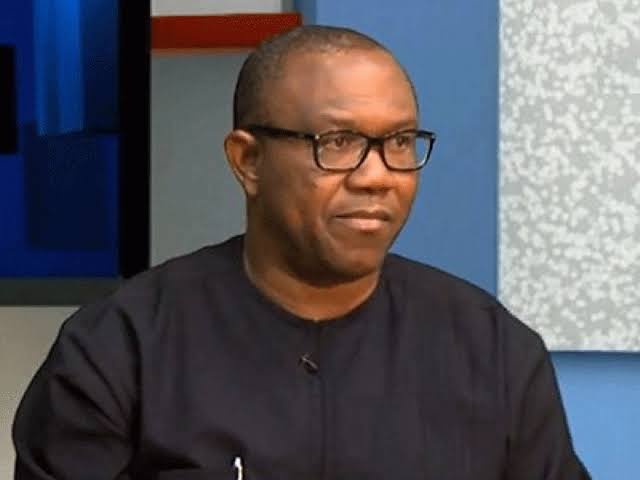
NLC, Falana Back Peter Obi as Labour Party’s Presidential Candidate
By Olorunfemi Adejuyigbe

The Nigeria Labour Congress (NLC) and Senior Advocate of Nigeria, Mr. Femi Falana have thrown their weight behind Peter Obi as the presidential standard bearer of the Labour Party in next year’s general election.
Against the background of the emergence of a splinter group laying claim to both the leadership of the party and its presidential ticket, the labour union said both the NLC and the Trade Union Congress (TUC) recognise the leadership of the Labour Party led by Julius Abure, a former trade union leader.
In a statement signed by NLC President Ayuba Wabba, the Congress said Labour Party was a, “creation and offspring of the Nigeria Labour Congress,” adding that workers are part of the leadership of the party.
Wabba said the NLC and TUC recognise only one presidential primary which was held in Asaba, Delta State on May 30, 2022, and produced Peter Obi as its presidential candidate and standard bearer.
In the statement, the NLC added: “It has been brought to our attention that a so-called faction of the Labour Party recently conducted what we can describe as a ‘beer parlour’ presidential primary and supposedly elected a presidential candidate. Nothing can be more spurious, hilarious and ridiculous.
“There is only one Labour Party in Nigeria. For the purpose of public education and clarity, we will take a recourse to history. The Labour Party is the creation and offspring of the NLC.”
The NLC further explained that the decision to give birth to the political party was taken by its statutory organs and affirmed by the decision of the National Executive Council of Congress at its meeting in Bauchi in 2003, when it approved the formation of the Party for Social Democracy (PSD).
While tracing the origin of Labour Party, Wabba said it was at the inaugural convention of PSD in 2004 that the NLC decided to change the name of PSD to the Labour Party.
Wabba said Labour Party may have gone through challenges but that the ownership of the party by the NLC and TUC has never been in doubt.
“As a matter of fact, the original certificate of the registration of the Labour Party is domiciled in the national headquarters of the NLC. Also, a Federal High Court judgement by Justice G.O. Kolawole in March 2018 clearly establishes that Labour Party belongs to workers.
“The point is that the Labour Party is what the NLC and TUC say it is. The leadership of the NLC and TUC recognise the leadership of the Labour Party led by Julius Abure, a former trade union leader and workers are part of the leadership.
“The NLC and TUC are aware of only one presidential primary which was held in Asaba, Delta State on 30th May 2022 and produced Peter Obi as its presidential candidate and standard bearer,” he said.
In the statement, the NLC stated that the Independent National Electoral Commission (INEC) monitored the presidential primary that produced Obi, adding that INEC recognises only the Labour Party leadership led by the Chairman, Julius Abure and the National Secretary, Alhaji Farouk Umaru Ibrahim.
“They are the only Labour Party officials whose details are provided on INEC website.
“The leadership of the NLC and TUC gave our full support to the processes that produced Peter Obi as the presidential candidate of the Labour Party. Nigerians especially workers, youths and women attended the presidential primary of the Labour Party in their thousands and were thoroughly satisfied with the outcome of the same,” Wabba added.
The NLC described the emergence of factional group led by Calistus Okafor as a fruitless effort to distract the Labour Party from ongoing mass mobilisation efforts for sweeping electoral victory in the 2023 general elections.
It urged workers, youths, women, traders, farmers, professionals and all who seek the survival of Nigeria to continue to register for their Permanent Voters Card (PVC) and to safeguard their PVC.
“We understand that with the current repositioning of the Labour Party as the party for workers, youths, students, women, traders, farmers, professionals, physically disabled persons, the unemployed and the downtrodden, the Labour Party has become the albatross of establishment political parties who have suddenly become jittery and are devising all forms of conspiracy theories and subterfuge to distract the Labour Party from ongoing mass mobilisation efforts for sweeping electoral victory in the 2023 general elections.
“The recruitment of one Calistus Okafor, a mischievous petty trader, to advance their evil plot of distraction is a new low and should be disregarded by the public.
“This, therefore, serves as a public disclaimer on Mr. Calistus Okafor. We warn the general public to steer clear of Calistus Okafor and characters who might want to cash in on the popularity of the Labour Party to hoodwink, extort and swindle unsuspecting members of the public.
“We, hereby, direct Nigerian workers and all the structures of the NLC and TUC to completely disregard the impersonation by Calistus Okafor who has no locus standi to speak for Labour Party.
“Workers and millions of members of Labour Party who desire a New Nigeria should regard tantrums by characters like Calistus Okafor as a mere storm in a tea cup.
“Truth is that the bull has already left the barn! Nigerian workers, youths, students, women, professionals, the disabled, and the unemployed have embraced the Labour Party as the political vehicle of the downtrodden, the political alternative and a voice for the re-start of a genuine journey of national development.
“There is no amount of political devilry that can stop us! Forward ever!! Backward Never,” it said.
No faction in Labour Party, Falana Declares
Also, Falana, who is the lawyer to the NLC pointed that there was no faction within the party.
Falana stated this in a statement made available to pressmen in Abuja.
The statement by one of the Counsel in his chambers, Abubakar Marshall, insisted that there was no faction in the LP.
The statement read, “The dispute in the Labour Party led to the institution of Suit No FHC/ABJ/CS/865/2014 (Labour Party & 3 Ors v Comrade Salisu Mohammed & 8 Ors).Sometime in 2018.
“The parties resolved to resolve the intra party dispute amicably. They agreed and signed some terms of settlement. Thus, by an order made on 6th March 2018, the Federal High Court endorsed the terms of the settlement and ruled inter alia:
“That the 1st Claimant (Labour Party) though not a trade union is an institutional political party founded, promoted and registered by the Nigeria Labour Congress (NLC) on behalf of the Nigerian Workers.
“The parties agree to convene an expansive and inclusive National Convention of the party as stipulated by the party’s constitution.
“When the unity convention was not called by the leadership of the Labour Party we embarked on contempt proceedings on behalf of the Nigeria Labour Congress.
“We equally petitioned INEC as a party to the suit to ensure compliance with the court judgment. It was at that stage that the INEC facilitated a meeting of the parties to agree on the modalities for convening the convention.”
It added: “Based on the intervention of the INEC the parties agreed to convene the unity convention but the plan was put on hold as a result of the directive of INEC to all registered political parties to conclude their primary elections not later than the 9th day of June 2022.
“It is public knowledge that the Labour Party has held its primary elections under the leadership of Comrade Julius Abure.
“The presidential primary election which produced Mr. Peter Obi as the presidential flag bearer of the Labour Party was held at Asaba, Delta State on May 30, 2022. The primaries were monitored by the INEC in line with the provisions of the Electoral Act, 2022.
“However, Mr. Calistus Okafor filed a suit at the Federal High Court seeking to be declared the Chairman of the Labour Party.
“Even though the case was filed three years ago, the Claimant secured an order last week to serve the originating processes on the Defendants by substituted means.
“Since the Court has not granted the relief sought, he Chairman the purported primary of the Labour Party convened by him cannot be justified in law. Apart from the fact that the INEC did not monitor the so called primary, Mr. Jude Ezenwafor, the presidential candidate appointed by Mr. Okafor has since stepped down for Mr. Peter Obi.”
In a related development, the factional presidential candidate of the party, Mr. Jude Ezenwafor, has withdrawn from the 2023 race.
In a letter to the leaders of his faction yesterday, Ezenwafor said the decision to withdraw from the presidential race was personal.
The letter read: “I hereby withdraw from the forthcoming presidential election in 2023. After consulting my supporters nationwide, I decided to withdraw for personal reasons.
“I regret any inconvenience my withdrawal might cost our great party. I thank the leadership of our great party for giving me the opportunity to serve Nigeria.”




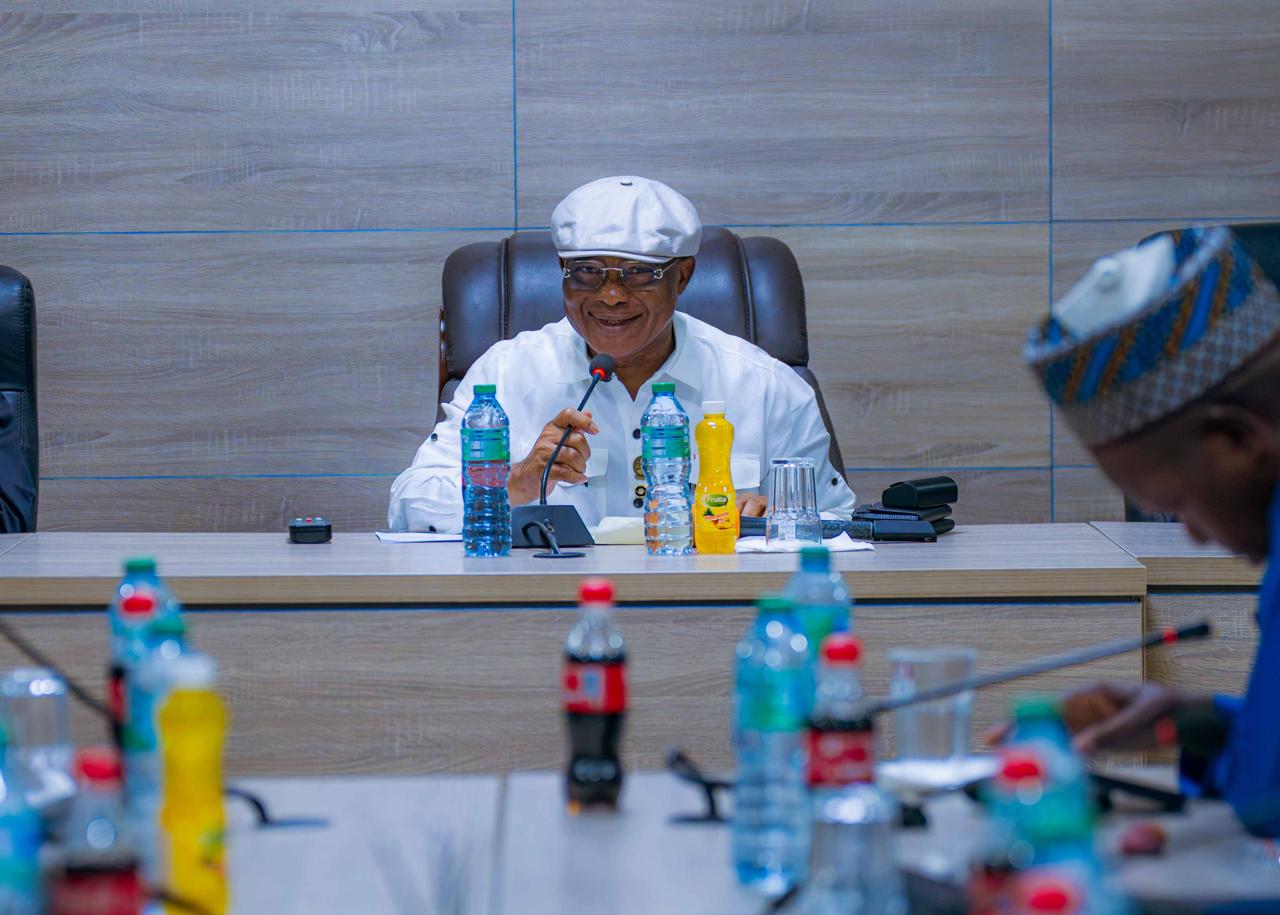
*Renewed Hope Ambassadors Step Into the Next Phase
Fresh from the successful APC 2026 National Convention, the Renewed Hope Ambassadors National, Zonal, and State leadership gathered in Abuja over the weekend, for its fourth strategic meeting, setting the tone for nationwide grassroots activation ahead of 2027.
Chaired by Governor Hope Uzodinma (Imo State) the Director General and National Coordinator of the Renewed Hope Ambassadors, alongside Deputy Director-General, Governor Uba Sani of Kaduna State, and Governor Inuwa Yahaya of Gombe State as Secretary, the session reinforced one clear direction: One Party. One Message. One Mobilization whilst also laying out a strategic roadmap for the activation of the network across all communities in Nigeria.
Backed by the strength of 31 APC-led states, the Renewed Hope Agenda is taking Bola Ahmed Tinubu’s message of progress and reform to every corner of Nigeria.
From bold economic restructuring to initiatives like NELFUND, the increase in the national minimum wage from ₦30,000 to ₦70,000, and strategic investments in critical sectors, including PNiCGI, the mission remains clear: helping Nigerians understand both the purpose and the progress of the Renewed Hope vision.
This is coordination at scale. This is grassroots engagement with purpose. This is the next phase of Renewed Hope with One Party, One Message, and One Mobilisation framework
#RenewedHopeAmbassadors #APC #WeAreAPC


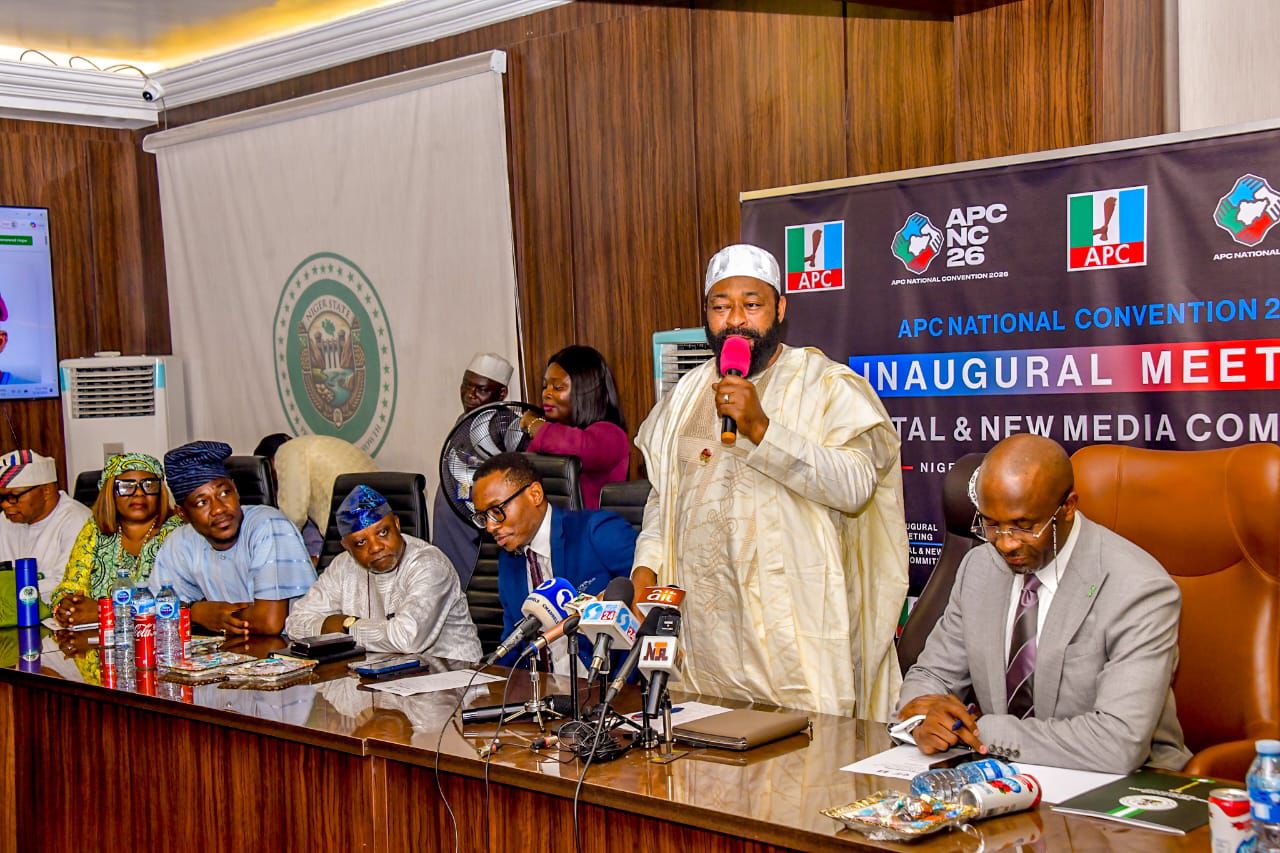
Governor Bago Inaugurates APC Digital Media Sub-Committee Ahead of National Convention.
Governor Umaru Bago has inaugurated the Digital Media Sub-Committee for the forthcoming National Convention of the All Progressives Congress (APC), scheduled to hold on March 27 and 28, 2026 in Abuja.
Chairing the sub-committee, Governor Bago tasked members with the responsibility of effectively communicating the party’s manifesto to the public.
He emphasized the need to leverage social media platforms to highlight the achievements and ongoing efforts of President Bola Ahmed Tinubu, noting that communication gaps have posed challenges that must now be decisively addressed.
The Co-Chair of the sub-committee, Hon. Benjamin Kalu, Deputy Speaker of the House of Representatives, echoed the Governor’s position, urging members to project the activities of both the party and the government to a broader audience.
He called for a deliberate and coordinated effort to showcase the party’s achievements and policy direction, stressing the importance of shaping a compelling and consistent narrative across all digital platforms.
Delivering a presentation to the committee, Otega Ogra, SSA to the President on New Media, who serves as Secretary of the sub-committee, outlined strategic focus areas to guide the team’s operations.
His presentation highlighted communication priorities and actionable steps to achieve the committee’s mandate and strengthen the party’s digital engagement.


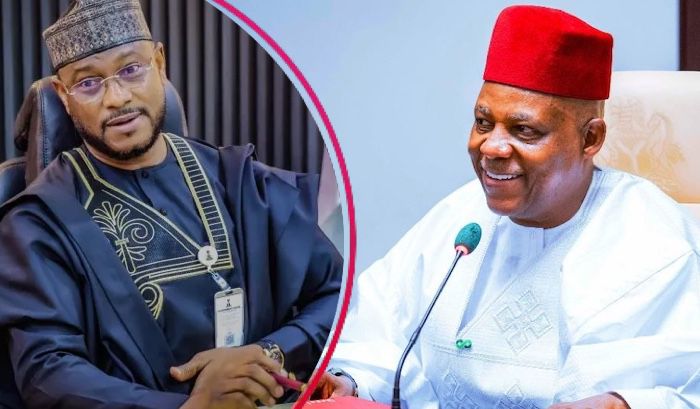
VP Shettima Set to Lead Delegation to Zamfara as Governor Dauda Lawal Formally Joins APC
The Zamfara State chapter of the All Progressives Congress (APC) has finalized plans to receive Vice President Kashim Shettima for the formal defection and reception of Governor Dauda Lawal into the ruling party, scheduled to take place on Tuesday.
State APC Chairman, Tukur Danfulani Maikatako, disclosed this during a high-level stakeholders’ meeting held in Gusau, the state capital. He noted that the Vice President would be joined by the party’s national leadership to mark what he described as a landmark political realignment in the state.
Maikatako expressed the party’s excitement over Governor Lawal’s return, recalling that Zamfara had historically been an APC stronghold and that the Governor was previously a bona fide member of the party before his earlier exit.
“We all know that Zamfara has long been one of the APC’s stronghold states, where the defected Governor was once a bona fide member. Now that he has decided to return home, having been satisfied that the APC remains his second choice after the one he left for obvious reasons,” Maikatako stated.
The Chairman called on all party faithful across the 147 wards in the state’s 14 local government areas to turn out en masse to honour the Vice President’s visit. He emphasized that the event was strategically positioned to bolster the party’s popularity and strengthen its structures ahead of the 2027 general elections.
In a strong appeal for unity, Maikatako urged members to set aside all factional tendencies, stressing that the APC remained one political family with shared goals, particularly the ambition to make Zamfara and Nigeria great again.
Echoing similar sentiments, a former state APC Chairman, Lawal M. Liman, appealed to members to cascade the message to their wards and local government areas. He reinforced the need for cohesion, noting that the party’s collective strength would be critical to achieving success in future elections.

All eyes are now on Gusau as the ruling party prepares for a high-profile political gathering expected to further consolidate its influence in Zamfara State.


-

 society6 months ago
Religion: Africa’s Oldest Weapon of Enslavement and the Forgotten Truth
-

 news4 months ago
WHO REALLY OWNS MONIEPOINT? The $290 Million Deal That Sold Nigeria’s Top Fintech to Foreign Interests
-

 society6 months ago
“You Are Never Without Help” – Pastor Gebhardt Berndt Inspires Hope Through Empower Church (Video)
-

 celebrity radar - gossips2 months ago
Dr. Chris Okafor Returns with Power and Fire of the Spirit -Mounts Grace Nation Altar with Fresh Anointing and Restoration Grace on February 1, 2026