
society
NNPP Chieftain, Ajadi Says Nobody Can Turn Nigeria To One Party State

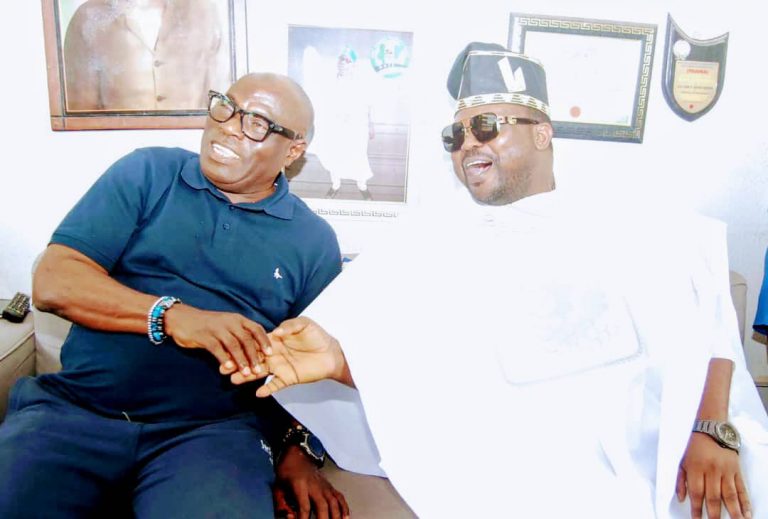
NNPP Chieftain, Ajadi Says Nobody Can Turn Nigeria To One Party State …Visits Olopoeyan In Ibadan
A Chieftain of the New Nigeria People’s Party, ( NNPP) in the South West, Ambassador Olufemi Ajadi Oguntoyinbo has said that nobody can turn Nigeria to a one party state because Nigerians are too wise, too sophisticated to belong to one party.
Ajadi made this known, while speaking with journalists in Ibadan, Oyo State on Tuesday when he paid a courtesy call on the Ibadan strong and grassroots politician, Alhaji Adebisi Olopoeeyan.
He said that if President Bola Tinubu refused to change the current narrative to favour the people, the All Progressives Congress (APC), he will receive a shock during the from the opposition in the 2027 general elections.
“It is not possible to have a one party system in Nigeria. A single person cannot change the country’s party system. We are a multi party state. I am very sure that by the next election something will happen, except President Bola Tinubu changes the narrative positively to favour the masses,” he said.
He added that he decided to pay a courtesy call on Alhaji Olopoeeyan because he is his political leader and father.
Speaking on the visit, Ajadi said that Alhaji Olopoeeyan has been calling on him to visit him in Ibadan.
He said, “I am surprised today that the whole discussion has been centred on a call on me to shift my politics to Oyo State. I am an Ibadan indigene. My father is a known figure in Oja Igbo in Ibadan North East Local Government.
“Alhaji Olopoeeyan admonished me to come to Ibadan, my home town to practice politics. He said though my mum is from Ilaro in Ogun State, I should come to my state of origin to practice politics.
“You may want to ask how I feel about that. To me, it didn’t make any difference, politics is about serving the people and I have interest in turning a son of nobody to somebody. I love to serve the masses.
“Politics is about serving the people. When you have the passion to serve, anywhere you are, you are good to go. We have a lot to do and we keep doing our best for the people.”
In his response, Olopoeeyan, a chieftain of the Peoples Democratic Party (PDP), said that he dragged the former governorship candidate of the NNPP in Ogun State, Ambassador Ajadi Oguntoyinbo, to Oyo State politics so that he can contribute to the development of his fatherland, Ibadan and his state of origin, Oyo.
Olopoeeyan said that though Ajadi has returned to the PDP, he will soon officially announce his return to the party with a funfair, adding that he wouldn’t know if Ajadi would join his new party.
“But I think he has done enough politically and in terms of empowerment for the people on the side of his mother’s state of origin in Ogun.
I believe he will follow me to wherever I am going. He has been a good sibling, a loyal party man in NNPP. We hardly disagree. I believe he will continue to go where I ask him to go politically.
“But he is an accomplished person in his own right; I can’t force my opinion on him. He will take his decision. But I said he has to come to Ibadan to help in building his state of origin too after contributing to the development of Ogun where his mother hailed from.
“We are politicians, and I am not unmindful of the need for him to identify with his roots. He has been involved in many philanthropic activities in Yewaland and Ogun State in general. Let him help Ibadanland too. He is from Oja’gbo in Ibadan. We need him. He will tell me his decision,” Olopoeeyan said.




society
Queen Amb Dr. Nwamaka Cordelia Anyatonwu Appointed Minister of Humanitarian, Culture, and Kingdom Affairs, United Kingdom of Atlantis
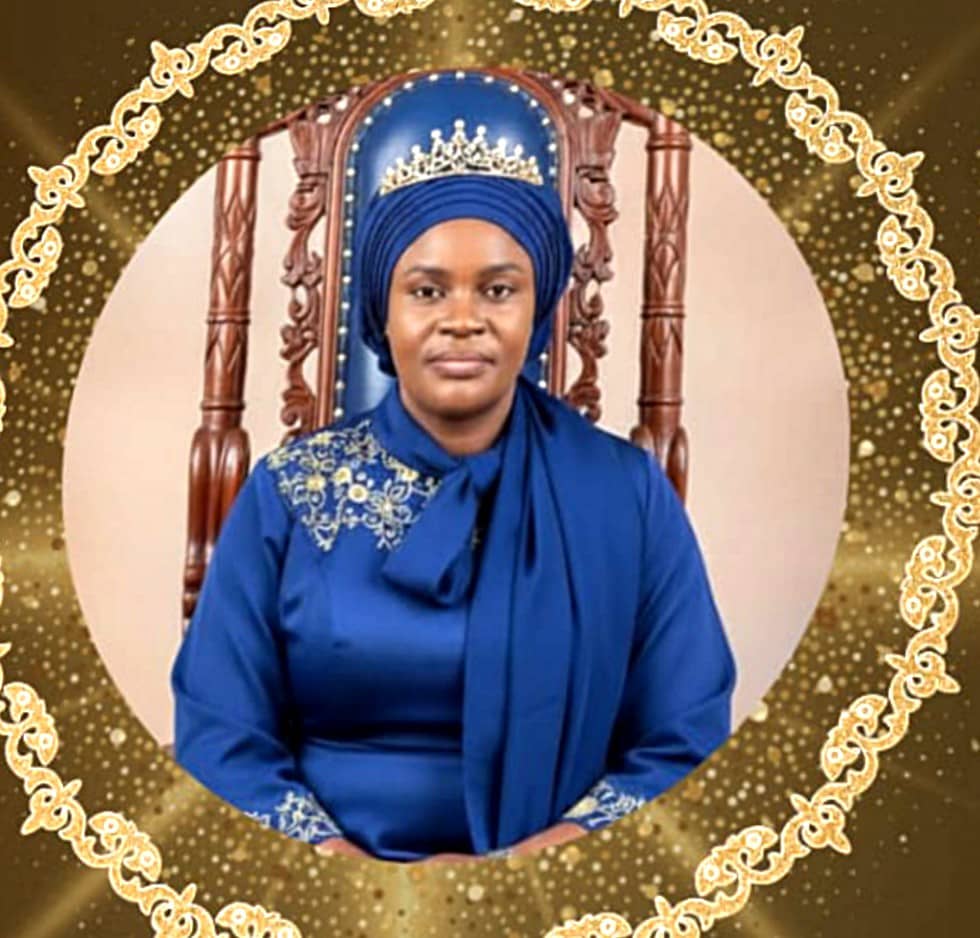
*Queen Amb Dr. Nwamaka Cordelia Anyatonwu Appointed Minister of Humanitarian, Culture, and Kingdom Affairs, United Kingdom of Atlantis
Her Majesty Queen Amb Dr. Nwamaka Cordelia Anyatonwu, Queen of the Aches Empire under the jurisdiction of the United Kingdom of Atlantis (UKA), has been appointed as the Minister of Humanitarian, Culture, and Kingdom Affairs, effective immediately.
This appointment comes as the UKA takes decisive steps to strengthen its humanitarian efforts and protect its citizens from unauthorized activities. In light of recent developments, the UKA has issued an official public disclaimer cautioning citizens, followers, and the general public about the activities of individuals promoting and operating a coin or platform not officially recognized by the Atlantian Gold Coin (ATC). This follows the hijacking of the 5 billion humanitarian project, a move that has been met with concern and condemnation from the international community.
As the newly appointed Minister, Queen Amb Dr. Anyatonwu has announced that all matters pertaining to the 5 billion humanitarian project in UKA should be directed to her office. This includes the newly captured NGOs, which are now required to report to the Office of Humanitarian Affairs, ensuring transparency and accountability in the management of humanitarian resources.
“We are committed to transparency and accountability in our humanitarian efforts,” said Queen Amb Dr. Anyatonwu. “We urge all stakeholders to work with us to ensure the success of our initiatives and protect our citizens from unauthorized activities. We will not tolerate any form of exploitation or mismanagement of humanitarian funds, and we will take all necessary measures to ensure that those responsible are held accountable.”
The UKA has assured its citizens and the international community that it is taking all necessary measures to recover the hijacked funds and bring the perpetrators to justice. The appointment of Queen Amb Dr. Anyatonwu is seen as a significant step towards achieving this goal and ensuring that humanitarian efforts are aligned with the UKA’s values and principles.
For more information. Please contact the Office of the Minister of Humanitarian, Culture and Kingdom Affairs.
*About the United Kingdom of Atlantis*
The United Kingdom of Atlantis is a sovereign nation committed to promoting peace, prosperity, and humanitarian values. The UKA is dedicated to working with international partners to address global challenges and improve the lives of its citizens and people around the world.
NASRE: Building A Safety Net For Nigeria’s Journalists
At a time when Nigeria’s media industry is strained by economic uncertainty, job instability, and shrinking newsroom resources, the Nigerian Association of Social and Resourceful Editors (NASRE) is redefining professional solidarity. More than a network of editors, it is emerging as a critical support system for journalists navigating an increasingly precarious landscape.
Founded on the principles of welfare, solidarity, and professional growth, NASRE has positioned itself as a responsive and forward-looking body within the media ecosystem. While many professional associations remain focused on advocacy and training, NASRE distinguishes itself by combining these roles with direct and practical support for journalists and their families.
At the core of its mission is a clear proposition that no journalist should be abandoned in times of need. Through financial assistance, targeted outreach, and sustained engagement, the association has supported members facing hardship, as well as widows and families of deceased practitioners. These largely understated interventions have steadily earned NASRE credibility and respect across the industry.
The organisation’s approach reflects a keen awareness of the pressures confronting media professionals, including irregular pay, job insecurity, and limited institutional backing. In such an environment, NASRE’s welfare initiatives are not merely charitable, they are essential.
Beyond welfare, the association is investing in professional resilience. Through collaboration, networking, and knowledge-sharing platforms, it is equipping editors and practitioners to remain competitive in a rapidly evolving digital media space, where adaptability is no longer optional.
Headquartered in Lagos, NASRE continues to broaden its reach, attracting a growing membership united by the need for a more responsive and supportive professional community. Its expansion signals a shift in expectations within the industry, away from symbolic affiliations towards institutions that deliver measurable value.
For many observers, NASRE represents a necessary evolution, a professional body anchored not just in ideals, but in impact. By combining empathy with structure, it offers a model of what media associations can become in challenging times.
As the industry continues to evolve, organisations like NASRE may prove indispensable. In a profession devoted to telling society’s stories, it is ensuring that the storytellers themselves are not left behind.
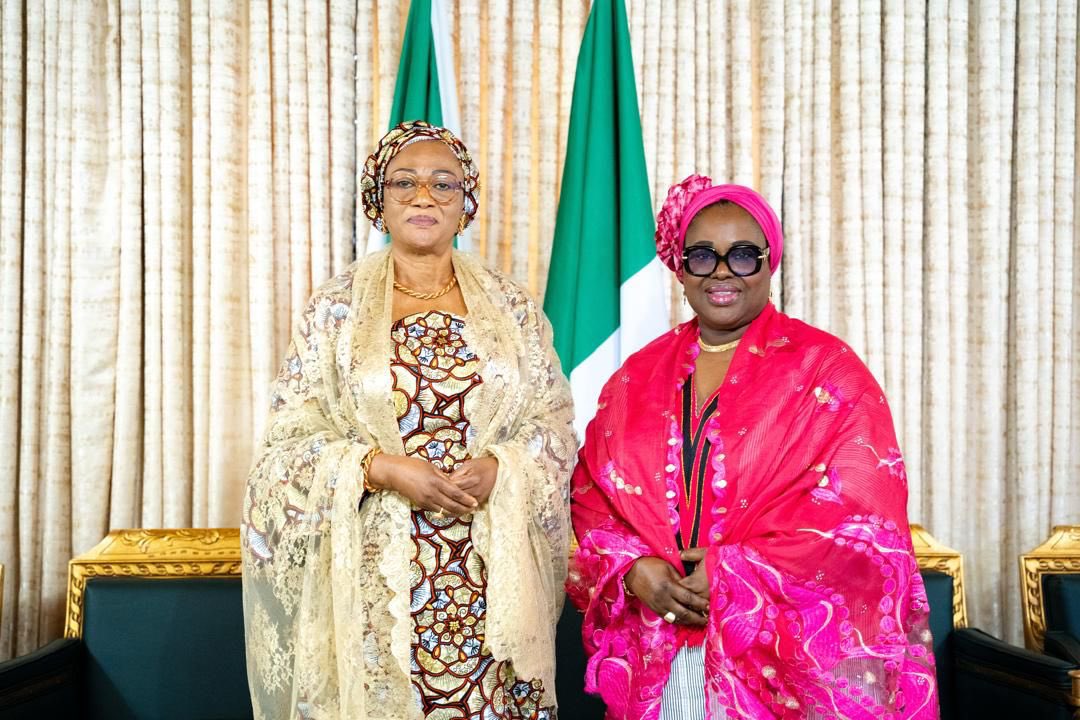
Oluremi Tinubu Hosts Wife of New IGP, Talks Welfare, Empowerment for Police Families
The First Lady of the Federal Republic of Nigeria, Senator Oluremi Tinubu, today welcomed Mrs. Mutiat Disu, wife of the Inspector General of Police, at the State House in Abuja.

During the meeting, the First Lady encouraged Mrs. Disu to continue championing the welfare and wellbeing of police officers’ families, especially through impactful support for their wives.
Speaking after the meeting, Mrs. Mutiat Disu shared her excitement about partnering with the First Lady’s Renewed Hope Initiative (RHI), noting that she is ready to leverage its programs to empower police officers’ wives across the country.
Mrs. Disu, who also serves as the National President of the Police Officers’ Wives Association (POWA), described the meeting as insightful and inspiring. She emphasized her commitment to using RHI platforms to improve healthcare, welfare, and economic empowerment for POWA members nationwide.
“The purpose of this visit is to tap into her wealth of experience and explore how POWA can benefit from her programs,” she said.
She added that her engagement with the First Lady has already provided valuable direction, especially in areas of social intervention and healthcare support for police families.
“I’m ready to work closely with Mama to ensure our women benefit fully, especially since RHI focuses on uplifting women, and POWA is largely made up of women.”
Mrs. Disu assumed leadership of POWA following the appointment of Tunji Disu as Inspector General of Police on February 24, 2026, succeeding Kayode Egbetokun.


-

 society6 months ago
Religion: Africa’s Oldest Weapon of Enslavement and the Forgotten Truth
-

 news4 months ago
WHO REALLY OWNS MONIEPOINT? The $290 Million Deal That Sold Nigeria’s Top Fintech to Foreign Interests
-

 society6 months ago
“You Are Never Without Help” – Pastor Gebhardt Berndt Inspires Hope Through Empower Church (Video)
-

 celebrity radar - gossips2 months ago
Dr. Chris Okafor Returns with Power and Fire of the Spirit -Mounts Grace Nation Altar with Fresh Anointing and Restoration Grace on February 1, 2026