
Business
NUJ President,Waheed Odusile is not fit to be President if he is trying to Confraternize journalism – Prof. Alexia Thomas fires


QUOTE: “Freedom of the Press, if it means anything at all, means the freedom to criticize and oppose” – George Orwell
Professor Alexia Thomas, Chairman of The Commonwealth Liberation Party (TCLP) United Kingdom and Chieftain Commonwealth Treaty Alliance Commission, famously called ‘Her Knowledgeable’ is an enigma, so passionate about fighting for human rights of the Commonwealth citizens; even at every inconvenience at the cost of her life. In this revealing encounter, she faults pronouncements made by Waheed Odusile, President of Nigeria Union of Journalists, NUJ, a media association founded in Nigeria on March 15, 1955; regarding an impending bill being orchestrated by Odusile to bring about Confraternity Journalism amongst media practitioners in Nigeria:
……………………………………………………………………….
Can you kindly take us through the burning issue you earlier raised regarding Nigerian journalists on BEN Television in London?
Let me start by saying this matter is very critical and as a Mother of Commonwealth, I think I will be doing injustice to the people without having to express my serious political views. The world will not be destroyed by those who do evil, but by those who watch them do evil without doing nothing. On 26th December, at about late in the night, I was watching BEN Television London, and I came across this figure on the programme whom I could see is called Waheed Odusile. As I watch this guy, I started analyzing him psychologically, and I could see this guy as a troubled man in his late 40s. I could hear the man talking on issues regarding journalism, saying they (Nigerian journalists) have their own problems, emphasizing they are trying to push a bill so that journalism can be legislated as a law.
As I watched this guy speak, I was able to go into his mind-overview, and I could see that this guy is trying to politicize journalism the Nigerian Union of Journalists (NUJ) became set up, how they put themselves into this occultic-killer squad, the brain behind it is not known. If there was supposed to be NUJ, I think the NUJ should operate as a club. As a club, members can come in, and members can leave. You cannot politicize journalism as an association, that have the power to penalize anybody. The Freedom of the Pen is Freedom of Rights. Everybody has a right and a law to write the way they chose to write.
As I watched the views of Waheed Odusile, I realized that this guy is trying to confraternize journalism. I don’t know where this guys has come from, I don’t know the background of this guy, but I know this guy is a Lagosian and I know this guy is running paranoid. This guy indirectly is mentally unwell. He talks rubbish. He talks about journalists, ridicules them, as a kind of father who goes about flogging children. This guy is talking nonsense, this guy is pushing a destructive bill, and this guy is being sponsored by politicians who want to control the medium of communication and expression. This guy’s presidency has to be disband.
I call upon NUJ, I ask them to re-visit the registration of that body. That body can only run well as a club. I could see that Waheed was sworn into power as President of NUJ and I could see in his swearing-in ceremony a barrister, while Waheed raised his hand and taking his Oath of office as if he is Mr. President (of the nation). NUJ is a club. This guy does not have a right coming on BEN Television disgracing all the journalists in this industry who have worked so hard to become graduates. He has no right talking on BEN Television that Nigerian journalists are troubled, that Nigerian journalists cannot manage themselves, that he is pushing a bill, having had the guts to come on BEN Television to talk about nonsense. This guy’s view breaches Article 19 of Universal Declaration of Human Rights (UDHR) 1948.
It is not Waheed’s fault because Nigerian government lacks education. The Nigerian Constitution is not fit to be a constitution. When we are talking of Treaty, Nigerian government should go back to the Treaty of 1948 and see what laws the masters who colonized them signed 15 years before Nigeria got her independence. If Waheed is well learned enough, he will know that freedom of the pen is freedom of rights. He will know that he cannot politicize journalism. The presidency, ministers, governors have an important duty to the people. The pen has a duty to expose their atrocities. So, if Waheed is trying to Confraternize journalism, I strongly say to him today or whoever has sponsored him, he should refrain from pushing that bill, if he goes ahead to push that bill, he would be disband and not fit to be the president of NUJ.
Like I earlier explained NUJ would be a club where people can associate in and leave. Pen will continue to be the power. Mr. President, governors, ministers, every journalists have a freedom of speech. Article 19 of UDHR 1948 holds journalists’ values, protect them. Their pen is their value, their pen is the peoples freedom. Waheed cannot legislate a law to control and further control the journalists. He should go back and get his facts right. I am going to advise all electronic media outlets who have been advocating his wrongful teachings to stop entertaining this guy on their broadcast media
platforms. Stop allowing this guy to talk nonsense, he should know the Royal Mother (Commonwealth Mother) has spoken from England. If Waheed Odusile needs money, I will get him money so he can get himself some serious education and learn the Universal Treaty. Nigeria cannot be a nation that will control herself without an independent media watching them. Waheed Odusile should know that being president of NUJ does not mean he has the power to control the Nigerian journalists. He has no rights to influence journalists views. As I looked into Waheed, I strongly recommend that his nomination would be abolished. If Waheed does not behave himself, does not respect every other journalist, he should refrain from saying Nigerian journalists have a troubled body. No journalist is troubled. Everyman is troubled when they cannot sustain their social security to sustain their social needs.
When I went into Waheed Odusile’s mind, I could see this man whose face tells you what is going on in his head. Whatever money he has collected from the Head of State or politicians deceiving him to push journalism as a bill is pure politicized confraternity. Political journalism is the basis of this guy’s architectural push. He is playing deceit-diplomacy as Waheed is pushing this bill, every journalists who are in the train with him have all been bribed. This work Waheed is doing pushing journalism to be legislated as a law is not alone on this bill. I am even sure when he was elected as President of NUJ, President Muhammadu Buhari congratulated him. Why did President Buhari congratulate him? It shows that they are befriending him because they want to make him control the views of what journalists are saying. This means, if journalists do not listen to Waheed, he will push them, push a case against them until those journalists eventually end up in jail. So, Waheed is a very dangerous man. NUJ is a club, for that reason Waheed is talking nonsense, not fit to be a president. The fact that Waheed’s argument breach Article 19 of UDHR 1948, he is a shameful man who lacks education. I will not sit in London and watch him bring shame on every journalists in United Kingdom. What he is talking about has shown that Nigerian journalists are illiterates and not educated. Based on what he is talking, there is no where in the world where journalism is registered as a law. So, working on pushing journalism as a law in Nigeria shows this man as a troubled man. NUJ members should come together and review their confraternity because when it was been founded they did not know it will hunt them. If we don’t quickly control this man’s insanity, he will see journalists in their magnitude go to jail and Nigeria will wreck in death. That is my statement.
Being that Waheed Odusile is a veteran journalist with decades of experience in various media houses in Nigeria and was elected president by members of NUJ during their annual general meeting, what is your message to the vast majority of NUJ executives?
First of all, the freedom of the pen is the freedom of rights. Journalism is about the employer. So if anyone should have a union, it should be the employer. Just like the newspaper houses should have their club is like saying the country and the citizen. For instance, newspaper houses need to have their own media clubs. True, the journalists themselves have their own union, but without their employers they (journalists) will not have a news medium to tell their own stories. The
basis of which NUJ has been set up is being Confraternized, it is becoming a confraternity journalism, and that is very dangerous for the profession. You don’t control anybody’s freedom of pen. If you control anyone’s freedom of pen, then you have enslaved their rights. The NUJ executives
should know that it is a patriotic club of being your brother’s keeper.
The club should not entertain any political influence. The law has no business with journalism, the President of the nation cannot be sending goodwill messages to NUJ president. Even if Mr. President send him a condolence message, I think NUJ president should reject it, if not that becomes a political relationship. That means, Waheed begins to control all-round negative media views of Mr. President. Remember Nigerian politics is corrupt, NUJ executives should not allow Waheed to be engaged in political relationship with the ruling government. Waheed does not know that he is pushing a sham bill. That bill is sham because Article 19 of UDHR 1948 talks about the freedom of expression and opinion. You don’t control a man on how to write, every man has his own view on how he writes. The act of a man’s writing depends on the power of his employer. If Punch newspaper wants to employ you, it is their view if they like your style of writing.
Since establishment of NUJ on 15th March, 1955, most media houses in Nigeria have NUJ Chapels (branches), being that Nigerian Constitution recognize the existence of NUJ as a body. So, what is your take on this?
I told you that as we move the train of a new 21st Century, we are not going to be governed by the Constitution. We already know that the British people (White man) do not use the Constitution, they use Statute of Authourity, words of Authority and Courts of judgment. However, sneaked journalism body in politics into the Constitution is totally a sham legislation. That would be debunked. What is Constitution? Constitution is
actually nothing. Constitution is a principle of taking something and putting it in a book and say these are going to be the Modus-Operandi. If NUJ has been sneaked into recognition by the Constitution, then it is a sham and not allowed. NUJ is a club, it has no politics view, its politics and views are going to be neutralism.
Regarding your latest revelation on Confraternity Journalism in Nigeria, what is your message to Committee of Protection of Journalists, CPJ and International Press Institutes, IPI, two major foreign media bodies that protect journalists worldwide, including Nigerian journalists?
The reason why journalists had been prosecuted in the past is because some of them had been influenced to assassinate. Why those journalists had problems then was because they are involved in politics. One governor pays one journalist to talk negatively about another governor. Journalism has gotten itself involved in politics acting in terms of being rewarded with cash. Now, Article 19 of UDHR 1948 is already a Universal Treaty for journalists which provides expression for journalists. As long as you expressions are right, information is accurate, it has truth and reality; nobody can question your pen. For the NUJ, I will be giving them 28 days to sit in their assembly and review all their hinges of Confraternity embodiment. NUJ has no business in Nigerian Constitution. If it has been included in the constitution, must be deleted immediately. Who guides a Constitution? Who writes a Constitution? Constitution is a book with a pen, where you write and you delete. You don’t need any ceremony to delete it.
NUJ is a club about protecting each other and supporting each other. As you begin to write, it is like pen-pal, where you guys appreciate yourselves. You guys support yourselves in terms of funding, it should not be controlled by politics. Democracy is not the views of the people, the government cannot influence how the journalists feel. No journalist in the world can arrest a journalist. The government in African continent has been neglected because the White man has left them to kill themselves.
For the first time, we are the Commonwealth Liberation Party in London and we would not sit back and watch injustice orchestrated on civilized men who know the truth. This guy is mocking men of knowledge, every journalist is a graduate, every journalist is a thinker. Every journalist is a reformer, every journalist is a beauty of art. How dare you tell me that Nigerian journalists are troubled? Who told you that? How did they (journalists) have trouble? They have trouble because Waheed cannot get millions from his comrades in government because other journalists are writing rubbish about them. That means they (the journalists) are speaking the truth. The boys have said to Waheed: ‘Go and clean the dirty job’. He comes in with a Confraternity bill, thinking he can get away and make it a law. Sorry, it is not going to be possible this time. If he does not refrain from this move, I tell him, in 60 days he will be out of that power as NUJ president.
We are aware that going by NUJ Articles and Treaty, changes by the executives can only be effected in their laws during their annual general meetings, not earlier.
Let me tell you this as well: NUJ cannot have its own Constitution, it is not allowed. What NUJ have is a working document (Modus Operandi). NUJ is a club. Who sets up this club? Go to the founding fathers of NUJ. What was the basis at which it was set up? It was sets up as a club. The initial, initiative was to assist themselves. It was not set up to be politicized. It is being politicized, It is being Confraternized. If NUJ has a Constitution, that would be taken off. There is nothing like a Constitution for NUJ. Constitution for who? Every journalists have their freedom of pen, which is their freedom of rights. So, who are you going to use the Constitution to govern? Who is telling journalists to give themselves a Constitution? That is why I said they are nailing themselves in the coffin. They only need a working document (Modus Operandi). They should go back and get their books right. This is disaster, this is death of free speech in Nigeria. This is assassination of every man’s character. Who has the right to question any man’s pen? Who has the right to say a man is talking rubbish? Everyman have their views. Waheed came into power to create what is going on in his head. Like I said, he is talking nonsense, disgracing all journalists.
What do you make of the regular use of BEN Television in UK by various interest groups of Nigerians with most views inimical to the development of Nigeria?
BEN Television London have no idea of what their invited guests are coming to say. The truth is, they (BEN Television members) are also not well educated. BEN Television is actually a good medium where people come to talk. These talks Waheed dished out are pranks on BEN Television. His talks are dangerous to humanity, these talks are dangerous to the values of journalists. This man is a killer assassin. When you assassin a man’s freedom of speech, it is as good as maiming the man for life.
Of what essence is studying journalism without being allowed to express your opinion? How could you register journalism by Constitution? Who is making
this law? The people have gone mad. NUJ is not an enforceable body, but a club to associate and protect each-others’ back. Journalism cannot be politicized, it cannot be Confraternized. Any registered law is Confraternity, it is legislative-it is journalism Confraternity. Waheed begging the parliament and government to legislate journalism as a law. Journalists always speak the truth. When a journalist speaks the truth you know, and when he speaks lie you know. Out of every 100 journalists, 98 speaks the truth. This man could not have come on air and said journalists had a troubled body. They are having troubled body since they constitutionalized it into Nigerian Constitution recognizing them after they have been awarded money.
The problem they are facing now is: money allocation to them by the presidency or by the government. This is why when the money comes to NUJ, the money is not shared among the members equally, that is what they are fighting for. What they fight for is: money disbursement for the welfare of journalism. When the money comes, the president and his executives will share the money without allowing it to reach other members of the body. They are not fighting because they lack education, they are not fighting because they are troubled, they are fighting because they are greedy and not sharing the money equally.





Fidelity Bank grows gross earnings by 38% to N434.95b in Q1
Fidelity Bank Plc recorded 37.9 per cent growth in gross earnings to N434.95 billion in first quarter 2026 as the international commercial bank continued to expand its core banking market share.
Interim report and accounts of Fidelity Bank for the three months ended March 31, 2026 released at the Nigerian Exchange (NGX) showed that gross earnings rose from N315.42 billion in first quarter 20025 to N434.95 billion in first quarter 2026, representing an increase of 37.9 per cent.
The top-line performance was driven by impressive growth in the bank’s core business operations with interest incomes rising by 22.8 per cent to N314.48 billion in first quarter 2026 as against N256.10 billion in first quarter 2025.
With net interest income at N180.97 billion, the bank closed the period with profit before tax of N92.48 billion. After taxes, net profit stood at N74.47 billion for the three-month period. Earnings per share remained high at N5.69, underlining the capacity of the bank to reward its shareholders.
The balance sheet of the bank also emerged stronger. Total assets crossed the N11 trillion mark to N11.35 trillion by March 2026 compared with N10.46 trillion recorded in December 2025. Customers’ deposits increased from N6.89 trillion to N7.38 trillion. Total equity rode on the back of earnings growth to a 27.5 per cent increase from N1.09 trillion in December 2025 to N1.39 trillion by March 2026.
The first quarter 2026 results further consolidated the strong earnings outlook of the bank, which had successfully completed its recapitalisation amidst impressive earnings performance in 2025.
Fidelity Bank had recorded double-digit growths in interest and non-interest incomes as well as key balance sheet items during the year ended December 31, 2025.
The audited report showed that gross earnings rose from N1.04 trillion in 2024 to N1.52 trillion in 2025, an increase of 45.6 per cent. Interest and similar incomes had grown by 38.7 per cent from N803.1 billion in 2024 to N1.11 trillion in 2025. Fees and commission incomes also rose by 44.7 per cent from N78.4 billion to N113.4 billion. The bank recorded net profit after tax of N242.4 billion in 2025.
The bank’s balance sheet emerged stronger with total assets rising by 18.6 per cent to N10.46 trillion in 2025 as against N8.82 trillion in 2024. Customer deposits increased by 16.1 per cent from N5.94 trillion to N6.89 trillion, reflecting continued franchise strength and an improved funding profile. Net loans and advances meanwhile declined by 2.4 per cent to N4.28 trillion in 2025 as against N4.39 trillion in 2024, attributable to customers paying down on their mature obligations.
The bank had in 2025 strengthened its capital position, with eligible capital rising to N561 billion, above the regulatory minimum of N500 billion for banks with international authorisation. In addition, capital adequacy had remained robust, with Capital Adequacy Ratio of 30.94 per cent by December 2025 as against 23.47 per cent by December 2024.
Managing Director, Fidelity Bank Plc, Dr. Nneka Onyeali-Ikpe, said the first quarter 2026 results reinforced the bank’s strong and resilient business model.
She noted that with the remarkable success of its recapitalisation programme and continuing expansion, Fidelity Bank has entered a new era of growth and impressive returns.
“We are on a stronger footing and confident that we will set new growth records that are reflective of our legacy and the future we are working on,” Onyeali-Ikpe said.
Business
Dangote Refinery Ends Nigeria’s Era of Fuel Import Dependence, Boosts GDP, FX Earnings — EIU
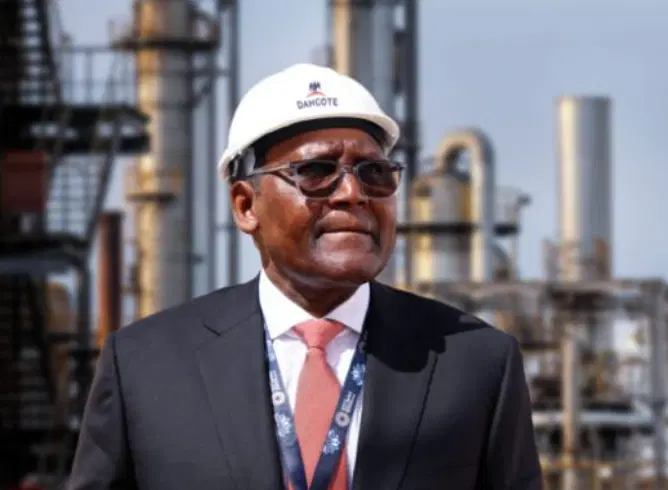
Dangote Refinery Ends Nigeria’s Era of Fuel Import Dependence, Boosts GDP, FX Earnings — EIU
The operational ramp up of the 650,000 barrels per day Dangote Petroleum Refinery & Petrochemicals is fundamentally reshaping Nigeria’s downstream oil sector, significantly reducing the country’s dependence on imported refined petroleum products and strengthening its external position, according to the Economist Intelligence Unit (EIU).
In its latest assessment on Nigeria’s fuel market and regulatory environment, the EIU said the refinery has already transformed a sector that was previously characterised by heavy reliance on imported fuel despite Nigeria being Africa’s largest crude oil producer. The report noted that the refinery met nearly 80 per cent of domestic petrol demand in April and produced enough volumes to satisfy local consumption requirements as operations approached full capacity.
The EIU described Nigeria’s downstream petroleum sector before the refinery as “long dysfunctional”, noting that the country had remained almost entirely dependent on costly imported fuel while producing nearly 1.5 million barrels of crude oil daily.
According to the report, the emergence of the refinery has reduced import dependence, improved domestic fuel availability and strengthened Nigeria’s balance of payments position through lower import demand and rising exports of refined petroleum products.
“The gradual ramp up of the 650,000 barrel/day Dangote refinery since May 2023 has transformed Nigeria’s long dysfunctional downstream sector,” the report stated. “The country’s main refineries, all state owned, had been inoperative for years and Nigeria was almost entirely reliant on costly imported fuel.”
The research and analysis division of The Economist Group, London added that the refinery’s attainment of full operational capacity and its planned expansion would further support Nigeria’s economic growth and foreign exchange earnings over the medium term.
“Meanwhile, the attainment of full capacity at, and an increase in exports from, the Dangote refinery will support real GDP growth and foreign exchange earnings in 2026 and 2027 and beyond, as a planned doubling of the plant’s output comes on stream around the end of the decade,” it added.
Industry analysts said the refinery is increasingly positioning Nigeria as an emerging refining and export hub, altering energy trade flows across Africa and reducing the vulnerability associated with fuel import dependence.
The EIU noted that the refinery’s expansion has coincided with major reforms in Nigeria’s downstream sector, including the removal of fuel subsidies and the introduction of market driven pricing mechanisms.
The report, however, said the transition from a state dominated fuel import structure to large scale domestic refining has triggered resistance from interests linked to the old import regime.
The latest tensions emerged following the decision by the Nigerian Midstream and Downstream Petroleum Regulatory Authority to relax restrictions on petrol imports despite the refinery’s growing capacity to meet domestic demand.
Dangote Industries subsequently initiated legal action, arguing that continued import approvals undermine domestic refining investments and conflict with the objectives of the Petroleum Industry Act, which seeks to encourage local refining capacity and reduce import dependence.
Analysts noted that the availability of large-scale domestic refining capacity has improved Nigeria’s energy security and reduced exposure to external supply shocks and foreign exchange volatility.
The Centre for the Promotion of Private Enterprise also cautioned against unrestrained importation of petroleum products, warning that such a policy could weaken Nigeria’s industrialisation drive and discourage investments in domestic refining.
Chief Executive Officer of CPPE, Muda Yusuf, said continued dependence on imported fuel had historically contributed to pressure on foreign reserves, exchange rate instability and fiscal leakages.
The refinery’s growing impact is also being reflected in Nigeria’s broader macroeconomic indicators. Earlier this month, S&P Global Ratings cited increased domestic refining capacity and rising hydrocarbon exports among the major factors supporting Nigeria’s sovereign credit rating upgrade – the first in 14 years.
Beyond Nigeria, analysts said the refinery is increasingly being viewed as a strategic industrial asset for Africa, where many countries remain heavily dependent on imported fuel despite rising demand for transportation, manufacturing, and power generation.
Business
BREAKING: Court Dismisses $19.6 Million Claim Against NNPCL — Rules Contract Scope Cannot Be Changed Orally

BREAKING: Court Dismisses $19.6 Million Claim Against NNPCL — Rules Contract Scope Cannot Be Changed Orally
In a landmark ruling on Friday, May 22, 2026, the Federal Capital Territory High Court in Abuja threw out a $19.6 million lawsuit filed by Alternate Dimensions Ventures Ltd against the Nigerian National Petroleum Company Limited (NNPCL), affirming a key legal principle: a written contract cannot be expanded through oral agreements or conduct.
Alternate Dimensions had sought $19,600,000 in professional fees, claiming the scope of its Direct Sale, Direct Purchase (DSDP e-pro) contract with NNPCL was orally expanded. Represented by counsel Patrick Peter, the firm argued it was entitled to the revised sum for services rendered under the alleged new terms.
But NNPCL, through its lawyer Ituah Imhanze of KENNA LP, pushed back sharply, arguing that parties are bound exclusively by the clear terms of their written agreement. Imhanze contended that without any written amendment, the claim was legally unsound, and the court agreed.
Delivering judgment, Justice Hamza Mu’azu upheld NNPCL’s defense, stating that the contract was unambiguous and that no evidence was adduced during the trial, which supported the alleged scope expansion. The court further found that NNPCL fully complied with all contractual terms and committed no breach.
Dismissing the suit as meritless, Justice Mu’azu reinforced the doctrine of sanctity of contract: any amendment to a written agreement must be express, unequivocal, and documented, not implied or verbal.
The ruling spares NNPCL from the S19.6 million claim and also a floodgate of similar potential liabilities.


- CANAL+ lists on the Johannesburg Stock Exchange (JSE), strengthening the Group’s dual-continental approach and reinforcing South Africa’s (SA) role as a gateway to global capital and African growth June 3, 2026
- African Mining Week (AMW) Country Focus to Spotlight Liberia’s Iron Ore, Gold and Critical Minerals Prospects June 3, 2026
- Venezuela to Host Its Largest-Ever International Energy Investment Summit June 3, 2026
- Canada–Africa Business Conference Preparations Advance Following Canadian Secretary of State’s High-Level Visit to Nigeria June 3, 2026
- Uganda: Parliament concludes vetting of ministers June 2, 2026
- Fund for Export Development in Africa (FEDA) Board Appoints Mr. Emmanuel Assiak as Chief Executive Officer June 2, 2026
- Ecobank Group Launches World First Nature Bond Mobilising Global Capital to Protect Africa’s Natural Ecosystems June 2, 2026
- Merck Foundation Chief Executive Officer (CEO) Dr. Rasha Kelej together with Kenya First Lady support the education of 47 Kenyan Schoolgirls by providing Annual Scholarships till they Graduate June 2, 2026
- Annual Meetings 2026: Governors Back the Bank’s Platform Solutions to Transform Aviation and Health Systems in Africa June 2, 2026
- ThinkMarkets launches ChelseaAI, bringing live CFD trading into Artificial Intelligence (AI) assistants June 2, 2026
- CANAL+ lists on the Johannesburg Stock Exchange (JSE), strengthening the Group’s dual-continental approach and reinforcing South Africa’s (SA) role as a gateway to global capital and African growth June 3, 2026
- African Mining Week (AMW) Country Focus to Spotlight Liberia’s Iron Ore, Gold and Critical Minerals Prospects June 3, 2026
- Venezuela to Host Its Largest-Ever International Energy Investment Summit June 3, 2026
- Canada–Africa Business Conference Preparations Advance Following Canadian Secretary of State’s High-Level Visit to Nigeria June 3, 2026
- Uganda: Parliament concludes vetting of ministers June 2, 2026
- Fund for Export Development in Africa (FEDA) Board Appoints Mr. Emmanuel Assiak as Chief Executive Officer June 2, 2026
- Ecobank Group Launches World First Nature Bond Mobilising Global Capital to Protect Africa’s Natural Ecosystems June 2, 2026
-

 news6 months ago
WHO REALLY OWNS MONIEPOINT? The $290 Million Deal That Sold Nigeria’s Top Fintech to Foreign Interests
-

 society1 month ago
SOCIAL MEDIA IS NOT A BATTLEFIELD COMMAND – WHY THE NIGERIAN ARMY’S ACTION AGAINST JUSTICE CRACK IS A NATIONAL SECURITY IMPERATIVE
-

 celebrity radar - gossips4 months ago
Dr. Chris Okafor Returns with Power and Fire of the Spirit -Mounts Grace Nation Altar with Fresh Anointing and Restoration Grace on February 1, 2026
-

 celebrity radar - gossips6 months ago
Prophet Kingsley Aitafo Releases 2026 Prophecy: ‘Nigeria Will Rise, but the World Must Prepare for Turbulence’
You must be logged in to post a comment Login
You must log in to post a comment.