
Business
POWERFUL ADELEKE’S FAMILY VS INFLUENCIAL MOMODU’S FAMILY : HOW DELE MOMODU DISGRACED DAVIDO’S FAMILY + HOW DAVIDO AND HIS BROTHERS DISGRACED DELE MOMODU


Nigeria’s superstar, Davido has gotten himself into a fresh trouble and a very serious one even as he has tried to stay scandal free over the years. The most painful part is that the reason for this trouble has throughout the year brought him real joy ; His baby.
Ever since he had the Cute baby girl, he has never ceased to make the whole world know how much he loves her. He even got her a customised ‘OBO’ chain which costs a lot. He has also been sharing pics of him baby sitting her despite his busy schedule, He created time for her and has been a caring Daddy to the little baby. He had the baby with Baby Mama, Sophia Momodu, niece to the publisher of Oviation magazine, Dele Momodu.
However, things has finally gone wrong in the camp of the Momodus and Adeleke as Sophia, The baby Mama accused Davido of human trafficking because it was gathered that Davido’s Sister, Coco Adeleke has ‘claimed’ ownership of the Baby and has restricted the original mother from seeing her.
This has caused a lot of stir in the family as non of the sides is willing to bend for another. It is a battle of big fishes and it might last long even though Dele Momodu and Davido’s father, Deji Adeleke are both big names in the country.
Furthermore, apart from the battle between the grown up, the baby mama, Sophia and father, Davido have been exchanging words on the social media.
Sophia posted this on her Twitter account:’I want to state it clear, that David @iam_David is the most useless man any woman out there can meet. I curse the day I met you kid.’
And here is some of his replies ‘’She (Sophia) never would be my wife and she was never qualified for that. Her background is very dissimilar from mine, and she has very paltry education and equally diminished physical attributes.’’
All this happened because Dele Momodu used his contact and influence to stop Davido’s family from flying to Dubai with the little girl for medical check up.
This is what Dele momodu has to say about the matter:
In September 2015, I got a call from Dr Adedeji Adeleke, a long time family friend, telling me his son had fathered a baby girl with my cousin, Sophia Momodu. I rejoiced with him as any reasonable soul would do. He apologised that he had not called all along because he wasn’t sure if Sophie’s baby was going to turn out a fake one like that of two others who had turned up at his doorstep. But mercifully, according to Dr Adeleke, Sophie’s baby passed the DNA Test by over 98 percent and he was elated. I congratulated him again as a proud grandfather. He said he would like to meet me with Sophie since Sophie’s dad, Uncle Jibola Momodu, passed on years ago and Sophie mentioned me as her cousin.
I had known about Sophie’s baby through her first cousin Ruth Abraham and had called to congratulate her. I was happy when she sent me pictures of the baby and other romantic pictures with David Adeleke, aka Davido.
But I never contacted David’s dad deliberately so as not to create the impression of begging for marriage. Where we come from, it is the man who approaches the lady’s family to plead to be allowed to marry into the family.
Prior to this phone call from Dr Adeleke, Sophie had narrated to me how on the 11th July, 2015, she was tricked to Davido’s sister, Coco Adeleke’s house with her baby, Imade Aurora Adeleke. After getting to the house on Baderinwa Alabi Street, Lekki Phase I, Lagos, her baby was forcefully taken from her and she was thrown out of the premises with the threat that she would be decisively dealt with if she ever bothered to return there. There were armed policemen in the premises and to avoid what could have been a messy encounter, instinct prevailed on her to make her leave her breast suckling baby behind, with so much pain in her heart.
By daybreak on the next day, Sophie was again at Coco Adeleke’s house to take her baby, but she was prevented by armed policemen from gaining access into the house. She was again threatened and warned never to return for the child.
Despite the pain and trauma my cousin was made to undergo, I restrained myself from getting directly involved in the matter and appealed to her to stay calm and take it easy with the Adelekes.
But after the phone call from Dr Adeleke, precisely on September 10, 2015, I picked up Sophie and her mum and drove to Dr Adeleke’s home in Lekki, Lagos. All through this time, I had waited patiently to meet Dr Adeleke with questions probing for answers.
Dr Adeleke invited two of his close friends to the meeting namely His Majesty OBA ADEDOKUN ABOLARIN and Mr Wale Adeeyo. We went into lengthy discussions. His daughter Coco had brought in the little baby and both attended the meeting.
Dr Adeleke explained why it took some time to call me and I said I understood.
Dr Adeleke said the baby was discovered to have traces of marijuana in her during medical test and said he believed Sophie and David were smokers and he needed to protect the child from two irresponsible parents, as he described them. He told the gathering that the baby would be under temporary custody and observation. He directed that Sophie would come to his house every Sunday to see her baby. Our family agreed. He promised to pay Sophie a monthly upkeep. We thanked him for his kindness. He promised to buy her a car. We were grateful for his generosity. We had dinner with him and left. David was not present.
Sophie said she got the monthly upkeep but never got the car and that she prefers to have her baby back and the Adelekes can keep their money.
I called Dr Adeleke and he said I should allay her fears. I pleaded again for patience. I was shocked when Sophie called me desperately and said her daughter was being taken to Dubai by Coco. I immediately called Coco and she said she was taking the baby for intensive medicals and I wondered how she would pass through the airport without the consent of Sophie but she actually did and even sent me pictures from Dubai. I played it cool and encouraged Sophie to calm down.
Sophie became withdrawn and extremely saddened. The situation went from bad to worse. She and David became aggressive enemies. At a point, David sent messages to Sophie and using the ‘f’ word against me. His father was shocked and called him to apologise which he did and I accepted and even told him how much I love him.
The worst came when my wife came from London and went with Sophie to check on the baby at Coco’s house and they were literally walked out and told they were not welcome in her house. My wife called and I called Dr Adeleke who said they should go to his house and wait for him.
Their meeting did not go well because my wife asked when the baby would be returned to her mum and Dr Adeleke went into the same old story of marijuana abuse and Sophie said she was ready for a test which Dr Adeleke wasn’t interested in. Dr Adeleke explained why the car had not been bought and my wife told him the baby was the issue and not the car. Dr Adeleke didn’t like the sound of this but it was reaching a point that some truth needed to be told that a baby cannot be bought with money.
I flew to Nigeria on December 28, 2015 after Sophie told me the Adelekes were travelling to Dubai with her baby without her consent again. As soon as I landed I called Uncle Wale Adeeyo, a close confidant of Dr Adeleke and expressed our displeasure at the way Sophie was being treated and he promised to speak to Dr Adeleke. When he came back to me he didn’t sound too positive. We spoke several times and nothing tangible came out of his supposed intervention.
I called Oba Dokun Abolarin but he was busy at a wedding in Ibadan. I then called Uncle Wale again and told him Sophie has plans to stop the trip on the knowledge that David has collected an American passport for the baby and the rumour that the baby was being abducted to America. I pleaded that we should avoid a confrontation.
I headed to the airport to alert the authorities including Immigration and Emirates. As predicted, the Adelekes arrived the airport with the baby where Immigration had laid in wait for them. Coco came forward and was asked who the mother of the baby was and she claimed ownership and her passport and that of the baby were taken away by Immigration. Her dad was alerted and he came to the office of the Comptroller with others to try and rescue the passports but the Immigration stood their grounds. I saw him making frantic calls but he gave up after the flight departed. He repeated the same boast that no one could ever take the baby from him and I told him to stop talking like God.
No one likes a fight but we have been treated shabbily and had to stop the charade. We could not be intimidated and everyone at the airport expressed shock and horror at such a brazen attempt to export a human being only seven months old without the mother. We thanked the officers who rescued us from a powerful family. We are always for peace, justice and equity. No one threatened the Adelekes with any expose unless they were using reverse psychology. Personally, I’m not a junk writer and would never descend so low to abuse those permanently connected to us through an innocent baby. We love the baby like they do and such an innocent child deserves to be protected by both families.
However, One of the Adeleke’s shared this pics, to mock Dele Momodu:





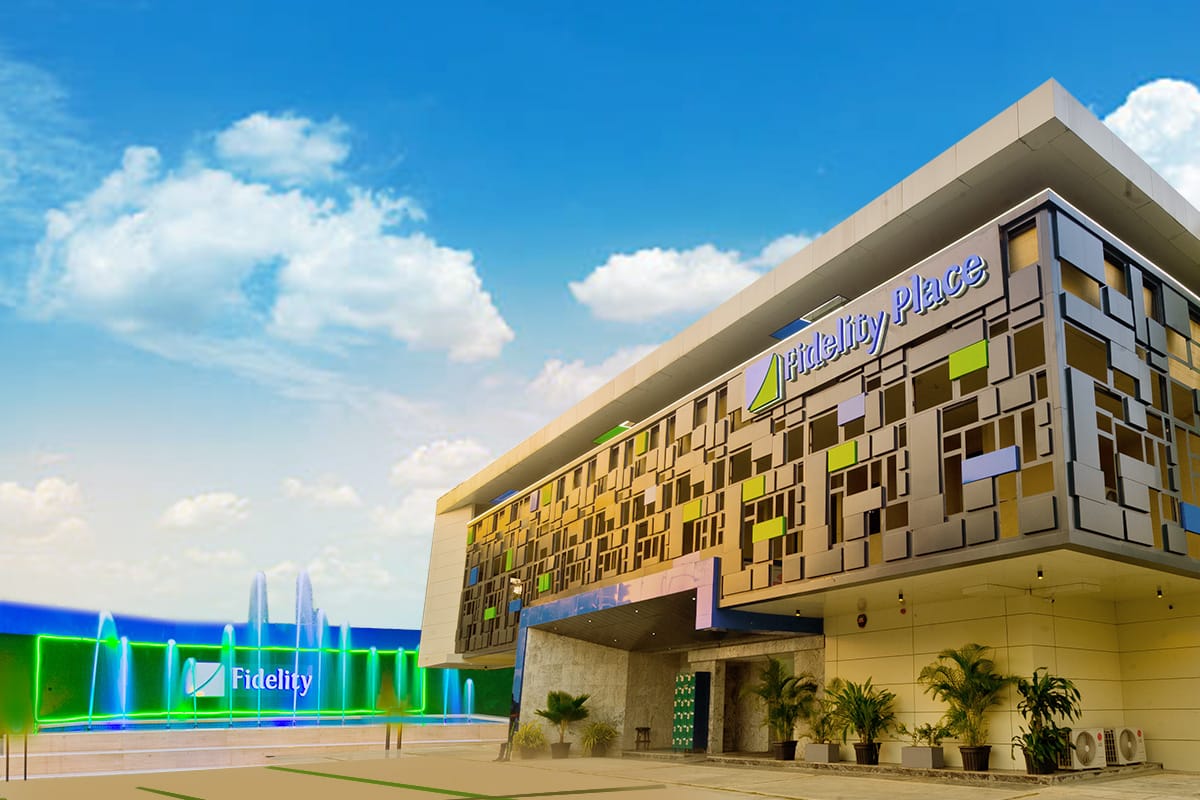
Fidelity Bank grows gross earnings by 38% to N434.95b in Q1
Fidelity Bank Plc recorded 37.9 per cent growth in gross earnings to N434.95 billion in first quarter 2026 as the international commercial bank continued to expand its core banking market share.
Interim report and accounts of Fidelity Bank for the three months ended March 31, 2026 released at the Nigerian Exchange (NGX) showed that gross earnings rose from N315.42 billion in first quarter 20025 to N434.95 billion in first quarter 2026, representing an increase of 37.9 per cent.
The top-line performance was driven by impressive growth in the bank’s core business operations with interest incomes rising by 22.8 per cent to N314.48 billion in first quarter 2026 as against N256.10 billion in first quarter 2025.
With net interest income at N180.97 billion, the bank closed the period with profit before tax of N92.48 billion. After taxes, net profit stood at N74.47 billion for the three-month period. Earnings per share remained high at N5.69, underlining the capacity of the bank to reward its shareholders.
The balance sheet of the bank also emerged stronger. Total assets crossed the N11 trillion mark to N11.35 trillion by March 2026 compared with N10.46 trillion recorded in December 2025. Customers’ deposits increased from N6.89 trillion to N7.38 trillion. Total equity rode on the back of earnings growth to a 27.5 per cent increase from N1.09 trillion in December 2025 to N1.39 trillion by March 2026.
The first quarter 2026 results further consolidated the strong earnings outlook of the bank, which had successfully completed its recapitalisation amidst impressive earnings performance in 2025.
Fidelity Bank had recorded double-digit growths in interest and non-interest incomes as well as key balance sheet items during the year ended December 31, 2025.
The audited report showed that gross earnings rose from N1.04 trillion in 2024 to N1.52 trillion in 2025, an increase of 45.6 per cent. Interest and similar incomes had grown by 38.7 per cent from N803.1 billion in 2024 to N1.11 trillion in 2025. Fees and commission incomes also rose by 44.7 per cent from N78.4 billion to N113.4 billion. The bank recorded net profit after tax of N242.4 billion in 2025.
The bank’s balance sheet emerged stronger with total assets rising by 18.6 per cent to N10.46 trillion in 2025 as against N8.82 trillion in 2024. Customer deposits increased by 16.1 per cent from N5.94 trillion to N6.89 trillion, reflecting continued franchise strength and an improved funding profile. Net loans and advances meanwhile declined by 2.4 per cent to N4.28 trillion in 2025 as against N4.39 trillion in 2024, attributable to customers paying down on their mature obligations.
The bank had in 2025 strengthened its capital position, with eligible capital rising to N561 billion, above the regulatory minimum of N500 billion for banks with international authorisation. In addition, capital adequacy had remained robust, with Capital Adequacy Ratio of 30.94 per cent by December 2025 as against 23.47 per cent by December 2024.
Managing Director, Fidelity Bank Plc, Dr. Nneka Onyeali-Ikpe, said the first quarter 2026 results reinforced the bank’s strong and resilient business model.
She noted that with the remarkable success of its recapitalisation programme and continuing expansion, Fidelity Bank has entered a new era of growth and impressive returns.
“We are on a stronger footing and confident that we will set new growth records that are reflective of our legacy and the future we are working on,” Onyeali-Ikpe said.
Business
Dangote Refinery Ends Nigeria’s Era of Fuel Import Dependence, Boosts GDP, FX Earnings — EIU
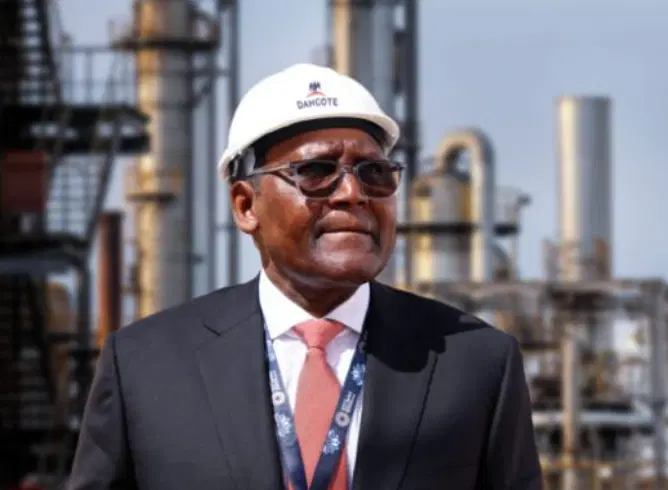
Dangote Refinery Ends Nigeria’s Era of Fuel Import Dependence, Boosts GDP, FX Earnings — EIU
The operational ramp up of the 650,000 barrels per day Dangote Petroleum Refinery & Petrochemicals is fundamentally reshaping Nigeria’s downstream oil sector, significantly reducing the country’s dependence on imported refined petroleum products and strengthening its external position, according to the Economist Intelligence Unit (EIU).
In its latest assessment on Nigeria’s fuel market and regulatory environment, the EIU said the refinery has already transformed a sector that was previously characterised by heavy reliance on imported fuel despite Nigeria being Africa’s largest crude oil producer. The report noted that the refinery met nearly 80 per cent of domestic petrol demand in April and produced enough volumes to satisfy local consumption requirements as operations approached full capacity.
The EIU described Nigeria’s downstream petroleum sector before the refinery as “long dysfunctional”, noting that the country had remained almost entirely dependent on costly imported fuel while producing nearly 1.5 million barrels of crude oil daily.
According to the report, the emergence of the refinery has reduced import dependence, improved domestic fuel availability and strengthened Nigeria’s balance of payments position through lower import demand and rising exports of refined petroleum products.
“The gradual ramp up of the 650,000 barrel/day Dangote refinery since May 2023 has transformed Nigeria’s long dysfunctional downstream sector,” the report stated. “The country’s main refineries, all state owned, had been inoperative for years and Nigeria was almost entirely reliant on costly imported fuel.”
The research and analysis division of The Economist Group, London added that the refinery’s attainment of full operational capacity and its planned expansion would further support Nigeria’s economic growth and foreign exchange earnings over the medium term.
“Meanwhile, the attainment of full capacity at, and an increase in exports from, the Dangote refinery will support real GDP growth and foreign exchange earnings in 2026 and 2027 and beyond, as a planned doubling of the plant’s output comes on stream around the end of the decade,” it added.
Industry analysts said the refinery is increasingly positioning Nigeria as an emerging refining and export hub, altering energy trade flows across Africa and reducing the vulnerability associated with fuel import dependence.
The EIU noted that the refinery’s expansion has coincided with major reforms in Nigeria’s downstream sector, including the removal of fuel subsidies and the introduction of market driven pricing mechanisms.
The report, however, said the transition from a state dominated fuel import structure to large scale domestic refining has triggered resistance from interests linked to the old import regime.
The latest tensions emerged following the decision by the Nigerian Midstream and Downstream Petroleum Regulatory Authority to relax restrictions on petrol imports despite the refinery’s growing capacity to meet domestic demand.
Dangote Industries subsequently initiated legal action, arguing that continued import approvals undermine domestic refining investments and conflict with the objectives of the Petroleum Industry Act, which seeks to encourage local refining capacity and reduce import dependence.
Analysts noted that the availability of large-scale domestic refining capacity has improved Nigeria’s energy security and reduced exposure to external supply shocks and foreign exchange volatility.
The Centre for the Promotion of Private Enterprise also cautioned against unrestrained importation of petroleum products, warning that such a policy could weaken Nigeria’s industrialisation drive and discourage investments in domestic refining.
Chief Executive Officer of CPPE, Muda Yusuf, said continued dependence on imported fuel had historically contributed to pressure on foreign reserves, exchange rate instability and fiscal leakages.
The refinery’s growing impact is also being reflected in Nigeria’s broader macroeconomic indicators. Earlier this month, S&P Global Ratings cited increased domestic refining capacity and rising hydrocarbon exports among the major factors supporting Nigeria’s sovereign credit rating upgrade – the first in 14 years.
Beyond Nigeria, analysts said the refinery is increasingly being viewed as a strategic industrial asset for Africa, where many countries remain heavily dependent on imported fuel despite rising demand for transportation, manufacturing, and power generation.
Business
BREAKING: Court Dismisses $19.6 Million Claim Against NNPCL — Rules Contract Scope Cannot Be Changed Orally
BREAKING: Court Dismisses $19.6 Million Claim Against NNPCL — Rules Contract Scope Cannot Be Changed Orally
In a landmark ruling on Friday, May 22, 2026, the Federal Capital Territory High Court in Abuja threw out a $19.6 million lawsuit filed by Alternate Dimensions Ventures Ltd against the Nigerian National Petroleum Company Limited (NNPCL), affirming a key legal principle: a written contract cannot be expanded through oral agreements or conduct.
Alternate Dimensions had sought $19,600,000 in professional fees, claiming the scope of its Direct Sale, Direct Purchase (DSDP e-pro) contract with NNPCL was orally expanded. Represented by counsel Patrick Peter, the firm argued it was entitled to the revised sum for services rendered under the alleged new terms.
But NNPCL, through its lawyer Ituah Imhanze of KENNA LP, pushed back sharply, arguing that parties are bound exclusively by the clear terms of their written agreement. Imhanze contended that without any written amendment, the claim was legally unsound, and the court agreed.
Delivering judgment, Justice Hamza Mu’azu upheld NNPCL’s defense, stating that the contract was unambiguous and that no evidence was adduced during the trial, which supported the alleged scope expansion. The court further found that NNPCL fully complied with all contractual terms and committed no breach.
Dismissing the suit as meritless, Justice Mu’azu reinforced the doctrine of sanctity of contract: any amendment to a written agreement must be express, unequivocal, and documented, not implied or verbal.
The ruling spares NNPCL from the S19.6 million claim and also a floodgate of similar potential liabilities.


- CANAL+ lists on the Johannesburg Stock Exchange (JSE), strengthening the Group’s dual-continental approach and reinforcing South Africa’s (SA) role as a gateway to global capital and African growth June 3, 2026
- African Mining Week (AMW) Country Focus to Spotlight Liberia’s Iron Ore, Gold and Critical Minerals Prospects June 3, 2026
- Venezuela to Host Its Largest-Ever International Energy Investment Summit June 3, 2026
- Canada–Africa Business Conference Preparations Advance Following Canadian Secretary of State’s High-Level Visit to Nigeria June 3, 2026
- Uganda: Parliament concludes vetting of ministers June 2, 2026
- Fund for Export Development in Africa (FEDA) Board Appoints Mr. Emmanuel Assiak as Chief Executive Officer June 2, 2026
- Ecobank Group Launches World First Nature Bond Mobilising Global Capital to Protect Africa’s Natural Ecosystems June 2, 2026
- Merck Foundation Chief Executive Officer (CEO) Dr. Rasha Kelej together with Kenya First Lady support the education of 47 Kenyan Schoolgirls by providing Annual Scholarships till they Graduate June 2, 2026
- Annual Meetings 2026: Governors Back the Bank’s Platform Solutions to Transform Aviation and Health Systems in Africa June 2, 2026
- ThinkMarkets launches ChelseaAI, bringing live CFD trading into Artificial Intelligence (AI) assistants June 2, 2026
- CANAL+ lists on the Johannesburg Stock Exchange (JSE), strengthening the Group’s dual-continental approach and reinforcing South Africa’s (SA) role as a gateway to global capital and African growth June 3, 2026
- African Mining Week (AMW) Country Focus to Spotlight Liberia’s Iron Ore, Gold and Critical Minerals Prospects June 3, 2026
- Venezuela to Host Its Largest-Ever International Energy Investment Summit June 3, 2026
- Canada–Africa Business Conference Preparations Advance Following Canadian Secretary of State’s High-Level Visit to Nigeria June 3, 2026
- Uganda: Parliament concludes vetting of ministers June 2, 2026
- Fund for Export Development in Africa (FEDA) Board Appoints Mr. Emmanuel Assiak as Chief Executive Officer June 2, 2026
- Ecobank Group Launches World First Nature Bond Mobilising Global Capital to Protect Africa’s Natural Ecosystems June 2, 2026
-

 news6 months ago
WHO REALLY OWNS MONIEPOINT? The $290 Million Deal That Sold Nigeria’s Top Fintech to Foreign Interests
-

 society1 month ago
SOCIAL MEDIA IS NOT A BATTLEFIELD COMMAND – WHY THE NIGERIAN ARMY’S ACTION AGAINST JUSTICE CRACK IS A NATIONAL SECURITY IMPERATIVE
-

 celebrity radar - gossips4 months ago
Dr. Chris Okafor Returns with Power and Fire of the Spirit -Mounts Grace Nation Altar with Fresh Anointing and Restoration Grace on February 1, 2026
-

 celebrity radar - gossips6 months ago
Prophet Kingsley Aitafo Releases 2026 Prophecy: ‘Nigeria Will Rise, but the World Must Prepare for Turbulence’
You must be logged in to post a comment Login
You must log in to post a comment.