
Politics
(Opinion) Nigeria @60: The Right Time To Break Up Or Adopt Swiss Style Of Govt

By Jumu’ah Abiodun
As some of Nigerian leaders and Nigerians home and abroad celebrated the Diamond Jubilee of the country Thursday, October 1st, 2020. I think this is the right time for the country to ‘Break Up’ or the Swiss style of governance should be adopted.
For those who are not students of history, let me give you a brief background of how the country called Nigeria was formed. In 1851, the British government forcefully invaded Lagos and by 1865 they formally annexed it. On September 25th, 1912, the British government returned former Governor-General of Nigeria, Sir Frederick John Lugard back to Lagos with the aim of amalgamating the people of Lagos Colony and Protectorate of Northern Nigeria.
In 1914, Southern Nigeria was joined with Northern Nigeria Protectorate to form the single colony of Nigeria by John Lugard a British soldier. The unification was done for economic reasons rather than political—Northern Nigeria Protectorate had continuous budget deficit; and the colonial administration sought to use the budget surpluses in Southern Nigeria to offset this deficit. However, we gained our independence on October 1st, 1960, and eventually became a ‘Republic’ in 1963.
In July 6, 1967, after a peace conference hosted in Ghana by General Joseph Ankrah, Nigerian military leadership came back, late Lieutenant-Colonel Chukwuemeka Odumegwu Ojukwu, then declared Eastern Nigeria as a sovereign state of Biafra from Nigeria which led to the three years of civil war.
In January 1969, during this war, the two factions agreed to a 48-hour ceasefire to watch Brazilian legend, Edson Arantes do Nascimento (Pelé) play an exhibition game in Lagos. The match between Santos of Brazil ended in 2-2 draw with Lagos based Stationery Stores FC and Pelé scored both goals of his team. The war continue barely 24hrs after the match. Indeed, football unites the world. After the civil war ended in January 15, 1970, it is on record that this war was one of the bloodiest civil wars in Africa.
Between then and up till when General Sani Abacha died in 1998, the country struggled with Coup due tats, seizure of power by military regimes, annulment of an election (June 12, 1993), among many other challenges.
By and large, looking at the whole scenario, Nigerians have only been recycling the same set of leaders we have had between 1979 till we grabbed ‘Democracy’ due to the death of Abacha.
After good twenty years of ‘Democracy’, ‘Freedom of the Press’ is still nowhere to be found; what you see in Nigeria today is, police or military brutalizing journalists, the kidnapping of journalists, killing of journalists. In Nigeria, journalists cannot even cover protests peacefully due to security agencies’ brutalization. When you expose a public officeholder of their corrupt act then that becomes a problem, because you start running helter-skelter for your life.
What a shameless country we are? Some people will start defending the government or the say of ‘Do you know where the US and the rest were during their sixty anniversaries? That’s a wrong notion, this is the 21st century for God’s sake, we need to move forward with time and don’t need to re-invent the wheel. This is a century of artificial intelligence(AI), countries are developing at a very fast pace due to technology.
Let us take a look at our contemporary in terms of Independence, at sixty, Nigeria does not have a single national carrier despite this present administration spending over N1 billion on ‘Business Plan, Design Logo and London Launch of a new airline. Coincidentally, this writer was in the UK during the launching in 2018, where I told my friends categorically that the funds for the project would be diverted and shared among Government officials. This eventually happened.
The then Minister of State Transportation (Aviation) now Minister of Aviation, Senator Hadi Sirika, was allegedly accused of siphoning over N1.2 billion on a phoney Nigeria Air project which was eventually suspended by the Federal Government of Nigeria.
Today, South Africa Airways waxing stronger with 16 fleet size, 10, 071 employees; Kenya got independence three years after Nigeria, December 12, 1963, the East African country is enjoying her 40 fleet size that’s flying to over 50 destinations in the world.
Another East African country, Ethiopia is doing fantastically well with her Ethiopian Airlines of 125 fleet size and flies to 125 destinations (passenger); 44 (cargo). Ditto for Rwanda Air a company owned by the government commenced operation April 27, 2003, now expanding it’s business base with 12 fleet size and flying to 29 destinations in the world, also sponsors Arsenal FC of England. Rwanda gained independence July 1, 1962.
Egypt (EgyptAir), Morocco (Royal Air Maroc), Algeria (Air Algerie) and Qatar (Qatar Airways) are expanding their business coast with 69 fleet size and 9,000 employees, 60 fleet size to 103 destinations, 56 fleet size to 75 destinations and 237 fleet size to 172 destinations of the world respectively.
Nigeria as a nation, we still has a long, long way to go. Agreed that Rome was not built in a day, but our twenty years of ‘Democracy’ was spent on religious sentiments, tribalism, nepotism, hypocrisy, votes buying, looting and looting and more looting by public officeholders. Instead of facing the work of governance, the leaders continue to blame previous administrations for cheap political discussion.
Comparing fuel price in Nigeria to other parts of the world is a ‘wrong shot’ by the Presidency, standard of living in Saudi Arabia is far better than the one of Nigeria, their minimum wage is 10x of Nigeria’s N30,000.
During the global lockdown effected by the novel Coronavirus pandemic, a pastor whose Church is not up to two plots of land in Ikeja bought a house of over N300 million at around Agege, a suburb area of Lagos state. The man of God (like religious believers call them) bought another land beside the house at about N30 million. These are the people that preach to their congregations that this life is “vanity upon vanity”.
The pastor has a white ‘Limousine’ he has parked in his compound for more than four months, has a ‘Rolls Royce’ which he barely use, a ‘Hummer H2’ with bad tyres, brand new Toyota Land Cruiser and other exotic cars. Yet their congregations continue to suffer throughout the global lockdown.
We have seen so many cases which include the story of ‘The Man Killed Himself And Ran Away’ an ex-Governor story, hundreds of public officeholders who stole billions of dollars still walking freely and enjoying protection in Nigeria. One ex-Senator just recently bought a $1 million ‘Lamborghini Aventador Roadster’.
During lockdown that I wrote an open letter to President Muhammadu Buhari, to provide a sincere and genuine palliative for Nigerians, I stated it then clearly that the school feeding program embarked upon by the Minister is a way of siphoning public funds but Mr President did not listen to my advice. A few days ago, Independent Corrupt Practices and other Related Offences Commission (ICPC) discovered over N2.67 billion school feeding funds diverted to several personal accounts.
We all have seen where very few people from the Niger Delta Development Commission (NDDC) shared a whopping N1.32 billion among themselves as COVID-19 palliative when a common man cannot even afford a daily meal during the lockdown.
As an oil-producing state with over 2.5 million per barrels of crude oil on a daily basis, Nigeria ranks as Africa’s largest producer of oil and sixth in the world. The country has the largest number of people living in extreme poverty in the world. Statistics by the National Bureau of Statistics (NBS) recently show that over 83 million Nigerians endure extreme poverty, in fact, this is increasing on a daily basis, the unemployment rate stands at around 27.1%, and a significant portion of Nigerians lack basic education.
The inflation rate jumps to 13.39% as border closure bites harder, bank interest rate now vary between 11.5% to 12.5%.
In the 21st century, you hardly see a government owned unrestricted wifi to connect to at Nigeria International airports when the telecommunications companies can’t even make an N5,000 plan for national calls with 500 free SMS per month. Even when you buy big data, the network melts it off like oil inside fire.
If we really want to be one, my advice will be good for the peace of the country, there’s an urgent need for any government who want peace and want to end corruption to stop ‘Petroleum Equalisation Fund (PEF)’ with immediate effect because those in the West don’t buy ‘Yam, Onions and Pepper’ same price as they sell in the North, so why paying for PEF. PEF is just a fraudulent policy with which public office holders are using to siphon public funds.
Another loophole left open for the stealing of funds is the Niger Delta Development Commission (NDDC). In the first place, for whatever reason NDDC might have been created, it’s clearly unnecessary. Construction or rehabilitation of Roads in the region, ministry of Works should do that. Cleaning of the Ogoni oil spill, the ministry of Environment fits in.
Should we still have PEF and NDDC in this country, then this is the best time we should break up. Over the years, different lawmakers from Lagos have pushed on the floor of the national assembly for a ‘Special Status’ for the state, the selfish lawmakers refused to let that sail through. To make it clear, PEF is an avenue of generating funds for the political class in the North and NDDC is purely directed at Southern Nigeria for their own share of the national cake, the government doesn’t have any agenda for the West.
My fellow Nigerians, our system is already collapsing, our economy is retrogressing, corruption is taking center stage in the country. In fact, I’m more than surprise, despite hundreds of professors of economics in Nigeria, our government still don’t know the true meaning of the devaluation of currency. Maybe they need a layman’s definition of devaluation of currency to be able to understand the term.
For me, there’s no sense in Nigeria’s constitution that asserts that there must be at least a Cabinet member from each of the 36 states, though, the ministries are 28 but now to create space for more political loyalists and those who lose during their various elections are considered too. As at the time I’m writing this article, Nigeria has over 40 ministers.
There’s nothing wrong if the Minister of Justice & Attorney General manage or oversees ministries of Defence and Police Affairs, the ministry of Foreign Affairs can be merged with Special Duties & International Affairs.
What sense does it make when we have ministries of Science and Technology; Mines and Steel Development; Education. Merging these ministries together will go a long way in reducing the cost of governance, Science & Technology and Mines & Technology should be under Education.
There’s nothing wrong if we can merge ministries of Environment, Water Resources and Health. The combination of these three into one entity would be fantastic.
Ministry of Labour & Employment can be merged with Agriculture & Rural Development. Communication and Information can be together while Culture goes to Education.
Ministry of Finance, Budget and National Planning can be merged with Humanitarian, Disaster Management and Social Development. While the ministries of Women Affairs and Niger Delta should be scrap.
Ministries of Petroleum, Aviation and Transportation can be one, there’s no sense in separating these three while Power, Works and Housing should be returned as one. Ministry of Federal Capital Territory can as well be integrated into the ministry of Interior.
Breaking up of Nigeria should be an easy transition of government because each region knows where they belong.
Let me take you on a tour of how few world powerful countries broke up without war:
For instance, the Communist structures in Czechoslovakia, Yugoslavia, and the big brother, Union of Soviet Socialist Republics (USSR), all collapsed, while the two Germanys that are ethnically the same but split by communism vs capitalism were reunited October 3, 1990. Such is the power of ethnic nationalism.
According to my investigations, the former Central European country, Czechoslovakia was made up of ten ethnic groups, the two major are the Czech Republic and Slovakia. Both separated peacefully on January 1st, 1993. The former is today 10.69 million people and the latter 5.458 million. Added together, they’re not up to Lagos. Other ethnic groups include Hungarians 3.8%, Romani people 0.7%, Silesians 0.3% while Ruthenes, Ukrainians, Germans, Poles and Jews made up the remainder of the population. Yet, they split for peace. The country called Czechoslovakia was then dissolved on January 1, 1993, after 75 years of existence, just 15 years older than Nigeria.
To break up should be as easy as ‘ABC’ because, In 1991, the Yugoslavia, a country with predominantly Muslim alongside Roman Catholicism, Judaism, Protestantism, as well as various Eastern Orthodox faith population then was 23.23 million, not up to Lagos population. It broke into six countries same year – all along ethnic lines, namely: Bosnia & Herzegovina, Croatia, Macedonia, Montenegro, Serbia, and Slovenia there was no war.
This happened along with two autonomous provinces within Serbia which are Vojvodina and Kosovo. The country called the Socialist Federal Republic of Yugoslavia was dissolved in 1992 after 47 years of existence which means Nigeria is currently 13 years older than that.
The Switzerland style of government:
Switzerland has four major political parties since 1959, these parties will form cantons, Federal Council which will consist of German: Bundesrat, French: Conseil federal, Italian: Consiglio federal and Romansh: Cussegl federal who has just a few thousands of speakers. The seven-member executive council that constitutes the federal government of the Confederation and serves as the collective head of states and government.
Should we still decide to live together as one Nigeria, the only way forward to peaceful and united Nigeria is to adopt Switzerland’s style of government where each of the seven major ethnic groups rotates the position of ‘Presidency’ annually.
The position of President of Switzerland rotates among the seven councillors on a yearly basis, with one year’s Vice President of the Federal Council becoming the next year’s President.
By adopting this, Nigeria as a nation will then become a decent society where we can spend less on governance. Each President knows s/he tenure ends every December 31st of every year.
Jumu’ah Abiodun is a Social Commentator, Dedicated fighter for Govt Accountability & Justice and Columnist writes in from Earth.




Politics
Political Earthquake in Kano: How, Senator Rabiu Musa Kwankwaso, Nasiru Gawuna’s Move to ADC Reshapes North-West Politics
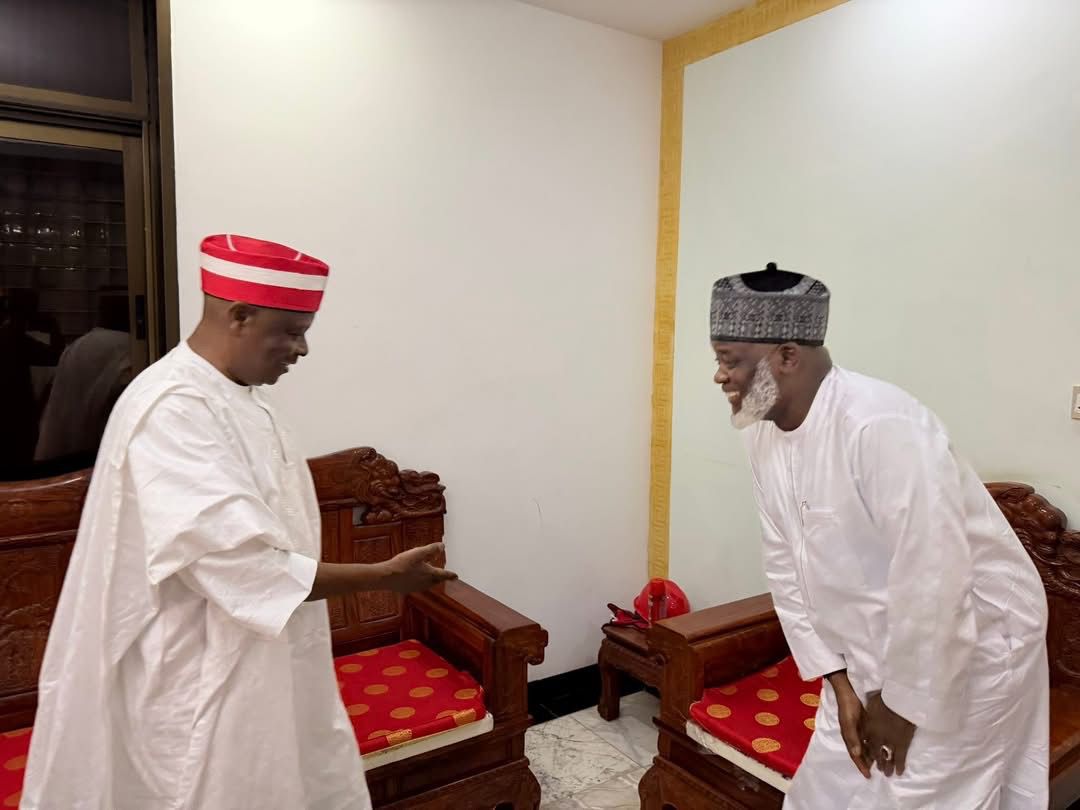
Political Earthquake in Kano: How, Senator Rabiu Musa Kwankwaso, Nasiru Gawuna’s Move to ADC Reshapes North-West Politics
The political atmosphere of Nigeria’s North-West was fundamentally altered on a sweltering afternoon in 2026 after Senator Rabiu Musa Kwankwaso former Governor of Kano State and Former Minister for Defence who is also the “Grand Commander” of the Red-Cap revolution, finalized a move that many viewed as the ultimate masterstroke of his political career. By transitioning from the NNPP to the African Democratic Congress (ADC), Kwankwaso did more than change platforms; he effectively reset the coordinates of the nation’s largest voting bloc.
Senator Kwankwaso’s pedigree is defined by a singular devotion to human capital development and an almost mythical grassroots loyalty preceded him. He turned a local movement, the Kwankwasiyya, into a disciplined, ideological army that transcends traditional party structures. His entry into the ADC instantly transformed a secondary party into a formidable fortress, signaling to the ruling elite that the North-West is no longer a monolith under their control.
The gravity of this shift is most profound in Kano, the heartbeat of Northern commerce. For years, the state was a polarized battlefield between the Kwankwasiyya and established conservative wings. However, the entry of Nasiru Yusuf Gawuna into the same ADC orbit has created a “Kano Super-Alliance” that was previously unthinkable. Kwankwaso, the visionary architect who sent thousands of Kano’s children to global universities, now finds his populist ideology merging with Gawuna’s administrative steadiness and deep-rooted institutional connections.
This synergy is a seismic departure from the politics of “zero-sum” rivalry; it is a calculated fusion of mass appeal and the strategic machinery required to protect and deliver votes.
This move reshuffles the entire North-West deck. As Kwankwaso plants the ADC flag across the region, he is attracting a wave of heavyweights from Kaduna to Sokoto who feel marginalized by the status quo. His political pedigree allows him to speak with a regional authority that others lack, positioning himself as a protector during a time of economic uncertainty. By bringing Gawuna into this fold, the dynamics of Kano politics have shifted from a war of attrition to a coalition of necessity. This alliance creates a “Third Way” that bypasses the failures of the old guard, promising a return to the rapid growth that defined the Kwankwaso years, but with a broader, more inclusive base that could dictate the occupant of Aso Rock in 2027.
Kwankwaso’s career has always been defined by a uniquely personal brand of power. From 1999 to 2015, he served two terms as Governor of Kano State, in addition to roles as Minister of Defence and Senator. While many were surprised by his recent maneuvers; especially following closed-door meetings with President Bola Tinubu, he chose the emerging ADC over the ruling APC.
In the high-stakes theater of Nigerian politics, few events have jolted the region quite like the defection of Nasiru Yusuf Gawuna from the APC to the ADC on March 31, 2026. Coming just twenty-four hours after Kwankwaso’s move, Gawuna’s transition fundamentally has also altered the political calculus in Kano. What makes this moment remarkable is the sheer drama of the reversal. Gawuna’s political journey has been a steady, calculated ascent through Kano’s establishment. He first shot to prominence as Commissioner of Agriculture under Governor Abdullahi Umar Ganduje, earning a reputation for hands-on management in a state where farming is the economic backbone. He eventually rose to Deputy Governor, serving for nearly six years and gaining invaluable executive experience. Beyond partisan politics, Gawuna distinguished himself as Chairman of the Governing Council of Bayero University and, most recently, as Chairman of the Federal Mortgage Bank of Nigeria (FMBN). He resigned from the FMBN on March 27, 2026, citing compliance with presidential directives regarding political appointees.
A look back at the 2023 gubernatorial election reveals just how significant Gawuna is. Running under the APC, he polled over 890,000 votes against the formidable Kwankwasiyya machine. This proved that he is one of the few politicians in Kano who can genuinely compete with Kwankwaso’s electoral machinery. His strength is threefold: he appeals to the youth, the religious establishment (Ulama), and the business community; he has the capacity to split the APC vote; and he has demonstrated he can deliver votes independently of a larger party wave. To understand the magnitude of this defection, one must appreciate the complete inversion of alliances since 2023. Back then, Governor Abba Kabir Yusuf ran on the NNPP ticket with Kwankwaso’s backing, while Gawuna carried the APC banner with Ganduje’s support. By 2027, the roles will likely reverse: Governor Yusuf is positioned to run under the APC with Ganduje’s blessing, while Gawuna is poised to run under the ADC with Kwankwaso’s endorsement.
From the perspective of the Kwankwasiyya movement, Gawuna’s arrival is a “return” rather than a “recruitment,” as he was part of the movement’s pioneer cohort. This narrative neutralizes accusations of opportunism. For his part, Gawuna framed his move in terms of service and divine guidance, with sources indicating he felt marginalized within the APC after his 2023 defeat.
The reaction from within the APC has been one of worry and regret. President Tinubu, recognizing the stakes, reportedly directed party leaders to prevent Gawuna’s move, even offering him an automatic Senatorial ticket for 2027. The failure of this pressure campaign, Gawuna reportedly placed his phone on “Do Not Disturb” and traveled abroad to avoid lobbyists represents a significant defeat for the presidency’s political management. This crisis prompted emergency meetings between President Tinubu, Dr. Ganduje, and Badaru Abubakar at the Presidential Villa to reorganize their strategy.
The long-term implication is the potential break of the APC-PDP duopoly. The ADC is now positioning itself as a genuine “third force” in the North-West. The defection of high-profile figures like Senator Ahmed Babba-Kaita, Senator Aishatu “Binani” Ahmed, and former Justice Minister Abubakar Malami suggests a coordinated realignment. This competition could force more substantive policy debates and reduce the “zero-sum” intensity of regional elections.
The projected 2027 gubernatorial rematch between Gawuna (ADC) and Governor Yusuf (APC) will be a battle between two men with established records. Voters will have a genuine choice between performance and platform rather than just shifting loyalties. As Gawuna put it: “Allah gives power to whom He wants and when He wants.” While the 2027 elections will reveal where that power flows, it is already clear that the political landscape of the North-West will never look the same again.
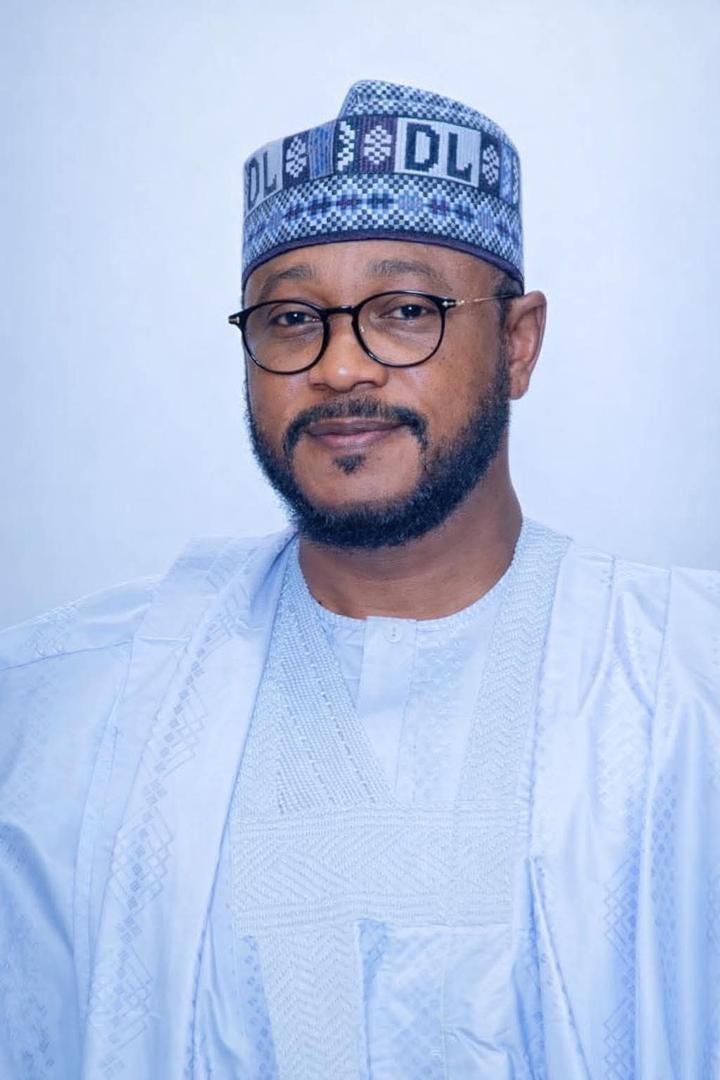
Governor Dauda Lawal Approves Gratuity Payment
The Zamfara State Government, under the visionary leadership of Governor Dauda Lawal, has approved the release of funds for the payment of Gratuity Batch 3 for the 2024/25 period. This decisive action underscores the administration’s unwavering commitment to the welfare of retired civil servants who dedicated years of service to the state’s development.
The Accountant General of the State is already working diligently to ensure that all eligible retirees receive their payments promptly and efficiently, reflecting the government’s resolve to uphold transparency and accountability in the disbursement process.
This timely gratuity payment is a testament to Governor Dauda Lawal’s people-centered leadership, which recognizes the sacrifices and contributions of retirees to the progress and stability of Zamfara State. It also reaffirms the government’s pledge to honor its financial obligations without unnecessary delays.
The Zamfara State Government calls on all retirees in the affected batch to exercise patience as the necessary administrative and financial processes are finalized. Every effort is being made to ensure smooth and uninterrupted payments.
This initiative is part of Governor Dauda Lawal’s broader vision to empower citizens and retirees, strengthen confidence in public service, and sustain the morale of those who have committed their lives to the growth of Zamfara State.
Politics
APC Group Endorses Fubara for 2027, Calls on Tinubu and APC to Prioritise Performance Over Politics in Backing Governor’s Second Term Ambition
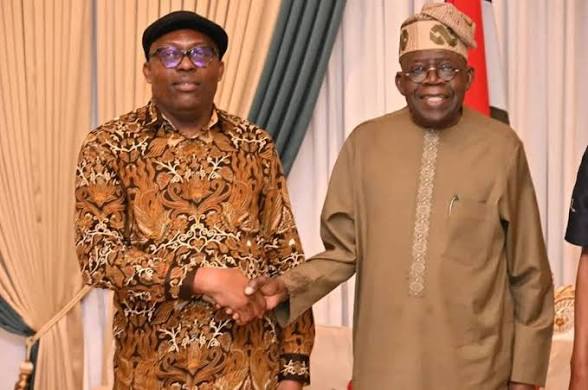
*APC Group Endorses Fubara for 2027, Calls on Tinubu and APC to Prioritise Performance Over Politics in Backing Governor’s Second Term Ambition*
The APC National Vanguard has appealed to President Bola Ahmed Tinubu and the leadership of the All Progressives Congress (APC) to support a second term in office for Siminalayi Fubara, citing what it described as “impressive and verifiable developmental strides” across Rivers State.
In a statement issued on Thursday by its National President, Dr Gbenga Salam (JP), the group said its position followed an extensive assessment tour of key infrastructure and public service projects executed under the Fubara administration.
The APC National Vanguard said the appeal was based strictly on performance, arguing that governance outcomes should outweigh partisan considerations, particularly in a state as economically significant as Rivers.
“We respectfully urge President Bola Ahmed Tinubu and the leadership of the All Progressives Congress to support the continuity of Governor Siminalayi Fubara beyond his current tenure, in recognition of his commitment to development, prudent resource management, and people-focused governance,” the statement read.
According to the group, its delegation visited multiple project sites across the state, observing ongoing and completed works spanning road construction, urban renewal, and public infrastructure upgrades.
It noted that the scale and distribution of these projects reflect a deliberate effort by the state government to extend development beyond traditional urban centres and into underserved communities.
“Our findings from the tour reveal a government that is not only active but intentional in its development agenda. The execution of capital projects across various parts of Rivers State demonstrates a clear understanding of the needs of the people and a commitment to addressing them,” Dr Salam said.
The group particularly commended what it described as prudent financial management by the administration, noting that the projects reviewed showed evidence of careful planning and efficient allocation of resources.
“At a time when economic pressures are evident across the country, it is commendable that the Rivers State government has managed its resources in a way that delivers visible and impactful development without signs of fiscal recklessness,” the statement added.
The APC National Vanguard further observed that despite political tensions in the state, the Fubara administration has maintained focus on governance, ensuring continuity in project execution and service delivery.
The group argued that such stability is critical for sustained development and should be encouraged rather than disrupted.
“Leadership must ultimately be judged by results. In Rivers State, there is clear evidence of progress—projects that are not only announced but executed, and policies that translate into real benefits for citizens,” Dr Salam noted.
The group warned that discontinuity in leadership could stall ongoing projects and reverse gains already recorded, stressing the importance of allowing a performing administration to consolidate its achievements.
“Rivers State is at a pivotal stage where continuity will allow for the completion of ongoing initiatives and the deepening of development gains. Supporting Governor Fubara for a second term is, therefore, a decision in the best interest of the people,” the statement said.
In addition to its call on the APC leadership, the group reaffirmed its support for President Tinubu, expressing confidence in his administration’s broader economic and governance reforms.
The APC group urged Nigerians to remain supportive of efforts aimed at stabilising the economy and strengthening public institutions.
“We reiterate our endorsement of President Bola Ahmed Tinubu for a second term in office, in recognition of his leadership and commitment to national development. With sustained support, the administration can consolidate its reform agenda for the benefit of all Nigerians,” Dr Salam added.
The APC National Vanguard concluded by calling on political actors to prioritise development and public interest over partisan divides, insisting that governance should always be guided by performance and accountability.
“Where leadership demonstrates prudence, delivers development, and remains focused on the welfare of the people, it deserves continuity. This is the position we have reached after a careful and independent assessment of Rivers State,” the statement added.


- United States (U.S.) and Mozambique Advance Cooperation on Emergency Response and Safety April 6, 2026
- The Impacts of the Middle East Conflict on Africa April 6, 2026
- Ghana: President Mahama announces a high-level panel of the Accra Reset April 6, 2026
- Ghana: President Mahama reiterates his determination to build more businesses April 6, 2026
- Mauritius accelerates energy transition with renewable projects of 405 MW April 6, 2026
- Africa Centres for Disease Control and Prevention (Africa CDC) Appoints His Excellency Prof. Yemi Osinbajo as Senior Strategic Advisor to the Director General April 6, 2026
- 2026 Easter Message by the President of the Catholic Bishops’ Conference of Nigeria (CBCN): The Dawn is Coming, Don’t Let Go Now, Hold on to Hope! April 5, 2026
- "A Time to Pause and Begin Again”: President Dr Patrick Herminie reflects in Easter message April 5, 2026
- President Dr. Patrick Herminie Pays Tribute to the Late Seychellois Artist David Philoe April 5, 2026
- Ghana identifies priority areas to strengthen cholera prevention and control April 5, 2026
- United States (U.S.) and Mozambique Advance Cooperation on Emergency Response and Safety April 6, 2026
- The Impacts of the Middle East Conflict on Africa April 6, 2026
- Ghana: President Mahama announces a high-level panel of the Accra Reset April 6, 2026
- Ghana: President Mahama reiterates his determination to build more businesses April 6, 2026
- Mauritius accelerates energy transition with renewable projects of 405 MW April 6, 2026
- Africa Centres for Disease Control and Prevention (Africa CDC) Appoints His Excellency Prof. Yemi Osinbajo as Senior Strategic Advisor to the Director General April 6, 2026
- 2026 Easter Message by the President of the Catholic Bishops’ Conference of Nigeria (CBCN): The Dawn is Coming, Don’t Let Go Now, Hold on to Hope! April 5, 2026
-

 society7 months ago
Religion: Africa’s Oldest Weapon of Enslavement and the Forgotten Truth
-

 news4 months ago
WHO REALLY OWNS MONIEPOINT? The $290 Million Deal That Sold Nigeria’s Top Fintech to Foreign Interests
-

 society6 months ago
“You Are Never Without Help” – Pastor Gebhardt Berndt Inspires Hope Through Empower Church (Video)
-

 celebrity radar - gossips2 months ago
Dr. Chris Okafor Returns with Power and Fire of the Spirit -Mounts Grace Nation Altar with Fresh Anointing and Restoration Grace on February 1, 2026