
Politics
Opinion: To Save Gov Akeredolu, His Family Should Listen To Primate Ayodele’s Warnings By Ariyo Awonuga

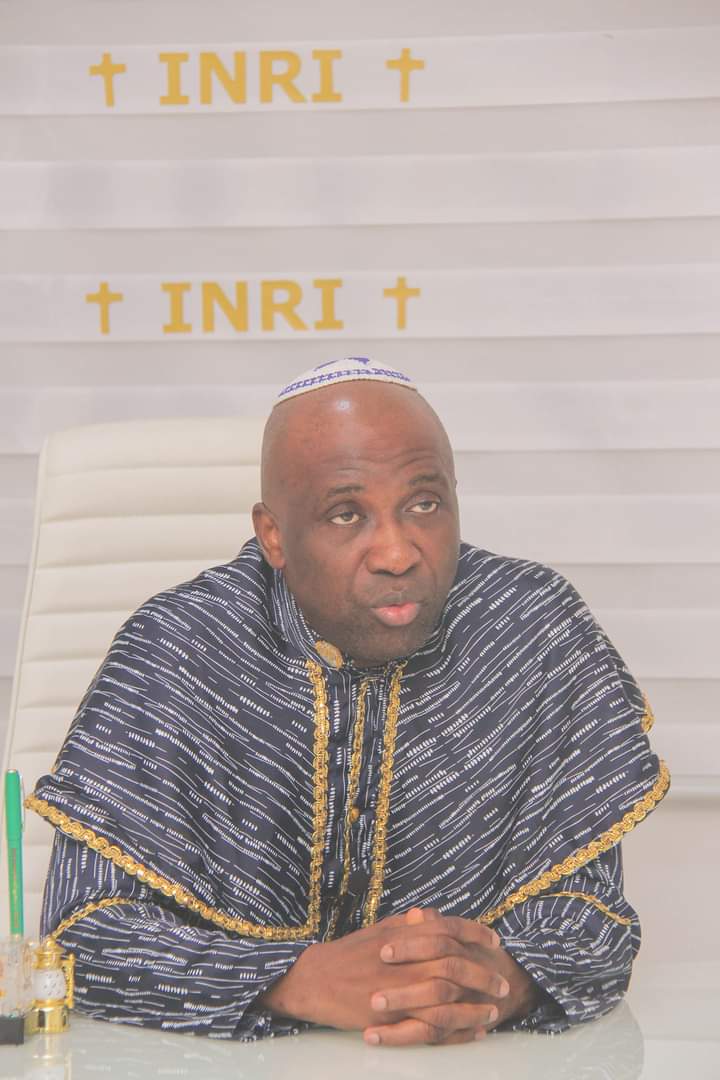
Opinion: To Save Gov Akeredolu, His Family Should Listen To Primate Ayodele’s Warnings
By Ariyo Awonuga
The Governor of Ondo state, Rotimi Akeredolu has been on sick bed for some months now. Earlier this year, he spent three months in Germany to seek medical attention but still didn’t get better when he returned.
On arrival, He landed in Oyo state and hasn’t been able to step foot into Ondo state or his office ever since. His health has reportedly deteriorated to a level where he can’t sign any document again and now, he has been flown abroad again to seek medical attention.
With the situation of things, it’s obvious the state and family of the governor have tried every possible means to revive Akeredolu but it doesn’t seem to work out as planned.
While it is not out of place to continue seeking medical solutions, it is important to tell everyone that cares to listen that other means should be tried in order to save the life of the ailing governor. At a time like this, his family will have different counsels from different quarters but one that they should not ignore is that of a prophet.
Nigeria is blessed, we have several prophets and one of them who have continually spoken about the health of Governor Rotimi Akeredolu is Primate Elijah Ayodele of INRI Evangelical Spiritual Church.
Primate Ayodele’s record in the prophetic realm dates back to the 90s when he spoke fearlessly to power and revealed what will become of an administration without mincing words. Primate Ayodele has continued to grow since then and has now become the most popular prophet in Africa; not by his prophecies alone but by their fulfillment. As of today, Primate Ayodele has over 25,000 fulfilled prophecies with proofs available on the internet.
During the time of former president Musa Yaradua, Primate Ayodele spoke about his health and noted that he doesn’t see the president coming back alive to his office. He asked Nigerians and his family to pray and seek God’s face in order to make him return to office but unfortunately, the President didn’t survive it.
For Rotimi Akeredolu, Primate Ayodele has been calling for prayers on his behalf immediately after the governor returned from Germany after three months of medical leave. The governor’s aides and family made everyone believe he was perfectly healthy but the prophet saw beyond their statements through his spiritual lens; he categorically shared that the governor still needs prayer for his health. This statement was made during a live video session at his church.
‘’Let’s continue praying for Akeredolu. He still needs prayer for his health’’
@primateayodele #pray #prayersneeded #prayers #primateayodele #iescworldwide #Nigeria #nigeriantiktok🇳🇬 #nigeriantiktok🇳🇬 #gubernatorial #akeredolu
Sometime last month, Primate Ayodele spoke again about the governor’s health and told his family to take his matter very seriously because he has a slim chance of returning to office. The man of God stated that his matter is more of spiritual than physical and except they seek God’s face for him, He may not be delivered.
‘’Let the family of Akeredolu take his matter very seriously. What is happening to him is more spiritual than physical. His health is very serious. They need to seek the face of God so he can be delivered otherwise, he has a 50-50 chance of returning to office.’’
@primateayodele #ondo #ondostate #akeredolu #health #nigeria #nigerian #nigeriatiktok #nigeriantiktok #primateayodele #iescworldwide #prayers #prayers
Some days ago, the prophet, while reacting to President Tinubu’s intervention in the crisis rocking the state, called for prayers on behalf of Governor Akeredolu. He made it known that there are still issues and serious prayers should be held for the governor. He advised them not to include him in the crisis rocking the state but pray for him to see the end of his term.
‘’Despite the president’s intervention, I am not seeing agreement and peace in Ondo state … .The governor needs prayers, let’s not involve him in this matter. There is a need for prayer for him to survive and end his term. There are still issues, we still need to pray seriously for him.’’
@primateayodele #ondo #ondostate #akeredolu #aiyedatiwa #politics #southeast #apc #politics #nigeria #nigerian #primateayodele #iescworldwide
Of a truth, Primate Ayodele saw correctly even when those around the governor tried to convince the public that the governor was fine. He saw beyond all of that and continuously called for prayers on the governor’s behalf. Let us also note that the prophet said the governor’s illness is more spiritual than physical. This simply means spiritual means should be sought in order to save the governor from an impending danger.
He warned them not to pray politics with the life of Rotimi Akeredolu but diligently run to God for his recovery.
‘’Governor Akeredolu needs prayers for him to come back to office and to return to power. His family needs to seek the face of God concerning his illness.’’
“It is more spiritual than physical. There are forces fighting him that don’t wish him well. He needs prayer for his health. His family should step into the spiritual aspect of it.’’
Gov Akeredolu’s illness spiritual, pray for him – Primate Ayodele
The governor has now embarked on another medical trip but it would be best if his family can seek spiritual solutions to conquer the spiritual illness; they can’t fight spirituality physically. If truly they want to save the life of Governor Rotimi Akeredolu, they should listen to Primate Ayodele’s warnings.




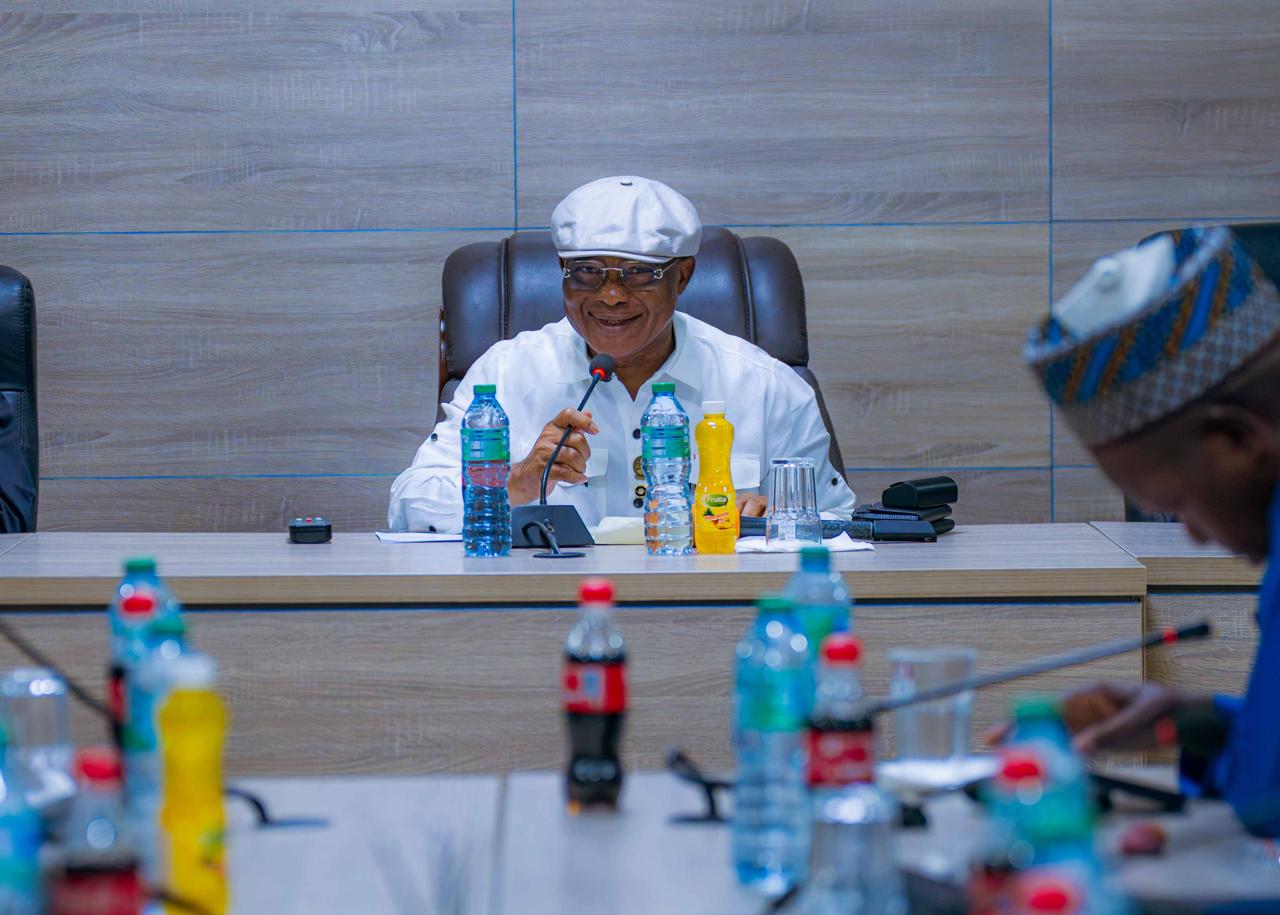
*Renewed Hope Ambassadors Step Into the Next Phase
Fresh from the successful APC 2026 National Convention, the Renewed Hope Ambassadors National, Zonal, and State leadership gathered in Abuja over the weekend, for its fourth strategic meeting, setting the tone for nationwide grassroots activation ahead of 2027.
Chaired by Governor Hope Uzodinma (Imo State) the Director General and National Coordinator of the Renewed Hope Ambassadors, alongside Deputy Director-General, Governor Uba Sani of Kaduna State, and Governor Inuwa Yahaya of Gombe State as Secretary, the session reinforced one clear direction: One Party. One Message. One Mobilization whilst also laying out a strategic roadmap for the activation of the network across all communities in Nigeria.
Backed by the strength of 31 APC-led states, the Renewed Hope Agenda is taking Bola Ahmed Tinubu’s message of progress and reform to every corner of Nigeria.
From bold economic restructuring to initiatives like NELFUND, the increase in the national minimum wage from ₦30,000 to ₦70,000, and strategic investments in critical sectors, including PNiCGI, the mission remains clear: helping Nigerians understand both the purpose and the progress of the Renewed Hope vision.
This is coordination at scale. This is grassroots engagement with purpose. This is the next phase of Renewed Hope with One Party, One Message, and One Mobilisation framework
#RenewedHopeAmbassadors #APC #WeAreAPC


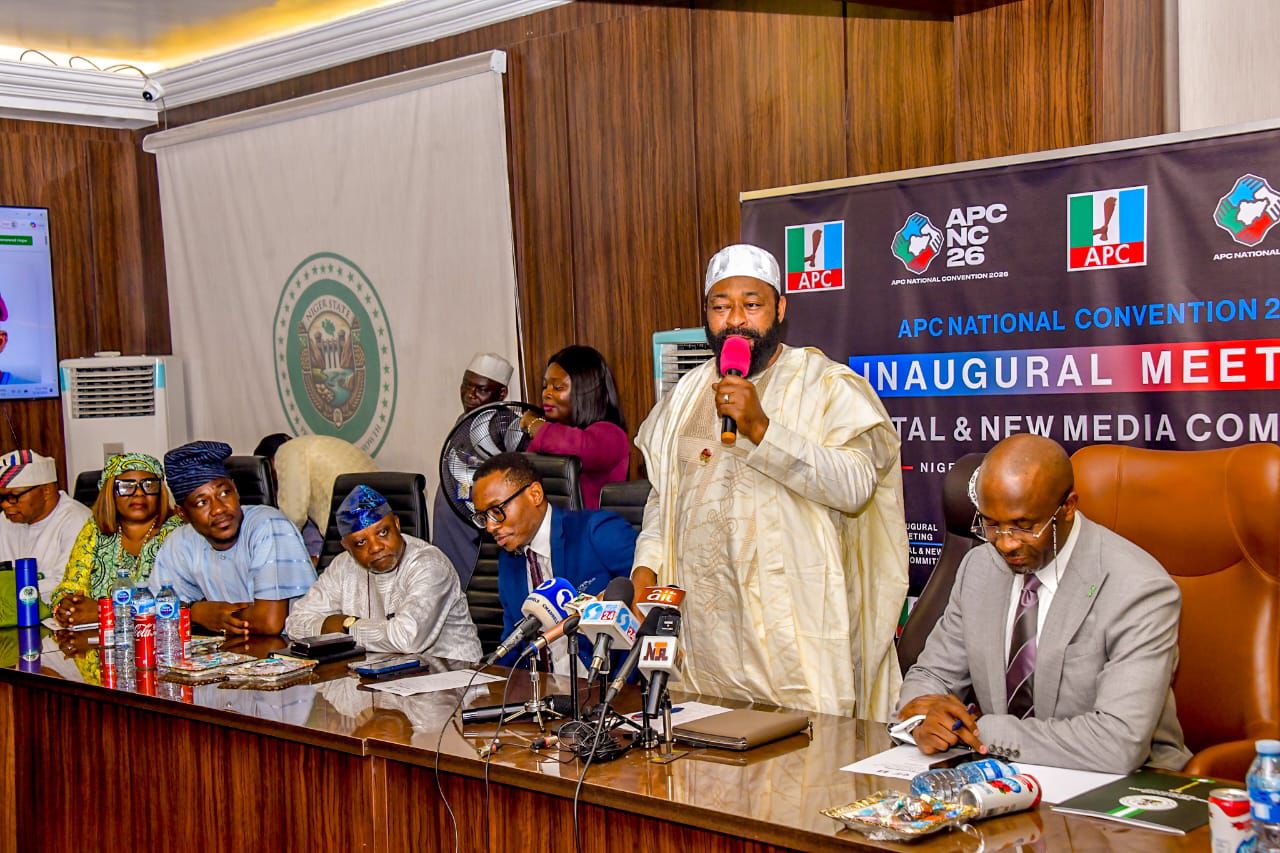
Governor Bago Inaugurates APC Digital Media Sub-Committee Ahead of National Convention.
Governor Umaru Bago has inaugurated the Digital Media Sub-Committee for the forthcoming National Convention of the All Progressives Congress (APC), scheduled to hold on March 27 and 28, 2026 in Abuja.
Chairing the sub-committee, Governor Bago tasked members with the responsibility of effectively communicating the party’s manifesto to the public.
He emphasized the need to leverage social media platforms to highlight the achievements and ongoing efforts of President Bola Ahmed Tinubu, noting that communication gaps have posed challenges that must now be decisively addressed.
The Co-Chair of the sub-committee, Hon. Benjamin Kalu, Deputy Speaker of the House of Representatives, echoed the Governor’s position, urging members to project the activities of both the party and the government to a broader audience.
He called for a deliberate and coordinated effort to showcase the party’s achievements and policy direction, stressing the importance of shaping a compelling and consistent narrative across all digital platforms.
Delivering a presentation to the committee, Otega Ogra, SSA to the President on New Media, who serves as Secretary of the sub-committee, outlined strategic focus areas to guide the team’s operations.
His presentation highlighted communication priorities and actionable steps to achieve the committee’s mandate and strengthen the party’s digital engagement.


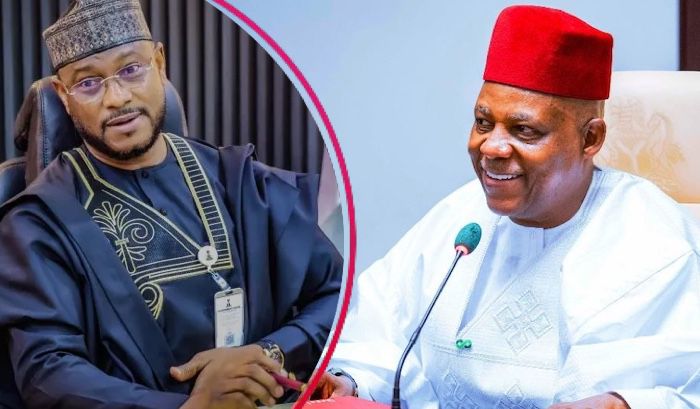
VP Shettima Set to Lead Delegation to Zamfara as Governor Dauda Lawal Formally Joins APC
The Zamfara State chapter of the All Progressives Congress (APC) has finalized plans to receive Vice President Kashim Shettima for the formal defection and reception of Governor Dauda Lawal into the ruling party, scheduled to take place on Tuesday.
State APC Chairman, Tukur Danfulani Maikatako, disclosed this during a high-level stakeholders’ meeting held in Gusau, the state capital. He noted that the Vice President would be joined by the party’s national leadership to mark what he described as a landmark political realignment in the state.
Maikatako expressed the party’s excitement over Governor Lawal’s return, recalling that Zamfara had historically been an APC stronghold and that the Governor was previously a bona fide member of the party before his earlier exit.
“We all know that Zamfara has long been one of the APC’s stronghold states, where the defected Governor was once a bona fide member. Now that he has decided to return home, having been satisfied that the APC remains his second choice after the one he left for obvious reasons,” Maikatako stated.
The Chairman called on all party faithful across the 147 wards in the state’s 14 local government areas to turn out en masse to honour the Vice President’s visit. He emphasized that the event was strategically positioned to bolster the party’s popularity and strengthen its structures ahead of the 2027 general elections.
In a strong appeal for unity, Maikatako urged members to set aside all factional tendencies, stressing that the APC remained one political family with shared goals, particularly the ambition to make Zamfara and Nigeria great again.
Echoing similar sentiments, a former state APC Chairman, Lawal M. Liman, appealed to members to cascade the message to their wards and local government areas. He reinforced the need for cohesion, noting that the party’s collective strength would be critical to achieving success in future elections.

All eyes are now on Gusau as the ruling party prepares for a high-profile political gathering expected to further consolidate its influence in Zamfara State.


-

 society6 months ago
Religion: Africa’s Oldest Weapon of Enslavement and the Forgotten Truth
-

 news4 months ago
WHO REALLY OWNS MONIEPOINT? The $290 Million Deal That Sold Nigeria’s Top Fintech to Foreign Interests
-

 society6 months ago
“You Are Never Without Help” – Pastor Gebhardt Berndt Inspires Hope Through Empower Church (Video)
-

 celebrity radar - gossips2 months ago
Dr. Chris Okafor Returns with Power and Fire of the Spirit -Mounts Grace Nation Altar with Fresh Anointing and Restoration Grace on February 1, 2026