Connect with us

society

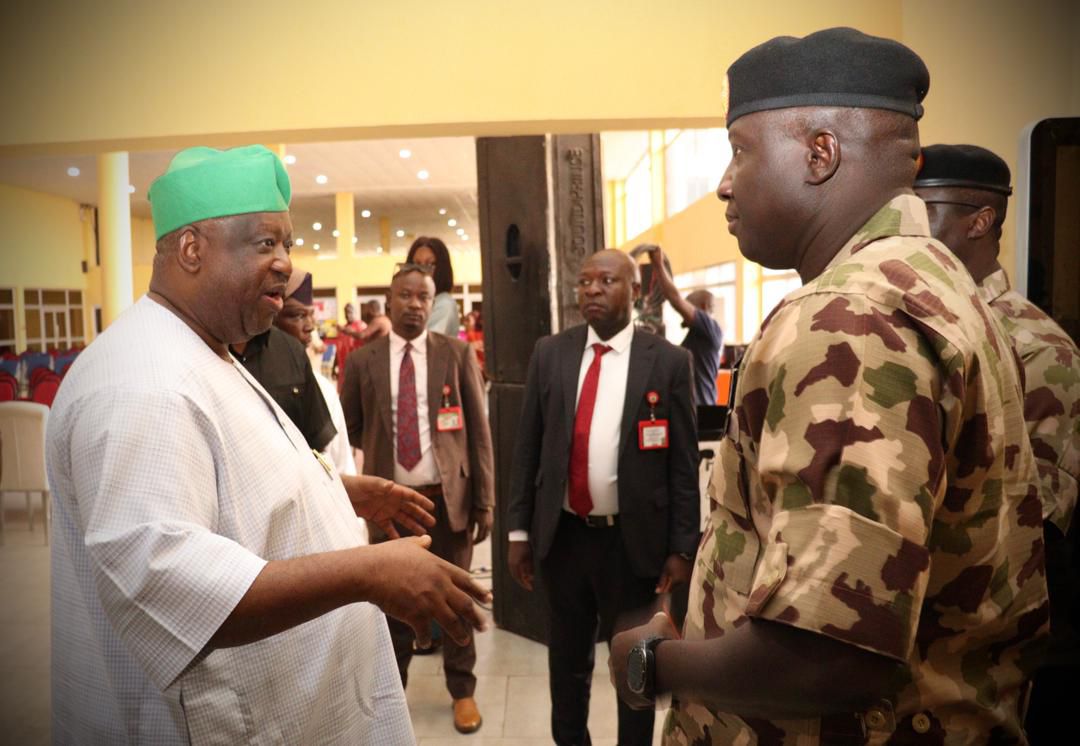
Oronsaye’s Report: What Government, Nigerians  Should Know About Army University And Avoid Merger 

Published

on

Why the merger of NAUB with NDA cannot work, the hard facts to consider'

Oronsaye’s Report: What Government, Nigerians  Should Know About Army University And Avoid Merger 

“Education is the best friend. An educated person is respected everywhere. Education beats the beauty and the youth”- Chanakya
Arguably, the Nigerian Army University Biu conceived as a research-intensive and innovative institution for the transformation of the Nigerian Defence System to a 21st Century technology-driven force has become the toast of many as the first public university to contend with first class private universities in the country. And the reason is not far-fetched.
Withing five years of debut, the institution has impacted the national socio-economic development framework through the provision of creative and innovative solutions in a rapidly changing and knowledge driven world.
And has successfully built five strong haven of faculties namely Arts, management and social sciences, natural and applied sciences, computing, Engineering Technology and Environmental sciences and has become the darling of many as first choice in JAMB.
NAUB provides a conducive teaching and learning environment in an environment once volatile and considered a hub of terrorism and ignorance. This university was able to achieve that by attracting high quality teaching and research staff, together with talented students; thus ensuring the availability of the much needed entrepreneurial ‘space’ as the platform for bottom up innovation.
This facilitated the grooming of graduates during the first convocation with distinctive competence inducing key in the  21st century world of works skills that will distinguish them, and their degrees as top performers in the global  scene.
This unique university has become a centre of excellence for learning, research, and technological development that promotes excellence, ingenuity, creativity, and distinctive competence in intellectual outputs.
One of the uniqueness of the Federal University known as NAUB is the ability to fuse practical career preparation with a focus on creating positive change in our world.
Thus, such a lofty project of the founding fathers built on solid foundation should be preserved and not scrapped.
The mandate of the Nigerian Defence Academy is very specific: to produce young officers with first degrees for the Nigerian Army, the Nigerian Navy, and the Nigerian Air Force. In some cases, the NDA assists the Police, Para-military agencies such as the Customs, Immigration, the Prisons, and Civil Defence Corps, as well as other security agencies to conduct training for their officers. On the other hand, the Nigerian Army University Biu is meant to produce skilled manpower (selected civilians and soldiers) with distinctive competence capable of meeting the security and technological challenges of the nation.
Secondly,  the admission policy is based on 75% civilian and 25% military/Paramilitary, security agencies, etc. The 75% civilian component will be spread to all 36 states of the Federation as well as FCT.
Furthermore, the logistical challenges of merging two institutions with distinct cultures, academic programmes, and operational frameworks can not be underestimated. Integrating NAUB and NDA into a single entity would require significant restructuring, resource reallocation, and strategic alignment, posing a risk of disruption and inefficiency in the process.
While collaboration and partnership between educational institutions can yield benefits, it is crucial to recognise and respect the individual identities and purposes of NAUB and NDA. Preserving the autonomy and distinctiveness of each institution is essential to ensure that they continue to effectively serve their respective mandates and contribute meaningfully to the advancement of education and national security in Nigeria. A merger between NAUB and NDA would not only be impractical but could also undermine the unique strengths and contributions of these vital institutions.
Continue Reading
Advertisement

society

Love on Display: Katie Price and Lee Put On a Public Show of Affection 

Published

on

Love on Display: Katie Price and Lee Put On a Public Show of Affection 

By George Omagbemi Sylvester | Published by SaharaWeeklyNG 

British media personality Katie Price is once again at the center of tabloid and public attention after being photographed poolside with her new husband, Lee, in a display of affection that quickly circulated across entertainment platforms. The images, reportedly taken during a recent leisure outing at a private resort location in the United Kingdom, show the couple embracing and kissing beside a swimming pool, with Lee prominently displaying a tattoo tribute dedicated to Price.


The photographs, which surfaced in mid-February 2026 through British tabloid outlets, depict the couple appearing relaxed and affectionate. Lee, whose full name has been reported in sections of the UK press but who largely maintains a lower public profile compared to his wife, lifted his arm to reveal a visible tattoo said to be in honor of Price and a gesture widely interpreted as a public affirmation of their relationship.


What happened was straightforward but symbolically charged: a public display of affection between newlyweds, amplified by Price’s longstanding celebrity status. Where it happened (poolside at what sources describe as a private holiday setting) underscores the blending of personal life and public spectacle that has long defined Price’s media journey. During a recent February getaway placed it squarely within ongoing tabloid interest surrounding her latest marriage. Price, 47 and her new husband Lee, whose visible tribute tattoo became the focal point of the moment.


Celebrity culture scholars argue that public figures such as Price operate within a media ecosystem where visibility sustains relevance. “Modern celebrity is performative intimacy,” explains Professor Graeme Turner, a media and cultural studies scholar known for his work on celebrity culture. “Public displays of affection are not merely private acts; they are communicative gestures that reinforce brand identity and narrative continuity.” In Price’s case, her romantic relationships have long been interwoven with her public persona.


Price first rose to prominence in the late 1990s under the glamour model moniker “Jordan,” before transitioning into reality television, publishing and business ventures. Her personal life (including previous marriages and high-profile relationships) has frequently generated headlines in the British press. This latest marriage continues that pattern of intense scrutiny.


The tattoo tribute displayed by Lee is particularly significant in celebrity symbolism. Body art dedicated to a partner is often perceived as a declaration of permanence. Dr. Chris Rojek, emeritus professor of sociology and an authority on fame and public identity, has observed that “celebrity relationships are sustained as much through symbolic reinforcement as through private commitment. Visible tokens (rings, tattoos, coordinated appearances) function as public assurances.” In this case, the tattoo serves not merely as personal expression but as a visual narrative device in an already highly mediated relationship.


How the moment unfolded (casually but conspicuously) reflects the dynamics of contemporary celebrity coverage. Photographs were reportedly captured either by paparazzi stationed nearby or shared through controlled media access, a common practice in the British entertainment industry. Within hours, the images were republished by multiple outlets, accompanied by commentary on Price’s relationship history and ongoing legal and financial challenges, issues that have previously placed her under intense public scrutiny.


Despite recurring controversy throughout her career, Price remains a resilient media figure. Communications analyst Mark Borkowski has previously remarked in interviews that “Katie Price understands publicity better than most. Whether by design or instinct, she maintains a feedback loop with the press that keeps her culturally visible.” The poolside photographs appear to fit squarely within that established pattern of managed exposure and reactive media amplification.


Critically, there is no indication of misconduct, public disturbance or controversy tied directly to the poolside display itself. It was, by all verified accounts, a consensual and celebratory expression of affection between married adults. The wider attention it has generated speaks less to the act and more to the individuals involved; particularly Price’s enduring position within British popular culture.


For global audiences, the episode illustrates a broader truth about contemporary fame: private milestones often become public commodities. The marriage of Katie Price and Lee (and the symbolic tattoo that now marks it) has become another chapter in a life lived persistently under the camera’s gaze.


As celebrity culture continues to blur boundaries between intimacy and publicity, moments like this poolside embrace are no longer trivial snapshots. They are narrative events, reinforcing identity, commitment and brand continuity in equal measure.

Continue Reading

society

Tinubu Signs Electoral Bill into Law — A Defining Moment for Nigeria’s Democracy

Published

on

Tinubu Signs Electoral Bill into Law — A Defining Moment for Nigeria’s Democracy

By George Omagbemi Sylvester | Published by SaharaWeeklyNG


“New Electoral Act 2026 Enters the Statute Books Amid Intense Debate Over Nigeria’s Democratic Future.”


In a watershed development for Nigeria’s political trajectory, President Bola Ahmed Tinubu has signed the Electoral Act, 2026 (a fundamental overhaul of the nation’s electoral legal framework) into law. The signing took place on 18 February 2026 at the Presidential Villa in Abuja, following the passage of the Electoral Act (Repeal and Re‑Enactment) Bill, 2026 by the National Assembly.


This move marks a critical legislative milestone ahead of the 2027 general elections. The amended Electoral Act replaces the 2022 law and introduces key changes to Nigeria’s electoral processes, procedures and timelines; a package that has ignited both approval and fierce criticism from political stakeholders, civil society and democracy advocates.


At the centre of the amendments are revisions to election timetables, the scope of result transmission procedures, and administrative adjustments intended to align the law with the logistical realities of upcoming polls. The Senate, during its legislative consideration, moved to shorten the notice period for general elections from 360 days to 300 days, a shift argued to be necessary to avoid a clash with the Ramadan fasting period, which could complicate nationwide mobilisation and voter participation.


Among the most contested provisions in the new law is the treatment of electronic transmission of election results. Initial versions of the bill sought to mandate the real‑time upload of polling unit results directly to the Independent National Electoral Commission’s (INEC) result platform — a reform widely regarded by experts as crucial for transparency and public confidence. However, the Senate’s final version retained a fallback to manual transmission in cases of network failure, a compromise that has been sharply criticised.


This compromise has drawn pointed warnings from seasoned electoral experts. Mike Igini, a former Resident Electoral Commissioner with the Independent National Electoral Commission (INEC), unequivocally described the bill as potentially harmful to Nigeria’s democratic progress. In a televised appeal on Arise Television, Igini urged President Tinubu not to sign the bill, calling it “a recipe for chaos” and a betrayal of the struggles that brought Nigeria to a competitive democratic space. He warned that weakening electronic transmission safeguards could leave room for manipulation, undercutting confidence in election outcomes.


Such dissent underscores the larger debate now gripping the nation, especially among civil society and opposition figures. Critics argue that the amendments fall short of international best practices for electoral transparency and accountability. Natasha Akpoti‑Uduaghan, a lawmaker and vocal proponent of stronger electoral reforms, has publicly condemned the removal of mandatory real‑time result transmission, calling it a “lethal assault on Nigeria’s democracy”. She urged for stronger safeguards that align with technological advancements and global trends toward transparent elections.


Proponents of the new law, including some in the ruling All Progressives Congress (APC) and supportive legislators, insist that the provisions strike a necessary balance between ambition and practicality. They argue that preserving manual processes as a contingency recognises the realities of Nigeria’s digital infrastructure challenges, especially in rural and underserved regions where reliable internet connectivity cannot be guaranteed.


Notably, the new law also preserves the Independent National Electoral Commission’s discretionary authority over certain key administrative functions, including the manner and timing of result transmission, which INEC is now expected to align with fresh guidelines consistent with the new statutory framework.


Analysts note that this legislative stride comes at a moment of heightened political activity as parties gear up for the 2027 elections. INEC’s recently released timetable for the next general polls signals a compressed campaign and preparation cycle, heightening the stakes for political actors and voters alike.


For many Nigerians, the day’s events resonate beyond legislative procedure and enter the realm of democratic symbolism. According to Dr Akin Olukayode, a governance expert at the Centre for Democratic Development, “How electoral laws are crafted and implemented defines the essence of representation. Elections are not merely contests for power; they are expressions of popular will. Any framework that weakens transparency undermines the social contract between citizens and state.”


As Nigeria enters its next general election cycle under this new legal regime, the country faces profound questions about reform, credibility and political inclusiveness. The path ahead (from INEC’s operationalisation of the law, through legal interpretations in the courts, to the lived experience of voters in 2027) will ultimately determine whether this legislative overhaul strengthens or weakens Nigeria’s democratic foundation.


What remains clear is that in signing the Electoral Act 2026 into law, President Tinubu has set into motion a defining chapter in Nigeria’s electoral history; one that will be intensely scrutinised by scholars, policymakers and citizens at home and abroad.

Continue Reading

society

CLARIFICATION ON RESULT TRANSMISSION FOR FCT AREA COUNCIL ELECTIONS

Published

on

INEC Cancels Election In Kogi

CLARIFICATION ON RESULT TRANSMISSION FOR FCT AREA COUNCIL ELECTIONS

Following the recent inspection of election readiness in the Kuje, Gwagwalada, and Bwari Area Councils of the FCT by the INEC Chairman, Prof. Joash Amupitan, SAN, the Commission has observed headlines in certain media outlets claiming the chairman confirmed ‘real-time’ transmission of results for the February 21 polls.

We wish to clarify that at no point during his engagement with the press did the chairman use the phrase ‘real-time.’ Such a description is a misrepresentation of his technical explanation of the Commission’s processes.

What the chairman actually said: Responding to questions on whether INEC was experimenting with technology, Prof. Amupitan reiterated that the Commission had a settled protocol for the electronic transmission of results which had been in use since 2022.

He stated, “Since 2022, INEC has been transmitting results… We have BVAS, and BVAS is capable of accrediting and also uploading and transmitting the results. So definitely, the results will be transmitted.”

While the Commission remains fully committed to the electronic upload of scanned Polling Unit results (Form EC8A) to the IReV portal, as mandated by the Commission’s regulations and the Electoral Act, this process occurs after the completion of voting, counting, and the manual signing of results by party agents at the polling units.

The use of ‘real-time’ implies a simultaneous or live feed of votes as they are cast, which is not the procedure provided for in the legal framework.

Given the sensitive nature of election technology in our current national discourse, we urge our partners in the media to be meticulous in their reportage. Misquoting the chairman on technical procedures can lead to unnecessary public agitation and misinformation.

INEC remains 100% committed to a transparent, technology-driven election in the FCT and looks forward to your continued professional coverage of the democratic process.


Continue Reading

Cover Of The Week

Trending