Connect with us

Politics

Oyo MattersAttack: PDP Guber Aspirant, Ajadi Commiserates With Govt, Families Of Slain National Park Guard

Published

on

Oyo MattersAttack: PDP Guber Aspirant, Ajadi Commiserates With Govt, Families Of Slain National Park Guard


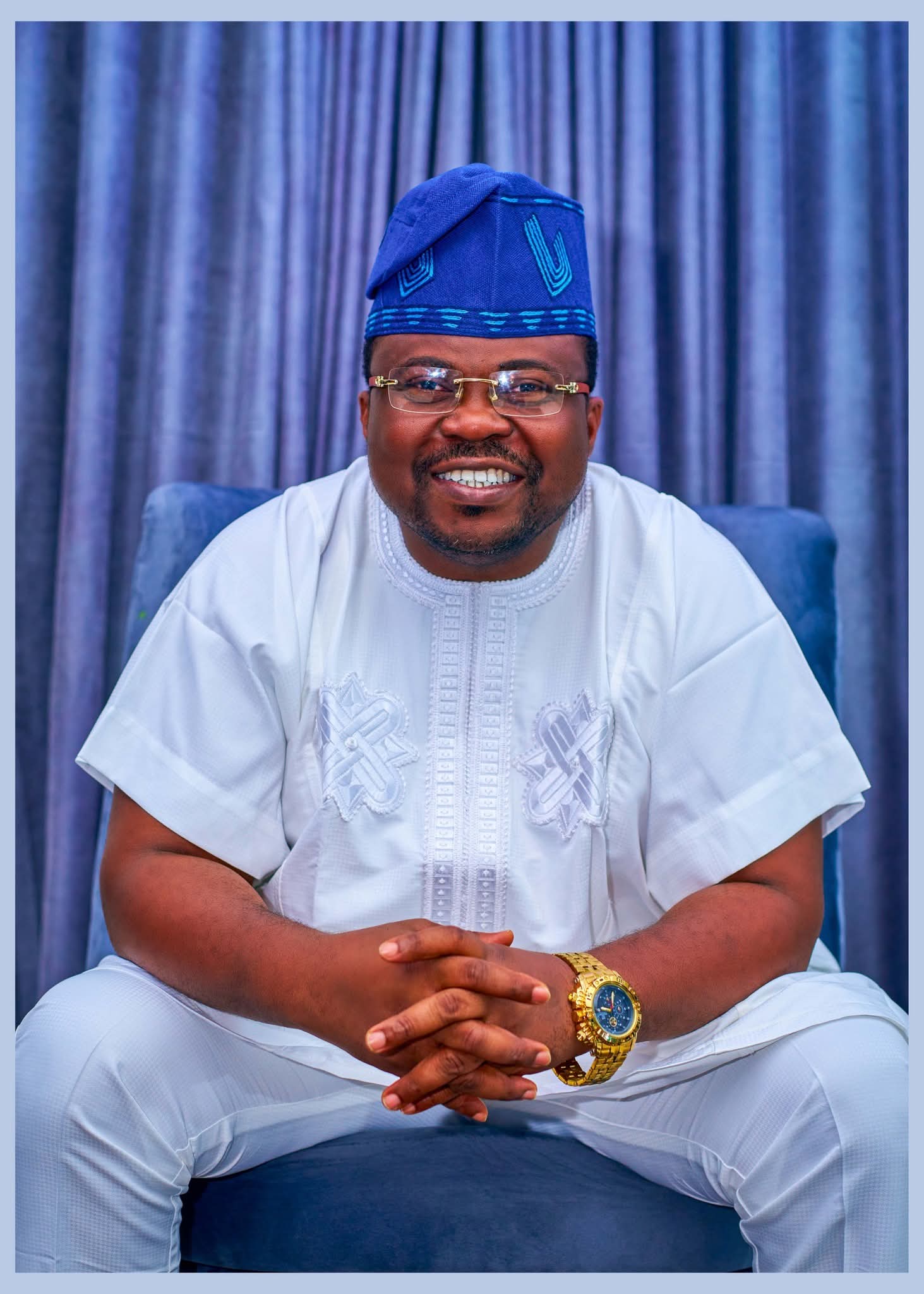
A frontline Peoples Democratic Party, (PDP) Governorship aspirant in Oyo State, Ambassador Olufemi Ajadi Oguntoyinbo has expressed his heartfelt sympathy to the families of victims of the recent bandit attack at the Old National Park in Oriire Local Government Area of Oyo State.

Ajadi in a statement on Friday commiserated with the Oyo State Government, families of those that were murdered during the attack as well as the entire people of Oyo State.

It could be recalled that gunmen on Tuesday night invaded the National Park Service office, leaving five people dead. The attack was carried out around 9:00pm.

In reaction to the attack, Ajadi condemned the killing of innocent residents and the destruction of properties by suspected bandits, describing the incident as unfortunate and heartbreaking.

He commended Governor Seyi Makinde for his swift and proactive response to the tragic incident and assurance of strengthened security architecture in the region.

He however, warned that the attack is a reminder that there is need to rebuild the security architecture in the state, especially in the bother areas with other states.

According to him, “I sympathise with the victims of the recent attack in Oriire Local Government Area of Oyo State. My heartfelt sympathy goes to the government of Oyo State, families of the victims and the entire people of the state.

“I also appreciate the swift response and proactive response of our dear Governor, Engr. Seyi Makinde. We should take the attack as a timely consciousness on the need to rebuild the security architecture in the state especially in the border areas.

“I pray that the state will continue to enjoy peaceful atmosphere and we will no more witness this kind of attack.”


Politics

2027: Atiku Will Not Withdraw for Obi. A Definitive Stand in Nigeria’s Emerging Political Chessboard.

Published

on

2027: Atiku Will Not Withdraw for Obi. A Definitive Stand in Nigeria’s Emerging Political Chessboard.

By George Omagbemi Sylvester


“Why Atiku Abubakar Stands Firm, What It Means for Peter Obi, the Opposition Coalition and the 2027 Presidential Contest.”

As the 2027 Nigerian presidential election draws nearer, a storm of speculation has erupted within political circles: will former Vice President Alhaji Atiku Abubakar withdraw from the race in favour of Peter Obi, the former Labour Party presidential standard-bearer now aligned with the African Democratic Congress (ADC)? Recent emphatic statements by veteran journalist and political actor Dele Momodu have now put that rumour to rest and Atiku will not step aside for Obi. That pronouncement reverberates across Nigeria’s volatile political landscape, shaking assumptions about coalition strategy, generational leadership, and opposition unity.

At a time when the opposition’s coherence is more strategic than ever, the narrative that Atiku should yield his ambition for Obi (a narrative energised mainly by sections of the Obidient Movement) has been labelled politically flawed, undemocratic and based on emotion rather than logic. This stance is now being vigorously defended by Momodu, one of Atiku’s closest allies in the ADC.

2027: Atiku Will Not Withdraw for Obi. A Definitive Stand in Nigeria’s Emerging Political Chessboard.
By George Omagbemi Sylvester | saharaweeklyng.com

The Rumour and the Reality.
Speculation that Atiku might withdraw in Obi’s favour began circulating soon after Obi’s defection from the Labour Party to the ADC in late 2025. Some political analysts interpreted Obi’s move as part of a broader opposition realignment aimed at defeating the incumbent President Bola Tinubu of the All Progressives Congress (APC). Critics suggested that a grand coalition might require Atiku to step aside and allow Obi to lead, perhaps with a power-sharing agreement spanning two terms.

However, Momodu has categorically dismissed these suggestions as unfounded. In an interview with SaharaWeeklyNG.com in Abuja, he stated bluntly that “Atiku has no reason to abandon the race” and that whisper campaigns about his withdrawal were rooted in biased assumptions rather than political reality.

Momodu asked pointedly: why should Atiku be asked to step aside when there is no evidence that his energy, health, or capacity are wanting? He challenged critics to justify their claims beyond age-biased prejudice, noting that President Tinubu, despite similar age criticisms, is widely expected to run.

Atiku’s Record: Experience vs Emotional Politics.


Momodu did not stop at denying the withdrawal rumours; he defended Atiku’s credentials vigorously. He challenged the idea that Peter Obi is somehow the unequivocal “best of us” (a slogan popular among some Obidient supporters) labeling it not only inaccurate but an insult to other qualified figures within the ADC coalition.

He argued that Atiku’s long service in public life (rising from Nigerian vice presidency 1999–2007 to multiple presidential bids) gives him a depth of experience that cannot be easily dismissed. In his words, “He’s certainly not a saint, but he towers above most of his peers by not being a parasite feeding on the state since he left power in 2007.” That statement deftly deflects the simplistic zero-sum framing of Nigerian political qualifications.

Political scientists generally agree: a candidate’s political longevity and networks matter enormously in Nigeria’s consensus-driven electoral politics. Professor Akinyemi Adebayo, a noted scholar of African governance, once observed: “Experience anchored in wide political interaction supplies an incumbent opposition candidate with indispensable capital that cannot be substituted by short-term popularity or media fandom.” While this comment is not about any one individual, its relevance to the Atiku vs Obi debate (at least in terms of strategic leadership versus emotional allegiance) is compelling.

Obidients and the Limits of Sentiment-Driven Politics.
Supporters of Peter Obi (the Obidients) have consistently insisted that Obi is the best candidate for the opposition, capable of galvanising the youth, moderates, and disenchanted voters across Nigeria’s geopolitical zones. Some of these activists, including economist Prof Pat Utomi and human rights advocate Aisha Yesufu, have even threatened to withdraw support if Obi is not given the presidential nomination or at least an assurance that he will not be relegated to a vice-presidential slot.

In a broader context, such sentiments reveal a deeper issue in Nigerian politics: the tension between emotional activism and structured political realpolitik. Grassroots enthusiasm is indispensable, but experts caution against letting passion override process. As Dr. Eniola Adegoke, a veteran political analyst, notes: “Movements can energise a campaign, but they cannot run a party. Successful electoral strategy requires negotiation, give-and-take, and often compromise roles for which pure emotion is ill-suited.”

Momodu echoed this critique when he dismissed calls that frame Obi as the unrivalled leader. He argued that such language deepens divisions and weakens coalition logic which is exactly the opposite of what an opposition alliance needs as it gears up against a formidable ruling party.

What This Means for 2027.
At this point in the 2027 race:
Atiku Abubakar remains a key presidential aspirant with formal membership in the ADC after departing the Peoples Democratic Party (PDP). His ambitions are intact, and his resolve reinforced by trusted allies.

Peter Obi’s defection to the ADC is a strategic recalibration, intended to build opposition strength but not necessarily to displace Atiku.

Threats to withdraw support from Obi’s camp indicate a growing schism that, if unresolved, could undercut the very coalition unity both leaders ostensibly seek.

Political negotiations inside the ADC remain ongoing, with other prominent figures (including Rotimi Amaechi and others) also positioning for influence should the party’s nomination contest materialise.

This dynamic suggests that 2027 will not simply be a replay of 2023’s “Obi vs Tinubu vs Atiku” contest, but a much more complicated political negotiation involving zoning, generational representation, party coalitions, and strategic compromise.

Summative Insight: Experience, Strategy & Unity Over Emotion.
The assertion by Dele Momodu that Atiku will not withdraw for Peter Obi sets a clear benchmark for political expectations in Nigeria’s 2027 race. What we are witnessing is not merely a clash of personalities but a deeper confrontation between pragmatic strategy and sentiment-driven activism.

Atiku’s defenders argue that his political infrastructure, experience, and network (from governance to grassroots mobilisation) provide a robust foundation for Nigerian leadership that cannot simply be sidelined. Critics caution that a failure to channel Obi’s popularity into a coherent electoral strategy could fracture opposition forces at the worst possible moment.

In the final analysis, the 2027 presidential contest may turn not on individual slogans or emotional appeals, but on the ability of Nigeria’s opposition to forge credible, united, and strategic leadership that resonates across the country’s diverse and often fractured political terrain.

Nigeria’s democracy (imperfect as it is) deserves nothing less.


2027: Atiku Will Not Withdraw for Obi. A Definitive Stand in Nigeria’s Emerging Political Chessboard.
By George Omagbemi Sylvester | saharaweeklyng.com

Continue Reading

Politics

RIVERS STATE IN THE EYE OF THE STORM: POLITICS, IMPEACHMENT & NATIONAL IMPLICATIONS

Published

on

RIVERS STATE IN THE EYE OF THE STORM: POLITICS, IMPEACHMENT & NATIONAL IMPLICATIONS.

By George Omagbemi Sylvester | Published by SaharaWeeklyNG.com

“From Paris to Port Harcourt. A Constitutional Clash, Power Play and the Future of Nigerian Democratic Governance.”


In what can only be described as one of the most explosive and consequential political sagas in Nigeria’s recent history, Rivers State has once again plunged into a constitutional and political crisis that transcends mere state politics in which reverberating across the Nigerian federation and challenging the very essence of democratic governance. At the heart of this unfolding drama is Governor Siminalayi Fubara, his relationship with political heavyweights and the ongoing impeachment proceedings launched against him and his deputy, Professor Ngozi Odu.

RIVERS STATE IN THE EYE OF THE STORM: POLITICS, IMPEACHMENT & NATIONAL IMPLICATIONS.

By George Omagbemi Sylvester | Published by SaharaWeeklyNG.com

This crisis is not a sudden spark but a culmination of prolonged political rivalry, deep factional divisions and contestations over constitutional authority. This write-up does not seek to merely narrate events; it is to contextualise, dissect and scrutinise the interplay of constitutional law, political strategy and democratic principles shaping the crisis in Rivers State whereby leaving no stone unturned in understanding its implications.


A Governor Under Siege: The Genesis of the Crisis.

Siminalayi Fubara (a seasoned accountant turned politician) officially assumed office as the Governor of Rivers State in May 2023 following a decisive electoral victory in what was then a Peoples Democratic Party (PDP) stronghold. However, this ascent was not without internal turmoil. His relationship with his political godfather and predecessor, Minister of the Federal Capital Territory (FCT), Nyesom Wike, deteriorated rapidly, setting the stage for prolonged political strife.


Political observers often quote Alexis de Tocqueville: “A democracy cannot exist without a certain measure of mutual toleration and respect for the rule of law” but yet, in Rivers State, what is unfolding can only be described as a breakdown of mutual political respect, with factional interests dominating constitutional norms.


The House of Assembly (predominantly aligned with Wike’s political camp) has, for the third time, initiated impeachment proceedings against Fubara and his deputy. The motion cites allegations of gross misconduct, including refusal to present the budget, extra-budgetary spending, obstruction of legislative oversight, demolition of the Assembly complex and alleged disregard for judicial directives pertaining to the financial autonomy of the legislature.


Speaker Martins Amaewhule declared that the legislature would pursue due process to its conclusion, even vowing to resign rather than abdicate what he described as constitutional responsibility. Critics, however, argue that this rhetoric masks political theatre rather than due process.

Impeachment vs. Political Sabotage: The APC’s Rejection.

The Rivers State chapter of the All Progressives Congress (APC); the ruling party at the national level has forcefully rejected the impeachment move, describing it as “DESTABILIZING, UNNECESSARY and POLITICALLY MOTIVATED.” In an official statement, the party’s spokesperson, Darlington Nwauju, held that while the legislature enjoys constitutional independence, resorting to impeachment against its own governor and deputy “AMOUNTS TO DESTABILIZATION ” and risks undermining governance in an APC-led administration.


The APC emphasized fiscal and constitutional safeguards: the ₦1.485 trillion budget approved during emergency rule in 2025 remains valid until August 2026, and the Nigerian Constitution permits governors to continue spending for six months into a new fiscal year without presenting a supplementary budget therefore nullifying claims that Fubara failed in fiscal duties.


The APC’s stance is not merely partisan defence; it reflects constitutional reasoning. Impeachment under Section 188 of the 1999 Constitution (which defines the grounds and process) must be anchored in clear and demonstrable gross misconduct, grave violations of the law, or misappropriation of public funds. Citing budget timing and procedural disagreements alone does not constitute such breaches.


Renowned constitutional scholar, Professor Itse Sagay, once asserted: “The impeachment power is created by our Constitution as a last resort and not as a weapon of political vendetta.” Without airtight evidentiary grounding, impeachment becomes a tool for factional politics rather than constitutional accountability.


Fubara’s Strategic Diplomacy: The Paris Intervention.

In a remarkable turn of events, Governor Fubara reportedly traveled to Paris, France, to meet President Bola Ahmed Tinubu ahead of the impeachment session, seeking presidential intervention amid mounting pressure from lawmakers aligned with Wike.


This strategic move underscores the governor’s recognition that the crisis extends beyond state legislature corridors, reaching the national political summit. No democracy can survive if its constitutional actors operate in isolation from constitutional anchors at the federal level. Fubara’s decision to brief the president highlights an attempt to balance regional dynamics with national political order.

Tinubu, arguably Nigeria’s most influential political actor, brokered a ceasefire in 2025 when he declared a six-month state of emergency in Rivers State after earlier impeachment attempts destabilised governance. This intervention elevated the conflict from local politics to federal constitutional negotiations.


Civil Society and Legal Advocacy: Critique of the Impeachment Move.

The impeachment threat in Rivers State has drawn widespread condemnation from civil society groups and legal watchdogs. The Human Rights Writers Association of Nigeria (HURIWA) described the impeachment plot as “reckless, unconstitutional, and a grave danger to democratic stability.” HURIWA accused lawmakers of acting at the behest of political interests rather than genuine constitutional oversight, urging President Tinubu to rein in the situation and uphold democratic norms.


The APC Progressive Mandate Group also criticised the proceedings as “constitutionally flawed and politically motivated,” framing it as an affront to the peace accord personally brokered by Tinubu.


These criticisms align with principles articulated by constitutional scholars: impeachment must remain a last-resort accountability mechanism, not a substitute for political dissatisfaction or factional rivalry.


Wider Political Implications: National Stability & Federalism.

The Rivers State crisis is not an isolated event; it strikes at the heart of Nigerian federalism and democratic sustainability. If a governor can be impeached (or threatened with impeachment) predominantly on political alignments rather than incontrovertible legal evidence, then the doctrine of separation of powers is imperiled.


Political scientist Leo Strauss once warned: “When law becomes subject to politics, democracy is no longer a government of law but of persons.” This insight resonates deeply in the current crisis. The Legislature’s actions risk converting constitutional mechanisms into political instruments, weakening democratic checks and balances.


Moreover, the expanded involvement of national party actors and speculation about the roles of influential figures like Tinubu and Wike, suggest that Rivers State’s political storm has strategic implications for national political alignments and the 2027 elections.


The Road Ahead: Constitutional Order, Political Integrity and the Future of Rivers.

The impeachment crisis in Rivers State represents multiple layers of conflict and constitutional interpretation versus political strategy, executive oversight versus legislative assertiveness, and local factionalism versus national political calculus.


At stake is not merely the political survival of Governor Fubara but the integrity of Nigeria’s democratic institutions. As respected democracy scholar Larry Diamond asserts: “Democracy is more than elections; it is about predictable, transparent governance under the rule of law.”


For Rivers State, the crisis is a stern test of constitutional resilience, political maturity and democratic fortitude. If constitutional processes are subverted for factional ends, the state (and indeed the nation) risks eroding public trust in democratic governance.


As events continue to unfold, Nigerians must watch closely: not just for who wins the political battle in Rivers State, but for whether constitutional order, judicial independence and the rule of law prevail in the face of political turbulence.

RIVERS STATE IN THE EYE OF THE STORM: POLITICS, IMPEACHMENT & NATIONAL IMPLICATIONS.

By George Omagbemi Sylvester | Published by SaharaWeeklyNG.com

Published by SaharaWeeklyNG.com

Continue Reading

Politics

Fix PDP, Fix Nigeria Group Condemns Alleged Smear Campaign Against Gov. Bala Mohammed Over Terror Financing Claims

Published

on

Fix PDP, Fix Nigeria Group Condemns Alleged Smear Campaign Against Gov. Bala Mohammed Over Terror Financing Claims

By Priye David


The Fix PDP, Fix Nigeria Group has strongly condemned recent reports allegedly linking Bauchi State Governor, Senator Bala Mohammed, to terrorism financing, describing the claims as a politically motivated smear campaign that is “unfortunate, sad, and a joke taken too far.”


In a statement issued by Mr. Priye David, a member of the group from the Federal Capital Territory (FCT), the organisation said the allegations were baseless and aimed solely at tarnishing the image of a leader with a long-standing record of public service and integrity.


According to David, Senator Bala Mohammed has enjoyed an illustrious career as a public servant and technocrat of high repute, serving Nigeria diligently in several sensitive national assignments. He recalled that during Bala Mohammed’s tenure as Minister of the Federal Capital Territory, he played a pivotal role in the development and establishment of key districts in Abuja, including Jahi, Guzape, Wuye, and Katampe.


“These are verifiable landmarks of service, vision, and commitment to national development. It is therefore absurd for anyone to suddenly attempt to paint such a figure as a financier of terrorism without a shred of credible evidence,” the statement said.


The group noted that Governor Bala Mohammed remains one of the most outspoken and principled leaders within the Peoples Democratic Party (PDP), consistently advocating internal democracy and fighting for the soul and survival of the party. It warned that attempts to brand him with such damaging allegations not only undermine his personal reputation but also erode the core values of democracy, free speech, and fair political competition.


Mr. David further questioned what he described as selective outrage in the handling of terrorism-related allegations, pointing to unresolved issues from the recent past. He recalled that during the Buhari administration, reports emerged that the Federal Government openly engaged and funded Miyetti Allah—an action that generated widespread national controversy.


He also raised concerns over the case of Senator Shehu Buba, who was recently removed as Chairman of the Senate Committee on National Security. According to David, the senator was widely reported to have sponsored the wives of bandits for pilgrimage to Saudi Arabia, yet no clear public accountability or decisive action followed those revelations.


“What was done to him? Nigerians deserve consistency and sincerity in the fight against terrorism, not selective accusations driven by political interests,” David queried.
The Fix PDP, Fix Nigeria Group called on Nigerians to reject what it described as politically motivated propaganda and urged security agencies to focus on credible intelligence, due process, and professionalism rather than unsubstantiated media trials.


The group reaffirmed its confidence in Governor Bala Mohammed, insisting that history, verifiable records, and facts remain his strongest defence against what it termed a desperate and malicious campaign.
Mr. Priye David writes from the Federal Capital Territory (FCT), Abuja, on behalf of the Fix PDP, Fix Nigeria Group.


Continue Reading

Cover Of The Week

Trending