
celebrity radar - gossips
Police uncover fake Trinidad and Tobago embassy in Lagos



The Rapid Response Squad (RRS) of Lagos State Police Command has discovered fake embassy operating in Lagos where many innocent members of the public had been swindled.
The Policemen attached to the squad swooped on them; two Chinese and two Nigerians were apprehended during the raid on their office situated inside an hotel, Golden Point and Suite, on Duduyemi Street in Ejigbo.The Chinese: Liu Honyang, 47, Sun Xinai, 49; and their Nigerian collaborators, Oriyomi Olawale, 47 and Desmond Chinedu, 25, conspired and swindled Nigerians who had planned to travel out of the country to seek greener pastures.

It was gathered that the operatives acted on the intelligence reports received from members of the public about the illicit act of these Chinese using Nigeria citizens as cover.
Our sources revealed that the Policemen lodged in the hotel for two days monitoring their activities before eventual arrest.
After the arrest, some of their victims showed up at the RRS’s Headquarters, recounting how they were duped respectively, hence their deportation from Trinidad and Tobago.
According to one of the victims, Adekunle Adefuye,
“I met these people (suspects) through one of their agents, Dorcas Slyver. She is a daughter to my brother’s pastor in Abeokuta. I told her my intentions and zeal to travel to United States of America…. After a while, she told me to come to Lagos that she can procure the American visa for me…. On getting to Lagos, she took me to these Chinese where I was told that I should go to Trinidad and Tobago…. They persuaded me to go Trinidad and Tobago that it was easier to secure employment with at least 3,000 dollars as salary.”
He continued;
“Initially, I declined to take their bait, insisting that I preferred America to Trinidad and Tobago (T&T)…. But in the long run, they brainwashed me into agreeing to go to Trinidad and Tobago. It was at this point, I was told that I would pay N1.3 million for the whole process including visa processing and flight fare…. The payment was made in installment. N376,000 for Visa, ticket N850,000, accommodation N39,000 and Visa Fee N33,000, which I obliged and paid all the monies into Dorcas’ GTB Accounts: 0130671906.”

He revealed that he and another person were rounded up immediately they got to Trinidad and Tobago by the country’s immigration officers for coming into the country with fake visas.
“We spent two days underground inside the Police custody. They treated us like criminals trying to enter the country illegally,” he added.
“We left Lagos enroute Lome on October 19th, 2016. From Lome to Sao Paulo in Brazil. From there, we moved to Panama where we boarded another plane to Trinidad and Tobago…. On getting to the country, we were arrested by their security operatives accusing us of entering their country with fake visa and documents…. We were locked up for 48 hours before we were deported on October 22nd, 2016 and arrived Nigeria the following day,” he added.
Adefuye stressed, “When we arrived Nigeria, we didn’t let them know we have been deported. They thought possibly we were lucky to have entered the T&T without any challenge.
It was one Good Samaritan that came to our rescue in Trinidad and Tobago, who pleaded for us when they threatened to prosecute us before we were sent back to Nigeria.
On his part, Rasheed Ololade, said that it was same agent, Dorcas Sylver, who persuaded him to go to T&T too, adding that all the money he paid amounted to N1.3M into her account.
“I met Adefuye at their office in Golden Point Hotel and Suites, Ejigbo in Lagos. And we became good friends henceforth…. We were only fortunate to have escaped being jailed in T&T for coming into the country with fake documents and Visas…. They beat hell out of us and starved us for the whole two days before fortune smiled at us. The Police in T and T collected all our belongings including money and threatened to kill us. In fact, they were abusing Nigerians calling us unprinted names…. In fact, we were lucky to have been deported because that country is a junkyard for drug addicts and dealers,” he lamented.
“Most of the Nigerians we met there were barely recognisable, and were high on drugs…. One of them, confided in me that he was struggling to survive by dealing in drug and that he has resorted to fate, since coming home was difficult,” he added.
Another victim, Friday Owah, who was at their office when they were arrested, said that he just paid N600,000 after being convinced to jettison his Europe trip for Trinindad & Tobago.
According to him, “I was introduced to them by one man, Mr Oscar. I paid directly to Madam Sun’s GT Bank account…. She promised to secure the visa for me within a space of two weeks. By the time the visa was ready, I was unable to eke-out another N850,000 for flight ticket, which made the T&T visa to get expired…. I went back to see her to help me again for same visa. And she told me to pay another N150, 000. It was after I had made another payment of N150,000 to her account that someone told me they don’t accept stamp visa but only electronic visa is allowed in that country.”
“I went back to explain to her but she denied the information but still insisted that stamp visa is acceptable in that country…. Then, I told her that I was no longer interested in T&T and she should return my money. I came to their office that fateful day to demand for the money when the Rapid Response Squad team came to arrest them,” he added.
Another victim, Lukmon Odeyemi, a footballer by profession, also parted away with N125, 000 for Trinidad and Tobago’s en route visa.
“The lady (Sun Xinai) charged me N400, 000 but I was only able to raise N125,000 to her with the hope of balancing her by month end,” he noted.
In his reaction, Liu Hongyag, one of the arrested suspects, said that he only helped her boss to do paper works and documents.
“We operated as separate entity as travel agency under the company’s name, Golden Point Hotel and Tour but our office is located inside the hotel…. Sun Xinai is my sister, and she is the director of the travel agency. I only do paper works and documents for visa procurement…. I don’t know how she secures visa for people. All what I know is that she travels to Abuja and comes back with that stamped visa. I am a phone repairer,” he stressed.

Our source posited that investigation has further revealed that the Trinidad and Tobago’s Embassy has confirmed the Visa fake and the two Chinese agents unknown.
But Sun Xinai, the major suspect, noted that she was unaware that stamped visa for Trindad and Tobago was no longer tenable in that country anymore.
Responding to RRS’s visa enquiry, the High Commission of the Republic of Trinidad and Tobago in its letter dated 7th December, 2016, referenced ABJ: 6/2/3/14, read in part:
“…the Mission can categorically confirm that the individual SUN XINAI who is claiming to be an agent of this Mission is unknown to us…. Furthermore, this Mission does not use the services of an ‘agent’ in any capacity whatsoever and has never done so in the past either…. With regard to the authenticity of the attached visas, the Mission can also categorically confirm that those visas were not issued at this High Commission and are clearly fraudulent…. Noteworthy too is the fact that in June 2015, this Mission stopped the practice of issuing stamped visas in passports in favour of individual electronic visas issued from our country’s capital Port of Spain.”
The letter was signed by Garth Lamsee, Acting High Commissioner
Items recovered from them during the raid were 25 international passports, 10 laptops, screw driver, 5 phones and paper documents.
While confirming the arrest, the Police Public Relations Officer of Lagos State, Superintendent of Police, SP Dolapo Badmus, said that Police will not rest on its oars in protecting rights of any individual in the country. She said that the Police are on manhunt for all their agents and canvassers.
“I will also use this medium to advise the public to be wary of visa agents and anyone who wishes to travel out of the country should direct their applications to the Embassies,” she added.
All the suspects have since been transferred to the State Criminal Investigation Department (SCID) for further investigation.




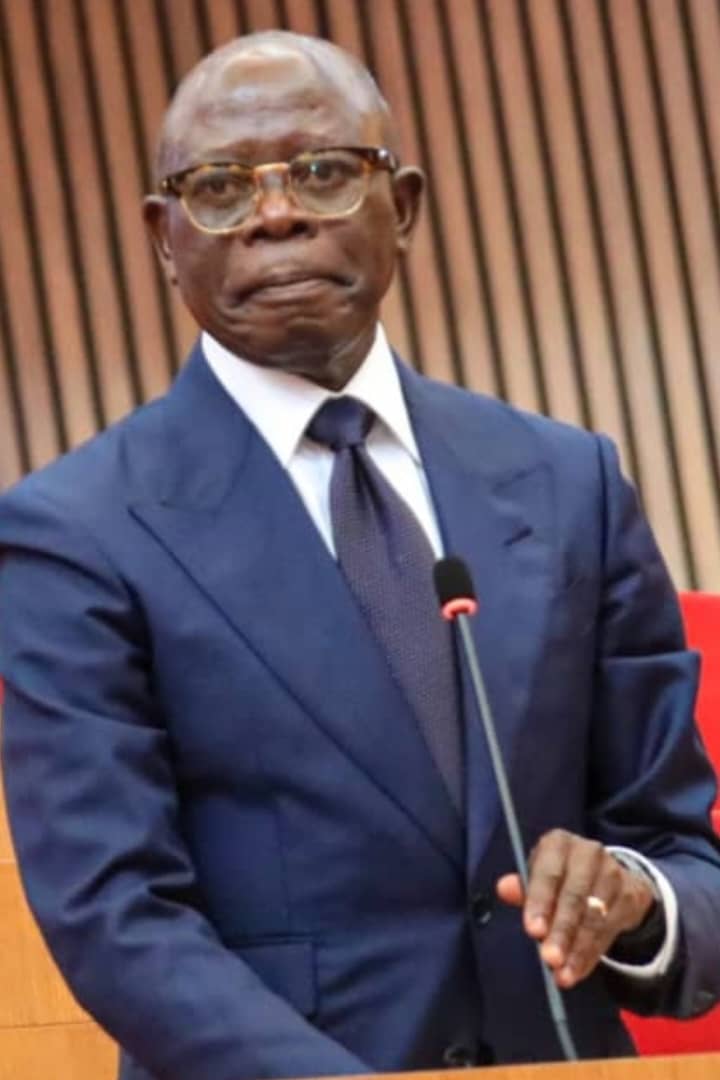
Daniel Eromosele Eulogize Adams Oshiomole as he turns 74 years
Today, I celebrate an exceptional leader, a fearless voice for the people, and a man whose life has remained a symbol of courage, sacrifice, and unwavering commitment to justice—Distinguished Comrade Senator Adams Aliu Oshiomhole.

Your journey has been nothing short of inspiring. From your days as a vibrant labour leader to your impactful tenure as the Executive Governor of Edo State, and now as a respected Senator of the Federal Republic, you have consistently demonstrated what it means to serve with integrity, strength, and purpose. Your contributions to the growth of our nation and the development of Edo State remain indelible and deeply appreciated.
You have not only built structures and institutions but have also built people. I am personally a beneficiary of your leadership, your guidance, and your belief in empowering others. Your influence in my life has been profound, and I remain grateful for the opportunities and inspiration you have given me.
On this special day, I celebrate not just your achievements, but the man you are—resilient, principled, and ever committed to the progress of Nigeria and her people.

May this new year bring you renewed strength, greater wisdom, good health, and more remarkable accomplishments. May your legacy continue to shine brighter with each passing year.
Happy Birthday, sir. Wishing you many more fruitful and impactful years ahead.
celebrity radar - gossips
Accolades to Empress Genevieve Wining as she Celebrate birthday in Grand style

Accolades to Empress Genevieve Wining as she Celebrate birthday in Grand style
Emmanuel Clement
Vilnius, Lithuania – The Grand Hotel Vilnius will host a grand birthday celebration in honor of Her Majesty The Empress Genevieve Wining of the United Kingdom of Atlantis (UKA) on April 4th, 2026.
The four-day event promises to be an extravagant affair, marking the special birthday of Empress Genevieve Wining. The celebration will take place at the prestigious Grand Hotel Vilnius, Lithuania, renowned for its luxurious ambiance and exceptional service.

According to the event flyer, the birthday celebration will be a spectacular occasion, fitting for an empress. Guests can expect an elegant setting adorned with golden accents, sparkling champagne, and festive decorations, creating a regal atmosphere befitting the occasion.
The Empress Genevieve Wining of UKA is expected to grace the event, which will include various festivities and celebrations in her honor. The occasion aims to bring together dignitaries, followers, and guests to commemorate the empress’s birthday with grandeur and joy.
For media inquiries, accreditation, or further information about the birthday celebration of The Empress Genevieve Wining of UKA, please contact the event organizers.
Courtesy of His Excellency Emperor Prof. Solomon Wining. UKA
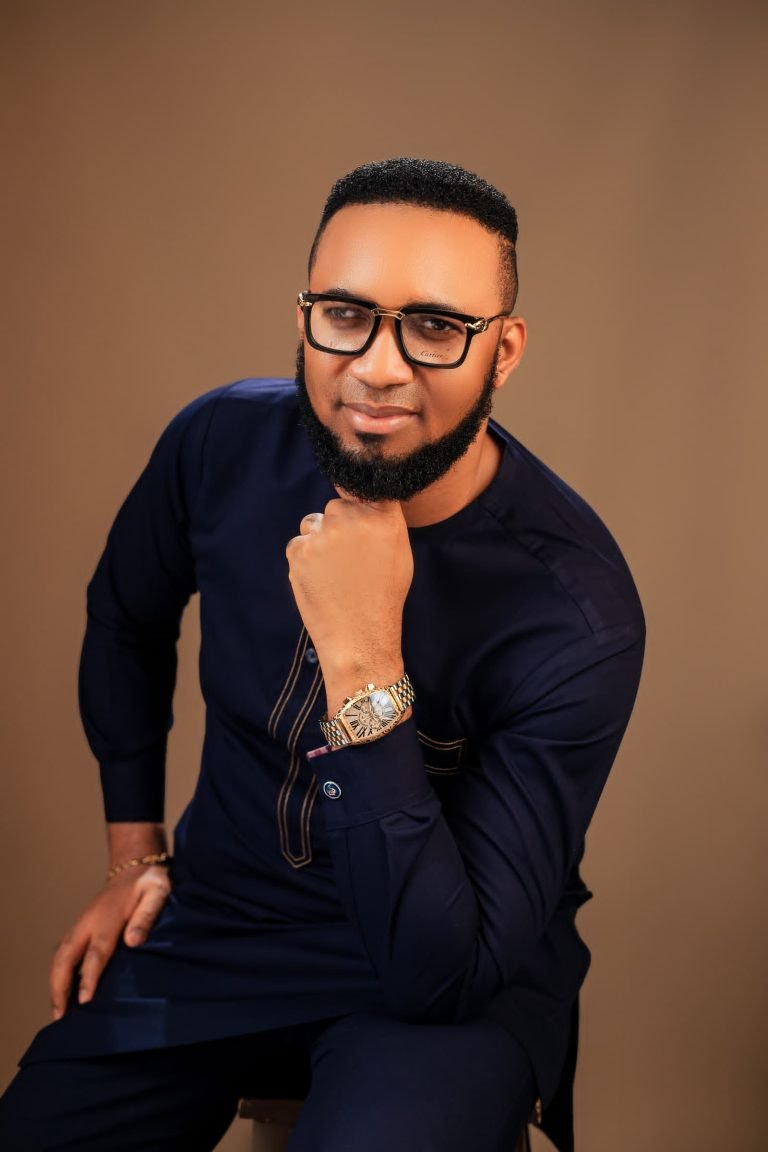
Today, Dr. Chris Okafor turns a year older
~By Sunday Adeyemi
It is widely acknowledged that the exceptional Dr. Chris Okafor, a man of great character, always celebrates his birthday on April 4th, and in recognition of this occasion, I am inspired to write this special tribute to honor him.
Today marks a momentous occasion as we commemorate the birthday anniversary of Dr. Chris Okafor, a rare gem, a perfect gentleman, and the revered founder of Grace Nation Church, aka Liberation City.
Without reservation, this versatile and dependable Oracle foundry has consistently proven itself worthy of the accolades bestowed upon it on this notable anniversary.
Let it be reiterated that Dr. Chris Okafor is a leader known for his generosity and commitment to humanity’s welfare and advancement. The special gifts donated recently to widows and widowers within and outside the church are a testament to his exceptional leadership.
Your reputation as an outstanding and authentic man of God is evident in your exceptional goodwill and philanthropic endeavors.
Your dedication and perseverance have yielded impressive results, and numerous people, including myself, are justifiably proud of the remarkable work you are doing.
You have consistently exemplified outstanding leadership in the Christian community, demonstrating the profound impact of your role as a gift from God to humanity. I firmly believe this to be true.
Here’s to a year of productivity, success, and happiness. Congratulations and warm wishes on your birthday, sir.
Sunday Adeyemi
Your Son


-

 society7 months ago
Religion: Africa’s Oldest Weapon of Enslavement and the Forgotten Truth
-

 news4 months ago
WHO REALLY OWNS MONIEPOINT? The $290 Million Deal That Sold Nigeria’s Top Fintech to Foreign Interests
-

 society6 months ago
“You Are Never Without Help” – Pastor Gebhardt Berndt Inspires Hope Through Empower Church (Video)
-

 celebrity radar - gossips2 months ago
Dr. Chris Okafor Returns with Power and Fire of the Spirit -Mounts Grace Nation Altar with Fresh Anointing and Restoration Grace on February 1, 2026
You must be logged in to post a comment Login
You must log in to post a comment.