
Politics
Political Terrorism in Disguise: How Tinubu and the APC Regime Are Destroying Nigeria (OPINION)

Political Terrorism in Disguise: How Tinubu and the APC Regime Are Destroying Nigeria (OPINION)
By George Omagbemi Sylvester
In every functioning democracy, political parties are expected to act as agents of progress, social development and economic upliftment. However, what we have witnessed in Nigeria since the All Progressives Congress (APC) took over in 2015, and particularly under the current presidency of Bola Ahmed Tinubu, is nothing short of calculated political and economic terrorism against the Nigerian people. It is time to call a spade a spade: supporters and defenders of the APC and Tinubu are enabling a regime that is choking the life out of the Nigerian state, destroying livelihoods and plunging millions into multidimensional poverty.
This is not an exaggeration. It is a fact-based analysis of a devastating political reality.
The Legacy of Ruin Since 2015
Under the APC, Nigeria has experienced a historic economic collapse. According to the National Bureau of Statistics (NBS), over 133 million Nigerians are now living in multidimensional poverty as of 2022, a staggering increase from roughly 70 million in 2015. This includes not only income poverty, but also lack of access to healthcare, education and clean water/basic human rights.
The inflation rate stood at 33.69% in April 2025, the highest in over two decades and food inflation reached an unbearable 40.53%. Even staple foods like rice, garri, yam and bread are becoming luxuries. The naira has collapsed to ₦1,500/$ in the parallel market, despite multiple promises to stabilize the economy. These are not random economic mishaps. They are the results of deliberate and reckless policies that benefit a corrupt elite while ordinary Nigerians are strangled by hunger, joblessness and despair.
Political and Economic Terrorism Defined
Terrorism is commonly defined as the use of violence or coercion to instill fear for political ends. When a political party or regime consistently impoverishes its citizens, muzzles dissent, manipulates the judiciary, rigs elections, loots public funds and weaponizes institutions against the people, what else can we call it if not state-sponsored terrorism?
Economic terrorism occurs when those in power deliberately sabotage the economic well-being of their people for personal or political gain. APC policies from the arbitrary fuel subsidy removal without any safety net, to the disastrous naira redesign policy that paralyzed the informal economy; fit this definition perfectly.
Dr. Obadiah Mailafia, former Deputy Governor of the Central Bank of Nigeria, once said:
“What is happening in Nigeria is not normal governance. It is a form of political and economic warfare against the Nigerian people.”
Supporters of this regime are therefore not innocent bystanders. They are collaborators in the oppression of over 200 million people.
Tinubu’s Travesty of Leadership
President Bola Tinubu assumed office in May 2023 under a cloud of controversy and allegations. His electoral victory was contested nationwide and criticized by international observers. Former U.S. Ambassador to Nigeria, John Campbell, noted that the 2023 election was “deeply flawed” and “failed to meet the expectations of a democratic process.”
Since assuming power, Tinubu has spent more time abroad than at home, squandering millions of dollars on foreign trips while Nigerians sleep hungry. A staggering ₦10 billion was spent on solar panels for the Aso Rock Villa amid epileptic national grid supply. How do we reconcile this with the fact that over 70% of Nigerians live without steady electricity?
In March 2024, it was revealed that the federal government allocated ₦15 billion for the renovation of the Vice President’s residence. Yet, universities remain underfunded, healthcare is in shambles and ASUU strikes loom.
Is this not economic sabotage at the highest level?
Defenders of Tyranny: The New Faces of Terrorism
Those who continue to support and defend this administration, despite the glaring evidence of its failure, are not simply partisan loyalists but they are enablers of oppression, agents of poverty and defenders of a system that is hostile to human dignity. They are no different from accomplices to armed robbers.
Professor Chidi Odinkalu, former Chairman of the National Human Rights Commission, once remarked:
“The worst kind of oppression is when those who are suffering become the cheerleaders of their own oppressors.”
Defenders of Tinubu and the APC fall squarely into this tragic category. They demonize critics, rationalize incompetence and gaslight an entire population suffering under a failed state.
Corruption as a Weapon of Control
Nigeria’s Auditor-General reports over ₦20 trillion unaccounted for in government spending between 2015 and 2023. Tinubu’s government continues the tradition of unbridled corruption. Ministers live like monarchs while civil servants are owed months of salaries. Oil theft has become institutionalized and subsidy scams remain unpunished.
Meanwhile, whistleblowers are silenced, opposition figures are harassed and the media is under attack. The EFCC, DSS, and police have become tools of intimidation. This is not democracy. It is an authoritarian kleptocracy wearing democratic makeup.
The International Community Watches in Disbelief
The international community has not been silent. The U.S. District Court ruling in 2024 compelled the FBI and DEA to release documents linking Bola Tinubu to alleged drug trafficking operations in the 1990s. While the government continues to deny and dismiss these allegations, the implications for Nigeria’s image are catastrophic.
Renowned African intellectual, Professor Patrick Lumumba, warned:
“Any nation that allows criminals to govern its affairs must prepare for the funeral of its democracy.”
Indeed, under Tinubu and the APC, Nigeria is attending its own political funeral, dressed in the garb of poverty, injustice and widespread hopelessness.
Final Note: The Time to Speak Is Now
Nigeria cannot afford the luxury of silence anymore. Every day spent under APC rule is another day closer to total collapse. Defenders of this regime are not just misguided, they are collaborators in a grand national heist.
They are political and economic terrorists.
And just like Boko Haram and bandits who destroy with guns, these ones destroy with policies, silence, and complicity. Their weapons are not bullets, but budgets; not bombs, but lies; not grenades, but corruption. And the result is the same: pain, death and national ruin.
The words of Martin Luther King Jr. ring true:
“Our lives begin to end the day we become silent about things that matter.”
Let us not be silent. Let us name and shame. Let us call them what they are.
This is not opposition for opposition’s sake. This is a fight for Nigeria’s soul.
If Nigeria must live, the political terrorists killing it must be held accountable, one by one.





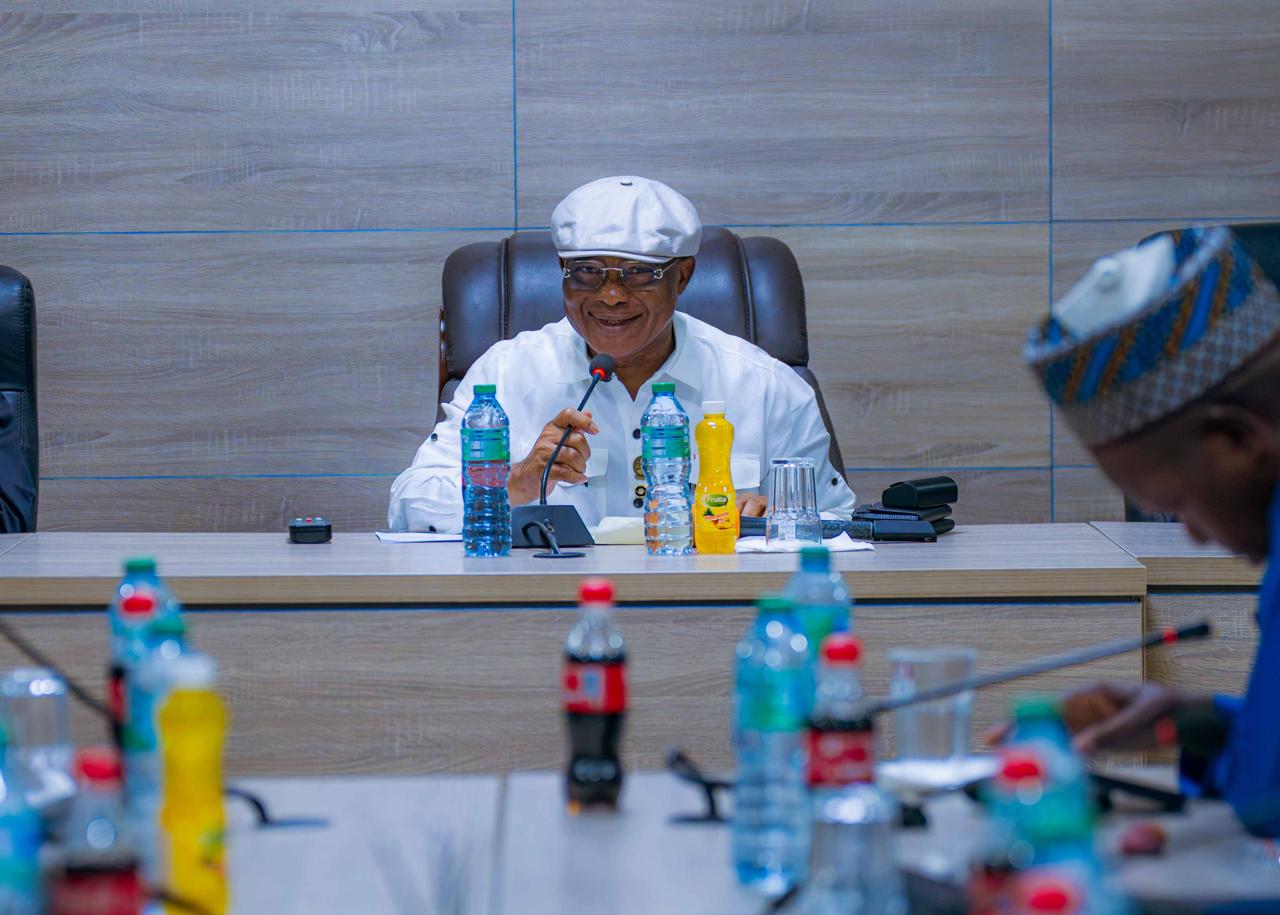
*Renewed Hope Ambassadors Step Into the Next Phase
Fresh from the successful APC 2026 National Convention, the Renewed Hope Ambassadors National, Zonal, and State leadership gathered in Abuja over the weekend, for its fourth strategic meeting, setting the tone for nationwide grassroots activation ahead of 2027.
Chaired by Governor Hope Uzodinma (Imo State) the Director General and National Coordinator of the Renewed Hope Ambassadors, alongside Deputy Director-General, Governor Uba Sani of Kaduna State, and Governor Inuwa Yahaya of Gombe State as Secretary, the session reinforced one clear direction: One Party. One Message. One Mobilization whilst also laying out a strategic roadmap for the activation of the network across all communities in Nigeria.
Backed by the strength of 31 APC-led states, the Renewed Hope Agenda is taking Bola Ahmed Tinubu’s message of progress and reform to every corner of Nigeria.
From bold economic restructuring to initiatives like NELFUND, the increase in the national minimum wage from ₦30,000 to ₦70,000, and strategic investments in critical sectors, including PNiCGI, the mission remains clear: helping Nigerians understand both the purpose and the progress of the Renewed Hope vision.
This is coordination at scale. This is grassroots engagement with purpose. This is the next phase of Renewed Hope with One Party, One Message, and One Mobilisation framework
#RenewedHopeAmbassadors #APC #WeAreAPC


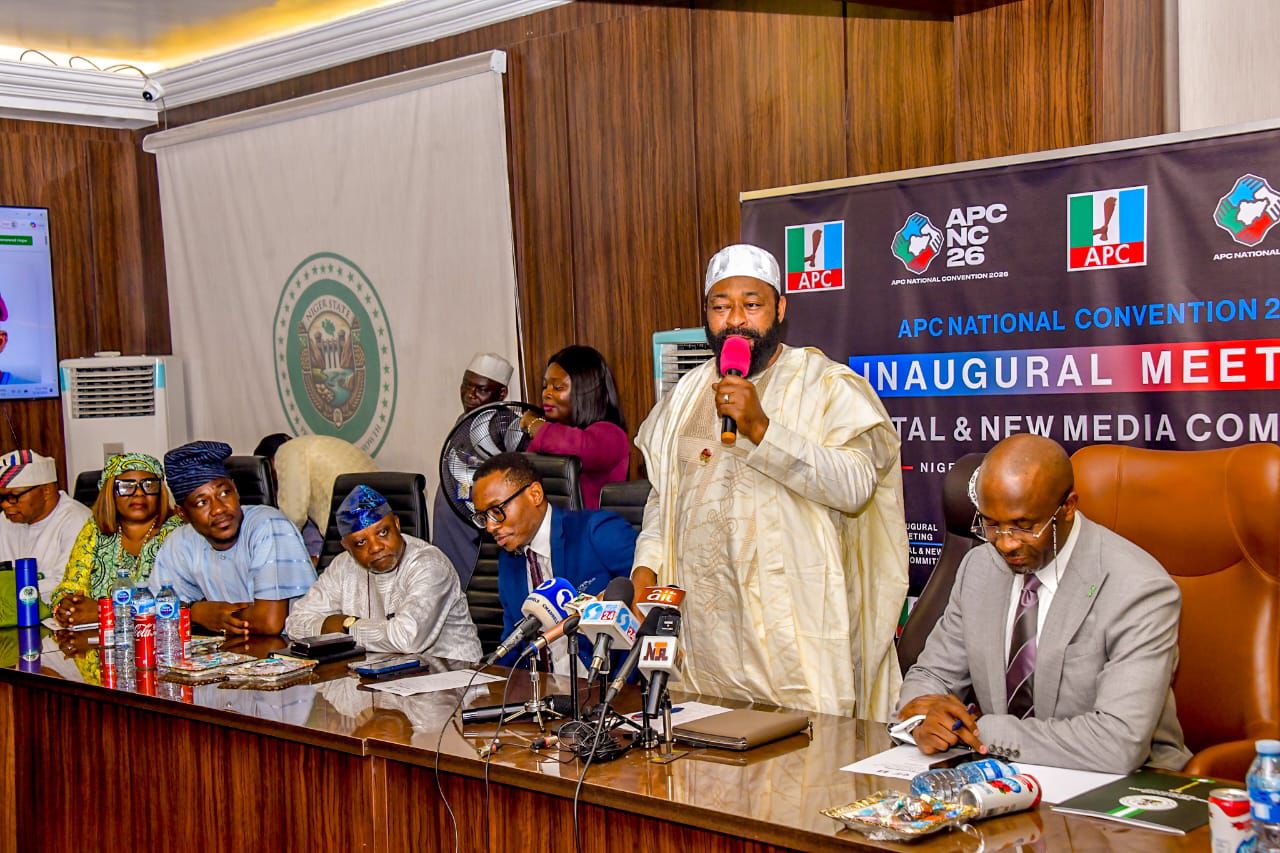
Governor Bago Inaugurates APC Digital Media Sub-Committee Ahead of National Convention.
Governor Umaru Bago has inaugurated the Digital Media Sub-Committee for the forthcoming National Convention of the All Progressives Congress (APC), scheduled to hold on March 27 and 28, 2026 in Abuja.
Chairing the sub-committee, Governor Bago tasked members with the responsibility of effectively communicating the party’s manifesto to the public.
He emphasized the need to leverage social media platforms to highlight the achievements and ongoing efforts of President Bola Ahmed Tinubu, noting that communication gaps have posed challenges that must now be decisively addressed.
The Co-Chair of the sub-committee, Hon. Benjamin Kalu, Deputy Speaker of the House of Representatives, echoed the Governor’s position, urging members to project the activities of both the party and the government to a broader audience.
He called for a deliberate and coordinated effort to showcase the party’s achievements and policy direction, stressing the importance of shaping a compelling and consistent narrative across all digital platforms.
Delivering a presentation to the committee, Otega Ogra, SSA to the President on New Media, who serves as Secretary of the sub-committee, outlined strategic focus areas to guide the team’s operations.
His presentation highlighted communication priorities and actionable steps to achieve the committee’s mandate and strengthen the party’s digital engagement.


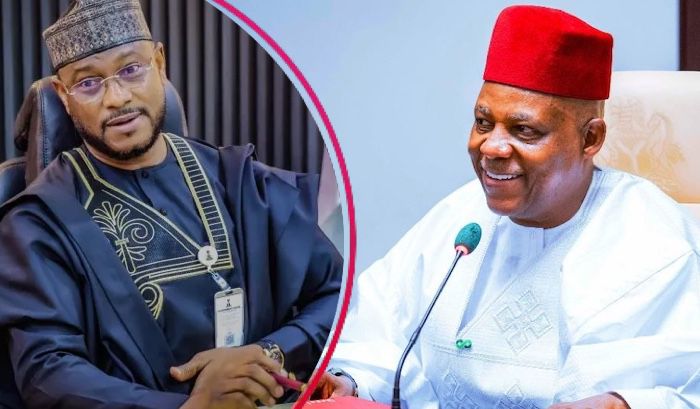
VP Shettima Set to Lead Delegation to Zamfara as Governor Dauda Lawal Formally Joins APC
The Zamfara State chapter of the All Progressives Congress (APC) has finalized plans to receive Vice President Kashim Shettima for the formal defection and reception of Governor Dauda Lawal into the ruling party, scheduled to take place on Tuesday.
State APC Chairman, Tukur Danfulani Maikatako, disclosed this during a high-level stakeholders’ meeting held in Gusau, the state capital. He noted that the Vice President would be joined by the party’s national leadership to mark what he described as a landmark political realignment in the state.
Maikatako expressed the party’s excitement over Governor Lawal’s return, recalling that Zamfara had historically been an APC stronghold and that the Governor was previously a bona fide member of the party before his earlier exit.
“We all know that Zamfara has long been one of the APC’s stronghold states, where the defected Governor was once a bona fide member. Now that he has decided to return home, having been satisfied that the APC remains his second choice after the one he left for obvious reasons,” Maikatako stated.
The Chairman called on all party faithful across the 147 wards in the state’s 14 local government areas to turn out en masse to honour the Vice President’s visit. He emphasized that the event was strategically positioned to bolster the party’s popularity and strengthen its structures ahead of the 2027 general elections.
In a strong appeal for unity, Maikatako urged members to set aside all factional tendencies, stressing that the APC remained one political family with shared goals, particularly the ambition to make Zamfara and Nigeria great again.
Echoing similar sentiments, a former state APC Chairman, Lawal M. Liman, appealed to members to cascade the message to their wards and local government areas. He reinforced the need for cohesion, noting that the party’s collective strength would be critical to achieving success in future elections.

All eyes are now on Gusau as the ruling party prepares for a high-profile political gathering expected to further consolidate its influence in Zamfara State.


-

 society6 months ago
Religion: Africa’s Oldest Weapon of Enslavement and the Forgotten Truth
-

 news4 months ago
WHO REALLY OWNS MONIEPOINT? The $290 Million Deal That Sold Nigeria’s Top Fintech to Foreign Interests
-

 society6 months ago
“You Are Never Without Help” – Pastor Gebhardt Berndt Inspires Hope Through Empower Church (Video)
-

 celebrity radar - gossips2 months ago
Dr. Chris Okafor Returns with Power and Fire of the Spirit -Mounts Grace Nation Altar with Fresh Anointing and Restoration Grace on February 1, 2026