
Politics
Power to Poison: How Toxic Politics Is Destroying Nigeria’s Democracy and Future

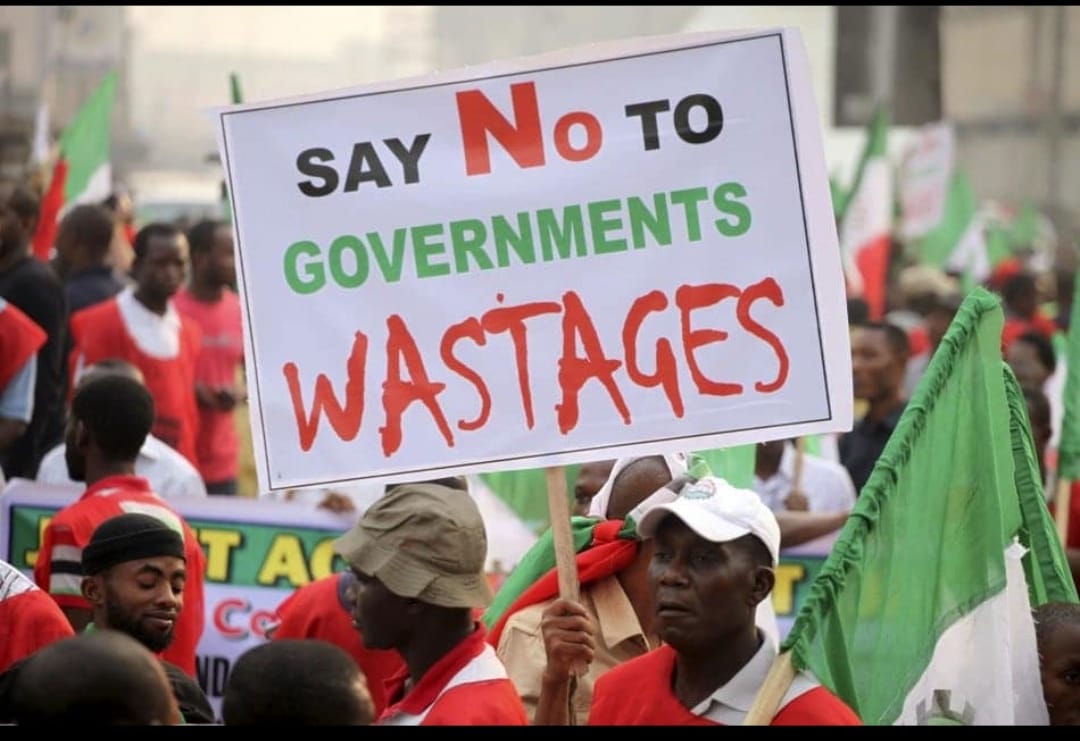
Power to Poison: How Toxic Politics Is Destroying Nigeria’s Democracy and Future
By George Omagbemi Sylvester
Nigeria’s political landscape in 2025 is best described as a battlefield of corruption, impunity, and institutional decay. Toxic politics has infested all arms of government—from the executive to the legislature and the judiciary—crippling national development and eroding public trust. Power is no longer a tool for service; it has become a weapon for suppression, self-enrichment, and systemic injustice. As the nation grapples with economic stagnation and widespread insecurity, the conduct of its political elite continues to alienate the populace and entrench hopelessness.

Executive Overreach: A Democracy Under Siege
In March 2025, President Bola Ahmed Tinubu stunned the nation by declaring a state of emergency in Rivers State, Nigeria’s oil-producing heartland. The federal government suspended the duly elected governor, deputy governor, and all members of the state assembly, citing uncontained pipeline vandalism and militant activities. In their place, a retired vice admiral was appointed to oversee the state’s affairs for six months.
This executive action, seen by many as a constitutional overreach, drew swift condemnation from legal experts, civil society, and opposition leaders. The Nigerian Bar Association (NBA) described the act as “a dangerous usurpation of democratic authority and a slide toward authoritarianism.” Legal analysts warned that allowing the president to unilaterally suspend elected officials under vague security pretenses sets a terrifying precedent—one where democracy can be dismantled on a whim.

The international community, including the African Union and ECOWAS, expressed concern over the erosion of Nigeria’s federal structure. While Tinubu’s administration defended its move as necessary to restore order, many see it as a political maneuver to neutralize dissent in a state known for opposition leanings.
The Rot in the Legislature: Corruption, Sexism, and Retribution
Toxicity in the legislative arm was on full display when Senator Natasha Akpoti-Uduaghan accused Senate President Godswill Akpabio of sexual harassment and political intimidation. Rather than addressing the serious allegations, the Senate retaliated by suspending her for six months over unrelated claims of “disruptive behavior.” The timing of the suspension raised widespread suspicion, and critics described it as a blatant abuse of parliamentary power.
The suspension ignited protests across the country under the slogan “We Are All Natasha.” Women’s groups and human rights organizations condemned the Senate’s action as misogynistic and retaliatory, exposing the entrenched patriarchy within Nigeria’s highest lawmaking body. Despite boasting over 100 senators, only about 8% are women, a glaring statistic that reflects the systemic barriers to female political participation.
Meanwhile, numerous legislators continue to face allegations of budget padding, contract inflation, and illegal constituency project allocations—yet few have been held accountable. The legislature has become a sanctuary for corrupt elites, shielded by procedural immunity and partisan loyalty.
Judiciary on Trial: Corruption, Compromise, and Complicity
The judiciary, theoretically the last hope of the common man, has not been spared. In 2024, the National Judicial Council (NJC) sanctioned multiple judges—two were compulsorily retired for falsifying their ages, and two others suspended for bribery-related offenses. But these internal corrective measures have failed to cleanse the judiciary of its deep-seated corruption.
A damning report by the National Bureau of Statistics in collaboration with the United Nations Office on Drugs and Crime (UNODC) in late 2024 ranked the judiciary as Nigeria’s most corrupt institution. Judges were found to be the highest recipients of bribes, surpassing police officers and tax officials.
This perception is damaging not just for the judiciary but for the rule of law itself. Lengthy trial procedures, endless adjournments, and politically influenced verdicts have become the norm. In several high-profile corruption cases, suspects walked free due to “lack of evidence,” despite overwhelming public documentation and media investigations.
The Patience Jonathan Saga: Power, Privilege, and Injustice
In a disturbing episode that underscores Nigeria’s elite impunity, former First Lady Patience Jonathan reportedly had several of her aides imprisoned for six years over allegations of stealing her jewelry—items that, according to investigative reports, were themselves acquired from looted public funds.
These aides, held without fair trial or substantive evidence, were denied basic legal rights. It was only after a protracted legal battle and pressure from human rights organizations that the truth began to emerge: not only were the allegations fabricated, but the items in question were part of illicitly acquired assets linked to public funds looted during her husband’s administration.
This saga is not just a tale of personal vendetta—it is a chilling reminder of how power in Nigeria is often weaponized against the powerless. The victims were collateral damage in a broader culture of impunity, where the elite operate above the law while ordinary citizens suffer the consequences of their greed and abuse.
Economic Cost of Corruption: A Nation Bleeding
Nigeria’s economic woes are inseparable from its political corruption. The Anti-Corruption Agencies of Nigeria estimate that over $18 billion is lost annually to graft and financial crimes—an amount equivalent to nearly 4% of Nigeria’s GDP in 2022. The impact is felt across every sector: failing hospitals, underfunded schools, collapsed infrastructure, and rising poverty.
Notable scandals like the Malabu Oil deal, the $2.1 billion arms deal under former National Security Adviser Sambo Dasuki, and Diezani Alison-Madueke’s luxury asset seizures in the UK and US have become symbols of elite plunder. In 2025, the U.S. repatriated $52.88 million in assets linked to Alison-Madueke, including high-end real estate and a luxury yacht. While such recoveries are welcome, they are mere drops in an ocean of stolen wealth.
Anti-Corruption Battles: Justice or Just Optics?
The Economic and Financial Crimes Commission (EFCC) boasts over 1,000 convictions, but critics argue that many are token victories. The agency is frequently accused of being a political tool—swift to prosecute opposition figures but slow to act against allies of the ruling party.
Institutional weaknesses plague anti-corruption efforts. The EFCC and Independent Corrupt Practices Commission (ICPC) are underfunded, politically manipulated, and struggle with outdated laws. Most corruption trials stretch for years, with wealthy defendants exploiting legal loopholes and endless adjournments.
The Way Forward: Reforms or Ruin
To break the cycle of toxic politics, Nigeria must pursue deep institutional reforms. These include:
Judicial Independence: Secure tenure and adequate funding for judges, alongside digital case management systems to prevent manipulation and delay.
Legislative Accountability: Open parliament sessions, public access to legislative votes, and stringent asset declarations.
Executive Restraint: Clear constitutional limits on presidential powers, with stronger checks from state governments and civil society.
Civic Engagement: Mass civic education and support for independent media to foster public awareness and accountability.
International Partnerships: Continued collaboration with global agencies for asset tracking, prosecution, and repatriation.
Nigeria can draw lessons from countries like Botswana and Rwanda, which have significantly reduced corruption through technology-driven governance, transparent budgeting, and rigorous law enforcement.
A Nation at the Crossroads
Nigeria’s political class has turned public office into a theatre of toxic ambition and moral bankruptcy. The executive abuses power, the legislature is riddled with corruption, and the judiciary is compromised. This triad of dysfunction not only sabotages national progress but endangers the very fabric of the democratic state.
Only a united citizenry, armed with truth, vigilance, and civic action, can reclaim Nigeria from the grip of political decay. The time to act is now—before the last remnants of justice, equity, and accountability are completely extinguished.




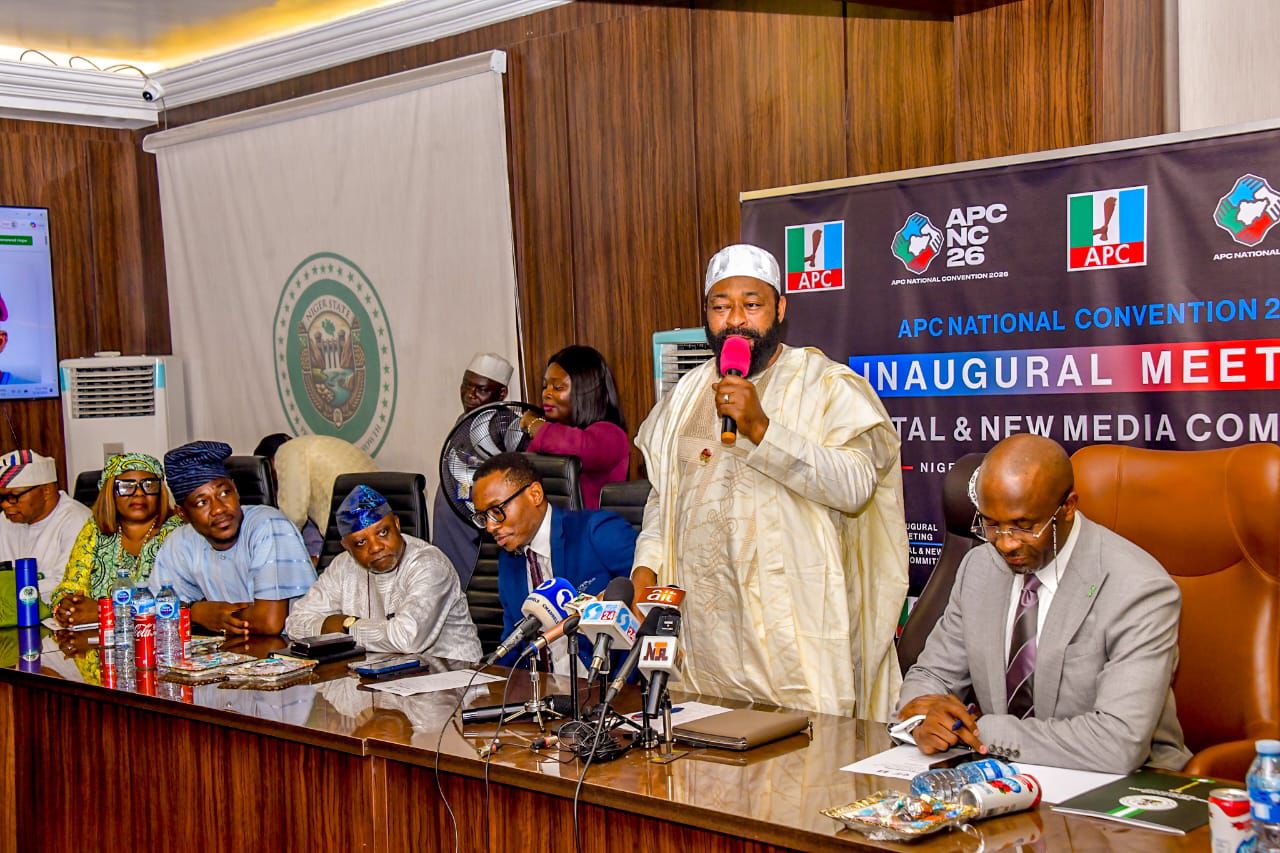
Governor Bago Inaugurates APC Digital Media Sub-Committee Ahead of National Convention.
Governor Umaru Bago has inaugurated the Digital Media Sub-Committee for the forthcoming National Convention of the All Progressives Congress (APC), scheduled to hold on March 27 and 28, 2026 in Abuja.
Chairing the sub-committee, Governor Bago tasked members with the responsibility of effectively communicating the party’s manifesto to the public.
He emphasized the need to leverage social media platforms to highlight the achievements and ongoing efforts of President Bola Ahmed Tinubu, noting that communication gaps have posed challenges that must now be decisively addressed.
The Co-Chair of the sub-committee, Hon. Benjamin Kalu, Deputy Speaker of the House of Representatives, echoed the Governor’s position, urging members to project the activities of both the party and the government to a broader audience.
He called for a deliberate and coordinated effort to showcase the party’s achievements and policy direction, stressing the importance of shaping a compelling and consistent narrative across all digital platforms.
Delivering a presentation to the committee, Otega Ogra, SSA to the President on New Media, who serves as Secretary of the sub-committee, outlined strategic focus areas to guide the team’s operations.
His presentation highlighted communication priorities and actionable steps to achieve the committee’s mandate and strengthen the party’s digital engagement.


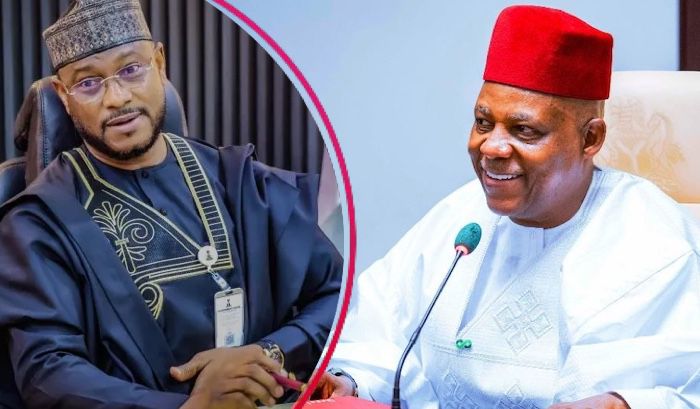
VP Shettima Set to Lead Delegation to Zamfara as Governor Dauda Lawal Formally Joins APC
The Zamfara State chapter of the All Progressives Congress (APC) has finalized plans to receive Vice President Kashim Shettima for the formal defection and reception of Governor Dauda Lawal into the ruling party, scheduled to take place on Tuesday.
State APC Chairman, Tukur Danfulani Maikatako, disclosed this during a high-level stakeholders’ meeting held in Gusau, the state capital. He noted that the Vice President would be joined by the party’s national leadership to mark what he described as a landmark political realignment in the state.
Maikatako expressed the party’s excitement over Governor Lawal’s return, recalling that Zamfara had historically been an APC stronghold and that the Governor was previously a bona fide member of the party before his earlier exit.
“We all know that Zamfara has long been one of the APC’s stronghold states, where the defected Governor was once a bona fide member. Now that he has decided to return home, having been satisfied that the APC remains his second choice after the one he left for obvious reasons,” Maikatako stated.
The Chairman called on all party faithful across the 147 wards in the state’s 14 local government areas to turn out en masse to honour the Vice President’s visit. He emphasized that the event was strategically positioned to bolster the party’s popularity and strengthen its structures ahead of the 2027 general elections.
In a strong appeal for unity, Maikatako urged members to set aside all factional tendencies, stressing that the APC remained one political family with shared goals, particularly the ambition to make Zamfara and Nigeria great again.
Echoing similar sentiments, a former state APC Chairman, Lawal M. Liman, appealed to members to cascade the message to their wards and local government areas. He reinforced the need for cohesion, noting that the party’s collective strength would be critical to achieving success in future elections.

All eyes are now on Gusau as the ruling party prepares for a high-profile political gathering expected to further consolidate its influence in Zamfara State.
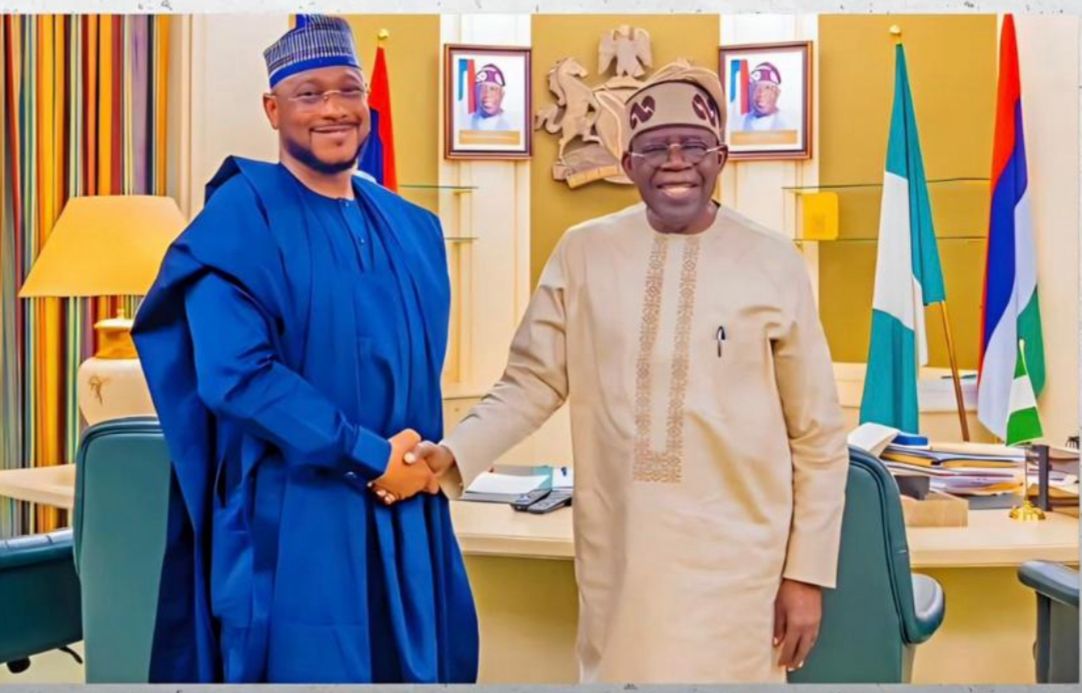
Governor Dauda Lawal Named Part of Presidential Delegation for Historic UK State Visit
Governor Dauda Lawal of Zamfara State has been named as a member of the presidential entourage that will accompany President Bola Ahmed Tinubu and First Lady Oluremi Tinubu on a historic two-day State Visit to the United Kingdom.
According to a statement from the Zamfara State Government House on Monday, the Governor will depart Abuja for the UK on Tuesday for the visit, which is scheduled to take place on March 18 and 19 at the invitation of the British Royal Family.

During the visit, King Charles III will host President Tinubu, the First Lady, and the Nigerian delegation at Windsor Castle, where they will view a special exhibition of Royal Collection items related to Nigeria. The Royal Family will also host a State Banquet in honour of the Nigerian guests on the evening of Wednesday, March 18.
The presidency has outlined that the purpose of the visit is to strengthen bilateral relations between Nigeria and the United Kingdom. President Tinubu is scheduled to hold talks with Prime Minister Keir Starmer, which are expected to lead to expanded bilateral discussions and the signing of Memorandums of Understanding covering trade, investment, defence, and cultural cooperation.
The President will also serve as the guest of honour at the Nigerian Modernism exhibition, which showcases contemporary art and culture, and will participate in a reception with Nigerian and British business leaders as well as members of the diaspora community.
The Zamfara State Government expressed confidence that Governor Lawal’s participation in the high-level delegation will provide valuable networking opportunities, opening significant prospects for investment and economic benefits for Zamfara State. The visit will also see Governor Lawal display his repertoire of knowledge on global policy and corporate governance and also pitch the Mineral and Farming rich state to potential investors during the bilateral meeting with the UK Prime Minister, Keir Starmer.


-

 society6 months ago
Religion: Africa’s Oldest Weapon of Enslavement and the Forgotten Truth
-

 news4 months ago
WHO REALLY OWNS MONIEPOINT? The $290 Million Deal That Sold Nigeria’s Top Fintech to Foreign Interests
-

 society6 months ago
“You Are Never Without Help” – Pastor Gebhardt Berndt Inspires Hope Through Empower Church (Video)
-

 celebrity radar - gossips2 months ago
Dr. Chris Okafor Returns with Power and Fire of the Spirit -Mounts Grace Nation Altar with Fresh Anointing and Restoration Grace on February 1, 2026