society
Prince Kazeem Eletu Odibo Foundation Berths, As Eletu Celebrates 40th Birthday In Lagos, Feb. 17, 2018
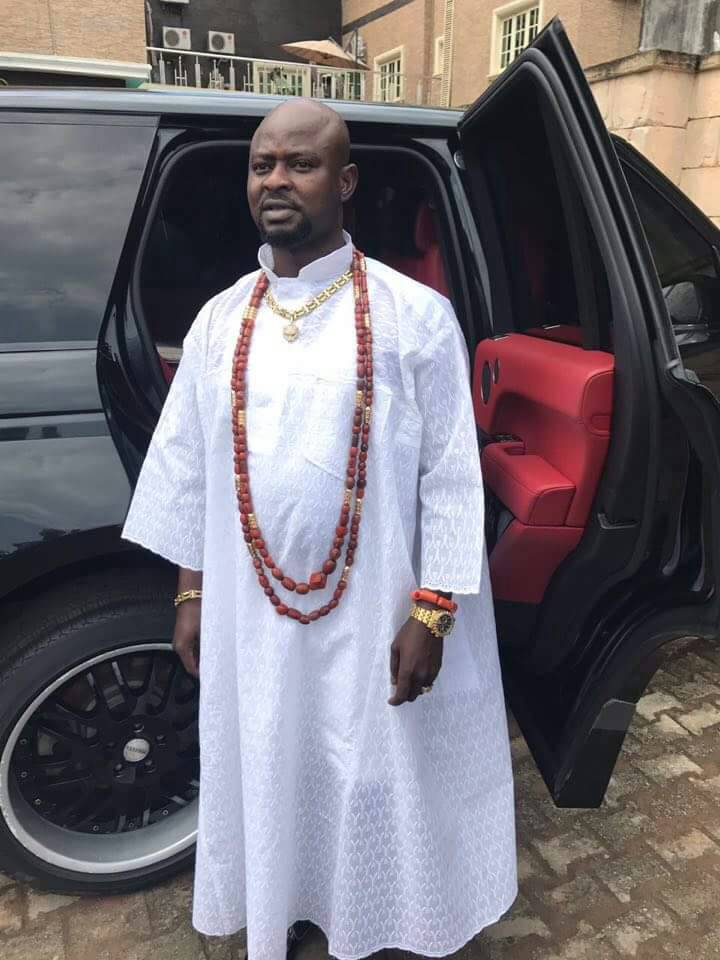
Come Saturday, February 17, 2018, drums will be rolled out with pomp and pageantry to celebrate the Founder and Chairman, Kazeem Royal Properties Limited, Amb. Dr. Prince Kazeem Eletu Odibo as he commemorates his 40th Birthday, at the Great Banquet Hall of Civic Centre, Victoria Island, Lagos.
This is even as the Prince Kazeem Eletu Odibo Foundation would be officially inaugurated amid the presence of eminent monarchs, envoys, career diplomats, academics, politicians, former and serving leaders at the Federal Level and across the States of the Federation, among others.
Ambassador (Dr.) Prince Kazeem was born on February 14, 1978.
In a statement on Sunday, the Executive Director of the Foundation and Chairman, Local Organising Committee of the event, Mr. Victor Gotevbe, expressed happiness over the berth of the Prince Kazeem Eletu Odibo Foundation, saying “the Foundation has come to alleviate poverty and foster the social and economic condition of the disadvantaged in our society.”
The statement read: “As we celebrate this monumental milestone of making the Prince Kazeem Eletu Odibo Foundation a reality, it is important to take a moment to appreciate the Almighty God who has made it possible for us in creating a positive change for a brighter and better tomorrow for the less privileged which is our Mission: To alleviate poverty and foster the social and economic condition of the disadvantaged in our society.
“Our Celebration is not so much a festivity but a solemn occasion to pause and recollect that our country, Nigeria since its independence undoubtedly shows that it is blessed with enormous natural and human resources but remains a paradox; with so many people living in poverty.
“Hence, it is a reminder to look ahead the mountains we must climb in bringing succour to the needy.
The Foundation is open to collaborations with other non-profits and charitable organizations as well as beneficial partnerships to ensure that the underserved communities in Nigeria are served.
“As we have entered a new year of philanthropy, we will keep on assessing the evolving needs of our people. To this end, our Board of Directors will continue to welcome input and fresh ideas. We pledge to utilize our resources to fulfil a vision that creates an enabling Society that would foster equal rights to opportunities.
“We do not intend to SAVE THE WORLD but to constantly strive to achieve landmarks and extend our reach throughout Nigeria and beyond.”
About Prince Kazeem Eletu Odibo Foundation
Gotevbe, who is also the Publisher/Editor, Diplomatic Watch, major media partner of the event, revealed that, “The Prince Kazeem Eletu Odibo Foundation is a not for profit organization working to eradicate poverty through education and personal development programmes including school improvement, access to quality education and community motivation and participation predominantly in some less privileged areas across Nigeria.
“The foundation is an independent and privately supported charity, with a Vision to create an enabling Society that would foster equal rights to opportunities.
“Among other things, the Prince Kazeem Eletu Odibo Foundation seeks: To helping students continue their studies by providing scholarships, grants and educational materials to students for better success in school education; To assist young people through employment skills development with particular emphasis on children from deprived backgrounds; To engage in youth and women empowerment programmes, vocational trainings, skill acquisition and career talks;To set up old age homes and to look after and assist persons who are unable to look after themselves due to poverty, disease and other infirmities; To establish and manage aid programmes providing relief and help to the needy and the poor during calamities alleviating human suffering from catastrophes; To create an environment for the integration of sports particularly football (soccer) as a vehicle for positive social change; To provide sponsorship to individuals pursuing artistic and performing arts (musical) career; to inspire creativity and cultivate emerging talent and To assist in the arts where the goal is to educate and expose the Nigerian public on Nigerian cultures.”
Meanwhile, Managing Director of the Foundation, Mrs. Bolanle Adebayo, who would be on ground to welcome guests at the epoch-making event, stated that, “in order to accomplish its goals, the Prince Kazeem Eletu Odibo Foundation shall frequently join efforts with organizations, institutions and individuals; provide financial support, awards scholarships and prizes on a competitive basis; organize charity events; assist in the organization of symposia, conferences, seminars, exhibitions etc.”
Who Is Prince Kazeem Eletu Odibo?
Ambassador Dr. Prince Kazeem was born on February 14, 1978 in Lagos into the Eletu-Odibo family; a royal family that historically served as the Chief Kingmaker who crowned the Oba of Lagos.
This was unknown to him for several years that he was born with a silver spoon. Prior to when his life took a new turn to prosperity, he grew up in a suburb called Ajegunle where he worked as a bus driver, a bus conductor and even a scanvenger.
He has attended numerous educational training programmes both within and outside the country. He has shown over the years that he is a dynamic, result-oriented leader with a strong track record of performance in his enterprises. Amb. Dr. Prince Kazeem as Founder and Chairman of Kazeem Royal Properties Limited, has done a lot of remarkable projects in the real estate sector and this earned him the City People Magazine 2017 Real Estate Award as Most Outstanding Royal Family In Property Award.
Philanthropy is associated with Amb. Dr. Prince Kazeem through the Prince Kazeem Eletu-Odibo Foundation.
His kindheartedness is visible amongst many individuals whom he has touched; he personally likes putting smiles on people’s faces irrespective of their tribe, ethnicity, creed or language. As a matter of fact, he singled-handedly, constructed many roads at Osapa London in Lekki axis in Lagos state following their dilapidated state.
Today, Osapa London is a prime area and has very expensive properties situated in it. He has made several donations to many groups, civil societies including the Rotary International and a lot of individuals, running into several millions of naira.
He also set up the Prince Kazeem Eletu Royal Football Academy in order to give young people the opportunity to grow and showcase their talents.
A good number of them are now playing outside the shores of the company. Music is one thing that could not escape his attention; the Kazeem Royal Music Empire does justice to this. Some artistes have been signed under this label.
His philanthropic lifestyle has attracted a lot of awards from various quarters such as the Nigerian Army, Ecowas Youth Organization, the Yoruba council and the Nigerian youths just to mention a few.
He recently was awarded an honorary Doctorate and United Nations Ambassadorial award in Washington DC, USA on November 18, 2017.
Amb. Dr. Prince Kazeem is married with children.
Politics
Customs at the Crossroads: When Lawmakers Look Away and the Executive Looks Aside
By Dr. Bolaji O. Akinyemi
In a democracy, legislative oversight is the scalpel that cuts through deceit, inefficiency, and corruption in public institutions. It is the people’s last institutional shield against abuse of power. But what happens when that shield becomes a shelter for the very rot it is meant to expose? And what happens when the Executive arm, whose duty is to supervise its agencies, pretends not to see?

The unfolding drama between the National Assembly and the Nigeria Customs Service (NCS) reveals more than a policy dispute. It exposes a dangerous triangle of confusion, complicity, and economic sabotage. At stake is not only the rule of law but the survival of an economy already gasping under inflation, a weak naira, and suffocating costs of living.
The House Talks Tough
In June 2025, Nigerians saw a glimpse of legislative courage when the House of Representatives Committee thundered at Customs:
> “Nigerian Customs Service, by June 30, must not collect CISS again. You are to collect only your 4% FOB assigned by the President. Even the 7% cost of collection you currently take is illegal—it was an executive fiat of the military, not democratic law. Any attempt to continue these illegal collections will be challenged in court. The ‘I’s have it.”
The voice was firm, the ruling decisive. Nigerians expected a turning point.
But the righteous thunder of the House was quickly muffled by the Senate’s softer tone, which suggested not the enforcement of the law but a readiness to bend it.
Senate: Oversight or Escape Route?
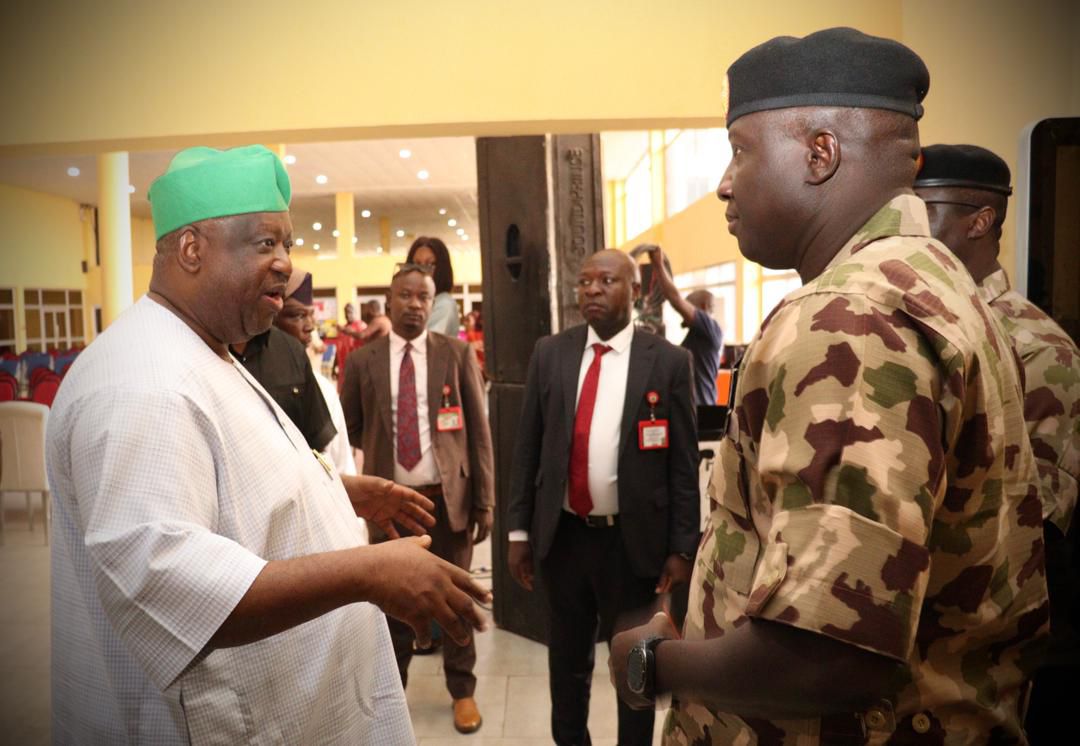
At a Senate Customs Committee session, Senator Ade Fadahunsi admitted openly that Customs has been operating illegally since June 2023. Yet rather than demand an end to illegality, he extended a lifeline to Comptroller-General Bashir Adeniyi:
> “If we come back to the same source… the two houses will sit together and see to your amendment so you will not be walking on a tight rope.”
But should Adeniyi be handed a loose rope while Nigeria’s economy hangs by a thread?
Instead of accountability, the Senate Customs Committee floated adjustments that would make life easier for Customs. The nation was given hints about fraudulent insurance and freight data, but instead of sanctions, what we saw was a search for escape routes. This is not oversight—it is overlook.
Smuggling and Excuses
The Senate Committee also lamented cross-border smuggling—Nigerian goods like cement flooding Cotonou, Togo, and Ghana at cheaper prices than in Nigeria. Senator Fadahunsi blamed the Central Bank’s 2% value deposit for encouraging the practice.
But where are the Senate’s enforcement actions—compliance checks, stiffer sanctions, cross-border coordination? None. The result is predictable: smugglers prosper, reserves bleed, and ordinary Nigerians pay more for less.
A Bloated Customs Budget
The Service’s 2024 capital allocation ballooned to ₦1.1 trillion from ₦706 billion. Instead of channeling these resources into modern trade systems, Customs is expanding empires of frivolity—such as proposing a new university despite already having training facilities in Gwagwalada and Ikeja that could easily be upgraded.
Oversight is not an afterthought; it is the legislature’s constitutional duty. To see waste and illegality and yet propose amendments that would legalise them is to turn oversight into overlook.
Customs has about 16,000 staff, yet many remain poorly trained. Rather than prioritise capacity building, the Service is busy building staff estates in odd locations. How does Modakeke—an inland town with no border post—end up with massive Customs housing projects, while strategic border towns like Badagry, Idiroko, and Saki remain neglected? Is Bashir Adeniyi Comptroller-General of Customs—or Minister of Housing?
The 4% FOB Levy: A Policy Blunder
The central controversy is the Federal Government’s plan to replace existing port charges with a new 4% Free-On-Board (FOB) levy on imports.
Nigeria is an import-dependent nation. This levy will instantly hike the costs of cars, spare parts, machinery, and raw materials—crippling industries and punishing consumers.
Already, the consequences are biting:
A 2006 Toyota Corolla now costs between ₦6–9 million.
Clearing agents who once paid ₦215,000 for license renewal must now cough out ₦4 million.
New freight forwarder licenses have jumped from ₦600,000 to ₦10 million.
Customs claims the revenue is needed for its modernisation programme, anchored on a software platform called B’Odogwu. But stakeholders describe this so-called “Odogwu” as epileptic—if not comatose. Why commit trillions to a ghost programme that will be obsolete by January 2026, when the Nigerian Revenue Service is set to take over Customs collections?
Industry Raises the Alarm
The Manufacturers Association of Nigeria (MAN) has warned that the levy will worsen inflation, disrupt supply chains, and hurt productivity.
Lucky Amiwero, President of the National Council of Managing Directors of Licensed Customs Agents, calls the levy “economically dangerous.” His reasoning is straightforward:
The 4% FOB levy is much higher than the 1% CISS it replaces.
Peer countries like Ghana maintain just 1%.
The new levy will fuel inflation, raise the landed costs of goods, and destabilise the naira.
He also revealed that the Customs Modernisation Act, which introduced the levy, was passed without Senate scrutiny or meaningful stakeholder consultation. He estimates that the levy could add ₦3–4 trillion annually to freight costs—burdens that will be transferred directly to consumers.
Who Is Behind the “Odogwu” Masquerade?
The haste to enforce this levy, despite its looming redundancy, raises disturbing questions. Who benefits from the “Odogwu” project draining trillions? Why the rush, when NRS will take over collections in a few months?
This masquerade must be unmasked.
The Price Nigerians Pay
For ordinary Nigerians, this policy translates into one thing: higher prices. Cars, manufactured goods, and spare parts are spiraling beyond reach. A nation struggling with inflation, unemployment, and a weak currency cannot afford such reckless experiments.
So, while the Senate looks away, the Executive cannot look aside.
The Executive Cannot Escape Blame.
It is easy to focus on the failings of the legislature. But we must not forget: the Customs Service is an agency of the Federal Ministry of Finance, under the direct supervision of the Honourable Minister of Finance, Mr. Wale Edun.
If Customs is breaking the law, wasting resources, or implementing anti-people policies, the buck stops at the Executive’s table. The Minister of Finance is Chairman of the Customs Board. To fold his hands while the Service operates in illegality is to abdicate responsibility.
History gives us a model. In 1999, the Minister of State for Finance, Nenadi Usman, was specifically assigned to supervise Customs and report directly to the President. Meanwhile, Ngozi Okonjo-Iweala focused on broader fiscal and economic policies. That division of responsibility improved accountability. Today, the absence of such an arrangement is feeding impunity.
President Tinubu and his Finance Minister must act decisively. Oversight without executive will is a dead letter.
A Call to Accountability
The truth is stark:
Customs has been operating illegally since June 2023 to the Senate’s own confession.
The 4% FOB levy will deepen inflation and worsen economic hardship.
The Ministry of Finance bears ultimate responsibility for Customs’ conduct.
Until importing and consuming, Nigerians demand accountability—of the Comptroller-General, the Senate, and above all, the Finance Ministry—this bleeding will continue.
Nigerians deserve better. They deserve a Customs Service that serves the nation, not a privileged few. They deserve a House that enforces its resolutions, not one that grandstands. They deserve a Senate that upholds the law, not one that bends it. And above all, they deserve an Executive that does not look aside while illegality thrives under its ministry.
Only public pressure can end this indulgence. If Nigerians keep silent, we will keep paying the price—in higher costs, weaker currency, and a sabotaged economy.
Citizens’ Charge: Silence is Not an Option
Fellow Nigerians, the Customs crisis is not a drama for the pages of newspapers—it is a burden on our pockets, our businesses, and our children’s future. Every illegal levy is a tax on the poor. Every abandoned oversight is an open invitation to corruption. Every silence from the Executive is an approval of impunity.
We cannot afford to fold our arms. Democracy gives us the power of voice, the duty of vigilance, and the right to demand accountability. Let us demand that:
The Senate and House of Representatives stop playing good cop, bad cop, and enforce the law without compromise.
The Ministry of Finance takes full responsibility for the Customs Service, supervising it in the interest of Nigerians, not vested interests.
The President intervenes now, before the Service crosses the dangerous line of turning illegality into policy.
History will not forgive a people who suffered in silence when their economy was bled by recklessness. Silence is complicity. The time to speak, to write, to petition, to protest, and to demand is now.
Customs must serve Nigeria—not sabotage it.
Dr. Bolaji O. Akinyemi is an Apostle and Nation Builder. He’s also the President of Voice of His Word Ministries and Convener Apostolic Round Table. BoT Chairman, Project Victory Call Initiative, AKA PVC Naija. He is a strategic Communicator and the CEO, Masterbuilder Communications.
Email:[email protected]
Facebook:Bolaji Akinyemi.
X:Bolaji O Akinyemi
Instagram:bolajioakinyem
religion
Apostle Johnson Suleman: Firebrand of Faith, Prophet to the Nations, Voice to a Generation
By Femi Oyewale
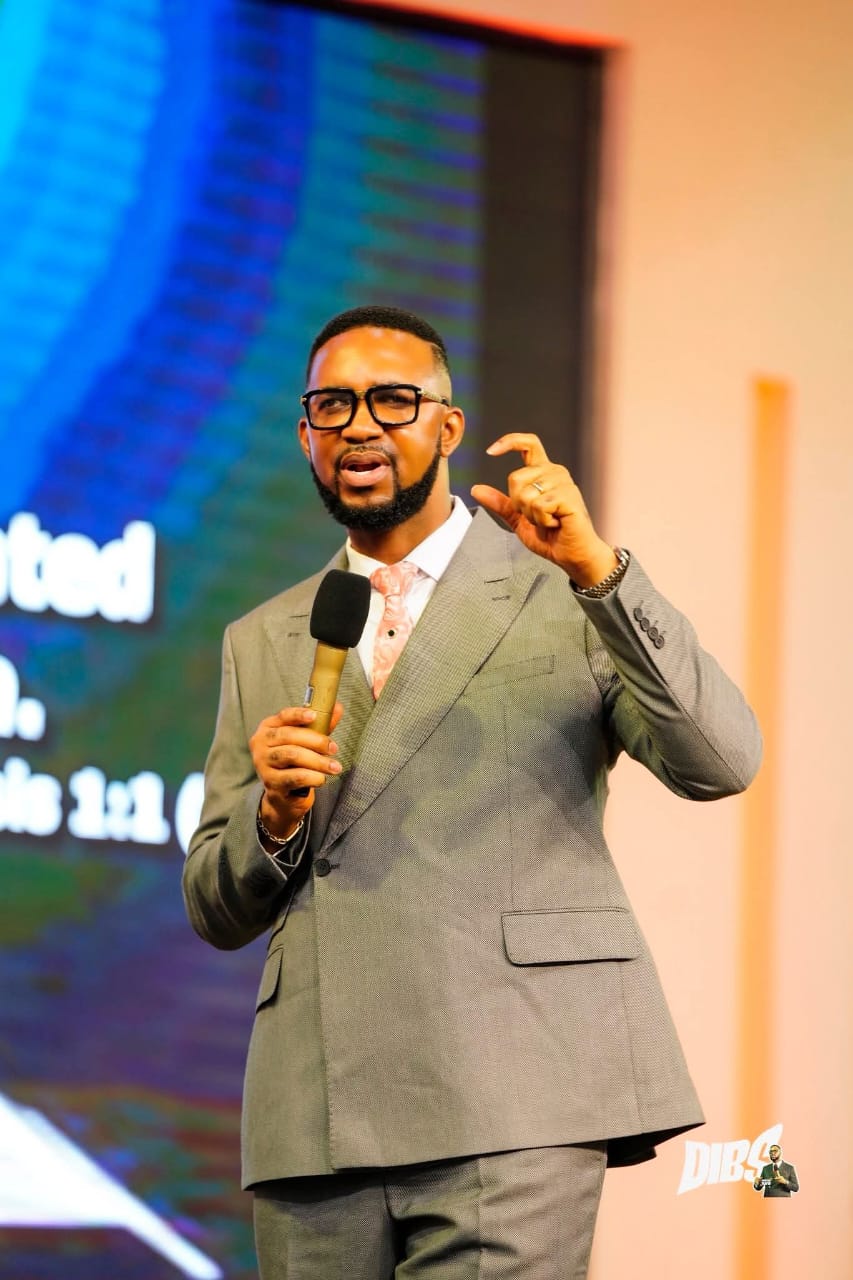
In the beginning, there was just one man with a burning vision. Today, that man has become a global force whose voice thunders across continents, whose prayers ignite miracles, and whose mission is transforming destinies worldwide. He is Apostle Johnson Suleman, the fiery Restoration Apostle, the humanitarian preacher, and the global trailblazer reshaping the Christian faith for a new generation.

From Auchi to the World
Born in Auchi, Edo State, Nigeria, Apostle Suleman’s rise from humble beginnings to international prominence is nothing short of remarkable. What started as a divine calling has now evolved into a global mandate, reaching millions through Omega Fire Ministries International (OFM).
His story is the classic tale of vision meeting conviction—of a man who dared to believe God not just for himself, but for nations. From a modest congregation, OFM has spread like wildfire, with branches in Africa, Europe, Asia, the Americas, and beyond.
The Man & The Mission

To know Suleman is to understand passion—passion for God, for people, and transformation. He lives by one mantra: populate Heaven, depopulate Hell.
His pulpit is a battlefield, his voice a trumpet, his words a sword. Through his fiery sermons, prophetic declarations, and healing crusades, countless men and women testify of divine encounters—cancers healed, destinies restored, impossibilities overturned.
But beyond the pulpit lies the heart of a humanitarian. Suleman’s mission has always extended beyond preaching. He funds scholarships for the underprivileged, empowers widows with homes, sets up businesses for struggling families, and supports countless orphans. In times of crisis, he has sent relief materials across regions, proving that true ministry is not only heard—it is seen.
The Impact
Step into one of his crusades, and the atmosphere tells its own story. Stadiums overflow. Multitudes gather, hungry for hope. From London to Houston, Dubai to Johannesburg, crowds testify to healings, deliverance, and restoration.
Through Celebration TV and other digital platforms, Suleman’s voice penetrates homes, villages, and cities, giving access to millions who may never step into a physical church. His boldness in confronting social ills and speaking truth to power has also established him as a fearless voice beyond the church walls.
The Global Moves
Apostle Suleman is not just a Nigerian voice—he is a global phenomenon. His recent international crusades draw audiences in their tens of thousands, breaking barriers of race, culture, and language.
From prophesying to presidents to laying hands on ordinary citizens, his message is universal: God still speaks, God still heals, God still restores.
Each global tour solidifies his place as one of the most influential Christian leaders of the 21st century. He is as comfortable commanding a crowd in Chicago as he is in Accra, as bold in Paris as he is in Abuja.
The Legacy in Motion
Apostle Johnson Suleman is more than a preacher—he is a movement. A man consumed by vision, driven by compassion, and equipped with an anointing that refuses to be confined by borders.
From Auchi to America, from pulpits to palaces, from widows to world leaders, his impact is undeniable. And as the Restoration Apostle continues to blaze trails across nations, one thing is certain: his legacy is still unfolding, and his global moves have only just begun.
society
Senator Musa’s Legacy of Intellect, Compassion and Delivery
By Suleiman Adamu
In Nigeria’s dynamic democratic landscape, where leadership often teeters between self-interest and public service, few figures emerge as true exemplars of covenantal representation. Senator Mohammed Sani Musa, CON, affectionately known as “Musa 313,” stands as a beacon of intellectual rigour, empathy, and impactful delivery. Representing Niger East Senatorial District, he has woven a legacy of legislative excellence and grassroots development that resonates far beyond the confines of his constituency, touching the heart of Nigeria’s democratic aspirations.
Great leaders are not born of chance; they are shaped by discipline, preparation, and an unrelenting commitment to progress. Senator Musa embodies this truth. A proud son of Niger State, he embarked on an academic journey that laid the foundation for his remarkable career. At Ahmadu Bello University, Zaria, he earned a Bachelor of Science in Business Administration, specialising in Banking and Finance, in 1990. This degree was not merely a credential but a springboard for his intellectual evolution.
Driven by a thirst for knowledge, he pursued further studies at global institutions, securing a Postgraduate Diploma in Public Policy and Management from the University of London and a Postgraduate Certificate in International Management from the University of Liverpool. These academic milestones equipped him with a nuanced understanding of governance, economics, and institutional reform, moulding him into a technocrat with a worldview enriched by comparative models of development.
Long before he stepped into the political arena, Musa was already a thinker whose ideas were informed by global perspectives and a deep appreciation for systemic change. Senator Musa is no ordinary parliamentarian. His presence reverberates from the hallowed chambers of the National Assembly in Abuja to the dusty roads of rural Niger East. He is a statesman whose intellectual sophistication is matched by his accessibility and empathy, a rare blend that allows him to connect with both policymakers and ordinary citizens.
His nickname, “Musa 313” is a symbol of trust and familiarity, a proof of the bond he has forged with his people. Unlike many legislators whose names fade beyond roll calls, Musa has etched his mark on the annals of parliamentary relevance since his election in 2019. As Chairman of the Senate Finance Committee, he shoulders one of the most critical roles in Nigeria’s legislative framework. His committee oversees fiscal discipline, appropriation, and national planning—responsibilities that demand precision, foresight, and patriotism.
Under his leadership, oversight reports and finance bills are scrutinised with meticulous care, earning him the confidence of Nigerians who see in him a guardian of the nation’s economic integrity. Musa’s legislative contributions are profound and far-reaching. His sponsorship of transformative bills reflects a mind attuned to both the immediate needs of his constituents and the structural challenges facing Nigeria.
Among his notable legislative efforts is the Bill to Regulate and Formalise Employment of Domestic Workers, Interns, and Other Informal Sector Employees (SB 629, 2025), currently in its second reading. Another landmark proposal is the National Rural Employment Guarantee Bill of 2021, a bold initiative to combat rural unemployment and foster economic inclusion in Nigeria’s hinterlands. The Critical Infrastructure Protection Bill of 2021 addresses the pressing need to safeguard Nigeria’s assets against sabotage and insecurity, a critical issue in a nation grappling with infrastructural challenges.
Musa’s vision for education is evident in the National University of Health and Medical Sciences, Suleja Bill, which aims to bolster medical training and healthcare delivery. His Loan Recovery Regulation Bill of 2020 seeks to sanitise the banking sector, while the Constitutional Court of Nigeria Bill of 2020 underscores his commitment to constitutionalism. The Constituency Delimitation Centre Bill of 2020 further demonstrates his dedication to strengthening democratic representation.
Each of these bills reveals a legislator who thinks locally but legislates nationally, addressing the unique needs of Niger East while tackling Nigeria’s broader developmental imperatives. Yet, for Senator Musa, legislation is not an end in itself but a means to transform lives. He understands that parliamentary privilege must translate into tangible progress for his constituents. In Niger East, his interventions are a testament to this philosophy, touching every facet of human development.
In education, Musa recognises that knowledge is the ladder by which societies ascend. He has renovated classrooms and constructed a principal’s office at Government Technical College, Minna, ensuring that students learn in dignified environments. His establishment of an ICT Centre in Ija Gwari, Tafa LGA, is a forward-thinking investment in the digital economy, empowering rural youths to compete in a technology-driven world. His scholarship programs, spanning primary, secondary, and tertiary levels, have opened doors for countless students, with international undergraduate opportunities in China and India offering a global stage for Niger East’s brightest minds. These initiatives are not mere gestures but structural investments in the future, ensuring that the next generation is equipped to lead.
In healthcare, Musa’s mantra of “Health is Wealth” guides his efforts to improve lives. Across the nine local government areas of Niger East, he has facilitated the installation of solar power and generators in primary healthcare centers, ensuring that immunisation, maternal care, and rural treatments are not hampered by power outages. His commitment to maintenance ensures these facilities remain functional, bringing dignity and reliability to healthcare delivery.
In agriculture, the lifeline of Niger East, Musa’s benevolence shines through. He has distributed 10,000 bags of grain to alleviate hunger and provided farm implements and fertilisers to rural farmers, boosting productivity and food security. His tailoring empowerment scheme for 100 youths is a deliberate effort to catalyse cottage industries, fostering economic self-reliance and preserving the region’s agrarian heritage.
Musa’s infrastructure projects further illustrate his responsiveness to his people’s needs. In Ginyin Village, Shiroro LGA, he constructed a solar borehole, delivering clean, safe water to residents who once struggled for this basic necessity. A 1km road in Kuta, Shiroro LGA, has improved connectivity, while electrification projects, including 500KVA transformers in Iwa Gurara and other communities, have brought light to darkened villages.
The renovation of Sukeja Town Hall has provided a communal space for gatherings, reinforcing social cohesion. Each project—water for the thirsty, light for the darkened, roads for the isolated—reflects Musa’s ability to listen and act, addressing the immediate needs of his people while laying the foundation for long-term progress. What sets Senator Musa apart is his embodiment of the qualities that define an uncommon parliamentarian: intellectual grounding, legislative productivity, constituency visibility, empathy, and national relevance.
He is not a populist chasing fleeting applause but a leader who feels the pulse of his people and synchronises it with national priorities. While others may settle for episodic empowerment, Musa builds a systematic architecture of development, weaving together education, healthcare, agriculture, and infrastructure into a cohesive vision for Niger East.
In just two years in the 10th Senate, he has redefined parliamentary responsibility, proving that senators need not be absentee representatives or mere voices in the capital. His work is a bridge between law-making and life-building, a testament to his refusal to divorce policy from people.
Musa’s impact extends beyond Niger East. His legislative efforts address national challenges, from unemployment to infrastructure security, positioning him as a statesman of national consequence. His ability to balance local needs with Nigeria’s broader aspirations makes him a model for aspiring leaders. Niger East is fortunate to have him; Niger State takes pride in his achievements, and Nigeria is enriched by his service.
To honour Senator Musa 313 is to recognise a rare fusion of intellect, compassion, and delivery—a leader who has rewritten the narrative of representation. His contributions are luminous chapters in Nigeria’s democratic journey, illuminating the path for others to follow.
*Adamu PhD is a researcher writing from UniAbuja.
-
society5 months agoRamadan Relief: Matawalle Distributes Over ₦1 Billion to Support 2.5 Million Zamfara Residents
-
Politics2 months agoNigeria Is Not His Estate: Wike’s 2,000‑Hectare Scandal Must Shake Us Awake
-
society4 months agoBroken Promises and Broken Backs: The ₦70,000 Minimum Wage Law and the Betrayal of Nigerian Workers
-
society3 months agoOGUN INVESTS OVER ₦2.25 BILLION TO BOOST AQUACULTURE


You must be logged in to post a comment Login