
celebrity radar - gossips
Real Reasons kevin McCarthy Was Removed As U.S Speaker

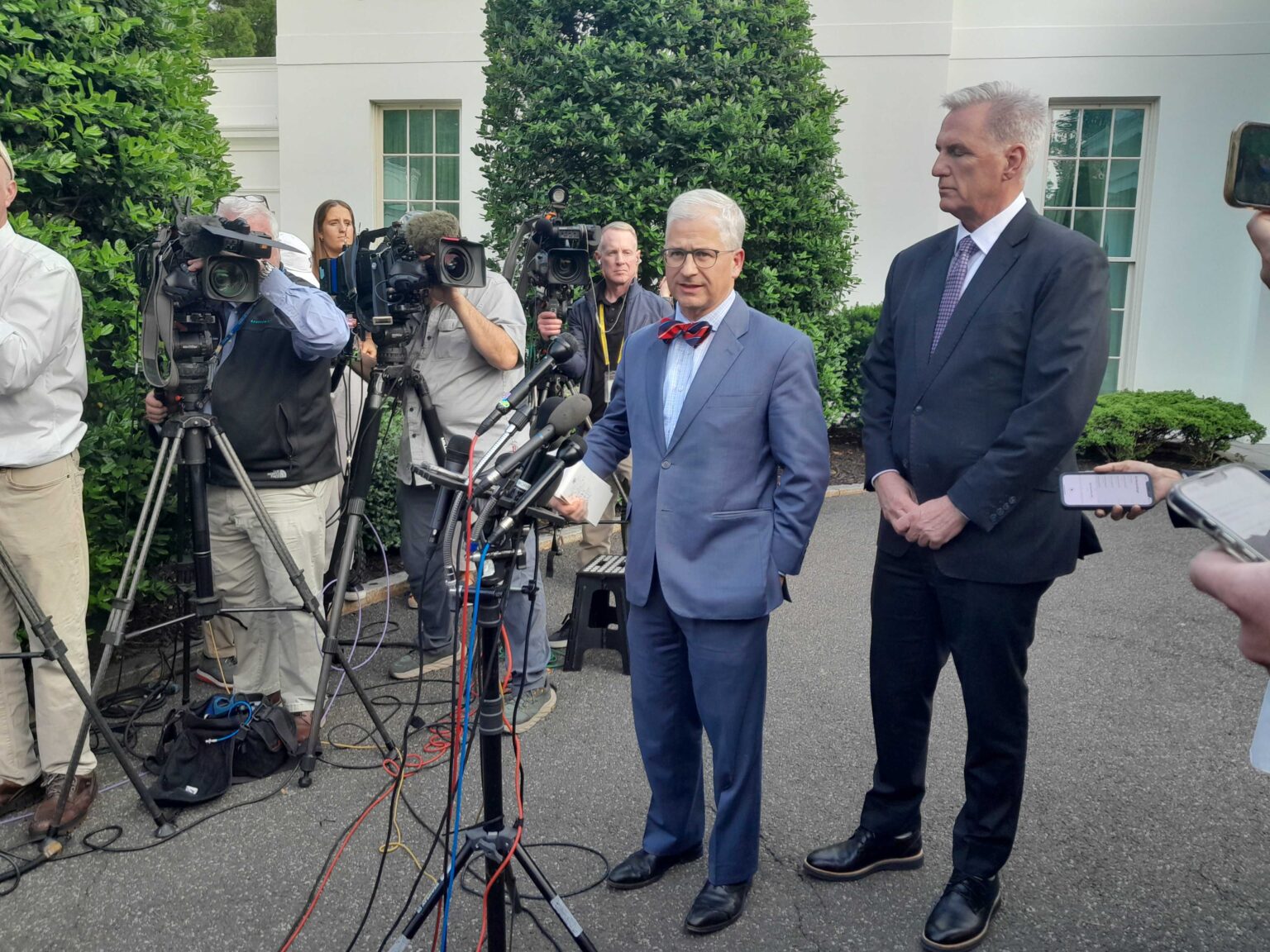
Real Reasons Kevin McCarthy Was Removed As U.S Speaker
Dissident Republicans in the U.S. House voted with Democrats on Tuesday to oust Kevin McCarthy as speaker, a historic move that came just nine months after he secured the gavel following days of negotiating with the GOP’s right flank and 15 rounds of voting.
It wasn’t immediately clear after the vote how the House would proceed in the coming days, having entered uncharted territory. No speaker has ever before been removed by the House. North Carolina Rep. Patrick McHenry was named speaker pro tem until the election of a new speaker.

The 216-210 vote on a motion to vacate, which Florida Republican Rep. Matt Gaetz filed Monday evening, capped off months of growing dissent among a small group of House Republicans.
Republican Reps. Andy Biggs of Arizona, Ken Buck of Colorado, Tim Burchett of Tennessee, Eli Crane of Arizona, Gaetz, Bob Good of Virginia, Nancy Mace of South Carolina and Matt Rosendale of Montana voted to remove McCarthy.
They also voted against tabling the motion, which took place just before the vote and would have stopped the process from moving forward.
Warren Davidson of Ohio, Cory Mills of Florida and Victoria Spartz of Indiana voted against tabling, but for keeping McCarthy as speaker.
All House Democrats present voted to declare the office of the speaker vacant.
So far, there have only been three instances where a motion to vacate was filed, one in March 1910, one in July 2015 and the one this month.
Only three motions to vacate in history
McCarthy said before the vote that he was calling Gaetz’s bluff, though he appeared to accept he would be ousted as speaker.
“At the end of the day, if you throw a speaker out that has 99% of their conference, that kept the government open and paid the troops — I think we’re in a really bad place for how we’re going to run Congress,” McCarthy said.
The California Republican said he believed his support for passing a bipartisan short-term spending bill on Saturday, preventing a partial government shutdown, was the “right decision.”
“I stand by that decision and at the end of the day, if I have to lose my job over it, so be it,” McCarthy said. “I’ll continue to fight.”
McCarthy excoriated
Gaetz and other hard-line conservatives have publicly rebuked McCarthy for not holding to a private deal he struck with them in January in order to secure the speakership.
The group of GOP lawmakers, some of whom are in the Freedom Caucus, have lamented McCarthy striking an agreement with President Joe Biden in May to avoid a default on the nation’s debt and for relying on Democratic votes to pass the short-term government spending bill.
Gaetz, speaking Monday on the floor, called on McCarthy to detail whether he had brokered a private deal with Biden to hold a vote on legislation that would provide additional aid to Ukraine in its fight against the Russian invasion. He also criticized McCarthy for reportedly adding border security to those talks.
“I get that a lot of folks might disagree with my perspectives on the border or Ukraine,” Gaetz said. “But could we at least agree that no matter how you feel about Ukraine or the Southern border, they each deserve the dignity of their own consideration and should not be rolled together.”
House Democratic Leader Hakeem Jeffries released a “Dear Colleague” letter just before the vote announcing House Democrats would vote to vacate the chair.
“Given their unwillingness to break from MAGA extremism in an authentic and comprehensive manner, House Democratic leadership will vote yes on the pending Republican Motion to Vacate the Chair,” Jeffries wrote.
The group of Republican dissenters who voted to remove McCarthy represents a small fraction of the House Republican Conference, many of whom backed McCarthy on the floor Tuesday and defended his record.
GOP supporters: ‘He did the right thing’
“He’s being punished because he did the right thing on Saturday and made sure that the government didn’t shut down, and we bought more time to continue the appropriations process,” GOP Rep. Tom Cole of Oklahoma told reporters.
Cole offered the motion to table on behalf of McCarthy.
Arkansas GOP Rep. Steve Womack told reporters before the vote the motion to vacate was a distraction and a “fool’s errand.”
Womack, who sits on the Appropriations Committee, said Republicans should focus on clearing all 12 appropriations bills before the new mid-November deadline.
“We just took the country to the brink of a shutdown for the purpose of what? Moving the rest of our appropriation bills,” Womack said. “We need to finish our work, and the only way to do that is to pass the rule and get these bills across the floor and move to the Senate in conference.”
Rep. Dusty Johnson of South Dakota told reporters Gaetz’s push for a motion to vacate showed there are “middle school grudges” against McCarthy.
“I think that Matt (Gaetz) is making a huge error,” Johnson said. “I think America is gonna be less well off because of his efforts. I think chaos has not served this country.”
Republican Rep. Stephanie Bice of Oklahoma told reporters she was skeptical of the motivations some have stated for removing McCarthy as speaker.
“This isn’t about the appropriations process, and don’t be fooled. (Gaetz) wants to talk about the fact that we should have been doing our (appropriations) work in August. Look, it didn’t happen. So now is the time, and instead of focusing on that for the next 43 days, we’re going to be focusing on this,” Bice said.
GOP Rep. Brian Fitzpatrick of Pennsylvania told reporters that Republicans should focus on clearing legislation to fully fund the government and work on getting aid to Ukraine.
“If we vacate the chair, the government will shut down, our credit rating will go down, interest rates will go up,” Fitzpatrick said. “Ukraine will be victimized and lose that war to Russia. That is what is at stake here.”
Democrats cheer behind closed doors
Democrats huddled behind closed doors for nearly 90 minutes Tuesday morning to plot a path forward and allow members to speak for up to one minute about the motion to vacate. Rounds of applause and some cheering could be heard from the hallway outside the meeting.
Democratic lawmakers said after the meeting that McCarthy hadn’t built trust.
New Hampshire Democratic Rep. Annie Kuster told reporters the party had “unity of purpose” ahead of the vote.
“What has happened that all of you have witnessed and the American people have witnessed is that the current speaker has chosen to cater to a very extreme element that, in my view, it’s sort of a post-truth world,” Kuster said. “I think you can see that within his own caucus, but you can certainly see it in the way he’s treated us and the American people.”
Congressional Progressive Caucus Chair Pramila Jayapal, a Washington state Democrat, told reporters that the House GOP could “wallow in their pigsty of incompetence and inability to govern.”
Jayapal said that Republican infighting about who their speaker should be was not an issue that Democrats felt the need to solve. She also noted that McCarthy has repeatedly broken trust with Democrats, making the party reluctant to help him keep the speakership.
“Nobody trusts Kevin McCarthy, and why should we? He has broken his commitment over and over again,” Jayapal said.
McCarthy, Jayapal said, has made a series of decisions that have eroded any support he would have had from Democrats. Those include his public comments following the Jan. 6 attack on the Capitol by pro-Trump rioters, his decision to walk away from a spending agreement he and Biden brokered earlier this year and his decision to withhold bringing a bill to the floor that would provide additional aid to Ukraine.
“Kevin McCarthy stood on the House floor and said one thing and then talked to Donald Trump and immediately did something else,” Jayapal said. “He has supported the insurrectionist president that enabled January 6 to happen and tried to obstruct the peaceful transfer of power.”
Jeffries, a New York Democrat, told reporters before the vote the party would “continue to put people over politics and to fight to make life better for everyday Americans.”
“From the very beginning that has been our objective and it will continue to be our sole focus,” Jeffries said. “We encourage our Republican colleagues, who claim to be more traditional, to break from the extremists.”
Jeffries said that Democrats were “ready, willing and able to work together with GOP lawmakers.
“But it is on them to join us to move the Congress and the country forward,” Jeffries said.
Rep. Richard Neal, a Massachusetts Democrat, told reporters after the closed-door meeting there wasn’t “a lot of goodwill in that room for Kevin McCarthy.”
“If you’re gonna negotiate, you have to negotiate with somebody you can trust who can actually keep their word,” Neal said. “And there’s not been a lot of evidence that Kevin McCarthy has kept his word along the way.”
Disputes over spending, Ukraine
Just hours before a shutdown would have begun this weekend, Congress approved a short-term bill to fund the government until Nov. 17. The House passed the stopgap measure in a 335-91 vote, with 90 Republicans opposing it. Senators approved the bill 88-9, with nine Republicans opposed.
The deal didn’t include additional funding for Ukraine, though Biden said Sunday that he and McCarthy agreed to find the votes needed to pass a supplemental package with military assistance and humanitarian relief for the war-torn country as it resists further invasion by Russia.
The stopgap funding bill to avert a government shutdown was not the only time McCarthy worked with Democrats to avert financial calamity. In May the speaker brokered a deal with Biden to raise the debt ceiling and keep the U.S. from defaulting on its loans.
The deal, signed into law as the Fiscal Responsibility Act, included agreed-upon spending levels for the fiscal year that began Oct. 1.
McCarthy has been unable to unify his far-right members around the established spending levels during this year’s appropriations process, bringing the federal government within hours of a partial shutdown.
House lawmakers on the far-right of the spectrum have been browbeating McCarthy since before he took the gavel.
McCarthy’s path to the speakership in January took 15 ballots as more than a dozen far-right conservatives blocked him during a four-day stalemate.
The California Republican won on the 15th ballot after several concessions to the ultra-conservative wing of his party, including a change to the motion to vacate that will allow any one member to essentially call for a no-confidence vote on the speaker.
McCarthy also reserved spots on key committees for far-right members and entered a handshake deal with members of the House Freedom Caucus, promising to cut spending levels.





Beauty Meets Glamour as Olaide Ogunyemi Opens New Studio in Mushin
Popular Nollywood actress and professional makeup artiste, Olaide Ogunyemi Oluwayemisi aka Damilola, has expanded her footprint in the beauty industry with the grand opening of her new makeup studio in Lagos.
The talented thespian, who is also the Chief Executive Officer of @Dobc_makeovers_andmore, officially unveiled the ultra-modern beauty space last Thursday, April 2, 2026, in a colourful ceremony filled with glamour, fashion, and pageantry.
Strategically located at 101 Palm Avenue, right beside FitPlus and Sparklight Hospital in Mushin area of Lagos, the new studio is designed to offer top-notch beauty services, reflecting Ogunyemi’s commitment to excellence and professionalism in the ever-growing makeup industry.
The opening ceremony attracted friends, colleagues from the Nollywood industry, beauty enthusiasts, and well-wishers who came out in large numbers to celebrate the entrepreneur’s latest milestone. Guests were treated to a vibrant atmosphere that showcased creativity, style, and the evolving standards of the beauty business in Lagos.
Speaking at the event, Ogunyemi expressed her excitement and gratitude, noting that the new studio represents years of hard work, dedication, and passion for her craft. She reaffirmed her commitment to delivering premium beauty services while empowering aspiring makeup artistes.
The launch of the studio further cements her reputation as a dynamic force, successfully blending her career in Nollywood with a thriving beauty brand.
With this latest development, Olaide Damilola Ogunyemi continues to inspire many young entrepreneurs, proving that talent, consistency, and vision remain key drivers of success in Nigeria’s creative and business landscape.


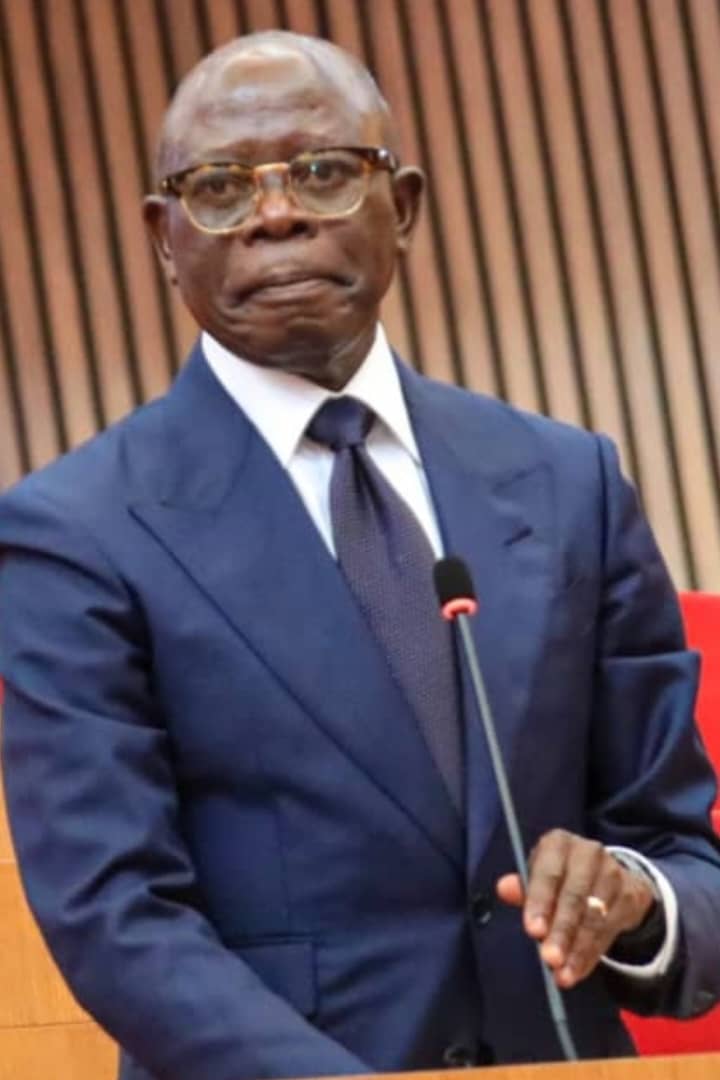
Daniel Eromosele Eulogize Adams Oshiomole as he turns 74 years
Today, I celebrate an exceptional leader, a fearless voice for the people, and a man whose life has remained a symbol of courage, sacrifice, and unwavering commitment to justice—Distinguished Comrade Senator Adams Aliu Oshiomhole.

Your journey has been nothing short of inspiring. From your days as a vibrant labour leader to your impactful tenure as the Executive Governor of Edo State, and now as a respected Senator of the Federal Republic, you have consistently demonstrated what it means to serve with integrity, strength, and purpose. Your contributions to the growth of our nation and the development of Edo State remain indelible and deeply appreciated.
You have not only built structures and institutions but have also built people. I am personally a beneficiary of your leadership, your guidance, and your belief in empowering others. Your influence in my life has been profound, and I remain grateful for the opportunities and inspiration you have given me.
On this special day, I celebrate not just your achievements, but the man you are—resilient, principled, and ever committed to the progress of Nigeria and her people.

May this new year bring you renewed strength, greater wisdom, good health, and more remarkable accomplishments. May your legacy continue to shine brighter with each passing year.
Happy Birthday, sir. Wishing you many more fruitful and impactful years ahead.
celebrity radar - gossips
Accolades to Empress Genevieve Wining as she Celebrate birthday in Grand style

Accolades to Empress Genevieve Wining as she Celebrate birthday in Grand style
Emmanuel Clement
Vilnius, Lithuania – The Grand Hotel Vilnius will host a grand birthday celebration in honor of Her Majesty The Empress Genevieve Wining of the United Kingdom of Atlantis (UKA) on April 4th, 2026.
The four-day event promises to be an extravagant affair, marking the special birthday of Empress Genevieve Wining. The celebration will take place at the prestigious Grand Hotel Vilnius, Lithuania, renowned for its luxurious ambiance and exceptional service.

According to the event flyer, the birthday celebration will be a spectacular occasion, fitting for an empress. Guests can expect an elegant setting adorned with golden accents, sparkling champagne, and festive decorations, creating a regal atmosphere befitting the occasion.
The Empress Genevieve Wining of UKA is expected to grace the event, which will include various festivities and celebrations in her honor. The occasion aims to bring together dignitaries, followers, and guests to commemorate the empress’s birthday with grandeur and joy.
For media inquiries, accreditation, or further information about the birthday celebration of The Empress Genevieve Wining of UKA, please contact the event organizers.
Courtesy of His Excellency Emperor Prof. Solomon Wining. UKA


- ABB’s Application Configurator brings speed and precision to grid-feeding protection system design April 7, 2026
- Can Equatorial Guinea Reposition as West Africa’s Gas Hub? April 7, 2026
- Afreximbank Partners with African Energy Week 2026 to Drive Africa-Led Energy Deals April 7, 2026
- Merck Foundation Marks ‘World Health Day’ 2026 – Transforming Patient Care in Africa and Beyond through 2600+ Scholarships for Healthcare Providers From 52 Countries April 7, 2026
- Morocco Gas Plan Reset Could Open Door to New Investment Models April 7, 2026
- African Petroleum Producers Organization (APPO) Secretary General Joins Angola Oil & Gas (AOG) 2026 as African Energy Bank Eyes June 2026 Debut April 7, 2026
- Ghanaian Biomedical Specialist Receives International Award April 7, 2026
- Grey Connects the Africa-Canada Money Corridor With Instant Transfers via Interac April 7, 2026
- Nigeria’s Oil Revival in Focus as Petroleum Minister Lokpobiri Joins Paris Energy Forum April 7, 2026
- CLG Expands into Libya and Central Africa, Named Official Legal Partner for African Energy Week (AEW) 2026 April 7, 2026
- ABB’s Application Configurator brings speed and precision to grid-feeding protection system design April 7, 2026
- Can Equatorial Guinea Reposition as West Africa’s Gas Hub? April 7, 2026
- Afreximbank Partners with African Energy Week 2026 to Drive Africa-Led Energy Deals April 7, 2026
- Merck Foundation Marks ‘World Health Day’ 2026 – Transforming Patient Care in Africa and Beyond through 2600+ Scholarships for Healthcare Providers From 52 Countries April 7, 2026
- Morocco Gas Plan Reset Could Open Door to New Investment Models April 7, 2026
- African Petroleum Producers Organization (APPO) Secretary General Joins Angola Oil & Gas (AOG) 2026 as African Energy Bank Eyes June 2026 Debut April 7, 2026
- Ghanaian Biomedical Specialist Receives International Award April 7, 2026
-

 society7 months ago
Religion: Africa’s Oldest Weapon of Enslavement and the Forgotten Truth
-

 news4 months ago
WHO REALLY OWNS MONIEPOINT? The $290 Million Deal That Sold Nigeria’s Top Fintech to Foreign Interests
-

 society7 months ago
“You Are Never Without Help” – Pastor Gebhardt Berndt Inspires Hope Through Empower Church (Video)
-

 celebrity radar - gossips2 months ago
Dr. Chris Okafor Returns with Power and Fire of the Spirit -Mounts Grace Nation Altar with Fresh Anointing and Restoration Grace on February 1, 2026