
celebrity radar - gossips
RECLAIMER: RESTORING CONTEXT, TRADITION, AND TRUTH …CLARIFIED ACCOUNT OF THE UNEME-OSU VILLAGE HEADSHIP AND THE LEGITIMACY OF HRH FREDERICK LUCKY IYOGUN. IYOGU II OF UNEME-AKIOSU


RECLAIMER: RESTORING CONTEXT, TRADITION, AND TRUTH
…CLARIFIED ACCOUNT OF THE UNEME-OSU VILLAGE HEADSHIP AND THE LEGITIMACY OF HRH FREDERICK LUCKY IYOGUN. IYOGU II OF UNEME-AKIOSU
In every society governed by ancestral norms and collective memory, truth is not preserved by noise but by careful recollection, balance, and fidelity to established custom. Recent narratives circulating in the public domain concerning the Uneme-Osu village headship have generated anxiety, misinterpretation, and an unfortunate distortion of facts. While public discourse is welcome in a democratic environment, it becomes imperative to respond when such discourse risks undermining communal cohesion, delegitimising lawful authority, and misrepresenting tradition.
This reclaimer is not written to inflame passions, malign individuals, or dismiss genuine concerns. Rather, it is offered as a measured corrective, rooted in historical continuity, cultural procedure, and the lived reality of Uneme-Osu. Its purpose is to reaffirm, with clarity and depth, that His Royal Highness, Frederick Lucky Iyogun, IYOGU II emerged as Village Head through processes consistent with Uneme-Osu tradition, validated by customary stakeholders and recognised within the appropriate administrative framework.
*Understanding Uneme-Osu Tradition Beyond Simplistic Narratives*
Uneme-Osu’s traditional governance structure is neither static nor simplistic. Like many indigenous systems, it has evolved through generations, adapting to demographic changes, lineage expansion, and administrative intersections with the modern state. To suggest that tradition operates only through a single rigid pathway is to misunderstand its organic nature.
While matrilineal considerations form an important aspect of Uneme customary governance, they do not exist in isolation from patrilineal identity, kindred consensus, ancestral legitimacy, and community acceptance. The village headship is not merely the product of ritual sequence but the culmination of lineage right, moral standing, communal trust, and capacity for leadership.

Historical practice in Uneme-Osu demonstrates that variation in procedural emphasis has occurred across generations, particularly during periods of transition or vacancy. What remains constant, however, is the recognition of eligible lineage, ancestral entitlement, and community affirmation. HRH Iyogu II emergence must therefore be examined within this broader customary framework rather than through a selective interpretation designed to support a predetermined conclusion.
*Lineage Legitimacy and Ancestral Right*
At the core of village headship legitimacy lies lineage. HRH Frederick Lucky Iyogun belongs to a recognised ancestral line within Uneme-Osu, historically associated with leadership responsibility, land stewardship, and communal representation. His family history is neither fabricated nor recently invented, as some narratives insinuate, but well-known within the community’s genealogical memory.
The attempt to cast doubt on his kindred identity by questioning nomenclature or historical terminology reflects a misunderstanding of how Uneme lineages have evolved over time. Kindred names, sub-lineages, and household identifiers have shifted, merged, or been colloquially referenced differently across generations, particularly in response to migration, intermarriage, and administrative record-keeping.
What matters in customary law is not semantic rigidity but ancestral traceability and communal recognition. On this basis, HRH Iyogu II lineage stands firmly within the accepted structure of Uneme-Osu society.
*On the Role of King Makers and Traditional Authorities*
Contrary to claims that king makers were “bypassed” or “excluded,” the process leading to HRH Iyogu II emergence involved consultations, acknowledgements, and tacit endorsements consistent with prevailing realities. It is important to state that traditional authority is not exercised solely through public ceremony. In many Uneme communities, deliberations occur privately, guided by senior custodians of custom who prioritise peace over spectacle.
Furthermore, the suggestion that the absence of a particular ritual at a specific moment invalidates the entire process ignores precedent. There are historical instances in Uneme land where coronation rites were staggered, deferred, or symbolically fulfilled due to disputes, mourning periods, or external pressures. Such adjustments have never nullified legitimate authority when lineage right and community acceptance were present.
*Administrative Recognition as Affirmation, Not Imposition*
Administrative acknowledgment by government authorities did not create HRH Iyogu II legitimacy; rather, it affirmed an existing traditional reality. The state does not appoint village heads in Uneme-Osu; it recognises outcomes produced by customary processes. To imply that recognition was “quietly obtained” under questionable circumstances is to underestimate the scrutiny involved in such procedures.
Government recognition requires documentation, verification, and engagement with multiple stakeholders. These processes are neither arbitrary nor informal. HRH Iyogu II recognition followed established administrative channels, reflecting the understanding that he represents the lawful traditional authority of Uneme-Osu.
*Addressing the Question of Rotational Principle*
The rotational principle referenced in public discussions is often misunderstood. While rotation exists in certain Uneme communities, it is not universally binding nor mechanically applied. Rotation operates where there is a standing, consensual agreement among kindreds, clearly defined and continuously upheld.
In Uneme-Osu, historical attempts to formalise strict rotation encountered unresolved disagreements, conditional proposals, and subsequent abandonment. Customary law is clear: a rejected or inconclusive arrangement cannot later be resurrected as binding tradition. Leadership succession therefore reverted to lineage eligibility and community consensus, under which HRH Iyogun validly emerged.
*On the Status of Previous Office Holders*
Respect for former village heads remains sacrosanct in Uneme culture. However, respect does not equate to perpetual incumbency beyond active service. Where circumstances change, whether through incapacity, prolonged absence, or communal realignment, tradition allows for reassessment to ensure effective leadership.
The recognition of HRH Iyogun does not erase history; it represents continuity through renewal, ensuring that Uneme-Osu is guided by an active, accessible, and forward-looking custodian of tradition.
HRH Frederick Lucky Iyogun’s claim to traditional authority is reinforced by the fact that his grandfather served as the Village Head of Uneme-Osu until his death in 1958. This is not folklore or conjecture but a well-known historical reality acknowledged within the community. His grandfather’s tenure established a lineage of leadership, responsibility, and custodianship that remains part of Uneme-Osu’s collective memory.
The death of his grandfather in 1958 did not extinguish the family’s ancestral standing or leadership eligibility. Traditional authority is not erased by time; it is preserved through lineage continuity. The suggestion that HRH Iyogu II emerged without historical grounding therefore collapses under factual scrutiny. His ancestry situates him firmly within the stream of legitimate traditional leadership, rather than outside it.
It is also essential to distinguish between respect for previous office holders and the misconception of perpetual incumbency. While Uneme-Osu tradition honours those who once held office, such honour does not freeze leadership succession indefinitely. Communities evolve, leadership transitions occur, and new custodians emerge in accordance with custom, circumstance, and necessity.
The emergence of HRH Iyogu II does not negate or dishonour any previous village head. Instead, it reflects continuity through lineage and adaptation through time. His authority is therefore not an aberration but a restoration of ancestral stewardship, grounded in history and validated by contemporary legal processes.
*THE COURT CASE DELIBERATELY AVOIDED*
Judicial Determination Is Not Optional
The most intellectually dishonest aspect of the publication is its total silence on the court case and judgment.
Let this be stated clearly and unequivocally:
The dispute over the Uneme-Osu village headship was presented before a competent court of law. Evidence was tendered.
Arguments were heard. Tradition was examined. And judgment was delivered in favour of HRH Frederick Lucky Iyogun lineage.
This is not an opinion. It is a matter of judicial record.
In any civilised society, once a court has pronounced on a matter within its jurisdiction, that pronouncement supersedes conjecture, petition-writing, and media speculation. Customary disputes, when escalated to the judiciary, are resolved through evidence, precedent, and legal interpretation of tradition.
The article’s failure to mention this judgment is not a minor oversight. It is a deliberate suppression of truth, designed to keep readers unaware that the issue it presents as “unresolved” has, in fact, been resolved.
*Responding to Allegations of Intimidation and Fear*
Claims of harassment, coercion, and intimidation attributed to HRH Iyogu II remain unsubstantiated assertions, amplified through repetition rather than evidence. No credible judicial or security finding has established wrongdoing on his part. On the contrary, his leadership has emphasised order, accountability, and respect for communal obligations, which some may misconstrue as authoritarian when longstanding informal practices are challenged.
The enforcement of community levies and norms, when carried out within traditional authority, does not constitute oppression. It reflects the responsibility of leadership to maintain collective welfare, infrastructure, and cultural obligations.
*Security Concerns and the Need for Calm*
The portrayal of Uneme-Osu as a community on the brink of violence is deeply unfortunate and risks becoming a self-fulfilling prophecy. Peace in Uneme-Osu has not been threatened by HRH Iyogu II leadership but by persistent attempts to delegitimise constituted authority, sowing doubt and encouraging resistance.
True security lies not in suspending legitimate leadership but in reinforcing lawful authority, discouraging parallel claims, and promoting dialogue rooted in respect for tradition.
*Clarification on Political Neutrality and Public Service Record of HRH Frederick Lucky Iyogun*
It has become necessary to address, with clarity and factual precision, the insinuations and speculative undertones suggesting that His Royal Highness, Frederick Lucky Iyogun, either held political office or enjoyed partisan political affiliation that may have influenced his emergence as Village Head of Uneme-Osu.
Such suggestions are not only inaccurate but also laughable and misleading, as they attempt to import a political narrative into what is fundamentally a traditional and judicially resolved matter.
HRH Frederick Lucky Iyogun has never held any elective or appointive political office at any level of government, nor has he been a card-carrying member of any political party.
At no time in his career did he function as a political actor, power broker, or partisan figure. Assertions linking him to political structures are therefore conjectural, unsupported by evidence, and designed to provoke suspicion rather than illuminate truth.
What is verifiable, documented, and beyond dispute is that HRH Iyogun served the Nigerian state as a career Federal Civil Servant.
His professional life was defined by bureaucratic discipline, institutional neutrality, and adherence to public service ethics. Until his statutory retirement in late 2023, he remained within the confines of civil service regulations, which expressly prohibit partisan political involvement. His service trajectory reflects administrative competence, restraint, and loyalty to national institutions rather than political ambition.
It is instructive to note that civil service, by its very nature, is non-partisan. Officers are trained to operate independently of political interests, executing policy rather than crafting or campaigning for it. HRH Frederick Iyogun’s thirty five ’35’ long years within this structure reinforce the fact that his orientation has always been toward order, due process, and institutional respect—qualities that naturally align with traditional leadership but do not equate to political manipulation.
The attempt to associate HRH Frederick Iyogun with political figures or administrations therefore represents a deliberate narrative distortion, aimed at creating an impression of undue influence where none exists. Such framing distracts from the substantive issues of lineage, tradition, and judicial affirmation, and instead seeks to delegitimise lawful authority through insinuation.
*December 26 and the Path Forward*
Community meetings should be spaces for dialogue, not fear. With HRH Iyogun recognised as Village Head, such gatherings offer an opportunity to heal divisions, clarify misunderstandings, and reaffirm shared values. Calls for restraint should apply equally to all parties, particularly those seeking to undermine established authority through alarmist narratives.
*Conclusion: Authority, Tradition, and the Future of Uneme-Osu*
Uneme-Osu stands not at the edge of disorder, but at a moment of reaffirmation. The legitimacy of His Royal Highness, Frederick Lucky Iyogun, rests on lineage right, customary evolution, community recognition, and administrative affirmation. To deny this legitimacy is to deny the community’s capacity to govern itself according to its own living tradition.
This reclaimer therefore calls on all stakeholders—elders, youths, commentators, and authorities—to embrace truth over speculation, unity over division, and tradition over distortion. Peace in Uneme-Osu will be sustained not by dismantling rightful leadership, but by respecting it.




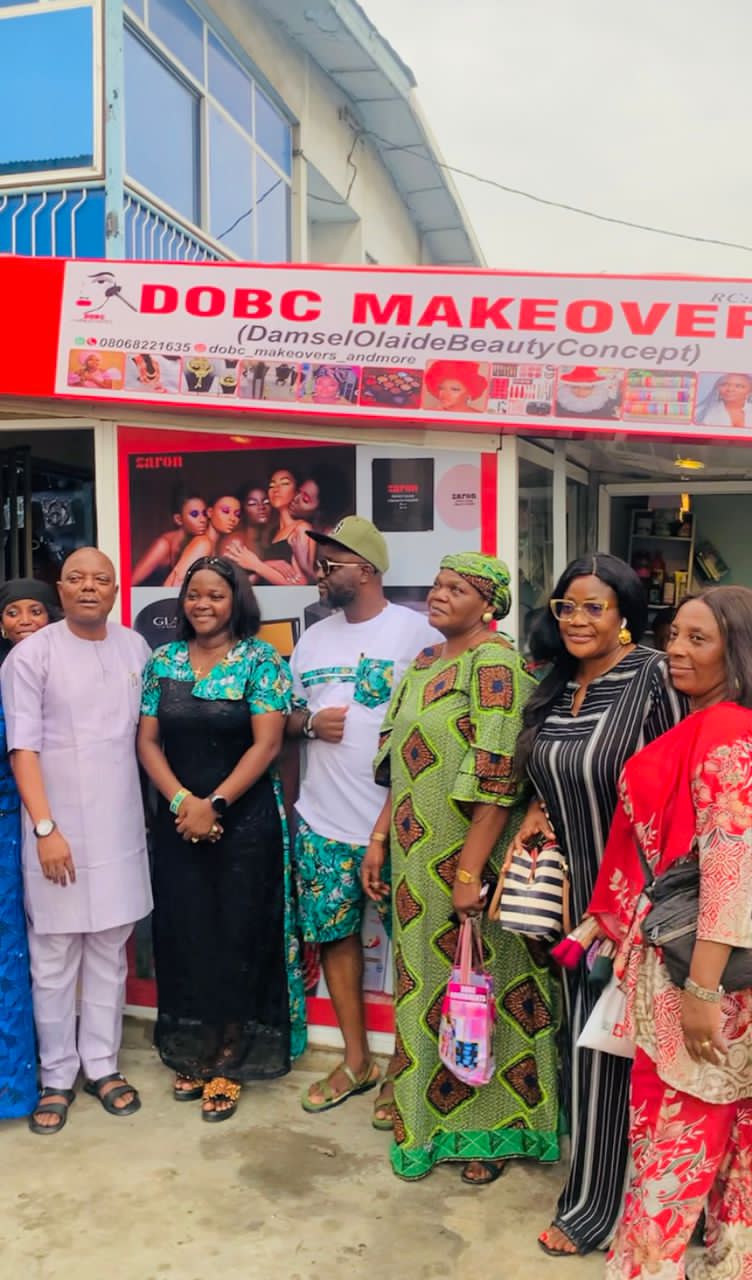
Beauty Meets Glamour as Olaide Ogunyemi Opens New Studio in Mushin
Popular Nollywood actress and professional makeup artiste, Olaide Ogunyemi Oluwayemisi aka Damilola, has expanded her footprint in the beauty industry with the grand opening of her new makeup studio in Lagos.
The talented thespian, who is also the Chief Executive Officer of @Dobc_makeovers_andmore, officially unveiled the ultra-modern beauty space last Thursday, April 2, 2026, in a colourful ceremony filled with glamour, fashion, and pageantry.
Strategically located at 101 Palm Avenue, right beside FitPlus and Sparklight Hospital in Mushin area of Lagos, the new studio is designed to offer top-notch beauty services, reflecting Ogunyemi’s commitment to excellence and professionalism in the ever-growing makeup industry.
The opening ceremony attracted friends, colleagues from the Nollywood industry, beauty enthusiasts, and well-wishers who came out in large numbers to celebrate the entrepreneur’s latest milestone. Guests were treated to a vibrant atmosphere that showcased creativity, style, and the evolving standards of the beauty business in Lagos.
Speaking at the event, Ogunyemi expressed her excitement and gratitude, noting that the new studio represents years of hard work, dedication, and passion for her craft. She reaffirmed her commitment to delivering premium beauty services while empowering aspiring makeup artistes.
The launch of the studio further cements her reputation as a dynamic force, successfully blending her career in Nollywood with a thriving beauty brand.
With this latest development, Olaide Damilola Ogunyemi continues to inspire many young entrepreneurs, proving that talent, consistency, and vision remain key drivers of success in Nigeria’s creative and business landscape.


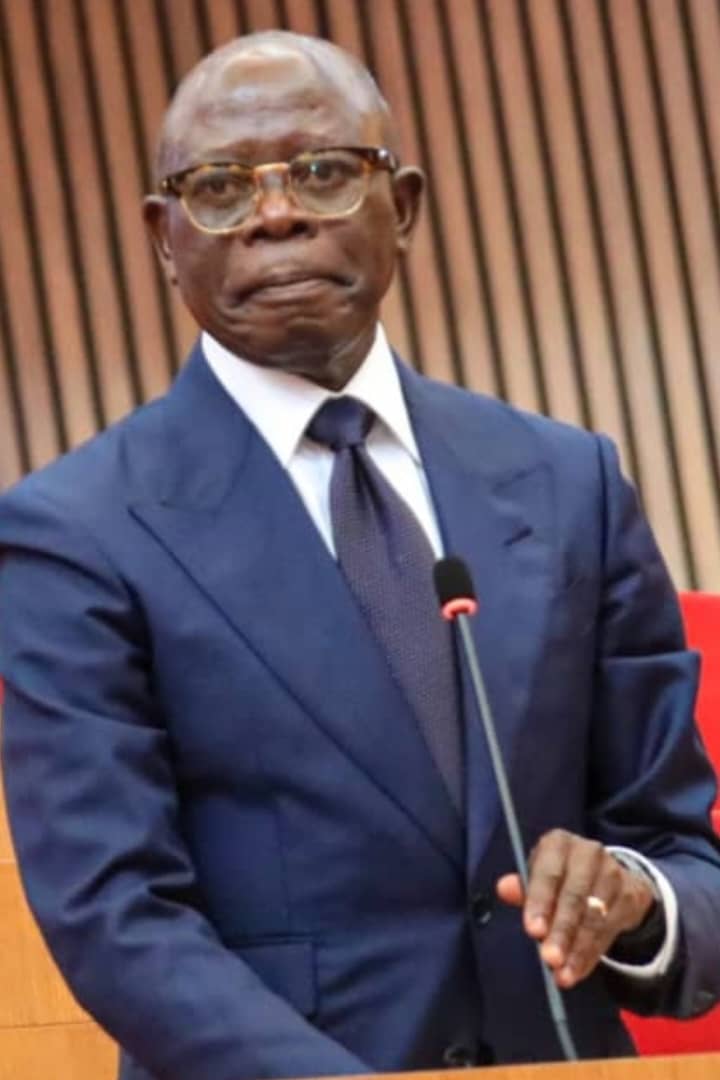
Daniel Eromosele Eulogize Adams Oshiomole as he turns 74 years
Today, I celebrate an exceptional leader, a fearless voice for the people, and a man whose life has remained a symbol of courage, sacrifice, and unwavering commitment to justice—Distinguished Comrade Senator Adams Aliu Oshiomhole.

Your journey has been nothing short of inspiring. From your days as a vibrant labour leader to your impactful tenure as the Executive Governor of Edo State, and now as a respected Senator of the Federal Republic, you have consistently demonstrated what it means to serve with integrity, strength, and purpose. Your contributions to the growth of our nation and the development of Edo State remain indelible and deeply appreciated.
You have not only built structures and institutions but have also built people. I am personally a beneficiary of your leadership, your guidance, and your belief in empowering others. Your influence in my life has been profound, and I remain grateful for the opportunities and inspiration you have given me.
On this special day, I celebrate not just your achievements, but the man you are—resilient, principled, and ever committed to the progress of Nigeria and her people.

May this new year bring you renewed strength, greater wisdom, good health, and more remarkable accomplishments. May your legacy continue to shine brighter with each passing year.
Happy Birthday, sir. Wishing you many more fruitful and impactful years ahead.
celebrity radar - gossips
Accolades to Empress Genevieve Wining as she Celebrate birthday in Grand style

Accolades to Empress Genevieve Wining as she Celebrate birthday in Grand style
Emmanuel Clement
Vilnius, Lithuania – The Grand Hotel Vilnius will host a grand birthday celebration in honor of Her Majesty The Empress Genevieve Wining of the United Kingdom of Atlantis (UKA) on April 4th, 2026.
The four-day event promises to be an extravagant affair, marking the special birthday of Empress Genevieve Wining. The celebration will take place at the prestigious Grand Hotel Vilnius, Lithuania, renowned for its luxurious ambiance and exceptional service.

According to the event flyer, the birthday celebration will be a spectacular occasion, fitting for an empress. Guests can expect an elegant setting adorned with golden accents, sparkling champagne, and festive decorations, creating a regal atmosphere befitting the occasion.
The Empress Genevieve Wining of UKA is expected to grace the event, which will include various festivities and celebrations in her honor. The occasion aims to bring together dignitaries, followers, and guests to commemorate the empress’s birthday with grandeur and joy.
For media inquiries, accreditation, or further information about the birthday celebration of The Empress Genevieve Wining of UKA, please contact the event organizers.
Courtesy of His Excellency Emperor Prof. Solomon Wining. UKA


- ABB’s Application Configurator brings speed and precision to grid-feeding protection system design April 7, 2026
- Can Equatorial Guinea Reposition as West Africa’s Gas Hub? April 7, 2026
- Afreximbank Partners with African Energy Week 2026 to Drive Africa-Led Energy Deals April 7, 2026
- Merck Foundation Marks ‘World Health Day’ 2026 – Transforming Patient Care in Africa and Beyond through 2600+ Scholarships for Healthcare Providers From 52 Countries April 7, 2026
- Morocco Gas Plan Reset Could Open Door to New Investment Models April 7, 2026
- African Petroleum Producers Organization (APPO) Secretary General Joins Angola Oil & Gas (AOG) 2026 as African Energy Bank Eyes June 2026 Debut April 7, 2026
- Ghanaian Biomedical Specialist Receives International Award April 7, 2026
- Grey Connects the Africa-Canada Money Corridor With Instant Transfers via Interac April 7, 2026
- Nigeria’s Oil Revival in Focus as Petroleum Minister Lokpobiri Joins Paris Energy Forum April 7, 2026
- CLG Expands into Libya and Central Africa, Named Official Legal Partner for African Energy Week (AEW) 2026 April 7, 2026
- ABB’s Application Configurator brings speed and precision to grid-feeding protection system design April 7, 2026
- Can Equatorial Guinea Reposition as West Africa’s Gas Hub? April 7, 2026
- Afreximbank Partners with African Energy Week 2026 to Drive Africa-Led Energy Deals April 7, 2026
- Merck Foundation Marks ‘World Health Day’ 2026 – Transforming Patient Care in Africa and Beyond through 2600+ Scholarships for Healthcare Providers From 52 Countries April 7, 2026
- Morocco Gas Plan Reset Could Open Door to New Investment Models April 7, 2026
- African Petroleum Producers Organization (APPO) Secretary General Joins Angola Oil & Gas (AOG) 2026 as African Energy Bank Eyes June 2026 Debut April 7, 2026
- Ghanaian Biomedical Specialist Receives International Award April 7, 2026
-

 society7 months ago
Religion: Africa’s Oldest Weapon of Enslavement and the Forgotten Truth
-

 news4 months ago
WHO REALLY OWNS MONIEPOINT? The $290 Million Deal That Sold Nigeria’s Top Fintech to Foreign Interests
-

 society7 months ago
“You Are Never Without Help” – Pastor Gebhardt Berndt Inspires Hope Through Empower Church (Video)
-

 celebrity radar - gossips2 months ago
Dr. Chris Okafor Returns with Power and Fire of the Spirit -Mounts Grace Nation Altar with Fresh Anointing and Restoration Grace on February 1, 2026