
Business
I rejected a multi-million naira job to follow the call of God – Prof. Dele Braimoh

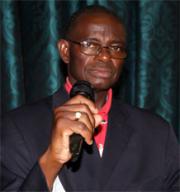


For many, the challenges of life vary and those who are strong to overcome the obstacles on the road to success and stardom would surely go through rigours. One man who never believed he could attain the height he found himself today is Professor Dele Braimoh. First, he never had the normal educational attainment that could qualify someone as a professor and second, he never knew he was being prepared by the Almighty God. Armed with dexterity and deep passion for education, Prof. Braimoh was able to acquire some level of education by divine means. He worked assiduously in the university after bagging his masters and Phd degrees. His foray into Christendom was also by divine intervention. He was a parish pastor at the RCCG after working as a photographer, typist and radio mechanic. It was during his time at the RCCG that he was called by God to found the Cornerstone Revival Church which today is making waves in South Africa, winning many souls and changing the face of Christianity across the country and beyond. He spoke with Sahara Weekly about himself, his relationship with God, his wife and the ministry. Enjoy reading.
Interestingly sir, you are a professor and also a pastor, can you tell us how the journey began?
It has been a very wonderful journey, when I tell people that it is just by the grace of God that I became a pastor, I have been a professor for about 25years and I have thought in many universities in Africa for about 35 years but the journey was rough, I never had any basic education, I never went to the secondary school for a day, I read at home through the extra-moral studies at the University of Ibadan and I did my advance level on my own before I went to the University of Lagos (UNILAG) where I had my first degree and then later to the University of Ibadan for my Masters. I finished my Phd in 1986, that is about 31 years ago. Well, it has not been easy, going by that background, it was rough especially coming from a polygamous family, I never had the advantage of going to school apart from when I had the primary school education and then the modern school In those days, I was on my own but I thank God today for seeing me through not because I was clever than anybody, I love education and I had to do it on my own having learnt photography, typing and shorthand, radio mechanic, those were the things I did before I went to the university but I thank God today that after teaching for 35 years in the university, though I got born again in between and then I joined the whole process of being a parish pastor under RCCG and then also teaching but eventually when God called me out to start the CORNERSTONE REVIVAL CHURCH in Pretoria, South AFrica and then working in Universities across Nigeria and Lesotho in South Africa, I eventually retired as a UNESCO Chair of Open and distance learning at the University of South Africa, I retired in 2012 and since then, I went into full time ministry, it has not been easy, if not for God, it would not have been anything that we are seeing but it has been a pleasant, fascinating journey especially now as a servant of God because I used to tell people in those days University of Ibadan and Lesotho University used to be my employers but right now, Jesus Christ is my employer.
You said you never attended a secondary school, what was your driving force?
It was not just by choice, it was by force. I used to be a departmental secretary at the Department of Theatre art at the University of Ibadan, my professor used to be Late Prof. Yinka Adedeji, he was a very hardworking man. I used to think I had everything because I read my O’levels at home so I was very content but I was overseeing typist, drivers, synographers, so I thought I had arrived until one day I was trying to type an examination question and two boys and two girls came in despite the fact that I wrote at the entrance of the office that it is out of bound for students, but they just ignored it and they came in, I asked if they were students of the department and they said yes, I said they should have read the notice on the door and they said and so what? They laughed and they said ‘You this bloody typist’, I seriously cried, because of the fact that I never went to secondary school, I never thought somebody who never went to secondary school could ever make it so when my professor came back, I went to report to him, I got their names then, he apologized and asked to tell me two things, he said unfortunately, he cannot tell them to apologize to me and that they are undergraduates, leaders of Nigeria’s tomorrow and they are studying for examination and therefore, I shouldn’t expect them to come and apologize because there are many things going on in their brains, so if they are the leaders of tomorrow, it means I’m the messenger of tomorrow, he said I should take it as one of the hazards of my professional calling, it’s very belittling for him to ask them to come and apologize to me, I wept and made up my mind to see what is going on in the heads of people in the university, and also aspire to be an undergraduate. That year, I registered for my A’Levels, I went to school, met some of my friends in the University to recommend books for me and be my supervisor. In fairness, I thought I had arrived but thank God today, I told Prof. Adedeji after I got admission, I wrote Economics and Government, I had A in Economics and B in government giving me 9 points so that was how I applied to many universities, God answered my prayer, I had admission into many universities but I chose UNILAG to read Mass communication, if not for those boys and girls, I would have been old and tired now. I thought I had arrived until they showed me I was nothing. When I finished my first degree, I returned to the University of Ibadan for my masters so that they will not think I have gone to buy certificate for the number of years I went for my advanced level, I did my masters in the same department and also served as a Youth Corper in the same department, teaching, eventually I did my masters in education and when I finished, they said they have never seen anyone like me, combining Mass Communications with education and they wanted somebody in that position, except I wanted to go for my PHd, they would immediately absorb me so I started as an Assistant, then as a lecturer, and I started to rise until I left Nigeria in the 1990s.
This is quite inspiring, how did you feel when you became a graduate?
I cried, I did not cry bitterly until I had my Phd because my father who had six wives, unfortunately he is late now, never saw any value in education, and when Prof Onabanjo was the then VC of University of Ibadan when he was conferring the doctoral degree on few of us, I cried having a handshake with him because I just thought what kind of Journey have I made from having no secondary education, for being a typist, photographer, radio Mechanic now calling me doctor Dele, it amazes me, this is why I say to the young ones except there is no determination, that is when you can not achieve, I tell people not to say the sky is the limit, beyond the sky is the limit because if without educational foundation, I could still go for the Phd, in fairness I believe there is nothing one cannot achieve with determination. The driving force was that I want to achieve this to make myself unique among my family members and after everything, I and Professor Adedeji were both sitting at the senate and I use to query him on certain things when he makes comment because he has a Phd and I had Phd too though he was a professor but I was not a professor yet so he said he’s not surprised because he knows I can always achieve something, maybe he is the one God used to propel me, that was my driving force
Redeemed GO, Pastor Adeboye once said something that his dream or aspiration is to be a Vice Chancellor and it is so obvious that you have the same passion, what was your dream educationally before you came into the ministry?
I wanted to aspire to become a Vice Chancellor but luckily I was a sub-dean as they call it in Nigeria at the faculty of education because my dean used to be a travelling dean so I used to be in charge of everything so I was thinking not to become a dean since I was a sub-dean already, but then I was thinking of becoming a vice chancellor of any university just to tell them I got to that level with my kind of educational background, in the long last, I thought it was a dream I have pursued earnestly but when the calling even with this one to have become a UNESCO Chairman of a University in a foreign land and I have travelled to over 32 countries of the world because of my position so I thought one day I must be a vice chancellor but God said I’m wasting my time, it was a drastic U-Turn I never knew though I was working until God said he needed me, I thought I was working as a pastor and as an academician but when prophecies kept coming including the prophecy of Brother Iginla who said I am in the wrong field and also Daddy Adeboye said the same thing that is it because I’m a professor and that is why I didn’t want to answer God’s call but I said I’m answering God because I was doing it as a part time then but now God called me and gave me the name of the ministry, it has been a very wonderful thing. I think I couldn’t be fulfilled than what I’m experiencing now, I have touched lives, evangelized, and God is doing a bit of His miracles to heal, change the destinies of people through prayer in our church, we are young but we are going gradually, so it is a very super accomplishment for me. I don’t even see the title of being a professor as more rewarding to me than when they said Pastor, and this is why some people call me Mr. Double P.
How would you describe the transition from the academics to the ministry?
It was originally complementary because you as a professor in the university, you are a parrot, you talk but on top of that, the reality is that with the ministry, you are also a parrot because you preach, the only thing you add to it is winning of souls for God and you do it passionately, I was prepared from being an academic to answer the call of God, it was an easy thing for me because I was talking all along and it has become part and parcel of my life, I can stand in class for hours ministering to people is no longer a problem, except that you are not talking about academics but when you dish out some points in the Bible, you must be able to convince people so I see it as a complementary effort and therefore to be able to move to the other side wasn’t a problem for me.
Lets talk about the ministry now, what makes your ministry unique?
Well, it is unique in the sense that, as I told you we are still young but to some people, I think my life evangelizes Christ, how could anybody has got to this level and got back to the church, I’ve seen people ask me of what I am looking for in church despite my post, sometime after we started, I got a job and the salary was about $15,000 without Tax and I was to relocate to Kenya to be an African Director for an international organisation and they said I would be travelling around, which is my hobby, and also live in a big house in Kenya and it was supposed to be a 5 years contract, I didn’t apply for it, why didn’t it come when I was a UNESCO Chairman, they only said I should submit my CV and let them know when I would start but when I spoke to God about it, God told me He will allow me to take the Job but from this time around I’ll be on my own so I rejected it so right now, I’m focusing on my ministry, I let my members know my past so most people say they like my God and they want to serve Him, sometimes I ask why God made me go through all the academic heights before calling me but it is for a purpose so whatever God does, He has never made mistakes.
What was your wife’s reaction when you told her you wanted to leave the academics for full time ministry?
I must tell you frankly that she was very happy, I thought she and God were communicating regularly, she never knew it was series of prophecies and warnings that I had that made me to change, she said that has always been her dream, it’s not as If she’s not enjoying my company as an academics but she said she sees me in the church as a full time ministry, where are we going to get the money though our last born was 35 and married so we are not sponsoring anybody but she said God will always provide, she is backing me in the ministry and I don’t look back, when I am not there, I have other pastors working with me, she is there too and very happy. For coming to Israel, she was one of the motivating factors, she said if my daddy is having his birthday and for this pilgrimage, I just have to join them and God provided the money. She is backing me very well and the children also pray and encourages me. When daddy was asking us of how many years we want to live, I said I still need beyond 70, I need another 50 so I will be able to impact positively on lives, I am not thinking of anything in this world, I want to build my home in heaven so that at the end of the day I will also be welcomed to paradise, that is my mission.
Would we be right to say your background and your life story is the secret of the success of your ministry?
I should think so because coming from that background, having travailed those things, I never dreamt of becoming a professor but with everything, that has given me the full commitment to say if God can do it, how could God not do His own work, It is one of the things that energizes me, even if I do not become a Vice Chancellor, I am already a Professor and there is no other position in the university that anyone would aspire to be because even the VC is a political appointment but this is an academic achievement and if then I use that, I do not see how God will not support me to do His work, teaching me the way to go about it, sending people like my father to me to instruct me, I have no fear that the ministry would expand to attract people to win souls for God
Some of your colleagues, what were their reactions when you told them you wanted to leave for full time ministry?
You see, one thing everyone is craving for is money, if it becomes the overriding force everybody is using, people may not make heaven, most of them thought I was crazy, someone hated me for it and said how will I reject a job of $15,000 and when I told him my next employer is Jesus Christ, he said Dele, now I know you are crazy, so they did not support, but most of them when they have problem, they come, we pray, some of them have seen changes, some of them are becoming Christians, I suspect that if they are called for full time ministry, they will not hesitate to go but initially it was tough, most of them looked at me as an eccentric, after about 25 years of being a professor, when I am supposed to be enjoying the fruit of my labour but well, it took me sometime to convince some people but since it is my life, they should not live my life for me, I was convinced with what I was doing and some of them have seen the results. Whatever you have minus God, that person is finished, what is happening around me is sufficient to convince them without me telling them, I am enjoying it and I am proud to say it anywhere. We have our website and some go there and get amazed (www.cornerstonerevivalchurch.org), it is fantastic, we are young but I know with the support of Daddy Joshua Iginla, beyond the sky is our limit, he is doing a lot for us. He established the church actually, he came to South Africa to establish it and he has come to minister when we were two years, we are his baby and he has not left us alone, he is my spiritual father, with the support, we may have not gotten the finances but we believe that God will open doors and also raise within the church millionaire members.



Fidelity Bank grows gross earnings by 38% to N434.95b in Q1
Fidelity Bank Plc recorded 37.9 per cent growth in gross earnings to N434.95 billion in first quarter 2026 as the international commercial bank continued to expand its core banking market share.
Interim report and accounts of Fidelity Bank for the three months ended March 31, 2026 released at the Nigerian Exchange (NGX) showed that gross earnings rose from N315.42 billion in first quarter 20025 to N434.95 billion in first quarter 2026, representing an increase of 37.9 per cent.
The top-line performance was driven by impressive growth in the bank’s core business operations with interest incomes rising by 22.8 per cent to N314.48 billion in first quarter 2026 as against N256.10 billion in first quarter 2025.
With net interest income at N180.97 billion, the bank closed the period with profit before tax of N92.48 billion. After taxes, net profit stood at N74.47 billion for the three-month period. Earnings per share remained high at N5.69, underlining the capacity of the bank to reward its shareholders.
The balance sheet of the bank also emerged stronger. Total assets crossed the N11 trillion mark to N11.35 trillion by March 2026 compared with N10.46 trillion recorded in December 2025. Customers’ deposits increased from N6.89 trillion to N7.38 trillion. Total equity rode on the back of earnings growth to a 27.5 per cent increase from N1.09 trillion in December 2025 to N1.39 trillion by March 2026.
The first quarter 2026 results further consolidated the strong earnings outlook of the bank, which had successfully completed its recapitalisation amidst impressive earnings performance in 2025.
Fidelity Bank had recorded double-digit growths in interest and non-interest incomes as well as key balance sheet items during the year ended December 31, 2025.
The audited report showed that gross earnings rose from N1.04 trillion in 2024 to N1.52 trillion in 2025, an increase of 45.6 per cent. Interest and similar incomes had grown by 38.7 per cent from N803.1 billion in 2024 to N1.11 trillion in 2025. Fees and commission incomes also rose by 44.7 per cent from N78.4 billion to N113.4 billion. The bank recorded net profit after tax of N242.4 billion in 2025.
The bank’s balance sheet emerged stronger with total assets rising by 18.6 per cent to N10.46 trillion in 2025 as against N8.82 trillion in 2024. Customer deposits increased by 16.1 per cent from N5.94 trillion to N6.89 trillion, reflecting continued franchise strength and an improved funding profile. Net loans and advances meanwhile declined by 2.4 per cent to N4.28 trillion in 2025 as against N4.39 trillion in 2024, attributable to customers paying down on their mature obligations.
The bank had in 2025 strengthened its capital position, with eligible capital rising to N561 billion, above the regulatory minimum of N500 billion for banks with international authorisation. In addition, capital adequacy had remained robust, with Capital Adequacy Ratio of 30.94 per cent by December 2025 as against 23.47 per cent by December 2024.
Managing Director, Fidelity Bank Plc, Dr. Nneka Onyeali-Ikpe, said the first quarter 2026 results reinforced the bank’s strong and resilient business model.
She noted that with the remarkable success of its recapitalisation programme and continuing expansion, Fidelity Bank has entered a new era of growth and impressive returns.
“We are on a stronger footing and confident that we will set new growth records that are reflective of our legacy and the future we are working on,” Onyeali-Ikpe said.
Business
Dangote Refinery Ends Nigeria’s Era of Fuel Import Dependence, Boosts GDP, FX Earnings — EIU
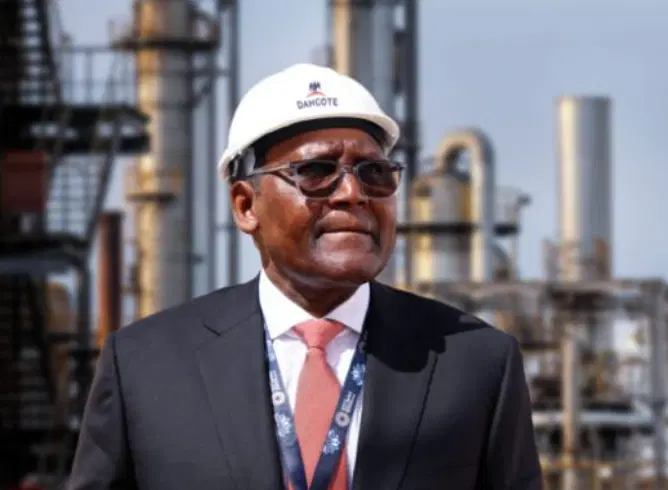
Dangote Refinery Ends Nigeria’s Era of Fuel Import Dependence, Boosts GDP, FX Earnings — EIU
The operational ramp up of the 650,000 barrels per day Dangote Petroleum Refinery & Petrochemicals is fundamentally reshaping Nigeria’s downstream oil sector, significantly reducing the country’s dependence on imported refined petroleum products and strengthening its external position, according to the Economist Intelligence Unit (EIU).
In its latest assessment on Nigeria’s fuel market and regulatory environment, the EIU said the refinery has already transformed a sector that was previously characterised by heavy reliance on imported fuel despite Nigeria being Africa’s largest crude oil producer. The report noted that the refinery met nearly 80 per cent of domestic petrol demand in April and produced enough volumes to satisfy local consumption requirements as operations approached full capacity.
The EIU described Nigeria’s downstream petroleum sector before the refinery as “long dysfunctional”, noting that the country had remained almost entirely dependent on costly imported fuel while producing nearly 1.5 million barrels of crude oil daily.
According to the report, the emergence of the refinery has reduced import dependence, improved domestic fuel availability and strengthened Nigeria’s balance of payments position through lower import demand and rising exports of refined petroleum products.
“The gradual ramp up of the 650,000 barrel/day Dangote refinery since May 2023 has transformed Nigeria’s long dysfunctional downstream sector,” the report stated. “The country’s main refineries, all state owned, had been inoperative for years and Nigeria was almost entirely reliant on costly imported fuel.”
The research and analysis division of The Economist Group, London added that the refinery’s attainment of full operational capacity and its planned expansion would further support Nigeria’s economic growth and foreign exchange earnings over the medium term.
“Meanwhile, the attainment of full capacity at, and an increase in exports from, the Dangote refinery will support real GDP growth and foreign exchange earnings in 2026 and 2027 and beyond, as a planned doubling of the plant’s output comes on stream around the end of the decade,” it added.
Industry analysts said the refinery is increasingly positioning Nigeria as an emerging refining and export hub, altering energy trade flows across Africa and reducing the vulnerability associated with fuel import dependence.
The EIU noted that the refinery’s expansion has coincided with major reforms in Nigeria’s downstream sector, including the removal of fuel subsidies and the introduction of market driven pricing mechanisms.
The report, however, said the transition from a state dominated fuel import structure to large scale domestic refining has triggered resistance from interests linked to the old import regime.
The latest tensions emerged following the decision by the Nigerian Midstream and Downstream Petroleum Regulatory Authority to relax restrictions on petrol imports despite the refinery’s growing capacity to meet domestic demand.
Dangote Industries subsequently initiated legal action, arguing that continued import approvals undermine domestic refining investments and conflict with the objectives of the Petroleum Industry Act, which seeks to encourage local refining capacity and reduce import dependence.
Analysts noted that the availability of large-scale domestic refining capacity has improved Nigeria’s energy security and reduced exposure to external supply shocks and foreign exchange volatility.
The Centre for the Promotion of Private Enterprise also cautioned against unrestrained importation of petroleum products, warning that such a policy could weaken Nigeria’s industrialisation drive and discourage investments in domestic refining.
Chief Executive Officer of CPPE, Muda Yusuf, said continued dependence on imported fuel had historically contributed to pressure on foreign reserves, exchange rate instability and fiscal leakages.
The refinery’s growing impact is also being reflected in Nigeria’s broader macroeconomic indicators. Earlier this month, S&P Global Ratings cited increased domestic refining capacity and rising hydrocarbon exports among the major factors supporting Nigeria’s sovereign credit rating upgrade – the first in 14 years.
Beyond Nigeria, analysts said the refinery is increasingly being viewed as a strategic industrial asset for Africa, where many countries remain heavily dependent on imported fuel despite rising demand for transportation, manufacturing, and power generation.
Business
BREAKING: Court Dismisses $19.6 Million Claim Against NNPCL — Rules Contract Scope Cannot Be Changed Orally
BREAKING: Court Dismisses $19.6 Million Claim Against NNPCL — Rules Contract Scope Cannot Be Changed Orally
In a landmark ruling on Friday, May 22, 2026, the Federal Capital Territory High Court in Abuja threw out a $19.6 million lawsuit filed by Alternate Dimensions Ventures Ltd against the Nigerian National Petroleum Company Limited (NNPCL), affirming a key legal principle: a written contract cannot be expanded through oral agreements or conduct.
Alternate Dimensions had sought $19,600,000 in professional fees, claiming the scope of its Direct Sale, Direct Purchase (DSDP e-pro) contract with NNPCL was orally expanded. Represented by counsel Patrick Peter, the firm argued it was entitled to the revised sum for services rendered under the alleged new terms.
But NNPCL, through its lawyer Ituah Imhanze of KENNA LP, pushed back sharply, arguing that parties are bound exclusively by the clear terms of their written agreement. Imhanze contended that without any written amendment, the claim was legally unsound, and the court agreed.
Delivering judgment, Justice Hamza Mu’azu upheld NNPCL’s defense, stating that the contract was unambiguous and that no evidence was adduced during the trial, which supported the alleged scope expansion. The court further found that NNPCL fully complied with all contractual terms and committed no breach.
Dismissing the suit as meritless, Justice Mu’azu reinforced the doctrine of sanctity of contract: any amendment to a written agreement must be express, unequivocal, and documented, not implied or verbal.
The ruling spares NNPCL from the S19.6 million claim and also a floodgate of similar potential liabilities.


- Uganda: Parliament concludes vetting of ministers June 2, 2026
- Fund for Export Development in Africa (FEDA) Board Appoints Mr. Emmanuel Assiak as Chief Executive Officer June 2, 2026
- Ecobank Group Launches World First Nature Bond Mobilising Global Capital to Protect Africa’s Natural Ecosystems June 2, 2026
- Merck Foundation Chief Executive Officer (CEO) Dr. Rasha Kelej together with Kenya First Lady support the education of 47 Kenyan Schoolgirls by providing Annual Scholarships till they Graduate June 2, 2026
- Annual Meetings 2026: Governors Back the Bank’s Platform Solutions to Transform Aviation and Health Systems in Africa June 2, 2026
- ThinkMarkets launches ChelseaAI, bringing live CFD trading into Artificial Intelligence (AI) assistants June 2, 2026
- Afreximbank Invites Rugby Africa President Herbert Mensah to Address the 33rd Annual Meetings on a Panel Exploring Sport as a Driver of African Industrialisation June 2, 2026
- Afreximbank Deepens Commitment to Economic Progress in The Bahamas June 1, 2026
- African Electric Vehicle (EV) platform Spiro raises $215M in equity to scale electric mobility and energy infrastructure across Africa June 1, 2026
- Africa Centres for Disease Control and Prevention (Africa CDC) Statement on Attacks Against Health Facilities During the Bundibugyo Virus Disease Response in the Democratic Republic of the Congo June 1, 2026
- Uganda: Parliament concludes vetting of ministers June 2, 2026
- Fund for Export Development in Africa (FEDA) Board Appoints Mr. Emmanuel Assiak as Chief Executive Officer June 2, 2026
- Ecobank Group Launches World First Nature Bond Mobilising Global Capital to Protect Africa’s Natural Ecosystems June 2, 2026
- Merck Foundation Chief Executive Officer (CEO) Dr. Rasha Kelej together with Kenya First Lady support the education of 47 Kenyan Schoolgirls by providing Annual Scholarships till they Graduate June 2, 2026
- Annual Meetings 2026: Governors Back the Bank’s Platform Solutions to Transform Aviation and Health Systems in Africa June 2, 2026
- ThinkMarkets launches ChelseaAI, bringing live CFD trading into Artificial Intelligence (AI) assistants June 2, 2026
- Afreximbank Invites Rugby Africa President Herbert Mensah to Address the 33rd Annual Meetings on a Panel Exploring Sport as a Driver of African Industrialisation June 2, 2026
-

 news6 months ago
WHO REALLY OWNS MONIEPOINT? The $290 Million Deal That Sold Nigeria’s Top Fintech to Foreign Interests
-

 society4 weeks ago
SOCIAL MEDIA IS NOT A BATTLEFIELD COMMAND – WHY THE NIGERIAN ARMY’S ACTION AGAINST JUSTICE CRACK IS A NATIONAL SECURITY IMPERATIVE
-

 celebrity radar - gossips4 months ago
Dr. Chris Okafor Returns with Power and Fire of the Spirit -Mounts Grace Nation Altar with Fresh Anointing and Restoration Grace on February 1, 2026
-

 celebrity radar - gossips6 months ago
Prophet Kingsley Aitafo Releases 2026 Prophecy: ‘Nigeria Will Rise, but the World Must Prepare for Turbulence’
You must be logged in to post a comment Login
You must log in to post a comment.