
celebrity radar - gossips
Revival! Dapo Abiodun’s Strides in Reviving Quality Education in Ogun

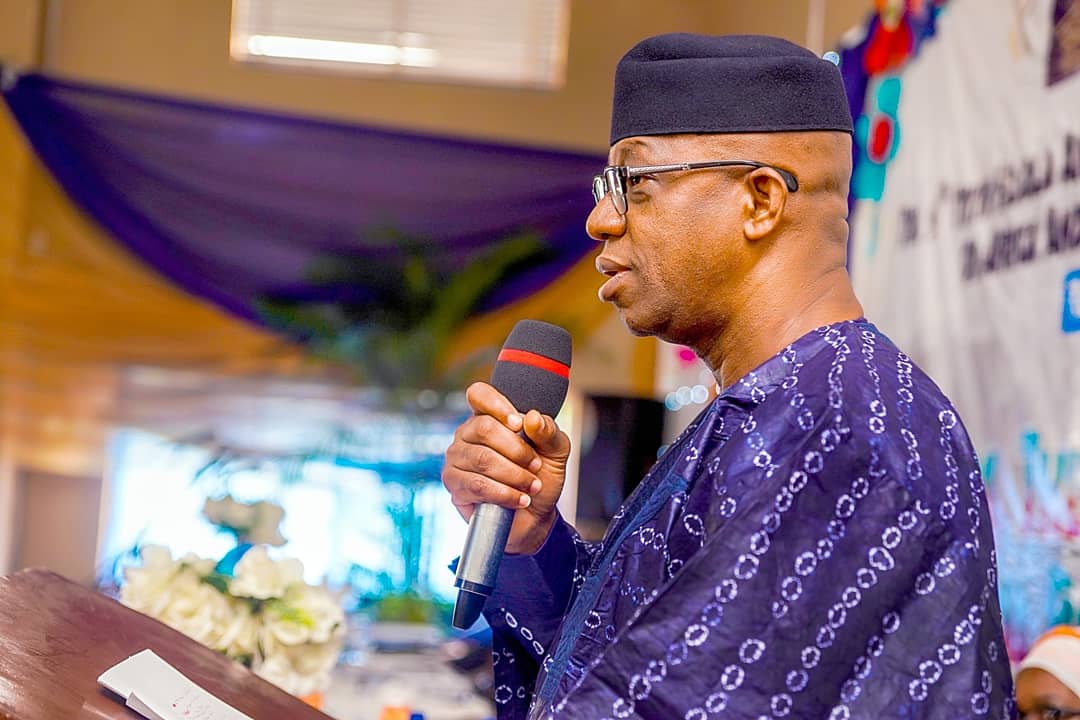
That was the most apt and most resounding word coming from the vocal box of the then gubernatorial candidate of the All Progressives Congress (APC) in Ogun State. Prince Dapo Abiodun minced no word about his intent to work round the clock to revive education from the near comatose it had been plunged into in Ogun State, a state which was before then known for being among the best in Nigeria. Empirical evidence as well as historical antecedents pointed to Ogun State as the Nigeria’s cradle of civilisation. But all that changed over time due to neglect and lack of deliberateness on the part of people at the helm of affairs then. Now that he is in the saddle, Governor Dapo Abiodun has unleashed his ingenuity to bring back the lost education glory of the state which has proudly produced many icons of global repute as well as thought leaders and political gladiators with impact that has remained indelible for ages.
During the silver jubilee of the historic launch of the Free Universal Primary Education in January 1980, late Chief Obafemi Awolowo addressed the Government and people of Ogun State at the Ogun State House of Assembly. According to the former Premier of Western Region, “Education is a fundamental right, and it is the inalienable right of every Nigerian citizen to be educated free by the state. To treat education as a privilege, the opportunity to acquire which is limited to the children of the well-to-do and the rich, or which must be paid for from loan given to the student by the state, is a most misguided policy. For the avoidance of doubt, by free education we mean the abolition of not only of fees but also of all kinds of levies, by whatever name called that are still being imposed and collected in some parts of the country.”
With this speech, foremost statesman, Chief Awolowo, re-emphasized the significance of popular education of the masses, even though free education had been core of his politics. This ideal has equally been enunciated by Governor Abiodun whose has tasked his administration to get the state back to the enviable top. In his inaugural speech, Governor Abiodun made no pretence about the enormity of challenges in the education section. He lamented the state of education sector, which he described as so worrisome, particularly in funding, white elephant projects some of which were moribund, unpaid salaries, controversial campus relocation, hasty appointment, among others.
Governor Abiodun brought his sense of duty to bear immediately he assumed duties. He made free education mandatory for pupils in primary and secondary schools. Prior to his coming on board, these groups of students were subjected to paying indiscriminate fees and levies with little or nothing to justify such payments. His declaration of free education put immediate end to the N3,700 levied on students as adopted by the former administration on the advice of the Parents Teachers Association.
“The fee negates the free education policy of this administration. It is like payment through the back door,” Abiodun said when defending his administration’s decision to take the burden of school fees off parents whose salaries are already stretched.
When questions were raised about the sustainability of the stoppage, he assured that his team were on top of the situation and would be working with school principals and headmasters general to look into the issue and proffer ways in which the gaps created by the stoppage would be blocked.
“I hereby suspend the payment in all our schools. We will also look into the issue of principal and headmaster generals. I have told them to go and look at and how we can make it work without having to charge anybody, because we promised we are going to offer free education.”
This has put paid to indiscriminate charges in primary and secondary schools, an initiative that has seen increase in the rate of student enrolments in primary and secondary schools.
Governor Abiodun in his maiden address after resumption, made it clear that his administration was going to tackle the hydra-headed challenged head long. “We are going to bring our education sector up to standard.
“Yes, we have the largest number of tertiary institutions in this State, however, the performances of our students are not encouraging and we have to change that so we may be declaring a state of emergency in the education sector.”
One of the earliest actions Abiodun took as Governor was setting up visiting panels on tertiary institutions in the state to assess the challenges facing the institutions, evaluate them and recommend actions to be taken to address the issues. These Panels have been submitting their reports; and the governor has alluded to the fact that his administration has resolved the issues at Moshood Abiola Polytechnic, and the embattled Tai-Solarin College of Education (TASCE), Omu, Ijebu, adding that the state government has set up a Government Delivery Unit for education in the state.
Governor Abiodun has also demonstrated that he is for all institution irrespective of their ownership structure. He has constantly visited and celebrated wins of privately owned institutions as well as those owned by both Ogun State and Federal Governments while also has pledged infrastructure development to aid their operations.
At the 40th anniversary and 19th convocation ceremony of the Federal Polytechnic, Ilaro, the Ogun State Governor offered Miss. Akintola Esther Modupe, the best graduating student of the institution automatic employment. Miss Akintola graduated with a cumulative average grade of 3.90 out of the maximum 4. She would commence work immediately after her mandatory one year national youth service scheme. The same gesture was also replicated during the convocation ceremony of Ogun State Institute of Technology where Governor Abiodun offered immediate employment to the Overall Best Graduating Student with a CGPA of 3.85 on a scale of 4.0, Adedokun Yetunde of the Department of Accountancy.
Governor Abiodun’s administration greatly appreciates the importance of personnel in educational development. As such, he has not only been about renovations and building of physical structure, even though that has been a front-burner activity for his government. He recently directed that promotional examination and interview for career elongation of primary school teachers to Grade level 15 be carried out. Recently, he approved the release of 2016 and 2017 promotion for 10, 000 teachers.The administration’s monthly commitment to timely payment of salaries and benefits of teachers has always been given 100% attention.
Ogun State Government pays an average of N791million pensions to retired Local Government Council workers and the State Universal Basic Education Board, SUBEB, retirees monthly. The present government has vowed to offset an outstanding debt of N32billion in gratuities and death benefits incurred between August 2011 and June 2019 under its Transition Pension Scheme.
Records from the Bureau of Local Government Pensions showed that the present administration has been facilitating prompt release of retirement savings account balance to retirees who had disengaged from the Contributory Pension Scheme with a view to ensuring that senior citizens enjoy better life after meritorious years of service to the councils. Apart from the N791 million being paid monthly as pensions, the Bureau has also paid N4,6 billion as monthly pensions between January and June, 2019.
Governor Abiodun’s reinstatement of Deputy Director in the Ministry of Education, Science and Technology, who was sacked by the immediate past administration for alleged dereliction of duty, shows his resolve to be fair and address all types of injustice meted out to workers. Also reinstated was the former Chairman, Nigerian Union of Teachers, Ogun State Chapter, Mr. Dare Ilekoya who had been compulsorily retired for alleged infractions, during the 2016 World Teachers Day celebration. Governor Abiodun, who announced the reinstatement during the 2019 World Teachers Day celebration held at the MKO Abiola Stadium, Kuto, Abeokuta, said the action was “to encourage teachers and also the right thing to do.”
The Ogun State Governor said that his administration would continue to ensure that the rights of teachers were protected and he called on teachers to be guided by the laws of the civil service.
Abiodun noted that the celebration of the World Teachers Day was a key element of nation building and a catalyst for the mental, physical, social and spiritual development of humanity, adding that the celebration was a great day of joy for teachers and equally those trained or brought up by teachers.
“I know very much the sacrifices that teachers make on a daily basis to impart knowledge, considering the prevailing socio-economic situation where we have continued to see that students spend a longer part of their days with their teachers. The teachers are fast becoming foster parents as well, and as such, a good student is not just a reflection of the home, but also of the teacher. Celebrating our teachers is, therefore, not a thing of one, but of all days,” he said.
Abiodun enjoined the teachers to double their efforts so as to achieve better performance from students in the Senior School Certificate Examination (SSCE) and other examinations, commending the academic excellence and sagacity of professional tutors and teachers at the national level through the exploits of Yewa College, Ilaro; Comprehensive High School, Ayetoro; Ijebu-Ode Grammar School; Adeola Odutola College; Mayflower, Ikenne; and, Abeokuta Grammar School.
In its bid to further encourage teachers in the state to do more, the Ogun State Government has disclosed that plans are underway to have the Governor’s Teachers’ School Excellence Award, with a view to creating healthy and meaningful competition among teachers in the state. Governor Abiodun made this known while welcoming the awardees that did Ogun State proud at the President-Teachers School Excellence Award (an award for teachers across the country) held in Abuja. Abiodun expressed his readiness to domesticate the award to let the teachers know that they can also get their rewards on the earth before proceeding to heaven to get the ultimate laurel.
“I want to introduce a state challenge among teachers in our state. The challenge will be known as the Governor’s Teachers’ School Excellence Award. We are going to domesticate this. What we will do to those that excel will be bigger than what you got from the President-Teachers Award. We will expand it to accommodate more teachers. Today, you have done us proud, our heads are ‘swollen,’ you have done us proud. It is important we sustain it, and one of the ways is to establish the Governor’s Excellence Award,” he said.
He added that the state government will continue to give all necessary support to teachers in the state, saying that his administration would continue to do all in its power to return the state to its place of pride in the education sector.
“If out of 15 awards, we have won 4, that means there is 11 to share between the other 35 states. That means we have done well. I want to assure you that we will give you all the needed support to sustain all what you have achieved,” he said.
Abiodun also disclosed that the State Government would support the winners with cash gifts as a way of incentives, saying that no good will go without its reward.
In another development, the administration is currently embarking on rehabilitation of Public Schools across the 236 Wards in Ogun State.
With the amount of focus this administration is giving to repositioning and strengthening the educational institutions, it is only a matter of time before Ogun State regains it pride of place in the educational sector nationally and globally.




Beauty Meets Glamour as Olaide Ogunyemi Opens New Studio in Mushin
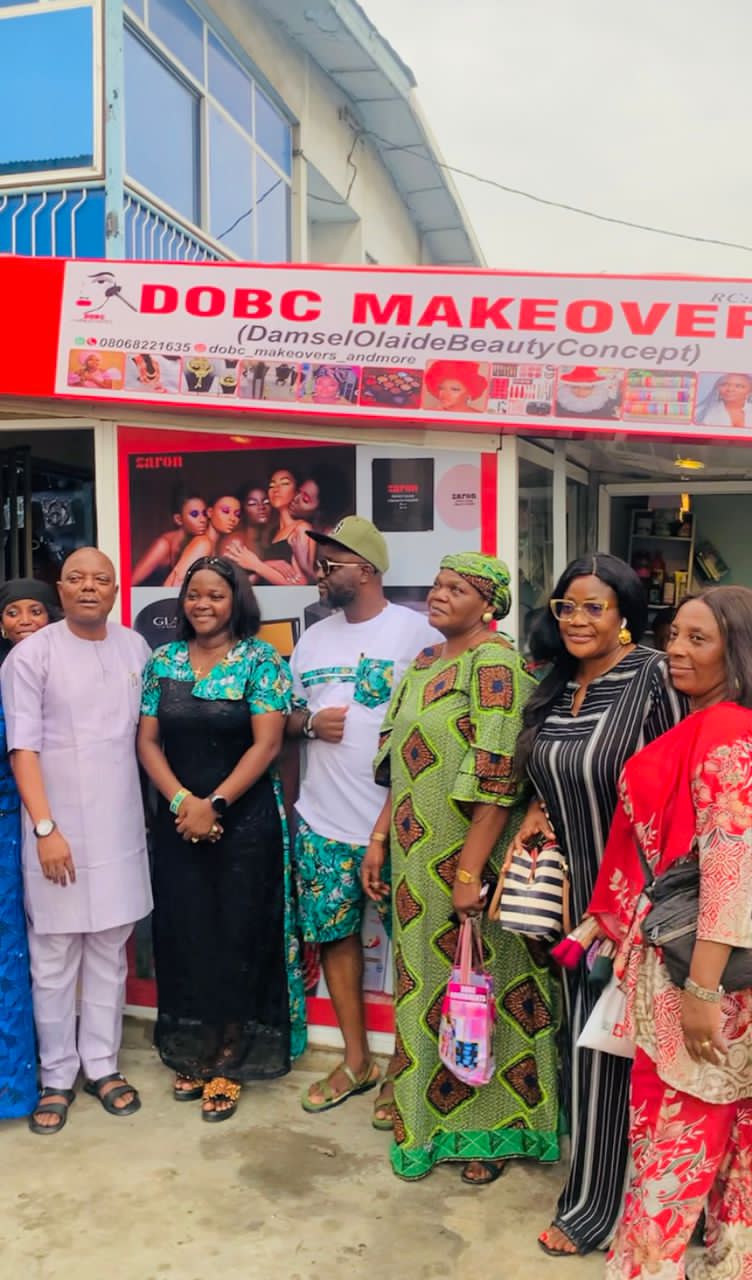
Popular Nollywood actress and professional makeup artiste, Olaide Ogunyemi Oluwayemisi aka Damilola, has expanded her footprint in the beauty industry with the grand opening of her new makeup studio in Lagos.
The talented thespian, who is also the Chief Executive Officer of @Dobc_makeovers_andmore, officially unveiled the ultra-modern beauty space last Thursday, April 2, 2026, in a colourful ceremony filled with glamour, fashion, and pageantry.
Strategically located at 101 Palm Avenue, right beside FitPlus and Sparklight Hospital in Mushin area of Lagos, the new studio is designed to offer top-notch beauty services, reflecting Ogunyemi’s commitment to excellence and professionalism in the ever-growing makeup industry.
The opening ceremony attracted friends, colleagues from the Nollywood industry, beauty enthusiasts, and well-wishers who came out in large numbers to celebrate the entrepreneur’s latest milestone. Guests were treated to a vibrant atmosphere that showcased creativity, style, and the evolving standards of the beauty business in Lagos.
Speaking at the event, Ogunyemi expressed her excitement and gratitude, noting that the new studio represents years of hard work, dedication, and passion for her craft. She reaffirmed her commitment to delivering premium beauty services while empowering aspiring makeup artistes.
The launch of the studio further cements her reputation as a dynamic force, successfully blending her career in Nollywood with a thriving beauty brand.
With this latest development, Olaide Damilola Ogunyemi continues to inspire many young entrepreneurs, proving that talent, consistency, and vision remain key drivers of success in Nigeria’s creative and business landscape.


Daniel Eromosele Eulogize Adams Oshiomole as he turns 74 years
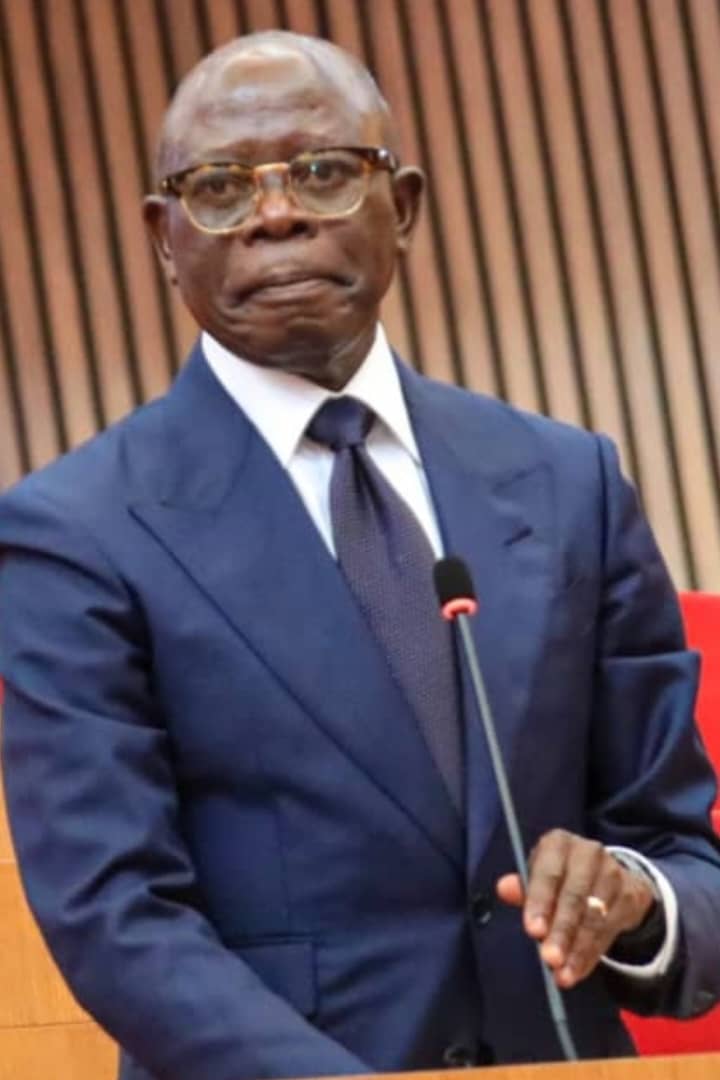
Today, I celebrate an exceptional leader, a fearless voice for the people, and a man whose life has remained a symbol of courage, sacrifice, and unwavering commitment to justice—Distinguished Comrade Senator Adams Aliu Oshiomhole.

Your journey has been nothing short of inspiring. From your days as a vibrant labour leader to your impactful tenure as the Executive Governor of Edo State, and now as a respected Senator of the Federal Republic, you have consistently demonstrated what it means to serve with integrity, strength, and purpose. Your contributions to the growth of our nation and the development of Edo State remain indelible and deeply appreciated.
You have not only built structures and institutions but have also built people. I am personally a beneficiary of your leadership, your guidance, and your belief in empowering others. Your influence in my life has been profound, and I remain grateful for the opportunities and inspiration you have given me.
On this special day, I celebrate not just your achievements, but the man you are—resilient, principled, and ever committed to the progress of Nigeria and her people.

May this new year bring you renewed strength, greater wisdom, good health, and more remarkable accomplishments. May your legacy continue to shine brighter with each passing year.
Happy Birthday, sir. Wishing you many more fruitful and impactful years ahead.
celebrity radar - gossips
Accolades to Empress Genevieve Wining as she Celebrate birthday in Grand style

Accolades to Empress Genevieve Wining as she Celebrate birthday in Grand style
Emmanuel Clement
Vilnius, Lithuania – The Grand Hotel Vilnius will host a grand birthday celebration in honor of Her Majesty The Empress Genevieve Wining of the United Kingdom of Atlantis (UKA) on April 4th, 2026.
The four-day event promises to be an extravagant affair, marking the special birthday of Empress Genevieve Wining. The celebration will take place at the prestigious Grand Hotel Vilnius, Lithuania, renowned for its luxurious ambiance and exceptional service.

According to the event flyer, the birthday celebration will be a spectacular occasion, fitting for an empress. Guests can expect an elegant setting adorned with golden accents, sparkling champagne, and festive decorations, creating a regal atmosphere befitting the occasion.
The Empress Genevieve Wining of UKA is expected to grace the event, which will include various festivities and celebrations in her honor. The occasion aims to bring together dignitaries, followers, and guests to commemorate the empress’s birthday with grandeur and joy.
For media inquiries, accreditation, or further information about the birthday celebration of The Empress Genevieve Wining of UKA, please contact the event organizers.
Courtesy of His Excellency Emperor Prof. Solomon Wining. UKA


-

 society7 months ago
Religion: Africa’s Oldest Weapon of Enslavement and the Forgotten Truth
-

 news4 months ago
WHO REALLY OWNS MONIEPOINT? The $290 Million Deal That Sold Nigeria’s Top Fintech to Foreign Interests
-

 society6 months ago
“You Are Never Without Help” – Pastor Gebhardt Berndt Inspires Hope Through Empower Church (Video)
-

 celebrity radar - gossips2 months ago
Dr. Chris Okafor Returns with Power and Fire of the Spirit -Mounts Grace Nation Altar with Fresh Anointing and Restoration Grace on February 1, 2026
You must be logged in to post a comment Login
You must log in to post a comment.