Connect with us

Politics

Right of Reply Bukola Saraki: The Burden of Standing When Others Walk Away

Published

on

Right of Reply

Bukola Saraki: The Burden of Standing When Others Walk Away
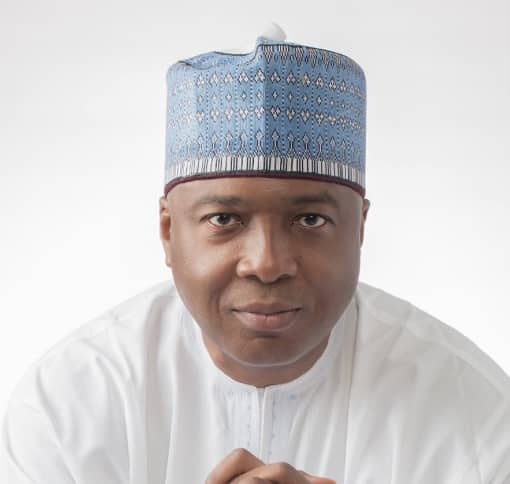
By: Osaze Osa


In politics, consistency is often mistaken for weakness by those who mistake proximity to power for relevance. The recent attempt to paint His Excellency, Senator Bukola Saraki, as a politician undone by duplicity collapses under the weight of facts, history, and context.

Let us be clear: engaging across political divides is not duplicity. It is statesmanship. Senator Saraki is not a member of the ruling APC and owes no one an explanation for maintaining national relationships.
A former Senate President does not retire into partisan isolation; he remains a national asset.
As Senate President from 2015 to 2019, Bukola Saraki presided over the most independent, productive, and reform-driven Senate in Nigeria’s Fourth Republic.

Under his leadership, the legislature asserted its constitutional role, strengthened oversight, and resisted executive overreach. That era remains incomparable to today’s Senate leadership, where legislative independence has largely been replaced by pliancy. Any attempt to equate Saraki’s tenure with what is currently obtainable is not analysis — it is revisionism.

One of the most consequential, yet conveniently forgotten, moments of Saraki’s leadership was his principled resistance to policies that threatened Nigeria’s fragile unity. During the Buhari presidency, Saraki was among the few national leaders who openly cautioned against the Muslim–Muslim political configuration, warning of its long-term implications for national cohesion.

That position was not politically convenient, but it was statesmanlike — placing national balance above personal ambition.
Those who now accuse Saraki of lacking courage should explain why they were silent when such difficult conversations needed brave voices.

The claim that Saraki is isolated within the PDP is equally hollow. History tells a different story. Former Senate Presidents Pius Anyim and David Mark eventually left the party. Former Vice President Atiku Abubakar once exited the PDP as well. Many who wore the party’s colours at critical moments chose personal exits when the pressure mounted.

Even Governor Seyi Makinde, now cited as a benchmark of relevance, was a central figure in the G5 episode that openly worked against the PDP’s presidential candidate in the 2023 election. That episode remains one of the most damaging internal betrayals in the party’s history.

Saraki, by contrast, stayed.

In 2019, at a critical moment when Atiku Abubakar faced diplomatic and political headwinds, it was Saraki’s leadership and credibility that helped secure him a soft landing to travel to the United States — an intervention that altered the trajectory of that campaign. That is not the action of a distrusted or irrelevant politician; it is the mark of a trusted institutional figure.
While others defected, negotiated personal deals, or undermined the party from within, Saraki remained a stabilising backbone of the PDP. He chaired reconciliation efforts, absorbed political blows, and placed party survival above ego.

Remaining when others leave requires more conviction than leaving when things get tough.
Comparisons with Senator Godswill Akpabio also betray a shallow understanding of political leadership. Alignment with power is not the same as leadership of institutions. Saraki’s Senate strengthened democracy; today’s legislature struggles to assert independence. History will remember that difference.
Saraki’s critics speak of cleverness and arrogance. But politics does not only reward alignment; it also rewards courage, foresight, and the willingness to stand alone when principles demand it.

Today, Bukola Saraki remains standing with the PDP — not because it is easy, but because consistency is his political currency. And in a political culture where defection has become the norm, standing firm has become the rarest form of leadership.
History is indeed unforgiving.
But when the dust settles, it will remember who stayed, who fled, and who stood for institutions over convenience.

Right of Reply
Bukola Saraki: The Burden of Standing When Others Walk Away
By: Osaze Osa
Osaze Osa
writes from Abuja

Politics

Global Storm: South Africa Demands UN Action After U.S. Strikes Venezuela. A Demand for Justice, Sovereignty & African Agency.

Published

on

Global Storm: South Africa Demands UN Action After U.S. Strikes Venezuela. A Demand for Justice, Sovereignty & African Agency.

George Omagbemi Sylvester 

“Geo-Political Upheaval, Sovereign Rights, and the Mandate of International Law. With Reflections on Human Welfare, Governance and the African Moment.”


In a world roiled by geopolitical tension and fraught with bitter contests over power and principle, the recent unilateral U.S. military strike on Venezuela has sparked an unprecedented diplomatic crisis, compelling South Africa to urgently urge a meeting of the United Nations Security Council and the very body vested with the solemn responsibility of maintaining international peace and security.


This call from Pretoria represents more than procedural politicking; it is a forceful rebuke against what many perceive as a reckless disregard for the Charter of the United Nations and the sanctity of sovereign statehood. The implications (legally, morally and politically) are vast.

The U.S. Strike on Venezuela: What Happened and Why It Matters.

In early January 2026, the United States conducted a “large-scale military strike” on Venezuela, hitting targets near Caracas and other regions and culminating in the reported capture of Venezuelan President Nicolás Maduro and his wife. The operation was justified by U.S. authorities on grounds of a supposed counter-narcotics mission and alleged criminality involving Venezuela’s leadership, but reaction from around the globe was swift and powerful.


To many observers, this was not a surgical law-enforcement action but a dramatic military intervention into the sovereign affairs of a nation, raising immediate questions about compliance with international law and Article 2(4) of the UN Charter, which prohibits the use of force against the territorial integrity or political independence of any state.


South Africa, already wary of unilateral interventions by global powers, did not mince words. The Department of International Relations and Cooperation (DIRCO) described the strikes as a “manifest violation of the Charter of the United Nations” and warned that such actions undermine the stability of the international order and the principle of equality among nations.


DIRCO spokesperson Chrispin Phiri emphasized that the UN Charter does not authorise external military intervention in matters that are essentially within the domestic jurisdiction of a sovereign nation. This point (legal in form and democratic in substance) goes to the heart of why South Africa felt compelled to demand urgent UN action.


Global Outrage: A Broad Chorus of Concern.

South Africa’s protest echoes a broader pattern of global criticism. Brazilian President Luiz Inácio Lula da Silva condemned the strikes as “a serious affront to Venezuela’s sovereignty,” warning that such acts represent a threat to regional peace. European and Asian powers (from France to China) also warned that no lasting political solution can be imposed from the outside, and many referred to international law as the only legitimate arbiter of disputes between states.


Even non-Western voices, historically wary of hegemonic intervention, registered intense concern. Latin American governments, Russia, and Cuba voiced condemnation, with human rights groups denouncing the violence and civilian impact. Collectively, these reactions underscore a broader anxiety: if one state can strike another without UN authorisation, then the legal framework that protects smaller nations is dissolved.

South Africa’s Stance: A Defence of Sovereignty and Rule of Law.

South Africa’s call for the Security Council to convene is rooted in principles formed from a painful history of colonialism, apartheid, and externally imposed domination. Pretoria’s position affirms that no nation (great or small) should be subject to military incursions without collective authorisation. As Dirco put it, “unlawful, unilateral force of this nature undermines the stability of the international order and the principle of equality among nations.”


Political analysts in South Africa, however, offer caution. Professor Andre Duvenhage of North-West University warned that while the call to convene the Council is legally sound, it carries potential economic and diplomatic costs, possibly straining Pretoria’s relations with major powers and exposing South Africa to geopolitical backlash.


Yet this is precisely the kind of moral leadership that defines nations that refuse to be cowed by power politics. South Africa’s stance is thus not merely defensive of Venezuela, it is a defence of the very legal fabric that gives voice to the Global South.


The Broader Lesson: Africa’s Moment to Uphold International Law.

For many scholars of international relations, South Africa’s position illuminates a critical moment in African diplomacy. As Professor Ifeoma Nwoye, a noted expert in international law, has argued: “Upholding the Charter protects all nations, especially those with limited capacity to respond to violations. To remain silent today is to invite arbitrary force tomorrow.”


Her point is simple but powerful: international law is only as strong as the willingness of states to defend it. In an era where might often masks itself as right, South Africa’s bold invitation to the UN Security Council to act is a call to resist the tyranny of power and defend the rule of law.


From Caracas to Gusau: The Human Cost of Leadership Failures.

While global capitals argue over geopolitics, ordinary citizens pay an incalculable price. In Venezuela, the spectre of war and foreign intervention threatens to upend civilian life, exacerbate humanitarian crises, and ripple into neighbouring regions. In the African context, we can reflect on a parallel crisis close to home: the ongoing struggle for peace and welfare in Nigeria’s Zamfara State.


Governor Dauda Lawal, the democratically elected Governor of Zamfara State, grapples daily with insecurity that has left communities terrorised and destabilised. Despite his administration’s repeated assurances to protect lives and livelihoods, insecurity persists as a defining challenge in the region.


Lawal has publicly committed to the welfare of the people, insisting that his government will “leave no stone unturned” to ensure justice and support for all residents, regardless of political affiliation. His promise to uplift education, security, and economic empowerment resonates with the aspirations of the state’s citizens.


Yet critics argue that persistent banditry and rising violence are evidence of leadership shortcomings. Local civic groups have accused the governor of inefficacy, claiming that insecurity in Zamfara continues to worsen under his watch — a sobering reminder that governance must be measured by results, not rhetoric.


Still, supporters highlight Lawal’s welfare programmes and recognition from labour unions for compassionate leadership, pointing to policies that have improved worker conditions and livelihood support.


Whether in Pretoria or in Gusau, the core issue is unchanged: people yearn for peace, dignity, and protection under accountable leadership. Governments must ensure that human welfare (not power projection) remains the cornerstone of policy.


What Lies Ahead: A Time for Principle Over Power.

The crisis ignited by U.S. military action in Venezuela and South Africa’s forceful appeal to the United Nations encapsulates a fundamental tension in the 21st century: the struggle between might and right, unilateral power and collective responsibility.


South Africa’s demand for a Security Council meeting is not an empty gesture. It is a principled stand for the rule of law, respect for sovereignty, and protection of international norms. It is also a reminder that in a world of shifting alliances and strategic interests, the voices of nations committed to justice and equality must be heard and loudly and without compromise.


As global leaders reckon with the fallout, the lessons echo across continents: peace cannot be imposed by force, rights cannot be guaranteed by bullets, and development cannot flourish in the soil of fear. Whether the United Nations heeds South Africa’s call will determine not just the fate of Venezuela but the fate of international order itself.


For the people of Zamfara and countless others who beleaguered by violence and insecurity, leadership (at all levels) must be anchored in accountability, compassion, and unyielding commitment to human welfare. Only then can we speak of true sovereignty and true peace.


Global Storm: South Africa Demands UN Action After U.S. Strikes Venezuela. A Demand for Justice, Sovereignty & African Agency.

George Omagbemi Sylvester 

Continue Reading

Politics

SELECTIVE BENCHMARKING AND THE BURDEN OF DEMOCRACY IN NIGERIA

Published

on

SELECTIVE BENCHMARKING AND THE BURDEN OF DEMOCRACY IN NIGERIA. Written by George Omagbemi Sylvester

SELECTIVE BENCHMARKING AND THE BURDEN OF DEMOCRACY IN NIGERIA.

Written by George Omagbemi Sylvester


“Why Our Collective Guilt, Loud Arguments, and Even Biases Are Not the Problem; but the Path to National Renewal.”


Nigeria is a country permanently trapped in argument. From insecurity to economic hardship, from electoral controversies to judicial contradictions, every major national event immediately fractures public opinion. Social media explodes, dinner tables become parliaments, and WhatsApp groups transform into ideological battlegrounds. To the casual observer, this constant disagreement may appear unhealthy, divisive, and unproductive. But beneath the noise lies an uncomfortable truth Nigerians rarely admit: WE ARE ALL GUILTY BUT YET OUR GUILT IS ONE OF THE STRONGEST PILLARS OF DEMOCRACY.

This phenomenon can best be described as selective benchmarking though the habit of judging national events through selective moral, political and emotional lenses depending on our political alignment, expectations, or disappointments. When something goes wrong in Nigeria, citizens almost always fall into three broad groups.


The first group blames the government outright. They see every failure as evidence of incompetence, corruption, or deliberate sabotage of the national interest. They highlight institutional collapse, leadership failure, and broken promises. This group is often dismissed as pessimistic, noisy, or anti-government. Yet paradoxically, this is the group that gives democracy its teeth. Without relentless criticism, governments drift easily into complacency or authoritarian comfort.


The second group defends the government. They argue that leadership is difficult, that inherited problems are complex and that institutions require time to mature. They emphasize effort over outcome, intention over impact. This group is equally demonized and often labeled as enablers or apologists. But they too are indispensable to democracy. As political philosopher Edmund Burke warned, “To make us love our country, our country ought to be lovely.” Defenders, rightly or wrongly, try to preserve belief in the state, preventing total collapse of public trust.


The third group is the smallest and most intellectually seductive. These are the analysts, the balanced voices, the “let us look at it from all sides” commentators. They interrogate context, history, data, and comparative global standards. They resist emotional outrage and partisan loyalty. On paper, they are the most reasonable. In practice, however, they often contribute less to democratic energy. Their neutrality, while intellectually admirable, rarely mobilizes citizens or pressures power. As political scientist Samuel Huntington noted, democracy is not sustained by consensus alone but by “INSTITUTIONALIZED CONFLICT.”


This is the uncomfortable irony of Nigeria’s democratic struggle: the so-called ‘bad groups’ are often more useful to democracy than the ‘good’ neutral observers.


DEMOCRACY IS NOT POLITENESS, IT IS CONTESTATION. One of the greatest misconceptions Nigerians hold is that democracy is about unity of opinion. It is not. Democracy thrives on disagreement, protest, opposition, and constant benchmarking of power against public expectations. According to Robert Dahl, one of the world’s foremost democratic theorists, democracy requires “continuous responsiveness of the government to the preferences of its citizens.” That responsiveness is not activated by silence or neutrality but by pressure.


Nigeria’s problem, therefore, is not that citizens argue. The problem is how we argue.

Too often, selective benchmarking degenerates into tribalism, religious bias, and blind party loyalty. Government critics sometimes exaggerate failures, ignore progress, or frame every issue as ethnic conspiracy. Government defenders sometimes excuse the inexcusable, rationalize incompetence, or attack citizens instead of addressing facts. When benchmarking becomes tribal, democracy weakens. When it becomes evidence-based and goal-oriented, democracy matures.


As economist Amartya Sen argued, “Public reasoning is the backbone of democracy.” Public reasoning dies when facts are ignored and emotions weaponized.


WE ARE ALL GUILTY, AND THAT IS THE POINT. The honest confession Nigerians must make is simple: none of us is completely neutral. We all belong (consciously or unconsciously) to one of the first two groups. We criticize when our expectations are betrayed; we defend when our hopes are invested. Pretending otherwise is intellectual dishonesty.


This collective guilt is not a moral failure. It is a democratic reality. In advanced democracies, citizens align with ideologies, parties, or policy preferences and argue fiercely. What separates functional democracies from failing ones is not the absence of bias but the presence of strong institutions, verifiable data and civic discipline.


Nigeria’s institutions remain fragile, which means public debate carries even more responsibility. When institutions are weak, citizens become the loudest checks on power. That is why silencing dissent, labeling critics as enemies, or banning platforms of expression is fundamentally anti-democratic.


As John Stuart Mill famously warned, “He who knows only his own side of the case knows little of that.” Nigeria must learn to argue fiercely without dehumanizing one another.


SELECTIVE BENCHMARKING VS NATIONAL DEVELOPMENT. Benchmarking itself is not evil. Selective benchmarking becomes dangerous only when it abandons national development as its ultimate goal. The moment insecurity, inflation, corruption, or unemployment becomes an opportunity to score party points rather than solve problems, democracy becomes performative.


Countries that developed did so amid intense internal criticism. South Africa’s post-apartheid democracy, India’s noisy parliamentary culture and even the United States polarized system all prove one thing: development does not require silence; it requires structured disagreement.

SELECTIVE BENCHMARKING AND THE BURDEN OF DEMOCRACY IN NIGERIA.

Written by George Omagbemi Sylvester

Nigeria needs critics who demand accountability and defenders who insist on stability, but both must be anchored on facts, not sentiments. As governance expert Francis Fukuyama emphasized, “Political order depends not just on state power but on legitimacy.” Legitimacy is earned through results, transparency and honest engagement with criticism.


A MESSAGE ACROSS PARTY LINES. This reflection cuts across all political parties whether ADC, LP, PDP, APC, and others. Democracy does not belong to one party or ideology. It belongs to citizens who argue, vote, protest, defend, critique and demand better.


You are not a bad citizen because you criticize government.

You are not a traitor because you defend government efforts.

You are not superior because you claim neutrality.


What matters is intent and method.


Avoid tribalism.

Avoid religious manipulation.

Avoid over-politicising national pain.


Let national development be the benchmark and not party survival.


TOWARDS A MORE INTELLIGENT DEMOCRATIC CULTURE. Nigeria’s future depends on transforming selective benchmarking into selective responsibility. Criticize with facts. Defend with evidence. Analyze with relevance. Democracy is not about being right; it is about being accountable to the collective good.


As Nelson Mandela once said, “A critical, independent and investigative press is the lifeblood of any democracy.” The same applies to citizens.


So yes, we are all guilty. Guilty of bias. Guilty of passion. Guilty of selective outrage. Though, if properly channeled, this guilt can become Nigeria’s democratic strength rather than its curse.


Happy New Year to all Nigerians; across SDP, NNPP, ADC, LP, PDP, APC and beyond. May our arguments build institutions, not burn bridges.

SELECTIVE BENCHMARKING AND THE BURDEN OF DEMOCRACY IN NIGERIA.

Written by George Omagbemi Sylvester

Continue Reading

Politics

I Am Not A Coward, I Will Not Join APC: Bala Mohammed’s Defiant Stand Against Political Persecution and the Weaponisation of State Power in Nigeria

Published

on

I Am Not A Coward, I Will Not Join APC: Bala Mohammed’s Defiant Stand Against Political Persecution and the Weaponisation of State Power in Nigeria.

By George Omagbemi Sylvester | Published by saharaweeklyng.com


“Governor Bala Mohammed Rejects Coercion, Affirms Loyalty to PDP and Exposes Dangerous Trends Undermining Democratic Pluralism in Nigeria.”

In a political environment increasingly defined by coercion, defections and the alarming weaponisation of state institutions, Governor Bala Abdulkadir Mohammed of Bauchi State has issued a defiant and historic statement that resonates far beyond his state borders: “ _I’m not a coward. I will not join them. I refuse to join their party_.” This declaration, made on January 2, 2026, is not just a personal pledge of political fidelity, but it is a clarion call for democratic integrity and resistance to authoritarian drift in Nigeria’s political landscape.


I Am Not A Coward, I Will Not Join APC: Bala Mohammed’s Defiant Stand Against Political Persecution and the Weaponisation of State Power in Nigeria.
By George Omagbemi Sylvester | Published by saharaweeklyng.com

Bala Mohammed, a seasoned politician with decades of public service as a senator, former Federal Capital Territory (FCT) Minister and three-term Governor of Bauchi State committed under the banner of the Peoples Democratic Party (PDP), spoke with unwavering confidence as he received an award as Safety Ambassador from the Institute of Safety Professionals of Nigeria. His remarks came against the backdrop of allegations that federal agencies, most notably the Economic and Financial Crimes Commission (EFCC), have launched investigations and court actions he alleges are politically motivated and designed to intimidate him into abandoning his party.

An Unapologetic Stand Against Political Intimidation. Governor Mohammed’s posture is rooted in both principle and history. Having navigated multiple national positions (most notably as Minister of the Federal Capital Territory from 2010 to 2015 under President Goodluck Jonathan) Bala Mohammed is no stranger to the ebb and flow of Nigerian politics. Despite this experience, what he faces today is a distinct and troubling pattern: opposition leaders being singled out by powerful federal agencies in ways that blur the lines between legitimate law enforcement and political vendetta.

In his address in Bauchi, he pointed out that even with constitutional immunity as a sitting governor, his name (and that of his commissioner) was referenced in court matters with serious charges including terrorism financing, conspiracy and money laundering. He described these actions as part of an effort to criminalise him and coerce him into the ruling All Progressives Congress (APC).

This, he warned, is beyond mere political rivalry. It represents the weaponisation of state institutions, transforming bodies designed to uphold justice into instruments of political suppression. “The APC-led federal government thinks they can use the courts and institutions of government to persecute Nigerians who are not within their own party,” he said.

Why This Matters: Democratic Principles at Stake. At the heart of Governor Mohammed’s stance is a fundamental democratic principle: a politician should not be forced to change party allegiance under duress. In a healthy democracy, political competition should be decided in the marketplace of ideas and votes not through judicial pressure or law enforcement harassment.

Political scholar Robert Dahl once observed that “Democracy requires not only free and fair elections but also the freedom for opposition to campaign without fear of reprisal.” If this principle erodes, the very essence of pluralism is jeopardised. Bala Mohammed’s words underscore the urgency of this truth in Nigeria’s context.

Moreover, political analyst Professor Claude Ake of Nigerian political thought emphasised that “Democracy is not merely electoral competition; it is about the rules (and respect for those rules) that allow such competition.” When state institutions appear to serve one party’s ends, the legitimacy of Nigeria’s democratic order is tested. Bala Mohammed’s charge challenges Nigerians to ask whether their political institutions serve citizens equally or whether they have become tools for partisan advantage.


Allegations of Federal Abdication of Responsibility. Governor Mohammed did not limit himself to critiquing political pressure tactics. He also lambasted what he described as a failure of the federal government to deliver tangible development to Bauchi State, despite commanding a significant share of national resources. “In my state, they have not provided one kilometre of road. They have not provided water. Even security agencies (I am the one paying them to work for us) and they have the guts to talk,” he lamented.

This accusation strikes at two core issues plaguing Nigeria’s federal system: resource control imbalances and the insufficient delivery of basic infrastructure and security. Many governors, especially in opposition states, have long argued that federal allocation disparities weaken subnational governments and create dependency that can be exploited politically.

The governor further criticised the current tax regime, warning that policies implemented without adequate consideration of grassroots realities risk deepening poverty rather than alleviating it. This echoes concerns of economists like Ngozi Okonjo-Iweala, who have warned that fiscal policies must be balanced with economic growth and citizens’ welfare to avoid crippling the productive capacities of subnational units.

Resistance, Not Retreat. Perhaps the most compelling dimension of Governor Mohammed’s speech was his rejection of silence in the face of what he describes as political intimidation. He affirmed that peace and security do not require submission to coercion. “IF THEY WANT WAR, WE WILL GIVE THEM WAR. IF THEY WANT PEACE, WE WILL GIVE THEM PEACE,” he declared an underscoring and a commitment to resist victimisation while upholding order.

This posture (resolute yet rooted in democratic engagement) is reminiscent of civil rights leader Martin Luther King Jr.’s call to “stand up for justice, even if it means standing alone.” Bala Mohammed’s insistence on accountability, transparency and continued cooperation with the federal government for national development separates principled opposition from antagonistic defiance.

The Broader Political Context. Governor Mohammed’s remarks arrive amid a broader wave of political defection in Nigeria. In 2025, several governors and political figures left the PDP for the APC, driven by various motives and some ideological, others pragmatic. Yet Bala Mohammed has firmly resisted such trends. Two months before his recent stand, he reassured party faithful that he was not defecting and remained committed to the PDP’s vision, even as other governors departed.

His position also underscores a larger debate within Nigeria’s opposition ranks: how to rebuild a viable political alternative capable of challenging the APC’s dominance and presenting credible governance propositions for the 2027 general elections. As he declared earlier in 2025, defections would not sink the PDP and the party could reclaim political space with strategic leadership and grassroots engagement.

Final Take: A Defining Moment for Nigerian Democracy. Governor Bala Mohammed’s statement (“I AM NOT A COWARD. I WILL NOT JOIN APC”) is far more than a personal declaration. It is a reaffirmation of democratic choice, political courage and resistance to the misuse of power. In a climate where political coercion can easily be mischaracterised as loyalty shifts, his defiance becomes an emblem of democratic resilience.

For Nigeria to deepen its democratic culture, leaders across the spectrum must respect institutional neutrality and allow political competition to be resolved through public engagement, policy debates, and the will of the electorate, not through intimidation or judicial warfare.


As political theorist Samuel P. Huntington once remarked, “The essence of democracy is competition between alternatives.” Bala Mohammed’s bold stance exemplifies this essence and challenges all Nigerians (politicians and citizens alike) to hold fast to the ideals of free political choice, accountability and constitutional governance.


I Am Not A Coward, I Will Not Join APC: Bala Mohammed’s Defiant Stand Against Political Persecution and the Weaponisation of State Power in Nigeria.
By George Omagbemi Sylvester | Published by saharaweeklyng.com

Continue Reading

Cover Of The Week

Trending