Politics
Rivers’ Journey of Transformation Under Fubara* By Paul Thomas
*Rivers’ Journey of Transformation Under Fubara*
By Paul Thomas
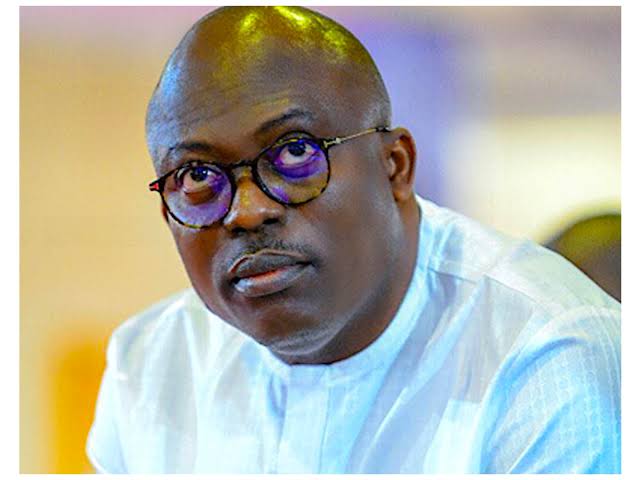
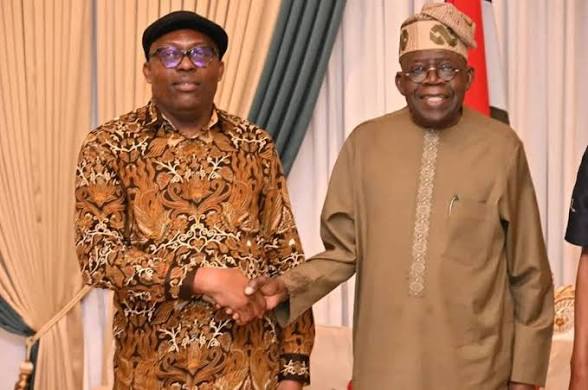
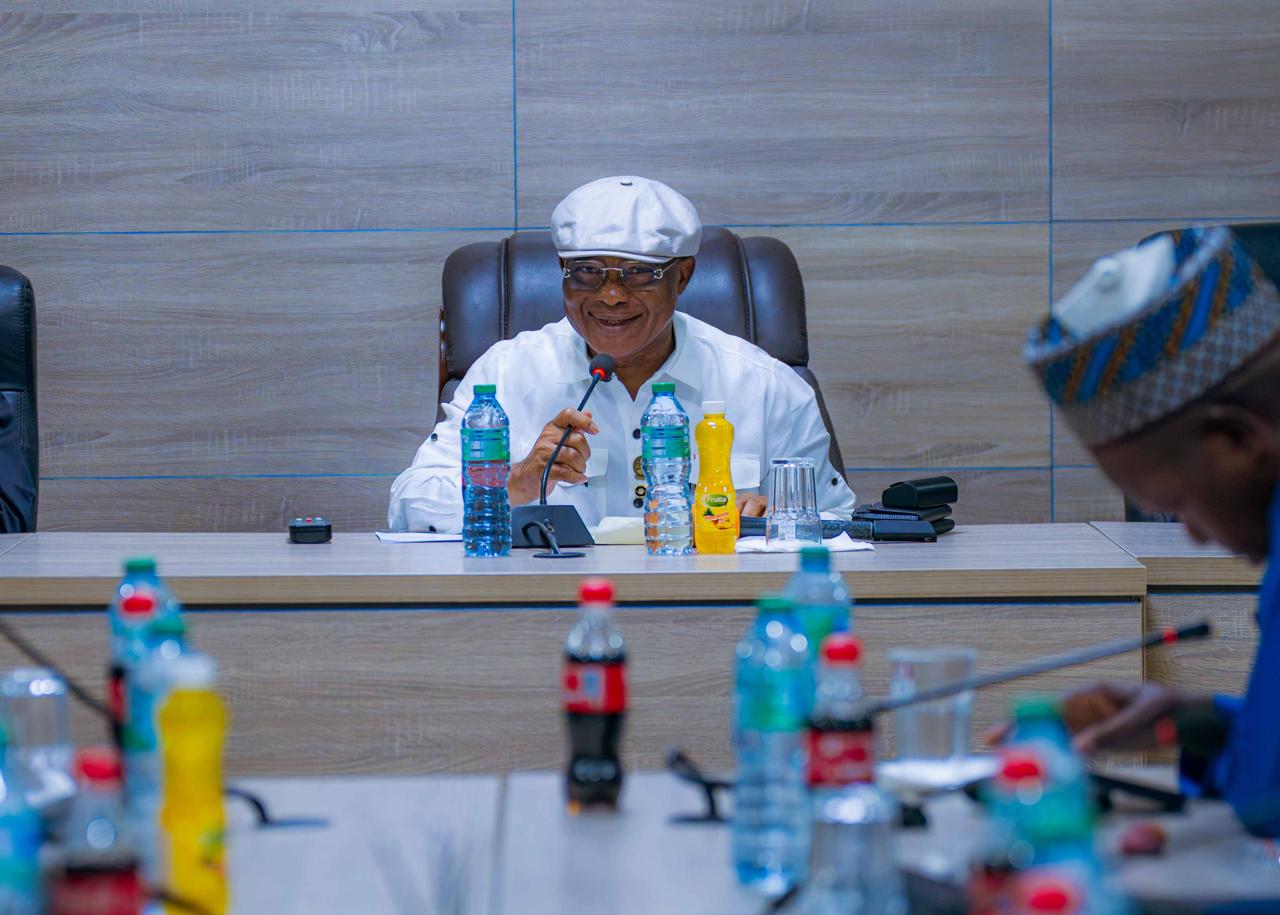
As I stepped into Rivers State, I was bracing myself for accounts of a prolonged and bitter conflict, perpetuated largely through social media and fueled by a dominant narrative that has come to define the state in recent times – one of incessant strife and unyielding hostility. Expecting to witness chaos and turmoil, I was prepared to encounter a state mired in political squabbles and clashes, as sensationalized by the headlines. However, I was pleasantly surprised to find a vastly different reality. Instead of the anticipated disorder, I was met with a transformative landscape that told a more comprehensive and optimistic story, one that is frequently obscured by the din of political theatrics. Under the visionary stewardship of Governor Sim Fubara, Rivers State is undergoing a remarkable renaissance. In a mere 10 months, Fubara has spearheaded numerous projects, effecting a radical overhaul of the state’s infrastructure and ushering in an era of peace and security, thereby redefining the very fabric of the state.
One of the most striking aspects of Governor Fubara’s administration is his commitment to peace and security. During my visit, I observed a palpable sense of calm and safety. People went about their daily activities without fear, a stark contrast to the tense atmosphere that once pervaded the state. This peace is not accidental; it is the result of deliberate policies and actions by the governor. His administration has prioritized security, investing in the police force and implementing measures to curb crime and violence. The once-turbulent state now exudes an aura of calm, an evidence to Fubara’s commitment to security. But it’s the infrastructure development that truly left me in awe.
In this last 10 months, Governor Fubara has embarked on an ambitious journey to reshape Rivers state. From the bustling city of Port Harcourt to the serene rural areas, the signs of progress are evident. Roads are being constructed and rehabilitated, schools are being renovated, and healthcare facilities are being upgraded.
One of the most impressive projects is the reconstruction of the Port Harcourt-Aba Road, a critical artery connecting the state’s economic hubs. This thoroughfare, once notorious for its deplorable condition, has been transformed into a modern, safe, and efficient transportation route.
Governor Fubara has recently reaffirmed his commitment to delivering the highly anticipated 12.5km Trans-Kalabari Road project, and has taken a significant step towards realizing this promise by paying 30 percent of the contract sum to mobilize the contractors to commence work on the project, thereby ensuring its timely completion. This development has brought immense joy to the people of Kalabari Kingdom, who have long awaited the transformation of the swampy areas, and are eager to reap the economic benefits that the completion of the road project will bring. By taking concrete action to fulfill his promise, Governor Fubara has demonstrated to his people that he is a leader who not only makes promises but also manifests them, thereby earning their trust and admiration.
Fubara’s team has also made significant strides in healthcare, with the establishment of world-class medical facilities and the revitalization of existing ones. The Rivers State University Teaching Hospital, a flagship project, has become a beacon of hope for quality healthcare in the region.
The realm of education, a crucial facet of societal advancement, has been accorded significant consideration by Fubara’s administration, which has undertaken a multifaceted approach to enhance the sector. Not only have schools been constructed and renovated, but also a conducive learning environment has been fostered, enabling students to thrive academically. Moreover, the introduction of innovative programs and scholarships has empowered the youth, equipping them with the skills and knowledge necessary to excel in an increasingly complex world, thereby brightening their future prospects.
Furthermore, the governor’s unwavering commitment to infrastructure development has extended to the state’s waterways, with the construction of modern jetties and terminals, which has not only augmented transportation but also stimulated economic activities, creating novel opportunities for trade and commerce to flourish.
The incessant unveiling of projects serves as a testament to the unwavering commitment of Governor Fubara’s administration to crafting a more affluent and thriving future for Rivers State. These projects, while indispensable for the state’s advancement, transcend mere physical edifices; they embody the very essence of a revitalized Rivers State, one that is forging ahead with unyielding resolve and unwavering purpose.
What left an indelible mark on my psyche was the palpable sense of pride and proprietorship exhibited by the residents. They spoke of Fubara’s projects with an air of possessiveness, expressing heartfelt gratitude for the profound and transformative impact on their daily lives, thereby underscoring the profound connection and sense of belonging that has been fostered between the government and the governed.
Fubara’s administration has tackled the state’s longstanding challenges with a multifaceted approach. From road construction to healthcare and education, every sector has received a boost. The governor’s dedication to creating a conducive environment for growth and prosperity is palpable.
Yet, despite these positive developments, the narrative about Rivers state in the media remains largely negative. The feud between Governor Fubara and his predecessor, Nyesom Wike, dominates the headlines, overshadowing the transformative work being done in the state. This focus on conflict is not only misleading, but it also does a disservice to the people of Rivers state, who are eager to move beyond the past and embrace the future.
Governor Fubara is not a man easily swayed by distractions. He remains focused on his vision for Rivers state, a vision of growth and prosperity. His commitment to this vision is evident in his actions. Despite the challenges and obstacles, he continues to push forward, undeterred by the noise and distractions.
My journey through Rivers State revealed a narrative beyond the feud – a tale of transformation, progress, and hope. Governor Fubara’s infrastructure revolution has set the state on a path towards sustainable growth and prosperity, inspiring a new generation of Rivers indigenes. The old narratives of conflict and feud are slowly being replaced by stories of progress and development. And at the center of this transformation is Governor Fubara, a leader who is not just building infrastructure, but also building hope.
It is imperative that we redirect our attention away from the protracted and contentious rivalry between Fubara and Wike, and instead devote our energies to acknowledging and appreciating the transformative initiatives underway in Rivers State. Let us commemorate the significant advancements achieved thus far, confront the obstacles that lie ahead with courage and resilience, and offer our unwavering support to the ongoing pursuit of a more prosperous and enlightened Rivers State. For ultimately, it is not the conflicts and discord that define our character, but our capacity to transcend them and pave a path towards progress and growth. And under the visionary leadership of Governor Fubara, Rivers State is indeed charting a course towards a brighter future, one marked by tangible progress and unwavering determination.
This is a call to action. A call to change the narrative about Rivers state, to focus on the positive developments, and to support the transformative journey being led by Governor Fubara. For it is in this journey that the true story of Rivers state lies, a story of resilience, progress, and hope.
Rivers under Governor Fubara is a state in transformation. It is a state that is shrugging off the shadows of its past and embracing a brighter future. It is a state where the daily lives of its residents are improving, where security is being restored, and where development projects are being executed with impressive efficiency. Amidst the noise of political rivalry, this is the narrative that deserves to be heard. This is the Rivers that I saw, and this is the Rivers that Governor Fubara is building.
As I left the state, I couldn’t help but feel a sense of optimism, knowing that Fubara’s vision will continue to shape a brighter future for Rivers.
Thomas is a UK trained freelance journalist writing from London.
Politics
NATIONAL UNVEILING OF THE IGBO PRESIDENCY PROJECT (IPP)
The Peaceful Path Toward Equity, Unity and Democratic Representation for the Igbo People of Nigeria
1. Introduction & Rationale
The Igbo Presidency Project (IPP) is a peaceful, pro-Nigeria, and pan-Igbo political advocacy initiative established by the Igbo Heroes and Icons Foundation. It is dedicated to the pursuit, in perpetuity, of electing—constitutionally and democratically—a President of Igbo extraction in the Federal Republic of Nigeria.
The IPP is premised on the principle that every major ethnic group in Nigeria must participate fairly in the leadership and governance of the nation, especially one that has contributed immensely to Nigeria’s unity, independence, economy, and democratic culture.
Since the early formation of political parties in Nigeria in the 1940s, the Igbo have been deeply active in the struggle for self-government and eventual independence. Notably, Igbo-led political movements viewed Nigeria as one indivisible entity and deliberately embraced inclusiveness, accommodating Nigerians of all tribes, religions, and ethnic backgrounds in leadership structures. This spirit was exemplified under the leadership of Dr. Nnamdi Azikiwe, whose NCNC reflected equitable representation across the North, West, and East.
The struggle for equitable rights and representation for the Igbo people is therefore non-negotiable, irreversible, and essential for national peace, cohesion, justice, and sustainable development.
This project calls upon Igbo communities in Southeast Nigeria, throughout the Nigerian federation, and across the global diaspora to unite in a common civic purpose: the restoration of dignity, representation, and rights through constitutional means.
2. Historical Context: Who Are the Igbo?
The Igbo are one of Nigeria’s three largest ethnic groups, concentrated in the southeastern region of the country, including Abia, Anambra, Ebonyi, Enugu, Imo, and parts of Delta and Rivers States. Estimates place the Igbo population at roughly 45 million people today, with vibrant diaspora communities across Europe, North America, the Caribbean, and West Africa.
Unlike many West African societies, traditional Igbo political organization was decentralized, rooted in autonomous villages and republican consensus systems rather than centralized kingdoms. This indigenous tradition fostered entrepreneurship, achievement through individual merit, and a culture of civic engagement.
Historically, the Igbo demonstrated uncommon sacrifices for Nigerian unity. For example:
In 1957, when Britain offered self-government to the regions if two agreed, Dr. Azikiwe rejected the offer because he believed the North should not be left behind, comparing Nigeria to “a fleet of ships” that must not abandon one vessel mid-voyage.
In 1959, Azikiwe again rejected an offer from Chief Awolowo that would have made him Prime Minister, choosing instead a coalition that preserved national balance and prevented crisis.
These are among the countless sacrifices made by the Igbo in the interest of peace and stability in Nigeria.
The Igbo also experienced one of the most tragic episodes in African post-colonial history—the Nigerian Civil War (1967–1970)—which resulted in the death of over one million civilians, mostly Igbo.
3. Post-War Reality: Marginalisation and Structural Exclusion
Despite their sacrifices, the post-war experience of the Igbo has been marked by deep structural injustice.
After the civil war, Igbo citizens who had legitimate bank savings were given only twenty pounds sterling, regardless of the amounts they held. This was followed by the declaration of many Igbo-owned homes as “abandoned properties,” particularly in Rivers State, where such properties were undervalued, seized, and sold under discriminatory conditions.
Other patterns of exclusion include:
Persistent relocation and dispossession of Igbo traders in Lagos and other states
Unequal state creation, leaving the Southeast with fewer states than other zones
Systematic denial of key national security and judicial positions to qualified Igbo citizens
Tenure extensions deliberately preventing Igbo succession in strategic offices
These realities continue to fuel perceptions of second-class citizenship, despite the Igbo having no other homeland outside Nigeria.
4. Systematic Injustice and the Unrewarded Sacrifices of the Igbo People
The call for an Igbo Presidency cannot be separated from the long record of sacrifices the Igbo have made for the unity, stability, and progress of Nigeria—sacrifices that have too often been met with exclusion rather than recognition.
From the earliest days of Nigeria’s amalgamation, through the independence struggle and the turbulent years that followed, the Igbo have consistently acted in favour of one united Nigeria, even at great cost to themselves. The massacres of 1953, the pogroms of 1966–1967, and the catastrophic genocide of the civil war remain among the darkest chapters in Nigeria’s history. Yet, despite these wounds, the Igbo people have repeatedly chosen forgiveness, reintegration, and renewed commitment to the Nigerian project.
One of the most defining sacrifices occurred in 1957 when Britain offered self-government to Nigeria’s regions on the condition that two of the three major regions accept. While the Western Region agreed and the North declined, Dr. Nnamdi Azikiwe—then leader of the Eastern Region—also refused, insisting that Nigeria must move forward together and that the North should not be left behind. Had he accepted, Nigeria would likely have fractured permanently into separate countries. The survival of Nigeria’s federation today is therefore inseparable from Igbo statesmanship and restraint.
Even in the political arrangements preceding independence, Igbo leaders repeatedly accepted less advantageous positions in order to preserve national balance. In 1959, Dr. Azikiwe declined the opportunity to become Prime Minister through a southern coalition, choosing instead a weaker ceremonial role to avoid pushing the North into opposition at independence—a decision he described as becoming “a prisoner in a gilded cage.”
Yet, rather than being honoured for such nation-building sacrifices, the Igbo have endured decades of collective demonization and structural punishment. The January 1966 coup was unfairly stamped an “Igbo coup,” despite evidence that Igbo officers played key roles in crushing the coup and that Igbo senior officers were also among its victims. No other ethnic group in Nigeria has been so persistently stigmatized in this manner.
Following the civil war, policies such as the infamous “twenty pounds” restitution—regardless of the savings Igbo citizens held—represented not reconciliation but economic devastation. The seizure of Igbo properties through the “abandoned property” system further dispossessed thousands of families, many of whom never recovered their homes, investments, or dignity.
In contemporary Nigeria, these patterns of exclusion continue through unequal representation in federal appointments, denial of career progression within national institutions, politically motivated removals of Igbo technocrats, and systematic sidelining of the Southeast in strategic national committees and decision-making structures.
Recent developments—including disproportionate ministerial allocations, dismissals of Igbo professionals from key economic agencies, and increasing threats of economic disenfranchisement in major commercial centres such as Lagos—reinforce the reality that marginalisation is not historical alone, but ongoing.
The consistent lesson is clear: patriotism has too often been rewarded with exclusion, and sacrifice has been met with structural imbalance. In a true democracy, such a pattern is unsustainable.
Therefore, the demand for an Igbo President is not a plea for favour, but a legitimate call for justice, equity, and national stability. Nigeria cannot continue to thrive while one of its most nation-building peoples remains permanently shut out of the highest office. The time has come to correct this imbalance peacefully, constitutionally, and democratically—by giving the Igbo people their rightful place in the leadership of their only homeland: Nigeria
5. National Justification for an Igbo Presidency
Beyond questions of ethnic sentiment, the demand for an Igbo President must be understood as a legitimate national necessity rooted in Nigeria’s history, contributions, sacrifices, and the principles of equity that sustain stable federations. The Igbo Presidency Project (IPP) is not an agitation against Nigeria, but rather a call for Nigeria to finally reflect its own democratic ideals through inclusive leadership representation.
The Igbo people are among the original occupants of their homeland long before colonial amalgamation created modern Nigeria. Since that colonial union, the Igbo have demonstrated an enduring instinct for national development, contributing immensely across all spheres of human endeavour—agriculture, commerce, industry, education, health, sports, and civic life. Their presence has never been limited to the Southeast; rather, the Igbo are uniquely pan-Nigerian in settlement, enterprise, and integration.
A defining characteristic of the Igbo is their uncommon openness to other ethnic nationalities. They are widely known for hospitality, inter-ethnic coexistence, and cross-cultural family ties. In many cases, Igbo families living outside their homeland adopt names and identities from host communities, reflecting deep social integration. Even Dr. Nnamdi Azikiwe, Nigeria’s foremost nationalist, gave Yoruba names to his first children born in Lagos—symbolic of the Igbo spirit of belonging everywhere in Nigeria.
Igbo communities also record the highest patterns of inter-tribal marriages across Nigeria, producing generations of Nigerians whose identities embody unity itself. This makes the Igbo question not merely regional but fundamentally national: no group has more invested emotionally, socially, and economically in Nigeria’s collective survival than the Igbo.
Economically, the Igbo remain among the most productive drivers of Nigeria’s internal trade and industrial energy. There is virtually no Nigerian town where Igbo entrepreneurs, artisans, builders, mechanics, traders, and professionals are absent. Their reputation for adaptability, innovation, and resilience has made them indispensable to Nigeria’s commercial ecosystem. This entrepreneurial culture is deeply rooted in the Igbo republican tradition—decentralized governance, merit-based advancement, and competitive excellence.
Historically, Igbo leadership has repeatedly demonstrated visionary commitment to national progress. A striking example is the industrial foresight of Dr. Michael Okpara, Premier of Eastern Nigeria, who proposed a steel complex that would have transformed Nigeria’s industrial base decades earlier. The federal refusal of this initiative, followed by its later fragmented execution outside the East, reflects a broader pattern of missed opportunities and structural sidelining of Eastern contributions.
Even after the civil war, highly qualified Igbo technocrats such as Dr. Eze Melari played central roles in national projects like Ajaokuta Steel, only to be removed through political manoeuvres that undermined competence and delayed national development. Nigeria’s failure to industrialize effectively cannot be separated from the systematic exclusion of capable contributors due to political imbalance.
The post-war era further entrenched Igbo marginalisation through policies such as the infamous “twenty pounds” restitution regardless of savings, and the widespread seizure of Igbo properties under the “abandoned property” framework. These actions reinforced perceptions of second-class citizenship for a people with no other homeland but Nigeria.
Politically, the exclusion of the Southeast from the presidency remains one of the clearest structural injustices in Nigeria’s leadership history. Since independence, nearly all regions have produced multiple Heads of State or Presidents, through democratic and military transitions alike, while the Southeast has remained the most persistently denied zone in the highest office of the land.
Equity demands fairness. In any federation, peace and stability are sustained when all major components feel represented at the centre. Continued denial breeds alienation, while inclusion fosters loyalty, trust, and unity.
The Igbo Presidency Project therefore represents more than an ethnic aspiration—it is a democratic correction, a moral restoration, and a strategic necessity for national renewal. Nigeria’s problems are not insurmountable, but they require competent, merit-driven, nationally invested leadership. The Igbo have consistently demonstrated these qualities across generations.
It is time, morally and politically, to allow the long-marginalised Southeast to contribute at the highest level—not as a concession, but as a rightful step toward a more balanced, prosperous, and united Nigeria.
6. The Igbo in Contemporary Nigeria & the Global Diaspora
Today, Igbo communities remain deeply engaged in national life and international diaspora networks. Igbo excellence is globally visible in entrepreneurship, innovation, literature, and governance.
Notable examples include:
Ngozi Okonjo-Iweala, globally respected for her economic leadership
Philip Emeagwali, credited with pioneering breakthroughs in computing
Indigenous industrial innovators such as Ezekiel Izuogu and Innoson Motors, often under-supported despite their contributions
The continued neglect of Igbo potential is not merely an ethnic issue—it is a national development failure.
7. Vision, Mission and Values of IPP
Vision
A united, equitable, democratic Nigeria where all peoples, including the Igbo, share power, dignity, and opportunity at the highest level.
Mission
To mobilize Igbo communities—locally, nationally, and internationally—to build consensus, political strategy, and civic engagement that culminates in the constitutional election of an Igbo President.
Core Values
Peaceful Advocacy
Civic Empowerment
Equity and Fairness
Inclusivity
Democratic Participation
8. Strategic Objectives
Advocacy & Sensitisation: Promote awareness among Igbo communities and Nigerians at large about the importance of equitable representation in national leadership for peace and unity.
Voter Education: Ensure widespread knowledge of electoral processes, civic rights, and political organization.
Diaspora Mobilization: Build a global network of supporters to complement grassroots and national efforts.
Partnership & Alliances: Engage like-minded groups interested in inclusive governance across Nigeria and globally.
Leadership Development: Groom and mentor future leaders from the Igbo community geared toward national service and presidency eligibility.
Data & Research: Conduct rigorous historical, political, and sociological studies to inform policy proposals and strategic direction.
9. Proposed Sub-Projects & Campaign Programmes
To ensure the IPP is systematic and sustainable, the following sub-projects and campaign initiatives are proposed:
A. Igbo Political Empowerment Academy (IPEA)
A specialized institution for political training, civic education, leadership readiness, and strategic campaigning.
B. Global Igbo Civic Forum (GICF)
A diaspora network that fosters global dialogue, lobbying, and resource mobilisation supporting the IPP agenda.
C. Youth Engagement & Future Leaders Programme
Focused on mentoring Igbo youths in political processes, debate, advocacy, and public service.
D. Media and Narrative Counter-Campaign (MNCC)
To counter misinformation, promote positive Igbo narratives, and build bridges with national and international media.
E. Research & Policy Development Wing
A think-tank producing position papers, policy proposals, and historical analyses to support constitutional arguments and widespread understanding.
F. Cultural Revival & Identity Project
This engages arts, festivals, language preservation, and cultural education to strengthen pride and identity among Igbo youth and diaspora.
10. Organisation & Structure of IPP
The IPP will be governed by a hierarchical and inclusive framework to ensure accountability, representation and grassroots engagement:
The Governing Council – Highest decision-making body of IPP consisting of esteemed Igbo Heroes and Icons.
Board of Trustees – Founders of the Igbo Heroes and Icons Foundation.
National Executive Committee – National leadership team.
International/Diaspora Executive Committee – Global coordination body.
Zonal & State Executive Committees – State-level governance structures.
Local Government & Ward Executive Committees – Grassroots organisation.
Polling Unit Grassroots Committees – Base ten-member bodies per polling unit to mobilise citizens.
11. Call to Action
This is a clarion call for peace, unity, and democratic equity. We invite Igbo youths, elders, professionals, women leaders, and all stakeholders of goodwill—inside and outside Nigeria—to join in advancing this historic cause.
By joining hands, minds, logistics, financial and intellectual resources, we can realize a Nigeria of equal opportunities (COEO)—a nation that celebrates diversity and includes all peoples meaningfully in its leadership structures.
Our Tomorrow Starts Today!
SIGNED
HON. PRINCE CHINEDU NSOFOR (KPAKPANDO NDIGBO)
NATIONAL COORDINATOR IGBO PRESIDENCY PROJECT AND FOUNDING PRESIDENT IGBO HEROES AND ICONS FOUNDATION
19/02/2026
news
Journalists for Good Governance Shines Searchlight on Local Government Administration
…Calls for Accountability in Nigeria’s Grassroots Governance
LAGOS, Nigeria — A civil society coalition known as Journalists for Good Governance(JGG) has intensified public debate on transparency and accountability within Nigeria’s local government system, urging media professionals, civil society actors, and citizens to hold grassroots leaders accountable.
Speaking an event in Lagos recently, the acting chairman of the society, Comrade Bunmi Obarotimi said that despite reforms such as the Supreme Court’s 2024 ruling granting financial autonomy to all 774 Local Government Areas (LGAs), systemic challenges continues to hinder effective service delivery and responsible stewardship of public funds.
“Local governments are the closest tier of government to the people — yet too often they remain the least transparent. Without civic oversight and vibrant media, promises of autonomy ring hollow.” the acting chairman said.
The Journalist for Good Governance emphasised crucial roles that journalists can play in uncovering discrepancies in council spending, flagging poor service delivery, and educating citizens on their rights. Their call comes amid wider efforts by media and civic organisations to bridge accountability gaps. The civil society initiatives had previously launched monitoring campaigns to track local government expenditures and have been quietly advocating for transparency in how public money is deployed.
The leaders of the Journalists for Good Governance (JGG) highlighted the importance of physical assessment and citizens engagement on projects to boost people’s confidence, urging local councils to adopt open data platforms and proactive information dissemination in compliance with the Freedom of Information Act. Experts say the majority of LGAs currently lack operational websites or digital portals, further limiting public scrutiny.
The Journalists for Good Governance initiative aligns with sustained advocacy by civil society groups and governance experts calling for a collective approach to strengthening democratic accountability, and has decided to engage in critical and holistic assessments of how Local Governments is being run and the impact and quality of projects they embark-on and to address deficits in transparency and public trust.
Meanwhile, some state governments have signalled support for improved community engagement. In Lagos State, authorities reiterated a commitment to enhancing community media platforms as vehicles for civic participation and accountability at the grassroots level.
The renewed spotlight on local government administration has reignited public debate over fiscal responsibility and priorities. Controversies such as the widely criticised Adamawa council chairmen’s wives trip to Istanbul — which drew public outrage for perceived misuse of public funds — underscore why watchdog groups say stronger oversight mechanisms are urgently needed at the grassroots.
Citizens and activists have welcomed the journalists’ initiative, calling for sustained media engagement that goes beyond headlines to influence policy and accountability reform.
The civic rights advocates note that real change will require robust legal frameworks, a free press, and empowered communities equipped to demand transparency at every level of governance.
As Journalists for Good Governance mobilises its members, the coming months are likely to see heightened media attention on grassroots administration — from council budgets and service delivery to the enforcement of public information laws and digital transparency initiatives.
Politics
Gov. Dauda Lawal commissions projects in Anka LGA, Commits to Sustainable Development
The Executive Governor of Zamfara State, Dr. Dauda Lawal, has reiterated his administration’s steadfast commitment to guiding Zamfara State towards sustainable development by inaugurating and initiating a series of pivotal projects in the Anka Local Government Area.
Among the key undertakings announced are the comprehensive reconstruction and modernization of the Emir of Anka’s palace, signaling a revitalization of traditional leadership; the initiation of work on the crucial Anka–Abbare Road, which is expected to significantly improve connectivity; and the construction of a new Local Government Secretariat.
Additionally, the projects encompass the establishment of dedicated offices for the Hisbah Commission and the Community Protection Guards, alongside the reconstruction of the Safe School in Anka, emphasizing the administration’s focus on enhancing educational infrastructure.
During the commissioning event, Governor Lawal highlighted that these projects are a fulfillment of commitments made during his campaign, aimed at transforming the local landscape by improving infrastructure, stimulating economic growth, bolstering public service efficiency, and enhancing the capacities of security agencies. He called for a collective effort from the community to ensure proper maintenance of these facilities, underscoring the shared responsibility in preserving public assets.
Governor Lawal shared that similar projects have also been inaugurated in Tsafe, with plans for upcoming projects in Kaura Namoda, Moriki, Bungudu, Bukkuyum, and Zurmi, all expected to be completed and inaugurated by the year’s end. This ambitious timeline reflects the administration’s urgency in addressing the development needs of various regions within the state.
In his remarks, the governor urged residents and local traditional institutions to collaborate closely in maintaining the newly commissioned structures and supporting the overarching objectives of his administration. “I stand here in Anka today to honor our commitments to the people of Anka Local Government and all of Zamfara State. The official opening of the new palace for the ‘Sarkin Zamfaran Anka’ and the Zamfara State Council of Chiefs is a significant milestone that wraps up today’s agenda,” he stated.
Governor Lawal emphasized the strategic importance of the Anka–Abbare Road, describing it as a critical artery that will not only enhance access to remote areas but also stimulate economic activities and generate multiplier effects throughout the local economy. He articulated the necessity of providing a conducive work environment for civil servants, affirming that the new local government secretariat and dedicated offices will significantly contribute to strengthening law and order within the state.
“Education is the cornerstone of any thriving society. Our focused initiatives are oriented towards fostering a safe, secure, and supportive environment for our students. I am also proud to announce the completion and commissioning of the reconstructed SAFE School Anka today,” he remarked, reaffirming the administration’s dedication to education.
The governor further noted that the commissioning of the Emir’s Palace serves to restore the historical prominence of traditional institutions, which he regards as pivotal custodians of the region’s culture and heritage. He underlined the administration’s awareness of the invaluable role that these institutions play in fostering the state’s growth and emphasized the necessity of aligning development projects with cultural values.
In conclusion, the governor mentioned that after the successful commissioning in Anka and Tsafe, future projects in Kaura Namoda and Moriki will follow suit, while those in Bungudu, Bukkuyum, and Zurmi remain on track for completion and official commissioning before the year concludes.
-
celebrity radar - gossips6 months agoWhy Babangida’s Hilltop Home Became Nigeria’s Political “Mecca”
-
society6 months agoPower is a Loan, Not a Possession: The Sacred Duty of Planting People
-
society5 months agoReligion: Africa’s Oldest Weapon of Enslavement and the Forgotten Truth
-
news6 months agoTHE APPOINTMENT OF WASIU AYINDE BY THE FEDERAL GOVERNMENT AS AN AMBASSADOR SOUNDS EMBARRASSING