
Uncategorized
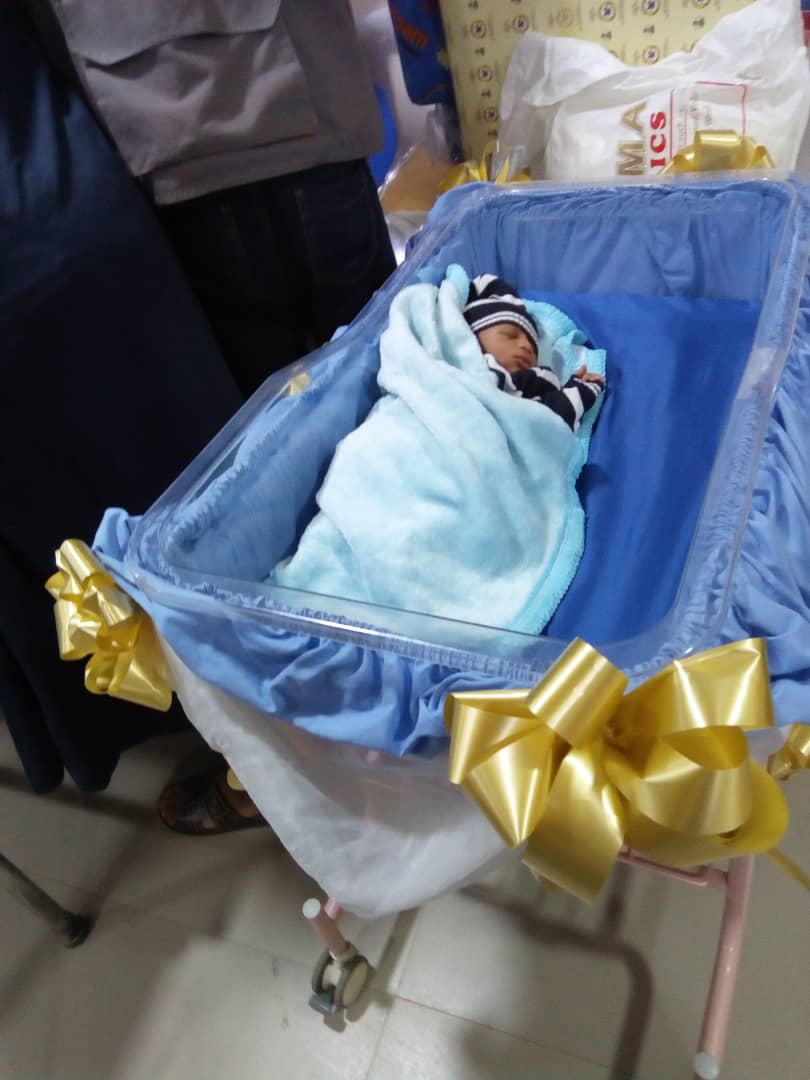
Sanwo-Olu presents gift to first baby of the year at Ijede hospital

By Ifeoma Ikem
Her excellency, wife of Lagos State Governor, Dr Ibijoke Sanwo-Olu, welcomed the first babies of year 2020 in four government owned health facilities in the state.
Sanwo-Olu presented gifts items to the babies during her visits to Ijede General Hospital, Agbowa General Hospital, Ketu-Ejirin General Hospital and Lagos Island Maternity Hospital.
The first baby of the year, a boy weighing two kilogrammes, was born to the family of Mr and Mrs Agede at 12.01 a.m. at Ijede General Hospital, Ikorodu.
Agede was followed by a girl, born at 12.07 a.m to the family of Mr and Mrs Agbor, at Agbowa General Hospital, weighing 3.1 kg.
The third baby boy, weighing 2.6kg, was born to the Momoh family at 12.09 a.m at Lagos Island Maternity Hospital, while the fourth baby was born to Mr and Mrs Kazeem at 1, 40 a.m weighing 3kg at Ketu-Ejirin.
Sanwo-Olu said the birth of a child was not by chance and required that the mother’s adequate care to ensure that she lived a healthy life whilst pregnant and got skilled care during labour and delivery.
According to the Lagos First Lady, the birth of a child brings good fortune to a society, symbolising the assurance that human heritage and life is preserved to the next generation.
“We are here today not just to celebrate new lives but also to seek opportunities to make a difference in the lives of the people who need our assistance.
“Bearing in mind always that our show of love, kindness and compassion is only an extension of gratitude to our maker for the same grace granted to us,” she said.
According to her, two new Maternal and Child Centres (MCC) at Alimosho and Eti-Osa areas of the state were commissioned to complement the existing ones and strengthen the health sector toward halting the trend of maternal and child mortality in the state.
Sanwo-Olu added that Neonatal Care Units, equipment and resources were also provided at some general hospitals to enhance the quality of maternal and child care services, adding that the state government was poised to doing more this year.
She commended the state Commissioner for Health, Prof. Akin Abayomi, and his team, for improvements recorded in the state health sector in the last few months.
Sanwo-Olu emphasised that the commissioner’s commitment toward infrastructure upgrade, provision of relevant equipment and human resource development was exemplary.
She disclosed that for the first time since the inception of 1st Baby of the year celebration 18 years ago, the event was marked for the first time at Ijede, Agbowa and Ketu-Ejirin General Hospitals, respectively.
Sanwo-Olu prayed that the babies would grow to become great and responsible citizens that would advance the course of the society.
She advised pregnant women to ensure healthy lifestyle that would guarantee wellbeing and posterity of the society
Earlier, Abayomi said that celebrating the first baby of the year was one of the state’s way of showing its commitment to the total health of the mother and her child after conception, pregnancy and child delivery.
Abayomi noted that the event was symbolic as the first annual activity of the state government, focusing on health.
“Its significance is demonstrated by the priority visit of the wife of the governor and the presence of important dignitaries, who could have been elsewhere on this great day but chose to spend their first few hours of the New Year in our public hospitals.
“They make it a duty to be here to rejoice with our mothers on the birth of their children and that, in itself, speaks volume.
“As such, events like this give our dignitaries the chance to evaluate where we are, as against the year before and recognise opportunities to create partnerships that can further improve health service outcomes,” he said.
Abayomi restated the state’s commitment to reducing maternal and child mortality through the implementation of mother and child survival interventions.
The Medical Director Ijede General Hospital,Dr(Mrs)Odubiyi Adenike ,in her speech commend the Lagos state government for the quality of health care delivery system enjoyed by populace within the state metropolis.
She expressed appreciation to the health service commission for their support throughout the year that make Ijede hospital the best and also impacted to lives positively.
According to her ,we have keyed into Mr Governor’s “Themes” Agenda because only a healthy populace can achieve the other pillars. Our gratitude to him and his amiable wife for the conducive working environment and all efforts to enshrine quality care in the state.
However,”our main challenges is acute space constraints, the hospital is very small for our catchment area which has exploded over the years. We need both vertical and lateral expansion. We also need ICT centre to ensure smooth take off of e-health in the facility”.she said
Mrs Bukola Agede, 31year old mother of the first baby of the year and mother of three,chatting with our correspondent appreciate the governor ,Lagos State government and entire staff of Ijede hospital for their kind gesture . Also return all the glory to God for save delivery.






FOPCHEN Calls for Dialogue as Court Fixes May 28 for Continuation
OTA, OGUN STATE — Proceedings in a widely followed legal case resumed on March 24, 2026, at the High Court of Ogun State, Ota Division, ending with a fresh adjournment as the court fixed May 28, 2026, for continuation.
During the session, legal representatives for all parties restated their positions and addressed preliminary matters, laying the groundwork for more substantive arguments at the next hearing. Observers noted that the case continues to attract significant public attention due to its perceived implications for law, culture, and societal values.
The Foundation for the Protection of Cultural Heritage in Nigeria (FOPCHEN) used the occasion to reiterate its call for constructive national dialogue. The group emphasized that while the judicial process must be respected, broader societal engagement remains essential.
According to the organization, issues relating to values, responsibility, and cultural identity should not be confined solely to courtroom deliberations but should involve active participation from various sectors of society.
Legal analysts present at the proceedings described the matter as one with far-reaching implications, noting that arguments advanced in court could shape future interpretations surrounding sensitive cultural and moral questions.
The presiding judge subsequently adjourned the case to May 28, granting all parties time to refine their submissions and respond to issues raised during the hearing.
As anticipation builds ahead of the next court date, Nigerians across different sectors continue to monitor developments closely, keen to see how the judiciary navigates the delicate balance between constitutional rights and cultural expectations.
Uncategorized
CRG: Politicians Must Stop Witch-Hunting, Focus on Nation Building — Says NYSC Cleared Deputy Speaker Since 2023

CRG: Politicians Must Stop Witch-Hunting, Focus on Nation Building — Says NYSC Cleared Deputy Speaker Since 2023
By: Boye Ola
The Centre for Responsible Governance (CRG) has called on political actors and interest groups to desist from what it described as needless witch-hunting of the Deputy Speaker of the House of Representatives, Benjamin Okezie Kalu, following renewed controversies surrounding his National Youth Service Corps records.
The organisation noted that the clarification by the National Youth Service Corps (NYSC) regarding the matter is not a recent development, as a formal verification letter had already been issued as far back as May 23, 2023.
The letter, referenced NYSC/CCD/VER/10/5.1/VOL1/02, had already addressed and cleared the questions surrounding the Deputy Speaker’s NYSC records.
Reacting to the renewed debate, the spokesman of the Centre,
Obande George, said it was troubling that issues which had already been clarified by a competent national institution were being resurrected for political purposes.
According to him, the time has come for political actors to move away from destructive engagements and concentrate on building the nation.
“It is important to note that the NYSC had already issued a verification letter dated May 23, 2023 addressing the matter.
Reopening issues that have already been clarified by a competent authority suggests that some individuals are more interested in political witch-hunting than in national progress,” George said.
The CRG stressed that democracy thrives when institutions are respected and their determinations are accepted in good faith rather than constantly questioned for political advantage.

George also commended the Deputy Speaker for demonstrating maturity and composure throughout the controversy, despite what he described as sustained provocations.
“Honourable Benjamin Kalu has shown remarkable calm and maturity in the face of intense public scrutiny and political provocation.
Instead of engaging in unnecessary public confrontation, he allowed institutions to speak through their records.”
The Centre warned that Nigeria’s political culture must evolve beyond constant character attacks and sensational allegations, which often distract public officials from their responsibilities.
According to the organisation, the country’s development requires constructive engagement among political actors rather than continuous attempts to discredit opponents.
“Nigeria cannot move forward if political energy is constantly spent on digging up allegations and amplifying rumours. Our leaders and political actors must redirect their focus to governance, policy and nation building.”
CRG therefore urged Nigerians to rely on verified information from credible institutions and avoid spreading speculative claims that could damage reputations or destabilise public discourse.
The organisation reiterated that respect for due process and institutional integrity remains essential for strengthening Nigeria’s democracy.

@The Centre for Responsible Governance, Email: [email protected], Instagram: crgngo6, Twitter: crgng06, Threads: crgngo6
Uncategorized
IWD 2026: Ajadi Celebrates Women, Urges Them To Seek More Elective Positions In Future Elections

IWD 2026: Ajadi Celebrates Women, Urges Them To Seek More Elective Positions In Future Elections
A Leading People’s Democratic Party, (PDP) Governorship Aspirant in Oyo State, Ambassador Olufemi Ajadi Oguntoyinbo has felicitates with women in the country on the occasion of this year’s International Women’s Day.
The international Women’s Day is celebrated on 8 March, commemorating women’s fight for equality and liberation along with the women right’s movement. It gives focus to issues such as gender equality and reproductive rights. International Women’s Day originated from labour movements in Europe and North America during the early 20th century.
In a statement issued on Sunday to commemorate this year’s edition of the International Women’s Day, Ajadi said the role of the women in nation building cannot be over emphasised.
He recalled the role played by prominent Nigerian women like Mrs Funmilayo Ransome- Kuti, Margaret Ekpo and Wuraola Esan towards the liberalization and the growth of the country and urges women to follow their footsteps by not only participate in the political process but seek more elective positions.
He urges the political leaders to encourage and give more chances to women for them to contest and occupy elective positions in the country.
Ajadi also called for more respect for women, saying they are definitely behind whatever success recorded by the menfolk.
He said domestic violence against women should be stopped, saying they deserves respect for their role in moulding the future leaders.
According to the statement, “I celebrate and congratulate our women on this year’s occasion of International Women’s Day. We cannot underestimate the role played by our women both at home, in the social circle and in politics. They deserve more respect.
“I equally called on them not only to be a passive participants in politics but to determine to seek more elected positions in future elections. They should aspire more from the position of dancing and singing at campaigns to seek more elective positions. The ratio of men to women in elective positions in the country is embarrassing. Women should stand up and fight for more elective positions.
“I also use the occasion of this year’s Women’s Day to appeal to Nigerians to stop domestic violence against the women. If we treat our women well, our country will witness unprecedented developments”.


-

 society7 months ago
Religion: Africa’s Oldest Weapon of Enslavement and the Forgotten Truth
-

 news4 months ago
WHO REALLY OWNS MONIEPOINT? The $290 Million Deal That Sold Nigeria’s Top Fintech to Foreign Interests
-

 society6 months ago
“You Are Never Without Help” – Pastor Gebhardt Berndt Inspires Hope Through Empower Church (Video)
-

 celebrity radar - gossips2 months ago
Dr. Chris Okafor Returns with Power and Fire of the Spirit -Mounts Grace Nation Altar with Fresh Anointing and Restoration Grace on February 1, 2026