
society
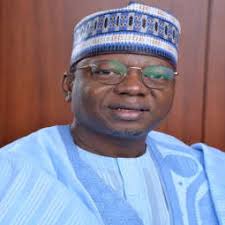
Senator Musa’s Legacy of Intellect, Compassion and Delivery

Senator Musa’s Legacy of Intellect, Compassion and Delivery
By Suleiman Adamu
In Nigeria’s dynamic democratic landscape, where leadership often teeters between self-interest and public service, few figures emerge as true exemplars of covenantal representation. Senator Mohammed Sani Musa, CON, affectionately known as “Musa 313,” stands as a beacon of intellectual rigour, empathy, and impactful delivery. Representing Niger East Senatorial District, he has woven a legacy of legislative excellence and grassroots development that resonates far beyond the confines of his constituency, touching the heart of Nigeria’s democratic aspirations.
Great leaders are not born of chance; they are shaped by discipline, preparation, and an unrelenting commitment to progress. Senator Musa embodies this truth. A proud son of Niger State, he embarked on an academic journey that laid the foundation for his remarkable career. At Ahmadu Bello University, Zaria, he earned a Bachelor of Science in Business Administration, specialising in Banking and Finance, in 1990. This degree was not merely a credential but a springboard for his intellectual evolution.
Driven by a thirst for knowledge, he pursued further studies at global institutions, securing a Postgraduate Diploma in Public Policy and Management from the University of London and a Postgraduate Certificate in International Management from the University of Liverpool. These academic milestones equipped him with a nuanced understanding of governance, economics, and institutional reform, moulding him into a technocrat with a worldview enriched by comparative models of development.
Long before he stepped into the political arena, Musa was already a thinker whose ideas were informed by global perspectives and a deep appreciation for systemic change. Senator Musa is no ordinary parliamentarian. His presence reverberates from the hallowed chambers of the National Assembly in Abuja to the dusty roads of rural Niger East. He is a statesman whose intellectual sophistication is matched by his accessibility and empathy, a rare blend that allows him to connect with both policymakers and ordinary citizens.
His nickname, “Musa 313” is a symbol of trust and familiarity, a proof of the bond he has forged with his people. Unlike many legislators whose names fade beyond roll calls, Musa has etched his mark on the annals of parliamentary relevance since his election in 2019. As Chairman of the Senate Finance Committee, he shoulders one of the most critical roles in Nigeria’s legislative framework. His committee oversees fiscal discipline, appropriation, and national planning—responsibilities that demand precision, foresight, and patriotism.
Under his leadership, oversight reports and finance bills are scrutinised with meticulous care, earning him the confidence of Nigerians who see in him a guardian of the nation’s economic integrity. Musa’s legislative contributions are profound and far-reaching. His sponsorship of transformative bills reflects a mind attuned to both the immediate needs of his constituents and the structural challenges facing Nigeria.
Among his notable legislative efforts is the Bill to Regulate and Formalise Employment of Domestic Workers, Interns, and Other Informal Sector Employees (SB 629, 2025), currently in its second reading. Another landmark proposal is the National Rural Employment Guarantee Bill of 2021, a bold initiative to combat rural unemployment and foster economic inclusion in Nigeria’s hinterlands. The Critical Infrastructure Protection Bill of 2021 addresses the pressing need to safeguard Nigeria’s assets against sabotage and insecurity, a critical issue in a nation grappling with infrastructural challenges.
Musa’s vision for education is evident in the National University of Health and Medical Sciences, Suleja Bill, which aims to bolster medical training and healthcare delivery. His Loan Recovery Regulation Bill of 2020 seeks to sanitise the banking sector, while the Constitutional Court of Nigeria Bill of 2020 underscores his commitment to constitutionalism. The Constituency Delimitation Centre Bill of 2020 further demonstrates his dedication to strengthening democratic representation.
Each of these bills reveals a legislator who thinks locally but legislates nationally, addressing the unique needs of Niger East while tackling Nigeria’s broader developmental imperatives. Yet, for Senator Musa, legislation is not an end in itself but a means to transform lives. He understands that parliamentary privilege must translate into tangible progress for his constituents. In Niger East, his interventions are a testament to this philosophy, touching every facet of human development.
In education, Musa recognises that knowledge is the ladder by which societies ascend. He has renovated classrooms and constructed a principal’s office at Government Technical College, Minna, ensuring that students learn in dignified environments. His establishment of an ICT Centre in Ija Gwari, Tafa LGA, is a forward-thinking investment in the digital economy, empowering rural youths to compete in a technology-driven world. His scholarship programs, spanning primary, secondary, and tertiary levels, have opened doors for countless students, with international undergraduate opportunities in China and India offering a global stage for Niger East’s brightest minds. These initiatives are not mere gestures but structural investments in the future, ensuring that the next generation is equipped to lead.

In healthcare, Musa’s mantra of “Health is Wealth” guides his efforts to improve lives. Across the nine local government areas of Niger East, he has facilitated the installation of solar power and generators in primary healthcare centers, ensuring that immunisation, maternal care, and rural treatments are not hampered by power outages. His commitment to maintenance ensures these facilities remain functional, bringing dignity and reliability to healthcare delivery.
In agriculture, the lifeline of Niger East, Musa’s benevolence shines through. He has distributed 10,000 bags of grain to alleviate hunger and provided farm implements and fertilisers to rural farmers, boosting productivity and food security. His tailoring empowerment scheme for 100 youths is a deliberate effort to catalyse cottage industries, fostering economic self-reliance and preserving the region’s agrarian heritage.
Musa’s infrastructure projects further illustrate his responsiveness to his people’s needs. In Ginyin Village, Shiroro LGA, he constructed a solar borehole, delivering clean, safe water to residents who once struggled for this basic necessity. A 1km road in Kuta, Shiroro LGA, has improved connectivity, while electrification projects, including 500KVA transformers in Iwa Gurara and other communities, have brought light to darkened villages.
The renovation of Sukeja Town Hall has provided a communal space for gatherings, reinforcing social cohesion. Each project—water for the thirsty, light for the darkened, roads for the isolated—reflects Musa’s ability to listen and act, addressing the immediate needs of his people while laying the foundation for long-term progress. What sets Senator Musa apart is his embodiment of the qualities that define an uncommon parliamentarian: intellectual grounding, legislative productivity, constituency visibility, empathy, and national relevance.
He is not a populist chasing fleeting applause but a leader who feels the pulse of his people and synchronises it with national priorities. While others may settle for episodic empowerment, Musa builds a systematic architecture of development, weaving together education, healthcare, agriculture, and infrastructure into a cohesive vision for Niger East.
In just two years in the 10th Senate, he has redefined parliamentary responsibility, proving that senators need not be absentee representatives or mere voices in the capital. His work is a bridge between law-making and life-building, a testament to his refusal to divorce policy from people.
Musa’s impact extends beyond Niger East. His legislative efforts address national challenges, from unemployment to infrastructure security, positioning him as a statesman of national consequence. His ability to balance local needs with Nigeria’s broader aspirations makes him a model for aspiring leaders. Niger East is fortunate to have him; Niger State takes pride in his achievements, and Nigeria is enriched by his service.
To honour Senator Musa 313 is to recognise a rare fusion of intellect, compassion, and delivery—a leader who has rewritten the narrative of representation. His contributions are luminous chapters in Nigeria’s democratic journey, illuminating the path for others to follow.
*Adamu PhD is a researcher writing from UniAbuja.


society
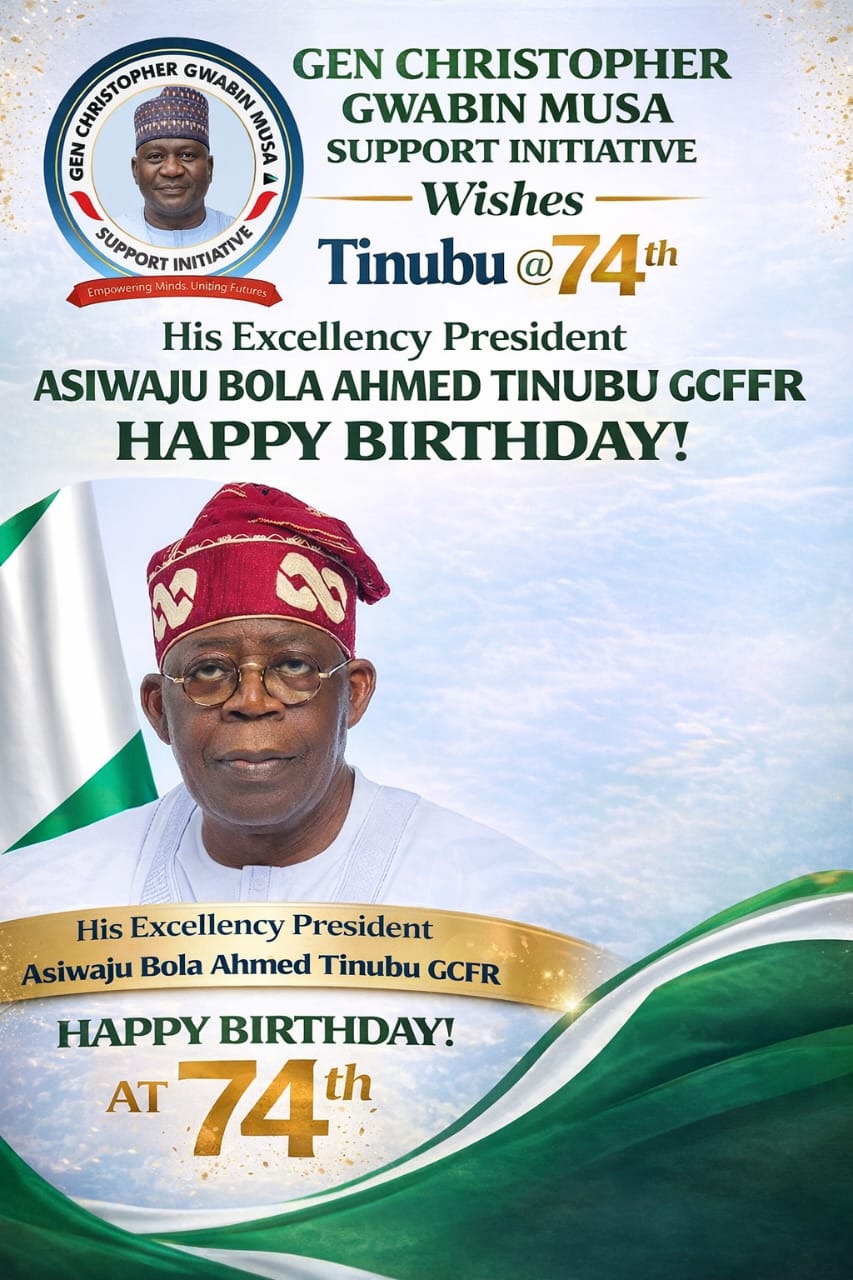
GEN CHRISTOPHER GWABIN MUSA SUPPORT INITIATIVE EXTENDS WARM BIRTHDAY FELICITATIONS TO PRESIDENT TINUBU ON 74TH BIRTHDAY
GEN CHRISTOPHER GWABIN MUSA SUPPORT INITIATIVE EXTENDS WARM BIRTHDAY FELICITATIONS TO PRESIDENT TINUBU ON 74TH BIRTHDAY
The Gen Christopher Gwabin Musa Support Initiative has extended heartfelt congratulations to His Excellency President Asiwaju Bola Ahmed Tinubu, GCFR, on the occasion of his 74th birthday.
In a statement released to the press, the Initiative conveyed warm wishes for the President’s personal well-being and for his continued leadership of the nation. The statement, signed by the Convener, Ibrahim Dahiru Danfulani, Sadaukin Garkuwan Keffi/Betara Biu, expressed hope that the coming year would bring the President “renewed strength and more wisdom in guiding the nation.”
The statement further noted that the Grand Patron of the Initiative, His Excellency Gen Christopher Gwabin Musa, OFR, Minister of Defence of the Federal Republic of Nigeria, joined in celebrating the milestone. It added, “Wishing Your Excellency continued good health, vitality, and determination as you lead the country towards greater unity and progress.”
The message underscores support for President Tinubu’s administration and its national objectives, marking the birthday as an occasion to reaffirm commitment to the nation’s unity and advancement under his stewardship.
society
Dominion City to Host Global Camp Meeting, “2 Nights of Glory” 2026 in Lagos, Enugu …Calls for Moral Renewal
*Dominion City to Host Global Camp Meeting, “2 Nights of Glory” 2026 in Lagos, Enugu
…Calls for Moral Renewal
Lagos – Dominion City has announced plans to host its annual Global Camp Meeting alongside a special “2 Nights of Glory” gathering in April 2026, with events scheduled to be held simultaneously in Lagos and Enugu.
The week-long programme is expected to draw tens of thousands of participants onsite and millions of virtual attendees from across the globe.
The Global Camp Meeting will run from Wednesday, April 1 to Monday, April 6, featuring daily sessions at 8:00 a.m. and 5:00 p.m. The “2 Nights of Glory” is slated for Friday, April 3 and Saturday, April 4 at the Golden Heart Place, Km 22 Lekki-Epe Expressway, beside Lagos Business School, Ajah, Lagos.
Organised by Dominion City, a global church focused on raising transformational leaders, the conference will centre on revival, spiritual renewal, and practical teachings. This year’s theme, “Redigging the Wells of Our Fathers,” underscores a call to return to foundational values and principles.
Speaking ahead of the event, Nobbert Onaga, President, Golden Heart Foundation and Senior Pastor, DC Lagos & Europe, emphasised the need for moral reawakening as a pathway to national transformation. He described the Church as “the pillar and foundation of truth,” noting that the conference aims to confront moral decline and restore core values within society.
“We are going back to foundational truths that established the Church. These truths will help repair societal damage and reposition the Church as a source of hope and light,” Onaga said.
Also speaking, Shola Olapade, Senior Pastor of Dominion City Headquarters, highlighted the Church’s role in addressing ethical and cultural challenges, particularly among young people. He added that the programme would go beyond spiritual teachings to include sessions on artificial intelligence, innovation, business, media, arts, and career development.
“We are equipping people not just spiritually, but with relevant 21st-century skills to thrive in today’s world,” Olapade noted.
The conference will feature teachings and ministrations from a lineup of international ministers, including Dr. David Ogbueli, Dr. Charles Ndifon, Andres Bisonni, Pastor Randy Mitchell, Apostle Ikechukwu Peter Nnajiofor, Dr. Ferdinand Nweke, Apostle Ben Hanyani Ndobe, Evangelist Dan Scott, and Dr. Chiefo Ejiofobiri.
Music ministrations will also be led by notable gospel artists such as Grace Idowu, Rhema Onuoha, Once More Six, David Nkennor, Anthony Kani, and GUC.
Organisers disclosed that over 30,000 participants are expected to attend in person, with free transportation provided from designated locations across Lagos to ease access. In addition, free medical services will be offered daily, building on previous outreaches that benefited over 1,700 people.
To ensure safety and order, more than 200 traffic marshals will be deployed in collaboration with relevant authorities.
Beyond its spiritual impact, organisers project that the event will stimulate local economic activity across hospitality, transportation, and retail sectors.
The Global Camp Meeting remains a key platform for spiritual impartation, leadership development, and societal transformation, aligning with Dominion City’s mission to equip believers to influence their communities positively.
Participation is open to the public, with registration available online for both physical and virtual attendance. //END.//
*PHOTO CAPTIONS:*
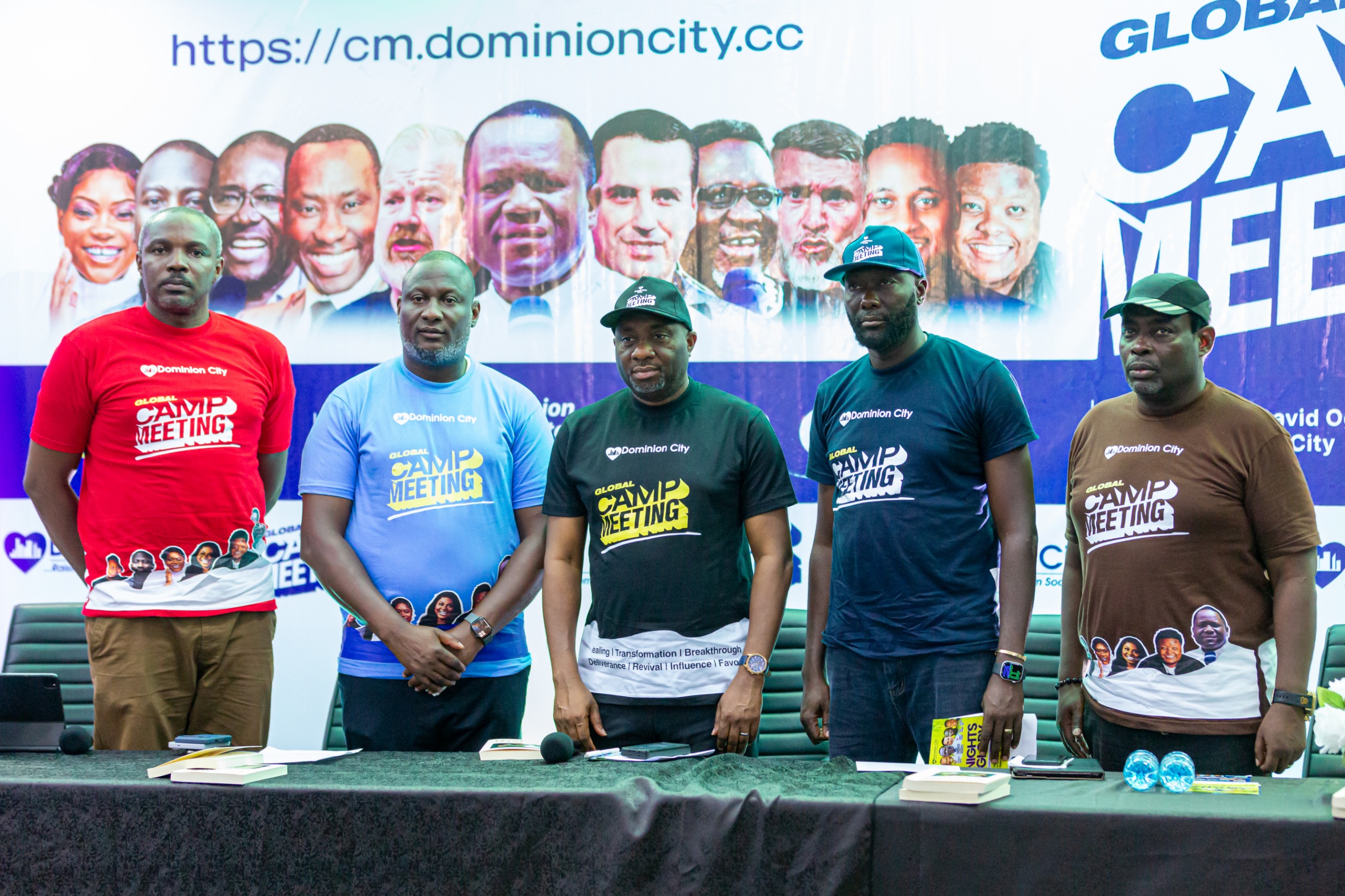
L-R: Dr. Godwin Efobi, Head, Medical Team, Dominion City Headquarters (DCHQ); Pastor Shola Olapade, Senior Pastor, DCHQ; Pastor Nobbert Onaga, President, Golden Heart Foundation and Senior Pastor, DC Lagos & Europe; Pastor Chuks Anochie, Head of Security and Traffic Control, Dominion City Headquarters (DCHQ), Camp Meeting 2026; Pastor Josh Tim Vaduchi, Head of Event & Programmes, DCHQ, during the press briefing of the forthcoming Global Camp Meeting, held the weekend of 2026 at the Dominion City Headquarters (DCHQ), Lagos.
L-R: Pastor Chuks Anochie, Head of Security and Traffic Control, Dominion City Headquarters (DCHQ), Camp Meeting 2026; Pastor Shola Olapade, Senior Pastor, DCHQ; Pastor Nobbert Onaga, President, Golden Heart Foundation and Senior Pastor, DC Lagos & Europe; Dr. Godwin Efobi, Head, Medical Team, DCHQ; and Pastor Josh Tim Vaduchi, Head of Event & Programmes, during the press briefing of the forthcoming Global Camp Meeting, held over the weekend in 2026 at the Dominion City Headquarters (DCHQ), Lagos.
society
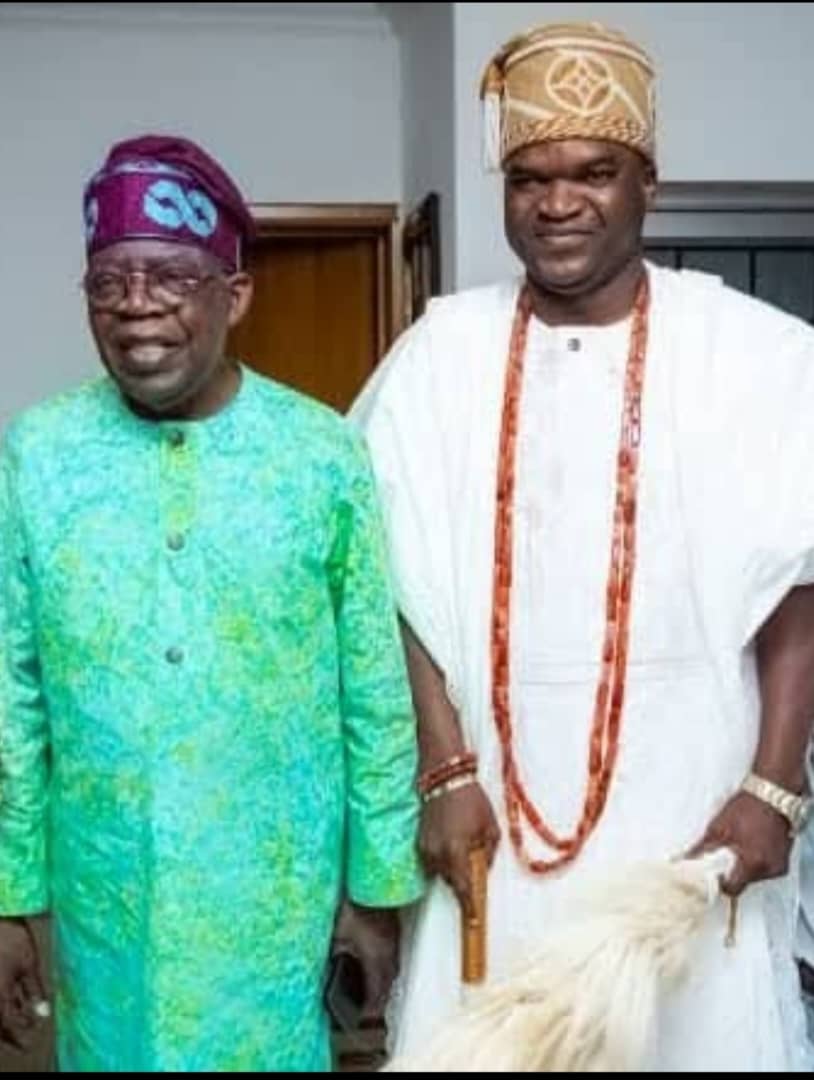
Oloworo of Oworosoki Kingdom, Oba Babatunde Saliu, Felicitates President Bola Ahmed Tinubu at 74
Oloworo of Oworosoki Kingdom, Oba Babatunde Saliu, Felicitates President Bola Ahmed Tinubu at 74
By Adeyemi Obadimu
The Oloworo of Oworosoki Kingdom, His Royal Majesty, Oba Babatunde Saliu, Elebo II, has extended warm felicitations to the President of the Federal Republic of Nigeria, Bola Ahmed Tinubu, GCFR, on the occasion of his 74th birthday.
In a goodwill message issued from his palace, the revered monarch described President Tinubu as a visionary statesman, a courageous reformer, and an indefatigable democrat whose lifelong commitment to nation-building continues to shape Nigeria’s progress.
Oba Babatunde Saliu praised the President’s unwavering dedication to public service, noting that his leadership has ushered in a new phase of economic reform, infrastructural renewal, and institutional strengthening across the country.
According to the monarch, the President’s Renewed Hope Agenda has begun yielding tangible relief and renewed confidence among citizens, reflecting his determination to reposition Nigeria for sustainable growth and prosperity.
“President Bola Ahmed Tinubu has demonstrated exceptional resilience, strategic foresight, and a deep love for Nigeria. His administration’s bold initiatives are laying the foundation for long-term national transformation. At 74, he remains steadfast in his resolve to build a stronger, more united, and economically vibrant nation,” the monarch stated.
Oba Babatunde further commended the President’s legacy of leadership, describing him as a bridge-builder, a mentor to many leaders, and a symbol of democratic stability. He acknowledged the President’s decades of sacrifice and contribution to the advancement of democracy in Nigeria.
On behalf of the Oworosoki Kingdom, the royal father prayed for divine wisdom, sound health, and renewed strength for the President to successfully complete the noble reforms and developmental strides he has embarked upon for the benefit of all Nigerians.
“As Your Excellency marks 74 remarkable years, we pray that Almighty God grants you long life, continued wisdom, and the fortitude to steer our great nation toward greater heights. May your days be filled with strength and grace as you continue to serve Nigeria with distinction,” Oba Babatunde Saliu added.
President Bola Ahmed Tinubu clocks 74 as a leader whose enduring influence, bold reforms, and steadfast patriotism remain central to Nigeria’s ongoing journey of national renewal.


-

 society6 months ago
Religion: Africa’s Oldest Weapon of Enslavement and the Forgotten Truth
-

 news4 months ago
WHO REALLY OWNS MONIEPOINT? The $290 Million Deal That Sold Nigeria’s Top Fintech to Foreign Interests
-

 society6 months ago
“You Are Never Without Help” – Pastor Gebhardt Berndt Inspires Hope Through Empower Church (Video)
-

 celebrity radar - gossips2 months ago
Dr. Chris Okafor Returns with Power and Fire of the Spirit -Mounts Grace Nation Altar with Fresh Anointing and Restoration Grace on February 1, 2026