
society
SETTING THE RECORD STRAIGHT: A Response to Malicious Allegations….Daniel Eromosele a.k.a Pikolo


SETTING THE RECORD STRAIGHT: A Response to Malicious Allegations….Daniel Eromosele a.k.a Pikolo
Aftermath of the Benin Airport attack on the Convoy of Senator Monday Okpebholo on July 18, an inspector attached to the Senator lost his life and other Apc party faithful’s are battling for survival in some undisclosed hospital.
People are surprised that Obaseki led Government wants to change the narrative by accusing some law abiding citizens of being behind the mayhem. One of the top comedian in Edo state Daniel Eromosele a.k.a Pikolo was accused by the State Government as one of the people involved in the violence.
Pikolo is not known to be a political thug, but rather a social media influencer who has a lot of followers in the state.
In a recent interview with the press pikolo said “I’m compelled to address a baseless and ridiculous accusation circulating on social media, claiming that I, alongside others, have been petitioned by the Edo State Government for allegedly attacking our own gubernatorial candidate’s convoy. Despite not receiving any official invitation from the authorities, I’m responding to protect my hard-earned reputation as a man of integrity.
For the record, I was not present at the airport on the day of the alleged incident. I was nowhere near the airport environment and was not seen around there. I’m a comedian, content creator, and politician who has never engaged in thuggery or any form of violence.
My recent videos have focused on promoting our candidate and highlighting the failures of the PDP and its leadership in the state. If my content has caused discomfort, I challenge those affected to counter my claims with facts and evidence, rather than resorting to spreading falsehoods.
It’s laughable that the government would stoop so low as to make unfounded allegations.
If my name can be included in such a petition, despite my clear absence from the scene, it’s clear that the document holds no merit.
I have contacted My Lawyers and they will do the needful in this matter , as the antics of the Solicitor General of Edo State,Prof Faith Osadolor, a supposed Professor of Law penning false allegations against my person and spreading it on the internet smacks of false information, false allegation, cyber bullying and cyber stalking.
Edo State Government should be reminded that the Law is for both the Governed and the Government.I demand an immediate retraction and apologies from the Edo State Government,else they will hear from my lawyers in the coming days .It was Martin Luther King that said *Injustice any where is a threat to justice everywhere*
To my followers, I urge you to remain vigilant and discerning in the face of misinformation. Keep faith, and I’ll continue to provide you with accurate updates and quality content.”
I remain committed to ensuring that most distinguished senator Monday Okpebholo and his deputy Rt hon Denis Idahosa win the September 21 election without distraction.
According to reliable sources APC has petitioned the perpetrators of the tragic attack to the inspector General of police and the fingered suspects have gone into hiding, thereby frustrating the police in doing investigation.
Meanwhile Edo State Government has petitioned the Inspector General Police over the Thursday, July 18, 2024 breakdown of law and order in the State which was orchestrated by the former Deputy Governor of the State, Philip Shaibu under the pretext of executing a judgment of the Federal High Court in Abuja for which a stay of execution had been filed and an appealed entered.
In the petition signed by the State Solicitor General, Prof. Faith Osadolor on behalf of the State Attorney General and Commissioner for Justice, the State Government said Shaibu, contrary to the rule of law, recruited a throng of heavily armed thugs, including Tony Adun (Aka Tony Kabaka), Daniel Eromosele (Aka Pikolo), Efe Stewart, Joseph Okonigene, Noah Amiolemen Idemudia, among others, resorting to self-help, leading to the wanton destruction within the Benin metropolis and death of a Police officer.
Why is Obaseki witch hunting Daniel Eromosele a.k.a Pikolo?
is it because he is making videos and campaigning for his principal.
He wasn’t even there at the crime scene.




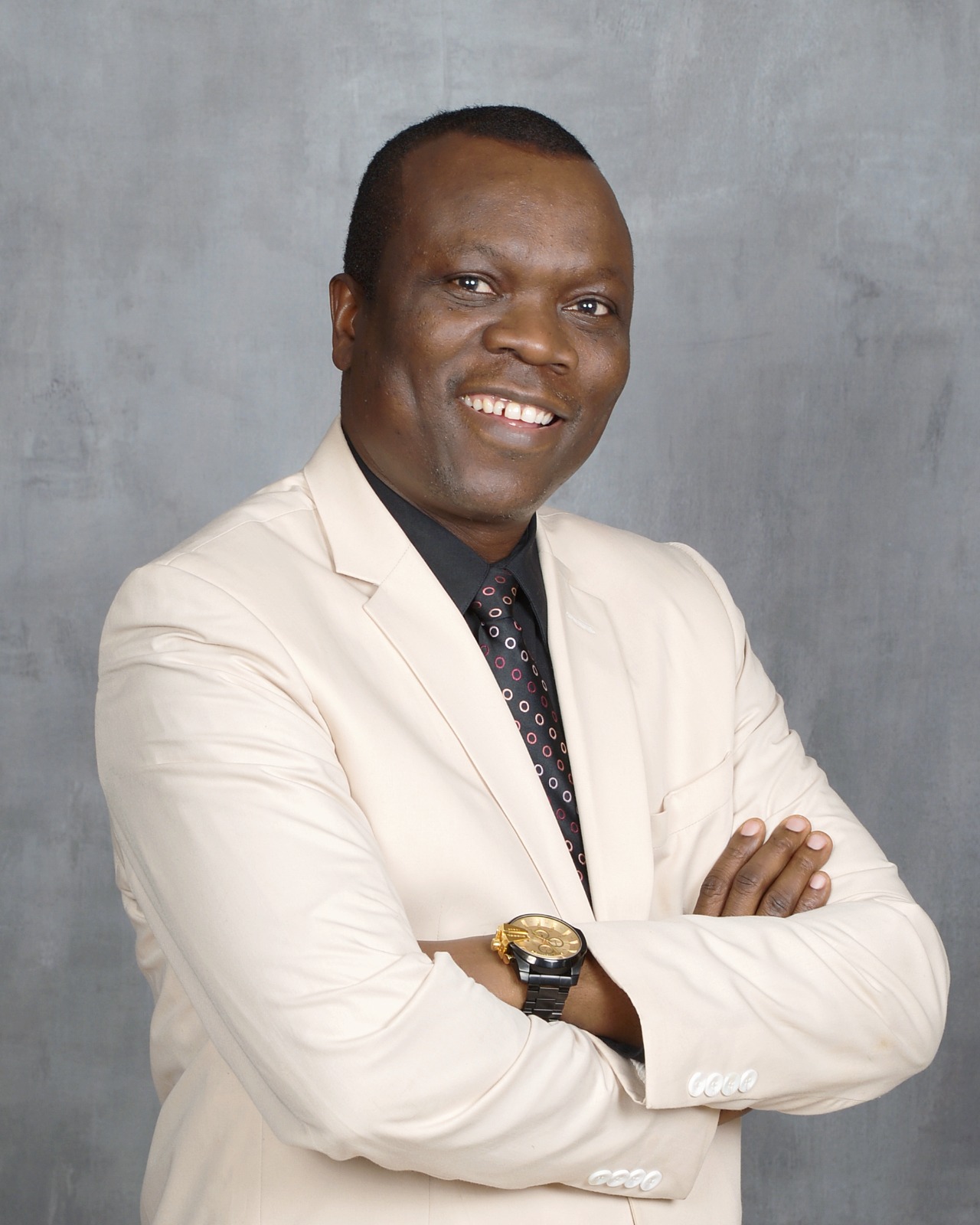
Nigerians Are Being Asked to Accept Dysfunction as Normal-Banwo
Lawyer and public affairs commentator, Dr. Ope Banwo, has delivered a scathing assessment of Nigeria’s governance landscape, warning that citizens are gradually being conditioned to accept systemic failures as a normal way of life.
In a strongly worded critique, Banwo painted a picture of a country where basic services remain inconsistent despite years of policy promises and public spending, raising concerns about accountability and leadership priorities.
He pointed to the continued instability in electricity supply, describing it as a long-standing issue that continues to burden households and businesses alike. According to him, the reliance on alternative power sources has become an economic strain that reflects deeper structural inefficiencies.
Banwo also highlighted persistent challenges in the education sector, where disruptions and extended academic timelines have become familiar patterns. He argued that such conditions place young Nigerians at a disadvantage in an increasingly competitive global environment.
On healthcare, he noted that limited public confidence in local systems continues to drive medical travel abroad among those who can afford it, a trend he said raises questions about the effectiveness of domestic investment in the sector.
Beyond service delivery, Banwo expressed concern over what he described as a visible disconnect between public officials and the realities faced by citizens. He referenced widespread perceptions of inequality and questioned whether governance structures are sufficiently aligned with public needs.
“What is worrying is not just the existence of these problems,” he said, “but the growing acceptance of them as inevitable.”
Banwo argued that when dysfunction becomes normalized, the urgency for reform diminishes, allowing systemic issues to persist unchecked.
He called for stronger institutional accountability, emphasizing the need for transparency in public spending and decision-making. While refraining from naming individuals, he stressed that sustainable development requires leadership that is both responsive and responsible
*Primate Ayodele’s Prophecies On Former President’s Death, Deputy Gov, Others Fulfilled
The Leader of INRI Evangelical Spiritual Church, Primate Elijah Ayodele is in the news again for the fulfilment of his prophecies as usual.
As we know, the only time Primate Ayodele gets in the news is when he makes prophecies and when they come to pass. No extra, no unnecessary attention, no lifestyle showcasing, just doing what God has sent him to do.
Just as it had been established earlier, Primate Ayodele has nothing less than 20,000 prophecies that have been fulfilled to his credit and as the day goes by, they continue to increase.
Recent additions to his fulfilled prophecies include:
1 Death of Former Algeria President: Former Algerian President Liamine Zeroual has died at the age of 85, the Algerian presidency said Sunday.
A statement said Zeroual had been battling illness for some time and was receiving treatment at the Mohamed Seghir Nekkache Military Hospital.
He died at the hospital.
Primate Ayodele had in a prophetic session warned nations to be pray against the death of a former president.
2 Resignation of Kano Deputy governor: The Deputy Governor of Kano State, Aminu Gwarzo, has resigned from the position, citing the need to ensure stability in governance and allow the office to function effectively.
In a press statement issued by the Kwankwasiyya Movement on Friday, the decision was described as “difficult” but necessary in the overall interest of the people of Kano State.
“The Deputy Governor of Kano State has tendered his resignation from office… This decision, though difficult, has been taken in the overall interest of the people and the stability of governance in Kano State.”
Primate Ayodele in a prophetic moment had revealed that it is not every deputy governor that will finish their tenure, indicating that some may die or resign. The prophecy was first fulfilled with the deputy governor of Bayelsa state and now Kano, with resignation.
3 Plateau attacks: The Plateau State Government has imposed a 48-hour curfew on Jos North Local Government Area following a deadly attack in the Angwan Rukuba community.
In a statement on Sunday, the state Commissioner for Information and Communication, Joyce Ramnap, said the curfew would take effect from midnight of March 29 to April 1, 2026.
The government said the decision followed a “tragic security incident” in the area, which resulted in loss of lives and left several others injured.
The statement read, “Following the tragic security incident that occurred at Gari Ya Waye community, Angwan Rukuba, today, Sunday, 29th March 2026, resulting in the loss of lives, while several others sustained varying degrees of injuries.
Primate Ayodele had in several prophecies mentioned that Plateau state would be attacked by gunmen. He called on security operatives to watch out and prepare ahead for the attacks.
These were his words:
“Terrorist attacks will be extended to Nasarawa, Gombe, Plateau, Kaduna, Bauchi, Benue, Abuja and Kogi. Let the CDS and COAS brainstorm and strategise, it’s time to eliminate terrorists in the country.
“They are both capable hands, they should not allow these terrorists to destroy their legacies and credibility.
”The ESN is also planning an attack in the South-East, it is a red alert because they want to abort a lot of people including an emir,”
https://tribuneonlineng.com/primate-ayodele-names-states-to-be-attacked-by-terrorists/
society
Grace Nation: Harvest of Babies 2026 Records Miracle Birth and Dedication of Twins as Conference Concludes
“Guard your fruitfulness—identify and avoid distractions.”
The 2026 edition of Harvest of Babies, the flagship family liberation conference of Grace Nation Global, concluded with remarkable testimonies, including the reported safe delivery of a baby boy during the programme and the dedication of multiple “miracle babies.”
Miracle Delivery and Baby Dedications
One of the standout testimonies involved a woman whose pregnancy had gone beyond term and was reportedly scheduled for surgery. According to accounts shared during the conference, she was prayed for after being identified during one of the sessions. She later delivered a healthy baby boy without complications during the course of the event.
The conference also witnessed the dedication of several children described as long-awaited blessings, including twins after 15 years, a baby boy after 9 years, and a baby girl after 7 years. The dedications formed a major highlight of the closing moments of the programme, reinforcing the conference’s focus on fruitfulness and restoration.
Teaching on Fruitfulness
Continuing his teaching series on “Fruitfulness,” the Generational Prophet of God and Senior Pastor of Grace Nation Worldwide, Dr Chris Okafor, emphasized the importance of addressing the root causes of life’s challenges.
“If the cause of a battle is not confronted, the cycle may continue,” he said, adding that spiritual discipline—particularly prayer—remains a key tool in overcoming limitations such as barrenness, whether physical, financial, or generational.
He described prayer as a necessary channel for divine intervention, stressing that understanding one’s spiritual foundation is essential to overcoming recurring challenges.
Guarding Your Fruitfulness
Dr. Okafor also warned about distractions that may hinder progress, urging believers to remain focused on principles that sustain growth and fulfillment.
“Every kingdom operates by principles,” he noted. “If you allow distractions around you to take your focus away from those principles, you may delay your manifestation.”
He encouraged participants to be intentional about their environment, relationships, and spiritual discipline in order to maintain their breakthroughs.
What Hinders Fruitfulness?
The cleric identified curses and ignorance as major obstacles to fruitfulness. According to him, some challenges may stem from longstanding family patterns, but these can be broken through spiritual understanding and alignment.
He reiterated that blessings—particularly those pronounced through spiritual authority—have the capacity to reverse negative cycles and establish fruitfulness.
“Ignorance allows problems to persist,” he said. “But when you gain understanding and follow divine instruction, transformation begins.”
Looking Ahead
Although the 2026 Harvest of Babies conference has ended, organizers say the testimonies and experiences from the event will have a lasting impact. Many participants expressed faith that by this time next year, they will return with their own testimonies of fruitfulness.
The conference closed on a note of expectation, with attendees looking forward to future editions and continued manifestations of what they described as divine intervention. By Sunday Adeyemi [email protected]


-

 society6 months ago
Religion: Africa’s Oldest Weapon of Enslavement and the Forgotten Truth
-

 news4 months ago
WHO REALLY OWNS MONIEPOINT? The $290 Million Deal That Sold Nigeria’s Top Fintech to Foreign Interests
-

 society6 months ago
“You Are Never Without Help” – Pastor Gebhardt Berndt Inspires Hope Through Empower Church (Video)
-

 celebrity radar - gossips2 months ago
Dr. Chris Okafor Returns with Power and Fire of the Spirit -Mounts Grace Nation Altar with Fresh Anointing and Restoration Grace on February 1, 2026