
celebrity radar - gossips
Sowore and the Nnamdi Kanu Protest; When the state gags one man, it gags the conscience of millions

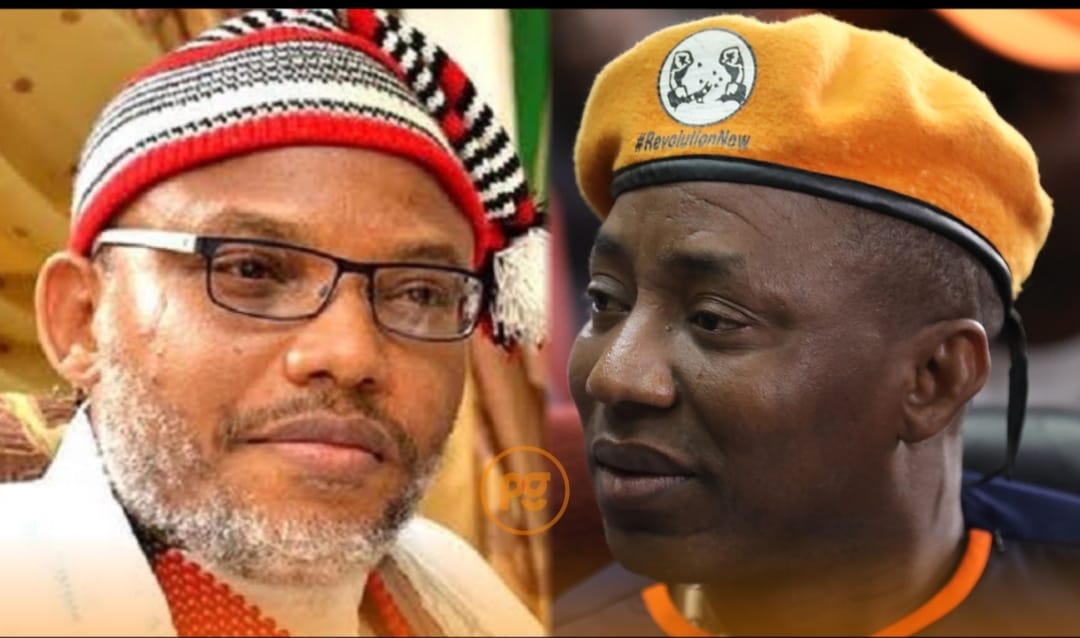
Sowore and the Nnamdi Kanu Protest; When the state gags one man, it gags the conscience of millions.
By George Omagbemi Sylvester | Published by SaharaWeeklyNG.com
Tear gas, court orders and a million promised feet – Abuja became the latest battleground for Nigeria’s right to dissent.
On Monday, October 20, 2025, Nigeria’s capital once again became the theatre of a deepening crisis between an assertive civil society and a nervous state. Human-rights activist Omoyele Sowore (veteran campaigner, publisher and organiser of mass actions) led calls for a #FreeNnamdiKanuNow demonstration that sought to spotlight what many Nigerians say is an overreaching, politicised prosecution of Nnamdi Kanu, leader of the proscribed INDIGENOUS PEOPLE OF BIAFRA (IPOB). The response from the security architecture was predictably heavy: teargas, water cannon, mass arrests, according to witnesses and multiple international news agencies, the sound of gunshots in pockets of the city as police sought to prevent demonstrators from pressing toward sensitive government sites.

Sowore cast the protest as more than a ONE-ISSUE MOBILIZATION. “This is not TRIBAL, not RELIGIOUS, it is social justice,” he declared in speeches and social posts urging Nigerians to remember that the right to assemble is the oxygen of democracy. Thousands answered the call in Abuja and in cities across the southeast, pausing commerce, closing markets and (for a day) forcing the nation to witness a popular outcry against what many see as selective justice. Yet the state quickly sought to frame the demonstrations as a security threat; a Federal High Court order issued days earlier restricted protests around Aso Rock, the National Assembly, the Court of Appeal, Eagle Square and other sensitive locations and the police warned organisers to obey the injunction. Sowore and allies rejected this as a pretext to criminalise dissent.
Facts matter. Nnamdi Kanu (a British citizen who leads the outlawed IPOB) has been in custody since a 2021 re-arrest and faces terrorism and treason charges that carry life sentences if convictions are secured. His trials have been postponed, contested and are now being heard under repeated judicial time pressure; his defence has filed motions and sought extended time to call dozens of witnesses. Kanu’s supporters insist his detention is political, citing years of perceived marginalisation in the southeast. The state insists it is prosecuting criminal conduct. Those competing narratives are at the heart of this confrontation.
The most damning reaction to the security response came from organisations that cannot be easily dismissed as partisan. Amnesty International publicly condemned the “LETHAL USE OF FORCE” and called for impartial investigations into arrests, beatings and indiscriminate use of tear gas on peaceful demonstrators, journalists and lawyers. International and local observers reminded citizens and the authorities alike that the International Covenant on Civil and Political Rights (to which Nigeria is a party) recognises the right to peaceful assembly and places strict limits on state force. Amnesty’s intervention was not rhetorical flourish, but a mirror held up to a state that has frequently weaponised the security apparatus against popular protest.
Sowore’s involvement sharpened the politics. He promised to place “ONE MILLION PEOPLE” on the streets of Abuja a provocative, HEADLINE-GRABBING claim that sought to make the mobilisation irreversible. Critics accused him of grandstanding and of pressing a volatile issue without adequate safeguards; sympathisers argued that bold numbers are sometimes the only way to force a stalled judicial and political process into the light. Veteran commentators and analysts offered sober warnings, the right to protest is sacrosanct, yes, but protests must be responsibly organised to avoid giving authorities the cover to crack down. Reuben Abati, among others, argued that while protest is constitutional, it must be executed within “THE BOUNDS OF REASON AND SANITY” a counsel that simultaneously defends assembly and cautions against actions that might provoke the state into escalation.
What this clash reveals is not merely a TUG-OF-WAR over one man’s freedom; it exposes a broader crisis of trust in Nigeria’s institutions. Courts, security agencies and political leaders are perceived by significant portions of the population as instruments of narrow partisan interest rather than neutral guarantors of rule and rights. When a Federal High Court is asked to restrain a protest, when police posture with armoured vehicles and water cannon and when journalists covering these events report harassment or equipment seizure, the inevitable public reading is that civic space is shrinking. Human-rights veterans such as Chidi Odinkalu have long warned that Nigeria’s right to dissent faces structural threats, warnings validated anew each time citizens exercising their constitutional rights are met with force.
Yet there is a paradox at the core of these confrontations: the more the state attempts to stifle protest with injunctions and baton-charges, the more the grievance it seeks to bury germinates and ripens. The 20 October protests coincided with the fifth anniversary of the EndSARS movement’s climax, a date that carries fresh wounds and unresolved moral questions about the state’s appetite for accountability. By choosing that date, activists deliberately linked Kanu’s case to a broader narrative of impunity and state violence. That linkage is political theatre and sometimes, politics must court theatre to be heard.
What should happen next is not conjecture but a sober checklist of democratic repair. First, the authorities must ensure transparent, impartial investigations into all allegations of excessive force and arbitrary arrests; those found culpable must be prosecuted under the law. Second, the courts must guard their independence and be seen to provide a fair, expeditious hearing for Kanu because JUSTICE DELAYED IS JUSTICE DENIED and because politicised court processes only legitimate extra-legal remedies. Third, civil-society organisers bear responsibility to plan peaceful, de-escalatory demonstrations and to engage neutral observers to reduce the chance of confrontation. Finally, national leaders should step back from demonising dissent and instead treat protest as a barometer of governance; a signal that frustrations exist and must be addressed not a pathology to be cured by force. Amnesty’s call for impartial probes and Human Rights Watch’s repeated admonitions about protest rights should guide any forward-looking response.
There is a temptation in Nigeria’s current moment to reduce the story to binary loyalties, you are either for the state or for separatism; you are either for Sowore or against him. That temptation must be resisted. The essence of democracy is the capacity to tolerate dissent while resolving disputes inside a framework of rights and rules. Sowore’s mobilisation for Kanu’s release (dramatic, disruptive and deeply divisive) forces the country to ask a fundamental question: Will we strengthen institutions so they earn the public’s trust or will we continue the cycle in which force begets protest and protest begets force?
If Nigeria wants peace that lasts, it must first learn to treat protest not as a public nuisance to be smothered but as a legitimate expression of grievance to be heard and addressed. Until then, the streets (and the courts) will remain battlegrounds where citizens and the state test the true limits of the republic. The events of October 20, 2025, were another chapter in that contest: messy, painful, instructive and for the sake of Nigeria’s democratic future, impossible to ignore.





celebrity radar - gossips
Adron Homes Celebrates Visionary Chairman, Aare Adetola Emmanuel King, at 51
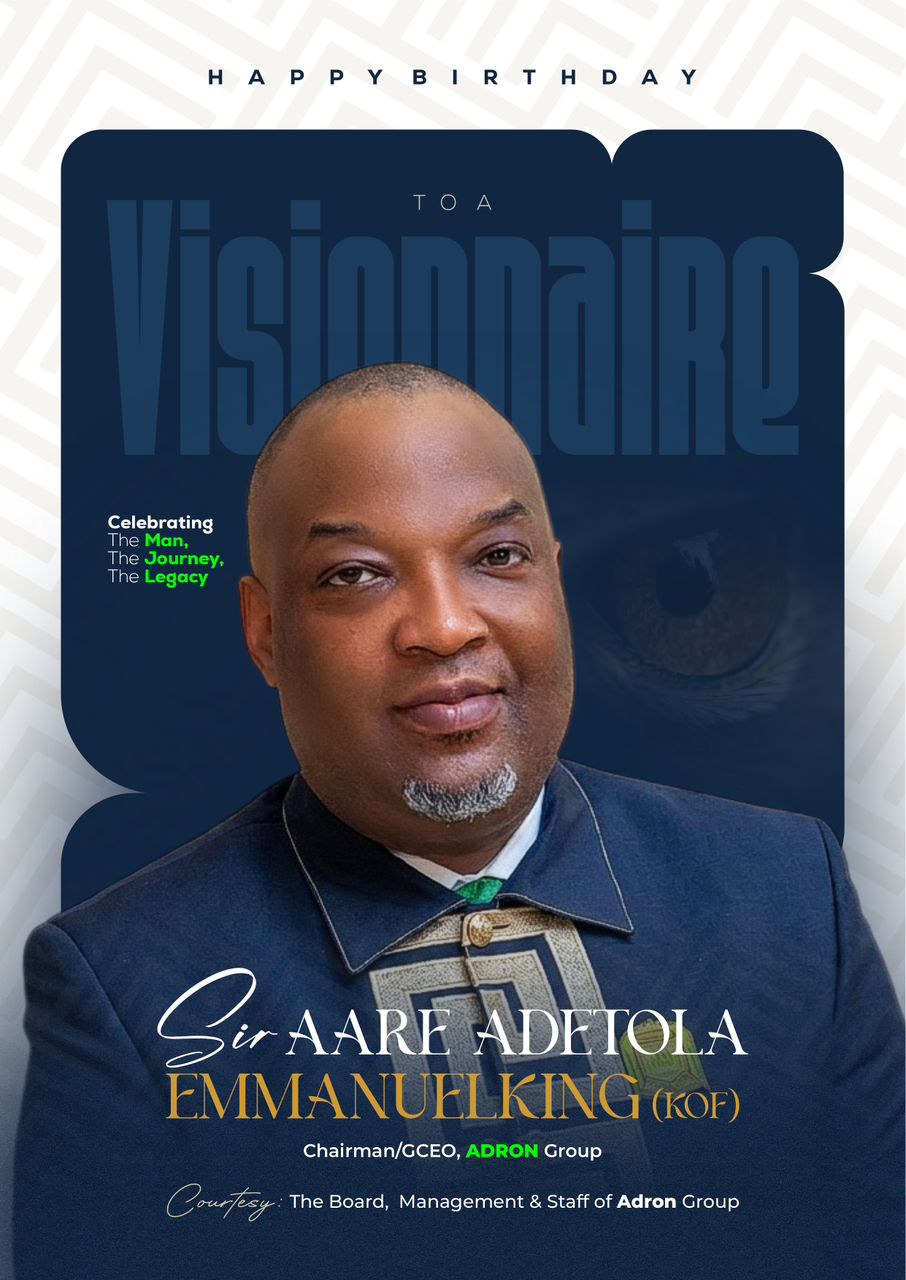
Adron Homes Celebrates Visionary Chairman, Aare Adetola Emmanuel King, at 51
The management and staff of Adron Homes and Properties Limited have joined family, friends, associates, and well-wishers across the globe to celebrate their Chairman and Chief Executive Officer, Aare Adetola EmmanuelKing, as he marks his 51st birthday.

In a statement released by the company, the milestone was described as a celebration of an exceptional leader whose vision, resilience, and entrepreneurial brilliance have not only transformed Adron Homes into a household name in Nigeria’s real estate sector but have also redefined affordable housing across the country.
Under his dynamic leadership, Adron Homes has continued to expand its footprint, delivering value-driven residential solutions while empowering thousands of Nigerians with opportunities for home ownership. His commitment to excellence, innovation, and customer satisfaction has remained the driving force behind the company’s sustained growth and industry leadership.
The statement further highlighted Aare EmmanuelKing’s passion for nation-building and community development, noting his significant contributions to job creation, youth empowerment, and the promotion of socio-economic development through real estate investments.
“As a leader, mentor, and visionary, Aare Adetola EmmanuelKing has consistently inspired a culture of excellence, integrity, and dedication within the organization. His ability to turn bold ideas into reality continues to position Adron Homes as a trailblazer in the industry,” the statement read.
The company expressed profound gratitude for his steadfast leadership and prayed for continued wisdom, strength, and sound health as he embarks on another year of impactful achievements.
As he celebrates his 51st birthday, the entire Adron Homes family proudly honours a man whose legacy continues to shape the future of real estate in Nigeria.
Happy 51st Birthday, Aare Adetola EmmanuelKing!
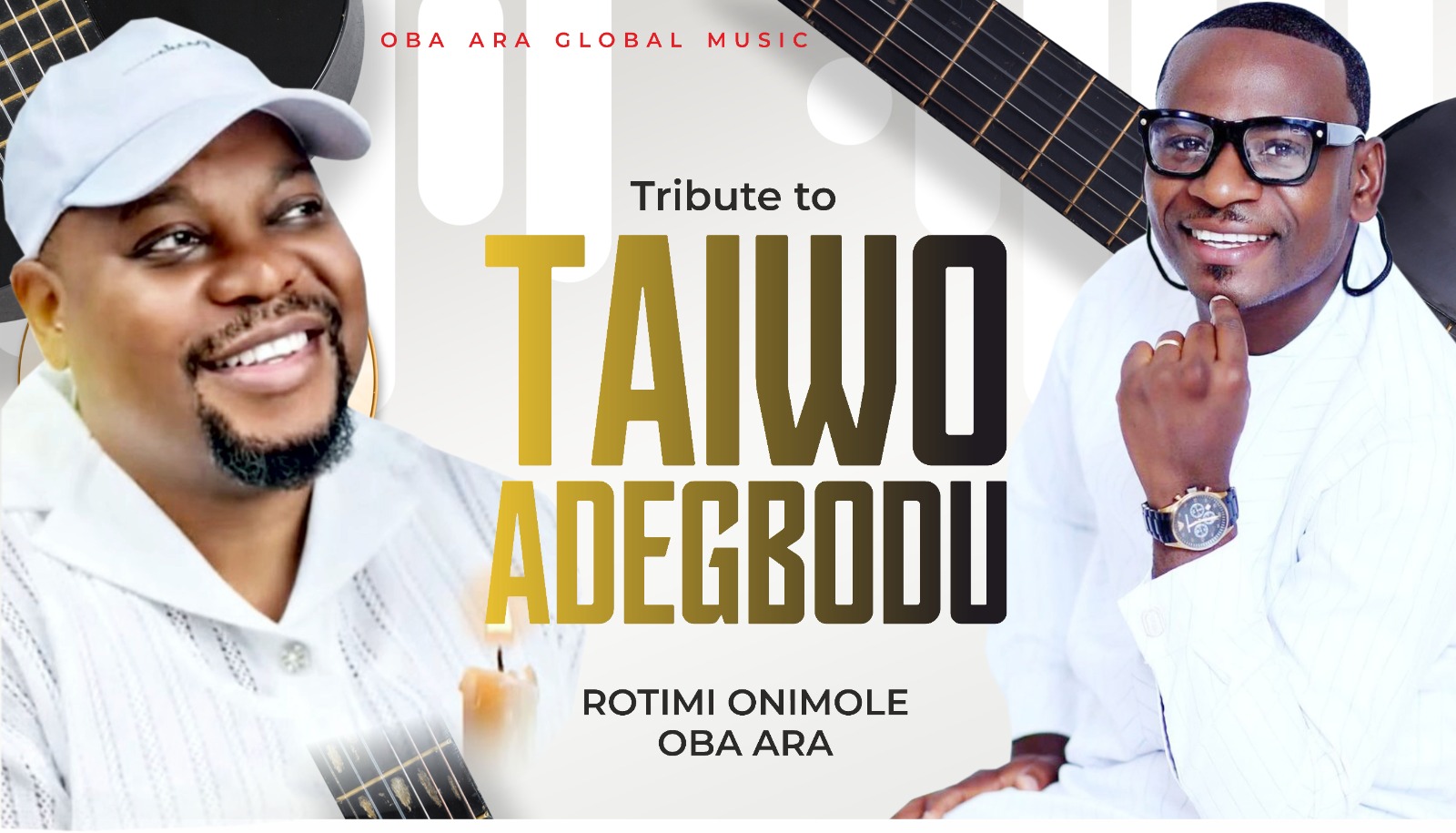
Oba Ara Releases Emotional Tribute to Late Taiwo Adegbodu
Taofik Afolabi
The gospel music community continues to grieve the painful loss of Taiwo Adegbodu, a beloved figure whose sudden departure left a deep void among fans, colleagues, and loved ones. In response to this loss, renowned gospel minister Rotimi Onimole, popularly known as Oba Ara, has released a moving tribute song that captures both the sorrow of the moment and the enduring legacy of the late singer.
Oba Ara, a proud son of Isale Eko, channels raw emotion throughout the song, using heartfelt lyrics and soul-stirring melodies to reflect on his personal connection with Taiwo Adegbodu. In the tribute, he openly expresses how deeply the news of Adegbodu’s passing shook him, describing it as a painful and unexpected loss that is difficult to come to terms with.
The song goes beyond mourning, it celebrates the life, ministry, and impact of Taiwo Adegbodu. Oba Ara highlights the late artist’s dedication to spreading the gospel through music, his inspiring voice, and the spiritual influence he had on many within and beyond Nigeria. Through powerful verses, he paints a picture of a man who lived for God and touched countless lives through his ministry.
Listeners have described the tribute as both comforting and deeply emotional, as it resonates with the collective grief of the gospel music community. It serves as a reminder that although Taiwo Adegbodu is no longer physically present, his music, message, and legacy will continue to live on.
In honoring his late colleague, Oba Ara not only pays his respects but also offers a source of healing for fans and fellow ministers, using music as a tool to process grief and celebrate a life well lived.
celebrity radar - gossips
Buratai, Fagbemi , Shagaya, Olofa, Others Eulogise Olowu Kuta’s Olori On 60th Birthday, Foundation Launch
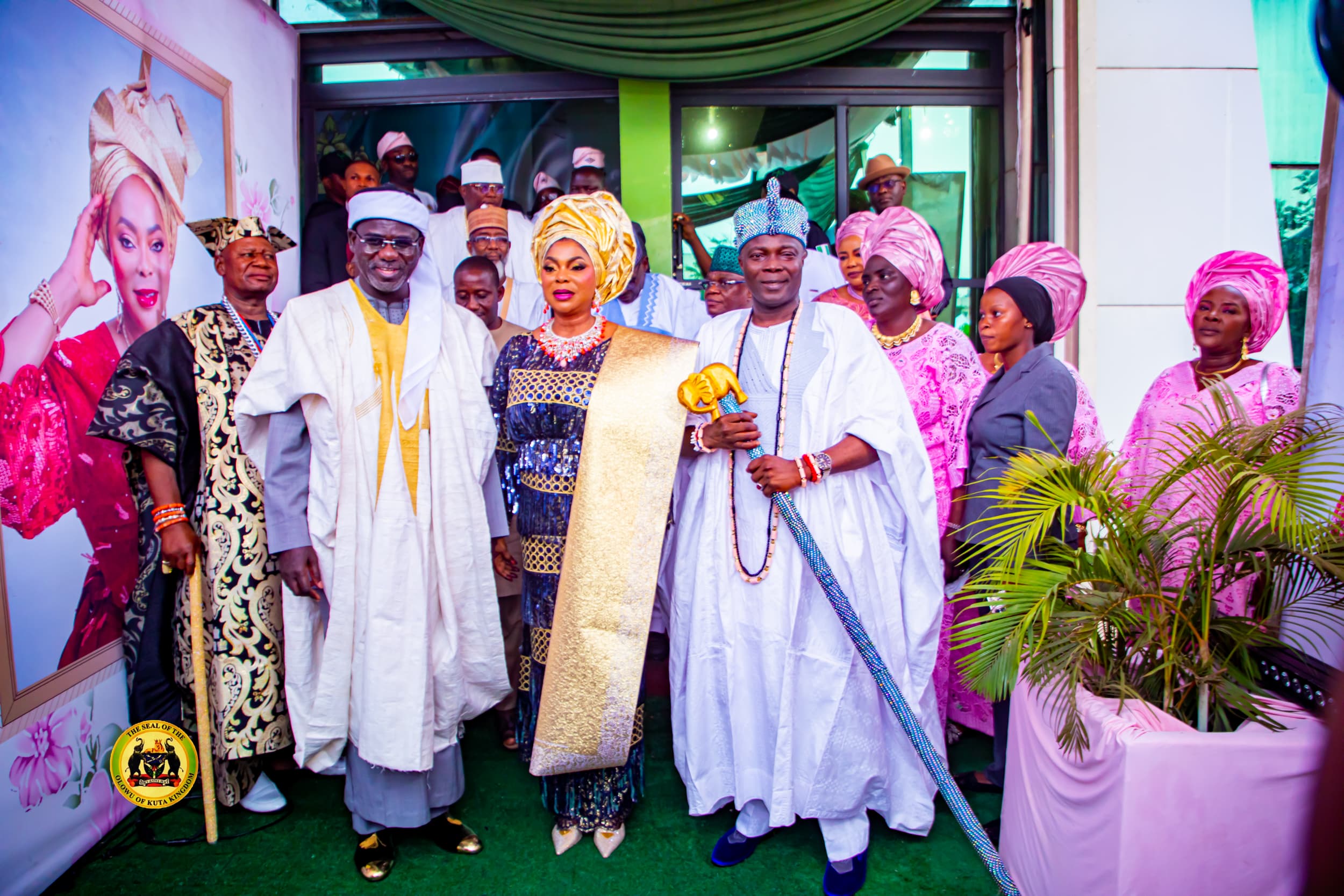
Buratai, Fagbemi , Shagaya, Olofa, Others Eulogise Olowu Kuta’s Olori On 60th Birthday, Foundation Launch
Eminent personalities across the Nigeria stormed the TFK Event Centre, Bala Mohammed Way, Guzape, Abuja, to celebrate the 60th birthday of Olowu Kuta’s Olori, Queen Jumai Amoke and her Foundation Launch on Saturday 28, March 2026.

From former Chief of Army Staff, Lt Gen TY Buratai rtd, to the Minister of Justice and Attorney-General of the Federation, Prince Lateef Fagbemi; Olofa of Offa, HRM Oba Mufutau Gbadamosi. Even top businesswoman and socialite, Chief (Mrs) Bola Shagaya, was in attendance.


Other dignitaries were newly promoted Deputy Inspector-General of Police and former AIG Zone 2 , Lagos , Adegoke Fayoade, Major General Abdumalik, Major General Samuel Adebayo rtd (Fmr CDI);
Major General Anthony Omozoje rtd (Fmr Copp);
Alhaji Tajudeen Owoyemi (Asiwaju of Offa and CEO Radisson Hotel Nigeria;
Dr Waheed Olagunju, former managing director of Bank of Industry, Oniba of Iba, Lagos State, HRM Oba Dr Suleiman Raji ;
Justice Falola, Olu of Ile-Ogbo , Oba Adetoyese amongst many traditional rulers and captains of industry too numerous to mention.
Speaking at the occasion, the Chief Host, Olowu of Kuta, HRM Oba Dr Adekunle Oyelude Makama, CON , Tegbosun iii, who is also the husband of the celebrant commended Queen Jumai for ‘ her slender arms full of kindness’ to establish such humanitarian Foundation, ‘Amoke Children and mother in Need Foundation’ at a time Nigerians are going through economic crisis occassioned by the global meltdown.
Olowu also commended her steadfastness and love for the less privileged and downtrodden.
The monarch refrenced the task before his wife’s humanitarian gesture said her best is yet to come.
” Olori Amoke Jumai, I celebrate you. You will celebrate 70, 80, 90 and continue to shine as you continue to put a smile on people’s faces. I love you, “Olowu Kuta added.
To Lt Gen Buratai, a former army chief and former Nigerian Ambassador to Benin Republic, the reward of hard work is more work.
Buratai, who also doubles as Balogun Agba of Owu Kuta, a chieftaincy title reserved for a generalismo congratulated Queen Jumai for attaining the age of 60 in good health.
The retired army General said he’s not surprised by the turn out of eminent personalities across the country to celebrate the Olowu Kuta’s Olori because she merited it through her hospitality to all, adding that Allah the most merciful, most beneficial would accept all her act of ibadah.
The minister of Justice, Prince Fagbemi, was full of praises for Queen Jumai for deeming it fit to have a place in her heart to accommodate the needy and less privileged in ‘our society.’
Prince Fagbemi urged the guests to contribute generously to support the Foundation in order to continue to alleviate poverty and put a smile on the faces of the people.
” I congratulate you on your 60th birthday and Foundation Launch. I wish you many happy returns of the day and many more fruitful services to the country and motherland”, Prince Fagbemi added.
The celebrant, Queen Jumai who was grining from ear to ear thankfully said she was excited by the turn out and the response of the people to her foundation.
Queen Jumai, however, promised to continue to use her resources and donations received for the good of the needy and less privileged in the society.
” I want to appreciate my own Kabiesi Olofa of Offa , for his presence and im I’m using him as a point of contact to all other Kabiesis present here, the minister of justice and Attorney-General, you’re welcome, sir; Mrs Bola Shagaya, I salute your enterprise, Lt Gen Buratai, I’m grateful, sir; DIG Fayoade, Justice Falola and other dignitaries too numerous to mention, I thank you, all. To my darling husband, Kabiesi Olowu , I thank you immensely for your support. And to my family and friends, I thank you , all. E se pupo!”, she said.


-

 society7 months ago
Religion: Africa’s Oldest Weapon of Enslavement and the Forgotten Truth
-

 news4 months ago
WHO REALLY OWNS MONIEPOINT? The $290 Million Deal That Sold Nigeria’s Top Fintech to Foreign Interests
-

 society6 months ago
“You Are Never Without Help” – Pastor Gebhardt Berndt Inspires Hope Through Empower Church (Video)
-

 celebrity radar - gossips2 months ago
Dr. Chris Okafor Returns with Power and Fire of the Spirit -Mounts Grace Nation Altar with Fresh Anointing and Restoration Grace on February 1, 2026