
celebrity radar - gossips
TB JOSHUA; REMEMBERING EXIT OF A WORLD CHANGER BY DARE ADEJUMO

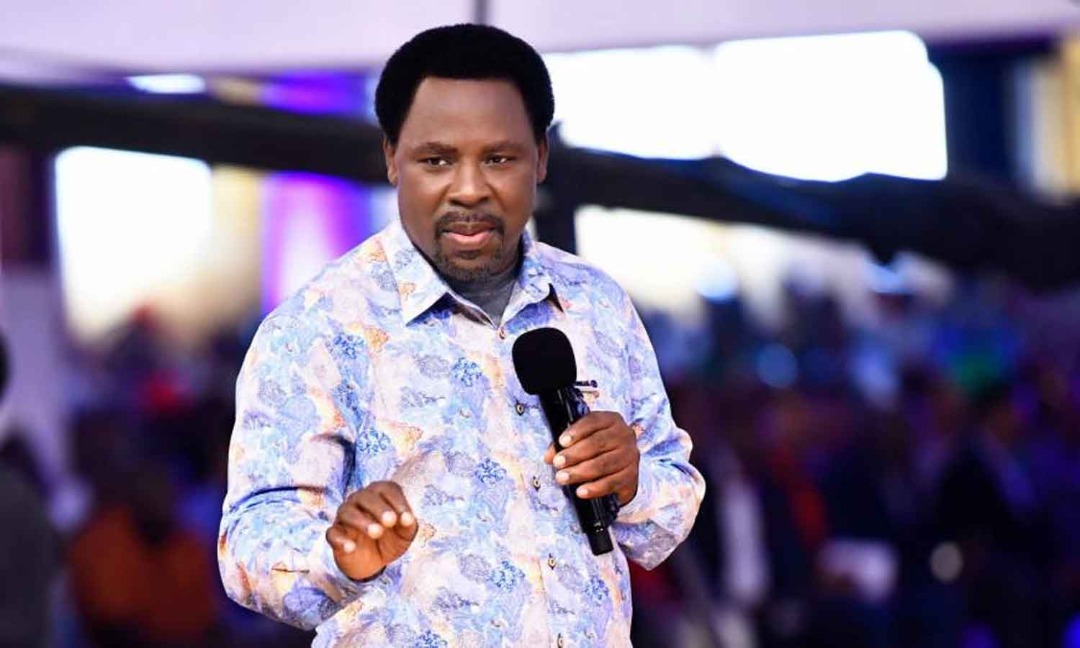
TB JOSHUA; REMEMBERING EXIT OF A WORLD CHANGER
BY DARE ADEJUMO
TB JOSHUA – The month of June is a significant month in the annal of Synagogue Church Of All Nations SCOAN. It is the birth and passing of its founder, Prophet TB Joshua that great world changer.
Its fifth day makes the second year of his glorious exit from earth and on the twelfth, the great man of God who cherished marking his birthdays would have been 60 years old.
Nations across the world would have been agog for an extraordinary Prophet of God whose footprints of wonderful deeds touching the lives of millions across the globe remain in the sand of time. TB Joshua came to revitalize the face of christianity and made the physiognomy of practical christian living as given by Jesus Christ already in abeyance real to mankind once again.
There’s no hide and seek in his life. He was love personified. The humbliest human being I have ever come across. Firm and stern, even in his moment of severity, you would still find love encapsulated. You cannot offend him. He’s extra sensitive with propulsively radiating wisdom, unfathomable knowledge of life, charming and a paragon of magnetically illuminating character. He was completely acidic to vanity, envy, jealousy. human comparison, imitation, vulgarity and wonton desires. He described them as one of those “foolish things” not to be entertained for a moment in one’s life.
TB Joshua was a divinely self made man. Here was a man with little elementary education. Yet with your degrees, prodigy of erudition and western exposures, you would be humbled by the self discovery of your personal hollowness or quasi emptiness when you sit to discuss or share a view with TB Joshua, a shying rustic village man. TB Joshua was an attestation of God’s Omniscient, Omnipresent, Omnipotent and greatness that lies in simplicity.
I personally witnessed several cases of some other so-called men of God who out of ignorance and envy were once persecuting him but after receiving the touch of God in different dimensions including mere touching of EMMANUEL TV while praying came to weep before God for forgiveness.
Joshua would only say to them: ” I didn’t fire one single arrow back from all your arrows against me; otherwise you won’t be here today to talk. One thing we should always know is this: I did not choose myself to do God’s work. He in His wisdom just chose me and I know He is with me. God would never give anybody this kind of power He gave me if the person would use it for selfish purposes or against his perceived enemies. No!”
TB Joshua was a puzzle, an enigma. He was the light shining in darkness that many couldn’t comprehend. He looked too simple and ordinary having not been commissioned by the earthly papacy or religious authorities of the day and for him to be performing miracles of diverse kinds like breathing. This was clearly indescribable, incomprehensible, a mystery and shocker to the spiritual ignoramuses and empty flamboyant oratorical, motivational preachers with big congregations.
That great English thinker and philosopher John Locke once said: “New opinions are always suspected and usually opposed without any other reason but because they are not already common”.
In God’s adamantine and inscrutable will, TB Joshua came to the scene when the acts of Christianity seen in Jesus Christ and His early desciples and apostles as captured in the Bible were gradually becoming moonlight tales to this generation. Religious leaders had already metamorphosed to careerism and polarised with pervasive unhealthy cacophonous standards. It was obvious that these religious leaders no longer knew what they were doing then even till today in several quarters without any tangible impacts in the life atrophied worshippers!
That was the turning point.
There was no way TB Joshua could have had it easier. He faced satanic conspiracies and persecution galore, but the man remained focused with unmitigated perseverance, vision and mission of his divine assignments which he tenaciously upheld victoriously till the last.
He took his persecution joyfully and that vonspiracy against him at home launched to the outside world in God’s agenda and design for his mission on earth.
Hear him:
“I began discovering the good life when I was only 15 years. My objectives and motives were determined at once. I wanted what God wanted and I wanted it for the reason God wanted it”. That’s prophet TB Joshua for you. Till the end he carried his childhood with him. With malice to no one but love, charity and firmness to all in God’s righteousness. To him love is pure. Take good care of your heart because that is your communicating point with God and must ever remain pure to know and flow with Him. You can never love God if you don’t love your neighbours and your neighbours include your percieved enemies, those not in the same faith with you, the poor and those in needs who you must give love unconditionally.
This Godly character often made TB Joshua be misrepresented by low spiritual human beings whenever they saw him attend to other people who were not Christian’s just as his Master, Jesus was accused of dining with Republicans and sinners which made the religious authorities persecuted Him.
The truth of humanity as once put by that foremost existentialist Italian philosopher Soren Kierkegaard is that history would always repeat itself because man would never learn from history. Many never discovered Joshua not until he had departed! What a painful loss.
You can never find TB Joshua criticizing or talking about other men of God. He moved on quietly on his own even though he lamented the pervasive discrimination and disunity in christendom.
Several people from other churches who received healings and miracles in his church, Synagogue Church Of All Nations SCOAN wanted to come and do thanksgiving in his church but Joshua would not allow them. “Go back to you church and do your Thanksgiving and give your offering there. We are the same. God had already answered your prayers there before you came here” for you to see how selfless he was in all his dealings.
TB Joshua was more interested in the quality of your Christian life and character. He would ask you: ‘Do you hear from God? Do you listen to Him? Does He speak with you? Do you know how much you need Him? Do you have a relationship with Him? The God’s General believed that your highest achievement on earth was to hear from God.
To TB Joshua, Christianity is not a religion but a relationship with God. If you don’t have that relationship with Him you have missed it and you are worshipping in vain. “How can you be worshipping God you don’t know?” He would spiritually jerked up his congregants to move away from spiritual docility, complacency and indolence.
TB Joshua was never an academic preacher. He spoke words of life that transformed lives of ardent and fervent seekers of God and salvation.
I remember a woman nurse I once encountered where she had come to treat a patient as she stood looking at EMMANUEL TV. On enquiries whether she knew of the television station, she said that she used to attend SCOAN. “I was a nurse and member of the church’s medical team. Then the church was not rich, just managing to survive. It was what happened during the man of God’s birthday that made me stop going and besides I had relocated to a farther distance. We all on our own contributed money to give TB Joshua as a present. When we got there to present it, the man just asked us to put all the money in one sack. He asked us to choose some people among us to take the whole money to the disabled people’s home at Oko Baba. He instructed that one of us should just dip his or her hand in the sack and be distributing the money to them one by one with whatever the hand could gather at once like that to the less privileged living there and nothing should be left in the sack. I couldn’t believe it. I was shocked that the man could take everything there like that not minding that the church itself was very poor”. This woman completely missed the beauty of life and essence of humanity the prophet symbolized. TB Joshua believed your giving is only meaningful when you give what you cherished most. He would never give in half measures. He was extraordinarily generous and at home in humility with all categories of people as a friend however commonised other people may look at them. Every human being is unique and important to TB Joshua and must be treated with dignity.
TB Joshua was never a burden to anyone but carried all human burdens that crossed his paths. He was the only man of God holding crusade abroad without asking for any donations or collecting offering from worshippers. He would rather go there with loads of charity works for people and the country. There was a time in Cameroon when the airwave was jammed with announcements that TB Joshua would be coming to hold a crusade in Yaounde asking for people to donate money. This was a scam because the scammers were capitalizing on Joshua’s popularity and the perceived pressure of the country’s request for his crusade program in Cameroon. TB Joshua in holy anger countered the announcements saying: ” That cannot be my TB Joshua of Synagogue Church Of All Nations SCOAN. I have no plan to go to Cameroon. God has not directed me to go there. Have you ever seen my pictures or envelopes asking for donation of money from anyone or anywhere? Please disregard this announcement. When God gives you an assignment He would also send to you what you would need through His chosen vessels”. This is a symbolic message for you to differentiate the chalk from the cheese in the religiously distorted world. He never allowed himself for a moment to be carried away by anything.
The lofty principles and legacies of TB Joshua remain enduring and a high watershed in Christendom. The joy today is that SCOAN is in the capable hand of a down-to-earth and visionary successor, Pastor Evelyn Joshua, a woman who had gone through the spiritual mills and rigorous discipline of TB Joshua the spiritual mentor extraordinaire who strongly believed that life’s biggest decision is what you do with Jesus.





celebrity radar - gossips
Buratai, Fagbemi , Shagaya, Olofa, Others Eulogise Olowu Kuta’s Olori On 60th Birthday, Foundation Launch

Buratai, Fagbemi , Shagaya, Olofa, Others Eulogise Olowu Kuta’s Olori On 60th Birthday, Foundation Launch
Eminent personalities across the Nigeria stormed the TFK Event Centre, Bala Mohammed Way, Guzape, Abuja, to celebrate the 60th birthday of Olowu Kuta’s Olori, Queen Jumai Amoke and her Foundation Launch on Saturday 28, March 2026.

From former Chief of Army Staff, Lt Gen TY Buratai rtd, to the Minister of Justice and Attorney-General of the Federation, Prince Lateef Fagbemi; Olofa of Offa, HRM Oba Mufutau Gbadamosi. Even top businesswoman and socialite, Chief (Mrs) Bola Shagaya, was in attendance.


Other dignitaries were newly promoted Deputy Inspector-General of Police and former AIG Zone 2 , Lagos , Adegoke Fayoade, Major General Abdumalik, Major General Samuel Adebayo rtd (Fmr CDI);
Major General Anthony Omozoje rtd (Fmr Copp);
Alhaji Tajudeen Owoyemi (Asiwaju of Offa and CEO Radisson Hotel Nigeria;
Dr Waheed Olagunju, former managing director of Bank of Industry, Oniba of Iba, Lagos State, HRM Oba Dr Suleiman Raji ;
Justice Falola, Olu of Ile-Ogbo , Oba Adetoyese amongst many traditional rulers and captains of industry too numerous to mention.
Speaking at the occasion, the Chief Host, Olowu of Kuta, HRM Oba Dr Adekunle Oyelude Makama, CON , Tegbosun iii, who is also the husband of the celebrant commended Queen Jumai for ‘ her slender arms full of kindness’ to establish such humanitarian Foundation, ‘Amoke Children and mother in Need Foundation’ at a time Nigerians are going through economic crisis occassioned by the global meltdown.
Olowu also commended her steadfastness and love for the less privileged and downtrodden.
The monarch refrenced the task before his wife’s humanitarian gesture said her best is yet to come.
” Olori Amoke Jumai, I celebrate you. You will celebrate 70, 80, 90 and continue to shine as you continue to put a smile on people’s faces. I love you, “Olowu Kuta added.
To Lt Gen Buratai, a former army chief and former Nigerian Ambassador to Benin Republic, the reward of hard work is more work.
Buratai, who also doubles as Balogun Agba of Owu Kuta, a chieftaincy title reserved for a generalismo congratulated Queen Jumai for attaining the age of 60 in good health.
The retired army General said he’s not surprised by the turn out of eminent personalities across the country to celebrate the Olowu Kuta’s Olori because she merited it through her hospitality to all, adding that Allah the most merciful, most beneficial would accept all her act of ibadah.
The minister of Justice, Prince Fagbemi, was full of praises for Queen Jumai for deeming it fit to have a place in her heart to accommodate the needy and less privileged in ‘our society.’
Prince Fagbemi urged the guests to contribute generously to support the Foundation in order to continue to alleviate poverty and put a smile on the faces of the people.
” I congratulate you on your 60th birthday and Foundation Launch. I wish you many happy returns of the day and many more fruitful services to the country and motherland”, Prince Fagbemi added.
The celebrant, Queen Jumai who was grining from ear to ear thankfully said she was excited by the turn out and the response of the people to her foundation.
Queen Jumai, however, promised to continue to use her resources and donations received for the good of the needy and less privileged in the society.
” I want to appreciate my own Kabiesi Olofa of Offa , for his presence and im I’m using him as a point of contact to all other Kabiesis present here, the minister of justice and Attorney-General, you’re welcome, sir; Mrs Bola Shagaya, I salute your enterprise, Lt Gen Buratai, I’m grateful, sir; DIG Fayoade, Justice Falola and other dignitaries too numerous to mention, I thank you, all. To my darling husband, Kabiesi Olowu , I thank you immensely for your support. And to my family and friends, I thank you , all. E se pupo!”, she said.
celebrity radar - gossips
Adron Homes Elevates Cultural Pride as Dignitaries Grace 39th Lisabi Festival in Abeokuta
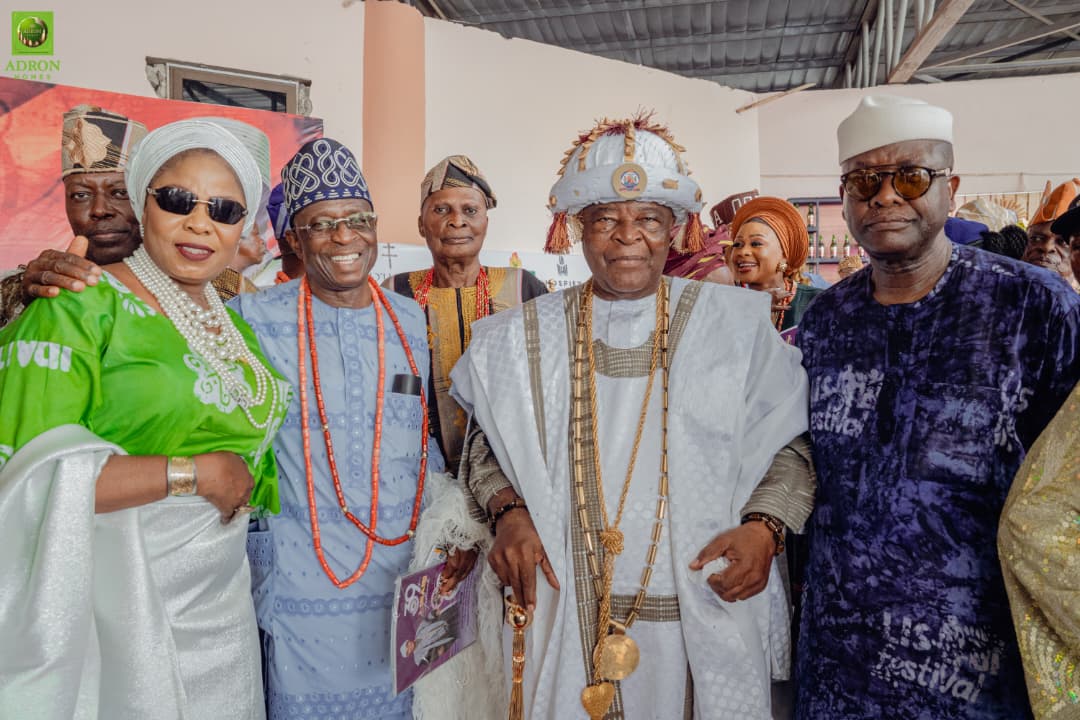
Adron Homes Elevates Cultural Pride as Dignitaries Grace 39th Lisabi Festival in Abeokuta
The ancient city of Abeokuta came alive in a grand display of culture, history, and unity as dignitaries from across Nigeria converged at the iconic Ake Palace Ground for the 39th edition of the Lisabi Festival, an annual celebration deeply rooted in the Egba people’s heritage.
The event, proudly supported by Adron Homes and Properties Limited, witnessed an impressive parade of distinguished personalities, traditional rulers, government officials, business leaders, and cultural enthusiasts, all captured in vibrant pictures that tell the story of a people united by history and pride.
From richly adorned monarchs in regal attire to elegantly dressed guests reflecting the depth of Yoruba tradition, the images from the festival encapsulate moments of honour, reverence, and celebration. Each photograph portrays not just faces, but influence, leaders, and stakeholders who continue to shape cultural preservation and community development.
At the heart of the celebration was the revered Oba Adedotun Aremu Gbadebo, whose presence underscored the festival’s significance as a symbol of Egba resilience and identity. Surrounding him were eminent dignitaries whose attendance further amplified the prestige of the event.
Adron Homes and Properties Limited stood out prominently, not only as a sponsor but as a key driver of cultural sustainability. Through its strategic support, the company reinforced its commitment to preserving indigenous heritage while fostering community engagement. The brand’s visibility across the venue and within the pictorial highlights reflects a deliberate alignment with culture, tradition, and people-centered development.
Beyond real estate, Adron Homes has continued to position itself as a cultural partner, investing in platforms that celebrate history and strengthen communal bonds. Its involvement in the Lisabi Festival is a testament to its broader vision of building not just homes, but legacies rooted in identity and pride.
The 39th Lisabi Festival, as captured through the lens of dignitaries in attendance, is more than an event, it is a narrative of continuity. And through its unwavering support, Adron Homes has once again set the pace, demonstrating that corporate institutions can play a vital role in sustaining the cultural heartbeat of a people.
As the echoes of drums fade and the colours of the festival linger in memory, one thing remains clear: the story told through these images is one of unity, heritage, and the enduring partnership between tradition and progress.


celebrity radar - gossips
Obasa Felicitates President Tinubu @ 74, says Renewed Hope Agenda is steering Nigeria toward stability and prosperity

Obasa Felicitates President Tinubu @ 74, says Renewed Hope Agenda is steering Nigeria toward stability and prosperity
The Speaker of the Lagos State House of Assembly, Rt. Hon. (Dr.) Mudashiru Obasa has congratulated President Bola Ahmed Tinubu on his 74th birthday, commending him for fulfilling his Renewed Hope Agenda promises to Nigerians.
Speaker Obasa’s birthday message is contained in a statement signed by Adeshina Oyetayo, his Special Adviser on Research, Media, and Documentation.
Speaker Obasa described the President as a purposeful and pragmatic leader whose commitment to enthroning a peaceful and prosperous Nigeria should be appreciated by all
“Mr. President, today should be a national day of celebration honouring your selfless and visionary leadership.
“I commend your courage and conviction to initiate and implement necessary economic reforms that have pulled Nigeria out of the doldrums, stabilized the nation, and set it on the path of prosperity.”
Speaker Obasa said that those otherwise painful reforms are now being hailed as ingenious and effective worldwide, citing a January 2026 article in the influential The Economist magazine titled “Nigeria’s economy may be back from the brink.”
The article acknowledged that President Tinubu’s reforms are beginning to yield bountiful returns as evidenced in the easing of headline inflation for the 11th consecutive month, unification of the foreign exchange market, and foreign reserves rising to $46billion.
Notably, the article also referenced the International Monetary Fund (IMF)’s upgraded 4.4% GDP growth forecast for 2026 despite global headwinds, while stating unequivocally that Nigeria’s golden years will return under President Tinubu.
Speaker Obasa said that this submission by an international journal signifies that Nigeria is in safe hands under President Tinubu. He, therefore, urged Nigerians to rally round him and support his re-election bid, promising that the gains of the Renewed Hope agenda will reach every household.
“Our prayer is that the Almighty will grant our dear President long life in robust health and the strength and wisdom to help him achieve the Nigeria of our collective dreams,” Speaker Obasa concluded.


-

 society6 months ago
Religion: Africa’s Oldest Weapon of Enslavement and the Forgotten Truth
-

 news4 months ago
WHO REALLY OWNS MONIEPOINT? The $290 Million Deal That Sold Nigeria’s Top Fintech to Foreign Interests
-

 society6 months ago
“You Are Never Without Help” – Pastor Gebhardt Berndt Inspires Hope Through Empower Church (Video)
-

 celebrity radar - gossips2 months ago
Dr. Chris Okafor Returns with Power and Fire of the Spirit -Mounts Grace Nation Altar with Fresh Anointing and Restoration Grace on February 1, 2026