
celebrity radar - gossips
THE CHILDREN OF USMAN DAN FODIO AND THE MANIFESTATION OF THE FULANI EMPIRE

As Nigerians there are certain qoutes and statements that we must enshrine and entrench in our spirits, minds and souls and that we must never forget if we really want to know where we are coming from, where we are today and where we will be tomorrow.
Permit me to begin this contribution with a series of those qoutes and statements and then share my thoughts with you later in the essay.
Consider the following.
In 1804 Sheik Usman Dan Fodio, the father and founder of the Fulani Caliohate said,
“I have been given the sword of truth to defeat and conquer the enemies of Allah. I will establish the Caliphate to rule over all and Sakwoto shall be its capital. It is either the pagans and unbelievers accept sharia and the Koran or they accept the sword”.
In 1914 Lord Frederick Lugard, the British Governor General of the newly-established Nigerian nation said,
“The amalgamation of the northern and southern protectorates of Nigeria is a marriage between the poor northern husband and the rich southern wife. May this union be unbreakable and may it last forever”.
In 1948 Sir Abubakar Tafawa Balewa, a man that was to later become the Prime Minister of Nigeria said,
“Since 1914, the British Government has been trying to make Nigeria into one country, but the Nigerian people themselves are historically different in their backgrounds, in their religious beliefs and customs and do not show themselves any sign of willingness to unite. Nigerian unity is only a British intention for the country”.
In 1957 Sir Ahmadu Bello, the Saurdana of Sokoto and the Premier of Northern Nigeria said,
“We the people of the north will continue our stated intention to conquer the south and to dip the Koran in the Atlantic ocean after the British leave our shores”.
In 1961 Sir Ahmadu Bello, the Saurdana of Sokoto and the Premier of the Northern Region said,
“The new nation called Nigeria should be an estate of our great grandfather Othman Dan Fodio. We must ruthlessly prevent a change of power. We must use the minorities in the North as willing tools and the South as a conquered territory and never allow them to rule over us and never allow them to have control over their future”.
In 1963 Sir Ahmadu Bello, the Saurdana of Sokoto and the Premier of the Northern Region said,
“I would rather employ a foreigner in the northern civil service than employ an Igbo. Igbos tend to always want to dominate others wherever they go and we do not want that in the north”.
In 1987 Sheik Abubakar Gumi, Leader of the Sunni Muslim Izala sect said,
“No Christian will ever rule Nigeria again unless it is over my dead body”.
In 1992 Sultan Ibrahim Dasuki, the Sultan of Sokoto said,
“This country was given to we northerners by the British to rule. When they left the understanding between us was that the North would always lead and rule Nigeria”.
In 2001 General Muhammadu Buhari, who had already been a military Head of State and who was to later become President of Nigeria said,
“I will continue to show openly and inside me the total commitment to the Sharia movement that is sweeping all over Nigeria. God-willing, we will not stop the agitation for the total implementation of the Sharia all over the country”.
In 2001 General Muhammadu Buhari, who had already been a military Head of State and who was to later become President of Nigeria said,
“Muslims should only vote for Muslims and those who will defend their faith”.
In 2001 General Muhammadu Buhari, who had already been a military Head of State and who was to later become President of Nigeria said,
“Why should Christians complain when limbs are being cut off in the name of sharia? After all these are Muslim limbs and not Christian ones”.
In 2001 General Muhammadu Buhari, who had already been a military Head of State and who was to later become President of Nigeria said,
“Why are your (Yoruba) people killing my (Fulani) people”.
In 2013 General Muhammadu Buhari, who had already been a military Head of State and who was to later become President of Nigeria said,
“An attack on Boko Haram is an attack on the north”.
In 2014 Sheik Abubakar Shekau, the leader of Boko Haram said,
“By Allah we will not stop fighting until every Nigerian abides by sharia law. If you don’t abide we will kill you”.
In 2015 President Muhammadu Buhari who was once a military Head of State said,
“Boko Haram are our misguided brothers”.
In 2018 President Muhammadu Buhari who was once a military Head of State said,
“The Fulani herdsmen are Nigerians and have a right to be here. They carry sticks and not dangerous weapons. If you want peace give them your land”.
In 2019 Alhaji Abdullahi Bodejo, President of Miyetti Allah and Leader of the Fulani herdsmen said,
“You are a Governor and you want to enjoy peace in your state, you don’t need any long meeting, just create a particular area for the Fulani and equip them with modern facilities”.
Now what can we make of all this and where are we today? The qoutes and statements are self-evident and each of them have been subjects of intense debate and intellectial discourse over the years. I need not discuss their meaning, import or implications here as they are obvious and self-explanatory.
In any case I have stated my views extensively and quite often over the last few years in a series of essays on this topic and about those that espouse the provocative, outrageous, racist and totally unacceptable sentiments, views and disposition that are reflected by these incendiary words and asinine assertions.
All of those essays were widely published and amongst them are “Nigeria’s Third Mahdi And The Last of The Amalekite Kings” (2016), “The Sons of Futa Jalon” (2016) and “The Fulani Of Nigeria” (2019).
All three of these write-ups can be googled and found on the internet and they are all, together with my other written works, on the essay column of my website at www.femifanikayode.org.
I suffered the pain and indignity of being locked up in a special terrorist facility and cell with Boko Haram suspects and convicts in Kuje prison in 2017 for writing the first two and I have been subjected to all manner of threats to my life for writing the third.
Nevertheless the quest for truth and the bitter struggle for the emancipation of our people must continue regardless of the price that those of us that are in the thick of it are paying and may still have to pay.
No matter what happens tomorrow I am satisfied with one thing: every single thing that I said would happen and would be done by our northern oppressors if they managed to get power in 2015 has since come to pass.
That vindication alone is more than enough for me. And trust me when I tell you that unless there is a divine intervention and something gives, things will get far worse as the noose of the conquerors tightens around our collective necks.
The good news though is that there is a God in Heaven who neither sleeps nor slumbers, who forges the destiny of nations and who rules in the affairs of men.
His name is the Ancient of Days, the Lord of Hosts and the Lion of the Tribe of Judah. And when He arises to deliver, no man or demon can stand against Him. In He lies our hope and strength and in His hands lies our collective deliverance. He shall not fail us.
What I will do in the rest of this write-up is to simply share my thoughts on where we are today. Consider the following.
I have no hate in me for anyone or for any group of people and neither do I believe in violence or seek to incite violence.
I am a lover of peace and a servant of truth. I am constrained to speak that truth no matter how bitter it is and no matter whose ox is gored. That is my calling and that is the purpose of this short contribution. Consider the following.
The agenda of the Fulani to own Nigeria and turn the indigenous people of our country into slaves is an ancient one. It started 215 years ago in 1804 and it has almost reached completion.
Those that are screaming about Fulani hegemony and northern domination today are like chickens whose heads have already been cut off. They are crying over spilt milk.
They are lamenting long after the horse has already bolted from the stable. They are like the proverbial frog that was dropped in a pot of cold water and that was slowly boiled alive.
This is not just a matter of Fulani hegemony and northern domination: we are long past that stage and it is far worse than that.
It is nothing less than the full manifestation of total and complete Fulani subjugation and the final entrenchment of northern supremacy. As leaders we were cowardly and complacent and now the worse has befallen our people. Today the Fulani and the core north own Nigeria and virtually everyone in it lock, stock and barrel.
Whether we choose to accept it or not that is the bitter truth. That is where we are! Worse still 90% of southern and Middle Belt leaders have made a choice to bend the knee and bow to the Fulani north.
The few that have stood up to them over the last 100 years have either been killed, jailed, frustrated, humiliated or discredited.
In my generation there are only a few men left standing in the fight for emancipation from the northern yoke and they are mostly unknown, unsung and not fully appreciated.
Amongst them are Ayo Fayose, Nnamdi Kanu, Gani Adams, Asari Dokubo, Yinka Odumakin, Seyi Makinde, Gboyega Adejumo, Segun Mimiko, Tony Nnandi, Anniko Briggs, Jackson Ude, Adekunle Odunmorayo, Otoks Princewill, Michael Orobator, Shola Salako, Akin Osuntokun, Charles Ogbu, Kassim Afegbua, Ade Ojikutu, Gbenga Adefaye, Reuben Abati, Demola Folarin, Kole Omololu, Jack McGunn, Shaka Momodu, Yemi Adebowale, Jide Ajani, Taiwo Adisa, Aziza Uko, Deji Adeyanju, Bayo Oladeji, Jude Ndukwe, Ifeanyi Ejiofor, Toks Ogunbanjo, Deji Osibogun, I.D. Gyang, Enyinnaya Abaribe, Reno Omkri, Musa Bagos, Mark Libdo, Jonathan Asake, Mark Jacob, Emmanuel Magba, George Akinola, Imam Yoruba Ilorin, Babatunde Gbadamosi and a handful of others.
Then you have groups like Afenifere, Ohaeneze, OPC, PANDEM, the Middle Belt Forum, SOKAPU, IPOB, Avengers, MEND, Ijaw Youth Congress, Yoruba Summit Group, YOLICOM, MASSOB, CAN, Christian Elders Forum, Yoruba K’oya, Core Federalists, Balogun Collective, Uzuko Umunna and a few others who have also stood firm and who have also been steadfast and unflinching.
Without the continous efforts, contribution, strength and vision of such individuals and such groups and without their gallant struggle against our collective oppressors we shall all be fully enslaved and be speaking Fufude in the next 10 years.
Virtually everyone else and every other group has been cowed and intimidated into submission and they all lament and complain about their pathetic condition of enslavement and servitude in whispered tones and behind closed doors. They dare not speak out loudly and boldly out of fear of the Fulani masters.
This is the tragedy that has befallen Nigeria: cowardice and capitulation to evil and the forces of darkness is now considered to be a virtue whilst courage and strong resistance to ethnic domination, racism, religious bigotry, injustice and tyranny is regarded as a vice. May God deliver us!




celebrity radar - gossips
Adron Homes Celebrates Visionary Chairman, Aare Adetola Emmanuel King, at 51
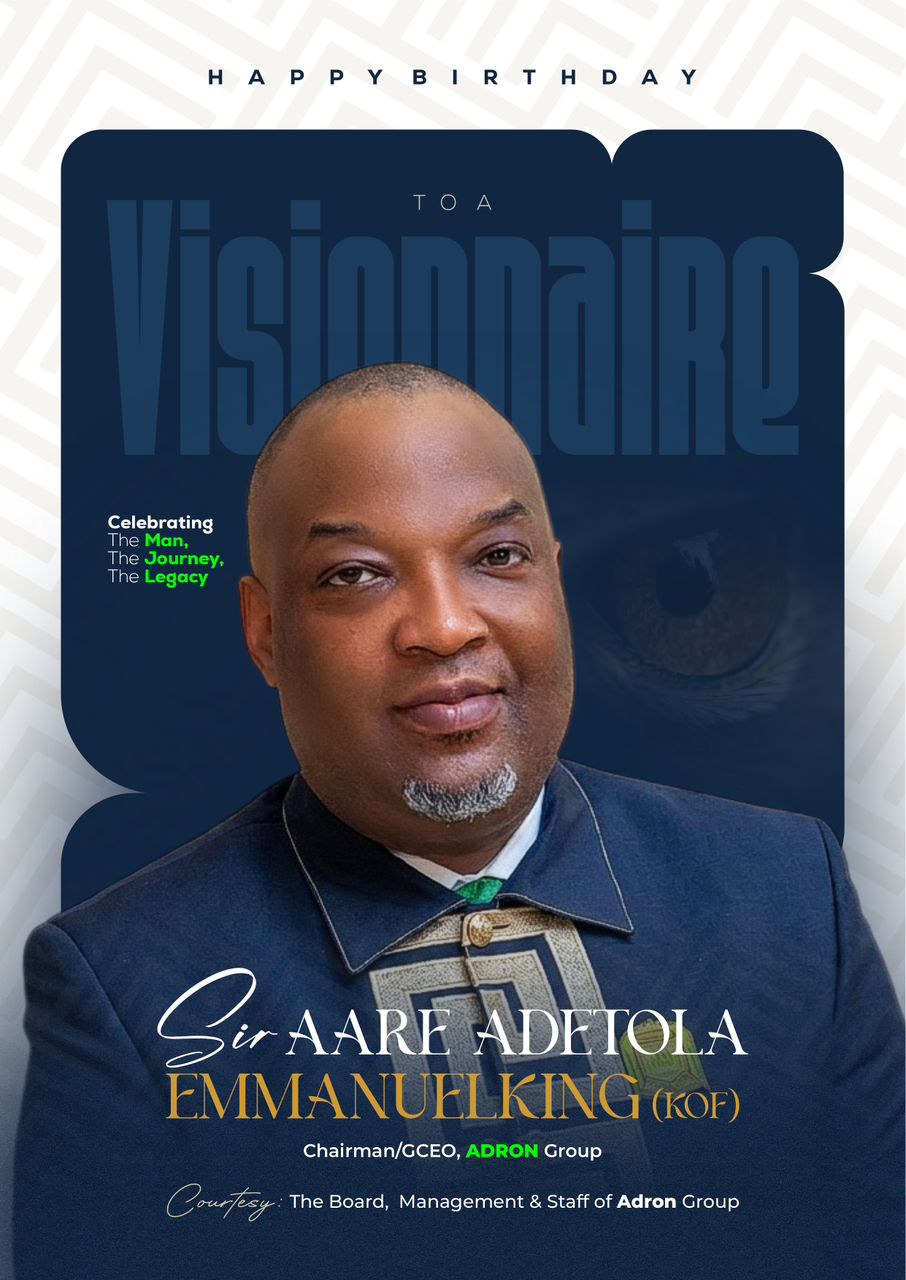
Adron Homes Celebrates Visionary Chairman, Aare Adetola Emmanuel King, at 51
The management and staff of Adron Homes and Properties Limited have joined family, friends, associates, and well-wishers across the globe to celebrate their Chairman and Chief Executive Officer, Aare Adetola EmmanuelKing, as he marks his 51st birthday.

In a statement released by the company, the milestone was described as a celebration of an exceptional leader whose vision, resilience, and entrepreneurial brilliance have not only transformed Adron Homes into a household name in Nigeria’s real estate sector but have also redefined affordable housing across the country.
Under his dynamic leadership, Adron Homes has continued to expand its footprint, delivering value-driven residential solutions while empowering thousands of Nigerians with opportunities for home ownership. His commitment to excellence, innovation, and customer satisfaction has remained the driving force behind the company’s sustained growth and industry leadership.
The statement further highlighted Aare EmmanuelKing’s passion for nation-building and community development, noting his significant contributions to job creation, youth empowerment, and the promotion of socio-economic development through real estate investments.
“As a leader, mentor, and visionary, Aare Adetola EmmanuelKing has consistently inspired a culture of excellence, integrity, and dedication within the organization. His ability to turn bold ideas into reality continues to position Adron Homes as a trailblazer in the industry,” the statement read.
The company expressed profound gratitude for his steadfast leadership and prayed for continued wisdom, strength, and sound health as he embarks on another year of impactful achievements.
As he celebrates his 51st birthday, the entire Adron Homes family proudly honours a man whose legacy continues to shape the future of real estate in Nigeria.
Happy 51st Birthday, Aare Adetola EmmanuelKing!
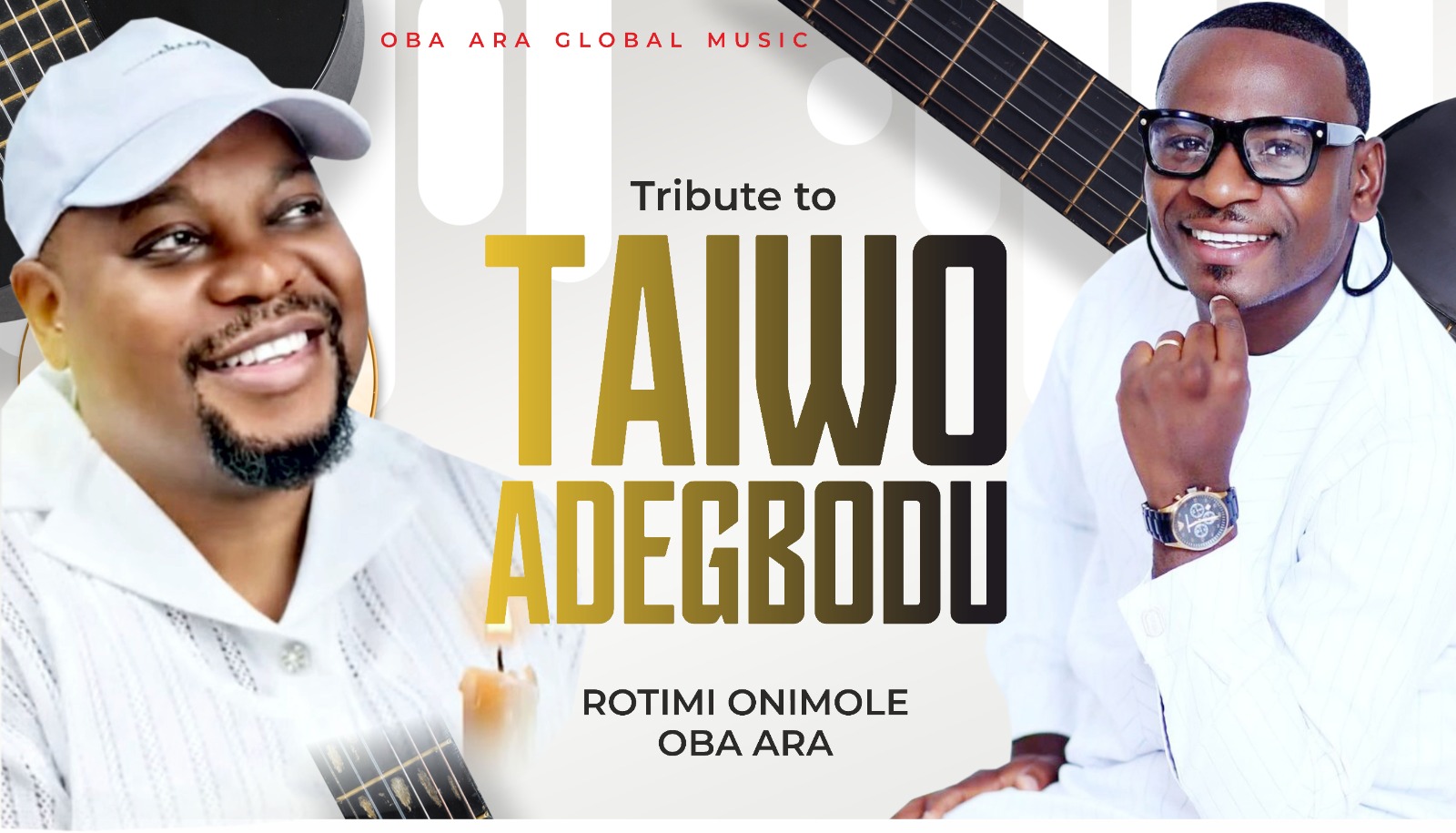
Oba Ara Releases Emotional Tribute to Late Taiwo Adegbodu
Taofik Afolabi
The gospel music community continues to grieve the painful loss of Taiwo Adegbodu, a beloved figure whose sudden departure left a deep void among fans, colleagues, and loved ones. In response to this loss, renowned gospel minister Rotimi Onimole, popularly known as Oba Ara, has released a moving tribute song that captures both the sorrow of the moment and the enduring legacy of the late singer.
Oba Ara, a proud son of Isale Eko, channels raw emotion throughout the song, using heartfelt lyrics and soul-stirring melodies to reflect on his personal connection with Taiwo Adegbodu. In the tribute, he openly expresses how deeply the news of Adegbodu’s passing shook him, describing it as a painful and unexpected loss that is difficult to come to terms with.
The song goes beyond mourning, it celebrates the life, ministry, and impact of Taiwo Adegbodu. Oba Ara highlights the late artist’s dedication to spreading the gospel through music, his inspiring voice, and the spiritual influence he had on many within and beyond Nigeria. Through powerful verses, he paints a picture of a man who lived for God and touched countless lives through his ministry.
Listeners have described the tribute as both comforting and deeply emotional, as it resonates with the collective grief of the gospel music community. It serves as a reminder that although Taiwo Adegbodu is no longer physically present, his music, message, and legacy will continue to live on.
In honoring his late colleague, Oba Ara not only pays his respects but also offers a source of healing for fans and fellow ministers, using music as a tool to process grief and celebrate a life well lived.
celebrity radar - gossips
Buratai, Fagbemi , Shagaya, Olofa, Others Eulogise Olowu Kuta’s Olori On 60th Birthday, Foundation Launch
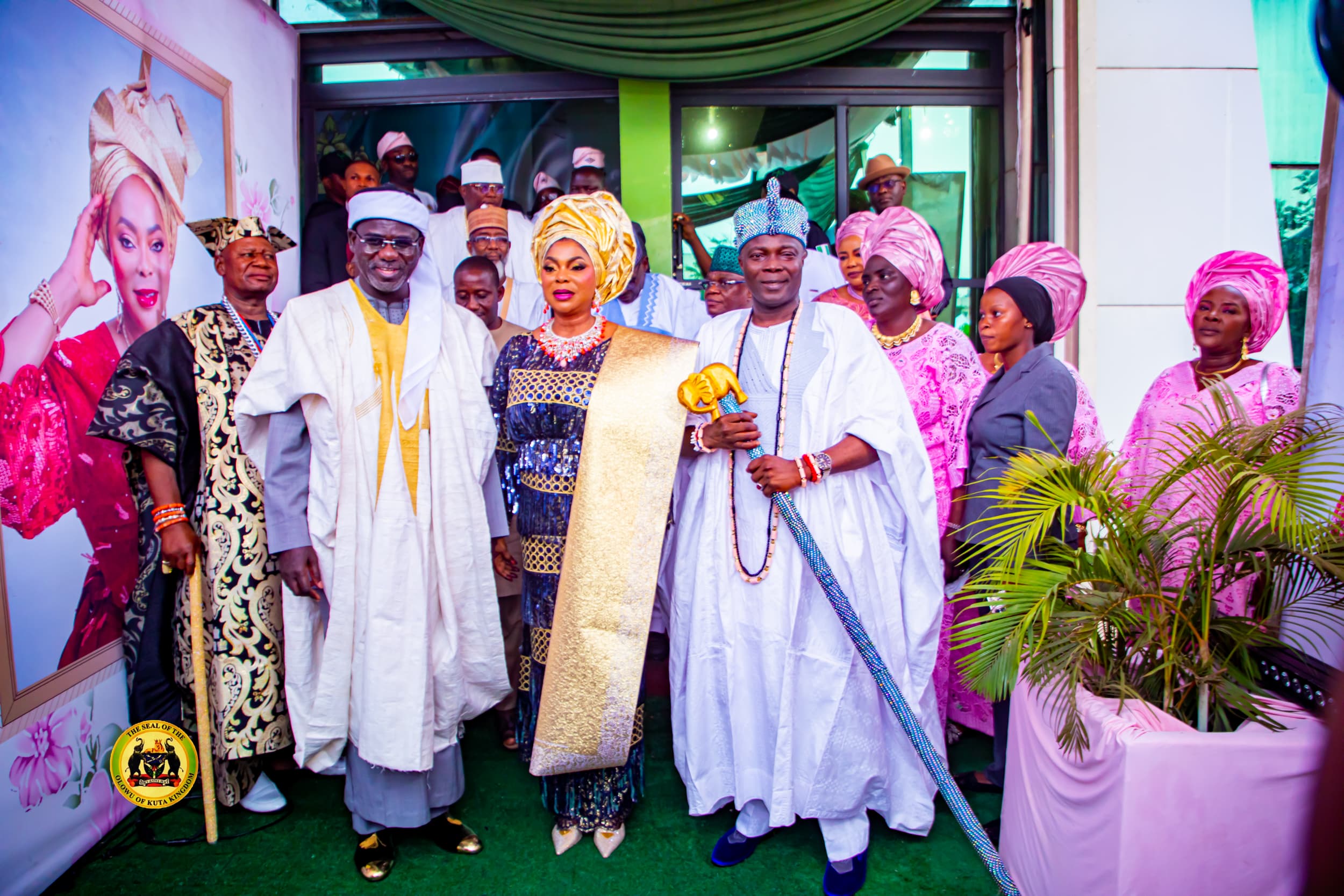
Buratai, Fagbemi , Shagaya, Olofa, Others Eulogise Olowu Kuta’s Olori On 60th Birthday, Foundation Launch
Eminent personalities across the Nigeria stormed the TFK Event Centre, Bala Mohammed Way, Guzape, Abuja, to celebrate the 60th birthday of Olowu Kuta’s Olori, Queen Jumai Amoke and her Foundation Launch on Saturday 28, March 2026.

From former Chief of Army Staff, Lt Gen TY Buratai rtd, to the Minister of Justice and Attorney-General of the Federation, Prince Lateef Fagbemi; Olofa of Offa, HRM Oba Mufutau Gbadamosi. Even top businesswoman and socialite, Chief (Mrs) Bola Shagaya, was in attendance.


Other dignitaries were newly promoted Deputy Inspector-General of Police and former AIG Zone 2 , Lagos , Adegoke Fayoade, Major General Abdumalik, Major General Samuel Adebayo rtd (Fmr CDI);
Major General Anthony Omozoje rtd (Fmr Copp);
Alhaji Tajudeen Owoyemi (Asiwaju of Offa and CEO Radisson Hotel Nigeria;
Dr Waheed Olagunju, former managing director of Bank of Industry, Oniba of Iba, Lagos State, HRM Oba Dr Suleiman Raji ;
Justice Falola, Olu of Ile-Ogbo , Oba Adetoyese amongst many traditional rulers and captains of industry too numerous to mention.
Speaking at the occasion, the Chief Host, Olowu of Kuta, HRM Oba Dr Adekunle Oyelude Makama, CON , Tegbosun iii, who is also the husband of the celebrant commended Queen Jumai for ‘ her slender arms full of kindness’ to establish such humanitarian Foundation, ‘Amoke Children and mother in Need Foundation’ at a time Nigerians are going through economic crisis occassioned by the global meltdown.
Olowu also commended her steadfastness and love for the less privileged and downtrodden.
The monarch refrenced the task before his wife’s humanitarian gesture said her best is yet to come.
” Olori Amoke Jumai, I celebrate you. You will celebrate 70, 80, 90 and continue to shine as you continue to put a smile on people’s faces. I love you, “Olowu Kuta added.
To Lt Gen Buratai, a former army chief and former Nigerian Ambassador to Benin Republic, the reward of hard work is more work.
Buratai, who also doubles as Balogun Agba of Owu Kuta, a chieftaincy title reserved for a generalismo congratulated Queen Jumai for attaining the age of 60 in good health.
The retired army General said he’s not surprised by the turn out of eminent personalities across the country to celebrate the Olowu Kuta’s Olori because she merited it through her hospitality to all, adding that Allah the most merciful, most beneficial would accept all her act of ibadah.
The minister of Justice, Prince Fagbemi, was full of praises for Queen Jumai for deeming it fit to have a place in her heart to accommodate the needy and less privileged in ‘our society.’
Prince Fagbemi urged the guests to contribute generously to support the Foundation in order to continue to alleviate poverty and put a smile on the faces of the people.
” I congratulate you on your 60th birthday and Foundation Launch. I wish you many happy returns of the day and many more fruitful services to the country and motherland”, Prince Fagbemi added.
The celebrant, Queen Jumai who was grining from ear to ear thankfully said she was excited by the turn out and the response of the people to her foundation.
Queen Jumai, however, promised to continue to use her resources and donations received for the good of the needy and less privileged in the society.
” I want to appreciate my own Kabiesi Olofa of Offa , for his presence and im I’m using him as a point of contact to all other Kabiesis present here, the minister of justice and Attorney-General, you’re welcome, sir; Mrs Bola Shagaya, I salute your enterprise, Lt Gen Buratai, I’m grateful, sir; DIG Fayoade, Justice Falola and other dignitaries too numerous to mention, I thank you, all. To my darling husband, Kabiesi Olowu , I thank you immensely for your support. And to my family and friends, I thank you , all. E se pupo!”, she said.


-

 society6 months ago
Religion: Africa’s Oldest Weapon of Enslavement and the Forgotten Truth
-

 news4 months ago
WHO REALLY OWNS MONIEPOINT? The $290 Million Deal That Sold Nigeria’s Top Fintech to Foreign Interests
-

 society6 months ago
“You Are Never Without Help” – Pastor Gebhardt Berndt Inspires Hope Through Empower Church (Video)
-

 celebrity radar - gossips2 months ago
Dr. Chris Okafor Returns with Power and Fire of the Spirit -Mounts Grace Nation Altar with Fresh Anointing and Restoration Grace on February 1, 2026
You must be logged in to post a comment Login
You must log in to post a comment.