
Politics
The Collosus Hits the 85 landmark – A Birthday Tribute To Chief Abdulkareem Adebisi Akande CFR

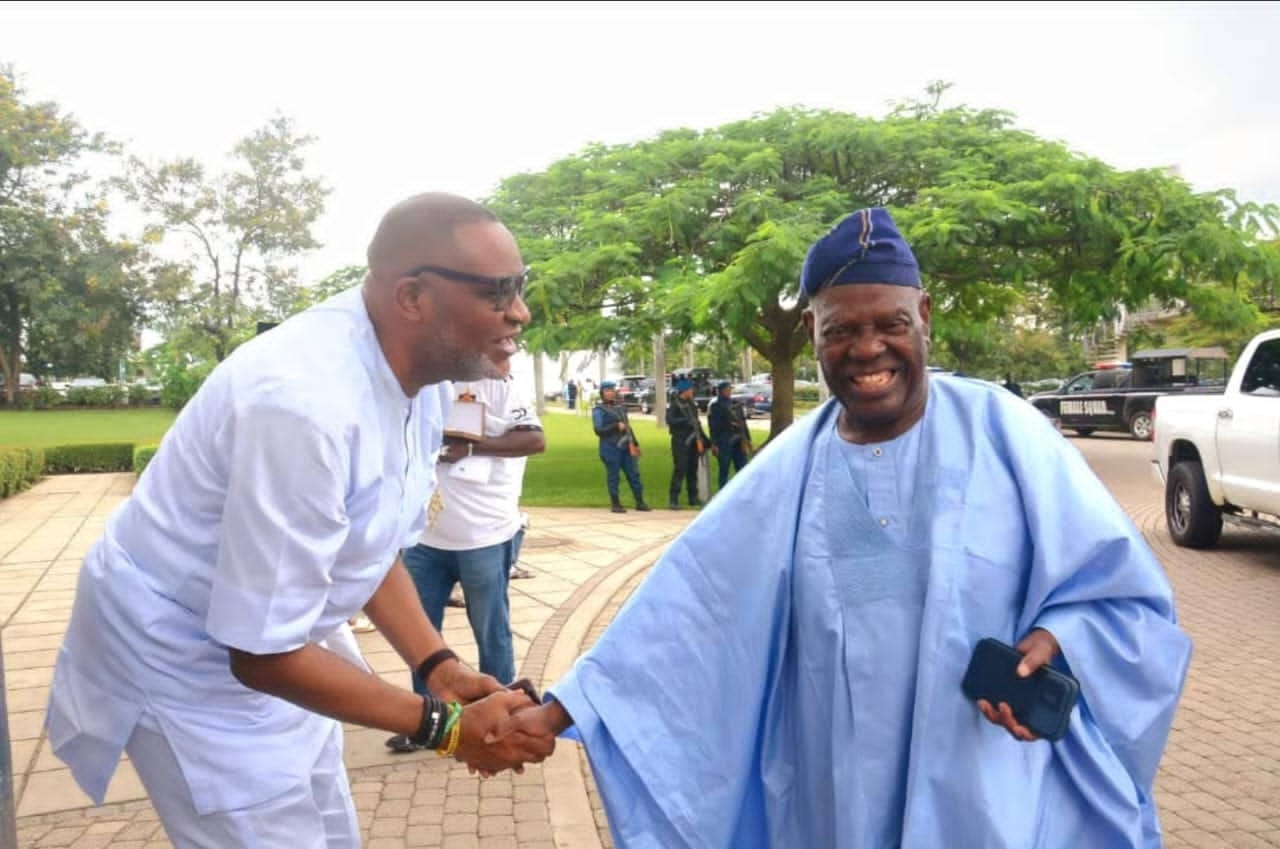
The Collosus Hits the 85 landmark – A Birthday Tribute To Chief Abdulkareem Adebisi Akande CFR.
THE MAN WHOSE CHARACTER AND INTERGRITY BECAME THE POLITICAL CAPITAL AND COLLATERAL FOR A STRUGGLE- The Oasis in the Desert…

Everytime I see Baba Akande these days, I am reminded of the Iroko tree 🌳 in the Forest, and the Oasis in the Desert.
Baba Akande also well known as” Baba awa omo Ke ke ke”i.e [ the father of children” is a man in his own class among human beings and dare I say among political class, though may not be physically tall, but in character, he towers dizzyingly over almost all the modern day politicians .
Baba is a sharp cut and divide , spartan and austere in nature compared to many in the political class today, clearly a distinctive and distinguished representation of the old stock, principled, bold , unwavering, unshaken and unruffled by situations and circumstances. A principled fighter backed by conviction.
I have mental recollections of Baba Akande as a young boy from the days of my budding interest in political affairs, when politics was driven by purity of intentions and purpose as exemplified by the likes of Papa Obafemi Awolowo, Chief Ajibola Ige , Chief Michael Adekunle Ajasin, Dr Ambrose Ali, all of them were governors of the Unity Party of Nigeria.
Back then these calibre of politicians lived by the unwritten rule of putting the people first, to be obedient if not subservient to the code of conduct that is steeply rooted in a life of modesty and moderation not fanfare and garulity of modern day emperors that some personalities in power now exemplify. That was not what the likes of Baba Akande exemplified while in power.
Indeed they abhorred ostentation and lousy use and display of power. They earned their veneration because the power they wielded was real people driven not imposed, snatched or bought!
In those good old days [ shamefully enough that we refer to those days most affectionately and nostalgically] because of the abuses of today, since today that ordinarily by progression should be better is not, but because power in the hands of those without depth of reason, care and concern has re-interpreted today’s politics and power in many ways that will make the likes of Baba Akande cringe and break out in goose bumps.
It was a typical Baba Akande who in His spartan nature and view of life and subscriber to a life of accountability that would rather choose to be impeached than to “settle” lawmakers to pass budget .. that can only be a Baba Akande.
Only a Baba Akande would leave government and still remain very modest without illicitly acquired possessions, acquired at the expense of the people’s well being but holding aloft the banner of good name, sterling public service record and profile of sparkling accountability and probity.
When will we have more Abdulkareem Adebisi Akandes ?
The stock is greatly depleted and their memories of unblemished public service are fast receding,and fading into distant horizon. 😢, made worse because we are a nation of fleeting emphasis and values.
Growing up much later, I recall clearly the roles played by this ageing man ,physically , but whose convictions have also being strengthened by the age and as the years went by.
Baba Akande was like the spinal chord that strengthened the opposition in the days of our struggles, a contented man not only in terms of material worth but in terms of political adventure.
Left to Baba Akande , the politics of the South west most likely would have remained politics of the South west, in literal sense because Baba Akande is not that politically adventurous, rather would like to prevent Ideological stain and contamination, he believes that undue alliances could come with contagious realities ..
Baba Akande believes that undue alliances would imply a compromise of ideals and ideology that he has subscribed to over the years , so he was ever cautious , but his implicit trust and believe in a younger more politically adventurous, very daring political maestro who also has the means convinced Baba Akande to allow the expansionist vision , driven by no other than the JagabanBorgu, the Asiwaju of Lagos, now literally Asiwaju of Nigeria, President Bola Ahmed Tinubu GCON .
This is the synoptic trajectory from the fall of Alliance for Democracy controlled states, where all the South west states were lost to the People’s Democratic Party , then portrayed and treated as a party of vermins and undying voracious if not rapacious liberals if not jackals. The attitude of the Alliance for Democracy then was isolationist and puritanical.
So after the reality of the loss of States in the South west by the rage of the tiger, the PDP, driven by President Obasanjo, hit home, it took the resilience of Asiwaju Bola Ahmed Tinubu, today’s President to start the fight-back, it was war like! Not a piece of cheese cake,it was bloody and bloodied, limbs and lives was lost 😢 . Thank God some of us are alive to tell the story , but with deference to all the fallen heroes of those days of struggle.
We soldiered on because it was like movement, the first goal was to get back the states of the South west away from “ultra conservatives party” [PDP] as it was so portrayed then, back to the camp and safe embrace of the ” ultra progressives” this was the political Catholicsm diet that some of us the younger elements were fed and raised on through our chequered political trajectory from AD to AC to ACN and today’s APC!
One of the strongest human fortress and premium value collateral for the struggle in those days was Baba Bisi Akande, whose towering moral standards and reputation became our banner to push our Ideological bent, slant and posturing.
Baba Akande was the National Party Chairman from AC to APC ! He was the leader that we had as the umbrella to push hard . His moral standing and standards kept our struggles well defined and real.
Today, has Baba Akande’s fears of compromise of our political Ideological standard not been compromised and diluted ? Obviously the answer is Yes, the purity of our ideology obviously stained and contaminated, because today nobody knows the difference seemingly so anymore, even some of our taskmasters in Egypt have become our Lords in Cannan! Without let , recourse or circumspection. Because as the Yorubas will say, “Iru ti dapo mo Sapati”
But did the political foray eventually become a success, Yes to the extent that today a Bola Ahmed Tinubu is now the President of Nigeria, which was almost thought to be an impossibility looking at the realities of those times.
The very high premium that is the worth and value placed on the moral and integrity quotient of Baba Bisi Akande cannot be over emphasised in the journey of the “Progressives ” [if that Ideological corner still exists in our political space today ]
The joy of today is that Baba Akande’s involvement in the struggles to this day is very gratifying and moreso because he is still alive and well, with his moral and integrity profile still soaring while he is still a very towering and relevant figure in the journey for national redefinition .
To know more about the man Baba Akande, it will be nice to real his autobiography to see what this man represents, his modest journey through life.
It is therefore with profound reverence that I join millions of “Awa omo ke ke ke” to wish Our Baba a very happy birthday and pray for more years in good health and well being as he takes on his role of instilling the virtues that earned him his medals in the successor generation.
This will be the most important legacy
Happy Birthday Sir.
Congressman Bimbo Daramola
#bimboEkiti.
#nitoriojoolawa




Politics
APC Group Endorses Fubara for 2027, Calls on Tinubu and APC to Prioritise Performance Over Politics in Backing Governor’s Second Term Ambition
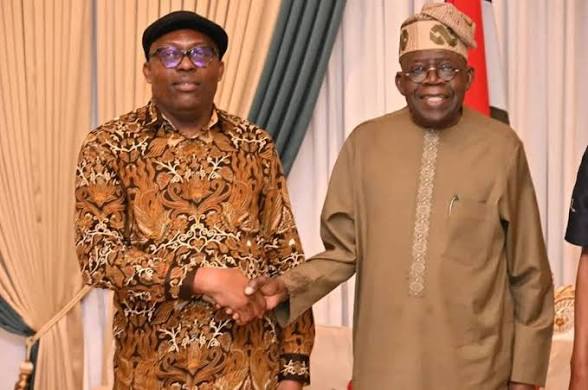
*APC Group Endorses Fubara for 2027, Calls on Tinubu and APC to Prioritise Performance Over Politics in Backing Governor’s Second Term Ambition*
The APC National Vanguard has appealed to President Bola Ahmed Tinubu and the leadership of the All Progressives Congress (APC) to support a second term in office for Siminalayi Fubara, citing what it described as “impressive and verifiable developmental strides” across Rivers State.
In a statement issued on Thursday by its National President, Dr Gbenga Salam (JP), the group said its position followed an extensive assessment tour of key infrastructure and public service projects executed under the Fubara administration.
The APC National Vanguard said the appeal was based strictly on performance, arguing that governance outcomes should outweigh partisan considerations, particularly in a state as economically significant as Rivers.
“We respectfully urge President Bola Ahmed Tinubu and the leadership of the All Progressives Congress to support the continuity of Governor Siminalayi Fubara beyond his current tenure, in recognition of his commitment to development, prudent resource management, and people-focused governance,” the statement read.
According to the group, its delegation visited multiple project sites across the state, observing ongoing and completed works spanning road construction, urban renewal, and public infrastructure upgrades.
It noted that the scale and distribution of these projects reflect a deliberate effort by the state government to extend development beyond traditional urban centres and into underserved communities.
“Our findings from the tour reveal a government that is not only active but intentional in its development agenda. The execution of capital projects across various parts of Rivers State demonstrates a clear understanding of the needs of the people and a commitment to addressing them,” Dr Salam said.
The group particularly commended what it described as prudent financial management by the administration, noting that the projects reviewed showed evidence of careful planning and efficient allocation of resources.
“At a time when economic pressures are evident across the country, it is commendable that the Rivers State government has managed its resources in a way that delivers visible and impactful development without signs of fiscal recklessness,” the statement added.
The APC National Vanguard further observed that despite political tensions in the state, the Fubara administration has maintained focus on governance, ensuring continuity in project execution and service delivery.
The group argued that such stability is critical for sustained development and should be encouraged rather than disrupted.
“Leadership must ultimately be judged by results. In Rivers State, there is clear evidence of progress—projects that are not only announced but executed, and policies that translate into real benefits for citizens,” Dr Salam noted.
The group warned that discontinuity in leadership could stall ongoing projects and reverse gains already recorded, stressing the importance of allowing a performing administration to consolidate its achievements.
“Rivers State is at a pivotal stage where continuity will allow for the completion of ongoing initiatives and the deepening of development gains. Supporting Governor Fubara for a second term is, therefore, a decision in the best interest of the people,” the statement said.
In addition to its call on the APC leadership, the group reaffirmed its support for President Tinubu, expressing confidence in his administration’s broader economic and governance reforms.
The APC group urged Nigerians to remain supportive of efforts aimed at stabilising the economy and strengthening public institutions.
“We reiterate our endorsement of President Bola Ahmed Tinubu for a second term in office, in recognition of his leadership and commitment to national development. With sustained support, the administration can consolidate its reform agenda for the benefit of all Nigerians,” Dr Salam added.
The APC National Vanguard concluded by calling on political actors to prioritise development and public interest over partisan divides, insisting that governance should always be guided by performance and accountability.
“Where leadership demonstrates prudence, delivers development, and remains focused on the welfare of the people, it deserves continuity. This is the position we have reached after a careful and independent assessment of Rivers State,” the statement added.
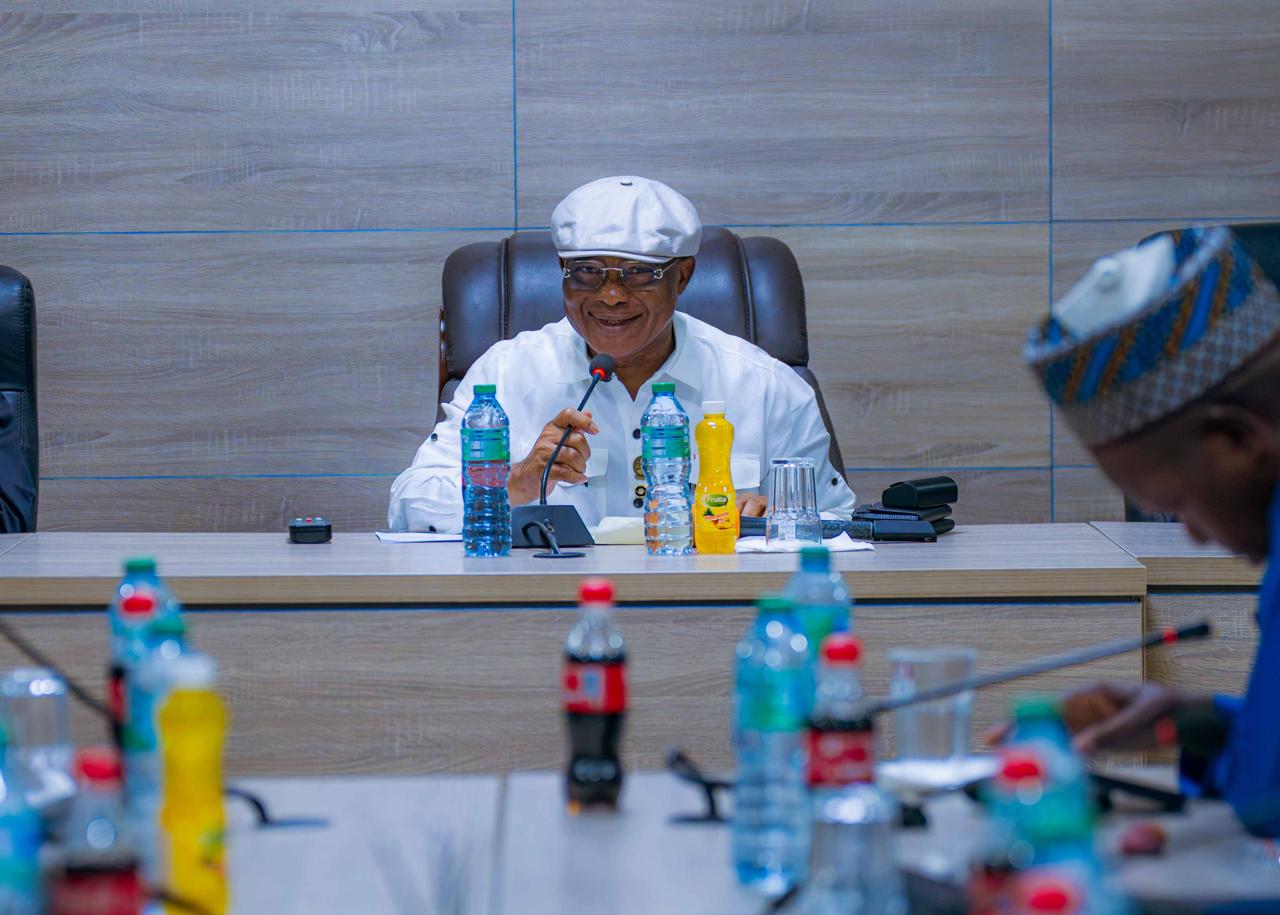
*Renewed Hope Ambassadors Step Into the Next Phase
Fresh from the successful APC 2026 National Convention, the Renewed Hope Ambassadors National, Zonal, and State leadership gathered in Abuja over the weekend, for its fourth strategic meeting, setting the tone for nationwide grassroots activation ahead of 2027.
Chaired by Governor Hope Uzodinma (Imo State) the Director General and National Coordinator of the Renewed Hope Ambassadors, alongside Deputy Director-General, Governor Uba Sani of Kaduna State, and Governor Inuwa Yahaya of Gombe State as Secretary, the session reinforced one clear direction: One Party. One Message. One Mobilization whilst also laying out a strategic roadmap for the activation of the network across all communities in Nigeria.
Backed by the strength of 31 APC-led states, the Renewed Hope Agenda is taking Bola Ahmed Tinubu’s message of progress and reform to every corner of Nigeria.
From bold economic restructuring to initiatives like NELFUND, the increase in the national minimum wage from ₦30,000 to ₦70,000, and strategic investments in critical sectors, including PNiCGI, the mission remains clear: helping Nigerians understand both the purpose and the progress of the Renewed Hope vision.
This is coordination at scale. This is grassroots engagement with purpose. This is the next phase of Renewed Hope with One Party, One Message, and One Mobilisation framework
#RenewedHopeAmbassadors #APC #WeAreAPC


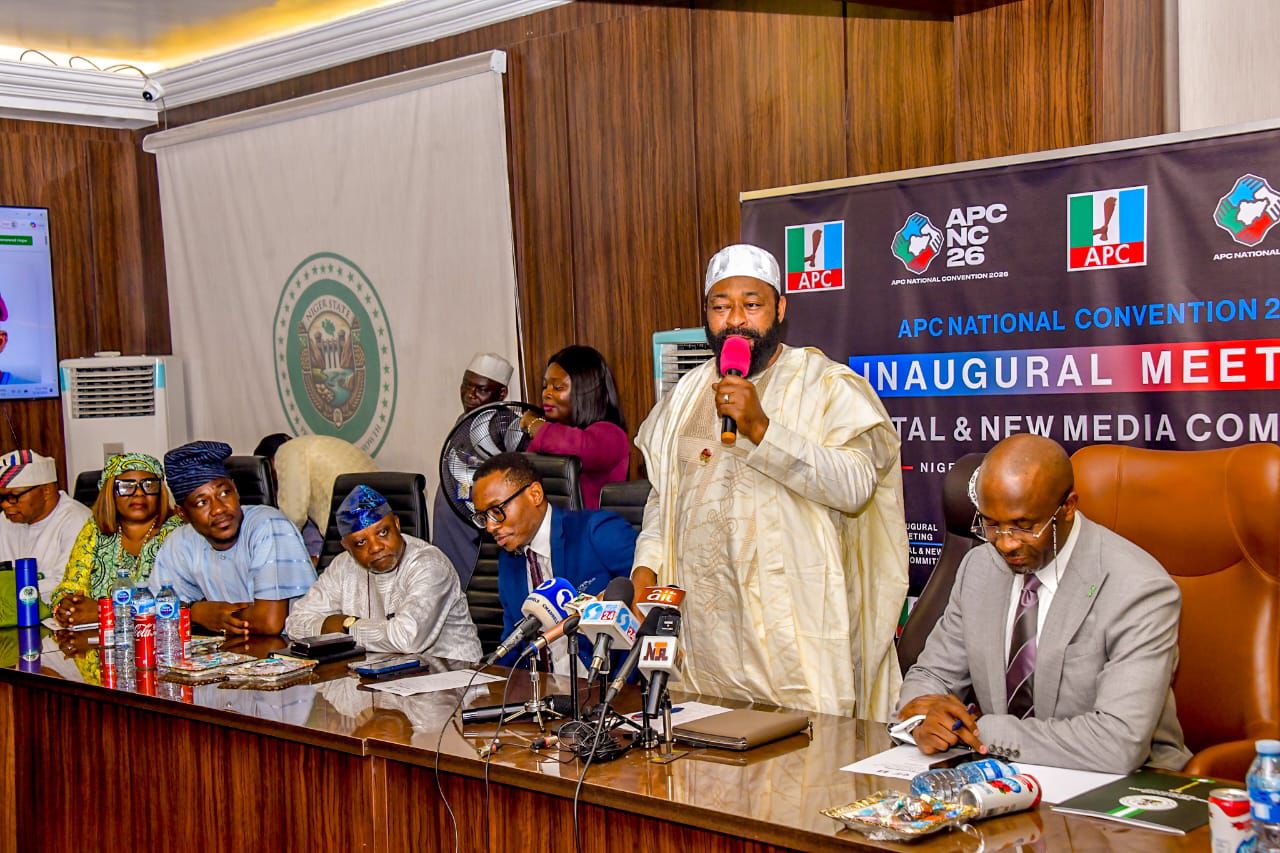
Governor Bago Inaugurates APC Digital Media Sub-Committee Ahead of National Convention.
Governor Umaru Bago has inaugurated the Digital Media Sub-Committee for the forthcoming National Convention of the All Progressives Congress (APC), scheduled to hold on March 27 and 28, 2026 in Abuja.
Chairing the sub-committee, Governor Bago tasked members with the responsibility of effectively communicating the party’s manifesto to the public.
He emphasized the need to leverage social media platforms to highlight the achievements and ongoing efforts of President Bola Ahmed Tinubu, noting that communication gaps have posed challenges that must now be decisively addressed.
The Co-Chair of the sub-committee, Hon. Benjamin Kalu, Deputy Speaker of the House of Representatives, echoed the Governor’s position, urging members to project the activities of both the party and the government to a broader audience.
He called for a deliberate and coordinated effort to showcase the party’s achievements and policy direction, stressing the importance of shaping a compelling and consistent narrative across all digital platforms.
Delivering a presentation to the committee, Otega Ogra, SSA to the President on New Media, who serves as Secretary of the sub-committee, outlined strategic focus areas to guide the team’s operations.
His presentation highlighted communication priorities and actionable steps to achieve the committee’s mandate and strengthen the party’s digital engagement.


-

 society6 months ago
Religion: Africa’s Oldest Weapon of Enslavement and the Forgotten Truth
-

 news4 months ago
WHO REALLY OWNS MONIEPOINT? The $290 Million Deal That Sold Nigeria’s Top Fintech to Foreign Interests
-

 society6 months ago
“You Are Never Without Help” – Pastor Gebhardt Berndt Inspires Hope Through Empower Church (Video)
-

 celebrity radar - gossips2 months ago
Dr. Chris Okafor Returns with Power and Fire of the Spirit -Mounts Grace Nation Altar with Fresh Anointing and Restoration Grace on February 1, 2026