
celebrity radar - gossips
The failed conspiracy against the First Lady Mrs. Ambode



When sheer ignorance degenerates into pure political mischief, couched in sleazy slogans, guttersnipe language and derogating doggerels, all with the mandate of the pull-him-down syndrome, especially from so called social commentators, there is cause for serious societal concern. When also an issue that is strictly within the purview of the Christian Association of Nigeria (CAN) has seen those same mischief makers climbing the rooftop to literally cry more than the bereaved, Nigerians cannot but begin to ask the pertinent questions.
The first of course, is to find out if indeed Pastor Femi Taiwo, whose sack has triggered his sympathisers’ sentimental angst was under the employment of the Lagos State government? The answer is “yes”. He was until recently, the chaplain of the Chapel of Christ the Light, Alausa, Ikeja, under the Ministry of Home Affairs, as part of the office of the First Lady and owned by the state government.And if so, has that government got the mandate to hire and to fire him, and any other civil servant for acts of gross misconduct? The response again is another resounding “yes!’.
But what about the First Lady, Mrs. Bolanle Ambode; has she got the constitutional power to sack any civil servant? Of course, not. Yet, one Paul Onomuakpokpo in his recent puerile piece on the said matter tried, but vainly too to convince his readers to that effect. He wrote: “The state government does not want us to link the ordeal of the pastor to the insufferable arrogance of the governor’s wife. It wants us to accept that the pastor had been a serial offender and it was the culmination of his offences that led to the termination of his employment and eviction”. We may not blame him based on his crass ignorance of the acts of misdemeanor his good friend has committed.
For instance, he might not have known that the good pastor flouted the church rules by going behind it to seek for seventy-five million naira (N75m) to fund a questionable youth empowerment programme. We may also forgive Paul for being ignorant of the pastor’s mania for money to have collected another forty million naira(N40 m) outside the knowledge of the church council. A “poor pastor” indeed!
Furthermore, it is utterly saddening for the concerned writer to have delved so morally low as to describe Mrs. Ambode as Lady Macbeth. Said he:“the period unveiled a Lady Macbeth in the Lagos State house and that while the state government was valourising democracy which privileges the will of the people, it was at the same time serving one of its residents a robust measure of authoritarianism.” He should have known much better.
Contrary to that erroneous insinuation, those who have had the opportunity to meet with her on a personal basis would testify to her being imbued with the virtues of humility and commitment to the service of God. These are inborn attributes that have seen rise to become a Deacon in the Redeemed Christian Church of God(RCCG).
In fact, not a few critical observers of the exemplary achievements of her husband within two years in office have attributed it also to his God-sent wife. She has been a conscientious companion, a confidant and prayer warrior. Such a virtuous woman would never, ever engage in acts capable of undermining her husband’s career success. But the writer wants the public to believe otherwise. In his words: “The governor’s wife might have read somewhere the blurred lines between the state and the church in medieval times. Unfortunately for her, the state now should not be concerned with running the affairs of the church”.
Not done, he degenerated so abysmally low as to ask this quaint question-“If the state government were really concerned about the religious wellbeing of its people why did it not build houses of worship for other religious adherents?”
So, we have to ask him if he would have raised so much dust and dirt if the Ambode-led government had built such Babalawo and Olorisha shrines and sacked any of the priests? Ha! Ha!
Perhaps, Onomuakpokpo should also have vented his spleen when the erstwhile Governor Babatunde Fashola sacked Pastor Olu Adeleke, his personal assistant on Christian Affairs, collected his car and chased him out of office and residence within 24 hours!
Truth be said that, those who live in glass houses must never throw stones. And one should exercise much moral restraint, critically study the circumstances surrounding decisions made by government before casting aspersions. Honour must be given to who is due. “Giving honour to whom honour is due” is a biblical principle. Paul emphasized this point in his letter to the Roman church, “Render [give] therefore to all [not some or just select individuals] their dues: tribute to whom tribute is due; custom to whom custom; fear to whom fear; honor to whom honor . (Rm. 13:7).
For now, the governor has his attention fully focused on delivering on the promises he and his party, the APC made to the good people of Lagos during the campaigns than been distracted by spurious allegations based on senseless sentiments. The CAN has taken its position that the sacking of Pastor is in tandem with its rules and regulations. So, should it be. Anyone who feels aggrieved should know what next step to take.
The current conspiracy against the First Lady and by extension her husband is one from the pit of hell which will never succeed. Those involved are well advised to channel their energy to worthwhile ventures, or better still to engage in matters that would add value to the lives of Lagosians who are unanimous in their applause for the people’s governor by his sterling achievements.




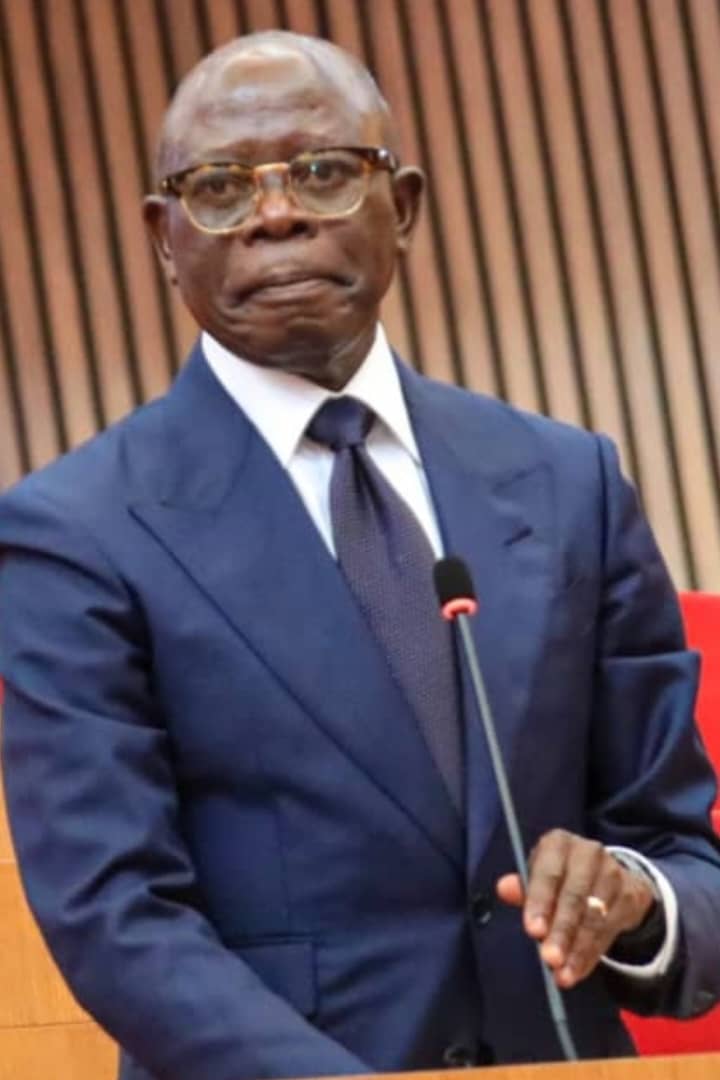
Daniel Eromosele Eulogize Adams Oshiomole as he turns 74 years
Today, I celebrate an exceptional leader, a fearless voice for the people, and a man whose life has remained a symbol of courage, sacrifice, and unwavering commitment to justice—Distinguished Comrade Senator Adams Aliu Oshiomhole.

Your journey has been nothing short of inspiring. From your days as a vibrant labour leader to your impactful tenure as the Executive Governor of Edo State, and now as a respected Senator of the Federal Republic, you have consistently demonstrated what it means to serve with integrity, strength, and purpose. Your contributions to the growth of our nation and the development of Edo State remain indelible and deeply appreciated.
You have not only built structures and institutions but have also built people. I am personally a beneficiary of your leadership, your guidance, and your belief in empowering others. Your influence in my life has been profound, and I remain grateful for the opportunities and inspiration you have given me.
On this special day, I celebrate not just your achievements, but the man you are—resilient, principled, and ever committed to the progress of Nigeria and her people.

May this new year bring you renewed strength, greater wisdom, good health, and more remarkable accomplishments. May your legacy continue to shine brighter with each passing year.
Happy Birthday, sir. Wishing you many more fruitful and impactful years ahead.
celebrity radar - gossips
Accolades to Empress Genevieve Wining as she Celebrate birthday in Grand style

Accolades to Empress Genevieve Wining as she Celebrate birthday in Grand style
Emmanuel Clement
Vilnius, Lithuania – The Grand Hotel Vilnius will host a grand birthday celebration in honor of Her Majesty The Empress Genevieve Wining of the United Kingdom of Atlantis (UKA) on April 4th, 2026.
The four-day event promises to be an extravagant affair, marking the special birthday of Empress Genevieve Wining. The celebration will take place at the prestigious Grand Hotel Vilnius, Lithuania, renowned for its luxurious ambiance and exceptional service.

According to the event flyer, the birthday celebration will be a spectacular occasion, fitting for an empress. Guests can expect an elegant setting adorned with golden accents, sparkling champagne, and festive decorations, creating a regal atmosphere befitting the occasion.
The Empress Genevieve Wining of UKA is expected to grace the event, which will include various festivities and celebrations in her honor. The occasion aims to bring together dignitaries, followers, and guests to commemorate the empress’s birthday with grandeur and joy.
For media inquiries, accreditation, or further information about the birthday celebration of The Empress Genevieve Wining of UKA, please contact the event organizers.
Courtesy of His Excellency Emperor Prof. Solomon Wining. UKA

Today, Dr. Chris Okafor turns a year older
~By Sunday Adeyemi
It is widely acknowledged that the exceptional Dr. Chris Okafor, a man of great character, always celebrates his birthday on April 4th, and in recognition of this occasion, I am inspired to write this special tribute to honor him.
Today marks a momentous occasion as we commemorate the birthday anniversary of Dr. Chris Okafor, a rare gem, a perfect gentleman, and the revered founder of Grace Nation Church, aka Liberation City.
Without reservation, this versatile and dependable Oracle foundry has consistently proven itself worthy of the accolades bestowed upon it on this notable anniversary.
Let it be reiterated that Dr. Chris Okafor is a leader known for his generosity and commitment to humanity’s welfare and advancement. The special gifts donated recently to widows and widowers within and outside the church are a testament to his exceptional leadership.
Your reputation as an outstanding and authentic man of God is evident in your exceptional goodwill and philanthropic endeavors.
Your dedication and perseverance have yielded impressive results, and numerous people, including myself, are justifiably proud of the remarkable work you are doing.
You have consistently exemplified outstanding leadership in the Christian community, demonstrating the profound impact of your role as a gift from God to humanity. I firmly believe this to be true.
Here’s to a year of productivity, success, and happiness. Congratulations and warm wishes on your birthday, sir.
Sunday Adeyemi
Your Son


-

 society7 months ago
Religion: Africa’s Oldest Weapon of Enslavement and the Forgotten Truth
-

 news4 months ago
WHO REALLY OWNS MONIEPOINT? The $290 Million Deal That Sold Nigeria’s Top Fintech to Foreign Interests
-

 society6 months ago
“You Are Never Without Help” – Pastor Gebhardt Berndt Inspires Hope Through Empower Church (Video)
-

 celebrity radar - gossips2 months ago
Dr. Chris Okafor Returns with Power and Fire of the Spirit -Mounts Grace Nation Altar with Fresh Anointing and Restoration Grace on February 1, 2026
You must be logged in to post a comment Login
You must log in to post a comment.