
celebrity radar - gossips
THE GOSPEL ACCORDING TO BILL GATES


“The world cannot return back to normal until every single person in the earth is vaccinated”- Bill Gates.
This is the ‘gospel’ according to Bill Gates and it is a ‘verse’ from the satanic bible.
Permit me to begin this contribution with a portion of a news report from an American newspaper. Consider this.
“End Times broadcaster Rick Wiles’ hatred of vaccines led him to threaten to confiscate all of Bill Gates’ wealth during last night’s episode of his “TruNews” program.
Last month, Wiles attacked Gates as “an enemy of the human race” over the latter’s support for vaccines and technology that could be used to determine who has and who has not been vaccinated. Wiles returned to the topic again last night, warning that if Gates continues to support such measures, Wiles and millions of other Americans will rise up, demand that he be stripped of his wealth, and run him out of the country.
“Bill Gates wants to get a microchip in your body, he wants a microchip in your baby’s body,” Wiles said. “If Mr. Gates and other billionaires continue to push their agenda, then they are going to push people like me to call for the confiscation of their wealth. I mean it. If these guys continue this talk of requiring mass vaccinations, immunity cards, immunity passports, microchips, buddy, you’re starting a fight you’ll wish you never started because the American people will rise up, and we will strip you down to your tighty whities.”
“Christians had better get ready for a confrontation with these people,” he continued. “They’re coming after us and our families. They have an evil agenda and the government needs to know there will be an uprising if they try to do it. There will be blood in the streets if Bill Gates pushes this agenda … The American people, we will rise up and we will march on your mansion in Seattle, we will sink your yacht that you just bought.”
“The American people need to get riled up and ready to defend the sanctity of their lives,” Wiles declared. “Don’t be like the Jewish people who marched into the gas chambers.”
He also said that Gates “is building Lucifer’s Anti-Christ system”.
In response to Mr. Wiles’ views, Mr. Patrick Silver wrote the following.
“To the ignorant, Wiles sounds stupid and unrealistic and even alarmist but any true Bible student knows he is telling the truth. He is also talking about mobilising the people to resist this tyranny. A thing that is impossible in Nigeria. The people actually support their own destruction and defend their oppressors while our clergymen pray for and bless them. God is this how You created us or are we just a people who have lost our moral compass?”
I share Mr. Silver’s views.
Those who are still hopelessly mesmerised and inexplicably enamoured by Bill Gates’ “generous contributions”, “philanthropic gestures” and “humanitarian acts” would do well to find out what his vaccines did in India over the years and why he has been banned from doing anything in Russia.
They would also do well to find out what American Congressman Robert Kennedy jnr., Dr. Judy Micholvitz, Nobel Laureate Vandana Shiva, Roger Stone, David Icke, Brian Rose, Pastor Paul Enenche, Alan Jones, Shiva Ayyadurai, Dr. Andrew Wakefield, Del Bigtree, Dr. Rasheed Ali Buttar, Joseph Okechukwu, Senator Dino Melaye and countless other public figures and leaders in the political, intellectual, medical and scientific spheres throughout the world have to say about the dangers posed to humanity by Bill Gates’ vaccine and his world depopulation agenda.
Our beloved continent Africa is his starting point because most of our people are vulnerable, poverty-striken, desperate, naive and easily manipulated whilst most of our leaders are shallow, gullible, weak, ignorant, tyrannical and corrupt.
Most disturbing of all is the fact that millions of Africans have literally deified him and see him as a demigod and modern-day saviour.
They have been swept off their feet, thoroughly bewitched and put under a deep and debilitating spell by his raffish charm, innocent and humble mien, warm smile, nerdish looks, vast resources and supposed commitment to wiping out diseases throughout the world with his vaccines and through the auspices of his Bill and Melinda Gates Foundation.
Yet the discerning and spiritually sensitive see him differently and a deep look into his cold, dark, unfeeling, soulless and cruel goat-like eyes tells a different story.
This is clearly a man who lacks compassion, who does not have the ability to empathise with the suffering and pain of others and who displays the symptoms of the classic cold-hearted control-freak and psychopath who sees himself as the all-knowing messiah.
Sadly the majority of the African people, as far behind as ever, simply see him as a Father Christmas who doles out free gifts and goodies with roaring laughter and a happy smile. They are so fixated with the gifts that they refuse to adequately assess or consider the true nature and accurate record of the giver.
They have no idea what Gates really stands for and what he has in mind, they do not appreciate the fact that he has a dark and sinister side and agenda and they have done next to no research about him other than reading little snippets and well-funded articles about his vast wealth and “humanitarian efforts” throughout Africa on the internet.
Worst of all they cannot comprehend or appreciate the age-old notion that says “all that glitters is not gold” and they forget that the Holy Bible teaches us that the devil comes “as an angel of light”.
The fact that he is, at best, a self-confessed atheist and unbeliever and, at worst, a closet satanist and a leading light of the Illuminati in their evil quest for the establishment of a New World Order, speaks volumes and the fact that he is publicly committed to reducing the population of the world by at least 15% says far more.
They say “beware of the Greeks when they bring gifts”. I say there is only one thing that is more dangerous than a Greek gift and that is a free lunch and a free ride from Bill and Melinda Gates.
I have said it before and I say it again, the GATES of HELL and the servants of Lucifer shall NOT prevail against the Church or indeed humanity no matter how much money they throw around or how many paid lobbyists and slick media practitioners and writers are on their pay roll and do their bidding.
Permit me to add this. The curious thing about African leaders is that a cure for Covid 19 has been found and mass produced in Madagascar already and it is herbal-based. This means it has no side effects.
Such is the efficacy and success of the cure that Madagascar is now Covid 19-free. Sadly instead of African leaders patronising this cure and ordering it for their people they would rather do nothing, sit on their thumbs and lick Bill Gates’ posterior whilst their people are dying like flies.
They are prepared to worship Gates, tickle his fancy, feed his ego, fan his vanity, bow at his feet, tremble at his call and wait indefinitely for his evil vaccine which will undoubtedly result in even more death and destruction.
This is not normal behaviour. There is something wrong somewhere. There is a dark force at work which has distorted the thinking and sensibilities of our leaders and our people and that has beclouded their judgement.
The truth is that there is a bigger and wider agenda unfolding which is so evil, so sinister, so dark, so callous, so terrifying, so frightful and so unabashedly malevolent and satanic that it literally beggars belief.
Though clothed in the deepest secrecy and subterfuge it is, nevertheless, real and those that view the reality of this agenda and veracity of these assertions with skepticism and unbelief are part of the problem.
The web is so complex and the puzzle so well constructed that only deep thinkers and those that are gifted with divine insight and a heavy dose of revelation knowledge can possibly comprehend it.
May the Lord open the eyes of those who have been blinded by the god of this world and mesmerised by the charms and satanic seduction of this modern-day dark angel called Bill Gates whose sole purpose is to systematically decimate and crush humanity as we know it and pave the way for satan’s New World Order.
For those that have no idea what this dark-eyed, cold-blood, shape-shifting reptilian and Luciferean beast really stands for and that still have doubts about his evil agenda permit me to share a significant portion of a well-resersched essay written by the brilliant American columnist Ray Jason and titled ‘Philanthropist Or Monster’. (TO BE CONTINUED).




celebrity radar - gossips
Adron Homes Celebrates Visionary Chairman, Aare Adetola Emmanuel King, at 51
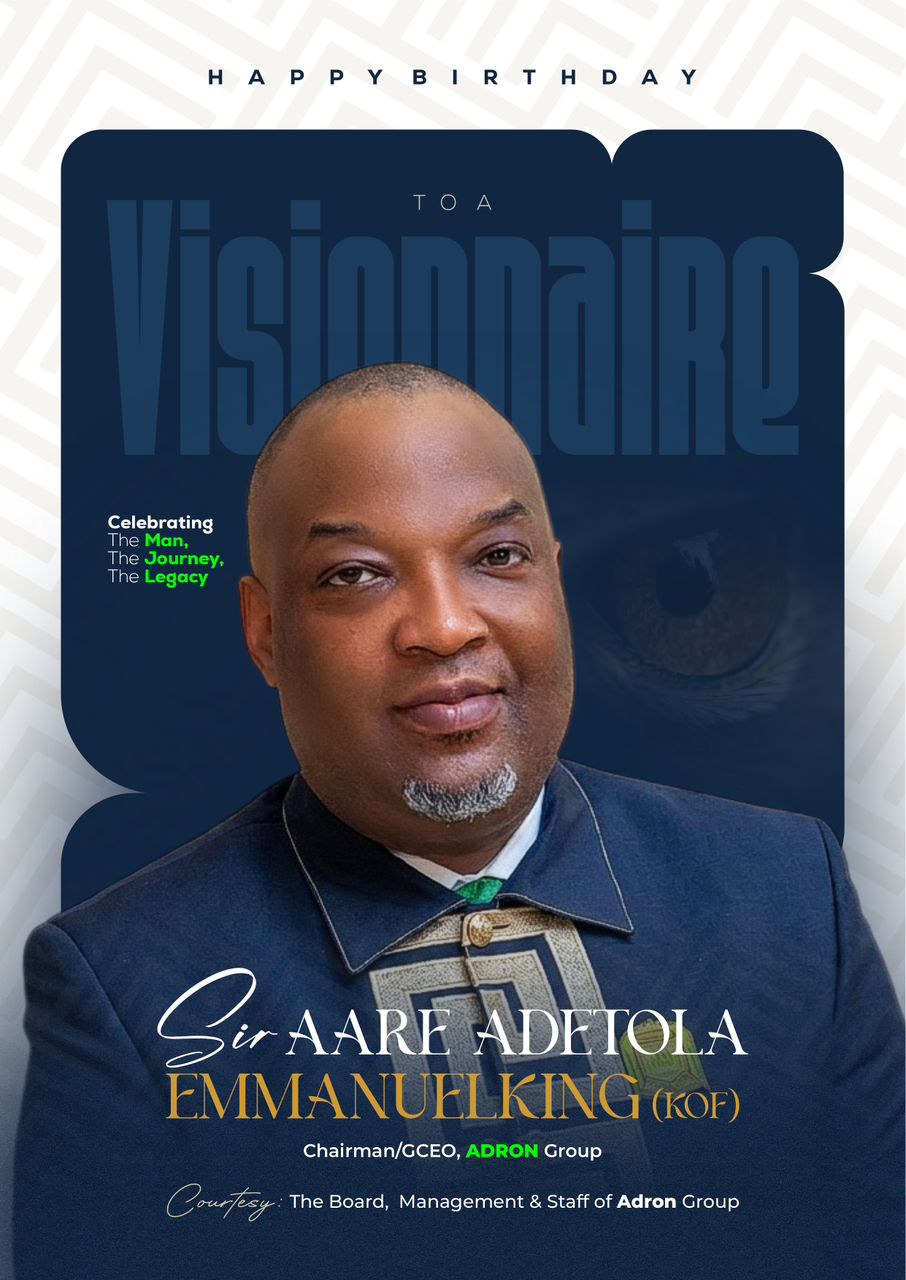
Adron Homes Celebrates Visionary Chairman, Aare Adetola Emmanuel King, at 51
The management and staff of Adron Homes and Properties Limited have joined family, friends, associates, and well-wishers across the globe to celebrate their Chairman and Chief Executive Officer, Aare Adetola EmmanuelKing, as he marks his 51st birthday.

In a statement released by the company, the milestone was described as a celebration of an exceptional leader whose vision, resilience, and entrepreneurial brilliance have not only transformed Adron Homes into a household name in Nigeria’s real estate sector but have also redefined affordable housing across the country.
Under his dynamic leadership, Adron Homes has continued to expand its footprint, delivering value-driven residential solutions while empowering thousands of Nigerians with opportunities for home ownership. His commitment to excellence, innovation, and customer satisfaction has remained the driving force behind the company’s sustained growth and industry leadership.
The statement further highlighted Aare EmmanuelKing’s passion for nation-building and community development, noting his significant contributions to job creation, youth empowerment, and the promotion of socio-economic development through real estate investments.
“As a leader, mentor, and visionary, Aare Adetola EmmanuelKing has consistently inspired a culture of excellence, integrity, and dedication within the organization. His ability to turn bold ideas into reality continues to position Adron Homes as a trailblazer in the industry,” the statement read.
The company expressed profound gratitude for his steadfast leadership and prayed for continued wisdom, strength, and sound health as he embarks on another year of impactful achievements.
As he celebrates his 51st birthday, the entire Adron Homes family proudly honours a man whose legacy continues to shape the future of real estate in Nigeria.
Happy 51st Birthday, Aare Adetola EmmanuelKing!
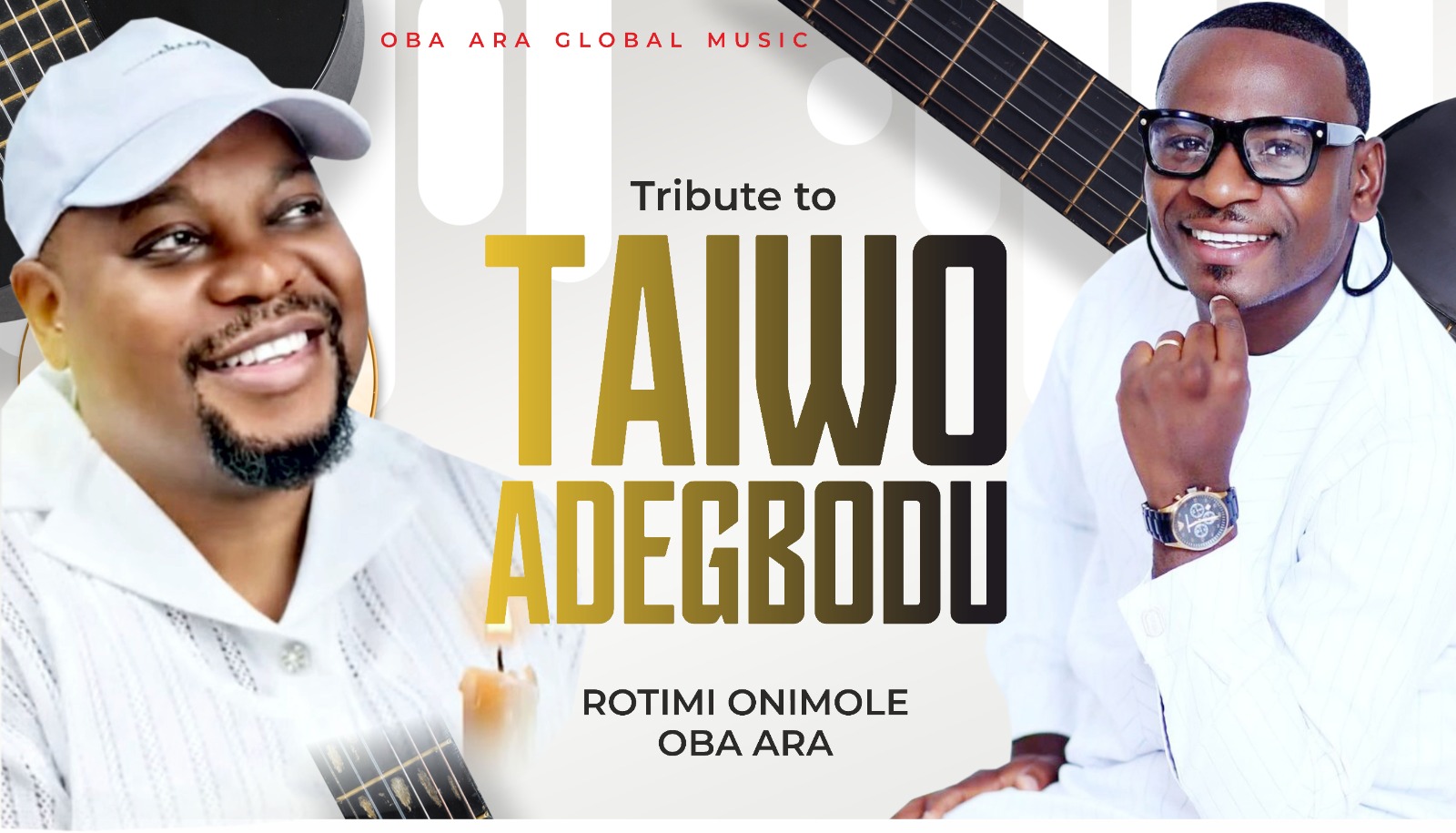
Oba Ara Releases Emotional Tribute to Late Taiwo Adegbodu
Taofik Afolabi
The gospel music community continues to grieve the painful loss of Taiwo Adegbodu, a beloved figure whose sudden departure left a deep void among fans, colleagues, and loved ones. In response to this loss, renowned gospel minister Rotimi Onimole, popularly known as Oba Ara, has released a moving tribute song that captures both the sorrow of the moment and the enduring legacy of the late singer.
Oba Ara, a proud son of Isale Eko, channels raw emotion throughout the song, using heartfelt lyrics and soul-stirring melodies to reflect on his personal connection with Taiwo Adegbodu. In the tribute, he openly expresses how deeply the news of Adegbodu’s passing shook him, describing it as a painful and unexpected loss that is difficult to come to terms with.
The song goes beyond mourning, it celebrates the life, ministry, and impact of Taiwo Adegbodu. Oba Ara highlights the late artist’s dedication to spreading the gospel through music, his inspiring voice, and the spiritual influence he had on many within and beyond Nigeria. Through powerful verses, he paints a picture of a man who lived for God and touched countless lives through his ministry.
Listeners have described the tribute as both comforting and deeply emotional, as it resonates with the collective grief of the gospel music community. It serves as a reminder that although Taiwo Adegbodu is no longer physically present, his music, message, and legacy will continue to live on.
In honoring his late colleague, Oba Ara not only pays his respects but also offers a source of healing for fans and fellow ministers, using music as a tool to process grief and celebrate a life well lived.
celebrity radar - gossips
Buratai, Fagbemi , Shagaya, Olofa, Others Eulogise Olowu Kuta’s Olori On 60th Birthday, Foundation Launch

Buratai, Fagbemi , Shagaya, Olofa, Others Eulogise Olowu Kuta’s Olori On 60th Birthday, Foundation Launch
Eminent personalities across the Nigeria stormed the TFK Event Centre, Bala Mohammed Way, Guzape, Abuja, to celebrate the 60th birthday of Olowu Kuta’s Olori, Queen Jumai Amoke and her Foundation Launch on Saturday 28, March 2026.

From former Chief of Army Staff, Lt Gen TY Buratai rtd, to the Minister of Justice and Attorney-General of the Federation, Prince Lateef Fagbemi; Olofa of Offa, HRM Oba Mufutau Gbadamosi. Even top businesswoman and socialite, Chief (Mrs) Bola Shagaya, was in attendance.


Other dignitaries were newly promoted Deputy Inspector-General of Police and former AIG Zone 2 , Lagos , Adegoke Fayoade, Major General Abdumalik, Major General Samuel Adebayo rtd (Fmr CDI);
Major General Anthony Omozoje rtd (Fmr Copp);
Alhaji Tajudeen Owoyemi (Asiwaju of Offa and CEO Radisson Hotel Nigeria;
Dr Waheed Olagunju, former managing director of Bank of Industry, Oniba of Iba, Lagos State, HRM Oba Dr Suleiman Raji ;
Justice Falola, Olu of Ile-Ogbo , Oba Adetoyese amongst many traditional rulers and captains of industry too numerous to mention.
Speaking at the occasion, the Chief Host, Olowu of Kuta, HRM Oba Dr Adekunle Oyelude Makama, CON , Tegbosun iii, who is also the husband of the celebrant commended Queen Jumai for ‘ her slender arms full of kindness’ to establish such humanitarian Foundation, ‘Amoke Children and mother in Need Foundation’ at a time Nigerians are going through economic crisis occassioned by the global meltdown.
Olowu also commended her steadfastness and love for the less privileged and downtrodden.
The monarch refrenced the task before his wife’s humanitarian gesture said her best is yet to come.
” Olori Amoke Jumai, I celebrate you. You will celebrate 70, 80, 90 and continue to shine as you continue to put a smile on people’s faces. I love you, “Olowu Kuta added.
To Lt Gen Buratai, a former army chief and former Nigerian Ambassador to Benin Republic, the reward of hard work is more work.
Buratai, who also doubles as Balogun Agba of Owu Kuta, a chieftaincy title reserved for a generalismo congratulated Queen Jumai for attaining the age of 60 in good health.
The retired army General said he’s not surprised by the turn out of eminent personalities across the country to celebrate the Olowu Kuta’s Olori because she merited it through her hospitality to all, adding that Allah the most merciful, most beneficial would accept all her act of ibadah.
The minister of Justice, Prince Fagbemi, was full of praises for Queen Jumai for deeming it fit to have a place in her heart to accommodate the needy and less privileged in ‘our society.’
Prince Fagbemi urged the guests to contribute generously to support the Foundation in order to continue to alleviate poverty and put a smile on the faces of the people.
” I congratulate you on your 60th birthday and Foundation Launch. I wish you many happy returns of the day and many more fruitful services to the country and motherland”, Prince Fagbemi added.
The celebrant, Queen Jumai who was grining from ear to ear thankfully said she was excited by the turn out and the response of the people to her foundation.
Queen Jumai, however, promised to continue to use her resources and donations received for the good of the needy and less privileged in the society.
” I want to appreciate my own Kabiesi Olofa of Offa , for his presence and im I’m using him as a point of contact to all other Kabiesis present here, the minister of justice and Attorney-General, you’re welcome, sir; Mrs Bola Shagaya, I salute your enterprise, Lt Gen Buratai, I’m grateful, sir; DIG Fayoade, Justice Falola and other dignitaries too numerous to mention, I thank you, all. To my darling husband, Kabiesi Olowu , I thank you immensely for your support. And to my family and friends, I thank you , all. E se pupo!”, she said.


-

 society7 months ago
Religion: Africa’s Oldest Weapon of Enslavement and the Forgotten Truth
-

 news4 months ago
WHO REALLY OWNS MONIEPOINT? The $290 Million Deal That Sold Nigeria’s Top Fintech to Foreign Interests
-

 society6 months ago
“You Are Never Without Help” – Pastor Gebhardt Berndt Inspires Hope Through Empower Church (Video)
-

 celebrity radar - gossips2 months ago
Dr. Chris Okafor Returns with Power and Fire of the Spirit -Mounts Grace Nation Altar with Fresh Anointing and Restoration Grace on February 1, 2026