
society
THE GREAT OIL STRUGGLE: How the United States Seized Venezuelan Oil, Defied Sanctions and Shook Global Order


THE GREAT OIL STRUGGLE: How the United States Seized Venezuelan Oil, Defied Sanctions and Shook Global Order.
By George Omagbemi Sylvester | Published by saharaweeklyng.com
“Trump’s Venezuela Strategy, Global Oil Politics and the World’s Watchful Silence.”
In a dramatic and unprecedented turn of events that reads like a 21st-century REALPOLITIK THRILLER, the United States under President Donald J. Trump has engineered a sweeping campaign to seize control of Venezuelan oil (the lifeblood of the South American nation) in defiance of longstanding export sanctions, international norms and mounting global unease. What began as a sanctions regime has morphed into a geopolitical juggernaut with oil tankers pursued across oceans, nations blockaded and the very principle of sovereign resource ownership thrown into question.
Sanctions, Sanctions Evaded and Three Oil Tankers Bound for the U.S.
As sanctions tightened on Venezuela’s petroleum industry (once a cornerstone of global crude markets) a new pattern emerged on the high seas. Despite crippling export limitations tied to U.S. financial penalties, Chevron-chartered vessels began moving crude to American refineries, underscoring the complexity and contradictions of U.S. energy policy. On January 8, 2026, three of the 11 Chevron-chartered ships were confirmed transporting Venezuelan oil onward to the United States, even amid “EXPORT SANCTIONS” that were ostensibly still in force.

This logistical twist reflects the convoluted reality: while broad sanctions remain in place, selective waivers and deals have been struck to prioritize oil flows that align with U.S. interests. In effect, sanctions enforcement has become a tool of leverage and not only to punish Maduro but to redirect Venezuela’s oil to American shores under terms set by Washington.
Shadow Fleets and Sinking Sovereignty: The Seizure of Oil Tankers.
The U.S. campaign took an audacious escalation in early January 2026, when government forces seized two oil tankers linked to Venezuelan crude exports and one of which was Russian-flagged and had been chased across the Atlantic for more than two weeks.
The Marinera (formerly Bella 1), flagged under Russia after attempts to evade detection and the M Sophia, intercepted in the Caribbean Sea, were both taken into U.S. custody under sanctions enforcement action. Washington claims these vessels were part of a “SHADOW FLEET” that shipped Venezuelan oil, potentially contravening American sanctions.

These seizures are not isolated incidents. At least four oil tankers have now been intercepted or commandeered by U.S. forces in the last weeks, part of an aggressive maritime campaign aimed at choking off Venezuela’s oil revenues.
Russia has vocally condemned these actions as breaches of international maritime law and “NEO-COLONIAL” overreach. Though the United States insists legal authority lies in its sanctions regime and national security prerogatives.
Military Might and Oil Blockade: Operation Southern Spear.
These maritime subplots occur against the backdrop of Operation Southern Spear, a sweeping U.S. naval and military buildup in the Caribbean since late 2025 that culminated in strikes, interceptor actions and the capture of Venezuelan President Nicolás Maduro himself in early January 2026, an act that stands out as one of the boldest and most controversial in recent U.S. foreign policy.
Initially framed as combating narcotics trafficking and enforcing sanctions, Southern Spear has resulted in:
A naval “blockade” (technically a quarantine of sanctioned tankers) restricting oil exports from Venezuelan ports.

Multiple U.S. military and Coast Guard seizures of oil tankers.
Threats and limited strikes on maritime vessels in the Caribbean and Eastern Pacific.
This buildup represents the largest American military presence in the Caribbean in decades, eclipsing even Cold War deployments and serves the twin purposes of resource control and regime destabilization.
Congressional Pushback and Global Watchers.
In Washington, not all branches of government have stood in unison behind Trump’s bold approach. A bipartisan U.S. Senate resolution was advanced to require congressional approval for further military action in Venezuela, a direct rebuke to unilateral executive maneuvers.
Senator Tim Kaine, a key proponent of the measure, underscored the constitutional imperative of legislative oversight on matters of war and peace. For critics in both the U.S. and abroad, the growing conflation of oil interests with military action recalls historical resource-driven conflicts and raises alarms about executive overreach.
At the United Nations, diplomats and legal experts have flagged legal concerns. Some UN bodies and experts characterize aspects of the blockade and seizures as violations of the UN Charter and customary maritime law, especially given that U.S. sanctions lack Security Council authorization and extend into international waters not under U.S. jurisdiction.
Yet, concrete collective action from the UN remains muted though revealing the limitations of global governance when confronted by a superpower with strategic intent.
Oil, Influence and Economic Leverage.
At the heart of the conflict is Venezuela’s massive crude reserves, among the largest on Earth. Control over these resources is not only an economic windfall but a geopolitical asset in a fractured world order where energy remains central to national power.
Trump’s administration has outlined plans to refine and market up to 50 million barrels of Venezuelan crude, funneling proceeds into U.S. economic channels and leveraging energy dominance for diplomatic influence.
Vice President J.D. Vance, articulating the strategy, stated, “We control the energy resources and we tell the regime, you are allowed to sell the oil so long as you serve America’s national interest” A statement that encapsulates not merely commercial policy but a territorial conception of resource sovereignty.
Global Repercussions and the World’s Gaze.
The world watches while the United States expands its grip on Venezuelan oil and many questions loom:
Legal legitimacy: Maritime law experts and UN legal authorities warn that unilateral blockades and seizures could redefine international norms if left uncontested.
Geopolitical tension: Russia has condemned U.S. actions and China (a major buyer of Venezuelan crude) denounced the seizures as “BULLYING.”
Economic impact: Venezuelan crude exports have plummeted as tanker traffic evaporates amid U.S. pressure.
Humanitarian crisis: With oil at the core of Venezuela’s economy already near collapse, further disruptions risk worsening living conditions for millions.
Critics argue that Washington’s aggressive posture risks turning the Caribbean into a new flashpoint of great-power rivalry, with oil reserves as the coveted prize. Scholar Dr. Felipe Gómez of the Latin American Institute for Geopolitical Studies warns, “Energy dominance pursued through coercion will fracture trust and ignite competition that the global system is ill-prepared to manage.”
Meanwhile, former U.S. Ambassador Anne Peterson comments, “When you conflate security and resource control, you invite conflict. The international community must reaffirm the principles that challenged nations, too, have rights under international law.”
In Retrospect: A New Age of Oil Politics.
The saga of Venezuelan oil and U.S. intervention is not simply about petroleum and sanctions. It is a stark illustration of how energy resources remain central to power, how laws can bend under national interest and how the global order (beset by rivalries and weakening multilateralc institutions) increasingly operates in a realist paradigm.
The world watches as tankers are seized, Congress debates war powers and the United States asserts its will far from its shores. Oil is more than a commodity here; it is the linchpin of political leverage and Venezuela (for all its suffering and turmoil) has become the epicenter of a renewed struggle over who controls energy and, by extension, the fate of nations.
In this unfolding drama, one truth is unmistakable: power flows with oil and those who control the oil may yet control the direction of history itself.





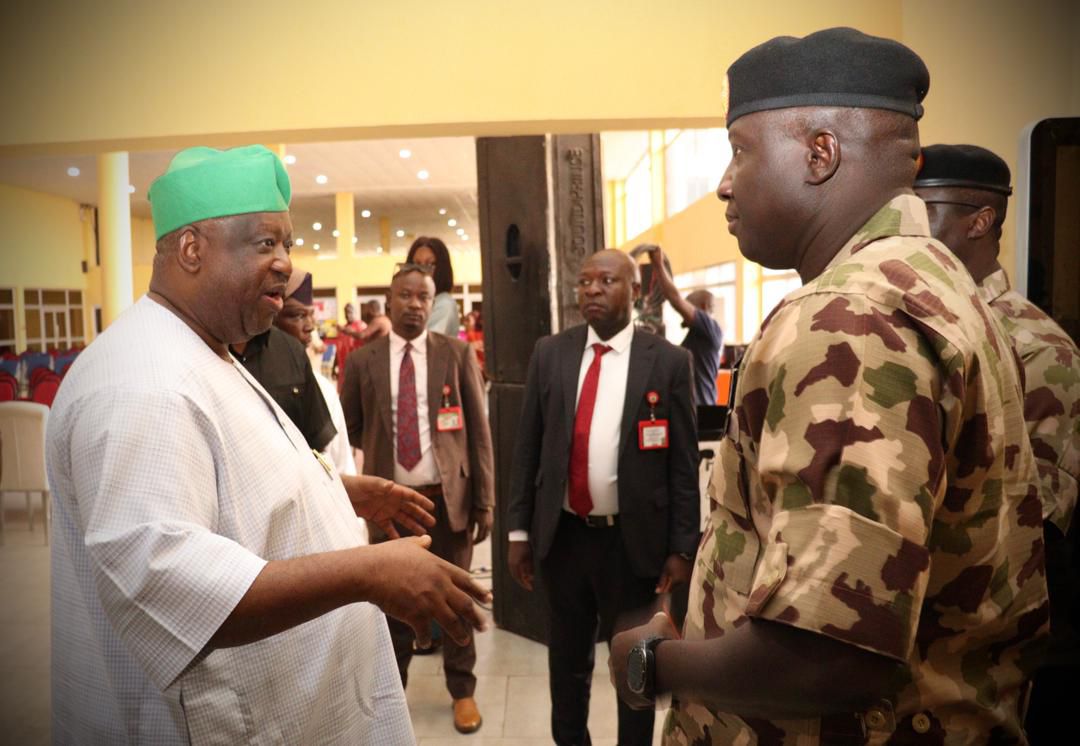
COAS Launches Nationwide Security Renewal Mission in Plateau
The Chief of Army Staff, Lieutenant General Waidi Shaibu, on Thursday led a high-level delegation of security chiefs to Plateau State, flagging off a nationwide security renewal mission aimed at strengthening civil-military cooperation and restoring lasting peace across the country.
The visit to Jos, the Plateau State capital, marks the first phase of a coordinated national effort to address persistent security challenges through joint operations, community engagement, and proactive intelligence gathering.

Governor Caleb Muftwang received the delegation, describing the initiative as a critical step toward stabilizing affected communities and reinforcing public confidence in security institutions.
Civil-Military Synergy Takes Centre Stage
At the heart of the mission is a renewed emphasis on collaboration between the military, civil authorities, and local communities. Speaking during the visit, Lt. Gen. Shaibu stressed that national security must be treated as a collective responsibility.
He urged citizens to support security agencies by remaining vigilant, sharing credible information, and complying with lawful directives, noting that effective security cannot be achieved in isolation.
Community Engagement as Confidence-Building Tool
In a departure from purely operational engagements, the Army Chief held direct consultations with community leaders and residents in Jos, reinforcing the importance of trust and dialogue in conflict resolution.
Lawmakers, including Dachung Bagos and Ladi Dangyok, commended the initiative, stating that visible engagement by top military leadership helps rebuild confidence among citizens and fosters cooperation.

Proactive Security Operations Underway
Operational updates were provided by Major General Folusho Oyinlola, who disclosed that troops under Operation Enduring Peace have intensified surveillance, intelligence-led patrols, and coordinated actions with other security agencies.
According to the Army, the approach is designed to prevent escalation of threats, safeguard lives and property, and stabilize vulnerable communities before crises emerge.
A Shift Toward Sustainable Peace
Military authorities emphasized that the Plateau visit is part of a broader, long-term strategy to transition from reactive responses to sustainable peacebuilding nationwide. The framework includes strengthening local resilience, ensuring justice, and maintaining continuous engagement with stakeholders.
Analysts view the initiative as a significant policy shift, reflecting a more inclusive security architecture that integrates community participation with military operations.
Call for National Unity
The Army leadership concluded with an appeal to Nigerians to reject divisive narratives and support ongoing efforts to promote unity and peace.
“The success of this mission depends not only on the armed forces but on the cooperation of every citizen,” the COAS stated.
The nationwide security renewal campaign is expected to extend to other regions in the coming weeks as authorities seek to consolidate gains and build a safer, more unified Nigeria.


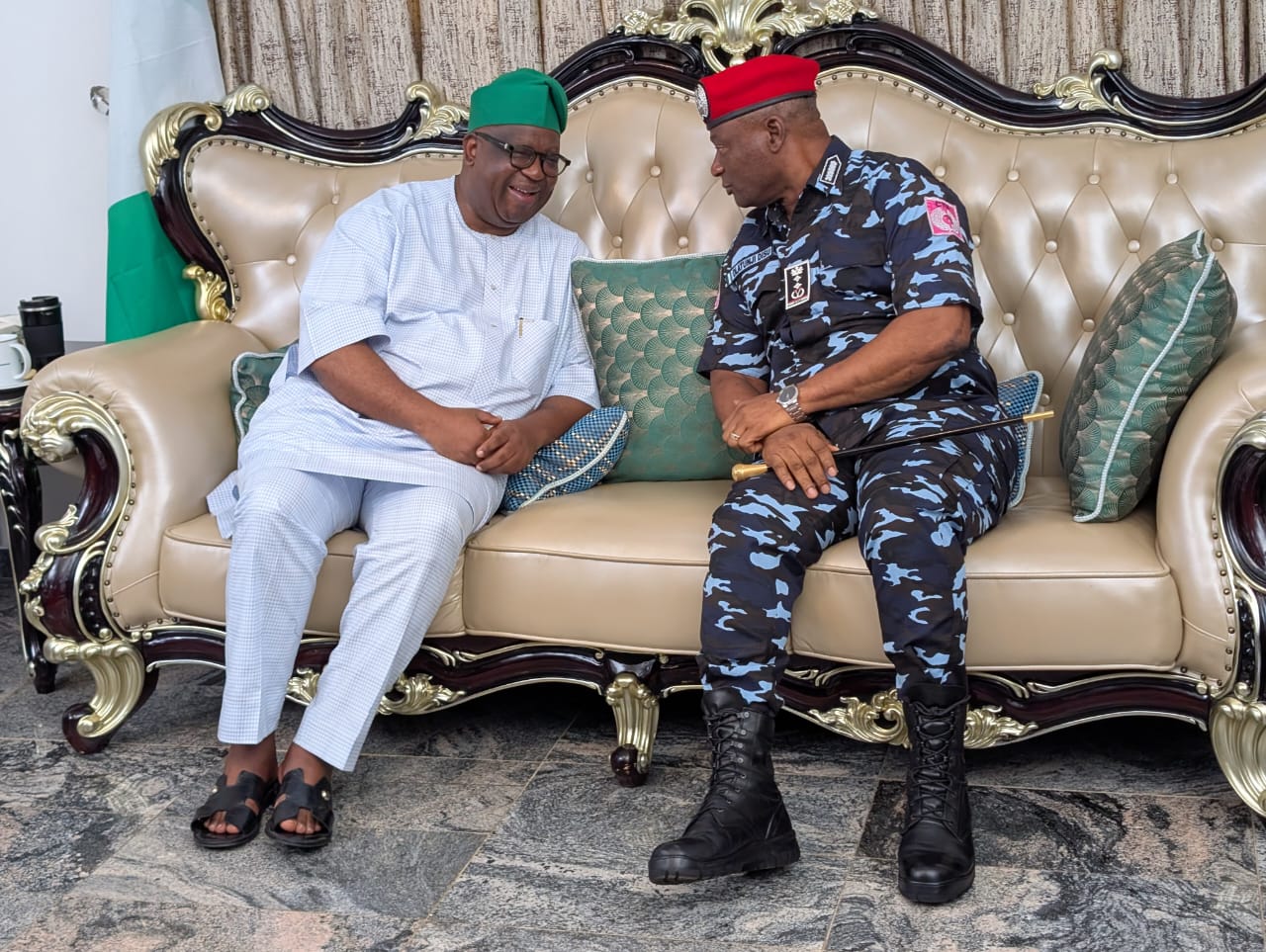
IGP Disu Visits Plateau, Orders Tactical Deployment To Reinforce Security
The Inspector General of Police, Olatunji Disu, on Thursday paid a working visit to Plateau State following recent unrest, holding strategic talks with Governor Caleb Muftwang on measures to strengthen security and prevent further disturbances.
As part of immediate steps to stabilise the situation, the police chief authorised the deployment of specialised tactical units to support officers already on ground across affected areas.
Governor Muftwang commended the swift intervention of the police leadership, praising the dedication and professionalism of security personnel working to restore calm. He also acknowledged the efforts of mobile police officers and lauded the leadership of the state’s Commissioner of Police, Bassey Ewah.
Both the Nigeria Police Force and the Plateau State Government reaffirmed their commitment to safeguarding lives and property, stressing that enhanced collaboration remains key to restoring lasting peace in Plateau State, popularly known as the Home of Peace and Tourism.


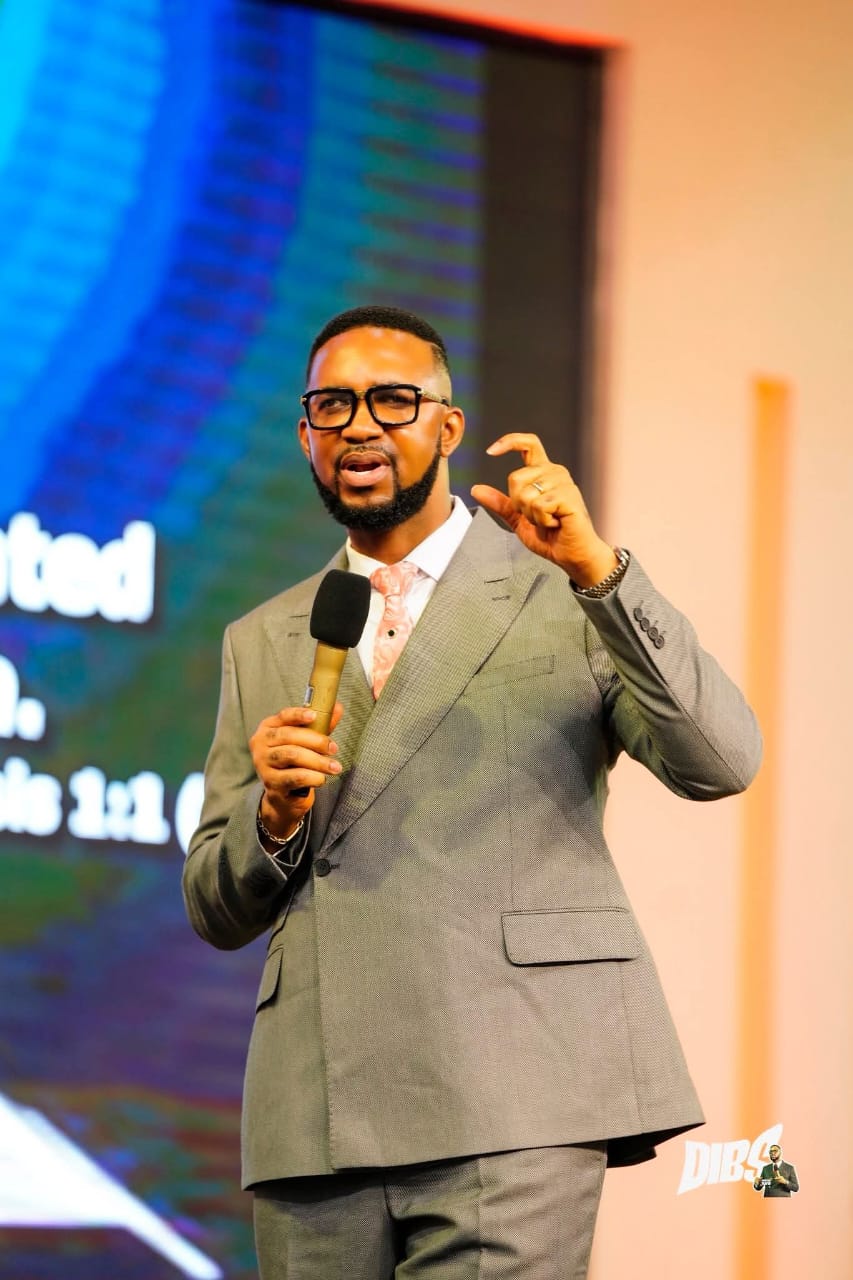
Grace Nation Worldwide: A Living Reality – Dr. Chris Okafor
……“Miracles, Healing, and Deliverance Overflow at Grace Nation Services”
The Grace Nation midweek Prophetic Healing, Deliverance, and Solutions (PHDS) Service on 2nd April 2026 at the international headquarters in Ojodu Berger, Lagos, was a spectacular display of God’s power, marked by miracles, healing, and deliverance.
The God of Grace Nation continues to demonstrate His authority, breaking strongholds, healing the sick, restoring lost glory, and providing solutions to every problem presented at His altar.
Testimonies of God’s Power
One woman, previously diagnosed with a terminal condition and slated for a ₦4.5 million surgery due to inability to excrete, was prayed for by the Generational Prophet, Christopher Okafor, just a week after visiting the church. Declaring healing within 24 hours, she returned to testify to God’s miraculous intervention.
Another pregnant woman, whose baby was bridged and at risk, was located and prayed for. She returned to service with confirmation that her child is now well-positioned for delivery. Similarly, a woman booked for a C-section due to an overdue and poorly positioned pregnancy testified during the service that her baby is now properly positioned, ready for birth.
These testimonies underscore the truth: what God cannot do does not exist. Grace Nation has entered a new level of spiritual authority, and with faith, believers are witnessing the impossible become reality.
God Works by Principle, Not Gossip
In his sermon, Dr. Okafor emphasized that God does not operate on superstition, gossip, or social media pressures. His work is grounded in His Word, and it is through adherence to His principles that Grace Nation continues to flourish.
The Generational Prophet stressed that to enjoy divine blessings and fruitfulness, believers must remain connected to God’s Word, faithfully serve Him, and ignore distractions or side-talks. Focused commitment to God’s service guarantees alignment with His miraculous power.
Join the Movement
Grace Nation Worldwide is open for all who desire a life transformed by divine intervention. Weekly services include:
Sunday Service: 7:00 AM
Grace Nation Island Service (Ogombo): Wednesday, 5:00 PM
Midweek PHDS Service: Thursday, 7:00 AM
Attending these services under the ministry of the Generational Prophet ensures encounters with God’s supernatural power, life-changing miracles, and lasting breakthroughs.
Grace Nation Worldwide is not just a church—it is a reality where faith meets the supernatural.
By Sunday Adeyemi


-

 society6 months ago
Religion: Africa’s Oldest Weapon of Enslavement and the Forgotten Truth
-

 news4 months ago
WHO REALLY OWNS MONIEPOINT? The $290 Million Deal That Sold Nigeria’s Top Fintech to Foreign Interests
-

 society6 months ago
“You Are Never Without Help” – Pastor Gebhardt Berndt Inspires Hope Through Empower Church (Video)
-

 celebrity radar - gossips2 months ago
Dr. Chris Okafor Returns with Power and Fire of the Spirit -Mounts Grace Nation Altar with Fresh Anointing and Restoration Grace on February 1, 2026