
Politics
THE KADUNA NZEOGWU AGENDA BY FFK

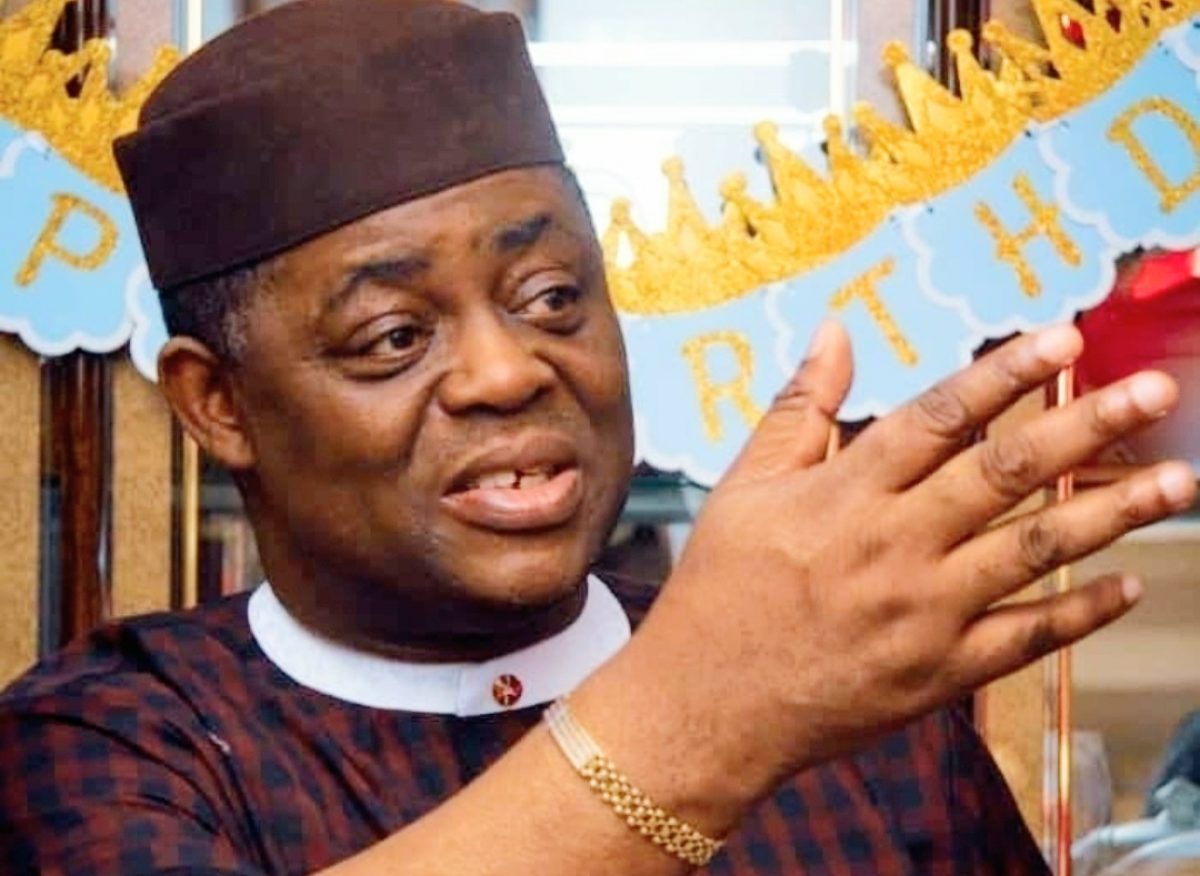
THE KADUNA NZEOGWU AGENDA BY FFK
Amongst the most dangerous people in Nigerian politics today are Peter Obi and Dati Baba Ahmed with their army of ignorant, fascist, violent, uncouth, frustrated, garrolous, racist, bigoted, misguided, radical, brash and rebellious supporters.
I heard Dati the Daft warning our President and CJN not to allow our President-elect to be sworn in or else lives would be endangered and the military would intervene.
He said this on Channels Television. His exact words were “if Tinubu is sworn in it is as good as inviting the military to take power”.
He also said that he would under no circumstances accept Tinubu as President, that he had no faith in the courts or the election tribunals, that the President was incompetent, that the INEC Chairman had conducted a fraudulent, sham election and was arrogant and that the President-elect was a Pablo Escobar and Mayer Lansky-like drug baron all rolled into one and the father of organised crime in Nigeria.

Even when the interviewer Seun Okunbaloye, as professional as ever, cautioned and warned him that his words and sentiments were unacceptable and that they breached the NBC regulations and the law he flared his Mauritanian nostrils, rolled his eyes, raised his voice and insisted on continuing, boasting that he feared no-one and that he had no apology for his intentions, assertions and views.

Instead of desisting from his attempt to incite Nigerians against constituted authority, democracy, the courts, the CJN, the Federal Government, the President, the INEC Chairman and the President-elect, he knuckled down and repeated his incendiary and dangerous words.
All this and he is still walking around freely. I wonder whether he is above the law?
If yours truly or anyone else from the BATIST camp had said those words and such things on national television all hell would have broken loose and we would have been invited by the security agencies by now.
We would also have been attacked and subjected to an insulting barrage of condescending, unsolicited, ill-informed, malicious and unwelcome advice by one or two foreign diplomats who had clearly forgotten their place.
What Obi, Dati and their wild, uncouth and unruly supporters represent and seek to implement is nothing less than a dangerous and fascistic ‘Kaduna Nzeogwu agenda’ with all it’s attendant consequences and they must be exposed, renounced, rejected and resisted by all lawful and constitutional means.
Nigeria is a multi-ethnic, multi-religious, multi-cultural nation nation whose strength, beauty and power lies in its unity, plurality and diversity.
We must not let anyone destroy or divide us.
We do not want or need a tribal President who seeks to subjugate and enslave all those that do not share his ethnic heritage or religious faith.
Worse still we do not want a Vice President with a foreign heritage who really has nothing to loose if Nigeria is burnt to the ground and who can always run back to his fathers country.
These fascists came third in a free and fair election, even trailing Atiku Ibn Dubai and his People’s Destruction Party, yet they still claim to have won and have threatened to turn our nation upside down if they do not have their way.
It is within their ranks more than any other that the call for an ING and a truncation of the democratic process is loudest.
They say it and pronounce it on the social and traditional media every day and neither Peter nor Dati cautions them or even attempts to reign them in.
They and their foreign friends who are encouraging them from behind the scenes and whose diplomats insist on involving themselves in our politics and internal affairs are hell bent on having their way, subverting the will of our people, destabilising our country and robbing the President-elect of his mandate.
Their thinking, like a jilted and bitter bride that has been abandoned at the alter by her groom, is that “if I can’t have it then no-one else will have it”.
They want to throw the baby out with the bath water.
They want to thwart the will of the Nigerian people and rob us of what is lawfully and legitimately ours.
Whilst we seek unity, love, peaceful co-existence and mutual respect they want division, war, panic, fear, chaos, subversion and destabilisation and they indulge in the most despicable and foul degree of denigration, subterfuge and malevolence against the Nigerian people and state that we have ever witnessed in our entire history.
They are furious and bitter with the outcome of the election and they just cannot live with it.
They do not have the stomach, the courage, the honor, the grace, the pedigree or the fortitude to accept defeat.
Simply put they want to wipe out the entire system and existing status quo, impose their will, destroy everything that is wholesome and good in our nation, re-write our history, re-define our heritage, destroy our culture, desecrate our values, use religion and ethnicity to achieve power and forge Nigeria in their own angry, bellicose, frustrated and jaundiced image.
We must resist them with every fibre of our being and defend our hard-earned democracy, our civil liberties, our human rights, our civic institutions, our way of life, our religious and ethnic diversity and heritage and the peace of our land otherwise, as a nation, we will be lost forever.
Nigeria must never fall into the hands of those who seek to destroy her from within and ultimately seek to dismember and divide her.
Nigeria must be at peace.
Nigeria must flourish and excel.
Nigeria must stand tall, strong and firm and reaffirm it’s enviable position as the giant, strength and pride of Africa and one nation under God.
(FFK)




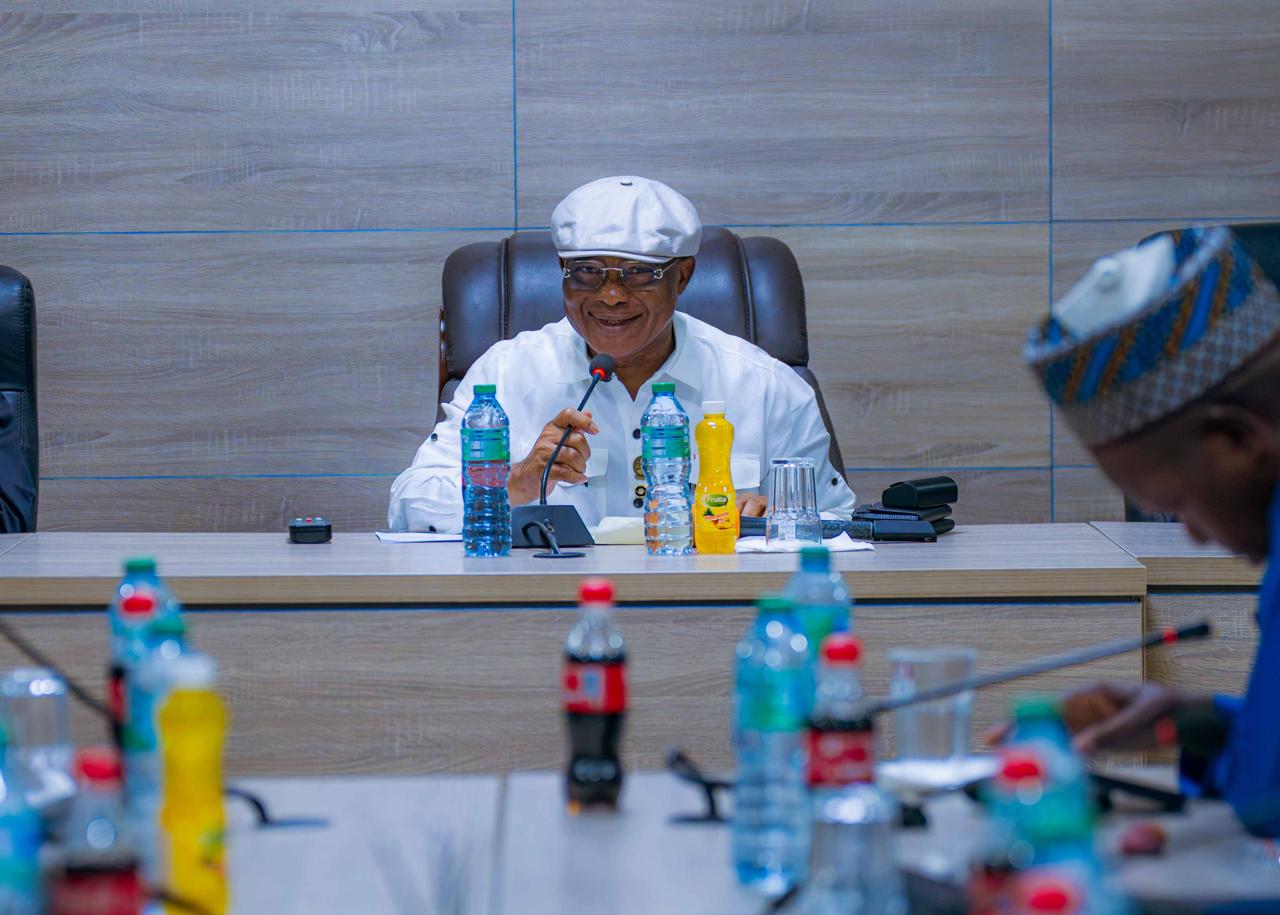
*Renewed Hope Ambassadors Step Into the Next Phase
Fresh from the successful APC 2026 National Convention, the Renewed Hope Ambassadors National, Zonal, and State leadership gathered in Abuja over the weekend, for its fourth strategic meeting, setting the tone for nationwide grassroots activation ahead of 2027.
Chaired by Governor Hope Uzodinma (Imo State) the Director General and National Coordinator of the Renewed Hope Ambassadors, alongside Deputy Director-General, Governor Uba Sani of Kaduna State, and Governor Inuwa Yahaya of Gombe State as Secretary, the session reinforced one clear direction: One Party. One Message. One Mobilization whilst also laying out a strategic roadmap for the activation of the network across all communities in Nigeria.
Backed by the strength of 31 APC-led states, the Renewed Hope Agenda is taking Bola Ahmed Tinubu’s message of progress and reform to every corner of Nigeria.
From bold economic restructuring to initiatives like NELFUND, the increase in the national minimum wage from ₦30,000 to ₦70,000, and strategic investments in critical sectors, including PNiCGI, the mission remains clear: helping Nigerians understand both the purpose and the progress of the Renewed Hope vision.
This is coordination at scale. This is grassroots engagement with purpose. This is the next phase of Renewed Hope with One Party, One Message, and One Mobilisation framework
#RenewedHopeAmbassadors #APC #WeAreAPC


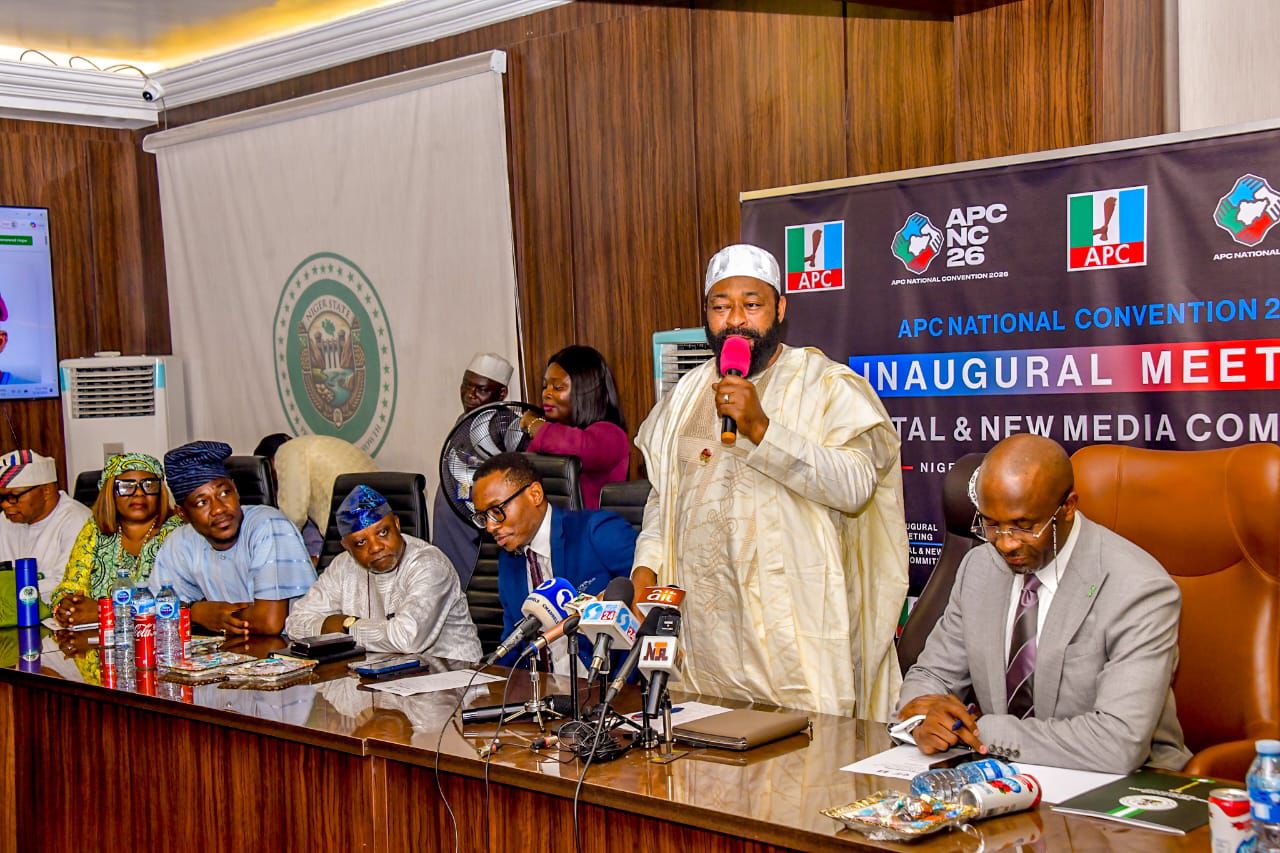
Governor Bago Inaugurates APC Digital Media Sub-Committee Ahead of National Convention.
Governor Umaru Bago has inaugurated the Digital Media Sub-Committee for the forthcoming National Convention of the All Progressives Congress (APC), scheduled to hold on March 27 and 28, 2026 in Abuja.
Chairing the sub-committee, Governor Bago tasked members with the responsibility of effectively communicating the party’s manifesto to the public.
He emphasized the need to leverage social media platforms to highlight the achievements and ongoing efforts of President Bola Ahmed Tinubu, noting that communication gaps have posed challenges that must now be decisively addressed.
The Co-Chair of the sub-committee, Hon. Benjamin Kalu, Deputy Speaker of the House of Representatives, echoed the Governor’s position, urging members to project the activities of both the party and the government to a broader audience.
He called for a deliberate and coordinated effort to showcase the party’s achievements and policy direction, stressing the importance of shaping a compelling and consistent narrative across all digital platforms.
Delivering a presentation to the committee, Otega Ogra, SSA to the President on New Media, who serves as Secretary of the sub-committee, outlined strategic focus areas to guide the team’s operations.
His presentation highlighted communication priorities and actionable steps to achieve the committee’s mandate and strengthen the party’s digital engagement.


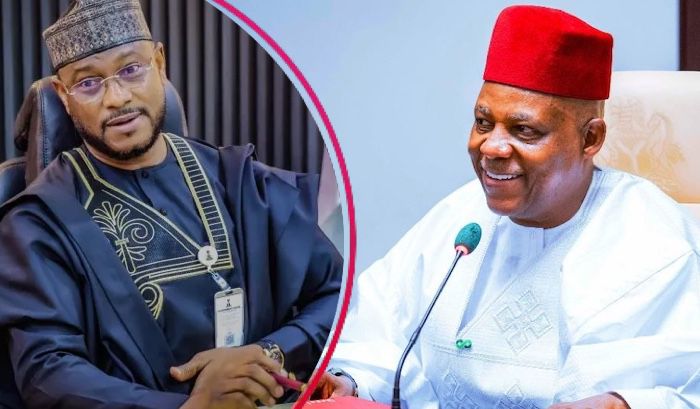
VP Shettima Set to Lead Delegation to Zamfara as Governor Dauda Lawal Formally Joins APC
The Zamfara State chapter of the All Progressives Congress (APC) has finalized plans to receive Vice President Kashim Shettima for the formal defection and reception of Governor Dauda Lawal into the ruling party, scheduled to take place on Tuesday.
State APC Chairman, Tukur Danfulani Maikatako, disclosed this during a high-level stakeholders’ meeting held in Gusau, the state capital. He noted that the Vice President would be joined by the party’s national leadership to mark what he described as a landmark political realignment in the state.
Maikatako expressed the party’s excitement over Governor Lawal’s return, recalling that Zamfara had historically been an APC stronghold and that the Governor was previously a bona fide member of the party before his earlier exit.
“We all know that Zamfara has long been one of the APC’s stronghold states, where the defected Governor was once a bona fide member. Now that he has decided to return home, having been satisfied that the APC remains his second choice after the one he left for obvious reasons,” Maikatako stated.
The Chairman called on all party faithful across the 147 wards in the state’s 14 local government areas to turn out en masse to honour the Vice President’s visit. He emphasized that the event was strategically positioned to bolster the party’s popularity and strengthen its structures ahead of the 2027 general elections.
In a strong appeal for unity, Maikatako urged members to set aside all factional tendencies, stressing that the APC remained one political family with shared goals, particularly the ambition to make Zamfara and Nigeria great again.
Echoing similar sentiments, a former state APC Chairman, Lawal M. Liman, appealed to members to cascade the message to their wards and local government areas. He reinforced the need for cohesion, noting that the party’s collective strength would be critical to achieving success in future elections.

All eyes are now on Gusau as the ruling party prepares for a high-profile political gathering expected to further consolidate its influence in Zamfara State.


-

 society6 months ago
Religion: Africa’s Oldest Weapon of Enslavement and the Forgotten Truth
-

 news4 months ago
WHO REALLY OWNS MONIEPOINT? The $290 Million Deal That Sold Nigeria’s Top Fintech to Foreign Interests
-

 society6 months ago
“You Are Never Without Help” – Pastor Gebhardt Berndt Inspires Hope Through Empower Church (Video)
-

 celebrity radar - gossips2 months ago
Dr. Chris Okafor Returns with Power and Fire of the Spirit -Mounts Grace Nation Altar with Fresh Anointing and Restoration Grace on February 1, 2026