
Politics
THE OBIDIENTS, THE JAGABAN AND THE ICARUS SYNDROME by Femi Fani-Kayode

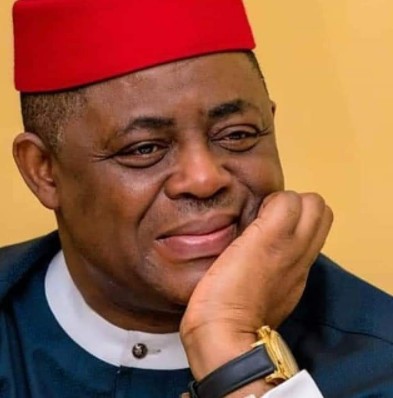
THE OBIDIENTS, THE JAGABAN AND THE ICARUS SYNDROME by Femi Fani-Kayode

I admire and respect the energy and passion of the Obidients and like I said in an earlier write-up titled “Who Are These Obidients?”, I believe that they wish to effect a social and political revolution which those of us in the larger political parties have to be very wary of.
I also believe that if they stay together and don’t run out of steam and if properly harnessed and managed over the next few years they may present a formidable challenge to us somewhere down the line.
Yet the truth is that like a rough and uncut diamond they are still very far from their mark, they still have a long way to go from achieving perfection and they still have much to learn.
They are a formidable movement as I said in my earlier write up and I, unlike many others, take them seriously.
I am glad that they have ventured into the dark and murky waters of Nigerian politics and it is my prayer that they survive it and last, even if they don’t make an appreciable impact at the polls next year.
Yet if the truth be told, as at today, they are more like a loose canon than a guided missile.
Anger alone cannot fuel a revolution: there must be purpose.
And that clear purpose is something that they seem to lack and which their leader, other than just wanting to be President of a so-called New Nigeria, clearly is incapable of providing.
Worst still, hubris, which always leads to nemesis, is beginning to creep into their ranks.
They remind me of the Greek mythological figure known as Icarus who overeached himself by flying too close to the sun with his wax wings, challenging the gods and boasting that he could touch the heavens.
Needless to say the wings melted and he came down crashing.
What worries me the most for them is, given their high expectations, the rude shock and sense of despair that will engulf them and the suffering and mental trauma they will experience after they receive a crushing defeat in next years presidential election. And receive it they will.
I doubt that they will win one Senatorial district or one seat in the House of Representatives let alone a Governorship election or the Presidential election.
It is after they have tasted and suffered that defeat that their resolve will be truly tested.
It is at that time that we shall find out whether they are the men and women they claim to be or that they are mere children, venting on social media and expressing their frustrations at any and every public event.
I had argued in my earlier contribution that they have vision and potential and that what makes them so dangerous is their revolutionary zeal and ideas and their desire to establish a new cadre of Nigerian leaders and sweep away the old.
I maintain this position but one thing is clear: the old political order will not allow this to happen without a good fight.
And even if it were to ever happen it would take a good number of years and much struggle.
After 2023 comes the real test for them.
After they suffer their first defeat next year they will either loose their nerve, freak out, crack up, break ranks, fall into disssaray, whine like neophytes, sulk to heaven and back, suck their little thumbs and insult the entire world on social media or they will accept their lot, pull themselves together, establish a new and firm resolve e to fight on regardless, consolidate their ranks, organise themselves into a new and formidable force and functional political party and prepare for the next election in four years time.
Sadly I suspect they are incapable of the latter simply because their leader lacks that level of focus, strength, commitment, fortitude or gravitas and I am not sure that there is anyone else within their ranks that can rise up and harness their remarkable energy and strength.
None of their leaders have the energy, charisma and strength of Yahaya Bello, the White Lion.
None has the wisdom, patience, knowledge and firm resolve of Mai Mala Buni or the commitment to hard work and dedication to duty, excellence and enterprise of Babagana Zulum.
None has the gentle, kind, accommodating, alluring and incisive disposition of Sani Bello (Abu Lolo) or the faith, steadfastness and loyalty of Bello Matawalle.
None has the vision, courage and firepower of Nasir El-Rufai, the profound and calculating disposition and utter genius of Sani Musa (313) or the depth of knowledge and brilliance in oratory of Kashim Shettima.
None has the calm resolve and iron will of Ifeanyi Ugwuanyi (Gburugburu), the calculating, tenacious and tactical disposition of Rahman Abdul Rasaq, the zeal, confidence, enterprise, experience and byzantine cunning of Orji Uzor Kalu or the irresistible charisma and pugnacious spirit of Nyesom Wike.
None has the intellectual depth of Kayode Fayemi, the lion heart of Dapo Abiodun, the scholarly insight of Ben Ayaade or the focus, determination and creativity of David Umahi.
I look into the ranks of their leaders and all I see is weakness.
The only exception is my older brother and dear friend Doyin Okupe who, as a highly experienced old war horse and veteran politican, is capable of holding his own in any fight but who, deep down, is a die-hard conservative, a product of the ruling class and a man that can hardly be described as a revolutionary.
I will say little about my brother Datti Ahmed, Obi’s running mate, who I happen to have a soft spot for and who has done a great job in the education sector other than to say that no true progressive or revolutionary would ever publicly proclaim that homosexuals and lesbians should “be killed” simply for being different.
And even if they believed that should be the case, fewer would have the temerity and sheer indiscretion to blurt it out on the floor of the Nigerian Senate for the entire world to see and hear.
Is that what the Obidients have in store for us? A world that is so intolerant of those that do not conform with their thoughts, vision, views, way of life, values and sexual preferences?
Are they really prepared to kill those that do not share their views or that are gays and lesbians?
I hope not because that would be heartless, fascistic, unjust, ungodly and simply barbaric and that is not the Datti Ahmed that I know and respect.
Yet say it he did and I repeat, all I see in the ranks of their leaders is weakness. I do not see any strength. I do not see any fire. I do not see any strong resolve. I do not see any passion or zeal and I do not see any fortitude to see the fight through to the end, no matter the cost.
Simply put they have no Achilles of the Mermidans in their battle ranks, no Hector of Troy, no Sir Arthur Dayne (the Sword of the Morning) and no Khaleed Ibn Waheed (the Sword of God).
They have no Aragorn of Gondor on their front line, no Alexander the Great, no Salahudeen Ayubi, no Ragnar Lothbrook, no Uthred of Bebbanberg and no William Wallace of the Mcregor’s.
They have no Robert the Bruce in their formations, no Bonny Prince Charlie, no Khaleesi, Mother of Dragons, no Beowulf son of Ecgtheow and no Daemon Targaryan, Prince of the Seven Kingdoms.
They have no Kahl Drogo of the Dothraki in their forces, no Jehu son of Nimshi, no Maximus Meridius of Rome, no David son of Jesse, no Grey Worm of the Unsullied, no Legolas of the Elves and no John Snow of the Targaryan’s.
They have no Gideon son of Joash in their vanguard, no Abner son of Ner, no Jeptha son of Gilead, no Eleazar son of Dodo, no Shammah son of Agee and no Ishbaal the Tachmonite.
They have no Joab, Abishai and Asahel sons of Zeruel and strong men of David in their assault team.
Without a strong and courageous leader who is prepared to loose everything including his or her liberty or life, their revolution and bid for power will amount to nothing.
Consequently I believe that we may hear little about them after 2023.
They will simply vanish and be gone with the wind. The combined forces of APC and PDP will overwhelm them and blow them away.
When the fight starts they will run for cover and leave the field and boxing ring for the big boys to slug it out.
They will be nowhere to be found and as the noose gets tighter and tighter, they will get weaker and weaker until they slowly disappear and melt away like an iceberg approaching the tropics.
I pray I am wrong but this is my suspicion given the fact that, according to unconfirmed reports, Obi is already negotiating a deal with the PDP and looking to form an alliance with them in order to acquire himself a soft landing in the unlikely event of them winning.
So much for his commitment to his young fanatical supporters and loyalty to his new party.
The truth is that he is simply using them both and whichever way, even if he gets back into bed with Atiku Abubakar and the PDP in some kind of overt or covert alliance, the APC and our presidential candidate Asiwaju Bola Ahmed Tinubu, the Jagaban Borgu, will thrash them all like the winter wheat.
Atiku particularly cannot possibly see, fathom or comprehend what is coming.
He will be served a crushing blow and a humiliating defeat and he will be utterly devastated.
He will be subjected to what the American military forces that invaded Iraq in 2003 under the command of General Tommy Franks famously described as “shock and awe”.
He will be subjected to what the German Army referred to as “blitzkrieg” during World War 11.
.
He will be utterly routed, roundly defeated, thoroughly demystified and ingloriously evicted out of the political space and from his olympian heights in precisely the same way that Lucifer, Son of the Dawn, was overpowered, overwhelmed and thrown out of Heaven.
After that he will retire from politics permanently and go back to Dubai from whence he came.
And that is precisely what he deserves. This is the same Atiku who in 2014 happily proclaimed that “PDP is dead” and that “this country is moving in the wrong direction because of PDP”.
In that same year he left the party with the then Speaker of the House, five Governors and a number of Senators, House members, former Governors, former Ministers and other notable party leaders on the grounds that it was time for a Northerner to be the flagbearer of the party.
He, Senator Bukola Saraki, Speaker of the House of Representatives Aminu Tambuwal, Governor Rabiu Kwankwaso, Governor Abdul Fatah Ahmed and a number of others turned their backs on President Goodluck Jonathan and destroyed their own party’s chances at the polls in 2015 by leaving it a year earlier and joining the then opposition APC.
Now, 7 years later, they are shamelessly back in the same PDP that they collectively demonised and murdered and they would want us to believe that it has suddenly resurrected and is alive again.
Thankfully God has given us the opportunity to prove to them by next year that the PDP is still as dead as a dodo and during the course of the election we shall finally bury it before the entire world.
It is just a question of time.
Yet aside from all this what I find the most irritating and objectionable about the Obidients is not their unadulterated aggression and abusive tendencies but rather their insistence on comparing their leader Peter Obi to Tinubu.
I consider this to be deeply insulting.
It is like comparing Don Perignon to ogogoro.
It is like comparing Cristal champagne to what the people of the Niger Delta call ‘sepe’.
It is like comparing the finest red wine from the vineyards of Bordeaux to what the Ghanaians call ‘akpeteshie’.
It is like comparing chalk and cheese.
It is like comparing a Rolls Royce to a Volkswagon Beetle, a Porsche Carrera to a three-wheeled scooter, a Ferrari to a broken down mini or a Gulf Stream jet to an Aba-made helicopter.
When Obi was still in kindergarten Bola Ahmed Tinubu was already a very wealthy and successful business man who had worked and invested massively in the oil, gas, hi-tech and communications sector.
At that time he was already a dollar millionaire and he invested much of his wealth into politics and the lives of others that were less fortunate than he was.
When Obi was still in secondary school Bola Ahmed Tinubu was already an integral part of the massive political network and a key figure in the late Major General Shehu Musa Yar’adua’s formidable political family which was known as the People’s Front (PF) together with other notable and seasoned leaders like Babagana Kingibe and Atiku Abubakar.
They were of course to later join the SDP as a group and they, more than any other, ensured the emergence of Chief MKO Abiola as the presidential flagbearer of that party at their Jos Convention in 1993.
When Obi was still at University Bola Ahmed Tinubu was in the trenches, fighting military Governments, leading NADECO and risking his life and liberty for the restoration of MKO Abiola’s June 12th mandate, which had been annuled by the military, and for democracy.
Many of today’s Obidients were not born at that time but they should go and ask their parents or grandparents about what happened and the role that Bola Tinubu played.
Those of us that were around and very vocal and active at the time can testify to his efforts and we were amongst those that were then described as NADECO footsoldiers.
Bola Tinubu inspired us and millions of other Nigerians and democrats all over the world with his courage and efforts and he encouraged us to keep up the struggle and rise up for June 12th. And we did!
Many of our people were killed, incarcerated and driven into exile (including yours truly) and had it not been for the leadership of the following heroes we would still be under the yoke of military rule today.
I will make this a full and comprehensive list for the benefit of those young Obidients who have no knowledge of our nation’s history and who know nothing about the June 12th struggle.
They include Moshood Kashimawo Olawale Abiola, Wole Soyinka, Anthony Enahoro, Alani Akinrinade, Kudirat Abiola, Kunle Ajasin, Bola Ahmed Tinubu, Lam Adesina, Frederick Fasheun, Bola Ige, Ayo Adebanjo, Abraham Adesanya and Gani Fawenhimi.
They also include Beko Ransome Kuti, Alao Aka Bashorun, Omo Omoruyi, Balarabe Musa, Kayode Fayemi, Tokunboh Afikuyomi, Pascal Bafyau, Olu Omotehinwa and Kunle Ajibade.
They also include, Adesegun Banjo, Festus Iyayi, Bisi Akande, Bisi Durojaiye, Abubakar ‘Dangiwa’ Umar, Alfred Rewane, Babatunde Edu, Suliat Adedeji, Bolanle Gbonigi, Kola Animashaun, Sam Omatseye, Pius O. Akinyeleru and Gbolabo Ogunsanwo.
They also include Adebayo Williams, Nosa Igiebor, Dare Babarinsa, Segun Osoba, Olu Falae, Akin Osuntokun, Reuben Abati, Dele Momodu, Dan Suleiman, Bagudu Kaltho, Rauf Aregbesola, Dele Alake, Augustine Sam, Seye Kehinde, Tunde Elegbede and Odia Ofeimun.
They also include Olisa Agbakoba, Ayo Obe, Amos Akingba, Ndubuisi Kanu, Patrick Koshoni, Bayo Onanuga, Femi Ojudu, Ralph Obioha, Oluwatoyin Onaguruwa, Kola Ilori, Onome Osifo-Whiskey and Bobo Nwosisi.
They also include Wale Okuniyi, Frank Kokori, Tony Nyiam, Femi Falana, Shehu Sani, Tony Uranta, Ogaga Ifowodo, Chima Ubani, Fred Agbeyegbe, Soji Omotunde and Chris Anyanwu.
And finally they include Mohammed Adamu, Sam Omatseye, Shola Omatsola, Bisoye Tejuosho, Olusegun Adeniyi, George Mbah, Ben Charles Obi and so many others.
Many of these names will be strange or unknown to the young Obidients and probably to their leader Peter Obi as well.
And that is why I decided to mention each and everyone of them.
I suggest they read up on them and find out the role each of these great and selfless individuals played in securing the democracy and free speech that they are enjoying today.
They, together with the Nigerian people, were the ones that drove the military out of power and consequently, after seven years of murderous violence, subjugation, tyranny, tribulation and a hard struggle against the military, democracy was restored to our country in 1999 with the pardon, release from prison and election of President Olusegun Obasanjo.
Some of those on the list were martyred and many were locked up and suffered badly whilst others were driven into a lonely and oftentimes challenging and depressing exile.
Bola Ahmed Tinubu was not just amongst them but he was one of those that led them, inspired them and fuelled and financed the resistance.
He was charged with treason, detained, his home was bombed and he was terrorised, traumatised and persecuted till the time that he, his wife, Oluremi Tinubu (who is a ranking member of the Nigerian Senate today) and children were smuggled out of the country into a long and harrowing exile.
Outside of that and before the struggle even began Tinubu had been elected as a Senator during the 3rd Republic in 1992 on the platform of the SDP, recording the highest number of votes for a Senate seat in the entire country!
Whilst at the Senate he excelled and was appointed Chairman of the Senate Commitee on Banking and Finance.
This was just short of a decade before he became Governor of Lagos state in 1999 after the murder of MKO Abiola and the then Head of State, Gen. Sani Abacha, after returning home from exile and after the military were driven away and pushed out of office.
From 1990 up until today Tinubu has been an active and key player in the political firmament of Nigeria and he has always fought against injustice and tyranny.
Whilst Obi was still a trader selling tomatoe ketchup and Bournvita in 1999 Bola Ahmed Tinubu had already paid his dues, made his mark and was already running for the Governorship of Lagos state.
The elders of the South West and Afenifere supported him and rewarded him by ensuring that he won simply because of the noble and dramatic role he played during the June 12th struggle and his role in ensuring that the military left power.
From 1999 till 2007 he stood firm against a hostile Federal Governmrnt led by President Olusegun Obasanjo (which I proudly served) and not only did he survive it but he went on to ensure that his boys were elected as Governor of that state in every subsequent election for the next 15 years and up until today.
Over that period of time he also ensured that his boys were elected Governor of virtually all the South West states, Vice President of the Federal Republic of Nigeria (Yemi Osinbajo), Speaker of the House of Representatives (Femi Gbajabiamila) and so much more.
Others were appointed as prominent and powerful Traditional Rulers all over the South West and have ascended to the throne of their reverred and distinguished ancestors.
Finally others were given Ministerial appointments from 2015 to date in President Muhammadu Buhari’s Government such as Lai Mohammed, Babatunde Raji Fashola and Sunday Dare who were once his loyal aides and who served him for many years whilst others, who were his political associates and trusted friends like Boss Mustapha and Babachir Lawal, were appointed as Secretary to the Federal Government respectively.
He also cultivated and groomed a small group of utterly brilliant professionals and technocrats, including bankers, lawyers, economists, businessmen and other leading members of the private sector like Wale Edun, Yemi Cardoso, Folarin Coker, Babatunde Fowler and James Faleke into the political arena where they shone and continue to shine like the bright stars that they are.
I was in the then ruling PDP in 2015 and during the campaign for the presidential election I played a key role for President Goodluck Jonathan and led the media campaign and charge against President Buhari’s election bid.
It was a tough fight and a very hard, vicious, aggressive and oftentimes dirty campaign and both sides gave as good as they got.
I can tell you that had it not been for the unequivocal support that Bola Ahmed Tinubu and his faction of the APC gave President Buhari at the time, he would NEVER have won that election.
The same thing happened again in 2019 though by that rime the campaign was far less colourful, less eventful, less contentious, less dramatic and less aggressive and, though still in PDP, I was not in any way involved in Atiku Abubakar’s election bid or campaign organisation.
Yet once again Tinubu and his machinery ensured that Buhari won.
There is no APC Governor in the South West today that can say he got there without the tacit support and approval of Bola Ahmed Tinubu.
He is father to all of them and he has also extended his support base to the entire country with his boys, followers and political associates everywhere, including the core North, the Middle Belt, the South South and the South East.
A final point on the June 12th struggle and Tinubu’s contribution to democracy and the peace and unity of Nigeria.
June 12th brought our nation closer to the brink of a second civil war than any other political event in the course of our history. It literally tore us apart. Yet thankfully 29 years later the wounds have finally healed and our nation has moved on.
I submit that Asiwaju Bola Ahmed Tinubu was the architect of that healing process and was the key reason why the matter was finally brought to closure and what the Holy Bible describes as an “expected end” and I shall explain how and why.
Perhaps the greatest testimony that we can cite as an example of his sense of patriotism is the fact that long after the passing of Chief MKO Abiola and even in the midst of the rise of a mainly new, naive, skeptical, unbelieving, antagonistic and historically-ignorant generation of Gen-Z and Millenial youths who know absolutely nothing about the sacrifices made for the restoration of democracy during June 12th, he kept faith with the memory and the heroes of that struggle.
He achieved this by ensuring that MKO Abiola was not only recognised but also honored by the Buhari administration who not only named June 12th as our Democracy Day but also named the National Stadium in Abuja after MKO and formally recognised him and his erstwhile running mate, Ambassador Babagana Kingibe, as a former President and Vice President of the Federal Republic of Nigeria respectively.
With these laudable actions they finally set aside all doubt and acknowledged the fact that, though these two great men were never sworn in, they actually won the June 12th 1993 presidential election: a fact that a handful of key players in the political space had disputed for many years and a course of action that a number of post-1999 democratically-elected Presidents and Governments had inexplicably and wickedly refused to do.
This singular act by the Buhari administration has finally killed the ghost of June 12th, brought about national reconciliation and cemented the unity and future of Nigeria more than any other.
It has also brought to an end the deep suspicion that had hitherto existed between the people of the South West and the North.
Commendation for all this must go to primarily two people.
Firstly President Muhammadu Buhari who displayed remarkable courage and sensitivity by taking this monumental step and noble course of action and secondly Asiwaju Bola Ahmed Tinubu who lobbied morning day and night to ensure that he did it.
For this alone and so much more Bola Tinubu deserves to be elected President of the Federal Republic of Nigeria in next years election.
Can any of these things be said of Peter Obi?
Of course not: unless you are deluded!
There are many former Governors, former Presidents, former Vice Presidents and former Ministers in this country whose names barely get a mention anymore in the public space but Tinubu is and has always been a constant factor for the last 32 years!
All this and much more and some have the sheer effontry to be comparing one Peter Obi who was Governor of Anambra state just a few years ago to the mighty Jagaban.
This is a big insult and frankly reflects nothing other than the ignorance of those making the comparison.
Take it or leave it, that is the bitter truth.
To compare a strong-willed, resilient, industrious, tried and tested, exposed, gifted, blessed, wily, wise, enigmatic, courageous, intelligent and great man like Bola Ahmed Tinubu who God has used to better the lives of millions and who transformed our very own Lagos from a chaotic, ugly, dirty, congested, over-populated, poor, crime-ridden, depressing, ghetto-filled city and festering slum with a dwindling economy, a tiny income and a negligible and pitiful IGR of 700 million naira per month in 1999 to the most modern, sophisticated, cosmopolitan, secure, orderly, powerful, dynamic, clean, beautiful, inspiring, prestigious, booming, business-friendly, commercially-gratifying, inspiring, happy, modern and prosperous city and industrial hub on the African continent with by far the largest population, an IGR of 44.5 billion naira per month, a massive income and the largest economy compared to any other CITY in Africa, the 3rd largest economy compared to any NATION in Africa (with a GDP of $76 billion) and a larger economy than over 95% of NATIONS on the African continent all as a consequence of his efforts and that of his political sons that succeeded him as Governor and established a joint and combined legacy of excellence with him over the last 23 years to a man who is so far down the ladder like Peter Obi is uncharitable.
This is the same Obi who, as Governor of his Anambra state just a few years ago, did NOTHING in terms of infrastructural development, was incapable of building up the state’s IGR, spent all his time fighting the workers and unions and oppressing his perceived enemies and instead of providing good governance and hope for his people, was busy persecuting non-indigenes and particularly Northerners and throwing them out of his state.
This is the same Obi who, as Governor of Anambra state, instead of providing inspirational leadership for his people was busy fighting the world and claiming that Lagos was no longer part of the West but now a “no-man’s land” and that took pleasure in stoking the embers of tribalism, religious intolerance, sectarian conflict and ethnic nationalism.
This is the same Obi who, as Governor of Anambra state, instead of doing something tangible and bringing the dividends of democracy to his people was, as Dele Alake the former Commissioner of Information of Lagos state rightly said, was too busy “saving money” whilst his people were dying of hunger and starvation.
Again this is a man who, as Governor of Anambra state, boldly and publicly proclaimed that “education is not for the poor” and not only increased the school fees of students to an exorbitant and unattainable figure but also wickedly insisted that they must pay their fees for three terms in advance as opposed to one, causing many students to drop out of school and forfeit their dream of getting a good education.
Again this is a man who is essentially a commodities broker and trader that imports virtually everything from toilet paper, tomatoe puree and toothpaste to biscuits, soap and Bournvita into our country and who has done nothing to support or encourage our local industries, local industrial growth or agricultural production.
This prompted a prominent social media public commentator by the name of Ayekooto Akindele to say that “Peter Obi IMPORTS into the country what Aliko Dangote PRODUCES in the country”.
Ayekooto is right.
And the implications of the activities of international traders and commodity merchants like Obi on our economy and the value of our currency and their contribution to the high unemployment rate in our country as a consequence of their line of work and desire to make a quick buck at the expense of our local farmers and producers are legion.
People like Obi are assisting foreign farmers and industrialists to make vast sums of money at the expense of their Nigerian counterparts by providing a vast market for them to dump their luxury items and consumner products at usually unreasonable and extortionate prices and killing local production of similar goods because our farmers and producers simply cannot compete with them.
Worse still they have done nothing to open any of the lucrative foreign markets to the few products that our farmers and industrialists can actually produce.
The direct consequence of this is poverty for the Nigerian farmer and producer and prosperity for the foreign ones and their agents and middle men like Obi.
This is unfair, unacceptable and unconciable.
And making the bulk of your money from such a nebulous and iniquitous endeavour regardless of the damaging effect and negative impact it has on your country’s economy, farmers and producers raises a lot of questions about your sense of patriotism.
That is the problem with the Obi’s of this world.
Comparing such a man to an enigma like Tinubu who has made massive investments in different sectors of our economy and who is the employer of hundreds of thousands of our people in various local enterprises and industries is absurd.
It is like comparing a gold-plated treasure chest filled with the world’s finest and largest emralds, topaz’s and diamonds to a worthless plastic bucket filled with sand, pebbles and a sprinkling of fools gold.
It is like comparing Miss Universe or Miss World to an ugly, shifty, smelly, well-worne and well-used Mumbai lady of easy virtue.
It is like comparing Elon Musk and Bill Gates to Hushpuppi and Al Capone.
It is like comparing a beautiful blue-blooded Turkish Sultana or Hatun with a fading, ageing, crude and vulgar 18th century Parisian streetwalker.
It is a shameful and shameless comparison.
It is a tactless, tasteless and nauseating joke.
It is a tale told by an idiot, full of sound and fury, signifying nothing!
It is an exercise in futility and a pointless and profit less endeavour.
Permit me to end this contribution with the following assertions.
Let the foundations of the earth rumble, let the demons scream, let the lions roar, let the wolves howl and let the sharks run riot.
Let the wailers wail, let the bulls of Bashan charge, let the mortals plot and plan, let the orcs shriek, let the goblins grumble and let our adversaries and oppressors “cry havoc and let slip the dogs of war”.
Let the forces of hell gather, let the creatures of darkness hiss and writhe, let the spoilers bellow and spoil, let the haters hate, let the liars lie and let the accusers accuse.
Let the hordes of hell, the wizards, the sorcerers, the witches, the voodoo-merchants, the witch-doctors, the spiritualists, the sharmans, the occultists, the deceivers and the agents of satan invoke their powers, chant their chants, spin their deceitful and ugly tales, cast their spells and do their worst.
it changes nothing and their counsel shall NOT stand because the Lord, whose name is MIGHTY and FAITHFUL, is with us!
Come rain, come shine, by His grace and the will of the Nigerian people, we shall prevail in next year’s presidential election, Bola Ahmed Tinubu will win and on his mandate WE SHALL STAND!
(FFK)




Politics
Political Earthquake in Kano: How, Senator Rabiu Musa Kwankwaso, Nasiru Gawuna’s Move to ADC Reshapes North-West Politics
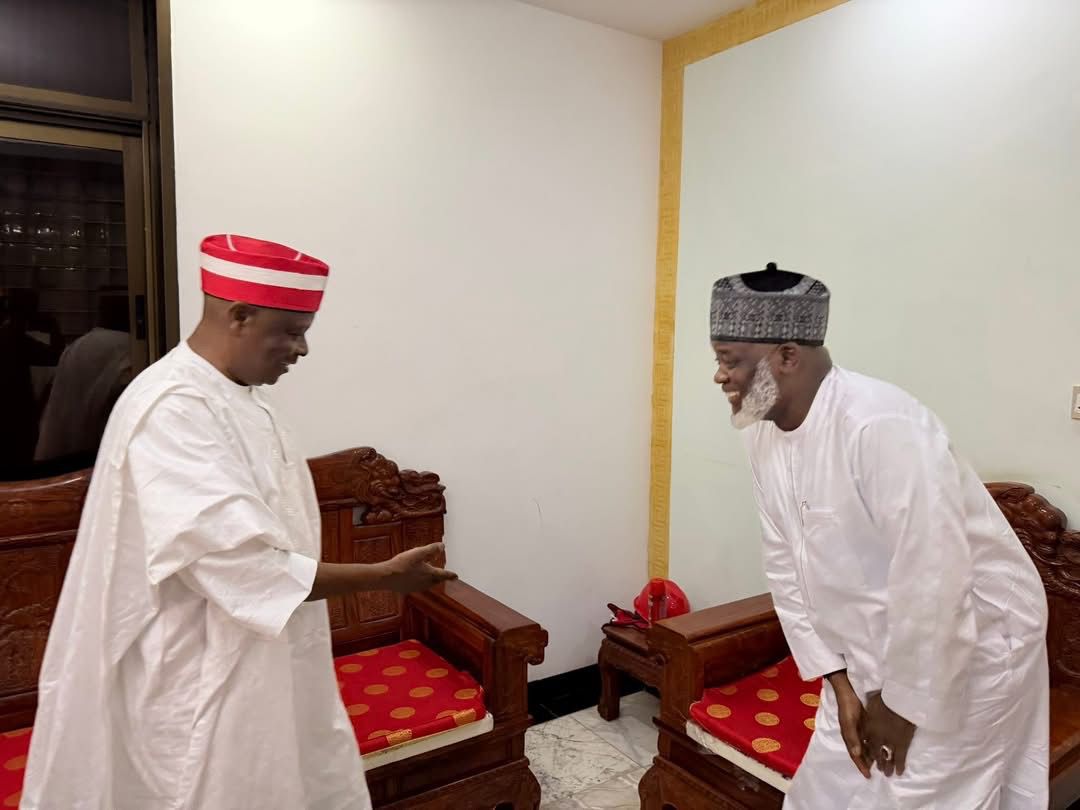
Political Earthquake in Kano: How, Senator Rabiu Musa Kwankwaso, Nasiru Gawuna’s Move to ADC Reshapes North-West Politics
The political atmosphere of Nigeria’s North-West was fundamentally altered on a sweltering afternoon in 2026 after Senator Rabiu Musa Kwankwaso former Governor of Kano State and Former Minister for Defence who is also the “Grand Commander” of the Red-Cap revolution, finalized a move that many viewed as the ultimate masterstroke of his political career. By transitioning from the NNPP to the African Democratic Congress (ADC), Kwankwaso did more than change platforms; he effectively reset the coordinates of the nation’s largest voting bloc.
Senator Kwankwaso’s pedigree is defined by a singular devotion to human capital development and an almost mythical grassroots loyalty preceded him. He turned a local movement, the Kwankwasiyya, into a disciplined, ideological army that transcends traditional party structures. His entry into the ADC instantly transformed a secondary party into a formidable fortress, signaling to the ruling elite that the North-West is no longer a monolith under their control.
The gravity of this shift is most profound in Kano, the heartbeat of Northern commerce. For years, the state was a polarized battlefield between the Kwankwasiyya and established conservative wings. However, the entry of Nasiru Yusuf Gawuna into the same ADC orbit has created a “Kano Super-Alliance” that was previously unthinkable. Kwankwaso, the visionary architect who sent thousands of Kano’s children to global universities, now finds his populist ideology merging with Gawuna’s administrative steadiness and deep-rooted institutional connections.
This synergy is a seismic departure from the politics of “zero-sum” rivalry; it is a calculated fusion of mass appeal and the strategic machinery required to protect and deliver votes.
This move reshuffles the entire North-West deck. As Kwankwaso plants the ADC flag across the region, he is attracting a wave of heavyweights from Kaduna to Sokoto who feel marginalized by the status quo. His political pedigree allows him to speak with a regional authority that others lack, positioning himself as a protector during a time of economic uncertainty. By bringing Gawuna into this fold, the dynamics of Kano politics have shifted from a war of attrition to a coalition of necessity. This alliance creates a “Third Way” that bypasses the failures of the old guard, promising a return to the rapid growth that defined the Kwankwaso years, but with a broader, more inclusive base that could dictate the occupant of Aso Rock in 2027.
Kwankwaso’s career has always been defined by a uniquely personal brand of power. From 1999 to 2015, he served two terms as Governor of Kano State, in addition to roles as Minister of Defence and Senator. While many were surprised by his recent maneuvers; especially following closed-door meetings with President Bola Tinubu, he chose the emerging ADC over the ruling APC.
In the high-stakes theater of Nigerian politics, few events have jolted the region quite like the defection of Nasiru Yusuf Gawuna from the APC to the ADC on March 31, 2026. Coming just twenty-four hours after Kwankwaso’s move, Gawuna’s transition fundamentally has also altered the political calculus in Kano. What makes this moment remarkable is the sheer drama of the reversal. Gawuna’s political journey has been a steady, calculated ascent through Kano’s establishment. He first shot to prominence as Commissioner of Agriculture under Governor Abdullahi Umar Ganduje, earning a reputation for hands-on management in a state where farming is the economic backbone. He eventually rose to Deputy Governor, serving for nearly six years and gaining invaluable executive experience. Beyond partisan politics, Gawuna distinguished himself as Chairman of the Governing Council of Bayero University and, most recently, as Chairman of the Federal Mortgage Bank of Nigeria (FMBN). He resigned from the FMBN on March 27, 2026, citing compliance with presidential directives regarding political appointees.
A look back at the 2023 gubernatorial election reveals just how significant Gawuna is. Running under the APC, he polled over 890,000 votes against the formidable Kwankwasiyya machine. This proved that he is one of the few politicians in Kano who can genuinely compete with Kwankwaso’s electoral machinery. His strength is threefold: he appeals to the youth, the religious establishment (Ulama), and the business community; he has the capacity to split the APC vote; and he has demonstrated he can deliver votes independently of a larger party wave. To understand the magnitude of this defection, one must appreciate the complete inversion of alliances since 2023. Back then, Governor Abba Kabir Yusuf ran on the NNPP ticket with Kwankwaso’s backing, while Gawuna carried the APC banner with Ganduje’s support. By 2027, the roles will likely reverse: Governor Yusuf is positioned to run under the APC with Ganduje’s blessing, while Gawuna is poised to run under the ADC with Kwankwaso’s endorsement.
From the perspective of the Kwankwasiyya movement, Gawuna’s arrival is a “return” rather than a “recruitment,” as he was part of the movement’s pioneer cohort. This narrative neutralizes accusations of opportunism. For his part, Gawuna framed his move in terms of service and divine guidance, with sources indicating he felt marginalized within the APC after his 2023 defeat.
The reaction from within the APC has been one of worry and regret. President Tinubu, recognizing the stakes, reportedly directed party leaders to prevent Gawuna’s move, even offering him an automatic Senatorial ticket for 2027. The failure of this pressure campaign, Gawuna reportedly placed his phone on “Do Not Disturb” and traveled abroad to avoid lobbyists represents a significant defeat for the presidency’s political management. This crisis prompted emergency meetings between President Tinubu, Dr. Ganduje, and Badaru Abubakar at the Presidential Villa to reorganize their strategy.
The long-term implication is the potential break of the APC-PDP duopoly. The ADC is now positioning itself as a genuine “third force” in the North-West. The defection of high-profile figures like Senator Ahmed Babba-Kaita, Senator Aishatu “Binani” Ahmed, and former Justice Minister Abubakar Malami suggests a coordinated realignment. This competition could force more substantive policy debates and reduce the “zero-sum” intensity of regional elections.
The projected 2027 gubernatorial rematch between Gawuna (ADC) and Governor Yusuf (APC) will be a battle between two men with established records. Voters will have a genuine choice between performance and platform rather than just shifting loyalties. As Gawuna put it: “Allah gives power to whom He wants and when He wants.” While the 2027 elections will reveal where that power flows, it is already clear that the political landscape of the North-West will never look the same again.
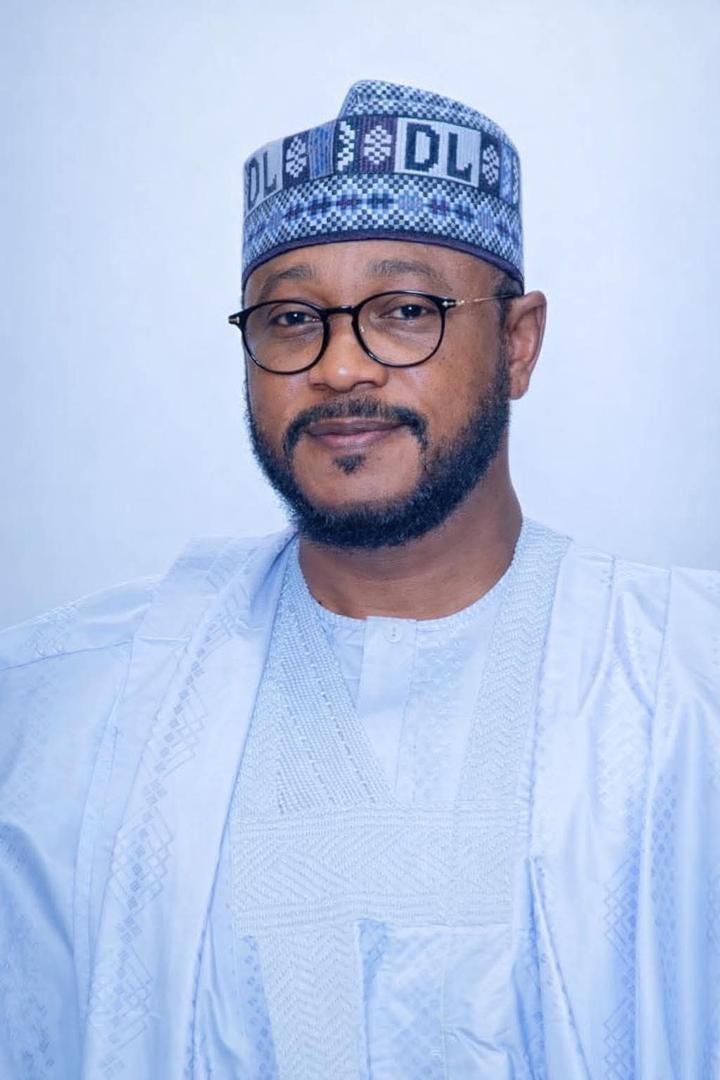
Governor Dauda Lawal Approves Gratuity Payment
The Zamfara State Government, under the visionary leadership of Governor Dauda Lawal, has approved the release of funds for the payment of Gratuity Batch 3 for the 2024/25 period. This decisive action underscores the administration’s unwavering commitment to the welfare of retired civil servants who dedicated years of service to the state’s development.
The Accountant General of the State is already working diligently to ensure that all eligible retirees receive their payments promptly and efficiently, reflecting the government’s resolve to uphold transparency and accountability in the disbursement process.
This timely gratuity payment is a testament to Governor Dauda Lawal’s people-centered leadership, which recognizes the sacrifices and contributions of retirees to the progress and stability of Zamfara State. It also reaffirms the government’s pledge to honor its financial obligations without unnecessary delays.
The Zamfara State Government calls on all retirees in the affected batch to exercise patience as the necessary administrative and financial processes are finalized. Every effort is being made to ensure smooth and uninterrupted payments.
This initiative is part of Governor Dauda Lawal’s broader vision to empower citizens and retirees, strengthen confidence in public service, and sustain the morale of those who have committed their lives to the growth of Zamfara State.
Politics
APC Group Endorses Fubara for 2027, Calls on Tinubu and APC to Prioritise Performance Over Politics in Backing Governor’s Second Term Ambition
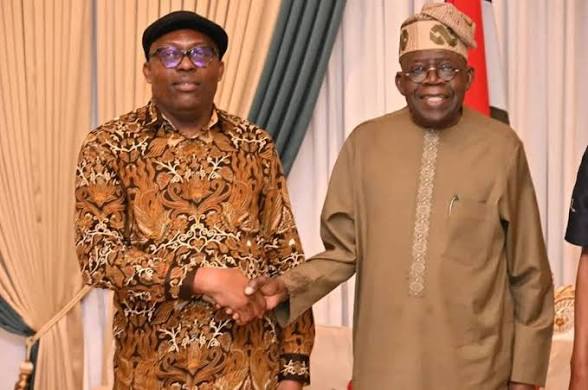
*APC Group Endorses Fubara for 2027, Calls on Tinubu and APC to Prioritise Performance Over Politics in Backing Governor’s Second Term Ambition*
The APC National Vanguard has appealed to President Bola Ahmed Tinubu and the leadership of the All Progressives Congress (APC) to support a second term in office for Siminalayi Fubara, citing what it described as “impressive and verifiable developmental strides” across Rivers State.
In a statement issued on Thursday by its National President, Dr Gbenga Salam (JP), the group said its position followed an extensive assessment tour of key infrastructure and public service projects executed under the Fubara administration.
The APC National Vanguard said the appeal was based strictly on performance, arguing that governance outcomes should outweigh partisan considerations, particularly in a state as economically significant as Rivers.
“We respectfully urge President Bola Ahmed Tinubu and the leadership of the All Progressives Congress to support the continuity of Governor Siminalayi Fubara beyond his current tenure, in recognition of his commitment to development, prudent resource management, and people-focused governance,” the statement read.
According to the group, its delegation visited multiple project sites across the state, observing ongoing and completed works spanning road construction, urban renewal, and public infrastructure upgrades.
It noted that the scale and distribution of these projects reflect a deliberate effort by the state government to extend development beyond traditional urban centres and into underserved communities.
“Our findings from the tour reveal a government that is not only active but intentional in its development agenda. The execution of capital projects across various parts of Rivers State demonstrates a clear understanding of the needs of the people and a commitment to addressing them,” Dr Salam said.
The group particularly commended what it described as prudent financial management by the administration, noting that the projects reviewed showed evidence of careful planning and efficient allocation of resources.
“At a time when economic pressures are evident across the country, it is commendable that the Rivers State government has managed its resources in a way that delivers visible and impactful development without signs of fiscal recklessness,” the statement added.
The APC National Vanguard further observed that despite political tensions in the state, the Fubara administration has maintained focus on governance, ensuring continuity in project execution and service delivery.
The group argued that such stability is critical for sustained development and should be encouraged rather than disrupted.
“Leadership must ultimately be judged by results. In Rivers State, there is clear evidence of progress—projects that are not only announced but executed, and policies that translate into real benefits for citizens,” Dr Salam noted.
The group warned that discontinuity in leadership could stall ongoing projects and reverse gains already recorded, stressing the importance of allowing a performing administration to consolidate its achievements.
“Rivers State is at a pivotal stage where continuity will allow for the completion of ongoing initiatives and the deepening of development gains. Supporting Governor Fubara for a second term is, therefore, a decision in the best interest of the people,” the statement said.
In addition to its call on the APC leadership, the group reaffirmed its support for President Tinubu, expressing confidence in his administration’s broader economic and governance reforms.
The APC group urged Nigerians to remain supportive of efforts aimed at stabilising the economy and strengthening public institutions.
“We reiterate our endorsement of President Bola Ahmed Tinubu for a second term in office, in recognition of his leadership and commitment to national development. With sustained support, the administration can consolidate its reform agenda for the benefit of all Nigerians,” Dr Salam added.
The APC National Vanguard concluded by calling on political actors to prioritise development and public interest over partisan divides, insisting that governance should always be guided by performance and accountability.
“Where leadership demonstrates prudence, delivers development, and remains focused on the welfare of the people, it deserves continuity. This is the position we have reached after a careful and independent assessment of Rivers State,” the statement added.


-

 society7 months ago
Religion: Africa’s Oldest Weapon of Enslavement and the Forgotten Truth
-

 news4 months ago
WHO REALLY OWNS MONIEPOINT? The $290 Million Deal That Sold Nigeria’s Top Fintech to Foreign Interests
-

 society6 months ago
“You Are Never Without Help” – Pastor Gebhardt Berndt Inspires Hope Through Empower Church (Video)
-

 celebrity radar - gossips2 months ago
Dr. Chris Okafor Returns with Power and Fire of the Spirit -Mounts Grace Nation Altar with Fresh Anointing and Restoration Grace on February 1, 2026