
society
The Power of Generosity: A Universal Gift That Transforms Lives.


The Power of Generosity: A Universal Gift That Transforms Lives.
By George Omagbemi Sylvester | Published by saharaweeklyng.com
” _No one has ever become poor by giving._” ~ Anne Frank
” _We make a living by what we get. We make a life by what we give_.” ~ Winston Churchill
In a world defined by ambition, materialism, and social inequality, one virtue continues to shine through as a beacon of hope, humanity, and healing, which is generosity. Whether you are rich or poor, young or old, educated or unlearned, generosity is not only possible; it is essential. Everyone can experience the joy and blessing of giving because everyone has something to give. If you have much, share your wealth; if you have little, give of your heart.

Generosity is not limited to financial endowments or grand philanthropic gestures. In fact, some of the most profound acts of giving come from those who possess very little. The single mother offering her last meal to a hungry neighbour, the teenager sacrificing time to tutor a struggling classmate, or the jobless man who still manages to share words of encouragement and love. These are all demonstrations of generosity with the heart ~ perhaps the purest form of giving.
Understanding Generosity: A Universal Human Virtue
Generosity is deeply embedded in every religion, culture, and philosophy. In Christianity, Jesus Christ taught, “ _It is more blessed to give than to receive” (Acts 20:35)_. Islam preaches _Zakat_, one of its five pillars, which mandates Muslims to give to the poor. Hinduism promotes “ _dāna_” the act of charity, as a vital spiritual duty. African traditional beliefs emphasize communal living, mutual help, and shared responsibility. In all these ideologies, giving is not optional, it is essential.

Despite the diversity of backgrounds and beliefs, the truth remains: humans are wired to be generous. According to a 2006 study published in the Proceedings of the National Academy of Sciences (PNAS), scientists discovered that acts of generosity trigger activity in the brain’s reward center, the same area stimulated by food, sex, and drugs. This means that giving doesn’t just benefit the receiver; it genuinely makes the giver happier and healthier.
The Science of Giving: Proven Benefits
Generosity has been proven to improve physical health, mental well-being, and life satisfaction. A 2013 study by the University of Zurich found that people who made a pledge to be more generous experienced greater happiness and had lower levels of stress and depression.
In another widely cited research conducted at Harvard Business School, it was found that individuals who spent money on others rather than themselves reported greater personal fulfillment and happiness. The science is clear: generosity enriches the giver as much, if not more, than the receiver.
In terms of societal impact, generosity leads to stronger communities, reduced crime rates, and greater social trust. Countries and regions with high levels of charitable giving tend to have healthier democracies, stronger civic engagement, and better public well-being.
The Myth of Scarcity
A major reason many hesitate to give is the myth of scarcity; the belief that we don’t have enough. This dangerous mindset traps individuals into hoarding wealth, love, knowledge, or time, believing that giving will leave them with less. But the opposite is often true. As Maya Angelou aptly put it, “ _When we give cheerfully and accept gratefully, everyone is blessed_.”
When you give, you invite others to do the same. Generosity is contagious. One act of kindness often sets off a chain reaction that can ripple across communities, countries, and even generations.
Consider the story of Feeding America, one of the largest hunger-relief organizations in the United States. It began from one man’s idea (John van Hengel) who saw grocery stores discarding edible food and sought to redistribute it to those in need. That single act of insight and compassion has today led to millions of meals served annually across the country.
In Nigeria, Tony Elumelu, a billionaire and philanthropist, is transforming Africa’s entrepreneurial landscape through the Tony Elumelu Foundation. His $100 million commitment to young African entrepreneurs is not just an act of giving but an investment in the future of the continent. That’s the power of generosity; turning a seed into a harvest.
Giving Without Money: The Gift of the Heart
Many people wrongly assume that generosity requires deep pockets. But you don’t need billions to make a difference. You can give your time, empathy, skills, or simply your attention. In today’s distracted world, listening to someone in pain can be more valuable than money.
In South Africa’s townships, community leaders run after-school tutoring programs with no pay, just passion. In rural India, retired schoolteachers volunteer to teach girls denied education. In war-torn Gaza, doctors from around the world offer free medical services in makeshift hospitals. These are not billionaires; they are ordinary people with extraordinary hearts.
Mother Teresa once said, “ _Not all of us can do great things. But we can do small things with great love_.” That is the very essence of giving from the heart.
Obstacles to Generosity: Greed, Fear, and Indifference
Despite its benefits, generosity is not always easy. Modern capitalism encourages competition over collaboration and materialism has conditioned many to measure success by accumulation rather than contribution. Greed, fear of lack, and social indifference are major barriers.
When a society becomes driven by “ _what’s in it for me_” rather than “ _what can I do for others,_” the consequences are visible: widening inequality, broken communities, and moral bankruptcy. Africa is rich in resources but suffers from poverty largely because those in power often take more than they give.
We must fight this culture of selfishness with intentional generosity. Not just charity, but equity. Not just handouts, but empowerment. Not just feeling good, but doing good.
Building a Culture of Generosity
To build a truly generous world, we must teach it from the grassroots. Schools must incorporate empathy and community service into their curriculum. Parents must model giving in their homes. Religious leaders must preach not just about receiving miracles but about being someone’s miracle.
Governments must make it easier to donate and support charitable acts through tax incentives, public recognition, and collaboration with NGOs. Companies must adopt corporate social responsibility not as a PR stunt but as a fundamental value.
The Heart of the Matter:
In a world torn by war, inequality, hate, and selfish ambition, generosity is not just a virtue; it is a revolution. The kind of revolution that does not require bloodshed but touches the soul; not a change in government, but a change in the heart.
The question is not how much you have but how much you’re willing to share. If you have wealth, use it to lift others. If you have wisdom, use it to guide others. If you have only your voice, use it to speak kindness. If you have only your hands, use them to help someone up.
Give because you can. Give because the world needs it. Give because in giving, we discover our highest selves.
As the great South African leader Tata Nelson Mandela once said, _“What counts in life is not the mere fact that we have lived. It is what difference we have made to the lives of others_.”
Let us not live for ourselves alone. Let us live for impact, for purpose, and for others; through the divine, healing, and transformational power of generosity.
Written by: George Omagbemi Sylvester
Published by: SaharaWeeklyNG.com
For publication, quotes, or inquiries, contact: [email protected]


NASRE: Building A Safety Net For Nigeria’s Journalists
At a time when Nigeria’s media industry is strained by economic uncertainty, job instability, and shrinking newsroom resources, the Nigerian Association of Social and Resourceful Editors (NASRE) is redefining professional solidarity. More than a network of editors, it is emerging as a critical support system for journalists navigating an increasingly precarious landscape.
Founded on the principles of welfare, solidarity, and professional growth, NASRE has positioned itself as a responsive and forward-looking body within the media ecosystem. While many professional associations remain focused on advocacy and training, NASRE distinguishes itself by combining these roles with direct and practical support for journalists and their families.
At the core of its mission is a clear proposition that no journalist should be abandoned in times of need. Through financial assistance, targeted outreach, and sustained engagement, the association has supported members facing hardship, as well as widows and families of deceased practitioners. These largely understated interventions have steadily earned NASRE credibility and respect across the industry.
The organisation’s approach reflects a keen awareness of the pressures confronting media professionals, including irregular pay, job insecurity, and limited institutional backing. In such an environment, NASRE’s welfare initiatives are not merely charitable, they are essential.
Beyond welfare, the association is investing in professional resilience. Through collaboration, networking, and knowledge-sharing platforms, it is equipping editors and practitioners to remain competitive in a rapidly evolving digital media space, where adaptability is no longer optional.
Headquartered in Lagos, NASRE continues to broaden its reach, attracting a growing membership united by the need for a more responsive and supportive professional community. Its expansion signals a shift in expectations within the industry, away from symbolic affiliations towards institutions that deliver measurable value.
For many observers, NASRE represents a necessary evolution, a professional body anchored not just in ideals, but in impact. By combining empathy with structure, it offers a model of what media associations can become in challenging times.
As the industry continues to evolve, organisations like NASRE may prove indispensable. In a profession devoted to telling society’s stories, it is ensuring that the storytellers themselves are not left behind.
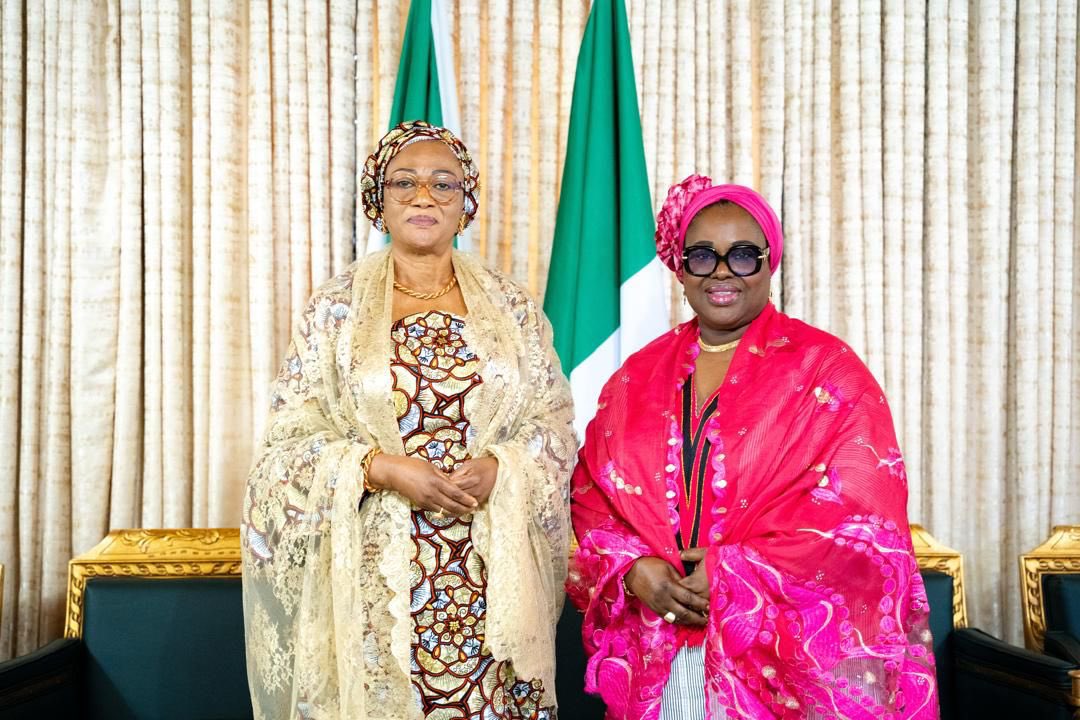
Oluremi Tinubu Hosts Wife of New IGP, Talks Welfare, Empowerment for Police Families
The First Lady of the Federal Republic of Nigeria, Senator Oluremi Tinubu, today welcomed Mrs. Mutiat Disu, wife of the Inspector General of Police, at the State House in Abuja.

During the meeting, the First Lady encouraged Mrs. Disu to continue championing the welfare and wellbeing of police officers’ families, especially through impactful support for their wives.
Speaking after the meeting, Mrs. Mutiat Disu shared her excitement about partnering with the First Lady’s Renewed Hope Initiative (RHI), noting that she is ready to leverage its programs to empower police officers’ wives across the country.
Mrs. Disu, who also serves as the National President of the Police Officers’ Wives Association (POWA), described the meeting as insightful and inspiring. She emphasized her commitment to using RHI platforms to improve healthcare, welfare, and economic empowerment for POWA members nationwide.
“The purpose of this visit is to tap into her wealth of experience and explore how POWA can benefit from her programs,” she said.
She added that her engagement with the First Lady has already provided valuable direction, especially in areas of social intervention and healthcare support for police families.
“I’m ready to work closely with Mama to ensure our women benefit fully, especially since RHI focuses on uplifting women, and POWA is largely made up of women.”
Mrs. Disu assumed leadership of POWA following the appointment of Tunji Disu as Inspector General of Police on February 24, 2026, succeeding Kayode Egbetokun.
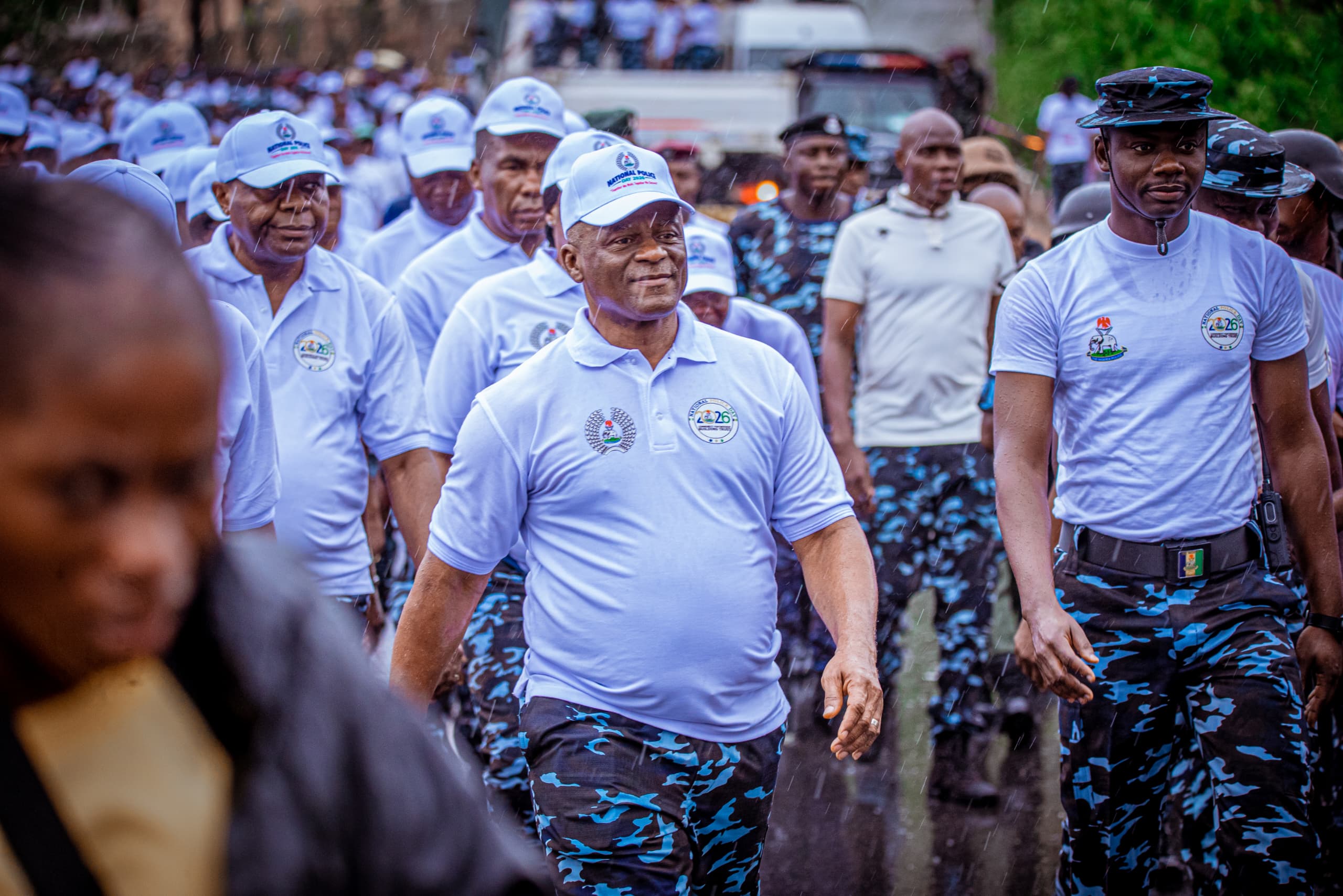
Police Day 2026: IGP Disu Leads Nationwide Walkathon To Strengthen Community Trust
The Inspector-General of Police, Olatunji Disu, on Tuesday led the management team, alongside officers and personnel of the Nigeria Police Force, in a nationwide walkathon to commemorate the 2026 National Police Day.
The event, held across state capitals and the Federal Capital Territory, formed part of activities marking Day Two of the annual celebration, themed “Community Partnership: Building Trust.”
The symbolic exercise, which drew participation from both police personnel and members of the public, was aimed at showcasing unity, discipline, and a renewed commitment to community policing and public safety.
According to the Force leadership, the walkathon underscores the Nigeria Police Force’s resolve to strengthen public trust, deepen engagement with citizens, and enhance collaboration in tackling security challenges across the country.
Participants described the initiative as a practical step toward bridging the gap between law enforcement and the communities they serve, while also promoting physical fitness and mental well-being among officers and civilians alike.
With the theme reflecting a shared responsibility for safety, the Police reiterated that sustainable security can only be achieved through active partnership with the public.
The event concluded with a renewed call for collective action under the banner: “Together We Walk, Together We Secure,” emphasizing unity of purpose in building a safer and more secure society for all Nigerians.


-

 society6 months ago
Religion: Africa’s Oldest Weapon of Enslavement and the Forgotten Truth
-

 news4 months ago
WHO REALLY OWNS MONIEPOINT? The $290 Million Deal That Sold Nigeria’s Top Fintech to Foreign Interests
-

 society6 months ago
“You Are Never Without Help” – Pastor Gebhardt Berndt Inspires Hope Through Empower Church (Video)
-

 celebrity radar - gossips2 months ago
Dr. Chris Okafor Returns with Power and Fire of the Spirit -Mounts Grace Nation Altar with Fresh Anointing and Restoration Grace on February 1, 2026