
society
THE RETURN OF NIGERIA’S ABSENTEE PRESIDENT FROM FRANCE TO ORCHESTRATE THE DECAMPING OF 5 PDP GOVERNORS TO APC IN FURTHERANCE OF THE ONE-PARTY AGENDA* : A Manifest Threat To Nigeria’s Democracy

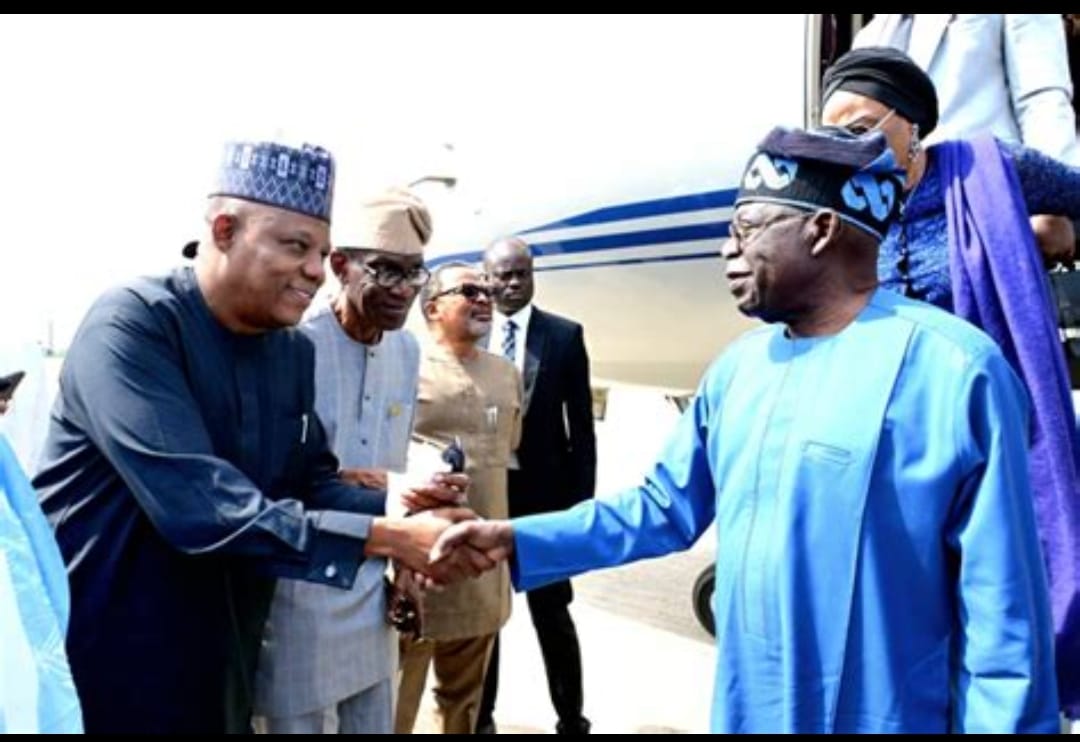
*THE RETURN OF NIGERIA’S ABSENTEE PRESIDENT FROM FRANCE TO ORCHESTRATE THE DECAMPING OF 5 PDP GOVERNORS TO APC IN FURTHERANCE OF THE ONE-PARTY AGENDA* : A Manifest Threat To Nigeria’s Democracy
By George Omagbemi Sylvester
While the Nigerian people groan under the crushing weight of insecurity, hunger, and deepening poverty, President Bola Ahmed Tinubu was reportedly on a “working visit” to France. But the truth is now widely known: the President took a French leave not to review policy or chart a new course for the country—as the Presidency would have Nigerians believe—but for personal medical reasons, specifically a stem cell treatment. In addition, he allegedly met with lobbyists in the United States to forestall the impending release of FBI files concerning his alleged past involvement in drug trafficking.

This deceitful detour to Europe and the United States occurred at a time when Nigeria desperately needed leadership. Inflation had soared to 33.69% by March 2025, according to the National Bureau of Statistics. Even more alarming, food inflation was nearing an unbearable 42%. Meanwhile, the World Bank recently reported that over 104 million Nigerians now live below the poverty line. In short, Nigeria is a nation in distress, but its president chose medical tourism and image laundering over urgent governance.
President Tinubu’s clandestine return to Nigeria, shrouded in secrecy and executed under the cover of darkness, has only added fuel to the fire. Sources suggest his return was hastened by his failure to convince U.S. authorities to delay or suppress the May 2nd, 2025 release of potentially damning documents. Rather than address the nation’s economic meltdown and worsening insecurity, the President appears singularly focused on deflecting attention from his past.
To this end, two diversionary tactics have been activated:
The orchestration of mass defections of Peoples Democratic Party (PDP) governors to the All Progressives Congress (APC);

A suspicious state creation agenda designed to stoke ethnic sentiments and dominate national discourse.
These maneuvers are not just political gimmicks they are strategic tools in a calculated plan to entrench a one-party state in Nigeria. The objective is clear: cripple the opposition, capture the entire political landscape, and monopolize democratic power.
The plan to coerce and induce PDP governors to defect to APC is deeply alarming and unambiguously undemocratic. It threatens the very foundation of Nigeria’s multi-party democracy. If allowed to stand, this maneuver would diminish the integrity of the electoral system and reduce political pluralism to a mere illusion.
This is not the first time Tinubu’s APC has sought to manipulate Nigeria’s democracy to serve its hegemonic interests. In recent months, the 10th National Assembly, led by Senate President Godswill Akpabio, has increasingly functioned as a rubber stamp to the Executive, passing questionable bills with little to no debate. Likewise, the Judiciary, now under the watch of Chief Justice Kekere-Ekun, has often appeared compromised or politically docile.
In this context, the push for PDP governors to cross over to the APC should be seen for what it truly is: a political power grab. These governors were not elected under the APC’s manifesto or ideology. Their defection, under coercion or inducement, would be a betrayal of the mandate given to them by their constituents and a fundamental violation of democratic norms.
Democracy thrives on opposition, debate, and diversity of thought. When a ruling party seeks to eliminate all dissent, it crosses the threshold into authoritarianism. Nigeria has been here before. Under General Sani Abacha, political repression and suppression of opposition voices led to a climate of fear and stagnation. We must never return to that dark chapter in our history.
Ruth Youngland Nelson once warned, _“The slow erosion of democracy does not always come from a bomb or a bullet, but from the steady betrayal of trust, from those who should guard it the most.”_ That is precisely what is at stake today in Nigeria.
*The threat of a one-party state is not theoretical. It has tangible and far-reaching consequences:*
*Loss of Checks and Balances:* In the absence of a viable opposition, power becomes centralized and unaccountable. The executive begins to act with impunity, and the institutions that should hold it in check become ineffective or co-opted.
*Suppression of Dissent:* A one-party state breeds fear. Citizens and civil society groups lose their voice. Media outlets are intimidated into silence. Human rights abuses increase as the state operates unchecked.
*Erosion of Civil Liberties:* Freedoms of speech, assembly, and association are often the first casualties in such a system. With no opposition to challenge draconian policies, citizens are left vulnerable to arbitrary arrests and legal persecution.
*Economic Stagnation:* Political monopolies often result in policy complacency. Innovation is stifled, merit is replaced with cronyism, and critical reforms are shelved in favor of patronage politics. With youth unemployment already above 53%, this spells disaster for national development.
*Let it be clearly stated:* the idea of state creation at this critical juncture is a red herring. It is a deliberate attempt to ignite ethnic and regional sentiments to distract the public from the administration’s catastrophic failures. Nigeria’s problem is not the number of states, it is the absence of visionary leadership, sound economic policy, and adherence to democratic principles.
Moreover, a political culture where politicians are more loyal to the ruling party than to their constituents is dangerous. It creates an elite cartel of power brokers disconnected from the people. As history has shown, when democracy is hollowed out in this manner, what follows is a government by coercion and fear rather than by consent and justice.
Joseph Chilton Pearce encapsulated the peril succinctly: _“To live a creative life, we must lose our fear of being wrong. But when leadership criminalizes dissent, creativity dies, and conformity becomes the law.”_ This is the warning Nigeria must heed today.
In light of these developments, it is imperative that every Nigerian rise up to defend our democracy. The media, civil society, religious and traditional institutions, and the international community must shine a light on these schemes and demand accountability. Silence is complicity.
We must resist this descent into a political monoculture. The defection of PDP governors under duress is not just an internal party matter; it is a national crisis. The Tinubu administration must be reminded that Nigeria is a democracy, not a personal estate. The future of our children depends on the choices we make today.
Nigeria needs reform, not regression. It needs unity, not uniformity. The people deserve a government that works for them, not one that works solely to protect the interests of a single individual or political party.
If this descent into a one-party dictatorship continues, Nigeria’s democracy, hard-earned and deeply cherished, may become a relic of the past. It is time to speak out. It is time to act.

Sylvester is a political analyst, he writes from South Africa




society
TULA MOTO KEKE: Electric 8-Seater Keke Hits Nigerian Market, Promises Higher Earnings for Transport Operators

TULA MOTO KEKE: Electric 8-Seater Keke Hits Nigerian Market, Promises Higher Earnings for Transport Operators
LAGOS — A new innovation in urban transportation has been introduced into the Nigerian market with the launch of an 8-seater fully electric power keke, offering commercial operators a cost-effective and environmentally friendly alternative to conventional petrol-powered tricycles.

The electric tricycle, now available in Lagos with distribution extending nationwide, is designed with two rows of passenger seating and has the capacity to carry up to eight passengers per trip—more than double the typical capacity of standard kekes. Promoters say this feature is aimed at boosting daily income for transport operators amid rising fuel costs across the country.

According to the distributors, the keke runs entirely on electric power, eliminating the need for petrol and reducing the burden of fluctuating fuel prices. They added that the vehicle is equipped with a long-lasting battery capable of covering extended distances on a single charge, making it suitable for commercial use across busy routes, estates, campuses, and market areas nationwide.

“The idea is simple, help drivers earn more while spending less,” a company representative said. “With this electric keke, operators can carry more passengers per trip and avoid the daily stress of fuel purchase.”
In addition to its increased capacity, the vehicle is said to require minimal maintenance compared to traditional tricycles, offering further savings for owners. Its smooth and quiet operation is also expected to improve the commuting experience for passengers.
Industry observers note that the introduction of electric-powered transport options aligns with broader efforts to promote cleaner energy solutions in Nigeria’s transport sector, particularly in densely populated cities like Lagos and beyond.
The distributors disclosed that the product is currently available under a limited promotional offer and can be delivered to all parts of Nigeria.
For inquiries and purchase, interested buyers can contact:
📞 08153432071
📞 08035889103
Office Address:
📍 Plot 9, Block 113, Beulah Plaza,
Lekki–Epe Expressway,
Lekki Phase 1, Lagos
As Nigeria continues to grapple with rising transportation costs and environmental concerns, innovations such as the electric power keke may signal a gradual shift toward more sustainable and profitable mobility solutions nationwide.


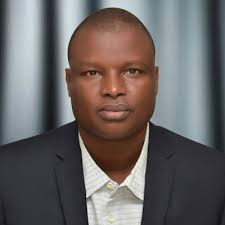
HURIWA: ABBA KYARI’S TEAM SPINNING DESPERATE FALSEHOODS TO OBSTRUCT JUSTICE
ABUJA— The Human Rights Writers Association of Nigeria (HURIWA) wishes to alert the Nigerian public, and the international community to a coordinated campaign of calumny and deliberate misinformation being orchestrated by the handlers of the suspended Deputy Commissioner of Police, Abba Kyari currently facing trial for drug trafficking offences.
Following an in-depth investigation into recent sponsored reports circulating on social media, which claim that two convicted drug traffickers have indicted officers of the National Drug Law Enforcement Agency (NDLEA) of complicity in the case, HURIWA can authoritatively confirm that these reports are a total fabrication and a clumsy attempt to subvert the course of justice.
Our findings, backed by official court records and witness statements, reveal a starkly different reality from the narrative being pushed by Kyari’s camp. In their official witness statements, the convicted traffickers Chibunna Patrick Umeibe and Emeka Alphonsus Ezenwanne categorically denied any contact or collusion with NDLEA officers at the Enugu airport in January 2022.
The convicts confessed that their pictures and travel details were actually sent to Abba Kyari. Despite being on suspension at the time over another criminal case for which the United States government is still seeking his extradition to the US for trial, Kyari dispatched a team from Abuja to Enugu to intercept the traffickers for his own ends.
The convicts have stated on record that while in Kyari’s custody, they were forced under duress to indict the NDLEA. The “video confession” currently being circulated was scripted, with Kyari’s men actively dictating what the suspects should say while recording.
HURIWA reminds the public that no amount of digital spin can erase the overwhelming evidence already admitted as exhibits in court. The world has seen the video of Abba Kyari handing over $61,400 to an NDLEA undercover agent. This cash was established to be the proceeds from the sale of part of the cocaine Kyari’s team seized from the very same convicts they are now trying to use as pawns.
“It is pathetic that a high-ranking officer would resort to such low-level blackmail. This is a clear attempt to distract the public from the gravity of the drug trafficking charges. The U.S. government and the global community are watching this case closely. You cannot ‘spin’ your way out of a forensic sting operation.”
For the benefit of the public who they are struggling hard to confuse, the transcript of the conversation between Abba Kyari and an NDLEA undercover agent, already admitted as exhibit in court, clearly confirmed the transactional relationship and conspiracy between Kyari and members of the drug trafficking cartel. Here is a sampler from the conversation between Abba Kyari and NDLEA undercover agent:
ABBA KYARI: Yes, they (Cartel) will reveal to me those that are conveying it (the drugs), snap their pictures and send to us. So, we already know their goods, picture and the clothes they’re wearing, hope you understand, we know their names, they will give us everything. So, automatically the team will just be waiting, they will just see them and pick them up.
NDLEA UNDERCOVER AGENT: But are your boys inside the airport or outside?
ABBA KYARI: Yes, yes, some are outside while some are inside. They will just allow them to finish everything and arrest them the moment they come out.
This tallied with the witness statements by the two already convicted Kyari’s co-accused. In the words of one of them, Chibunna Patrick Umeibe: “I traveled to Ethiopia, Addis Ababa on 10th of January 2022, then I stayed in a lounge at the airport and somebody called me on phone whose name I can’t remember that Jekwu gave him my number that he supposed to give me some stuff which is cocaine. He met me at the lounge and gave me the stuff which is inside the nylon bag, then later snapped my picture. Then that was on the 18th of January 2022 (after staying 8 days in the airport) he asked me to dress the way I will travel back before he snapped the picture. Then after snapping the picture he left. He knows the reason of snapping the picture, then on 19th of January I boarded to Nigeria. Immediately getting to the outside (Enugu international airport), a young man approached me and said that I should give him my international passport and I asked him what for? He bring out police ID card and showed me immediately and before I know, other police people some are on uniform while some are not on uniform, they surrounded me and pushed me and my brother inside a sienna car and zoomed off.”
There’s therefore no doubt from the court records that the pictures of the convicts were taken by the cartel members at the Addis Ababa airport and sent to Abba Kyari to enable him identify the couriers. This is the only reason his officers were able to pick only the two couriers out of the multitude of people at the airport’s car park.
HURIWA therefore calls on the Nigerian judiciary to remain undeterred by these subterranean moves to blackmail the prosecution. We urge the media to be professional and verify claims against official court transcripts before amplifying narratives that seek to shield alleged drug kingpins from accountability. The facts of the crime remain constant, no amount of sponsored falsehood will wish away the evidence of the $61,400 bribe or the documented betrayal of public trust.
Emmanuel Onwubiko
National Coordinator, Human Rights Writers Association of Nigeria (HURIWA)
March 25, 2026
society
His Imperial Royal Eminence King Sir Benny Terry Danson Leads UKA’s Charge for International Recognition
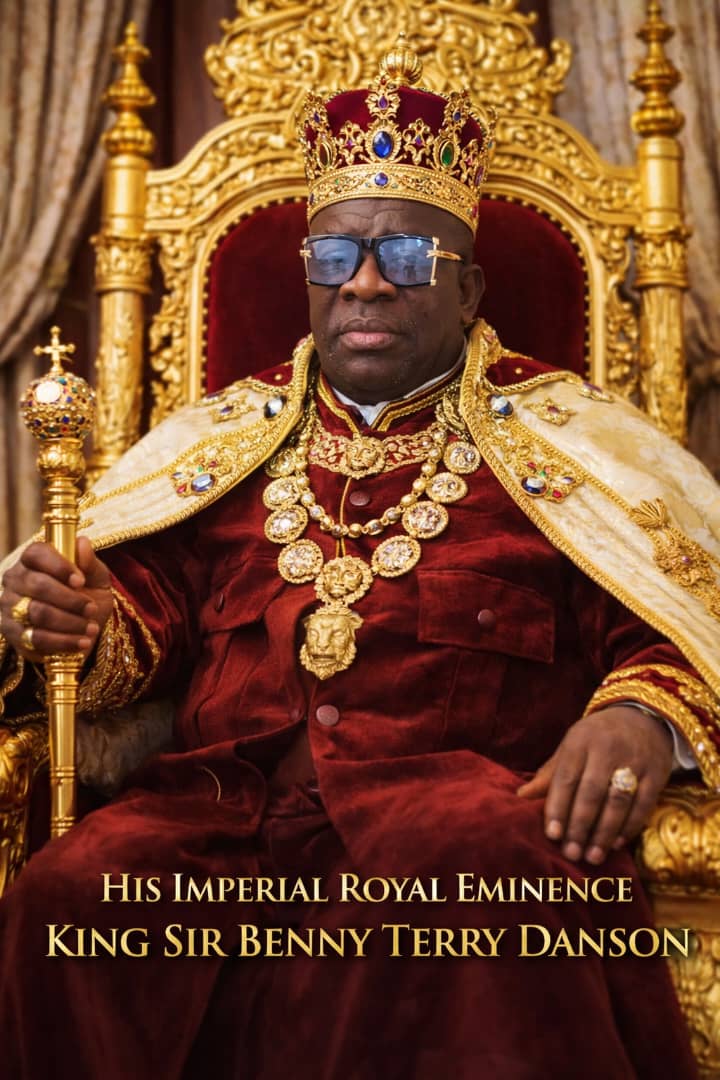
His Imperial Royal Eminence King Sir Benny Terry Danson Leads UKA’s Charge for International Recognition*
The United Kingdom of Atlantis (UKA) today issued a statement clarifying its sovereignty and territorial boundaries, emphasizing its commitment to international law and cooperation. The UKA is a sovereign nation established in accordance with the Montevideo Convention on the Rights and Duties of States (1933) and in compliance with international laws.
The nation is taking steps to gain official recognition, including establishing diplomatic ties with countries like the US, UK, Nigeria, and India, and securing bilateral treaties with nations like Bangladesh, Malaysia, and South Africa. UKA has also gained membership in the International Police Commission and is seeking UN membership ¹ ² ³.
“We are a proud and independent nation, with a rich history and heritage,” said [Official Spokesperson], spokesperson for the UKA government. “Our territory is unique and distinct, and we are committed to maintaining our sovereignty and independence.”
The UKA’s territory is located outside the African region, and it has no plans to establish a presence in Nigeria or any other African country. The nation is committed to upholding the principles of the United Nations Charter and meeting all requirements for membership.
*Key Developments:*
– *Diplomatic Offices*: Established in several countries, including the US, UK, Nigeria, and India
– *International Memberships*: Member of the International Police Commission, seeking UN membership
– *Recognition Efforts*: Received State Sovereignty Certificate from the First Republic Register Foundation, applying for ISO currency code for the Atlantian Crown
The UKA is working towards meeting the Montevideo Convention criteria for recognized sovereign statehood, including defined territory, government, and independence.
His Imperial Royal Eminence
King Sir Benny Terry Danson, Admin to the throne of UKA , has been instrumental in leading the nation’s efforts to gain international recognition


-

 society6 months ago
Religion: Africa’s Oldest Weapon of Enslavement and the Forgotten Truth
-

 news3 months ago
WHO REALLY OWNS MONIEPOINT? The $290 Million Deal That Sold Nigeria’s Top Fintech to Foreign Interests
-

 society6 months ago
“You Are Never Without Help” – Pastor Gebhardt Berndt Inspires Hope Through Empower Church (Video)
-

 celebrity radar - gossips2 months ago
Dr. Chris Okafor Returns with Power and Fire of the Spirit -Mounts Grace Nation Altar with Fresh Anointing and Restoration Grace on February 1, 2026