
celebrity radar - gossips
THE SIEGE ENDS: FG WITHDRAWS CRIMINAL DEFAMATION CASE AGAINST SENATOR NATASHA AKPOTI‑UDUAGHAN


THE SIEGE ENDS: FG WITHDRAWS CRIMINAL DEFAMATION CASE AGAINST SENATOR NATASHA AKPOTI‑UDUAGHAN.
By George Omagbemi Sylvester | Published by SaharaWeeklyNG.com
“A Landmark Victory for Free Speech, Justice, and the Rule of Law in Nigeria.”
On January 4, 2026, the Federal Government of Nigeria formally withdrew the criminal defamation and cyberbullying charges against Senator Natasha Akpoti‑Uduaghan, the lawmaker representing Kogi Central Senatorial District, ending a legal saga that had gripped national attention for over six months. This case was more than a legal contest; it symbolized the tension between state power, political rivalry, and the fundamental democratic rights of elected officials and citizens.
The withdrawal was formalized through a Notice of Discontinuance, filed on December 12, 2025, and endorsed by the Federal High Court, Abuja Judicial Division, officially ending Charge No: FHC/ABJ/CR/195/2025. Signed on behalf of the Attorney‑General of the Federation and Minister of Justice, Prince Lateef Olasunkanmi Fagbemi, SAN, the notice invoked Sections 108(1), 108(2)(a), and 108(5) of the Administration of Criminal Justice Act, 2015.
This outcome reflects a rare acknowledgment by the government that prosecutorial power must not be abused for political ends, and it marks a pivotal moment for Nigeria’s fragile democratic institutions.

The Story Behind the Case.
The criminal defamation case stemmed from comments Senator Akpoti‑Uduaghan made in a televised interview on Channels Television’s Politics Today, in which she alleged that her life was under threat due to her public disagreements with Senate President Godswill Akpabio and former Kogi State Governor Yahaya Bello. Instead of investigating her claims of threats, the government accused her of defamation under Section 391 of the Penal Code, Cap 89, Laws of the Federation, 1990, alleging that her statements could harm reputations.
This legal strategy drew immediate criticism from scholars, civil society, and international observers. Critics argued that using criminal law to silence a senator for reporting threats was a blatant misuse of state power and a serious infringement on free expression.
Professor Akin L. Okeowo, a constitutional law expert, stated: “Criminal defamation laws are relics of a bygone era. Modern democracies increasingly recognize that they are incompatible with freedom of speech and political accountability.” The case, therefore, became a national debate about the limits of state power and the protection of dissenting voices.
A Career Marked by Courage.
Senator Akpoti‑Uduaghan has long been a symbol of political courage. A former lawyer and development economist, she entered the national spotlight by advocating for marginalized communities, especially in Kogi State. She is one of the few female senators who consistently challenge entrenched political hierarchies, raising issues ranging from governance transparency to gender inclusion in politics.
Her legislative track record includes championing bills on women’s rights, anti-corruption reforms, and social welfare, earning her both respect and criticism from political heavyweights. This case, some analysts argue, was less about law and more about silencing a politically inconvenient voice.

Criminal Defamation in Nigeria: A Historical Context.
Nigeria’s criminal defamation laws have a long and controversial history. Initially intended to protect personal reputations, these laws have frequently been weaponized against journalists, activists, and political opponents. Over the decades, several high-profile prosecutions have drawn condemnation for undermining free expression and chilling public discourse.
The law permits imprisonment for statements considered damaging to reputations, a practice widely criticized by human rights groups. The African Commission on Human and Peoples’ Rights has repeatedly urged African states, including Nigeria, to review criminal defamation laws, emphasizing that they should not suppress political critique or civic activism.
The withdrawal of the charges against Senator Akpoti‑Uduaghan, therefore, is significant: it signals a rare instance where the state recognized the misuse of law in a politically charged context.
National and International Reactions.
Civil society organizations were quick to commend the government’s decision. Dr. Oby Ezekwesili, a former Minister of Education, hailed the withdrawal as a “step toward protecting democratic norms and ensuring that political speech is not criminalized.” Media freedom advocates also pointed out that the case highlighted the fragility of Nigeria’s press and political discourse, noting that the judiciary had acted to prevent a dangerous precedent.
International observers welcomed the development, emphasizing that freedom of speech is fundamental to democracy. Analysts note that the world is closely watching Nigeria’s handling of political dissent, with implications for foreign relations, investment, and the perception of Nigeria as a democracy.
The Political Implications.
The case carried undeniable political overtones. Senator Akpoti‑Uduaghan is a member of the People’s Democratic Party (PDP), the main opposition party, and her vocal criticisms of government policies had positioned her as a target for political retaliation. The prosecution was widely interpreted as an attempt to intimidate opposition voices in the Senate and signal that dissent could have legal consequences.
Dr. Ifeanyi Eze, a political analyst, noted: “The true test of a democracy is not how the government treats loyalists, but how it treats critics. Using criminal law to silence elected representatives is an affront to the principles of governance.”

The withdrawal, therefore, is a significant victory for democratic accountability, demonstrating that even high-profile government-backed prosecutions can be reversed when they conflict with constitutional principles.
What the Withdrawal Means.
The AGF’s decision to discontinue the case represents a calculated exercise of prosecutorial discretion under Nigerian law. It prevents the state from using the courts as instruments of political repression and reinforces the principle that no public official, regardless of position, can manipulate the judicial system for personal or political gain.
Senior legal experts, including Barrister Chukwuma Onwudiwe, have emphasized that the withdrawal is symbolic as much as it is legal: “It demonstrates that the courts and the AGF can act in the interest of justice, not political expediency.”
While the criminal charges have been discontinued, pending civil defamation suits, including a ₦200 billion claim filed by Senate President Akpabio, remain. Nevertheless, the criminal case’s withdrawal ensures that Senator Akpoti‑Uduaghan’s fundamental rights have been restored, and she can now focus on legislative duties and advocacy without fear of imprisonment.
A Test of Democratic Maturity.
The withdrawal of the criminal defamation case against Senator Natasha Akpoti‑Uduaghan is a defining moment for Nigeria’s democracy. It underscores the delicate balance between state authority and individual rights, between political rivalry and judicial fairness. In a nation where justice is sometimes wielded as a weapon, this outcome signals that constitutional freedoms (especially the right to speak out) can prevail against misuse of power.
Legal scholars emphasize that this decision is symbolic. As Professor Akin L. Okeowo notes, “Democracy is tested not when the powerful speak, but when dissenting voices are protected.” How Nigeria treats its critics is a litmus test of its commitment to democratic principles, accountability, and rule of law.
This case also highlights the urgent need to modernize Nigeria’s defamation laws, ensuring they protect reputations without stifling political discourse or legitimate criticism of government officials.
Ultimately, this development sends a clear message: while political disagreements are inevitable, democracy thrives when citizens can raise concerns, challenge authority, and hold leaders accountable without fear of state reprisal. Senator Akpoti‑Uduaghan’s victory is not merely personal. It is a victory for justice, freedom and the resilience of Nigerian democracy.





celebrity radar - gossips
Adron Homes Celebrates Visionary Chairman, Aare Adetola Emmanuel King, at 51
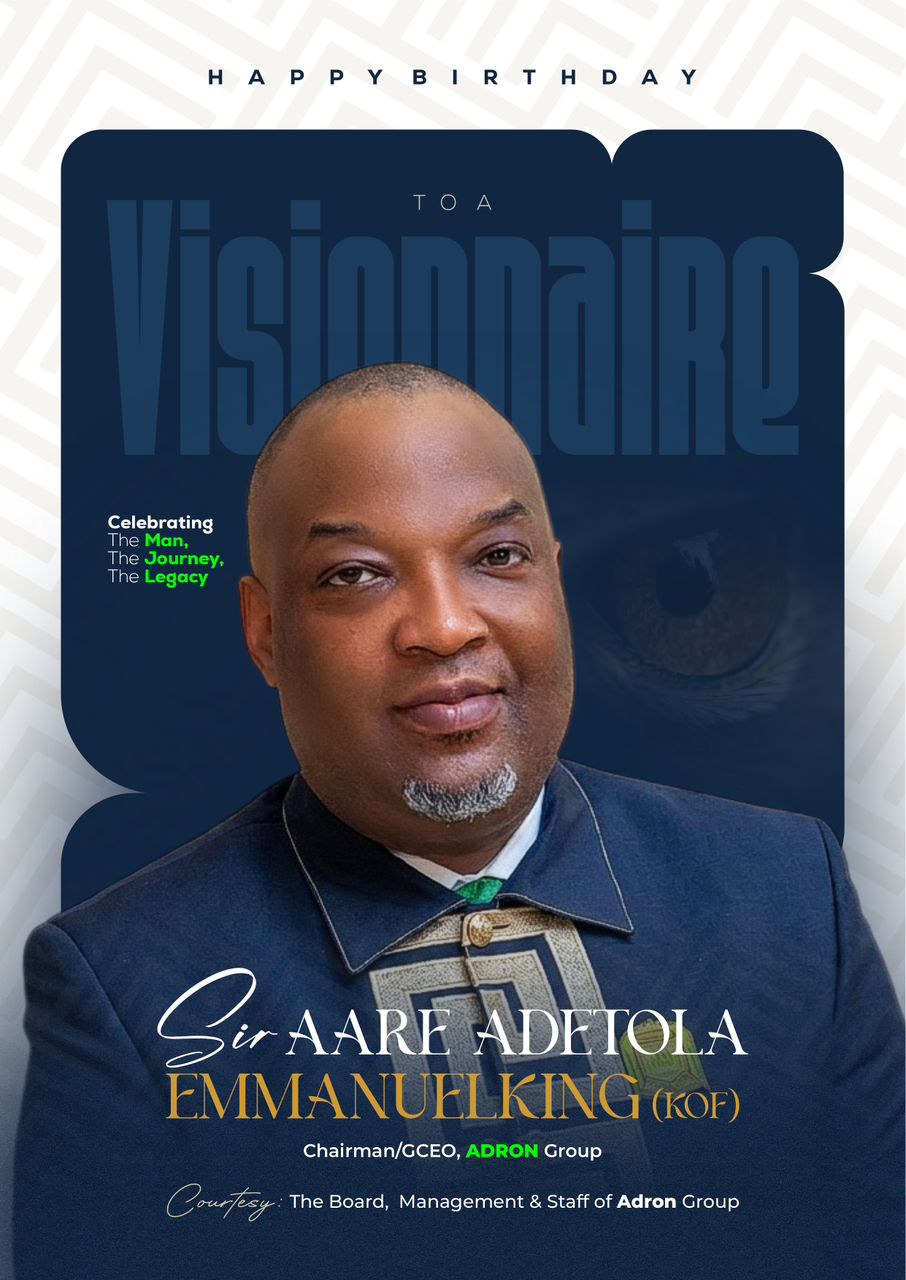
Adron Homes Celebrates Visionary Chairman, Aare Adetola Emmanuel King, at 51
The management and staff of Adron Homes and Properties Limited have joined family, friends, associates, and well-wishers across the globe to celebrate their Chairman and Chief Executive Officer, Aare Adetola EmmanuelKing, as he marks his 51st birthday.

In a statement released by the company, the milestone was described as a celebration of an exceptional leader whose vision, resilience, and entrepreneurial brilliance have not only transformed Adron Homes into a household name in Nigeria’s real estate sector but have also redefined affordable housing across the country.
Under his dynamic leadership, Adron Homes has continued to expand its footprint, delivering value-driven residential solutions while empowering thousands of Nigerians with opportunities for home ownership. His commitment to excellence, innovation, and customer satisfaction has remained the driving force behind the company’s sustained growth and industry leadership.
The statement further highlighted Aare EmmanuelKing’s passion for nation-building and community development, noting his significant contributions to job creation, youth empowerment, and the promotion of socio-economic development through real estate investments.
“As a leader, mentor, and visionary, Aare Adetola EmmanuelKing has consistently inspired a culture of excellence, integrity, and dedication within the organization. His ability to turn bold ideas into reality continues to position Adron Homes as a trailblazer in the industry,” the statement read.
The company expressed profound gratitude for his steadfast leadership and prayed for continued wisdom, strength, and sound health as he embarks on another year of impactful achievements.
As he celebrates his 51st birthday, the entire Adron Homes family proudly honours a man whose legacy continues to shape the future of real estate in Nigeria.
Happy 51st Birthday, Aare Adetola EmmanuelKing!
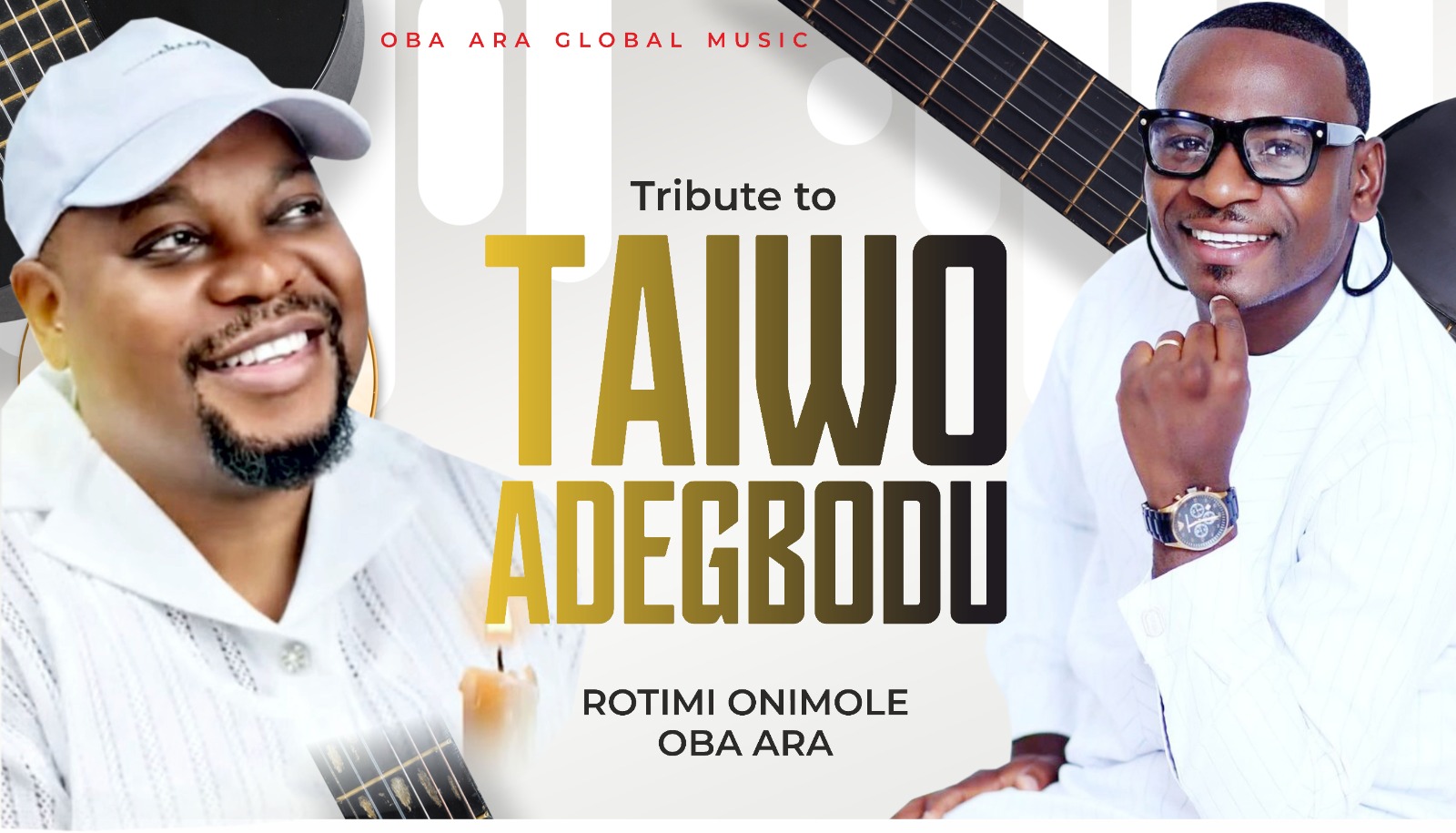
Oba Ara Releases Emotional Tribute to Late Taiwo Adegbodu
Taofik Afolabi
The gospel music community continues to grieve the painful loss of Taiwo Adegbodu, a beloved figure whose sudden departure left a deep void among fans, colleagues, and loved ones. In response to this loss, renowned gospel minister Rotimi Onimole, popularly known as Oba Ara, has released a moving tribute song that captures both the sorrow of the moment and the enduring legacy of the late singer.
Oba Ara, a proud son of Isale Eko, channels raw emotion throughout the song, using heartfelt lyrics and soul-stirring melodies to reflect on his personal connection with Taiwo Adegbodu. In the tribute, he openly expresses how deeply the news of Adegbodu’s passing shook him, describing it as a painful and unexpected loss that is difficult to come to terms with.
The song goes beyond mourning, it celebrates the life, ministry, and impact of Taiwo Adegbodu. Oba Ara highlights the late artist’s dedication to spreading the gospel through music, his inspiring voice, and the spiritual influence he had on many within and beyond Nigeria. Through powerful verses, he paints a picture of a man who lived for God and touched countless lives through his ministry.
Listeners have described the tribute as both comforting and deeply emotional, as it resonates with the collective grief of the gospel music community. It serves as a reminder that although Taiwo Adegbodu is no longer physically present, his music, message, and legacy will continue to live on.
In honoring his late colleague, Oba Ara not only pays his respects but also offers a source of healing for fans and fellow ministers, using music as a tool to process grief and celebrate a life well lived.
celebrity radar - gossips
Buratai, Fagbemi , Shagaya, Olofa, Others Eulogise Olowu Kuta’s Olori On 60th Birthday, Foundation Launch

Buratai, Fagbemi , Shagaya, Olofa, Others Eulogise Olowu Kuta’s Olori On 60th Birthday, Foundation Launch
Eminent personalities across the Nigeria stormed the TFK Event Centre, Bala Mohammed Way, Guzape, Abuja, to celebrate the 60th birthday of Olowu Kuta’s Olori, Queen Jumai Amoke and her Foundation Launch on Saturday 28, March 2026.

From former Chief of Army Staff, Lt Gen TY Buratai rtd, to the Minister of Justice and Attorney-General of the Federation, Prince Lateef Fagbemi; Olofa of Offa, HRM Oba Mufutau Gbadamosi. Even top businesswoman and socialite, Chief (Mrs) Bola Shagaya, was in attendance.


Other dignitaries were newly promoted Deputy Inspector-General of Police and former AIG Zone 2 , Lagos , Adegoke Fayoade, Major General Abdumalik, Major General Samuel Adebayo rtd (Fmr CDI);
Major General Anthony Omozoje rtd (Fmr Copp);
Alhaji Tajudeen Owoyemi (Asiwaju of Offa and CEO Radisson Hotel Nigeria;
Dr Waheed Olagunju, former managing director of Bank of Industry, Oniba of Iba, Lagos State, HRM Oba Dr Suleiman Raji ;
Justice Falola, Olu of Ile-Ogbo , Oba Adetoyese amongst many traditional rulers and captains of industry too numerous to mention.
Speaking at the occasion, the Chief Host, Olowu of Kuta, HRM Oba Dr Adekunle Oyelude Makama, CON , Tegbosun iii, who is also the husband of the celebrant commended Queen Jumai for ‘ her slender arms full of kindness’ to establish such humanitarian Foundation, ‘Amoke Children and mother in Need Foundation’ at a time Nigerians are going through economic crisis occassioned by the global meltdown.
Olowu also commended her steadfastness and love for the less privileged and downtrodden.
The monarch refrenced the task before his wife’s humanitarian gesture said her best is yet to come.
” Olori Amoke Jumai, I celebrate you. You will celebrate 70, 80, 90 and continue to shine as you continue to put a smile on people’s faces. I love you, “Olowu Kuta added.
To Lt Gen Buratai, a former army chief and former Nigerian Ambassador to Benin Republic, the reward of hard work is more work.
Buratai, who also doubles as Balogun Agba of Owu Kuta, a chieftaincy title reserved for a generalismo congratulated Queen Jumai for attaining the age of 60 in good health.
The retired army General said he’s not surprised by the turn out of eminent personalities across the country to celebrate the Olowu Kuta’s Olori because she merited it through her hospitality to all, adding that Allah the most merciful, most beneficial would accept all her act of ibadah.
The minister of Justice, Prince Fagbemi, was full of praises for Queen Jumai for deeming it fit to have a place in her heart to accommodate the needy and less privileged in ‘our society.’
Prince Fagbemi urged the guests to contribute generously to support the Foundation in order to continue to alleviate poverty and put a smile on the faces of the people.
” I congratulate you on your 60th birthday and Foundation Launch. I wish you many happy returns of the day and many more fruitful services to the country and motherland”, Prince Fagbemi added.
The celebrant, Queen Jumai who was grining from ear to ear thankfully said she was excited by the turn out and the response of the people to her foundation.
Queen Jumai, however, promised to continue to use her resources and donations received for the good of the needy and less privileged in the society.
” I want to appreciate my own Kabiesi Olofa of Offa , for his presence and im I’m using him as a point of contact to all other Kabiesis present here, the minister of justice and Attorney-General, you’re welcome, sir; Mrs Bola Shagaya, I salute your enterprise, Lt Gen Buratai, I’m grateful, sir; DIG Fayoade, Justice Falola and other dignitaries too numerous to mention, I thank you, all. To my darling husband, Kabiesi Olowu , I thank you immensely for your support. And to my family and friends, I thank you , all. E se pupo!”, she said.


-

 society7 months ago
Religion: Africa’s Oldest Weapon of Enslavement and the Forgotten Truth
-

 news4 months ago
WHO REALLY OWNS MONIEPOINT? The $290 Million Deal That Sold Nigeria’s Top Fintech to Foreign Interests
-

 society6 months ago
“You Are Never Without Help” – Pastor Gebhardt Berndt Inspires Hope Through Empower Church (Video)
-

 celebrity radar - gossips2 months ago
Dr. Chris Okafor Returns with Power and Fire of the Spirit -Mounts Grace Nation Altar with Fresh Anointing and Restoration Grace on February 1, 2026